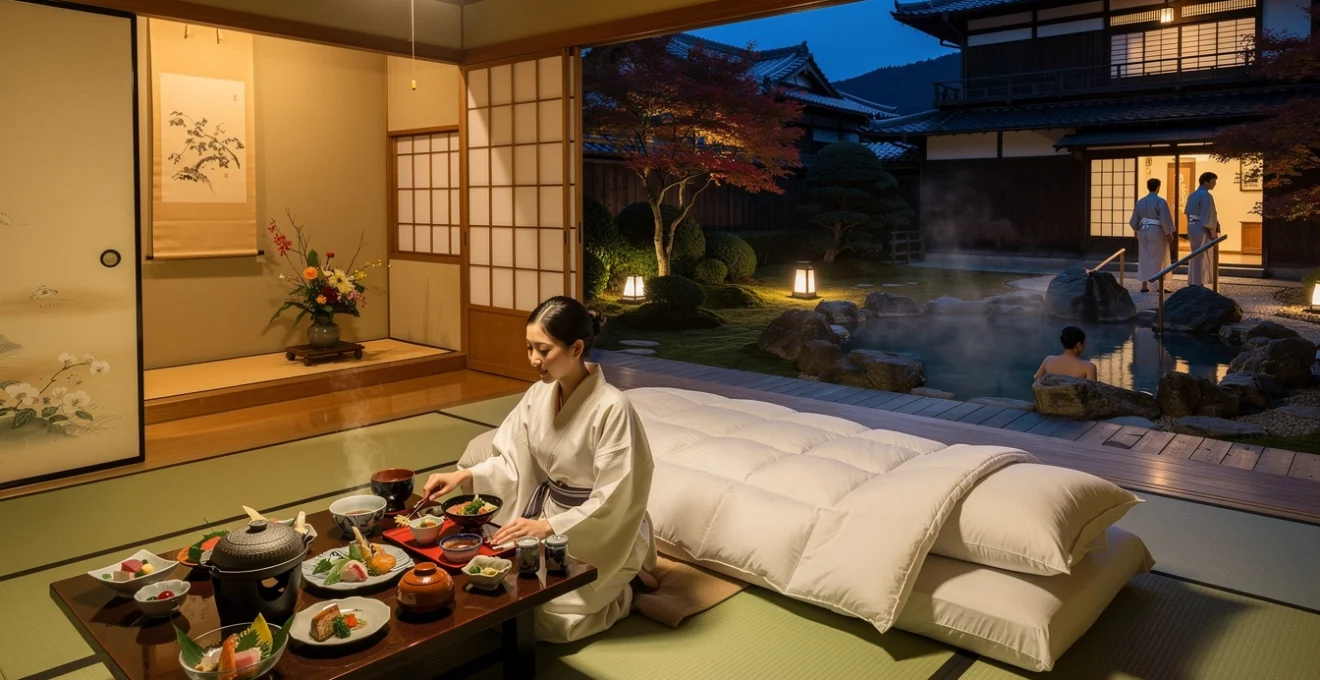
Stepping into a traditional Japanese ryokan is akin to entering a portal to another era, where time decelerates and the outside world fades into insignificance. These quintessential Japanese inns represent far more than mere accommodation; they embody centuries of refined hospitality culture, architectural wisdom, and aesthetic philosophy. With approximately 80,000 ryokans scattered across Japan’s diverse landscape, from volcanic hot spring valleys to ancient temple cities, these establishments continue to preserve traditions that originated during the Edo period whilst adapting to contemporary traveller expectations. For anyone seeking an authentic immersion into Japanese culture, a ryokan stay transcends the typical tourism experience, offering instead a meticulously choreographed symphony of sensory delights, architectural harmony, and human connection.
Architectural elements and spatial design in traditional ryokan construction
The architectural philosophy underpinning traditional ryokan design reflects centuries of refinement in creating spaces that foster tranquillity whilst maintaining functional efficiency. Unlike Western hotel architecture, which often prioritises visual grandeur and monumentality, ryokan structures embrace principles of wabi-sabi aesthetics—finding beauty in simplicity, imperfection, and transience. The materials employed in construction typically include natural elements such as timber, bamboo, washi paper, and clay, which develop character and patina over time rather than deteriorating. This approach to material selection creates living structures that evolve alongside their surroundings, breathing with seasonal humidity changes and settling gracefully as decades pass.
Tatami mat dimensions and room layout configurations
Tatami mats serve as both the foundational element and the measuring unit for traditional Japanese room design. Each mat measures approximately 910mm by 1820mm, though regional variations exist, with Kyoto mats slightly larger than their Tokyo counterparts. Rooms are designated by the number of tatami mats they contain—a six-mat room (roku-jo) measures roughly 9.72 square metres, whilst an eight-mat room (hachi-jo) provides approximately 12.96 square metres. This standardisation extends beyond mere convenience; it reflects a deeper cultural understanding of spatial proportion and human scale. The slightly yielding surface of woven rush grass over compressed rice straw creates a distinctive walking sensation and naturally moderates room temperature and humidity. You’ll notice that furniture placement in tatami rooms follows specific protocols, with the tokonoma alcove positioned to receive the most honoured guest, who sits with their back to this decorative space.
Fusuma sliding doors and shoji screen integration
The genius of fusuma and shoji lies in their dual capacity to divide space whilst maintaining visual and atmospheric continuity. Fusuma, opaque sliding panels covered with decorative paper or fabric, enable room configurations to transform according to need—a single large gathering space can become multiple intimate chambers within moments. Shoji screens, constructed from translucent washi paper stretched across wooden lattice frameworks, filter daylight into a soft, diffused glow that eliminates harsh shadows whilst preserving privacy. This interplay of light and shadow, known as in-yo (yin-yang in Japanese philosophy), creates an ever-changing atmospheric quality throughout the day. Modern luxury ryokans have refined these traditional elements, incorporating contemporary materials that improve insulation and soundproofing whilst maintaining aesthetic authenticity. The craftsmanship required to construct perfectly balanced fusuma that glide effortlessly along their tracks represents specialised knowledge passed through generations of artisans.
Engawa veranda corridors connecting interior and garden spaces
The engawa serves as a liminal zone—neither fully interior nor exterior—that mediates between the built environment and nature. These wooden corridor-like verandas typically extend along the garden-facing side of ryokan buildings, elevated slightly above ground level and protected by deep eaves. The engawa provides both practical functions, such as circulation pathways and protection from rain, and philosophical purposes, offering a contemplative space where you can observe seasonal changes in the garden whilst remaining sheltered. Many ryokans encourage guests to sit on the engawa during twilight hours, perhaps with a cup of green tea, to experience the transition from day to night. This architectural element exemplifies the Japanese concept of ma—the
intentional use of negative space and pause. In a ryokan, silence, shadow, and the gentle creaking of floorboards are not flaws to be eliminated but integral ingredients in a peaceful overnight stay in Japan, encouraging you to slow your pace and tune into subtler sensations.
Tokonoma alcove aesthetics and seasonal display practices
The tokonoma—a shallow, raised alcove set into one wall of the guest room—is the visual and spiritual focal point of a traditional ryokan interior. Historically reserved for receiving honoured guests, the tokonoma houses a carefully curated combination of a hanging scroll (kakemono) and a single flower arrangement or simple ceramic piece. Rather than overwhelming you with decoration, the space is intentionally sparse, inviting you to contemplate each element and its relationship to the season outside. Sitting with your back to the tokonoma is traditionally considered a mark of respect, symbolically placing you under the protection of the household’s most treasured objects.
Seasonal sensitivity is at the heart of how ryokan staff dress the tokonoma. In spring, you might find a calligraphy scroll evoking renewal paired with a single branch of plum blossom; in autumn, perhaps a landscape ink painting and a spray of red maple leaves. This quiet rotation of objects throughout the year is a subtle, almost poetic way of grounding guests in the present moment—much like a calendar written in flowers and ink. For many travellers, photographing the tokonoma becomes a cherished ritual, but experienced guests will first take a few seconds simply to sit, breathe, and absorb the atmosphere before reaching for their camera.
Kaiseki ryori multi-course dining protocol in ryokan settings
For most visitors, the highlight of staying in a traditional ryokan is the evening meal: a full kaiseki ryori experience served in your room or in a private dining salon. Kaiseki is to everyday Japanese food what a classical symphony is to a pop song—meticulously structured, rooted in tradition, and designed to engage all the senses over time. While modern ryokans adapt to dietary needs and offer vegetarian or even vegan kaiseki menus, the core philosophy remains the same: celebrate the local terroir through seasonally driven, beautifully balanced dishes. Because dinner and breakfast are typically included in the nightly rate, understanding how kaiseki works helps you fully appreciate the value of a ryokan stay.
Seasonal ingredient sourcing and regional culinary traditions
Authentic ryokan cuisine is inseparable from its environment. Many properties maintain close relationships with nearby farmers, fishers, and foragers, ensuring that the kaiseki menu changes not only with the four seasons but often month by month. In coastal regions such as Kanazawa or Kinosaki, you might see sweet snow crab, amberjack, and sea bream appear when they are at their peak, while mountain ryokans in Nagano or Gifu highlight wild vegetables (sansai), river fish, and locally reared wagyu beef. This hyper-local sourcing turns each meal into a snapshot of place and time—an edible travelogue of where you are in Japan.
From a culinary tourism perspective, staying in a ryokan is one of the most efficient ways to experience regional Japanese food culture in a single sitting. You are not simply eating “Japanese food”; you are tasting Niigata’s famed rice, Yamagata’s mountain vegetables, or Kyushu’s rich soy-based broths. Many chefs adhere to the traditional shun principle, serving ingredients only at the precise moment they are considered at their most flavourful. If you are planning an itinerary around food, choosing a ryokan in a sake-producing region, onsen town, or fishing port can dramatically deepen your understanding of Japanese gastronomy in just one peaceful overnight stay.
Mukōzuke appetiser through mizugashi dessert course progression
A full kaiseki ryori dinner typically unfolds across 8–12 small courses, each with a defined role in the overall progression. After an opening aperitif or amuse-bouche, you will usually encounter the mukōzuke course: artfully sliced sashimi presented with freshly grated wasabi and local soy sauce. This is followed by a sequence of preparations that might include a simmered dish (nimono), a grilled item (yakimono), a lidded bowl of clear soup (osuimono), and sometimes a hot pot (nabemono) in which you briefly cook meat or vegetables at the table. Think of it as a carefully plotted story arc where each chapter has a specific tempo and texture, preventing palate fatigue.
As the meal nears its conclusion, a rice course (gohan) accompanied by pickles (tsukemono) and miso soup signals that the savoury sequence is ending. Dessert in a kaiseki context—mizugashi—tends to be lighter and less sugary than Western-style sweets, often featuring seasonal fruit, a small wagashi confection, or a delicate jelly. This measured finale leaves you comfortably satisfied rather than uncomfortably full, which is particularly welcome when you will be sleeping on a futon soon after. If you are unsure in which order to taste each item, simply observe the placement: dishes arranged nearest to you are usually intended to be eaten first, moving outward like ripples on a pond.
Lacquerware presentation and ceramic vessel selection standards
In kaiseki ryori, the plates, bowls, and trays are as important as the food they hold. Traditional ryokans invest heavily in urushi lacquerware and regional ceramics, treating each vessel as a frame that enhances the dish’s colours and shapes. A clear soup might be presented in a lidded black lacquer bowl that reveals a burst of green herbs and white tofu when opened, while grilled fish arrives on a rustic, ash-glazed plate echoing the embers of the hearth. This practice is sometimes likened to pairing a painting with the right frame: the wrong choice distracts, while the right one makes the artwork sing.
Many ryokan chefs and owners collaborate with local potters, commissioning bespoke pieces that reflect both the property’s aesthetic and its natural surroundings. You may notice motifs such as maple leaves, waves, cranes, or plum blossoms recurring across different courses, subtly reinforcing seasonal themes. Guests are expected to handle these items gently, turning bowls or cups with two hands to appreciate their form before drinking or eating. For travellers interested in design, paying attention to the interplay between food, vessel, and table setting can transform dinner from a simple meal into a masterclass in Japanese craftsmanship and visual harmony.
In-room dining service etiquette and timing choreography
One of the most memorable aspects of a ryokan stay is having a multi-course kaiseki dinner served directly in your tatami room. Behind the scenes, this requires precise timing and quiet coordination: staff must synchronise hot dishes with your eating pace while remaining as unobtrusive as possible. On check-in, you will usually be asked to choose a dinner start time—often between 18:00 and 19:00—so the kitchen can pace preparation accordingly. Arriving late may compress the schedule or, in some traditional establishments, risk missing certain courses entirely, so it is wise to plan your sightseeing with these fixed hours in mind.
During the meal, attendants may slide open the fusuma several times to bring new dishes, clear used ones, and refill tea or sake. You are not expected to tip individually each time; instead, gratitude is expressed through simple courtesies such as a warm greeting, a few words of thanks, and avoiding phone calls or loud music while food is being served. In most ryokans, the transformation from dining room to bedroom happens after dinner: while you enjoy a final soak in the onsen, staff will quietly clear the low table and lay out your futon bedding. This almost theatrical “scene change” is choreographed to make your transition from meal to sleep as seamless and serene as possible.
Onsen bathing rituals and thermotherapy practices
Many of Japan’s most beloved ryokans are built around natural hot springs, turning a simple overnight stay into a full-body wellness retreat. The Japanese onsen tradition combines geological good fortune—mineral-rich waters heated deep underground—with a carefully codified bathing etiquette designed to promote both hygiene and contemplation. From a modern perspective, onsen bathing can be seen as a gentle form of thermotherapy: alternating periods of immersion in warm water with rest and rehydration to relax muscles, improve circulation, and calm the nervous system. For first-time visitors, understanding these rituals in advance can transform apprehension into anticipation.
Rotemburo outdoor bath experiences at renowned establishments
Rotemburo, or open-air baths, are often the crown jewels of onsen ryokans. Imagine soaking in steaming water while snow falls silently around you in Nagano, or watching mist rise from a forested valley at dawn in Hakone—that contrast between hot water and cool air is both invigorating and deeply soothing. Many famous ryokans carve their rotemburo into natural rock formations, surround them with moss gardens, or design them to frame views of rivers, bamboo groves, or distant mountains. The goal is not just physical comfort but a sense of merging with the landscape, even if only for a few minutes.
High-end ryokans increasingly offer private open-air baths attached to guest rooms, allowing you to enjoy the rotemburo experience without sharing the space. This can be especially appealing if you feel shy about communal bathing or are travelling as a couple or family. When evaluating different properties, pay attention not only to the photos of the baths but also to opening hours and rotation schedules—some ryokans alternate men’s and women’s access to certain outdoor baths between evening and morning so that all guests can enjoy the best views. If you have only one night, consider timing at least one soak for early morning when the atmosphere is at its quietest.
Pre-bath cleansing procedures at communal washing stations
Before entering any onsen bath—indoor or outdoor—thorough washing at the communal shower stations is essential. Think of the bath itself as a shared relaxation pool, and the washing area as the functional “bathroom”. You will usually find rows of low stools, handheld showers, and basic amenities such as shampoo, conditioner, and body soap. The correct sequence is to sit, rinse your body and hair, lather, rinse again, and only then step into the main pool. Remaining seated keeps splashing to a minimum and respects the quiet of those around you.
Many first-time visitors worry about “doing it wrong,” but the process is straightforward if you remember that the goal is to enter the shared water completely clean. A small towel—often provided in your room—is used for washing and modesty when moving between stations and baths, but it should never touch the bathwater itself. You will see regulars folding the towel and placing it on their head while soaking, an almost comical sight that nonetheless serves a practical purpose: it keeps the cloth dry and out of the pool. By following these simple procedures, you quickly blend into the rhythm of onsen culture and can focus on the therapeutic warmth rather than on etiquette anxieties.
Mineral composition variations across hakone, kinosaki and kusatsu waters
Not all hot springs are created equal; their mineral composition depends on local geology and depth, giving each onsen town a distinctive character and set of reputed health benefits. In Hakone, one of Japan’s most accessible onsen regions, you will encounter a variety of spring types, from milky sulphur baths said to soften the skin to clearer sodium-chloride waters that retain heat in the body. Many ryokans there proudly display analysis charts near the baths, listing temperature, pH level, and dominant minerals—evidence that the water is truly natural and not simply heated tap water.
Kinosaki Onsen on the Sea of Japan coast is famous for its gentle, slightly saline waters and its culture of sotoyu meguri, or touring multiple public baths while staying in a local ryokan. Guests stroll the town in yukata and geta sandals, sampling different bathhouses, then return to their inn for dinner and sleep. Kusatsu, by contrast, boasts some of the most acidic hot springs in Japan, with strong sulphur content and a distinctive aroma; locals claim these waters help with skin conditions and muscular fatigue. If you are planning a peaceful overnight stay specifically for wellness, researching the typical mineral profile and temperature range of each onsen region can help you choose the ryokan whose waters best match your needs and preferences.
Gender-segregated bathing customs and kashikiri private bath options
Most onsen ryokans in Japan maintain gender-segregated communal baths, with separate entrances and changing areas marked clearly in red (for women) and blue (for men). Bathing is typically done nude, which can feel daunting at first but quickly becomes surprisingly unremarkable—everyone is focused on relaxation, not on appearances. To accommodate couples, families, and guests with cultural or personal reservations, many ryokans also offer kashikiri baths: private onsen spaces that can be reserved by the hour. These may be indoor stone tubs, small rotemburo, or even themed baths with views or aromatherapeutic elements.
If mixed-gender or private bathing is important to you, it is wise to confirm options in advance, as policies vary between establishments. Some properties limit kashikiri reservations to certain time slots, while others include complimentary private bath use in higher room categories. For travellers with tattoos—a potential concern in communal baths—kashikiri onsen provide a discreet and stress-free alternative in regions where tattoo policies are strict. Ultimately, the aim of both shared and private baths is the same: to give you a safe, unhurried environment in which to unwind, making that overnight stay in a ryokan feel like a miniature spa retreat.
Omotenashi hospitality philosophy and guest service methodologies
Beyond architecture, cuisine, and onsen, what truly distinguishes a traditional ryokan from other forms of accommodation is its approach to hospitality, encapsulated in the concept of omotenashi. Often translated as “Japanese hospitality,” omotenashi goes deeper than simply providing good service; it implies a heartfelt, anticipatory care that seeks to meet unspoken needs before the guest has to articulate them. Staff members watch quietly to see if you favour firm or soft pillows, notice whether you prefer green tea or water in the evening, and adjust their actions accordingly. This sensitivity creates an atmosphere where you feel gently looked after rather than managed.
In practical terms, omotenashi manifests in many small but meaningful gestures throughout a peaceful overnight stay in Japan. You might arrive on a rainy afternoon to find towels warming by the hearth and umbrellas already waiting at the entrance for your next outing. If you express interest in a particular local sweet during dinner, a few extra pieces may appear at breakfast without comment. Crucially, this service is delivered with humility and discretion; staff do not hover or intrude, but seem to materialise when needed and disappear again when their role is complete. For many travellers, this invisible choreography of care is what lingers longest in memory after leaving the ryokan.
Futon bedding preparation and sleep surface ergonomics
Sleeping on a futon laid directly on tatami flooring is one of the most distinctive features of a stay in a traditional ryokan. Unlike Western beds, which rely on thick mattresses and box springs, Japanese futons are relatively thin, firm pads that distribute body weight evenly across the floor. For some guests, the first impression can be startling—“Isn’t this too hard?”—but many discover by morning that their back feels unexpectedly supported and relaxed. Studies in sleep ergonomics increasingly suggest that overly soft surfaces can exacerbate posture problems, while a firmer base encourages a more neutral spine alignment, much like standing upright but in a horizontal position.
Ryokan staff typically prepare the futon while you are at dinner, layering a base mattress, a crisp cotton sheet, a duvet appropriate to the season, and sometimes an extra pad for comfort in higher-end establishments. Pillows may be filled with buckwheat hulls, which conform to the shape of your head and neck and promote airflow during sleep. If you find the surface too firm or soft, do not hesitate to mention it politely; many ryokans keep additional pads and blankets on hand and can adjust the setup for subsequent nights. For taller guests worried about length, modern futons in tourist-focused ryokans are generally generous in size, and rooms can often accommodate two futons side by side without feeling cramped.
Notable historic ryokan establishments preserving edo-period traditions
While contemporary boutique ryokans continue to reinterpret tradition in innovative ways, a number of historic establishments across Japan have been perfecting the art of a peaceful overnight stay for centuries. Visiting one of these inns is akin to stepping into a living museum, where architectural details, service rituals, and even floor plans still echo the Edo-period travellers they once hosted. Many have survived fires, earthquakes, and wars through careful stewardship by the same family line, making them remarkable case studies in cultural continuity. If your itinerary allows, staying at or at least visiting one of these properties can add historical depth to your ryokan experience.
Hōshi ryokan komatsu: 1,300 years of continuous family operation
Located in Komatsu, Ishikawa Prefecture, Hōshi Ryokan is often cited as one of the world’s oldest hotels, with a founding date traced back to 718 CE. Operated by the same family for over 46 generations, Hōshi embodies a layered history in which religious pilgrimage, hot spring therapy, and hospitality intertwine. The ryokan’s architecture combines classic wooden corridors, tatami suites, and landscaped gardens designed for contemplation, while its onsen waters have drawn visitors seeking healing for more than a millennium. Staying here connects you not only to Japanese tradition but to an unbroken chain of hosts and guests extending deep into the past.
Despite its age, Hōshi continues to evolve, integrating modern comforts such as improved insulation, seismic reinforcement, and contemporary bath facilities, all while maintaining a distinctly old-world atmosphere. Guests can wander through inner courtyards, visit the shrine associated with the original hot spring discovery, and participate in seasonal events that reflect the local culture. For travellers fascinated by heritage properties, a night at Hōshi is a vivid reminder that the concept of a peaceful overnight stay in Japan long predates mass tourism—what you experience today is the refined result of centuries of small adjustments and accumulated wisdom.
Tawaraya kyoto and the andon-lit sukiya-zukuri architecture
In Kyoto, Tawaraya is often spoken of in hushed, almost reverential tones among aficionados of Japanese hospitality. With roots stretching back over 300 years, this ryokan exemplifies sukiya-zukuri architecture: an understated, tea-house-inspired style that favours natural materials, asymmetry, and intimate scale. Rooms open onto meticulously composed gardens where stone lanterns and moss share space with carefully pruned pines, and interior spaces are lit by andon—traditional paper lamps that cast a soft, amber glow. The resulting ambience feels less like a hotel and more like a private residence suspended in time.
Tawaraya’s service model is equally refined, with a strong emphasis on privacy and bespoke care. The number of rooms is kept deliberately small, allowing the staff to tailor every detail, from the choice of flowers in your tokonoma to the pacing of your meals. Reservations can be challenging to secure, particularly in peak seasons, but for those able to stay, Tawaraya offers a distilled version of the Kyoto ryokan ideal: serenity, subtle luxury, and a sense of being both honoured guest and temporary member of a long-standing household. Walking down its softly lit corridors at night, you may feel as if you have stepped into a woodblock print rather than a modern city.
Beniya mukayu kanazawa’s contemporary minimalist interpretation
Not all notable ryokans are centuries old; some, like Beniya Mukayu near Kanazawa, reinterpret traditional principles through a contemporary lens. Perched on a hillside in Yamashiro Onsen, this design-forward property blends minimalist architecture with classic ryokan elements such as tatami rooms, kaiseki dining, and private onsen baths. Floor-to-ceiling windows frame views of a wild, deliberately unmanicured garden, turning the changing light and weather into integral parts of the interior design. The overall effect is akin to a modern art gallery that just happens to provide one of the most tranquil overnight stays in Japan.
Beniya Mukayu’s philosophy emphasises emptiness and openness—literally “no adornment”—as a pathway to mental clarity, echoing Zen concepts while catering to contemporary expectations of comfort. Guests can enjoy spa treatments incorporating local botanicals, read in a library stocked with art and architecture books, and dine on kaiseki menus that foreground seasonal Hokuriku ingredients in innovative presentations. For travellers interested in how Japanese hospitality evolves in the 21st century, this ryokan demonstrates that the core values of omotenashi, harmony with nature, and mindful design remain intact, even as materials, forms, and guest preferences shift.