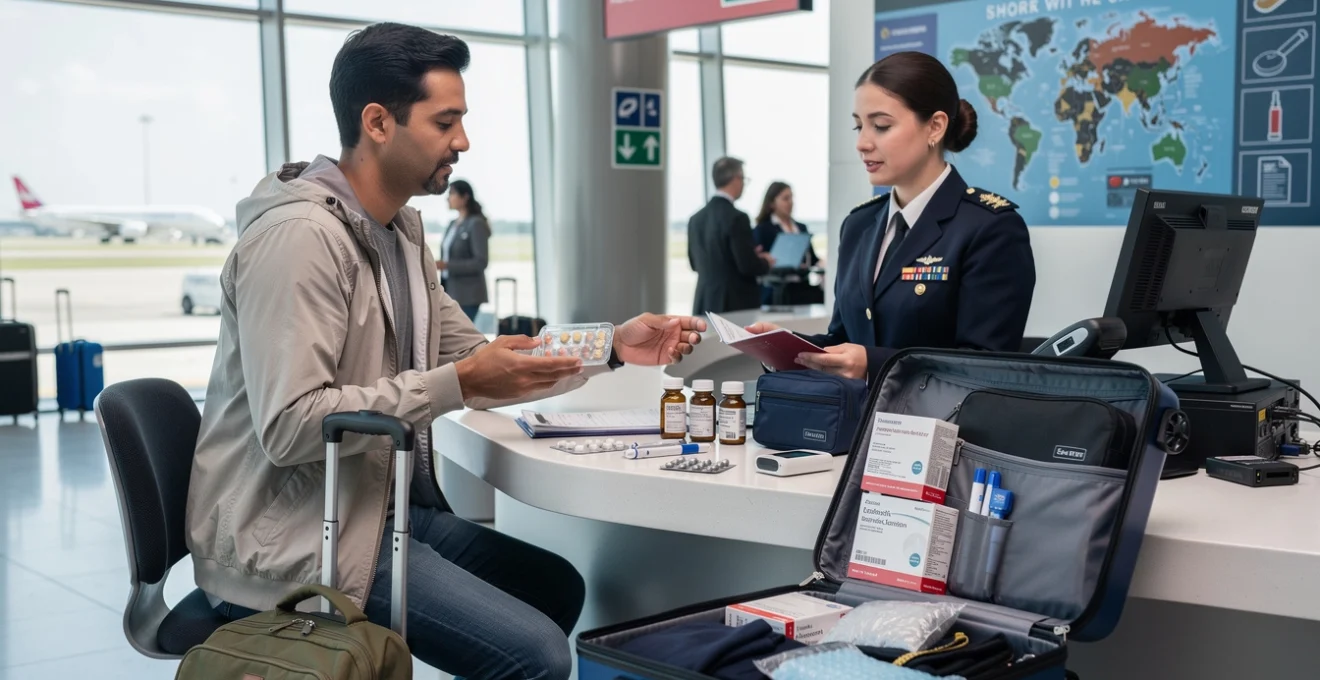
International travel presents unique challenges for individuals who depend on regular medication. Whether you’re managing a chronic condition such as diabetes, hypertension, or epilepsy, or carrying emergency treatments like EpiPens and inhalers, ensuring uninterrupted access to your pharmaceutical supplies requires meticulous planning. Border control procedures, temperature-sensitive storage requirements, and varying national regulations around controlled substances can transform what should be an exciting journey into a logistical puzzle. Understanding the documentation requirements, storage protocols, and customs procedures before departure is not merely advisable—it’s essential for both your health and legal compliance.
The landscape of international pharmaceutical regulation has become increasingly complex in recent years, with countries implementing stricter controls on prescription medications and controlled substances. Many travellers discover these requirements too late, facing confiscated medications at customs or finding themselves unable to replace prescriptions whilst abroad. The consequences extend beyond inconvenience; without proper preparation, you risk serious health complications or legal difficulties in foreign jurisdictions. This reality underscores the importance of thorough preparation and understanding of international pharmaceutical transport regulations.
Obtaining and preparing medical documentation for international travel
Medical documentation serves as your pharmaceutical passport, providing proof of medical necessity and legitimacy for the medications you’re carrying. Without proper paperwork, even entirely legal prescriptions can be confiscated at international borders, particularly when dealing with controlled substances or injectable medications. The documentation process should begin at least four to six weeks before your departure date, allowing sufficient time to address any complications or additional requirements.
Securing a signed prescription letter from your GP or consultant
The foundation of your travel documentation is a comprehensive letter from your prescribing physician on official letterhead. This document should include your full name exactly as it appears on your passport, your date of birth, and your residential address. The letter must list each medication you’ll be carrying, including the generic drug name, brand name, dosage strength, frequency of administration, and the total quantity you’ll be transporting. Your doctor’s signature, printed name, medical registration number, and contact details are essential elements that customs officials will verify.
This letter serves multiple purposes beyond customs clearance. If you need to replace lost medication or seek medical attention abroad, having a detailed prescription letter from a UK healthcare provider can facilitate interactions with foreign pharmacists and physicians. The letter should also specify the dates of your travel and confirm that the medications are essential for your ongoing treatment. For controlled substances, the letter must explicitly state that the medication has been prescribed for legitimate medical purposes and that you require it for personal use during your journey.
Understanding the international Non-Proprietary name (INN) system for drug identification
Brand names for medications vary significantly across different countries, which can create confusion when you’re trying to identify or replace prescriptions abroad. The International Non-Proprietary Name system, administered by the World Health Organization, provides standardised generic names for pharmaceutical substances that are recognised globally. For instance, paracetamol in the UK is known as acetaminophen in the United States, but both refer to the same active ingredient.
When your doctor prepares your prescription letter, ensure they include both the INN generic name and any brand names you might be using. This dual identification system becomes particularly valuable if you need to purchase medication abroad or if customs officials need to verify the contents of your pharmaceutical supplies. Many countries require prescriptions to use INN terminology for customs declarations, making this information not just helpful but mandatory for compliance with international regulations.
Translating prescriptions for Non-English speaking destinations
Whilst English serves as a common language in many international airports, your destination country’s customs officials and healthcare providers may require documentation in their native language. Professional translation of your prescription documents is advisable when travelling to non-English speaking regions, particularly in Asia, South America, or parts of Eastern Europe. These translations should be certified by a recognised translation service and include an official stamp or seal verifying their accuracy.
The translation must mirror the original document exactly, including all medication names, dosages, and prescriber details. Some countries, including Japan and several Middle Eastern nations, specifically require translated documentation as part of their pharmaceutical import procedures. Investing in professional translation services before departure can prevent significant complications at border control and ensure you can access medical care if needed during your stay.
Requesting a medical certificate for
Requesting a medical certificate for controlled substances and injectables
For certain medications, a standard prescription letter is not sufficient. If you are travelling with controlled drugs (such as strong opioid painkillers, some ADHD medicines, or benzodiazepines) or injectable medications (including insulin, GLP‑1 agonists like semaglutide, or biologic therapies), you should request a dedicated medical certificate. This document should clearly state that you must carry needles, syringes, injection pens, or infusion devices, and that these are prescribed for your personal medical treatment. It should also specify any sharps disposal requirements, which can reassure airline and security staff.
In the UK, this certificate is often issued by your GP or hospital consultant and may be formatted as a “fit to fly” or “travelling with medicines” letter. Ask explicitly that the certificate lists the controlled status of the medicine (if applicable), confirms that the medicine is for legitimate therapeutic use, and notes that you will be carrying it both on board and through customs. Keep this certificate with your passport and boarding pass so you can easily present it at security checkpoints or to airline personnel when boarding.
Packing and temperature-controlled storage solutions for medication
Once your documentation is in order, the next priority is how you physically transport and store your medication. Improper packing can lead to broken vials, lost prescriptions, or temperature damage to sensitive drugs. Thinking of your medication bag as a “mobile medicine cabinet” can be helpful: everything should be clearly labelled, organised, and protected, while still being easy to access during flights and customs checks. Effective packing and storage not only protect your health but also reduce the likelihood of delays at airport security.
Different medicines have different storage needs. Some, such as standard tablets, are relatively robust and can tolerate a range of temperatures. Others, including insulin, biologics, and certain eye drops, must remain within a narrow temperature range to stay effective. Before you travel, review the patient information leaflet for each medicine and note whether it should be kept below 25–30°C, refrigerated between 2–8°C, or protected from freezing. This information will guide your choice of travel coolers, ice packs, and monitoring devices.
Insulin and biologic medications: cold chain management with frio wallets
Insulin, many biologic injections for conditions such as rheumatoid arthritis, inflammatory bowel disease, or psoriasis, and some fertility drugs are “cold chain” medicines. They are normally stored in the fridge and can be damaged by heat or freezing. When you fly, aircraft holds can reach sub-zero temperatures, while cabins and airport terminals can become very warm, especially in summer. To manage this, many travellers use evaporative cooling pouches such as Frio wallets, which keep insulin and similar medicines within a safe range without the need for ice or electricity.
These wallets are activated with water and can maintain a stable environment for several days, making them ideal for long-haul flights and stopovers. However, they are not freezers and should be used according to manufacturer instructions to avoid over-cooling. You should place the original insulin pens or vials inside the Frio wallet while keeping the whole set-up in your hand luggage, never in checked baggage. Think of the Frio wallet as a portable mini-fridge for travel: it helps preserve your medication’s potency whilst giving you the freedom to move through airports and city streets without constant access to a refrigerator.
Original packaging requirements and pharmacy labels for customs verification
Customs and security officers need to be able to identify your medicines quickly and reliably. For this reason, you should keep medications in their original packaging wherever possible, complete with pharmacy labels. These labels show your full name, the drug name, dose, prescribing doctor, and dispensing pharmacy. Loose tablets in unmarked pill organisers may be convenient for daily use but provide no legal proof of what the medicine is, which can be problematic at border control.
A practical approach is to travel with medicines in original boxes or blister strips and, if you wish, transfer a day or week’s supply into a small pill organiser once you arrive at your destination. For customs verification, the combination of original packaging, pharmacy labels, and your prescription letter gives officials a clear trail of evidence that these are legitimate, doctor‑prescribed medications. This is especially important for controlled drugs, sedatives, and any medicine that could be mistaken for recreational substances.
Carry-on vs checked luggage: TSA and IATA guidelines for pharmaceutical transport
Deciding whether to pack medication in carry-on or checked luggage can feel confusing. As a rule of thumb, any essential or life-sustaining medication should always travel in your hand luggage. Organisations such as the US Transportation Security Administration (TSA) and the International Air Transport Association (IATA) generally recommend that passengers keep all critical medicines with them in the cabin. This protects you if luggage is delayed or lost and ensures that you can access your medication during the flight.
Most airports allow medically necessary liquids and gels in quantities greater than standard liquid limits, provided you declare them at security and present supporting documents. Tablets and capsules rarely pose problems and can usually pass through security without additional screening. Non-essential “backup” supplies may be placed in checked luggage, but temperature-sensitive or controlled drugs should remain in your carry-on. Before travelling, check both your airline’s medical policies and the departure airport’s security guidance so you know exactly how to present your medication at screening points.
Portable refrigeration options: ICECAP and MedAngel temperature monitors
For longer trips or particularly sensitive drugs, you may want more precise temperature control than a simple cool bag. Portable refrigeration systems such as ICECAP coolers can maintain a stable chilled environment for many hours, making them useful for long-haul flights or journeys through very hot climates. These devices are often designed for air travel, with insulation and cooling packs tested to stay within medicine-safe temperature ranges. They can be especially valuable if you are carrying multiple biologic injections or travelling with children who rely on refrigerated medicine.
To add another layer of safety, some travellers use digital temperature monitors such as MedAngel sensors. These small devices sit alongside your medications inside a cooler or bag and connect to a smartphone app, alerting you if temperatures move outside the recommended range. Think of them as a “thermostat and alarm system” for your medicine: you gain real-time insight rather than guessing whether a hot day or long airport queue has compromised your supply. While not essential for every trip, these tools can be reassuring when you are carrying high-cost or clinically critical refrigerated drugs.
Navigating customs declarations and border control procedures
Even with careful packing, misunderstandings at customs can occur if you are not familiar with local declaration rules. Some countries take a very strict approach to controlled substances, opioid painkillers, and sedatives, while others focus more on the quantity of medicine you are carrying. To minimise risk, you should review both your departure and destination country’s guidance on importing medication well before you travel. In many cases, failure to declare controlled medicines is treated more seriously than declaring them with correct paperwork.
Border crossings typically have “green” and “red” channels or equivalent systems. If you are carrying only standard prescription medications in reasonable personal-use quantities, you will often be able to use the green channel. However, if you have controlled drugs, large volumes of medicine, or documentation such as special licences, you may be required—or it may be safer—to use the red channel and make a formal declaration. Doing so demonstrates transparency and can prevent accusations of smuggling or illegal importation.
Red channel declaration requirements for controlled drug categories
Controlled drugs fall into stricter legal categories because of their potential for misuse and dependence. Examples include strong opioids (such as morphine or fentanyl), certain sleeping tablets, stimulants used in ADHD treatment, and some anxiety medications. When travelling with these medicines, many jurisdictions expect you to declare them proactively via the red channel or equivalent declaration desk. This allows customs officials to compare the medication you carry with your prescription letters, licences, and travel itinerary.
If you attempt to pass through the green channel with controlled drugs and are randomly searched, the consequences can be serious, ranging from confiscation of medicine to fines or even arrest. Using the red channel may feel intimidating, but it gives you the chance to present your documents in an organised way and explain your medical needs. Think of it as a formal check-in rather than an accusation: you are demonstrating that you respect the country’s rules and are prepared to show proof of legitimate medical use.
Schengen area regulations: article 75 and personal use quantities
Within the Schengen Area, controlled drugs for personal medical use are regulated under Article 75 of the Schengen Convention. If you are a resident of a Schengen country and travelling within the area, you may need a standardised certificate—often referred to as a Schengen certificate—issued by your national health authority. This document confirms that you are authorised to carry specific controlled medicines for personal treatment during your trip, usually for up to 30 days’ supply.
Travellers from outside the Schengen Area must rely on their home prescriptions and, where required, additional permits or letters. Regardless of your origin, you should carry no more than the amount of medicine needed for the duration of your stay, plus a small safety margin. If you are unsure whether your drug is classified as controlled under Schengen rules, consult the embassy or consulate of the country you are visiting and your own prescribing doctor. It is far easier to adjust your plans in advance than to have medicine refused at the border.
Schedule II–V substances: DEA and international import permits
In the United States, many medicines fall into Schedules II–V of the Controlled Substances Act. When these drugs are taken abroad, some destination countries require extra paperwork from both the prescribing doctor and national authorities. While DEA Form 225 is primarily used by institutions to import or export controlled substances, individual travellers may still need import permits or letters authorised by health ministries in the countries they are visiting. These rules are designed to prevent diversion of prescription drugs into illicit markets.
If you are a US resident travelling internationally with a Schedule II–V medicine, discuss your plans with your prescriber well in advance. They can clarify whether your drug is likely to attract extra scrutiny and help you gather official letters or certified copies of prescriptions. You should also check the foreign country’s embassy website for any specific import permit forms. Remember that a drug’s scheduling in the US does not automatically match its classification abroad—some medicines that are routine at home may be tightly restricted or even banned in other jurisdictions.
Country-specific restrictions and prohibited medications by jurisdiction
Not all countries treat the same medications in the same way. Some over-the-counter painkillers or cough medicines in one region may be controlled or prohibited in another. Before you travel, you should always check whether your prescriptions—or even common remedies you plan to pack—appear on any restricted lists for your destination. Failing to do so could lead to confiscation of medicines or, in extreme cases, criminal charges.
Country-specific rules can change over time, especially as governments respond to concerns about drug misuse and public health. It is therefore important to rely on up-to-date sources, such as official government health or customs websites and embassy pages, rather than old travel forums. If regulations are unclear, contacting the embassy directly by email can provide written confirmation, which you can print and carry with your travel documents. Having this evidence can be reassuring if customs officers question your medication.
United arab emirates: codeine, tramadol and benzodiazepine import restrictions
The United Arab Emirates (UAE) has some of the strictest medication import rules in the world, particularly for opioids, codeine-containing painkillers, tramadol, and many benzodiazepines. Drugs that are available by prescription—or even over the counter—in Europe or North America may be classified as narcotics or psychotropics under UAE law. Travellers carrying these medicines without prior approval risk severe penalties, including arrest. For this reason, you must review the UAE Ministry of Health guidelines before travelling.
If you need to bring a restricted medicine into the UAE, you may be required to submit an online application in advance, attaching copies of your prescription, doctor’s letter, and passport. Only a limited quantity—often up to 30 days’ supply—is permitted, and all medication must be in original packaging. It is wise to carry printed copies of your authorisation emails or permits, as well as your medical documentation, in your hand luggage. If in doubt about a particular drug, ask your doctor whether an alternative medicine with fewer restrictions could be used during your trip.
Japan’s yakkan shomei certificate system for prescription drugs
Japan operates a specific import certificate system known as Yakkan Shomei for certain prescription medicines and medical devices brought in by travellers. If you plan to carry more than one month’s supply of most prescription medicines, or any quantity of designated controlled substances, you may need to apply for Yakkan Shomei before arrival. This involves submitting forms to a regional branch of Japan’s Ministry of Health, Labour and Welfare, along with documentation about your prescriptions and travel dates.
The process can take several weeks, so it is essential to begin early. Once approved, you will receive a certificate that must be presented to customs officials upon entry. Without it, your medicine may be seized, and you could be refused permission to bring it into the country. You should also be aware that some common nasal sprays, asthma inhalers, and ADHD medications are restricted or banned in Japan, making prior research and communication with Japanese authorities crucial.
Singapore’s health sciences authority import licence requirements
Singapore’s Health Sciences Authority (HSA) closely regulates the import of controlled drugs and certain psychotropic substances. Travellers carrying these medications for personal use may need an import licence or approval letter, depending on the type and quantity of drug. Even for non-controlled prescription medicines, it is advisable to carry a copy of your prescription and a doctor’s letter, as Singaporean customs officials have broad powers to inspect and question pharmaceutical imports.
If your medicine appears on Singapore’s list of controlled substances, you must apply in advance through the HSA, submitting details about your health condition, prescribed dose, and travel plans. Only amounts consistent with personal use for the duration of your stay are typically allowed. As with other strict jurisdictions, carrying medicines in original packaging, together with licences, letters, and proof of travel dates, will greatly reduce the risk of delays or confiscation at Changi Airport or land border crossings.
Managing medication access and prescriptions during extended travel
What if you are not just going away for a week or two, but travelling for several months or moving abroad temporarily? Long-term travel raises additional challenges around prescription duration, repeat supplies, and access to healthcare in other countries. Most jurisdictions do not allow you to carry or import more than a three-month supply of controlled drugs, and some place similar limits on standard prescription medicines. Planning ahead can help you avoid running out of essential medication halfway through your trip.
Start by discussing your itinerary with your GP or specialist. They can advise how much medicine they are legally able to prescribe at once and whether your condition is stable enough to justify an extended supply. You should also check whether your travel health insurance covers pre-existing conditions and ongoing prescriptions, as many basic policies exclude them. For stays lasting several months or longer, you may need to register temporarily with a local doctor at your destination to obtain follow-up prescriptions and monitoring.
- Map your medication timeline against your travel dates. Work out when each prescription will run out and where you will be at that time. This helps you decide whether to arrange extra supplies before leaving or to identify clinics and pharmacies in countries where you will need a refill.
- Research healthcare access at each long-stop destination. In some countries, you can walk into a private clinic and see a doctor quickly for a fee. In others, waiting lists are long, or foreigners must use specific hospitals. Knowing this in advance allows you to book appointments before you arrive, particularly for specialist care.
For non-controlled medicines, some doctors will issue repeat prescriptions that can be filled at intervals by a nominated pharmacy or mail-order service. However, most postal carriers will not ship controlled substances internationally, and customs may seize medications sent across borders. If you anticipate needing more than three months’ supply of a controlled drug while abroad, speak to your prescribing doctor and, where relevant, national licensing authorities. In rare circumstances, special permits or personal licences may be available, but often the safest route is to arrange supervised care and prescribing in your host country.
Emergency protocols and pharmacological assistance whilst abroad
Even the best travel plans can go wrong: luggage is lost, medicines are spoiled by heat, or an unexpected illness changes your treatment needs. Having a clear emergency protocol for medication issues can turn a potential crisis into a manageable inconvenience. Before departure, make a simple plan for what you will do if your medicines are lost, stolen, or damaged, and who you will contact first in each scenario. This plan should include local emergency numbers, your travel insurer’s medical assistance line, and contact details for your home GP or consultant.
If your medication is lost or stolen, report it promptly to local police and obtain a written report. Insurers and some embassies may require this document before they authorise help with replacement costs. Next, contact your travel insurance provider; many policies include a 24-hour medical helpline staffed by clinicians who can direct you to reputable hospitals or clinics. When you see a doctor abroad, bring your prescription letters, translated documents if available, and a list of the active ingredients in your medications, not just brand names. This reduces the risk of receiving an inappropriate substitute.
What about unfamiliar pharmacies or medicines that look different from those at home? Wherever possible, use licensed pharmacies attached to hospitals or well-known chains, and avoid buying prescription drugs from markets or online sellers. Counterfeit medicines remain a significant problem in many parts of the world, especially for antibiotics and malaria tablets. Always check packaging, expiry dates, and the spelling of drug names. If you are unsure whether a suggested alternative medicine is appropriate, ask the pharmacist to write down the generic name and strength so you can confirm with your home doctor by email or secure messaging.
Finally, remember that your mental and physical wellbeing are closely linked. Travel, time zone changes, and disrupted routines can affect conditions such as epilepsy, diabetes, and mental health disorders. Set alarms on your phone to remind you to take doses on time according to your new time zone, and adjust devices such as insulin pumps or CPAP machines as soon as you land. By combining careful preparation with a clear plan for emergencies, you can travel with medication more confidently, knowing that you have practical strategies in place to manage both routine doses and unexpected challenges.