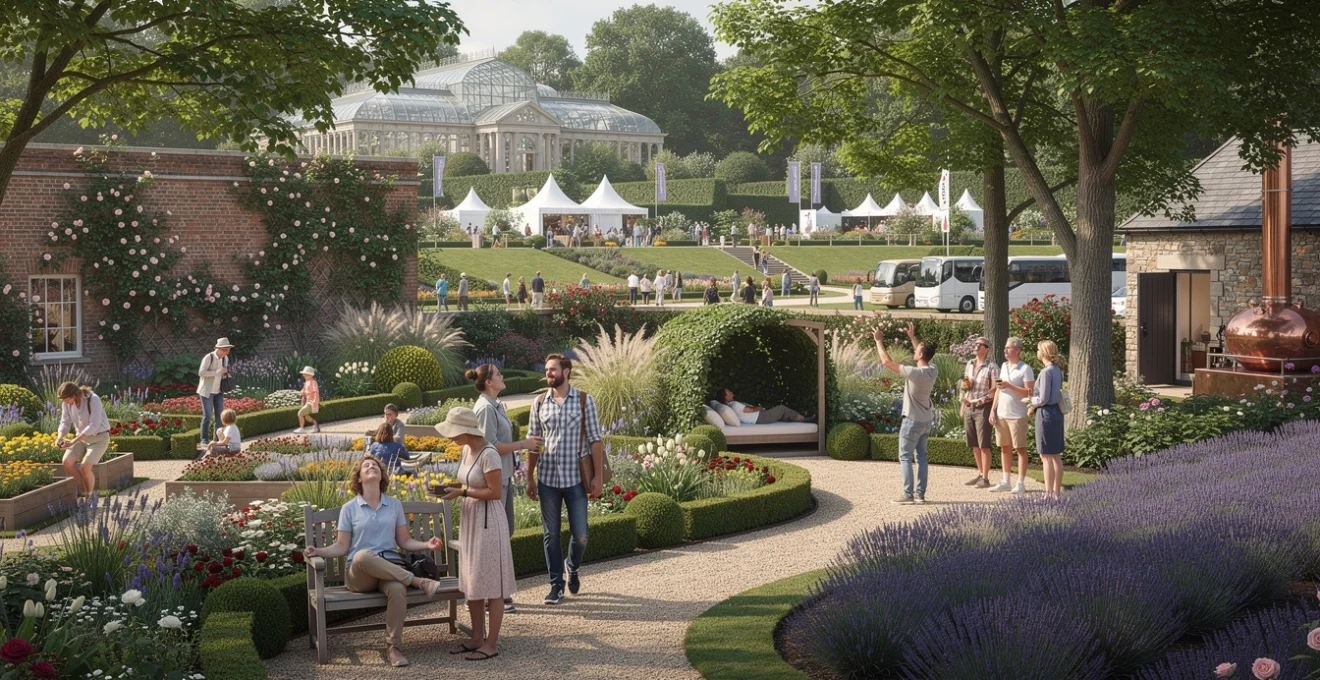
Garden tourism has emerged as a profound response to our increasingly digitised world, where travelers seek respite from urban intensity through immersive botanical experiences. Recent research from California Polytechnic State University reveals that botanical garden visits generate measurable improvements in mental well-being, with participants experiencing stress relief, enhanced self-awareness, and renewed perspectives. This growing movement represents more than casual sightseeing—it embodies a deliberate pursuit of tranquility through nature’s carefully curated beauty.
The appeal extends beyond simple aesthetics, tapping into fundamental human needs for restoration and connection. As digital saturation reaches unprecedented levels, particularly among younger demographics who spend approximately six hours online daily, garden destinations offer essential counterbalances to technological overwhelm. The therapeutic benefits of horticultural environments are becoming increasingly recognised by wellness practitioners and tourism professionals alike, positioning garden tourism as a significant sector within the broader wellness travel industry.
Psychological drivers behind horticultural tourism and biophilic travel motivations
The psychological foundations of garden tourism stem from humanity’s innate biophilic tendencies—our evolutionary predisposition to seek connections with natural environments. This phenomenon explains why botanical spaces consistently generate positive emotional responses across diverse demographics, transcending cultural and geographical boundaries. Modern research validates these instinctive attractions, demonstrating measurable physiological changes when individuals engage with horticultural environments.
Garden tourism satisfies multiple psychological needs simultaneously, creating layered experiences that address both conscious and unconscious desires for restoration. The carefully designed environments found in botanical gardens provide controlled exposure to nature’s complexity, offering visual stimulation without overwhelming sensory input. This balance proves particularly appealing to urban dwellers whose daily environments often lack organic variation and natural rhythms.
Attention restoration theory and Garden-Based cognitive recovery mechanisms
Attention Restoration Theory provides scientific framework for understanding garden tourism’s cognitive benefits. The theory identifies four key elements that facilitate mental recovery: being away from routine environments, fascination with natural elements, extent of immersive experience, and compatibility between personal inclinations and environmental characteristics. Botanical gardens excel at providing all four elements within structured, accessible settings.
The soft fascination offered by garden environments allows directed attention to rest whilst maintaining gentle engagement through natural beauty. Unlike the hard fascination demanded by digital media or urban environments, horticultural spaces permit cognitive restoration through effortless attention to flowers, foliage patterns, and seasonal changes. This process enables mental fatigue recovery whilst simultaneously providing enriching sensory experiences.
Stress reduction through nature immersion at kew gardens and similar botanical institutions
World-renowned institutions like Kew Gardens have become laboratories for understanding stress reduction mechanisms within botanical environments. Research conducted across similar facilities demonstrates consistent reductions in cortisol levels, blood pressure, and anxiety markers among visitors who spend extended periods in garden settings. These physiological changes occur remarkably quickly, with measurable improvements often evident within twenty minutes of arrival.
The stress-reduction benefits appear most pronounced in gardens featuring diverse microclimates and varied topographical elements. Water features, enclosed garden rooms, and transitional spaces between different planting schemes create opportunities for visitors to find environments that resonate with their specific needs for calm and restoration. This environmental diversity ensures that garden tourism can accommodate different personality types and stress-response patterns.
Dopamine response patterns triggered by floral colour palettes and garden design elements
Neuroscience research reveals specific dopamine response patterns triggered by exposure to certain colour combinations and design elements common in horticultural settings. Warm colours like oranges and yellows stimulate energy and optimism, whilst cooler blues and purples promote contemplation and serenity. Garden designers increasingly leverage these findings to create purposeful emotional journeys through their spaces.
The anticipation elements inherent in garden design—curved pathways, partially concealed vistas, and seasonal reveals—activate reward pathways in the brain similar to those triggered by positive social interactions. This neurological response helps explain why garden tourism often generates lasting positive memories and encourages repeat visitation, even among individuals who don’t consider themselves particularly interested in horticulture.
Mindfulness tourism integration within historic garden settings like sissinghurst castle
Historic gardens provide particularly rich environments for mindfulness practices,
where historic narratives, architectural structures, and mature planting schemes combine to create multi-layered contemplative spaces. Places like Sissinghurst Castle Garden in Kent exemplify how garden tourism and mindfulness tourism intersect: enclosed “rooms”, long vistas and sheltered seating areas all invite visitors to slow down, notice details, and engage their senses with intention. Guided meditation walks, early-morning photography sessions, and yoga in walled gardens are increasingly offered as part of specialist garden travel packages, giving structure to what might otherwise be a purely visual experience.
These historic garden settings also foster mindful awareness through their temporal dimension. When you walk through borders first conceived nearly a century ago, or under trees planted by earlier generations, you become acutely aware of seasonal cycles and the passing of time. This awareness often encourages visitors to disconnect from digital distractions and reconnect with embodied experience—how the gravel sounds underfoot, how rose scent changes with the weather, how light shifts across a herbaceous border. As more travelers seek meaningful, slow experiences rather than checklist sightseeing, mindfulness-based garden tourism is likely to grow as a key segment of biophilic travel.
Botanical tourism infrastructure and specialised garden travel networks
Behind the visible beauty of garden tourism lies an increasingly sophisticated infrastructure of organisations, events, and specialised operators. This ecosystem connects private gardens, public institutions, and destination management organisations into coherent networks that make horticultural travel both accessible and economically viable. From open garden schemes and flagship flower shows to heritage trails and dedicated tour companies, garden tourism infrastructure now rivals that of more traditional cultural tourism sectors.
For destinations, tapping into these networks is a strategic way to attract visitors seeking beauty and calm while also dispersing tourism beyond city centres. For travelers, they offer ready-made frameworks to explore multiple gardens within a region, often with integrated transport, accommodation, and expert guidance. Understanding how these garden tourism structures operate can help both gardeners and tourism professionals design experiences that resonate with nature-motivated visitors.
National garden scheme open gardens programme and its economic impact model
The UK’s National Garden Scheme (NGS) is one of the most influential examples of organised garden tourism in the world. Each year, thousands of private gardens open to the public on selected days, creating a vast, decentralised network of horticultural attractions. Visitors pay modest entry fees, often complemented by plant sales and home-made teas, with proceeds supporting nursing and health charities. In recent years, the NGS has raised several million pounds annually, demonstrating how garden tourism can generate significant social as well as economic value.
This open gardens model operates as a form of distributed tourism development. Rather than concentrating the visitor economy in a few hotspots, it directs travelers into villages, market towns, and rural communities that might otherwise receive little tourist spend. Local businesses—from cafés and pubs to B&Bs and farm shops—benefit from increased footfall on open days. For travelers seeking “slow travel” experiences, NGS listings provide a curated way to discover hidden gardens, meet passionate owners, and enjoy authentic encounters that large attractions cannot always replicate.
Chelsea flower show tourism surge and seasonal visitor pattern analysis
The RHS Chelsea Flower Show illustrates how a single flagship event can shape seasonal tourism patterns for garden lovers worldwide. Held annually in late May, Chelsea attracts more than 150,000 visitors over just a few days, with tickets often selling out months in advance. Beyond the showground itself, the event triggers a wider tourism surge: London hotels, restaurants, and nearby attractions all report increased bookings from visitors combining a city break with horticultural inspiration.
Chelsea also acts as a seasonal “switch-on” for garden travel. Many visitors use the show as a launchpad for extended trips to gardens across southern England, timing their journeys to coincide with peak late-spring flowering. This creates pronounced visitor peaks at destinations like Kew Gardens, RHS Wisley, and Sissinghurst Castle immediately before and after the show dates. For tourism planners, aligning marketing campaigns and transport offers with this Chelsea-driven interest can help extend stays and encourage travelers to explore beyond the capital.
Garden tourism trail development across english heritage properties
Heritage organisations have increasingly recognised that gardens are not simply decorative backdrops but major draws in their own right. English Heritage, which manages over 400 historic sites, has been weaving garden tourism trails through its portfolio to encourage multi-site visitation. From formal parterres and kitchen gardens to landscape parks and wildflower meadows, these trails invite visitors to experience how horticulture and history intertwine.
By structuring itineraries—such as “Romantic Ruins and Roses” or “Victorian Walled Gardens”—English Heritage transforms scattered assets into coherent garden tourism routes. This approach supports longer stays, spreads visitors more evenly across the network, and highlights lesser-known properties alongside icons. For travelers interested in cultural heritage and landscape design, such trails provide a narrative thread that makes each garden visit part of a larger story rather than an isolated stop.
Horticultural festival circuit integration with eden project and lost gardens of heligan
In regions like Cornwall, horticultural tourism has evolved into a year-round festival circuit that anchors local economies. The Eden Project and the Lost Gardens of Heligan serve as flagship attractions, but their impact is amplified through seasonal events ranging from harvest festivals and sculpture trails to plant fairs and light installations. These festivals transform garden spaces into multi-sensory stages, attracting both dedicated garden enthusiasts and families seeking memorable experiences.
Strategic coordination between venues allows visitors to “follow” horticultural events across a season, much like a cultural festival circuit. Someone who comes for Eden’s winter lantern trail might return in spring for Heligan’s magnolia displays or a regional flower festival. This staggered programming supports repeat visitation, smooths seasonal peaks, and showcases gardens as living, changing destinations rather than static museums of plants. For travelers, it means that whenever you choose to visit, there is likely to be a festival or event that adds extra value to your garden itinerary.
Specialist garden tour operators and bespoke botanical itinerary design
As interest in horticultural travel has grown, so too has the number of specialist garden tour operators designing bespoke itineraries. These companies curate small-group journeys that might include private access to renowned designers’ gardens, out-of-hours tours of major botanical gardens, or visits to nurseries and plant collections not normally open to the public. For many travelers, this insider access is a key reason to book a dedicated garden holiday rather than plan independently.
Bespoke botanical itineraries often integrate themes such as “Arts and Crafts gardens”, “Mediterranean drought-resistant planting”, or “historic rose collections”, allowing participants to deepen knowledge as well as enjoy beauty. Operators also manage practicalities—timing visits for peak bloom, arranging expert guides, and coordinating logistics across rural regions where public transport can be limited. For time-poor but curiosity-rich travelers, this level of curation makes garden tourism both accessible and enriching.
Therapeutic horticulture applications within garden tourism destinations
Beyond visual pleasure, many garden tourism destinations are intentionally designing experiences around therapeutic horticulture principles. As evidence mounts that contact with nature reduces stress, improves mood, and supports rehabilitation, gardens are increasingly positioned as healing landscapes open to both patients and casual visitors. This fusion of tourism and therapy reflects a broader wellness travel trend in which people seek experiences that leave them mentally and physically replenished.
From adapted forest bathing walks in arboreta to fully accessible sensory gardens and aromatherapy-focused lavender farms, therapeutic elements are being woven into the visitor journey. For destinations, this offers a competitive advantage: by framing garden visits as restorative experiences rather than mere sightseeing, they can appeal to wellness seekers, carers, and those managing chronic stress or burnout. For travelers, it provides permission to treat a garden holiday as an act of self-care.
Forest bathing practices adapted for formal garden environments
Originating in Japan as shinrin-yoku, forest bathing involves slow, mindful immersion in wooded environments to reduce stress and restore mental balance. While the practice was developed in wild forests, many botanical gardens and arboreta have now adapted forest bathing for more formal settings. Guided walks often take small groups through woodland glades, shaded walks, and quiet corners of the grounds, focusing on breathing, sensory awareness, and unhurried observation.
These adapted sessions demonstrate that you do not need remote wilderness to experience the benefits of forest bathing. A carefully designed arboretum with diverse tree species, filtered light, and minimal traffic noise can offer similar physiological and psychological outcomes. For urban travelers, accessing forest bathing in a managed garden may feel less intimidating than venturing into remote landscapes, yet it still provides the rare gift of extended, contemplative time among trees.
Sensory garden design elements at RHS wisley for accessibility tourism
RHS Garden Wisley showcases how sensory garden design can open horticultural experiences to a far wider audience, including people with visual impairments, limited mobility, or neurodiverse needs. Raised beds allow closer engagement with plants, while textured pathways, handrails, and clear wayfinding support safe exploration. Fragrant planting, rustling grasses, and water features provide rich non-visual stimuli, ensuring that the garden can be appreciated through touch, sound, and scent as much as sight.
These inclusive design strategies have made Wisley a benchmark for accessibility tourism within the garden sector. By integrating sensory gardens into mainstream visitor routes rather than segregating them, the site normalises diverse ways of experiencing nature. For families, carers, and tour operators, this means that mixed-ability groups can share the same spaces, each person engaging at their own pace and through their preferred senses. As populations age and awareness of accessibility grows, such design approaches are likely to become standard expectations in leading garden tourism destinations.
Aromatherapy gardens and essential oil production at lavender farms tourism sites
Lavender farms and aromatherapy gardens provide a vivid example of how plant-based wellness can be integrated into tourism. Fields of lavender, chamomile, and other aromatic herbs not only create visually striking landscapes but also form the raw material for essential oils, soaps, and wellness products. Many farms now offer guided tours explaining cultivation, harvesting, and distillation, allowing visitors to follow the journey from plant to product.
These experiences tap into multiple motivations at once: the desire for Instagram-worthy scenery, curiosity about natural remedies, and the search for calming, sensory-rich environments. In peak flowering season, visitors often describe the combination of colour, scent, and buzzing pollinators as profoundly soothing—an open-air aromatherapy session. For travelers seeking beauty and calm, a visit to a lavender farm or aromatherapy garden can feel like stepping into a living spa, with the added pleasure of taking home products that prolong the experience long after the trip ends.
Garden therapy programme integration within wellness travel packages
Some wellness retreats and hotels are going further by integrating structured garden therapy programmes into their travel packages. Activities might include hands-on gardening sessions, horticultural crafts, vegetable growing for farm-to-table meals, or reflective journaling in designated quiet corners of the grounds. Often developed in consultation with occupational therapists or psychologists, these programmes use gardening tasks to build confidence, support mental health, and encourage gentle physical activity.
For guests, this offers a different kind of holiday: instead of only consuming experiences, they also contribute to the garden’s life, whether through planting, pruning, or seasonal maintenance. This sense of purposeful engagement can be especially meaningful for those recovering from burnout or navigating life transitions. As wellness tourism continues to evolve, expect more hotels, spas, and retreats to highlight therapeutic horticulture as a signature element of their offering.
Economic valuation models for garden tourism and sustainable horticultural travel
Quantifying the economic value of garden tourism can be challenging because its benefits spread across multiple sectors: heritage, hospitality, retail, health, and even real estate. However, studies from Europe and beyond suggest that green attractions and botanical destinations can significantly boost local economies. Rural tourism research, for example, shows that nature-led travel generates billions in annual revenue, with garden visits often forming a key part of these itineraries.
Economic valuation models for garden tourism typically consider direct visitor spending on tickets, food, and transport, as well as indirect impacts such as employment in maintenance, landscaping, and event management. There are also important non-market benefits: improved mental health, increased physical activity, and enhanced community pride. When cities and villages invest in parks, flower displays, and accessible green walks, they not only attract more tourists but also support residents’ wellbeing—a dual return on investment that strengthens arguments for sustained funding.
Digital marketing strategies for garden tourism destinations and horticultural attractions
Digital channels have become essential tools for connecting garden tourism destinations with travelers seeking restorative nature experiences. Social media platforms, particularly visually driven ones, allow gardens to showcase seasonal highlights in real time—whether that is a sudden explosion of wisteria, peak autumn colour, or a rare plant coming into flower. Well-timed posts can prompt spontaneous day trips and microcations, especially among urban audiences looking for short, meaningful escapes.
Effective digital marketing for horticultural attractions goes beyond beautiful imagery. Storytelling around garden history, planting philosophy, and behind-the-scenes work helps audiences feel invested before they arrive. Practical content—such as suggested itineraries, accessibility information, and tips for visiting with children—reduces friction in trip planning. Many destinations now combine email newsletters, online booking systems, and virtual garden tours to maintain engagement year-round, ensuring that travelers are inspired to visit in different seasons rather than only at perceived “peak” times.
Climate-responsive garden design trends shaping contemporary botanical tourism
As climate change alters weather patterns, leading gardens and botanical institutions are rethinking design and planting to remain resilient—and in doing so, they are reshaping the visitor experience. Drought-tolerant borders, gravel gardens, and Mediterranean-style plantings are becoming more common across northern Europe, creating new aesthetic languages that still deliver colour, texture, and habitat value. Rain gardens and bioswales demonstrate how sites can manage intense rainfall while providing attractive features for visitors.
For travelers, climate-responsive gardens offer both beauty and education. Many destinations now interpret their adaptive strategies through signage, guided tours, and workshops, helping visitors understand how they might future-proof their own outdoor spaces. This turns a garden visit into a living classroom on sustainable horticultural travel and low-impact design. As more people seek meaningful, environmentally conscious tourism, gardens that model climate resilience—without sacrificing the calm and sensory richness visitors crave—are likely to stand out as leaders in the next chapter of garden tourism.