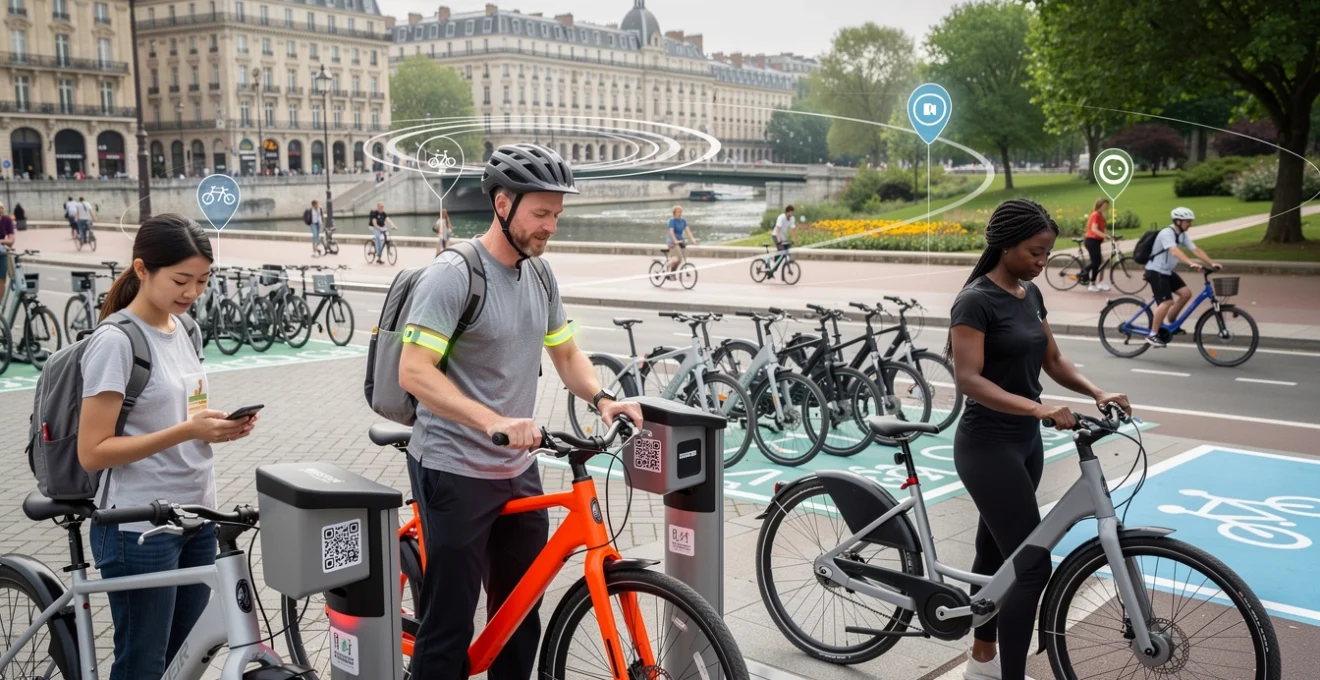
Urban bike-sharing systems have revolutionised how tourists explore cities worldwide, transforming from simple convenience tools into sophisticated transportation networks that span continents. With over 2,500 bike-sharing programmes operating across 83 countries, travellers today face an increasingly complex landscape of technologies, payment systems, and regulations that vary dramatically from one destination to another. The global bike-sharing market, valued at £4.6 billion in 2023, continues expanding rapidly as cities integrate these systems into their broader sustainable transport strategies.
Modern bike-sharing platforms represent far more than traditional bicycle rentals, incorporating cutting-edge technologies such as GPS tracking, geofencing capabilities, and artificial intelligence-driven fleet management systems. For tourists, understanding these technological foundations becomes essential when navigating unfamiliar urban environments. The complexity increases when considering that each system operates under distinct regulatory frameworks, safety requirements, and operational protocols that reflect local infrastructure capabilities and cultural preferences.
Global Bike-Sharing system architectures and operational models
Contemporary bike-sharing infrastructure operates through three primary architectural models, each presenting unique advantages and challenges for international travellers. Understanding these fundamental differences enables tourists to prepare appropriately for their chosen destinations and anticipate potential operational variations they might encounter across different cities.
Docked station networks: citibike new york and santander cycles london
Station-based docked systems represent the most established bike-sharing architecture, characterised by physical docking stations distributed throughout urban areas. These networks require users to collect and return bicycles at designated stations, creating predictable availability patterns and centralised maintenance protocols. Citibike in New York operates over 1,700 stations with approximately 27,000 bicycles, whilst London’s Santander Cycles maintains roughly 800 stations across the capital.
The primary advantage of docked systems lies in their reliability and maintenance standards. Bicycles undergo regular inspections when returned to stations, ensuring consistent quality for subsequent users. However, tourists must plan routes carefully, considering station availability at their intended destinations. Peak demand periods can result in either full stations preventing returns or empty stations limiting access to bicycles.
Station-based systems typically offer the most reliable bicycle conditions and predictable pricing structures, making them ideal for tourists seeking dependable urban transport options.
Dockless GPS-Enabled systems: lime and bird fleet management
Dockless bike-sharing systems utilise GPS technology and integrated locking mechanisms, allowing users to locate, unlock, and secure bicycles virtually anywhere within designated operating zones. Companies like Lime and Bird have pioneered this approach, deploying fleets that users can access through smartphone applications without requiring fixed infrastructure. This flexibility appeals particularly to tourists exploring areas with limited station coverage.
However, dockless systems present unique challenges for international visitors. Bicycle distribution patterns can be unpredictable, with popular tourist destinations sometimes experiencing shortages whilst residential areas accumulate excess inventory. Additionally, some cities impose parking restrictions requiring users to leave bicycles in specific zones, potentially creating confusion for unfamiliar tourists who might inadvertently violate local regulations.
Hybrid infrastructure models: capital bikeshare washington DC integration
Hybrid systems combine elements of both docked and dockless technologies, offering users flexibility whilst maintaining some infrastructure-based reliability. Washington DC’s Capital Bikeshare exemplifies this approach, allowing users to return bicycles either to traditional docking stations or designated parking areas equipped with smart locks. This model addresses some limitations of purely dockless systems whilst preserving user convenience.
For tourists, hybrid systems often provide the most adaptable solution, accommodating various trip patterns and destination types. The redundancy built into these networks reduces the risk of being unable to return bicycles, whilst still offering the freedom to explore areas not served by traditional stations. Understanding which return options are available becomes crucial for planning efficient tourism itineraries.
QR code authentication protocols and mobile app interfaces
Modern bike-sharing systems predominantly utilise QR code scanning for bicycle access, requiring tourists to download specific applications before use. Each system typically maintains its proprietary app, though some companies operate across multiple cities with unified platforms. The authentication process generally involves scanning a QR code displayed on the bicycle, triggering an unlock sequence managed through cloud-based systems.</p
This process may appear straightforward, but tourists frequently encounter practical obstacles: language barriers in the app interface, unfamiliar password requirements, or mandatory identity verification steps such as scanning a passport or driving licence. You may also need to agree to local terms of service that define your liability in case of accidents or fines. Checking these conditions before you arrive – and downloading the app over reliable Wi‑Fi rather than mobile data – helps you avoid delays when you first reach the docking station. Where possible, we recommend setting up your account and completing any ID verification while still at home, so that your first ride abroad starts with a simple QR scan rather than 20 minutes of form-filling on the pavement.
International payment processing and authentication requirements
Beyond the hardware and software you see on the street, every international bike-sharing journey runs on complex payment infrastructure. When you tap your card or phone in a foreign city, your transaction passes through multiple banks, payment processors, and fraud-detection systems in seconds. For tourists, this can translate into unexpected card declines, higher-than-anticipated pre-authorisations, or confusing currency conversions. Understanding how these systems work gives you more control over costs and reduces the risk of being stranded next to a locked bike that your card will not unlock.
Credit card Pre-Authorisation limits and security deposits
Most large bike-sharing platforms require a pre-authorisation hold on your card before your first ride. This temporary charge, which may range from £20 to over £200 depending on the city and the type of bicycle (standard, e‑bike, or cargo bike), acts as a security deposit against theft or damage. Whilst the final amount charged is usually just your actual ride fees, the hold can reduce your available credit for several days, particularly when you use a foreign currency card. If you are travelling on a tight budget or relying on a single debit card, this can be an unwelcome surprise.
To avoid problems, check the service’s terms for maximum pre-authorisation amounts and daily ride caps before you sign up. Some operators, especially municipal schemes, offer lower deposits for short-term passes bought with a local bank card, while international credit cards may attract higher holds due to perceived risk. You should also enable international payments and “card not present” transactions on your account before leaving home, as many bike-sharing payments are processed as online transactions even when you tap a physical terminal at the station.
Digital wallet integration: apple pay, google pay, and alipay compatibility
Digital wallets such as Apple Pay, Google Pay, and Alipay have become popular ways to pay for bike-sharing abroad, particularly in Asia, North America, and major European capitals. These wallets often provide an extra authentication layer (such as Face ID or fingerprint recognition) that satisfies local security requirements while masking your actual card details from the operator. For tourists, digital wallets can reduce the risk of card cloning and simplify the process of switching between different local schemes without repeatedly entering card numbers.
However, compatibility remains uneven across regions. A system in Beijing or Shanghai may fully support Alipay and WeChat Pay but reject foreign debit cards, whilst a network in Paris or New York may only accept Apple Pay and Google Pay linked to Visa or Mastercard. Before you rely on your phone alone, verify whether the bike-sharing service accepts your preferred wallet and whether in‑app payments require a backup physical card for verification. If you travel as a family or group, consider adding a shared card to each person’s digital wallet so multiple riders can unlock bikes without passing a single plastic card around.
Tourist-specific payment solutions and temporary membership options
Many large bike-sharing schemes now offer tourist-focused passes that simplify payments and avoid complex subscription structures. These short-term memberships – often available as 24‑hour, 72‑hour, or week-long passes – typically bundle unlimited short rides (for example, 30 or 45 minutes each) into a fixed fee. For visitors who plan to make several trips per day, this model can be significantly cheaper than paying per minute, especially with e‑bike surcharges. It also reduces your exposure to high pre-authorisation amounts, as some city-run schemes cap deposits for these passes.
When choosing between pay‑as‑you‑go and tourist passes, think about how you will actually use bike-sharing abroad. Will you make many small hops between attractions, or just one long ride along a river or coastal path? Compare the free-ride duration included in each option, any overtime penalties, and whether e‑bike usage is priced differently from classic bikes. Also, note that some services require automatic renewal unless you manually cancel, which can lead to charges appearing on your statement weeks after you return home. Take a screenshot of your chosen tariff and its conditions so you have a clear record if you need to query a payment later.
Currency exchange rates and dynamic pricing algorithms
When you unlock a bike in a foreign city, the amount you see in the app is almost always displayed in the local currency. Your bank or card provider then converts this amount to your home currency using its own exchange rate and, in many cases, an additional foreign transaction fee of 1–3%. On top of this, some international bike-sharing platforms employ dynamic pricing algorithms, adjusting per-minute rates based on demand, time of day, or special events. As a result, two rides of similar length may cost noticeably different amounts, making it harder for tourists to predict their spending.
If cost control is a priority, we recommend disabling “currency conversion” by foreign ATMs or third-party services and letting your own bank handle the exchange rate instead. Monitor notifications from your banking app after your first few rides to confirm the effective per‑ride cost in your home currency. Dynamic pricing can work in your favour as well – for example, by offering discounted off-peak rates in the middle of the day – so consider riding outside local rush hours where possible. Think of it like airline pricing on a much smaller scale: a bit of flexibility in timing can stretch your bike-sharing budget considerably further.
Regional traffic laws and cycling infrastructure compliance
Once payment is sorted and your bike is unlocked, your next challenge is navigating unfamiliar traffic laws and cycling infrastructure. Whilst bike-sharing abroad feels similar from the saddle, the rules that govern where you may ride, how you interact with pedestrians, and your priority at junctions vary sharply across countries – and sometimes even between neighbouring cities. Ignoring these regulations does not just risk fines; it can also place you in conflict with drivers, tram lines, or pedestrians who expect you to behave in a locally standardised way.
Key differences include which side of the road you must ride on, whether you are legally required to use marked cycle lanes when they exist, and how you should approach traffic lights, pedestrian crossings, and roundabouts. For example, some European cities allow cyclists to turn right (or left, in left‑hand-traffic countries) at red lights when a specific sign is present, whilst others fine riders heavily for the same manoeuvre. Before you set off, take a few minutes to research local cycling rules via official city transport websites or tourist information pages, and consider planning routes that maximise segregated cycle infrastructure rather than simply following the shortest path on a map.
Safety equipment standards and helmet legislation across jurisdictions
Safety equipment requirements form another crucial dimension of riding shared bikes abroad. In some cities, you will see almost no one wearing helmets, while in others, helmet use is legally mandated for certain age groups or for all riders on public roads. Reflectors, front and rear lights, and even reflective clothing may be required at night, with enforcement varying from gentle reminders to on‑the‑spot fines. For tourists, the difficulty lies in balancing legal compliance, personal safety, and the practical limitations of packing or hiring additional equipment on a short trip.
European EN 1078 helmet certification requirements
Within Europe, most cycle helmets sold for road and commuter use must comply with the EN 1078 standard, which specifies performance criteria for shock absorption, strap retention, and field of vision. This certification is not merely a technical detail; it often appears in insurance conditions and legal discussions following accidents. If you bring your own helmet from abroad, especially from outside the European Economic Area, local authorities will not typically check its certification at the roadside, but some organised tours or event organisers may insist on EN 1078-compliant equipment for liability reasons.
When using bike-sharing in European cities, you will usually need to supply your own helmet, as public schemes rarely provide them for hygiene and logistical reasons. If you decide to purchase a helmet on arrival, look for the EN 1078 marking inside the shell or on the packaging. Remember that a helmet is only one part of a broader safety system: proper fit, correctly adjusted straps, and appropriate riding behaviour in traffic arguably influence your real-world protection as much as the certification stamp itself.
Mandatory safety equipment: reflective gear and lighting systems
Most modern bike-sharing fleets come equipped with integrated front and rear lights, often powered by hub dynamos or internal batteries that activate automatically when you start riding. Nevertheless, legal requirements around lighting can be more demanding than the basic equipment provides. Some countries mandate steady (rather than flashing) lights, specific visibility distances, or additional reflectors on pedals and wheels. If you intend to ride after dark, it is wise to verify that both lights function correctly before leaving the docking station and to report any faults through the app.
Reflective clothing and accessories are another area where laws and recommendations diverge. In France, for example, cyclists riding outside urban areas at night must wear a high-visibility vest, whereas in many other jurisdictions such items are strongly encouraged but not mandatory. Tourists seldom travel with full reflective gear, but a compact reflective armband or strap can materially improve your visibility without taking much space in your luggage. Think of lighting and reflectors as your “digital profile” on the road: the clearer you appear to other road users, the easier it is for them to predict and accommodate your movements.
Insurance coverage gaps and personal liability considerations
Insurance is often the most overlooked aspect of bike-sharing abroad. Many travellers assume that standard travel insurance will cover any cycling incident, only to discover exclusions for motor-traffic accidents, e‑bikes above certain power thresholds, or commercial hire vehicles. At the same time, bike-sharing operators usually limit their own liability through terms of service, placing responsibility for injuries to others or damage to property squarely on the rider. In dense urban environments, even a minor collision with a pedestrian or parked car can become an expensive legal matter.
Before you ride, review your travel insurance and any existing personal liability policies to confirm how they treat cycling and bike-sharing specifically. Pay attention to requirements such as wearing a helmet where legally mandated, obeying local traffic laws, and avoiding intoxication – breaches can invalidate cover. If your policy leaves gaps, some bike-sharing platforms offer optional insurance add‑ons during registration, though coverage levels and conditions vary widely. As with any form of mobility abroad, it is better to clarify these issues in advance than to rely on assumptions after an incident has occurred.
Geofencing technology and restricted zone navigation
As cities try to balance the benefits of bike-sharing with concerns about congestion, pedestrian safety, and visual clutter, geofencing technology has become a central tool for regulating where and how shared bikes may operate. Using GPS data and digital maps, operators define “virtual boundaries” that influence everything from maximum speed to where you can end a ride. For tourists, these invisible rules can be confusing: your bike may suddenly slow down, refuse to lock, or generate penalty fees if you leave it in a prohibited area. Understanding geofencing helps you interpret these behaviours not as malfunctions, but as deliberate safety and management features.
GPS boundary enforcement in amsterdam canal districts
Amsterdam illustrates how geofencing can protect particularly sensitive urban environments. In the historic canal districts, with their narrow pavements and heavy pedestrian flows, authorities have imposed strict controls on shared micromobility. Some operators geofence entire streets or squares, preventing users from ending rides or even from riding through at full speed. When you cross into such a zone, your app may display a warning, your e‑bike assistance may cut to a lower level, or the system may log your presence for potential follow‑up if you park improperly.
From a user’s perspective, these restrictions can feel abrupt – especially when you are following a general-purpose navigation app that does not know about operator-specific geofences. To avoid frustration, always consult the bike-sharing app’s in‑built map, which typically overlays restricted areas, recommended parking locations, and service boundaries. Think of geofenced canal districts as “museum galleries without walls”: they remain open to the public, but your behaviour and speed are curated to preserve the character and safety of the space.
No-ride zones: central park NYC and hyde park london restrictions
Even in cities that actively promote cycling, certain parks and pedestrian-heavy zones limit or prohibit the use of shared bikes. Central Park in New York and Hyde Park in London both contain areas where bike-sharing operators either disable rentals entirely or enforce strict dismount rules. In practice, this means your app may refuse to start a ride within these zones, or your contract may require you to walk your bike along specific paths rather than cycling freely. Local signage may not always distinguish between privately owned bikes and shared schemes, adding another layer of ambiguity for visitors.
To stay compliant, look for “no-ride” or “dismount” indications within your bike-sharing app and on physical signs at park entrances. If in doubt, err on the side of walking your bike until you exit the restricted area. Ignoring these rules may result in automated warnings, fines, or even temporary suspension of your account. Remember that these zones often exist to protect shared spaces where pedestrians, children, and wildlife have priority, so respecting them is part of being a considerate guest in the city.
Tourist area speed limitations and automated brake systems
In some high-density tourist districts, bike-sharing operators implement automatic speed limitations based on location. Using a combination of GPS data and built‑in sensors, e‑bikes can reduce motor assistance or apply subtle power cuts once you exceed a configured threshold – often 15–20 km/h – within marked zones. While the bike will not usually apply the physical brakes without your input, the loss of assistance can feel like you are riding into a strong headwind. This form of “soft braking” is designed to give you more time to react to unpredictable movements by pedestrians, taxis, and delivery vehicles in crowded streets.
How should you adapt to these automated controls? First, anticipate slower progress through major tourist areas and plan extra time into your itinerary instead of trying to “fight” the bike’s behaviour. Second, maintain a relaxed riding style with both hands ready on the brake levers, as reduced assistance can tempt riders to overcompensate with sudden pedal bursts. Consider speed-limited zones as analogous to automatic speed limiters in modern cars: they may slightly delay your journey, but they significantly reduce the risk of serious collisions in complex urban environments.
Cross-border usage: EU schengen area Bike-Share interoperability
One of the more ambitious promises of modern mobility is the idea that a single subscription could unlock bikes across multiple countries, particularly within integrated regions such as the EU Schengen Area. In practice, full interoperability remains rare. While some operators run services in several countries under one app – allowing you to use the same login and payment method – individual cities often maintain separate tariffs, rules, and service boundaries. Crossing a national border on a shared bike is usually prohibited, and geofencing will typically prevent you from ending a ride outside the authorised metropolitan area.
For tourists planning multi-country itineraries, the most realistic approach is to think of each city’s bike-sharing scheme as a distinct service, even when brands or apps overlap. Set up your accounts before you travel, check whether your preferred payment method functions in each jurisdiction, and familiarise yourself with local regulations city by city. Over time, we can expect more integration and roaming-style agreements, but for now, seamless cross-border bike-sharing is closer to an aspirational vision than everyday reality. Treat each new city as a fresh opportunity to learn how local planners have adapted the same basic idea – a shared bicycle – to their unique legal, cultural, and technological context.