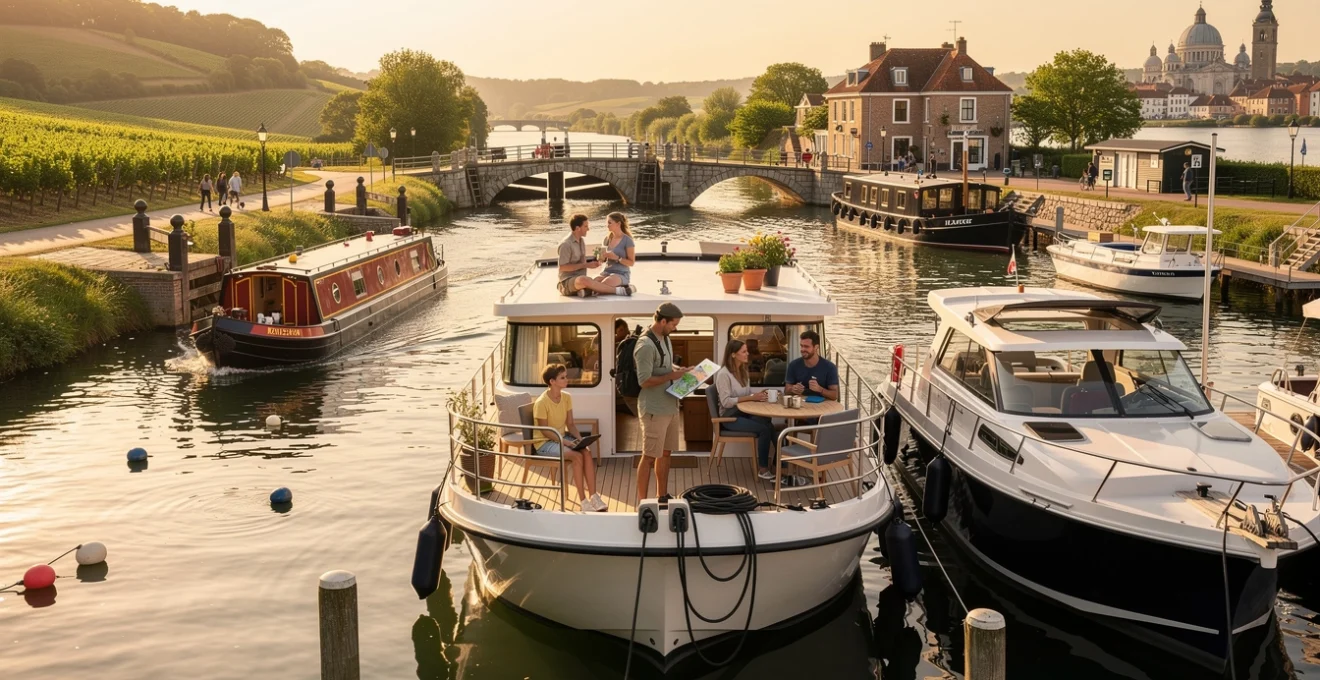
The gentle lapping of water against the hull, panoramic views that change with every mile, and the freedom to explore hidden waterways at your own pace – houseboat holidays represent the pinnacle of experiential travel. This distinctive form of accommodation has experienced remarkable growth, with the global houseboats market projected to reach $15 billion by 2032, driven by travellers seeking unique, flexible escapes that combine adventure with comfort.
European waterways offer some of the world’s most sophisticated houseboat experiences, from the historic canals of England to the pristine lakes of Germany’s Mecklenburg region. Whether you’re navigating narrow locks on traditional narrowboats or cruising expansive waters aboard luxury catamarans, these floating holidays provide an unparalleled opportunity to discover destinations from an entirely different perspective.
The appeal extends beyond mere novelty – houseboat holidays deliver exceptional value, often proving 18-34% more cost-effective than equivalent hotel-based trips for groups. Modern vessels equipped with full amenities, combined with the flexibility to wake up in a new location each morning, create a travel experience that’s both practical and magical.
Narrowboat rentals vs Self-Drive cruiser hire: vessel types for inland waterway navigation
Selecting the appropriate vessel type fundamentally shapes your houseboat experience. The choice between traditional narrowboats, wide-beam cruisers, and modern houseboats depends on your intended waterways, group size, and desired level of comfort. Each vessel category offers distinct advantages and limitations that savvy travellers should understand before booking.
Traditional canal narrowboats on the grand union and oxford canals
Narrowboats, measuring typically 6-7 feet wide and up to 72 feet long, represent the quintessential British canal experience. These vessels excel on historic waterways like the Grand Union and Oxford Canals, where their slender profile allows navigation through original Victorian locks. Modern narrowboats accommodate 2-12 people across ingeniously designed interiors that maximise every inch of space.
The traditional narrowboat layout features a saloon, galley, and sleeping quarters arranged linearly. Premium models include central heating, shower rooms, and fully equipped kitchens with four-burner hobs and full-size refrigerators. The intimate scale creates a cosy atmosphere perfect for couples or small families seeking an authentic canal experience.
Wide-beam cruiser hire for norfolk broads and river thames navigation
Wide-beam cruisers, spanning 10-14 feet in width, offer significantly more living space whilst maintaining manoeuvrability on broader waterways. These vessels prove ideal for the Norfolk Broads, River Thames, and continental European canals designed for commercial traffic. The additional beam translates to more comfortable sleeping arrangements and expanded social areas.
Contemporary wide-beam designs incorporate separate bedrooms, spacious lounges, and often feature fly-bridges for enhanced navigation visibility. Luxury specifications may include dishwashers, washing machines, and sophisticated entertainment systems. These cruisers typically accommodate 4-12 passengers with superior comfort levels compared to narrowboats.
Dutch barge conversions for continental waterway cruising
Converted Dutch barges represent the premium segment of houseboat accommodation, often exceeding 100 feet in length with beam measurements of 15-20 feet. These vessels, originally designed for cargo transport, provide exceptional space and stability. Many conversions retain original features like cargo holds transformed into magnificent living areas with soaring ceilings.
The substantial size allows for multiple separate cabins, full-size bathrooms, and expansive deck spaces ideal for entertaining. High-end conversions feature hot tubs, wine cellars, and professional-grade galleys. These barges excel on major European rivers and canal systems where size restrictions don’t apply.
Catamaran houseboats for coastal marina mooring
Modern catamaran houseboats blend stability with contemporary amenities, proving particularly effective for coastal waters and large inland lakes. The twin-hull design provides exceptional stability and spacious accommodation across multiple levels. These vessels often feature panoramic windows
with 360-degree views, generous outdoor decks and hotel-style interiors. Catamaran houseboats are particularly popular for marina-based stays on the Mediterranean and Atlantic coasts, offering the novelty of life afloat without the demands of offshore sailing. Guests typically remain on a fixed berth with access to full marina facilities, yet still enjoy the gentle motion of the water and direct access to paddleboards, kayaks, or nearby beaches.
For travellers prone to seasickness, the inherent stability of twin hulls is a considerable advantage compared to monohull yachts. Drafts are generally shallow, allowing access to sheltered bays and lagoon-style marinas. If your ideal houseboat holiday combines coastal scenery, stylish design, and easy shore access, catamaran-style floating homes and pontoon houseboats provide an appealing alternative to traditional canal craft.
Premium houseboat destinations: european inland waterway networks
Europe’s inland waterways form an intricate network of navigable rivers, canals, and lakes, each with its own character and cruising style. From vineyard-lined canals in France to vast lake systems in Germany, these destinations offer houseboat holidays that blend cultural immersion with slow travel. Choosing the right region is as important as selecting your vessel, particularly if you want a balance of nature, heritage towns, and convenient moorings.
Most premium houseboat destinations in Europe are designed with self-drive cruising in mind, meaning you can navigate without a formal licence after a short induction in designated areas. Navigation is generally straightforward, with well-marked channels, lock keepers on busy sections, and comprehensive pilot guides. Whether you prefer a weekend break or a multi-week expedition, the following regions represent some of the finest houseboat holiday routes in Europe.
Canal du midi and burgundy wine region waterway routes
The Canal du Midi, a UNESCO World Heritage Site, is one of Europe’s most iconic self-drive waterways. Stretching approximately 240 kilometres between Toulouse and the Mediterranean, it offers a quintessential French houseboat holiday: plane-tree-lined towpaths, stone bridges, and sleepy wine villages. Cruising speeds are low, usually around 6-8 km/h, which encourages you to slow down, moor frequently, and explore local markets and vineyards.
Further north, Burgundy’s waterway network combines the Canal de Bourgogne, Canal du Nivernais, and Yonne River, threading through renowned wine appellations. Here, a houseboat effectively becomes your mobile base for wine tasting and gastronomic excursions. Expect numerous manual locks, charming lock-keeper cottages selling regional produce, and moorings within walking distance of medieval towns. For travellers dreaming of a “floating wine tour”, these Burgundy routes offer one of the best houseboat holiday itineraries in Europe.
Amsterdam canal ring and frisian lakes system
The Netherlands is almost purpose-built for houseboat holidays, with its dense lattice of canals, rivers, and lakes. In Amsterdam, the historic canal ring provides an atmospheric backdrop of gabled houses, arched bridges, and bustling waterside cafés. While navigating directly within the central ring demands heightened awareness due to busy traffic, many operators offer comfortable moorings just outside the core, letting you commute into the city by bike or tram.
Beyond Amsterdam, the Frisian Lakes in the north present a very different environment: wide-open waters, low horizons, and traditional watersports hubs like Sneek and Heeg. Houseboat routes link these lakes via short canal sections, enabling flexible itineraries that mix town visits with nights at quiet rural moorings. If you enjoy combining urban exploration with sailing-style open water, a Frisian Lakes itinerary delivers a distinctive, wind-swept variation on the classic canal boat holiday.
Shannon-erne waterway and lough derg navigation
Ireland’s Shannon–Erne Waterway connects the River Shannon with the Erne system, creating one of Europe’s most tranquil houseboat cruising regions. The route meanders through rolling countryside, peat bog landscapes, and small waterside communities where pub culture is integral to the experience. Locks along the Shannon–Erne are largely automated, making operation straightforward for first-time skippers after basic instruction.
Further south, Lough Derg forms a vast, sheltered lake with multiple harbour villages, blue-flag marinas, and scenic anchorages. The combination of broad waters and marked navigation channels suits modern cruisers and larger houseboats, with ample room for watersports and fishing. For travellers seeking a slower-paced, nature-rich houseboat holiday with easy-going navigation and warm local hospitality, the Shannon basin and Lough Derg are compelling options.
Brandenburg lake district and mecklenburg waterway park
Germany’s Brandenburg Lake District and the adjoining Mecklenburg Lake Plateau offer more than 700 kilometres of navigable waterways, many classified as charter licence areas. In these zones, you can operate a houseboat without a formal boating licence after a structured three-hour induction, making them ideal for beginners. The interconnected lakes, rivers, and canals create a vast playground for those seeking pure relaxation on the water.
In Mecklenburg, you’ll glide across glittering lakes like the Müritz and Plauer See, bordered by forests, wetlands, and nature reserves rich in birdlife. Brandenburg, often known as the “blue paradise”, surrounds Berlin with a mosaic of lakes and small towns, blending wilderness with cultural excursions. Houseboat holidays here feel almost like a moving lakeside cabin stay, where you can anchor in secluded bays or tie up near historic towns and spa resorts.
Venice lagoon and po delta houseboat moorings
The Venice Lagoon offers a unique environment for houseboat holidays, combining centuries-old maritime heritage with complex tidal channels and shallow sandbanks. Designated houseboat routes keep navigation manageable, guiding you between island communities such as Burano, Torcello, and Murano. Rather than staying directly in Venice’s crowded historic centre, you can moor in quieter lagoon marinas and visit the city by vaporetto or water taxi.
South of the lagoon, the Po Delta region provides a calmer, nature-focused alternative. A network of canals and lowland rivers threads through wetlands rich in birdlife, making it an attractive destination for eco-conscious travellers. Moorings often lie close to long sandy beaches and fishing villages, where you can sample fresh seafood and regional wines. For guests who want a houseboat holiday that blends culture, coastal scenery, and wildlife, the Venice and Po systems deliver a memorable, slightly more adventurous experience.
Houseboat charter operators: fleet specifications and booking platforms
Selecting a reputable charter operator is essential for a safe and enjoyable houseboat holiday. Major European providers offer standardised safety protocols, clear pricing structures, and online booking tools that simplify trip planning. While fleet styles differ—from classic Penichette barges to ultra-modern cruisers—the fundamentals remain consistent: well-maintained vessels, comprehensive briefings, and responsive support.
Before booking, it’s worth comparing fleet age, onboard amenities, and base locations rather than focusing solely on headline price. A slightly higher charter fee often buys better fuel efficiency, improved insulation, and upgraded equipment, which can transform a good trip into an exceptional one. The following operators highlight some of the key models and services you can expect when arranging a houseboat holiday in Europe.
Le boat fleet management and online reservation systems
Le Boat operates one of the largest houseboat fleets in Europe, with bases across France, Germany, the UK, Ireland, and Italy. Their vessels are organised into categories such as Budget, Comfort, and Premier, reflecting age, fit-out level, and onboard technology. Newer boats typically feature bow and stern thrusters for easier manoeuvring, particularly useful when entering locks or mooring in tight marinas.
The Le Boat online platform functions much like a hotel booking engine: you select your region, travel dates, and party size, then filter by cabin configuration, pet-friendly status, or air conditioning. Transparent pricing outlines the base charter fee, optional extras (such as bicycles, Wi-Fi, or cleaning packages), and mandatory local charges. For travellers who value a self-service, book-anytime approach, Le Boat’s digital reservation system makes planning a houseboat holiday straightforward and relatively frictionless.
Locaboat holidays vessel categories and pricing structures
Locaboat Holidays is renowned for its distinctive Penichette barges, inspired by traditional French working boats. These vessels emphasise efficient use of space, robust construction, and excellent visibility from raised wheelhouses or flybridges. Layouts often suit couples and small groups who prefer separate cabins and a generous saloon, creating an experience closer to a compact floating cottage than a conventional motor cruiser.
Locaboat’s pricing structure typically includes a base charter fee, variable fuel consumption charges, and optional extras like bike hire, barbecues, or priority boarding. Early-booking discounts and low-season rates can significantly reduce overall costs, especially for longer itineraries. If you’re looking for a classic European canal barge experience with a strong brand heritage, Locaboat’s Penichette range offers a reliable, characterful option.
ABC boat hire insurance packages and damage deposit protocols
ABC Boat Hire focuses primarily on UK waterways, offering narrowboats and cruisers from multiple marinas across the canal and river network. One of the key considerations when booking with ABC—or any similar operator—is understanding insurance coverage and damage deposit requirements. Most charters involve a refundable security deposit that covers minor accidental damage, alongside a non-refundable waiver that limits your liability.
ABC typically presents a clear choice between paying a higher refundable deposit or opting for a lower deposit combined with a collision damage waiver. Reading the terms in advance helps avoid surprises if, for example, you scrape a lock wall or damage a propeller. Think of this process like hiring a car: you want to know exactly what is covered before you depart, so you can relax and enjoy your houseboat holiday without worrying about every minor bump.
Crown blue line premium fleet and concierge services
Crown Blue Line, now integrated into larger brands but still synonymous with premium European river cruising, set the standard for high-spec self-drive fleets. Vessels under this banner often feature en-suite cabins, powerful heating and cooling systems, and higher cruising speeds where permitted. These features make them particularly attractive for early or late-season journeys when temperatures can fluctuate.
In addition to hardware, Crown Blue Line-style operations often emphasise concierge-style services: pre-arrival grocery provisioning, route planning advice, and assistance with restaurant or winery bookings along your itinerary. For travellers who want a more curated experience—something between bareboat charter and fully crewed cruising—this service level can be a deciding factor. It transforms a houseboat holiday from simple boat rental into a comprehensive, personalised travel package.
Lock navigation techniques and waterway safety protocols
For many first-time houseboat guests, navigating locks is both the most daunting and the most rewarding part of inland cruising. A lock is essentially an aquatic lift, raising or lowering your vessel between sections of water at different levels. Once you’ve mastered the basic sequence—enter, secure, fill or empty, and exit—the process becomes almost meditative, punctuating your day with gentle rhythms rather than stress.
Before departure, reputable operators provide a practical demonstration and clear written instructions, often accompanied by diagrams. As a rule of thumb, always reduce speed well before a lock approach, brief your crew, and assign simple roles: one person at the helm, one or two handling lines, and someone ready to communicate with lock keepers where present. Using normal speaking voices and clear hand signals is usually sufficient; in busy seasons, patience and courtesy are as important as technical skill.
Waterway safety protocols extend beyond lock operation. You’ll be expected to observe posted speed limits, respect “no wash” zones, and keep to the right-hand side of channels in most European countries. Wearing lifejackets on deck, especially for children or non-swimmers, is strongly recommended. Think of your houseboat as a slow-moving vehicle: staying alert, avoiding alcohol while at the helm, and checking weather forecasts daily will greatly reduce the likelihood of any incidents.
Environmental safety is equally crucial. Most inland waterways have strict rules on waste disposal, prohibiting the discharge of black water and detergents into the canal or river. Your briefing will cover how to use onboard holding tanks and where to find pump-out facilities. By following these guidelines, you help protect fragile ecosystems and ensure that houseboat holidays remain sustainable for future generations of travellers who crave life on the water.
Onboard amenities: galley equipment and sanitation systems
Modern houseboats are designed to function as self-contained holiday homes, with galleys (kitchens) and bathrooms that rival compact apartments. A typical galley will include a gas or electric hob, oven or grill, refrigerator, sink with hot and cold water, and ample storage for provisions. Higher-end vessels may feature microwaves, coffee machines, and even dishwashers, making it easy to prepare everything from simple breakfasts to multi-course dinners on board.
When considering a houseboat holiday, check the detailed inventory for cookware, utensils, and tableware. Many fleets supply pots, pans, crockery, and basic kitchen tools as standard, though you may wish to bring favourite knives, spices, or speciality items. Treat the galley as you would a well-equipped holiday rental: with a little planning, you can significantly reduce dining costs compared to eating out every night, without sacrificing culinary enjoyment.
Sanitation systems on houseboats are carefully engineered to balance comfort with environmental compliance. Most modern vessels use marine toilets connected to holding tanks, which store waste until it can be pumped out at designated stations. Showers and washbasins typically share a hot water system heated by the engine, shore power, or dedicated heaters, giving you a predictable supply of warm water after cruising.
To keep systems functioning smoothly, operators will advise using only supplied toilet paper, avoiding chemical cleaners that can damage pumps, and reporting any anomalies early. Think of the plumbing like a compact version of a motorhome or RV: treat it gently and it will work reliably throughout your journey. If you’re concerned about facilities before booking, reviewing deck plans and technical specifications can reassure you that a houseboat holiday offers far more comfort than the “camping on water” analogy might suggest.
Mooring regulations and marina facility access across european waterways
Mooring rules vary between regions, but most European waterways offer a combination of official visitor pontoons, public quays, marina berths, and informal rural spots where overnight stays are permitted. In many French and German regions, you can often tie up along the towpath or bank where signs do not prohibit mooring, provided you avoid blocking lock landings, bridges, or private properties. This flexibility is one of the chief pleasures of a houseboat holiday: you can decide on the day whether to overnight in a bustling port or a quiet backwater.
Marinas and harbour facilities usually charge a nightly fee based on vessel length, which often includes access to shore power, potable water, showers, and sometimes Wi-Fi and laundry services. Prices can range from modest in rural areas to higher in premium locations such as central Amsterdam or the Venice Lagoon. Budget-conscious travellers often alternate between free or low-cost rural moorings and occasional marina nights to recharge batteries, refill tanks, and enjoy a hot shower with unlimited water.
Across Europe, local regulations may restrict mooring duration in popular spots—24 to 72 hours is common—to ensure turnaround for all users. Some areas, particularly nature reserves or sensitive habitats, prohibit bank mooring entirely to protect wildlife and prevent erosion. Your skipper’s handbook and onboard charts will flag these zones clearly. When in doubt, look for signage on the bank or ask a harbour master; a brief conversation can prevent fines or the awkward experience of being asked to move late in the evening.
As houseboat holidays continue to grow in popularity, many municipalities are investing in improved visitor moorings and shore facilities. This means you can often step off your boat directly into historic town centres, within walking distance of restaurants, cultural attractions, and transport links. By understanding basic mooring etiquette—approaching slowly, securing lines properly, and keeping noise to a minimum after dark—you’ll not only stay within regulations but also contribute to the welcoming atmosphere that makes European waterway cruising so special.