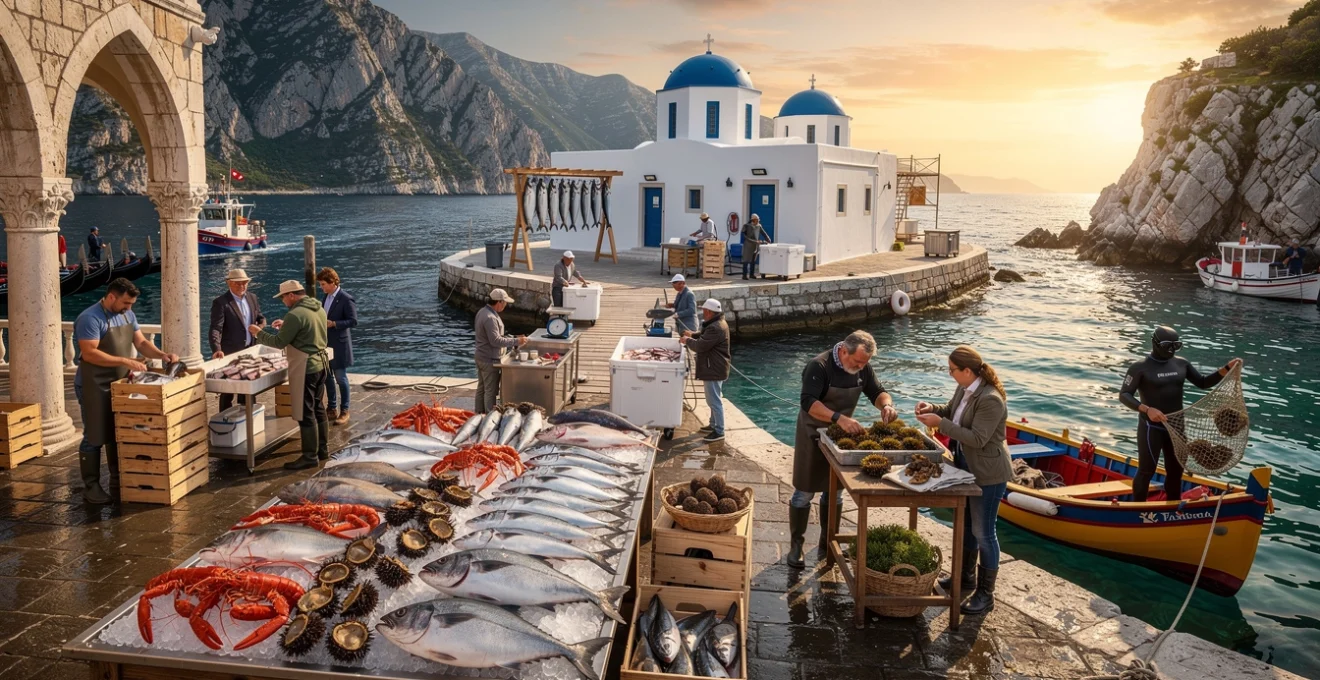
The world’s most exceptional seafood destinations share a common thread: an unwavering commitment to ultra-fresh coastal cuisine that connects diners directly to the ocean’s bounty. These remarkable locations have perfected the delicate art of transforming the day’s catch into extraordinary culinary experiences, where the time between net and plate is measured in hours rather than days. From the bustling fish markets of Venice to the pristine waters of the Lofoten Islands, these coastal havens represent the pinnacle of maritime gastronomy.
What sets these destinations apart isn’t merely their proximity to productive fishing grounds, but rather their sophisticated understanding of how to maintain and enhance the natural qualities of fresh seafood. Each location has developed unique protocols, preservation techniques, and culinary traditions that ensure visitors experience seafood at its absolute peak. These coastal communities have mastered the complex logistics of bringing ocean-fresh flavours to the table while preserving the integrity of delicate marine proteins.
The pursuit of ultra-fresh coastal cuisine has driven these destinations to innovate continuously, developing everything from advanced cold-chain management systems to time-honoured preservation methods passed down through generations. Whether you’re seeking the crystalline sweetness of just-caught sea urchins or the firm texture of properly handled deep-water fish, these locations offer unparalleled access to the ocean’s finest offerings.
Mediterranean coastal markets: adriatic and aegean fresh catch protocols
The Mediterranean basin hosts some of the world’s most sophisticated fresh seafood markets, where centuries-old trading traditions blend seamlessly with modern quality control systems. These coastal markets have developed intricate protocols for handling the region’s diverse marine species, from the delicate flesh of Mediterranean sea bass to the robust flavours of Adriatic shellfish. The warm Mediterranean climate demands particularly stringent temperature control measures, leading to innovations in ice management and rapid distribution networks that ensure optimal freshness.
Mediterranean fish markets operate on principles of transparency and traceability that have evolved over generations of trade. Vendors display their catches with detailed information about fishing methods, precise catch locations, and landing times. This level of detail allows discerning buyers to make informed decisions about quality and freshness. The region’s markets have also pioneered grading systems that classify seafood based on visual appearance, texture, and aroma—factors that experienced buyers can assess within seconds of examination.
Venetian fish market rialto: dawn auction systems and quality grading
The legendary Rialto fish market operates according to traditions established during the height of the Venetian Republic, yet incorporates modern quality control measures that ensure exceptional standards. Auctions begin before dawn, with buyers examining catches by torchlight and artificial illumination designed to reveal the subtle colour variations that indicate peak freshness. Professional buyers can distinguish between fish caught yesterday evening and those landed at dawn, adjusting their bidding strategies accordingly.
The Rialto’s grading system evaluates Mediterranean species according to specific criteria: the clarity of eyes, the firmness of flesh, the brightness of gills, and the natural slime coating that indicates recent capture. Venetian fishmongers have developed an almost supernatural ability to assess quality through touch, pressing gently on fish flanks to test the elasticity that signals proper handling and storage. This expertise, passed down through family businesses spanning generations, represents one of Europe’s most sophisticated informal quality control systems.
Santorini harbour landing procedures for daily Boat-to-Table supply
Santorini’s unique volcanic geography creates exceptional fishing conditions in the deep waters surrounding the island, while the compact harbour allows for remarkably efficient boat-to-table supply chains. Local fishing boats typically return to harbour within 4-6 hours of departure, ensuring that catches experience minimal stress and maintain optimal quality. The island’s restaurants have developed direct relationships with fishing captains, allowing them to reserve specific portions of the catch before boats return to shore.
The harbour’s landing procedures prioritise speed and temperature control, with ice stations positioned strategically throughout the dock area. Fish are sorted immediately upon landing, with premium specimens destined for high-end restaurants receiving individual ice packing and immediate transport to kitchen facilities. The volcanic soil of Santorini absorbs and retains heat, making rapid cooling essential for maintaining seafood quality in the Mediterranean climate.
<h
For visitors seeking ultra-fresh coastal cuisine, this tight feedback loop between boat and kitchen means menus can change not just daily, but hourly, depending on what the Aegean yields. Diners often see handwritten boards updated throughout the day, with grilled squid, red mullet, or line-caught sea bream appearing as soon as they arrive in port. If you ask your server when the fish was landed, you will usually get a precise answer measured in hours, not days—an easy way to verify just how “boat-to-table” your seafood really is.
Croatian istrian peninsula: truffle and sea urchin harvesting techniques
On Croatia’s Istrian peninsula, coastal seafood culture intersects with one of Europe’s most renowned truffle regions, creating a distinctive terroir where land and sea truly meet. The rocky Adriatic seabed around towns like Rovinj and Pula supports dense populations of sea urchins, while the karst hills just inland harbour prized black and white truffles. Local chefs have turned this dual bounty into a signature style of ultra-fresh coastal cuisine, pairing raw or lightly cooked shellfish with shaved truffle for an unforgettable flavour contrast.
Sea urchin harvesting in Istria typically follows strict seasonal windows, with divers working in late winter and early spring when the gonads (the edible “roe”) are at their fullest. Equipped with simple hooks and mesh bags, they hand-pick urchins from shallow reefs, carefully avoiding over-harvesting by rotating collection zones. The urchins are opened dockside or in nearby kitchens, with the bright orange lobes spooned directly onto toasted bread or fresh pasta, often drizzled with local olive oil. Because the roe deteriorates quickly once exposed to air, the distance from reef to plate is deliberately kept as short as possible.
Truffle hunting, by contrast, unfolds in the shaded oak and hornbeam forests further inland, where specially trained dogs locate the subterranean fungi. Professional foragers work under tight regulations that limit quantities and require licensed collection, helping to preserve both the truffle population and the broader forest ecosystem. When these intensely aromatic truffles reach the coast, they are sliced over just-cooked scampi, branzino carpaccio, or even raw oysters, functioning like a bridge between Istria’s maritime and rural identities. For travellers, timing a visit between late autumn truffle season and winter sea urchin season can yield some of the most memorable seafood dishes in the Adriatic.
Malta’s marsaxlokk market: traditional luzzu boat preservation methods
In Malta’s fishing village of Marsaxlokk, rows of brightly painted luzzu—traditional wooden boats—signal a community where seafaring remains central to daily life. These vessels, easily recognised by the protective “Eye of Osiris” painted on their prows, are more than picturesque; they are critical tools in maintaining an ultra-fresh seafood supply. Their shallow draft and robust hulls allow fishers to navigate both nearshore reefs and deeper offshore grounds, returning quickly with catches of lampuki (mahi-mahi), swordfish and various small pelagic species.
The preservation protocols in Marsaxlokk begin on board. Most luzzu are equipped with insulated boxes or small ice holds, packed before dawn with flaked ice produced in village facilities. Fish are bled and chilled immediately after capture, a step that significantly improves texture and extends shelf life by several crucial hours. Because Maltese summers are hot and humid, maintaining a continuous cold chain from boat to market stall is essential for any vendor claiming ultra-fresh coastal cuisine as their hallmark.
Once back in harbour, catches move directly to Marsaxlokk’s open-air Sunday market, where families have sold seafood for generations. Here, traditional knowledge guides both display and sale: whole fish are laid on inclined tables to allow meltwater to drain, and vendors frequently refresh ice to keep surface temperatures low. Consumers are encouraged to handle and inspect fish—checking gills, eyes and aroma—reinforcing a culture of transparency and quality. For visitors, arriving early is key; by mid-morning, the best specimens have often been reserved by local restaurateurs who plan their menus around whatever has just arrived from the luzzu fleet.
Nordic fjord systems: arctic water temperature impact on seafood quality
The frigid waters of the Nordic fjords create conditions that are almost ideal for producing pristine seafood. Low temperatures slow fish metabolism and microbial growth, leading to firmer textures, higher fat content and extended natural shelf life. In regions such as Norway, Iceland and the Faroe Islands, water temperatures often hover between 2°C and 8°C for much of the year, effectively acting as a giant natural refrigerator that underpins local approaches to ultra-fresh coastal cuisine.
These Arctic and sub-Arctic environments also shape the flavour profile of seafood. Cold-water species like cod, haddock and salmon accumulate dense, well-marbled flesh, while shellfish such as mussels and scallops develop a pronounced sweetness. For chefs and diners, this translates into products that need minimal intervention—often just a sprinkle of sea salt and a squeeze of lemon. Yet, as pristine as these conditions seem, they demand careful management: climate change, shifting currents and increased storm activity can all impact spawning grounds and migration routes, challenging traditional fishing calendars. As travellers, when we seek out “ultra-fresh” in these regions, we are also encountering a delicate balance between nature, technology and long-standing fishing traditions.
Norwegian lofoten islands: cold-water cod processing and preservation
The Lofoten Islands, above the Arctic Circle, are synonymous with Atlantic cod and the historic skrei fishery. Each winter, millions of cod migrate from the Barents Sea to spawn along Norway’s jagged coastline, transforming villages like Henningsvær and Svolvær into hubs of intense activity. Local fishers operate small to medium-sized vessels that can return to port within hours, ensuring that cod destined for ultra-fresh coastal cuisine is processed almost immediately. Filleting stations near the docks handle fish as soon as they are landed, trimming, cleaning and packing fillets on ice for distribution throughout Norway and beyond.
At the same time, Lofoten maintains one of Europe’s most iconic preservation traditions: air-dried stockfish. Whole, gutted cod are hung on vast wooden racks called hjell, where Arctic winds and low temperatures slowly dehydrate them over several months. This process, which relies on very specific weather conditions—consistently cold, dry and windy—concentrates flavour much like aging cheese or curing ham. Although stockfish is a preserved product, its quality is directly linked to the freshness of the original catch and the speed with which fish are cleaned and hung. This dual focus on both immediate consumption and long-term storage reflects how Lofoten communities hedge against the uncertainties of the ocean.
Modern quality control overlays these traditional practices. Norwegian regulations require detailed catch reporting, onboard hygiene standards and temperature logging from sea to shore. Many boats now use slurry ice systems that surround cod in a semi-liquid mix of ice and water, cooling the fish more quickly and evenly than traditional ice. For visitors, this means that whether you’re eating pan-fried skrei cheeks in a harbour bistro or sampling stockfish in a centuries-old rorbuer (fisherman’s cabin), you are experiencing seafood that has been handled according to some of the strictest protocols in the world.
Faroese sustainable fishing quotas and marine ecosystem management
Situated in the North Atlantic between Iceland and Norway, the Faroe Islands have built a reputation for both exceptional seafood and rigorous marine management. The archipelago operates under a Total Allowable Catch (TAC) system that sets species-specific quotas based on scientific advice, with additional effort controls limiting days at sea. This ecosystem-based approach recognises that ultra-fresh coastal cuisine depends on long-term stock health rather than short-term gains. As a result, Faroese waters remain productive for cod, haddock, saithe and pelagic species like mackerel and herring.
What distinguishes the Faroes is the integration of traditional knowledge into modern policy. Local fishers, who have observed changes in migration patterns and spawning behaviour over decades, contribute data and feedback that complement acoustic surveys and biological sampling. In practice, this can lead to dynamic area closures when spawning aggregations are detected, or rapid adjustments to quotas if signs of overfishing emerge. Enforcement is taken seriously: vessels are monitored via satellite, and landings are recorded in central databases to ensure compliance. For travellers keen on responsible seafood tourism, choosing restaurants that highlight Faroese-caught species is a way to support this carefully balanced system.
On the plate, Faroese seafood is often presented with minimal adornment to showcase its cold-water purity. Poached cod tongues, marinated herring and lightly cured salmon appear frequently on menus, sometimes alongside more adventurous specialities such as fermented lamb. You might wonder, how does such a remote community maintain high standards from boat to table? The answer lies in short supply chains: most catches are processed locally in small facilities, then either consumed within the islands or exported under well-controlled conditions. In Tórshavn’s harbour restaurants, asking about the origin of your fish usually results in a detailed story of which vessel caught it—and sometimes even the captain’s name.
Icelandic geothermal seawater treatment for langoustine cultivation
Iceland leverages one of its most distinctive natural resources—geothermal energy—to innovate in seafood handling and aquaculture. Along the country’s southern coast, particularly near Höfn and the Reykjanes Peninsula, cold Atlantic waters rich in langoustine (Nephrops norvegicus) meet onshore facilities powered by hot springs. Geothermal heat is used not only for buildings and processing plants but also to create controlled seawater environments, where temperature and salinity can be fine-tuned for optimal seafood quality.
In practice, this can look like a hybrid system where wild-caught langoustines are transferred into holding tanks supplied with filtered seawater heated slightly by geothermal exchangers. The goal isn’t to raise temperatures dramatically—doing so would stress the shellfish—but to stabilise conditions and reduce mortality during storage and transport. Some research facilities have also experimented with full-cycle cultivation of shellfish and finfish using geothermal-warmed seawater, which accelerates growth rates while maintaining low disease pressure thanks to rigorous filtration and closed-loop systems.
For visitors, the most obvious outcome is the extraordinary quality of Icelandic langoustine served in coastal restaurants. The meat tends to be exceptionally sweet and delicate, benefitting from careful handling and precise temperature control from the moment it leaves the ocean. You might enjoy them grilled in garlic butter in Höfn, or folded into creamy soups in Reykjavik’s old harbour. Behind each dish, however, lies a complex interplay of geology, oceanography and engineering. This use of clean, renewable geothermal energy reduces reliance on fossil fuels in the seafood supply chain—a compelling model for how ultra-fresh coastal cuisine can also be low-carbon and future-focused.
Japanese coastal fisheries: tsukiji-style market operations and sashimi standards
Japan’s coastal fisheries are world-renowned for their precision, efficiency and uncompromising standards of freshness. Although Tokyo’s famous Tsukiji Market relocated to Toyosu in 2018, the fundamental principles that made it legendary continue to guide seafood handling across the country. From pre-dawn auctions to meticulous grading of sashimi-grade fish, Japanese markets have refined the art of moving seafood from boat to plate in the shortest possible time while preserving texture, flavour and food safety.
A key feature of these systems is the emphasis on shun—the concept of seasonal peak. Rather than chasing year-round availability, fishers, wholesalers and chefs align their practices around the months when specific species are at their best. This ensures that ultra-fresh coastal cuisine is also seasonally appropriate, with fatty tuna in winter, sweet ayu in summer and rich autumn salmon all appearing at their natural zenith. For visitors, understanding this rhythm can transform how you plan a seafood-focused itinerary in Japan.
Toyosu market tuna grading: fat marbling assessment protocols
At Toyosu Market, the daily tuna auction remains a barometer of Japan’s seafood culture. Frozen and fresh bluefin, bigeye and yellowfin tunas are lined up in neat rows, each tagged with information about catch location, weight and fishing method. Professional buyers armed with small flashlights and specialised hooks perform rapid assessments, slicing tiny cores from the tail section to evaluate colour, fat distribution and muscle structure. The presence and distribution of intramuscular fat—marbling—is perhaps the most critical factor determining a tuna’s value, especially for cuts destined for high-end sushi counters.
Buyers look for a fine, even network of white fat streaks within the deep red flesh, particularly in the otoro (fatty belly) and chutoro (medium-fatty) sections. This marbling translates into a buttery, melt-in-the-mouth texture when served as sashimi. However, it’s a delicate balance: too much fat can make the fish cloying, while too little may result in a drier mouthfeel. In addition to visual cues, experienced graders also pay close attention to smell—any hint of oxidation or sourness is an immediate red flag. Temperature control is critical at every stage: freshly landed tuna are often flash-chilled or blast-frozen at around -60°C to lock in quality, then carefully thawed by wholesalers using controlled protocols.
For food travellers, observing the tuna auction (now accessible via designated viewing areas rather than open-floor access) offers insight into why top-tier sushi in Tokyo tastes so different from imitations elsewhere. The rigorous grading system ensures that only fish meeting exacting standards is sold as premium sashimi, while lower grades are directed into other product streams. When you sit at a sushi counter and the chef proudly announces the provenance and grade of the day’s tuna, you are witnessing the final step in a highly orchestrated chain that began long before dawn.
Hokkaido sea urchin diving techniques and seasonal availability charts
Hokkaido’s frigid northern waters are home to some of Japan’s most coveted sea urchins, particularly the bafun uni and murasaki uni species. Harvesting these delicacies still relies heavily on skilled divers who work in close synchrony with seasonal patterns. Sea urchin seasons are carefully mapped out in regional availability charts, which account for spawning cycles, water temperature and local kelp growth—factors that all influence the size and sweetness of the roe.
Divers, often operating from small boats, descend with weighted belts and simple hand tools, carefully prying urchins from rocks without damaging surrounding kelp forests. This selective approach minimises habitat disruption and helps maintain the delicate marine ecosystem on which the urchins depend. Once brought to the surface, urchins are packed into chilled containers and rushed to coastal processing sheds, where workers open them by hand and gently extract the roe. Because uni is extremely perishable, time is of the essence; within hours, the roe may be on its way to Sapporo sushi counters or packed for shipment to Tokyo and overseas.
For those planning a seafood-focused journey, consulting regional uni calendars can be as important as checking weather forecasts. Prime seasons vary by coast: for example, Rishiri and Rebun islands often have peak uni between June and August, whereas other areas may favour late summer or early autumn. When you hear a chef mention that today’s uni is “in season” from a specific cape or island, it reflects not just pride but an entire framework of regulated harvesting, careful diving practices and hyper-local knowledge of Hokkaido’s coastal waters.
Kumamoto oyster cultivation: tidal zone management and shell development
Kumamoto oysters, beloved for their petite size and deep, cupped shells, are a testament to Japan’s sophisticated approach to tidal zone aquaculture. Although the original Crassostrea sikamea species comes from Kumamoto Prefecture, its cultivation techniques have influenced oyster farming worldwide. In Japan, growers carefully select intertidal and subtidal zones with ideal salinity, current flow and plankton availability, then suspend oyster spat on ropes or in baskets to encourage uniform growth. Tidal fluctuations act like a natural training regime, periodically exposing oysters to air and forcing them to close tightly, which strengthens the adductor muscle and improves shelf life once harvested.
Managing these tidal zones requires a detailed understanding of local hydrodynamics. Farmers map how freshwater from rivers mixes with ocean currents, seeking areas where salinity remains stable across seasons. Excessive freshwater can stress oysters, while stagnant water risks low oxygen levels. By positioning culture gear at precise depths and orientations, growers optimise food delivery (phytoplankton) and minimise siltation, which can smother shells. Over several months to a few years, oysters develop their characteristic thick, sculpted shells—an external sign of strong internal structure and good meat yield.
For travellers, tasting Kumamoto-style oysters at source offers a vivid comparison with other bivalves. Their flavour tends to be sweet and mild, with a clean, cucumber-like finish that pairs beautifully with crisp local sake. As you slurp one straight from the half-shell, you’re experiencing the end result of countless micro-decisions about farm siting, gear design and tidal management. Many farms now welcome visitors for short tours, where you can see how oysters are graded, cleaned and packed, reinforcing just how much care goes into each seemingly simple shell.
Kanazawa winter crab processing: live transportation and storage systems
On Japan’s Sea of Japan coast, Kanazawa is famed for its winter crab season, particularly the coveted snow crab known locally as Kano-gani. These crabs are landed alive at ports along Ishikawa Prefecture, then transported rapidly to wholesale markets using aerated seawater tanks. Maintaining crabs in a live, unstressed state is crucial for premium sashimi and hot-pot applications, as any degradation in muscle quality manifests quickly in the delicate leg meat.
Once at market, crabs are graded based on size, shell condition, leg completeness and, in the case of females, roe content. Top-tier specimens may be tagged with individual identifiers indicating their exact fishing ground, vessel and date of capture—a level of traceability that reassures both chefs and diners. Storage systems rely on chilled seawater tanks that mimic natural conditions as closely as possible, keeping crabs at low temperatures to slow metabolism without causing shock. Some high-end retailers even maintain live crab displays, allowing customers to select their own crab for same-day cooking.
In Kanazawa’s restaurants, you might encounter crab served in multiple courses: raw leg sashimi, lightly grilled claws, steamed roe and rich miso soup made from the bodies. Behind this abundance lies a network of regulations that limit fishing seasons, control mesh sizes and cap total catches, all designed to keep snow crab populations healthy in the face of rising demand. For visitors chasing ultra-fresh coastal cuisine in winter, planning a trip around Kanazawa’s crab season can be as rewarding as timing a visit to Toyosu’s tuna auctions or Hokkaido’s uni harvests.
Celtic atlantic coastlines: irish and scottish traditional fishing methods
Along the Celtic fringes of Ireland and Scotland, rugged Atlantic coastlines shelter communities whose fishing practices blend age-old techniques with contemporary sustainability concerns. Ultra-fresh coastal cuisine here often means hyper-local catches landed in small harbours, where boats may bear the same family names for generations. The cold, nutrient-rich waters of the North Atlantic and Irish Sea support abundant stocks of mackerel, haddock, langoustine and shellfish, all of which feature prominently in local food culture.
Traditional methods such as handlining, potting and small-scale netting remain common. Handlining for mackerel, for example, allows fishers to target schooling fish with minimal bycatch and almost no seabed impact. Creels (pots) set for brown crab and lobster around the Hebrides or Ireland’s west coast are checked regularly, with undersized or egg-bearing individuals returned to the water. In many areas, community-based management schemes and inshore regulations restrict the use of heavy trawls close to shore, protecting sensitive habitats like maerl beds and seagrass meadows.
For travellers seeking authentic experiences, visiting harbour towns such as Kinsale, Dingle, Oban or Ullapool offers a chance to see these methods in action. Early mornings often bring the sight of small boats unloading their catch directly onto quayside markets or into waiting vans bound for local restaurants. You might enjoy a bowl of chowder thick with just-landed mussels, or grilled langoustines whose tails were still flicking an hour earlier. Asking about the gear used to catch your meal can open up conversations about sustainable fishing and coastal livelihoods—topics that are increasingly central to the future of Celtic seafood.
Pacific northwest sustainable aquaculture: vancouver island to oregon coast
From British Columbia’s Vancouver Island down to Oregon’s rugged shoreline, the Pacific Northwest has emerged as a leader in sustainable aquaculture and responsible wild fisheries. The region’s cool, oxygen-rich waters and strong tidal exchanges provide an excellent environment for shellfish farming, particularly oysters, mussels and clams. At the same time, stringent environmental regulations and active Indigenous stewardship help shape how salmon, Dungeness crab and other wild species are harvested.
Shellfish farms in bays such as Fanny Bay, Baynes Sound and Netarts Bay often operate on a low-impact model: oysters are grown in floating bags or on beach leases where they filter phytoplankton from the water column, improving clarity and potentially benefiting local ecosystems. These bivalves act like living water treatment plants—an analogy many farmers use to explain their environmental value. Because oysters and mussels require no feed inputs, their carbon and resource footprint is comparatively low, making them a cornerstone of climate-conscious ultra-fresh coastal cuisine.
Salmon remains more complex, with ongoing debates around open-net pen farming, disease risks and wild stock interactions. In response, parts of the region are pioneering closed-containment systems and land-based recirculating aquaculture, which separate farmed fish from open ecosystems while allowing precise control over water quality and waste. Wild salmon fisheries, meanwhile, are managed through science-based escapement targets and mixed-stock assessments, with many runs now co-managed by Indigenous nations whose traditional knowledge complements modern monitoring.
For visitors, this translates into a wealth of traceable, high-quality seafood options. You can slurp briny oysters straight from the shell at a dockside shack, then drive inland to tour a land-based salmon facility that recycles more than 95% of its water. In coastal cities like Vancouver, Victoria and Portland, restaurant menus frequently note the specific inlet, farm or First Nation territory from which their seafood originates. By choosing venues that highlight certifications, origin stories and seasonal availability, you actively participate in a regional food system striving to align enjoyment with ecological responsibility.
Caribbean reef systems: bahamas and barbados artisanal fishing communities
Across the Caribbean, coral reef systems support vibrant artisanal fishing communities whose livelihoods depend on maintaining both fish populations and reef health. In the Bahamas and Barbados, small-scale fishers target a mix of species—snapper, grouper, parrotfish, lobster and conch—using gear designed to minimise habitat damage. When we talk about ultra-fresh coastal cuisine in these islands, we are often referring to fish that were speared, trapped or hand-lined within sight of the beach where you’re dining.
In the Bahamas, many fishers still rely on small skiffs or traditional wooden boats to access patch reefs and blue holes. Spearfishing on freedive, often using simple pole spears, allows for highly selective harvesting: individual fish are chosen by size and species, reducing bycatch and ensuring that undersized individuals remain on the reef. Lobsters are commonly captured by hand or with simple loops rather than heavy traps, especially in shallow areas where coral structures are fragile. Conch, a cultural staple, is increasingly subject to size limits and seasonal closures as governments and NGOs respond to overfishing concerns.
Barbados, with its dense fringing reefs and strong tourism sector, showcases how artisanal fishing can integrate with coastal hospitality. Fishers bring flying fish, dolphin fish (mahi-mahi) and kingfish to markets like Bridgetown’s Cheapside or Oistins Fish Market, where vendors clean and portion catches for both locals and restaurants. The famous Oistins Friday Night Fish Fry epitomises ultra-fresh coastal cuisine: grills loaded with fish landed that afternoon, smoky aromas drifting over wooden picnic tables, and conversations about weather, currents and reef conditions flowing as freely as the rum punch.
These communities face real challenges: coral bleaching, hurricane damage and tourism pressure can all strain marine resources. Yet many islands are responding with marine protected areas, gear restrictions and community-led reef restoration projects. As visitors, the choices we make—opting for grilled lionfish (an invasive species) over threatened reef fish, or patronising vendors who respect closed seasons—can tangibly support healthier Caribbean seas. When you savour a simple plate of charcoal-grilled snapper on a Bahamian beach or a flying fish cutter in Barbados, you’re not just enjoying a meal; you’re tasting the outcome of countless daily decisions made by fishers, market vendors and policy-makers to keep reef-dependent seafood on the table for generations to come.