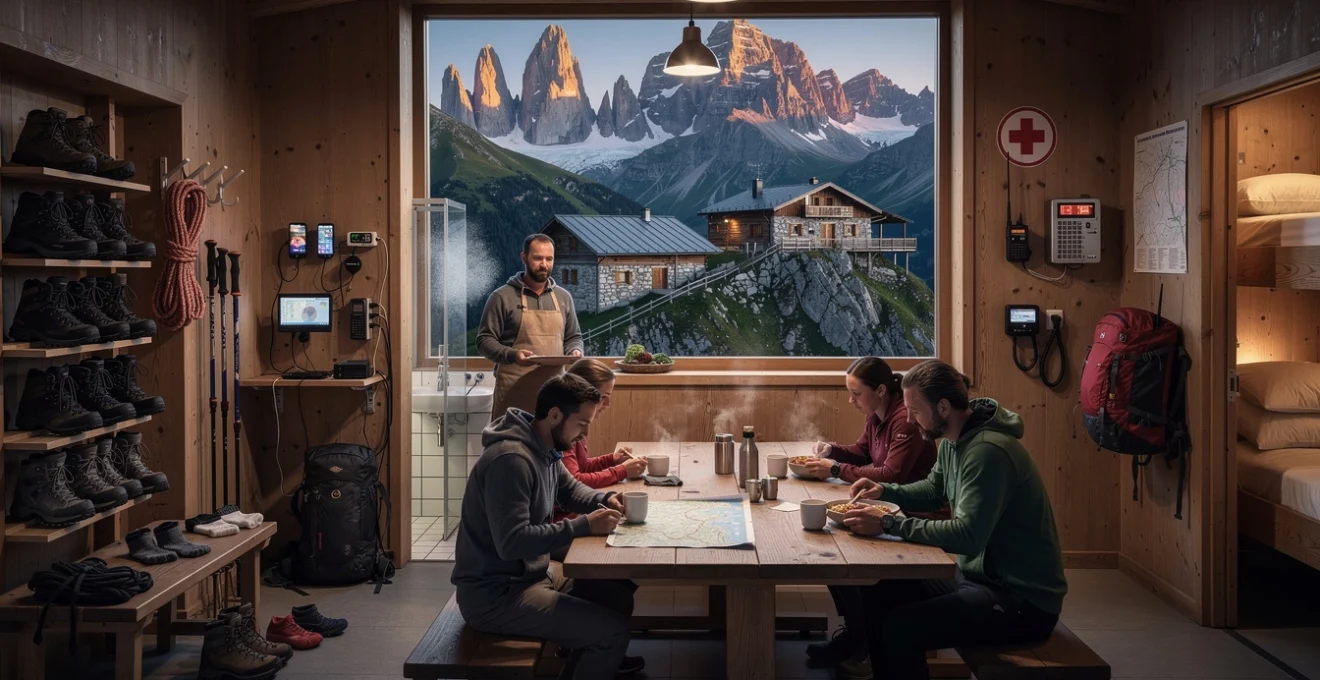
Mountain refuges represent one of hiking’s most distinctive experiences, offering weary trekkers essential shelter, sustenance, and camaraderie high above the treeline. These remote sanctuaries dot the world’s most challenging mountain ranges, from the jagged peaks of the Dolomites to the glaciated summits of Mont Blanc, providing a crucial lifeline for adventurers embarking on multi-day expeditions. Unlike conventional accommodation, mountain huts embrace simplicity and functionality, creating an authentic alpine experience that strips away modern luxuries in favour of genuine mountain hospitality.
The appeal of refuge accommodation extends far beyond mere practicality. These establishments foster a unique culture of mountain fellowship, where strangers become temporary companions, sharing stories over hearty communal meals while spectacular alpine vistas unfold outside frost-covered windows. For serious hikers and mountaineers, understanding refuge systems, amenities, and etiquette proves essential for planning successful multi-day adventures across Europe’s most celebrated mountain trails.
Alpine refuge classification systems and accommodation standards
European mountain refuge systems operate under various classification frameworks, each reflecting regional mountaineering traditions and administrative structures. The complexity of these systems often surprises first-time refuge users, as standards and amenities vary dramatically between countries and even individual establishments within the same mountain range.
CAI mountain hut categories and grading criteria
The Club Alpino Italiano (CAI) maintains one of Europe’s most comprehensive refuge classification systems, categorising mountain huts based on altitude, accessibility, and amenities provided. Category A refuges typically feature full kitchen facilities, comfortable bedding, and experienced guardians who prepare meals throughout the operational season. These establishments often occupy strategic positions along popular trekking routes, such as the Alta Via networks threading through the Dolomites.
Category B refuges offer more basic accommodation, frequently operating as self-service facilities during shoulder seasons or providing limited meal services. Category C designations apply to emergency shelters and basic bivouacs, offering minimal amenities but crucial protection during adverse weather conditions. Understanding these classifications helps hikers set realistic expectations and pack appropriate supplies for their mountain adventures.
Guardian-staffed versus Self-Service refuge operations
The distinction between staffed and unstaffed refuges significantly impacts the hiking experience and required preparation. Guardian-staffed refuges typically operate from late spring through early autumn, offering prepared meals, clean bedding, and local expertise about weather conditions and route recommendations. These establishments function as alpine hotels, albeit with shared accommodations and basic amenities.
Self-service refuges require hikers to bring sleeping bags, cooking equipment, and provisions, as these facilities provide only basic shelter and sometimes cooking facilities. Many experienced mountaineers prefer self-service options for their flexibility and reduced costs, though this approach demands careful planning and appropriate equipment selection.
Booking systems and reservation protocols for peak season
Securing refuge accommodation during peak summer months requires strategic planning and early booking, particularly for popular routes like the Tour du Mont Blanc or Dolomites Alta Via trails. Most staffed refuges accept reservations several months in advance, with some high-altitude establishments requiring deposits to guarantee placement.
Modern booking systems increasingly embrace digital platforms, though many refuges still accept telephone reservations exclusively. Peak season demand often exceeds capacity by 200-300% at popular locations, making alternative accommodation planning essential. Some refuges maintain waiting lists for cancellations, while others allocate spaces on a first-come, first-served basis for walk-in guests.
Bedding configurations: dormitories, lager and private rooms
Mountain refuge sleeping arrangements prioritise efficiency and warmth over privacy, with dormitory-style accommodations representing the standard configuration. Traditional Matratzenlager (mattress camps) feature communal sleeping areas where hikers rest side-by-side on continuous mattress platforms, creating maximum occupancy within limited space.
Modern refuges increasingly offer smaller dormitory rooms housing 4-8 people, providing improved privacy while maintaining the communal spirit integral to mountain culture. Private rooms remain rare and command premium pricing when available, typically reserved for refuge guardians, guides,
and occasionally for mountain guides travelling with clients. Regardless of configuration, guests should always expect to use their own sleeping bag liner, share limited storage space, and adapt to the sounds and rhythms of a busy refuge at night. If you value a quieter environment, aim to book smaller dormitories where possible and avoid peak weekends on the most popular trekking routes.
Essential refuge amenities for post-trek recovery
After a demanding day in the mountains, the true value of a mountain refuge lies in the simple comforts it provides for recovery. While facilities vary widely—from near-hotel standards in some valleys to ultra-basic shelters on high ridges—most huts are designed to help you rest, refuel, and prepare for the following stage. Understanding what to expect from washing facilities, charging options, drying rooms, and first aid provisions allows you to plan your packing list realistically and avoid unpleasant surprises at altitude.
Washing facilities and shower availability in remote locations
Washing facilities in mountain refuges range from fully plumbed shower blocks with hot water to a cold tap outside the building—or, in some high-altitude huts, no running water at all. Lower-altitude refuges near lift systems or access roads are more likely to offer hot showers, often on a token or pay-per-use basis to conserve limited water reserves. In contrast, high alpine shelters above 2,500–3,000 metres frequently rely on snowmelt or rainwater collection, which makes showers either very restricted or non-existent.
When hot showers are available, they are usually time-limited (typically 2–4 minutes) and may be switched off during droughts or peak demand. You should carry a small travel towel, biodegradable soap, and wet wipes for basic hygiene on days when facilities are minimal. Think of washing in refuges less like a hotel bathroom and more like careful water rationing on a sailing boat—every drop counts, and mountain communities take conservation seriously. If you arrive late or during busy periods, consider postponing a full wash until the following day rather than using precious hot water needed by others.
Charging stations and electronic device management
As more hikers depend on GPS navigation, smartphones, and digital cameras, charging facilities have become a key consideration when choosing refuge accommodation. However, electricity in remote mountain huts is often generated by solar panels, small hydro systems, or fuel-efficient generators, which means capacity is limited and tightly managed. Many refuges provide a single communal charging station in the dining room or corridor, where multiple devices compete for a few sockets or multi-plug adapters.
To avoid disappointment, assume that you will not be able to charge all your electronics every night and plan accordingly. A high-capacity power bank, energy-saving mode on your phone, and paper maps as a backup to digital navigation are strongly recommended for multi-day treks. Some modern huts now charge a small fee for device charging, both to regulate demand and to offset the cost of off-grid power generation. Consider prioritising essential items—such as your phone or GPS—over luxury devices, and remember that part of the charm of refuge life is the chance to disconnect from constant digital noise.
Boot drying rooms and gear storage solutions
Few things affect your comfort on the trail as much as the state of your footwear and outer layers. Recognising this, many European mountain refuges feature dedicated boot rooms or drying areas, often located near the entrance to keep mud and snow away from sleeping quarters. These spaces may include heated racks, dehumidifiers, or simply well-ventilated shelving where you can leave boots, wet shells, and trekking poles overnight. It’s common practice to switch into hut slippers or light shoes indoors; some refuges provide communal clogs or Crocs-style footwear, while others require you to bring your own.
In more traditional or basic huts, drying facilities may be limited to a warm corner near a stove or hooks in a communal corridor, so you should never rely on gear being completely dry by morning. Lightweight spare socks, a second base layer, and a simple cord for improvised hanging can make a disproportionate difference to your comfort on a multi-day route. When storing equipment, always label items clearly and keep valuables—such as cameras, wallets, and passports—with you in the dormitory rather than leaving them unattended in the boot room.
First aid provisions and emergency communication systems
Most staffed mountain refuges maintain a basic first aid kit and are equipped to handle minor injuries such as blisters, small cuts, or mild sprains. Guardians and staff typically receive mountain safety training and can offer practical advice on whether you should continue your route or descend. However, these supplies are not a substitute for your own personal first aid kit, which should include blister care, pain relief, and any prescription medication you require. In remote refuges, resupply flights or mule transport can be infrequent, so consumables may be limited.
Emergency communication systems vary significantly depending on location and national regulations. Some huts are connected by radio to mountain rescue services or local guides’ offices, while others rely on satellite phones in case of serious incidents. Mobile coverage can range from excellent on ridgelines to non-existent in deep valleys; you cannot assume that you’ll always be able to call for help with your own device. Before setting out, familiarise yourself with the relevant emergency numbers (for example, 112 across the EU) and local procedures for requesting assistance. In bad weather or during storms, the refuge itself becomes a critical safe haven, and following staff instructions can quite literally be life-saving.
Iconic mountain refuges across european alpine regions
Scattered across Europe’s high ranges, certain mountain refuges have achieved near-legendary status among hikers and climbers. Whether perched precariously on a rocky spur, overlooking a famous north face, or forming part of a long-distance route, these shelters embody the spirit of alpine exploration. Understanding how these iconic huts operate—and what makes them special—can help you decide which mountain refuges to include on your next trekking itinerary.
Refuge du goûter and cosmiques hut on mont blanc circuit
On the Mont Blanc massif, two huts stand out as milestones for ambitious mountaineers: Refuge du Goûter and the Cosmiques Hut (Refuge des Cosmiques). Refuge du Goûter, dramatically situated at 3,835 metres on the normal “voie royale” route, is often the final overnight stop before summit attempts. This modern, eco-designed structure operates under strict booking regulations due to heavy demand and environmental concerns, with places selling out months ahead of the main climbing season. Staying here feels less like a casual overnight and more like entering an organised high-altitude base camp, where timing, equipment checks, and weather windows are crucial.
On the opposite side of the massif, the Cosmiques Hut at around 3,613 metres serves as a gateway to technical routes on Mont Blanc du Tacul, Mont Blanc du Midi, and the famous Cosmique Arête. Accessed via the Aiguille du Midi cable car and a short glacier approach, it offers a unique blend of accessibility and serious mountaineering terrain. Both refuges provide full-board options, crampon-friendly entrances, and secure gear rooms, but they demand a higher level of experience and preparation than lower valley huts. If you are considering these refuges, guided ascents and an honest assessment of your fitness and acclimatisation are essential parts of responsible planning.
Dolomites alta via refuge network: rifugio lagazuoi to tre cime
The Dolomites Alta Via trails in northern Italy—especially Alta Via 1 and Alta Via 2—are renowned for their dense network of rifugi offering comfortable, well-catered accommodation amidst some of Europe’s most dramatic limestone towers. Rifugio Lagazuoi, perched at 2,752 metres and accessible by both trail and cable car, is famous for its panoramic terrace and World War I tunnels nearby. Further east, rifugi surrounding the Tre Cime di Lavaredo, such as Rifugio Auronzo and Rifugio Locatelli, give trekkers front-row seats to sunrise and sunset over the iconic three peaks.
Compared to more austere high alpine shelters, many Dolomite refuges feel almost hotel-like, with robust meal services, warm showers, and sometimes even private rooms. This does not mean you can skip advance planning: during July and August, beds are frequently booked solid, and walk-ins may be turned away. The combination of relatively short daily stages, reliable waymarking, and welcoming rifugi makes the Alta Via network ideal for hikers seeking mountain refuges that balance simple comfort with unforgettable scenery. Still, fast-changing weather and exposed sections remind you that this is a true mountain environment, not a theme park.
Scottish bothy system and MBA maintained shelters
While not “refuges” in the continental alpine sense, Scottish bothies maintained by the Mountain Bothies Association (MBA) represent a distinct and fascinating form of simple mountain shelter. Scattered across the Highlands and islands, these unlocked buildings—often former crofts or estate cottages—provide basic, no-frills accommodation free of charge. Facilities are extremely limited: no staff, no booking system, usually no running water or electricity, and sleeping is typically on wooden platforms or the floor. You bring everything you need, including sleeping gear, stove, food, and often fuel, treating the bothy as a safe roof rather than serviced accommodation.
The bothy system is built on trust and a strong code of ethics enshrined in the “Bothy Code”, which emphasises respect for the building, environment, and fellow users. In many ways, bothies are the spiritual cousins of high alpine bivouacs—places of refuge in bad weather and staging posts for long, remote routes across moor and mountain. If you are used to guardian-staffed huts with cooked dinners, the transition to MBA bothies can feel stark, but the reward is a raw, immersive experience of wild landscapes. As with all mountain shelters, leave-no-trace principles and considerate behaviour are fundamental to keeping these spaces available for future visitors.
Pyrenean refuge trail: GR10 and HRP accommodation points
Stretching from the Atlantic to the Mediterranean, the French GR10 and the high-level Pyrenean Haute Route (HRP) weave through a patchwork of staffed refuges, unmanned shelters, and village gîtes. In the central Pyrenees, classic huts such as Refuge de Wallon–Marcadau, Refuge des Oulettes de Gaube, and Refuge de Bayssellance offer hikers spectacular access to glaciers, lakes, and high passes. Many of these establishments have recently been renovated to improve comfort and sustainability while preserving their traditional atmosphere of shared tables and dormitories.
Compared to the Alps, Pyrenean refuge density is slightly lower, meaning daily stages can be longer and require more careful logistical planning. Weather is also notably variable, with Atlantic and Mediterranean influences combining to produce sudden storms and temperature swings. For long-distance trekkers on the GR10 or HRP, a balanced strategy often involves mixing nights in refuges with wild camping or small village accommodation. When you do reach a staffed hut, the chance to enjoy a hot meal, social interaction, and a solid roof becomes a psychological as much as a physical boost, helping you tackle the next remote stretch with renewed energy.
Refuge etiquette and sustainable mountain practices
Life in a mountain refuge revolves around shared spaces and finite resources, so considerate behaviour is essential to maintain harmony and protect fragile environments. Unlike anonymous hotel stays, your actions in a hut directly affect the comfort and safety of others, from noise levels in dormitories to how carefully you manage waste and water. Refuge etiquette is not about rigid rules for their own sake; it’s a collective agreement that allows many people to coexist peacefully in a confined space at altitude.
Core principles include arriving on time for meals, following staff instructions, and keeping gear tidy in communal areas. In dormitories, you should pack and unpack quietly, use headlamps with red-light modes in the early morning, and avoid rustling plastic bags when others are sleeping. Many hikers underestimate how disruptive a few careless actions can be at 5am when summit parties are leaving—imagine trying to sleep in a busy train carriage, but at 3,000 metres and with thinner patience. Simple steps like preparing your kit the night before and stepping outside to chat on the phone can make a huge difference to everyone’s experience.
On the environmental side, sustainable mountain practices are increasingly built into refuge operations: waste is minimised, grey water is treated, and supplies are often flown or carried in at significant cost. You can support these efforts by packing out non-biodegradable rubbish where requested, using water sparingly, and choosing eco-friendly soaps and toiletries. Some huts charge for showers or drinking water refills not to profit from tired hikers, but to reflect the true cost of transporting and purifying water at altitude. Ultimately, if we treat refuges as temporary homes rather than anonymous service providers, we are more likely to behave in ways that preserve both the building and its surroundings for future generations.
Meal services and nutritional recovery planning
Nutrition plays a central role in how well you recover between trekking stages, and mountain refuges are accustomed to feeding hungry hikers with simple but substantial meals. Dinner in a staffed hut typically follows a set menu format: soup or salad to start, a carbohydrate-rich main course such as pasta, polenta, or stew, and a dessert like fruit or cake. Portions are geared towards expending energy at altitude, but if you have particular dietary requirements—vegetarian, vegan, gluten-free, or allergies—you should always notify the refuge when booking. Many guardians will do their best to accommodate you within the constraints of remote supply chains, but last-minute surprises are harder to manage when everything arrives by helicopter or mule.
Breakfast, by contrast, is often more modest: bread, jam, butter, and hot drinks are common in French and Italian huts, with occasional cereals or yoghurt. Protein options can be limited, so if you know that a strong breakfast helps your performance, it’s wise to carry supplementary items such as nuts, cheese, cured meat, or protein bars. Think of refuge meals as the foundation of your energy intake and your personal trail snacks as the flexible layer that fills the gaps. On demanding multi-day routes, planning your nutritional recovery is as important as choosing the right boots; under-fuelling one day can leave you struggling on steep climbs the next.
Most huts also sell packed lunches or simple picnic items—sandwiches, fruit, chocolate bars—which can be pre-ordered at dinner and collected in the morning. While these are convenient, they may be relatively expensive due to transport costs, so many hikers choose a hybrid strategy of buying some items on-site and carrying others from valley supermarkets. Hydration is another key element: bottled water in remote huts can be costly, and tap water may not always be drinkable without treatment. A water filter or purification tablets give you more flexibility, particularly on routes where natural sources are plentiful but not guaranteed safe. By thinking ahead about calories, hydration, and timing of meals, you give your body the best chance to adapt to altitude and long days on the trail.
Weather contingency protocols and emergency shelter procedures
Mountain weather can change with startling speed, turning a pleasant afternoon hike into a serious situation within an hour. Refuges therefore play a critical role in weather contingency planning and emergency shelter provisions for trekkers. Guardian-staffed huts usually receive regular forecasts via radio or internet and are familiar with local weather patterns, making them invaluable sources of up-to-date information. When staff advise against crossing a particular pass or recommend delaying a summit attempt, it is wise to listen—they have seen the consequences of ignoring the forecast more often than most visitors.
From a planning perspective, you should build flexibility into your itinerary, allowing extra days to wait out storms or adapt your route. Treat refuges as anchor points in your risk management strategy: know where the next safe shelter lies, how long it will take to reach, and what alternatives exist if conditions deteriorate. In some regions, emergency winter rooms or unstaffed shelters attached to main huts remain accessible outside the normal season, providing essential refuge if you are caught out by unexpected weather. These spaces are usually very simple, sometimes unlocked and free, operating on the principle of trust and minimal impact—leave them cleaner than you found them.
In genuine emergencies—serious injury, whiteout, or avalanche risk—your priorities are to ensure immediate safety, conserve warmth, and establish communication with rescue services if possible. Refuges may serve as coordination hubs for search and rescue operations, providing local knowledge, shelter for companions, and sometimes helicopter landing zones nearby. However, you should never assume that a hut will be open year-round or staffed in poor conditions; always check operating dates, carry essential survival equipment, and know the basics of self-rescue relevant to your route. By combining the strategic use of mountain refuges with prudent decision-making, you significantly increase your margin of safety in unpredictable alpine environments.