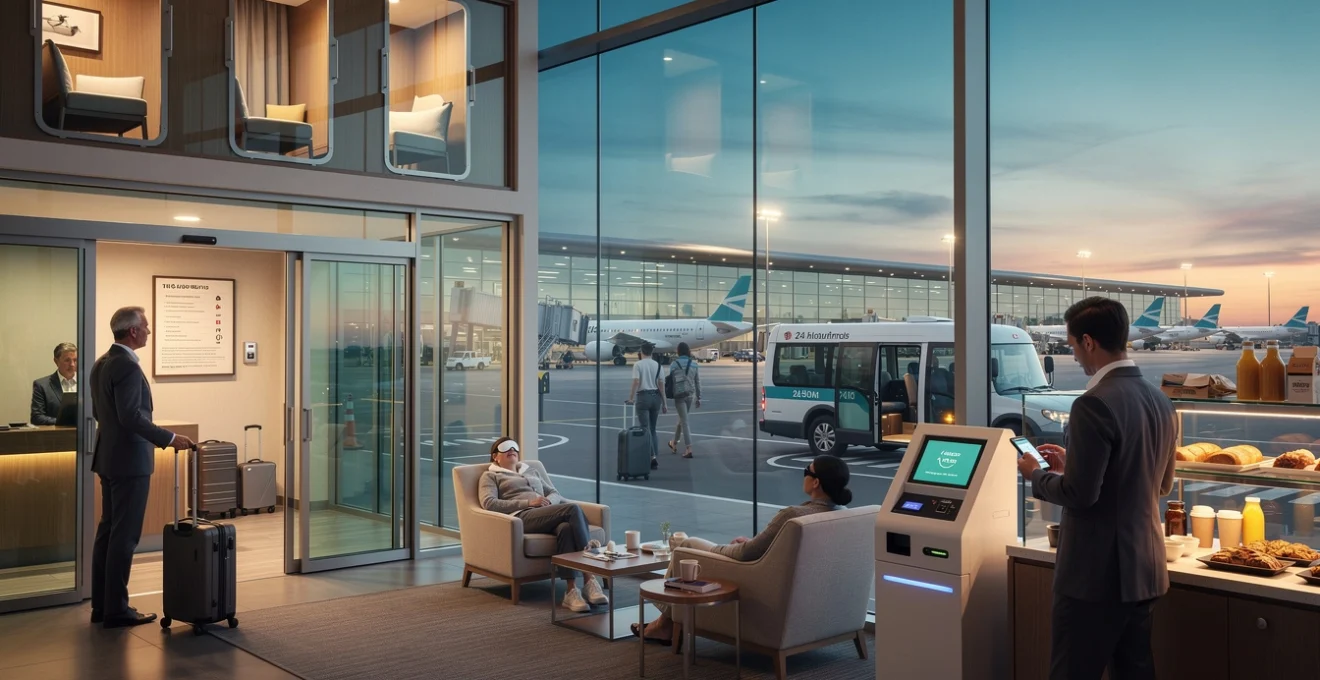
Modern air travel presents unique challenges, particularly when dealing with early morning departures or extended layovers between connecting flights. Airport hotels have evolved dramatically over the past two decades, transforming from basic overnight accommodation into sophisticated transit facilities that address the specific needs of contemporary travellers. These strategically positioned properties now serve as essential components of the aviation ecosystem, offering everything from micro-rooms for brief rest periods to comprehensive suites designed for extended stopovers.
The concept of airport hospitality has expanded beyond traditional boundaries, with innovative brands like Yotelair pioneering the integration of hotels directly within terminal buildings. This evolution reflects the growing recognition that passenger comfort during transit periods significantly impacts the overall travel experience, particularly for those facing the stress of dawn departures or the fatigue associated with international connections.
Strategic airport hotel selection criteria for transit passengers
Selecting the optimal airport hotel requires careful consideration of multiple factors that directly impact your travel efficiency and comfort levels. The decision becomes particularly crucial when you’re managing tight schedules or attempting to maximise rest during brief layovers. Understanding the key selection criteria can mean the difference between a seamless travel experience and unnecessary stress.
Proximity analysis: Terminal-to-Hotel walking distance and transport options
Distance from the terminal stands as the most critical factor in airport hotel selection. Properties located within terminal buildings, such as the Yotelair facilities at Gatwick and Singapore Changi, eliminate the need for external transportation entirely. These airside accommodations allow passengers to remain within the secure zone, avoiding the time-consuming process of clearing security multiple times.
For hotels requiring shuttle services, the typical journey time ranges from 3-15 minutes depending on airport traffic and shuttle frequency. The Amsterdam Schiphol Airport area hotels generally maintain shuttle intervals of 10-15 minutes during peak hours, whilst Frankfurt Airport properties often provide more frequent services due to higher passenger volumes. Properties exceeding a 20-minute journey time from the terminal should be approached with caution, particularly for early morning departures.
24-hour shuttle service reliability and frequency schedules
Shuttle service reliability becomes paramount when catching pre-dawn flights. Many airport hotels operate reduced shuttle frequencies between midnight and 5:00 AM, potentially creating significant delays. The most reliable properties maintain consistent 15-20 minute intervals throughout the night, with some premium facilities offering on-demand shuttle services for guests with early departures.
Research indicates that shuttle-related delays account for approximately 12% of missed early morning flights among airport hotel guests. Properties with dedicated early morning shuttle protocols, including guaranteed departure times aligned with flight schedules, demonstrate significantly higher passenger satisfaction rates. Always verify the specific shuttle schedule for your departure time when making reservations.
Early morning Check-Out procedures and luggage storage solutions
Express check-out capabilities have become standard at quality airport hotels, with many properties offering mobile check-out options and 24-hour front desk services. The most advanced facilities provide automated systems allowing guests to complete check-out procedures without staff interaction, essential for departures before 6:00 AM when skeleton crews may be operating.
Luggage storage solutions vary considerably between properties. Terminal-connected hotels often provide direct access to airline check-in facilities, whilst external properties may offer temporary storage until shuttle departure times. Some facilities have implemented smart locker systems, allowing guests to store belongings securely whilst exploring airport retail areas during extended layovers.
Soundproofing standards and sleep quality metrics for aircraft noise
Aircraft noise represents the primary sleep disruption factor at airport hotels, with sound levels varying dramatically based on runway proximity and flight schedules. The most effective properties implement multiple soundproofing layers, including specialised window glazing and acoustic wall treatments. Sound level measurements at quality airport hotels typically maintain interior noise levels below 40 decibels, comparable to a quiet residential neighbourhood.
Advanced facilities employ active noise cancellation technologies in premium rooms, whilst others provide complimentary earplugs and white noise machines. The Hilton Munich Airport, for example, has invested in comprehensive soundproofing that reduces external noise by up to 80%, significantly improving sleep quality despite its proximity to active runways.
Premium airport hotel categories and terminal integration
The airport
The airport hotel landscape has also diversified into clear categories, ranging from fully integrated terminal properties to ultra-compact pod concepts aimed at passengers who simply need a shower and a few hours of uninterrupted sleep. Understanding how these premium airport hotels connect with terminals, and how they differ in service level and access, helps you align your choice with your specific transit needs. For early flights and long layovers, this terminal integration can be as impactful as choosing a non-stop flight over a multi-stop itinerary.
Terminal-connected properties: singapore changi transit hotel and yotel amsterdam schiphol
Terminal-connected hotels represent the gold standard for stress-free early departures and overnight layovers. At Singapore Changi, the transit hotel inside the terminal allows passengers to move directly from gate to room without exiting the secure area, clearing immigration, or waiting for shuttles. Cabins and rooms can be booked by the hour, making them ideal for long layovers where you only need six to eight hours of rest rather than a full night.
Similarly, Yotel Amsterdam Schiphol offers compact, well-designed cabins located within the terminal complex, eliminating the “last-mile” problem between hotel and gate. Features like adjustable SmartBeds™, built-in mood lighting, and integrated work surfaces help you maximise a short stay, whether you’re catching up on sleep or emails. Because you are already at the airport, you can realistically leave your room as little as 30–40 minutes before boarding if you are checked in and travelling with cabin baggage only.
Airside vs landside accommodation: security clearance considerations
The distinction between airside and landside airport hotels is crucial for transit passengers planning long layovers. Airside hotels, such as many Yotelair properties in Gatwick, Paris Charles de Gaulle or Istanbul, are located beyond security and, often, immigration. This configuration allows you to stay within the transit area, saving 30–60 minutes each way that would otherwise be spent clearing border formalities and security checkpoints multiple times.
Landside properties, by contrast, sit outside the secure perimeter and are usually accessible to both travellers and the general public. While they often provide larger rooms and more traditional hotel amenities, you must factor in queue times at security and passport control when planning your early morning departure. Before you book, confirm whether your itinerary, visa status, and airline requirements allow you to remain airside overnight, and consider whether you might want to leave the airport to explore the city during a particularly long layover.
Pod hotels and micro-rooms: space optimisation at munich airport hilton
Pod hotels and micro-room concepts address a simple reality of airport travel: many passengers do not need a full-sized room; they just need a quiet, private space for a short period. While the Hilton Munich Airport is primarily a full-service property, it exemplifies how large airport hotels are increasingly integrating space-optimised room types and day-use options. These compact units focus on efficient layouts, high-quality bedding, power access, and soundproofing rather than expansive floorplans.
From a traveller’s perspective, micro-rooms function like business-class seats on an aircraft: every centimetre is designed for practical use. You might have a SmartBed™ that transforms from sofa to bed, foldaway desks, and cleverly integrated storage to keep bags out of the way. For early departures, day rooms allow you to arrive the afternoon before, rest properly, and then check out in the middle of the night without paying for a second full night’s stay.
Luxury transit suites: emirates first class lounge dubai and similar facilities
At the top end of the spectrum, luxury transit suites blur the line between airport hotel and premium lounge. Facilities like the Emirates First Class Lounge in Dubai provide private rooms, à la carte dining, spa services, and direct boarding access, effectively functioning as a five-star hotel embedded in the terminal. For eligible passengers, these suites transform long layovers into restorative breaks rather than endurance tests.
Comparable concepts are emerging in other major hubs, where selected lounges now offer bookable sleeping suites or “nap rooms” even to non-elite passengers for a fee. If you value privacy, quiet, and premium amenities over a full hotel experience, these luxury transit suites can be a compelling alternative to traditional airport hotels. Think of them as a first-class cabin on the ground, designed to help you arrive at your destination rested and ready.
Operational logistics for early departure management
When you are facing a 5:30 AM departure or a tight morning connection, the operational details of your airport hotel matter as much as the room itself. How early can you check out? Is breakfast available before dawn? Does the shuttle align with your flight time? Evaluating these logistical factors in advance significantly reduces the risk of last-minute stress and missed flights.
Pre-dawn check-in desk operations and self-service kiosk availability
For early flights, 24-hour reception is non-negotiable, but service levels between midnight and 5:00 AM can vary widely. Well-managed airport hotels ensure that experienced staff are available at all times to handle billing queries, room changes, and transport coordination. Some properties also provide dedicated pre-dawn support for guests needing printed boarding passes, basic luggage assistance, or clarification on terminal access routes.
Increasingly, hotels are deploying self-service kiosks in their lobbies to streamline both check-in and check-out during off-peak hours. These kiosks allow you to scan your ID, authorise payment, encode room keys, and obtain a printed receipt in minutes, even if staff are busy managing shuttle requests. For travellers arriving on late-night flights, this can mean the difference between being in bed within 30–40 minutes of landing or queuing at reception when you most need rest.
Express breakfast service timing and grab-and-go options
Traditional breakfast hours often start around 6:30 or 7:00 AM, which is useless if you need to be at security by 5:00. To address this, many airport hotels now operate “early bird” or grab-and-go breakfast services from 3:30 or 4:00 AM. These typically include coffee, tea, water, fruit, yoghurt, and pre-packaged items such as muesli bars or croissants that you can consume en route to your gate.
If you rely on breakfast for stability during long travel days, verify early service times when booking and ask whether it is included in your rate or charged separately. Some properties will prepare cold breakfast boxes on request and store them at reception for collection during the night. For families or crew travelling together, pre-arranged breakfast solutions remove one more variable from an already compressed morning schedule.
Automated shuttle coordination with flight schedules
Automated shuttle coordination is becoming more common at busy airport hotels, which use software to predict peak demand based on flight schedules and guest bookings. Rather than running fixed, half-empty shuttles all night, these systems allow hotels to increase frequency ahead of popular departure banks—such as transatlantic or early European morning waves—while reducing unnecessary trips during lulls. For you, this means shorter waits and more predictable journey times to the terminal.
Some properties now offer app-based shuttle reservations, allowing you to book a specific departure time the evening before and receive reminders on your phone. This approach works much like a ride-hailing service, giving you clarity on pick-up time and capacity. When evaluating hotels, check whether shuttle departures are timed to get you to the airport at least two hours before short-haul flights and three hours before long-haul departures, especially during peak seasons.
Mobile check-out technology and contactless payment systems
Mobile check-out technology allows you to leave your room, settle your bill, and head straight for the shuttle or terminal without stopping at reception. Many airport hotels now integrate check-out into their mobile apps, sending you a draft invoice overnight for review. Once confirmed, charges are processed automatically, and your emailed receipt serves as proof of payment.
Contactless payment systems further accelerate the process, reducing the time you spend handling cards or cash during busy morning departures. For travellers managing multiple currencies or corporate travel policies, the ability to store cards securely in an app and receive itemised digital receipts simplifies both personal budgeting and expense reporting. In practice, this can shave 10–15 minutes from your departure routine—precious time when every minute counts.
Extended layover facilities and passenger amenities
Extended layovers, typically those lasting 8–24 hours, present both a challenge and an opportunity. Without proper facilities, long layovers mean stiff necks on terminal benches and restless wandering between gates. With the right airport hotel and amenities, that same window becomes a chance to sleep properly, refresh, and even explore the local city before your next flight.
Modern airport hotels and transit facilities now cater specifically to these extended stops. Many offer hourly or half-day room rates, allowing you to pay only for the time you actually need. Others provide additional services such as luggage storage, day-use spa access, co-working spaces, and quiet zones, enabling you to customise your layover based on whether you need to rest, work, or reset between flights.
Real-time booking platforms and dynamic pricing strategies
Advances in real-time booking technology have made it easier than ever to secure airport accommodation at short notice, even when your travel plans change unexpectedly. Major hotel platforms and airline apps now display live inventory, allowing you to filter for “airport hotel” or “terminal-connected” properties and compare walking distances, shuttle options, and guest ratings in seconds. Some airports even integrate on-site hotel booking into their own apps or information kiosks for passengers who decide to stay after arriving.
Dynamic pricing, however, means that rates can fluctuate significantly based on demand, time of day, and major events. Overnight stays during peak travel periods or severe weather disruptions can be substantially more expensive than bookings made weeks in advance. For travellers with flexible schedules, monitoring prices over a few days and setting alerts can help you capture lower rates, especially for long layovers where you may have multiple viable routing options.
Regional airport hotel analysis: global transit hubs performance comparison
Not all global transit hubs offer the same quality or variety of airport hotels, and performance can vary considerably by region. European hubs like Amsterdam Schiphol, Frankfurt, and Paris Charles de Gaulle typically feature a mix of terminal-connected properties and nearby shuttle hotels across a range of price points. Many of these emphasise soundproofing, early breakfast, and efficient transport links, reflecting their heavy use by both leisure travellers and airline crews.
In Asia, airports such as Singapore Changi, Tokyo, Hong Kong, and Istanbul are increasingly recognised for their integrated transit hotels, sleep pods, and premium lounges with sleeping suites. These hubs often provide the most seamless experience for long-haul connections, combining high service standards with passenger-focused amenities like spas, gyms, and quiet rest zones. North American airports have historically lagged in transit hotel availability, but major hubs including New York JFK, Atlanta, and Los Angeles are gradually introducing more on-site or terminal-linked accommodation options.