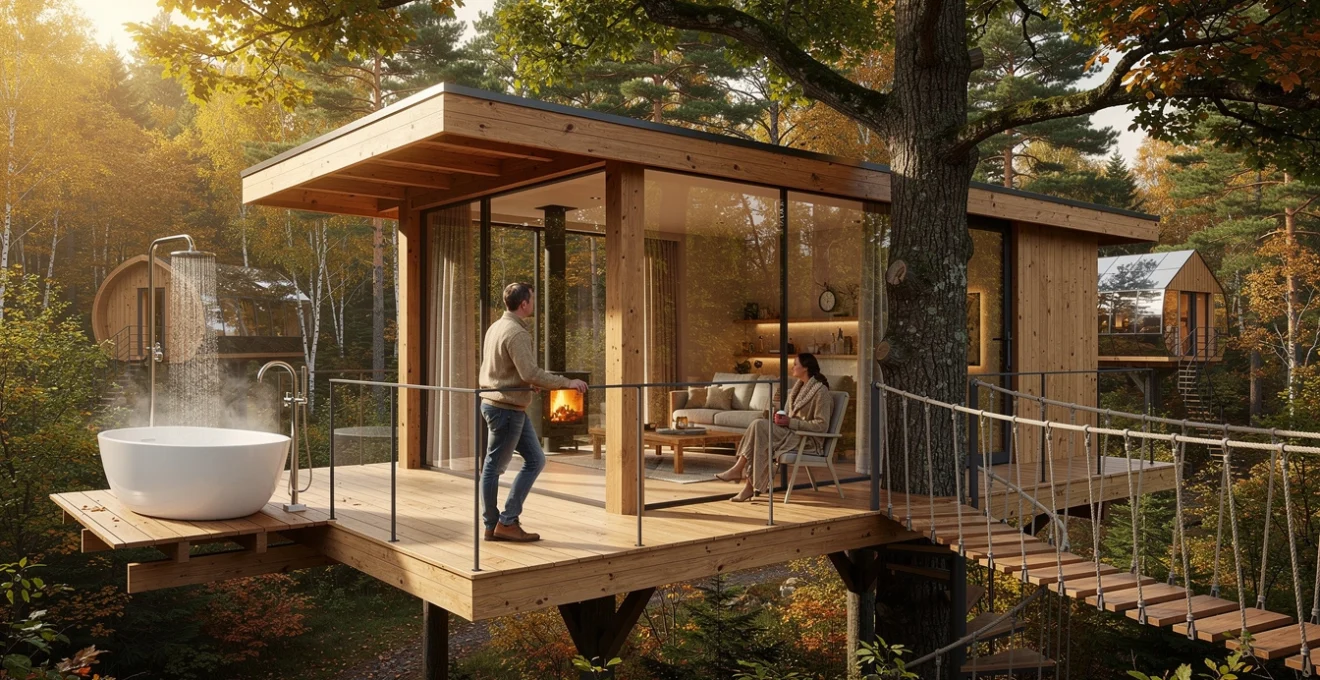
The allure of sleeping among the branches has transcended childhood fantasy to become one of the most sought-after hospitality experiences in contemporary travel. Across the United Kingdom and wider Europe, treehouse accommodation has evolved from rudimentary platforms into architectural masterpieces that combine environmental sensitivity with uncompromising luxury. These elevated sanctuaries offer more than mere novelty—they provide genuine reconnection with woodland ecosystems whilst delivering comfort standards that rival five-star hotels. The growing demand for treehouse holidays reflects a broader cultural shift toward nature-based wellness, experiential travel, and sustainable tourism practices that minimise environmental impact whilst maximising immersive outdoor experiences.
Industry data from 2023 indicates that treehouse bookings in the UK increased by 47% compared to pre-pandemic levels, with average occupancy rates exceeding 82% during peak seasons. This remarkable growth demonstrates that discerning travellers increasingly value authentic nature encounters over traditional hotel experiences. The unique perspective afforded by canopy-level accommodation—waking to birdsong, observing wildlife from elevated vantage points, and experiencing forest ecology from an arboreal viewpoint—creates memorable moments that conventional ground-based lodging simply cannot replicate.
Architectural design features that define elevated treehouse accommodation
Contemporary treehouse construction represents a sophisticated marriage between architectural innovation and ecological responsibility. The engineering challenges inherent in creating habitable spaces suspended among living trees demand specialist expertise, advanced structural calculations, and materials selected for both performance and environmental compatibility. Modern treehouse designers employ techniques that protect host trees whilst ensuring guest safety and comfort across varying weather conditions and seasonal changes.
Cantilevered platform construction and Load-Bearing techniques
The foundation of any exceptional treehouse lies in its structural integration with the supporting trees. Cantilevered platform systems distribute weight across multiple anchor points, typically utilising purpose-designed treehouse attachment bolts (TABs) that penetrate the cambium layer without causing irreversible damage to vascular tissue. Engineers calculate precise load distributions based on tree species, diameter, health status, and anticipated guest capacity. Premium installations often incorporate adjustable supports that accommodate tree growth and movement during high winds—mature oaks can sway up to 18 inches in storm conditions, requiring flexible connections that prevent structural stress.
The most sophisticated designs employ suspended cable systems that transfer loads to multiple trees, creating stable platforms even in dense woodland where single large specimens aren’t available. This distributed approach minimises individual tree stress whilst providing superior stability. Professional treehouse architects conduct comprehensive arboricultural assessments before construction, often working with certified arborists to identify suitable host trees and establish long-term monitoring protocols that ensure continued tree health throughout the structure’s operational lifespan.
Sustainable timber selection: cedar, oak, and douglas fir applications
Material specification plays a crucial role in both aesthetic integration and environmental performance. Western red cedar remains the premium choice for external cladding due to its natural weather resistance, attractive grain patterns, and sustainable harvesting from certified forests. Cedar contains natural oils that repel moisture and resist fungal decay without chemical treatments, making it ideal for exposed elements that experience constant humidity fluctuations. Its relatively low density also reduces overall structural weight—a critical consideration when loading is distributed across living trees.
Structural frameworks typically utilise Douglas fir or European oak for their superior strength-to-weight ratios and load-bearing capabilities. Oak provides exceptional durability for ground-contact elements and primary supports, whilst Douglas fir excels in spanning applications where long, straight timbers are required. Many luxury treehouse projects incorporate reclaimed timber for interior finishes, adding character whilst reducing embodied carbon. Responsible suppliers provide full chain-of-custody documentation verifying sustainable forest management practices, ensuring that your luxury retreat doesn’t contribute to habitat destruction elsewhere.
Panoramic glazing systems for immersive forest canopy views
The defining characteristic of premium treehouse accommodation is the seamless visual connection with surrounding woodland. Triple-fold glazing systems create expansive openings that transform solid walls into transparent membranes, dissolving boundaries between interior comfort and exterior wilderness. These engineered glass assemblies provide thermal efficiency comparable to conventional insulated walls whilst offering unobstructed sightlines across forest canopies. Advanced low-em
low coatings, warm-edge spacers and argon-filled cavities, ensuring that you can enjoy floor-to-ceiling views without sacrificing thermal comfort. In many high-end treehouse stays, these glazing systems are designed to slide or fold back completely, turning living rooms into open-air platforms where you can listen to the wind moving through the canopy and observe subtle changes in forest light throughout the day.
From a guest experience perspective, panoramic glazing is one of the key reasons a treehouse stay feels so different from a conventional countryside cottage. You are not just looking at nature through a small frame; you are immersed in it, watching mists rise from valley floors at dawn or tracking bat flights at dusk. Acoustic laminated glass can be specified to reduce noise transmission from nearby roads, while selective tinting protects interior finishes from UV damage without dulling the vibrancy of greens and golds outside. For travellers, this means you can book a treehouse weekend break confident that views and comfort will be equally exceptional, even in shoulder seasons.
Integration of eco-sanitation and off-grid water management systems
Behind the romance of a treetop hideaway lies a practical question: how do you manage water and waste at height without harming the woodland below? Many elevated treehouse accommodations now employ eco-sanitation systems that minimise water usage and protect fragile root zones. Advanced composting toilets, sealed urine diversion systems, and micro-flush vacuum WCs reduce the volume of wastewater dramatically compared to conventional installations. This approach is particularly important in ancient woodland, where trenching for mains drainage would be ecologically unacceptable.
For water supply, off-grid treehouses frequently combine rainwater harvesting with high-efficiency filtration and UV sterilisation to deliver potable water directly to taps and showers. Greywater from sinks and baths is routed through bio-filtration beds or reedbed systems at ground level, where plants and microbial communities break down contaminants before water returns to the soil. Pressure-boosting pumps and thermostatic mixing valves ensure that guests still enjoy strong showers and consistent hot water, even in remote settings. When you choose a nature-focused treehouse stay, these invisible systems are often what allow luxury features—such as outdoor bathtubs and rainfall showers—to coexist with genuine low-impact living.
Premier treehouse destinations across the united kingdom
The UK has become a global leader in premium treehouse hospitality, with a handful of flagship properties setting benchmarks for design, comfort, and environmental responsibility. These destinations demonstrate how elevated cabins can be sensitively integrated into landscapes ranging from coastal pine forests to historic estates. While each location has its own character, they all share a commitment to high-spec architecture, robust eco-credentials, and the kind of immersive woodland experience that transforms a short break into a restorative retreat.
When comparing UK treehouse stays, it helps to think in terms of three pillars: setting, specification, and experience design. Setting relates to the surrounding ecosystem—be it ancient oak woodland, riverside alder groves, or landscaped gardens. Specification covers the build quality, thermal performance, and amenities on offer. Experience design encompasses everything from welcome hampers and spa treatments to guided wildlife walks and access to walking trails. The following standout treehouse destinations balance all three, giving you a clear sense of what to look for when booking your own elevated escape.
The woodman’s treehouse at dorset’s chalke valley
Frequently cited in design magazines and sustainability awards, The Woodman’s Treehouse is a flagship example of how luxurious a UK treehouse holiday can be without losing its connection to the landscape. Perched within mature woodland in Dorset’s Chalke Valley, this one-off structure combines hand-crafted joinery with modern engineering, featuring a large cantilevered deck, outdoor hot tub, and even a copper bath positioned to overlook the treetops. The architecture celebrates tactile materials—exposed oak beams, cedar shingles, and reclaimed timber details—creating an atmosphere that feels both indulgent and grounded.
From an environmental standpoint, the Woodman’s Treehouse incorporates many of the eco-sanitation and off-grid water strategies discussed earlier. Rainwater harvesting, efficient wood-burning stoves, and careful consideration of tree health ensure that the building coexists harmoniously with its host oaks. For guests, the experience is one of secluded comfort: you might spend the afternoon reading by the log burner, venture out along local walking routes in the Cranborne Chase Area of Outstanding Natural Beauty, then return to soak under the stars. If you are seeking a treehouse stay where craftsmanship and sustainability are equally prioritised, this Dorset retreat is a compelling model.
Chewton glen’s luxury treetop suites in the new forest
For travellers who prefer resort-style amenities with their woodland immersion, the treetop suites at Chewton Glen in the New Forest offer a hybrid between five-star hotel and secluded cabin. Elevated on timber stilts among mature trees near the Hampshire coast, these suites feature expansive glazing, private hot tubs, and spacious decks that float above the forest floor. Interiors lean toward contemporary luxury: underfloor heating, state-of-the-art entertainment systems, and curated artwork sit alongside natural textures and muted colour palettes inspired by the surrounding woodland.
One of the key advantages of Chewton Glen for a weekend treehouse break is the breadth of services available. Guests can access spa facilities, fine dining, and concierge-arranged activities such as coastal walks or New Forest pony safaris, all while returning to their treetop sanctuary at the end of the day. The property’s sustainability initiatives—ranging from kitchen gardens and local sourcing to energy-efficient building systems—mean that indulgence comes with a lighter footprint. If you are introducing someone to the idea of treehouse accommodation for the first time, these suites can be an ideal gateway, blending the familiarity of a luxury hotel with the novelty of canopy-level living.
Alnwick garden’s treehouse restaurant and lodging complex
At Alnwick Garden in Northumberland, the treehouse experience takes on a more social dimension. The iconic Treehouse Restaurant, one of the largest in the world, is woven through the branches with suspended walkways, rope bridges, and vaulted interiors that feel almost cathedral-like. While many visitors come just for a meal, the broader complex increasingly offers overnight options, with smaller elevated cabins and lodges allowing guests to extend their time among the branches. This combination of public and private spaces makes Alnwick particularly appealing for couples or families seeking a treehouse weekend that includes dining, exploration, and cultural experiences.
Because the treehouse is integrated into a wider garden attraction, guests have immediate access to landscaped grounds, water features, and seasonal events, from spring blossom festivals to winter light trails. Architecturally, Alnwick’s structures showcase how large-scale treehouse design can manage load-bearing demands through extensive use of stilts and suspended walkways rather than relying solely on living trees. For travellers, the appeal lies in the atmosphere as much as the amenities: flickering braziers, twinkling fairy lights, and the gentle sway of rope bridges combine to create a sense of grown-up enchantment that is hard to find in conventional accommodation.
Liv’s treehouse at glampitect’s powys woodland retreat
In contrast to resort-scale developments, Liv’s Treehouse in Powys, Wales, exemplifies the intimate, design-led micro-retreat. Tucked within mixed woodland, this architecturally crisp yet cosy cabin is elevated just enough to deliver sweeping views through the canopy while maintaining easy access via a combination of ramp and staircase. The design team has prioritised energy efficiency and low-impact construction, employing sustainably sourced timber, high-spec insulation, and compact but fully equipped interiors that support comfortable year-round stays.
Liv’s Treehouse is particularly suited to guests who want to balance digital detox with modern convenience. High-speed connectivity allows remote workers to turn a weekend break into an extended work-from-woods stay, while thoughtful details—such as outdoor seating platforms, bird feeders, and strategically placed lighting—encourage you to step away from screens and into the forest. Local walking routes, dark-sky viewing opportunities, and partnerships with nearby producers (from artisan bakeries to farm shops) round out the experience. If you are exploring treehouse rentals in Wales, this retreat shows how compact design and smart specification can create a surprisingly spacious feeling in the treetops.
European forest canopy retreats setting industry standards
Beyond the UK, mainland Europe hosts a growing constellation of treehouse hotels that push the boundaries of design and sustainability. From Scandinavia’s experimental architecture to Mediterranean eco-retreats, these properties have helped shape global expectations around what a treehouse stay can offer. For travellers, they provide a chance to experience different forest biomes—from boreal pine to cork oak—while enjoying elevated accommodation that often feels closer to an art installation than a traditional cabin.
What unites Europe’s leading treehouse retreats is a commitment to place-specific design. Architects respond to local climate, cultural context, and ecological constraints rather than applying a one-size-fits-all formula. As a result, a night in Swedish Lapland feels entirely different from a stay in Catalonia or the Bavarian Alps, even if the core appeal—quiet, height, and proximity to wildlife—remains the same. For anyone researching where to book a treehouse holiday in Europe, the following pioneers are important reference points.
Treehotel’s mirrorcube and biosphere designs in swedish lapland
Treehotel in Harads, Swedish Lapland, has achieved near-iconic status for its collection of architect-designed tree rooms suspended within a boreal forest. The Mirrorcube, clad in reflective glass, visually dissolves into the surroundings, turning the building into a chameleon-like presence among the pines. Inside, minimalist Nordic interiors prioritise natural birch plywood, compact spatial planning, and large windows that frame views of snow-laden branches or the pale summer night sky. The effect is both futuristic and deeply rooted in the landscape, especially when the aurora borealis ripples above in winter.
The newer Biosphere tree room, wrapped in hundreds of bird nests, illustrates how treehouse architecture can actively contribute to local ecosystems rather than merely coexisting with them. Designed in collaboration with ornithologists, it provides habitat for multiple bird species while offering guests unparalleled opportunities for close observation. Energy-efficient heating systems, carefully managed access paths, and limited guest capacity ensure that the forest environment remains largely undisturbed. For travellers seeking a treehouse escape that doubles as a design pilgrimage, Treehotel is hard to surpass.
Cabanes als arbres in catalonia’s montseny natural park
In Spain’s Montseny Natural Park, Cabanes Als Arbres (literally “cabins in the trees”) offers a very different style of canopy retreat. Here, clusters of wooden treehouses are connected via forest paths rather than dramatic architectural gestures, emphasising simplicity, quiet, and close contact with Mediterranean woodland. Guests typically access their cabins by rope bridge or staircase, with interiors kept deliberately uncluttered: comfortable beds, basic furnishings, and balconies that catch sunrise or sunset over cork oak and chestnut groves.
One of the defining features of Cabanes Als Arbres is its low-tech, low-impact ethos. Many cabins use dry composting toilets and limited electrical fittings, encouraging guests to adjust to natural rhythms of light and dark. Breakfast baskets are hoisted up by pulley in the morning, adding to the sense of gentle adventure. If you are used to high-spec UK treehouse stays with underfloor heating and full kitchens, this Catalan retreat offers a more pared-back, almost monastic kind of luxury—where the main amenities are birdsong, clean air, and uninterrupted time.
Baumgeflüster’s bavarian alpine treehouse cluster
In the German-speaking world, a number of treehouse resorts have emerged, but the Baumgeflüster (“whispering trees”) concept in the Bavarian region stands out for its balance of Alpine charm and modern comfort. Typically set on the fringe of mixed spruce and beech forests, these treehouses are elevated on robust stilts and anchored into slopes that overlook valleys, meadows, or distant mountain peaks. Architecturally, they favour pitched roofs, generous balconies, and large windows that take advantage of Alpine light, with interiors echoing chalet aesthetics—think timber panelling, wool textiles, and crackling stoves.
Snow-load capacity and winter insulation are critical considerations in this climate, and Baumgeflüster-style designs excel in both areas. High-performance envelopes, triple-glazed windows, and carefully detailed roof structures allow treehouses to remain cosy even when heavy snow settles on branches and decks. For travellers, this means you can book a treehouse stay in the depths of winter and still enjoy warm interiors, hot drinks on the balcony, and the muffled silence of snow-covered forest. Compared with more experimental Northern European concepts, Bavarian treehouses often feel reassuringly familiar, making them an excellent choice for first-time treehouse travellers who still want a strong sense of place.
Wildlife observation opportunities from arboreal accommodation
One of the greatest advantages of a treehouse holiday is the elevated vantage point it offers for wildlife watching. Sleeping several metres above ground places you at eye level with bird flight paths, squirrel routes, and in some cases, the browsing height of deer. This perspective shift can be transformative: rather than glimpsing animals fleetingly from a woodland path, you are quietly present as the forest goes about its business from dawn to dusk.
Many premium treehouse stays now incorporate wildlife-friendly design into their planning. Bird feeders, insect hotels, and native planting schemes are positioned to attract species without habituating them to human food sources. Motion-activated cameras, spotting scopes, and in-cabin field guides help guests identify what they are seeing, turning casual sightings into meaningful encounters. Have you ever wanted to learn the difference between a tawny owl’s call and a barn owl’s? A few nights in the canopy, with windows cracked open to the night, can provide a more memorable lesson than any textbook.
The specific wildlife you may observe depends heavily on location and season. In UK deciduous woodlands, expect great tits, nuthatches, and woodpeckers at feeders, with roe deer and foxes passing below at dawn. In coniferous forests, crossbills, siskins, and red squirrels become more likely, while European retreats in the Alps or Scandinavia may offer chances—albeit slim—to spot pine martens, elk, or even lynx tracks in snow. For the best experience, choose treehouse accommodation that publishes clear information on local species, adheres to dark-sky principles to avoid light pollution, and encourages quiet enjoyment rather than intrusive spotlighting or baiting.
Seasonal considerations for treehouse booking and forest ecology
Unlike conventional hotels, treehouse stays are profoundly shaped by season. The same elevated deck that basks in dappled summer shade may feel dramatically different when surrounded by bare branches in winter or exploding buds in spring. Understanding these seasonal dynamics helps you choose the right time for your treehouse weekend break—and ensures your visit aligns respectfully with woodland ecology. It can be helpful to think of the year as a cycle of shifting priorities: birds and blossoms in spring, foliage and fungi in autumn, insulation and stargazing in winter, and shade and long evenings in summer.
Season also influences availability and pricing. Industry booking data from 2023–2024 shows that peak demand for UK treehouse accommodation often occurs in late spring (May–June) and early autumn (September), when weather is generally settled and school holidays exert less pressure on family-friendly destinations. If you are flexible, considering shoulder-season stays can yield a quieter forest experience, lower rates, and equally rich ecological encounters. The subsections below break down what to expect in each major season, both for you as a guest and for the forest itself.
Spring nesting periods and avian activity optimisation
Spring is arguably the most dynamic time to book a treehouse escape if you are interested in birds and emerging plant life. As daylight increases from March through May, woodland species enter breeding season, filling the canopy with song and territorial displays. From a treehouse balcony, you can often watch nest-building, courtship behaviour, and feeding visits at surprisingly close range—provided you remain still and quiet. This is when your elevated position truly comes into its own, acting like a discreet observation hide rather than a disturbance.
However, spring is also the period when forests are most sensitive to human intrusion. Responsible treehouse operators schedule maintenance works outside of peak nesting months and design access paths to avoid known nesting territories. As a guest, you can support this by keeping noise levels low at dawn and dusk, sticking to marked trails, and resisting the temptation to approach nests for photographs. Think of the forest as a theatre in which you are a respectful audience member rather than part of the cast; the less you interfere, the more natural behaviour you will witness. For those planning a spring treehouse stay, bringing binoculars and a bird app or field guide can unlock hours of quiet, absorbing observation.
Autumn foliage transitions in deciduous woodland settings
If your ideal treehouse holiday centres on colour, texture, and a cosy interior, autumn in a deciduous woodland is hard to beat. From late September through November in much of the UK and northern Europe, canopies transition through a palette of greens, golds, ambers, and reds. Viewed from an elevated deck, this process becomes almost cinematic: morning mists roll through thinning branches, leaves drift past windows, and sunlight takes on a lower, warmer angle. It is during these weeks that panoramic glazing and wood-burning stoves come into their own, allowing you to enjoy the spectacle in comfort even as temperatures drop.
Ecologically, autumn is a period of intense resource redistribution. Trees withdraw nutrients from leaves, fungi fruit along damp logs, and animals focus on feeding and caching. A quiet treehouse guest can witness jays burying acorns, squirrels racing along branches, and deer moving through rutting territories. When booking for autumn, look for treehouse stays that specify robust heating, good insulation, and weather-protected outdoor spaces—covered decks, sheltered hot tubs, or screened porches—so that sudden showers or wind do not cut short your enjoyment. Consider also the simple pleasures: a thermos of coffee on the balcony, a log fire in the evening, and perhaps a foraging walk with a local guide to learn about mushrooms and nuts, always with safety and responsible harvesting in mind.
Winter thermal insulation performance and snow-load capacity
Winter treehouse breaks are increasingly popular among travellers seeking quiet, stargazing, and a sense of retreat from year-end busyness. Yet elevated structures are more exposed to wind and cold than earth-anchored cottages, making insulation and structural engineering critically important. High-performance treehouses use a combination of rigid and flexible insulation, airtight membranes, and triple-glazed windows to achieve thermal performance on par with modern eco-homes. Underfloor heating, supplemented by efficient wood-burning stoves, creates a consistent, radiant warmth that feels particularly welcome when frost coats the branches outside.
In regions where snow is a realistic possibility—parts of Scotland, northern England, the Alps, or Scandinavia—snow-load capacity must be factored into roof and deck design. Engineers calculate worst-case loading scenarios and specify rafters, fixings, and supports accordingly, much like designing a mountain chalet. For guests, this behind-the-scenes work translates into peace of mind: you can relax in a hot outdoor bath or sit by the window watching flakes settle on the balustrade, knowing the structure is built to handle the conditions. When considering a winter treehouse stay, check for clear information on heating systems, access (will paths be gritted or cleared?), and any recommendations regarding vehicle type or arrival times in poor weather.
Summer canopy density and natural climate regulation
In summer, the forest canopy becomes both shelter and air-conditioning system. Dense foliage intercepts sunlight, shades treehouse roofs and decks, and promotes evaporative cooling as leaves transpire moisture into the air. Well-sited treehouse accommodation takes full advantage of this natural climate regulation, orienting windows and openings to capture prevailing breezes while relying on the canopy to reduce heat gain. The result is often a surprisingly comfortable interior temperature even during warm spells, with far less need for artificial cooling than in comparable ground-level buildings.
For guests, summer treehouse holidays lend themselves to long evenings on the deck, al fresco dining, and extended exploration of trails, rivers, and nearby attractions. The soundtrack shifts to insect choruses, owls, and the distant calls of nightjar or frog where habitats allow. However, higher summer occupancy and school holidays can make popular sites busier, both in terms of booking competition and shared facilities such as forest cafés or activity centres. To preserve a sense of seclusion, look for treehouses with well-spaced plots, private access paths, and generous screening provided by vegetation. Simple measures—like early morning walks before others are up—can restore the feeling that you have the forest to yourself.
Amenity specifications for premium treehouse hospitality
While the magic of a treehouse stay comes from its setting, amenities are what transform a rustic cabin into a premium retreat. Over the past decade, expectations have risen sharply: guests now look for hotel-level comfort—high-quality mattresses, reliable heating, strong showers—delivered in a context that still feels authentic and close to nature. The best operators approach amenities as an extension of their overall design philosophy, choosing systems and fittings that are durable, energy-efficient, and visually sympathetic to timber interiors.
When evaluating potential treehouse bookings, pay attention to the specification detail rather than just headline features. A listing may mention a hot tub, for example, but is it wood-fired or electric, and how is water filtered and discharged? Is the log burner a decorative focal point or a serious heat source sized to the volume of the space? Do outdoor baths and showers have adequate privacy and slip-resistant access? By looking beyond marketing language to the underlying specification, you can select treehouse accommodation that will be comfortable in all weathers and genuinely enjoyable to use.
Wood-burning stoves and underfloor heating integration
Few experiences are as evocative of a woodland retreat as sitting beside a wood-burning stove while branches sway outside. In treehouses, stoves serve both aesthetic and functional roles, providing a focal point for evenings and a powerful source of radiant heat. Modern installations use high-efficiency, clean-burn appliances that meet stringent emissions standards, often paired with insulated flue systems that maintain safe clearances from timber structures. Firewood is typically sourced from on-site woodland management, turning necessary thinning and deadwood clearance into a renewable energy loop.
To avoid cold floors and temperature stratification—where warm air pools near the ceiling—many high-end treehouses combine stoves with underfloor heating. This low-temperature system, usually powered by electric mats or air-source heat pumps, delivers consistent background warmth, while the stove provides quick boosts and atmosphere. Think of the underfloor system as the central heating and the stove as the open fire: one does the everyday work, the other delivers charm. For guests, this integration means you can enjoy bare feet on timber boards in winter, controlled via smart thermostats that let you adjust zones without compromising energy efficiency.
Outdoor suspended bathtubs and rainfall shower installations
One of the signature luxuries of contemporary treehouse stays is the opportunity to bathe or shower in the open air, surrounded by woodland. Suspended or freestanding outdoor bathtubs—often crafted from copper, enamelled steel, or composite stone—are positioned on decks or cantilevered platforms to capture the best views while maintaining privacy through careful screening. High-capacity hot water systems and insulated pipework ensure that filling the tub does not drain resources or lead to rapid heat loss, even on cool evenings. The result is an experience more akin to a forest spa than a standard bathroom routine.
Rainfall showers, both indoor and outdoor, add to this wellness-oriented amenity set. Oversized heads, thermostatic controls, and anti-scald devices provide a luxurious yet safe experience, while non-slip decking, concealed drainage, and frost-protected pipe runs address practical concerns. Some properties integrate these features with eco-sanitation strategies, routing greywater to on-site treatment systems rather than conventional drains. When considering a treehouse with outdoor bathing facilities, it is worth checking whether robes, towels, and perhaps even blankets are provided—small details that determine whether you will actually use the tub on a crisp night or simply admire it in photos.
Rope bridge access systems and spiral staircase engineering
The approach to a treehouse is part of the adventure. Rope bridges, spiral staircases, and elevated boardwalks shape your first impressions and, when well designed, contribute to both safety and sense of place. Rope or suspension bridges are typically engineered with steel cables and tensioning systems hidden beneath timber treads and handrails, providing the reassuring solidity of a conventional walkway with just enough flex to feel playful. Safety netting, code-compliant balustrade heights, and anti-slip surfaces ensure that the crossing remains accessible for a wide range of guests, even in damp or frosty conditions.
Spiral staircases, often carved around or echoing the form of a tree trunk, offer a space-efficient way to gain height while adding sculptural interest. Structural engineers model loads and lateral forces to prevent excessive sway, while building regulations guide tread depth, riser height, and handrail design. For guests, this translates into a sequence of ascent that feels more like entering a secret hideout than simply climbing stairs. If you have mobility considerations or are travelling with heavy luggage, it is worth checking access details before booking; many operators now provide alternative routes, such as gently sloping ramps or straight, wide staircases, alongside more whimsical options. That way, you can enjoy the romance of elevated access without compromising comfort or safety.