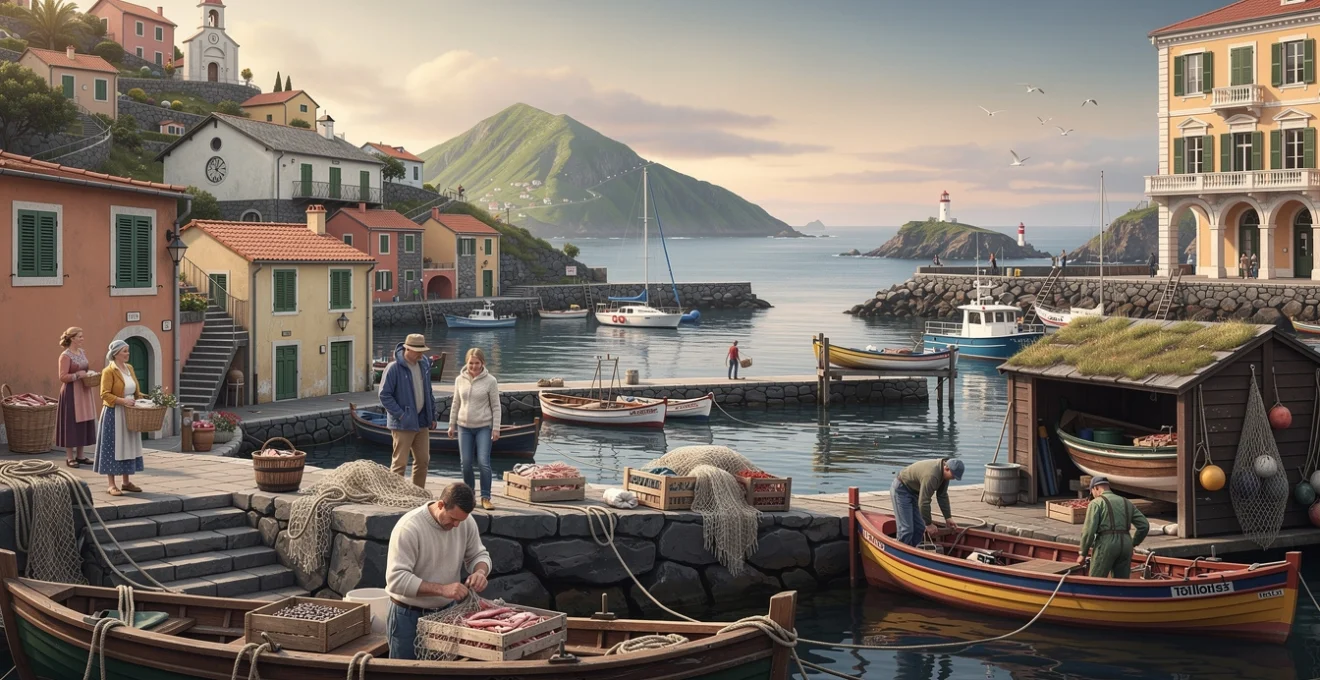
The thunderous arrival of massive cruise ships at major Mediterranean and Caribbean ports has become synonymous with modern maritime tourism. Yet beyond these crowded gateways lies a maritime world where tradition still governs daily life, where fishing boats outnumber luxury yachts, and where the rhythm of tides dictates community activities rather than cruise schedules. These smaller ports, often overlooked by mainstream tourism, offer authentic glimpses into centuries-old maritime cultures that have shaped coastal communities across Europe’s diverse waterways.
The appeal of these intimate harbours extends far beyond their picturesque settings. They represent living museums of maritime heritage, where traditional boat-building techniques persist alongside modern conservation efforts, and where local seafood processing methods have remained unchanged for generations. Small port destinations provide visitors with opportunities to witness authentic maritime life, from the early morning departure of fishing fleets to the afternoon return laden with the day’s catch.
What makes these ports particularly compelling is their ability to maintain economic viability while preserving cultural authenticity. Unlike their larger counterparts, which often struggle with overtourism and infrastructure strain, smaller ports have developed sustainable tourism models that complement rather than overwhelm their traditional maritime activities. This balance creates unique travel experiences that connect visitors directly with maritime heritage and local communities.
Hidden gems along mediterranean coastal routes: exploring authentic maritime heritage
The Mediterranean coastline harbours numerous small ports that have maintained their authentic character despite centuries of maritime trade and cultural exchange. These destinations offer visitors intimate encounters with traditional Mediterranean maritime life, from ancient fishing techniques to time-honoured boat maintenance practices that have been passed down through generations of coastal families.
Portofino’s maritime legacy beyond celebrity tourism
While Portofino’s reputation as a glamorous destination precedes it, the village’s authentic maritime heritage remains deeply embedded in its daily operations. The harbour continues to support a small but active fishing fleet that operates traditional gozzi boats, wooden vessels crafted using techniques dating back to the 16th century. Local shipyards still maintain these boats using traditional methods, with craftsmen employing hand-forged tools and locally sourced materials.
The port’s morning fish market, though modest in scale, showcases the continuation of traditional Mediterranean fishing practices. Local fishermen utilise sustainable methods including selective netting and seasonal fishing restrictions that have preserved local fish populations for centuries. This commitment to traditional practices has maintained Portofino’s role as a working fishing village despite its international fame.
Cinque terre fishing villages: traditional anchovy processing and local maritime culture
The five villages of Cinque Terre represent perhaps the most authentic preservation of traditional Mediterranean fishing culture. Each village maintains distinct maritime traditions, with Monterosso al Mare renowned for its anchovy processing techniques that date back to Roman times. Local fishermen continue to use traditional lampara nets, circular nets deployed at night using bright lights to attract schools of anchovies.
The processing of anchovies in these villages follows methods established over centuries, with families maintaining closely guarded recipes for salt-curing and oil preservation. These techniques produce anchovies with distinctive flavour profiles that reflect both local marine ecosystems and traditional processing expertise. The economic impact of this traditional industry supports approximately 40 local families across the five villages, demonstrating the viability of heritage-based maritime activities.
Collioure’s catalan naval history and artisanal port operations
Collioure’s strategic position near the French-Spanish border has shaped its unique maritime character, blending French and Catalan naval traditions. The port maintains a fleet of traditional Catalan fishing boats called barques catalanes, distinctive vessels with bright paintwork and traditional rigging that continue to operate using centuries-old fishing techniques.
The harbour’s anchorage system reflects medieval engineering principles, with stone breakwaters constructed using techniques developed by Catalan master builders. Modern harbour operations incorporate these historical elements, creating a functional port that serves both working vessels and visiting yachts while maintaining its authentic architectural character. The port handles approximately 200 visiting vessels annually while supporting 15 local fishing boats.
Symi’s sponge diving heritage and Neo-Classical harbour architecture
The Greek island of Symi represents one of the Mediterranean’s most remarkable examples of
its 19th-century prosperity, when Symi became one of the eastern Mediterranean’s principal centres for sponge diving. Traditional sponge boats, once equipped with simple diving bells and later with early compressed-air equipment, would depart Symi’s natural amphitheatre harbour for months-long expeditions across the Aegean and Levantine seas. These voyages shaped not only the island’s economy but also its social fabric, with entire families dependent on the seasonal rhythms of sponge harvesting.
Today, Symi’s colourful Neo-Classical harbour architecture stands as a visible record of this maritime prosperity. Merchant mansions, customs houses, and merchant warehouses line the waterfront, many restored to their original pastel façades and wooden shutters. While commercial sponge diving has declined due to overharvesting and the advent of synthetic materials, small-scale, regulated sponge collection and educational demonstrations help preserve this unique maritime heritage. Visitors who arrive on small ships can observe traditional boat maintenance in the shipyards behind the harbour and visit family-run shops where natural sponges are still cleaned, trimmed, and graded by hand.
Atlantic archipelago ports: sustainable maritime tourism models
Moving beyond the enclosed waters of the Mediterranean, several Atlantic archipelagos have developed small ports that balance traditional maritime activities with carefully managed tourism. These remote island harbours, from the North Atlantic to the tropics, have become laboratories for sustainable maritime tourism models that prioritise local culture, small-scale infrastructure, and environmental protection. Their success shows how small ports can welcome visitors without compromising the integrity of their marine ecosystems or coastal communities.
Unlike major cruise hubs that can see thousands of passengers disembark at once, Atlantic island ports typically focus on lower-volume, higher-value tourism. Many have introduced capacity limits, staggered arrivals, and preferential berthing for small ships and sailing yachts. For travellers, this means more time to engage with local maritime heritage—traditional fishing, whaling histories, boatbuilding, or coastal agriculture—rather than navigating crowds and commercialised waterfronts. For port authorities, it offers a resilient economic model that spreads revenue across more local actors and seasons.
Faroe islands’ tórshavn: traditional pilot whale hunting traditions and modern conservation
Tórshavn, one of the world’s smallest capitals, offers a compelling case study in how a small port navigates sensitive maritime traditions and contemporary conservation standards. The Faroe Islands’ traditional pilot whale drive, or grindadráp, remains an integral part of local culture and subsistence practices, with deep historical roots in community cooperation and shared resources. While controversial internationally, the practice is strictly regulated, with quotas, licensing, and mandatory training designed to minimise animal suffering and ensure that no part of the catch is wasted.
At the same time, Tórshavn has invested heavily in marine research, environmental monitoring, and whale-watching operations that reflect modern conservation priorities. Local institutions collaborate with international scientists to track migratory species, monitor ocean health, and study the impact of climate change on North Atlantic ecosystems. For visitors arriving on small expedition ships, guided tours and museum exhibits provide nuanced perspectives on the islands’ maritime traditions, allowing you to understand how a community can both honour its heritage and adapt to evolving ethical and environmental expectations.
Azores’ horta marina: transatlantic sailing culture and volcanic harbor infrastructure
Horta Marina on the island of Faial is a legendary stopover for transatlantic sailors, a place where ocean-crossing yachts have paused for rest, repair, and resupply since the early days of bluewater cruising. The marina’s breakwaters and piers are covered with thousands of hand-painted murals, each left by passing crews as a talisman for safe passage—a living archive of global maritime routes and personal seafaring stories. For small ships and expedition vessels, calling at Horta provides a rare chance to plug directly into this vibrant transatlantic sailing culture.
The harbour itself is a product of volcanic geography and careful engineering. Natural basins formed by historic eruptions have been reinforced with modern breakwaters designed to cope with North Atlantic swells, while still allowing for tidal exchange that supports marine life. Local authorities have prioritised low-impact port operations: waste reception for yachts and small cruise ships, shore-power options for reduced emissions, and designated zones for hull cleaning to limit invasive species. Visitors can walk from the pier to workshops where wooden sailing boats are still maintained, or take short trips to nearby whaling lookout posts, now repurposed for responsible whale watching rather than industrial hunting.
Madeira’s funchal alternatives: ribeira brava and traditional levada-fed port systems
While Funchal is Madeira’s best-known cruise port, smaller harbours such as Ribeira Brava illustrate a quieter side of the island’s maritime life. Nestled at the mouth of a steep valley, Ribeira Brava’s modest quay historically depended on the island’s intricate levada system—narrow irrigation channels built into the mountainsides—to support both agriculture and small-scale maritime trade. Water channelled from the highlands nourished banana plantations and sugarcane fields that supplied the cargo once loaded onto coastal vessels in the tiny port.
Today, this traditional levada-fed landscape underpins a sustainable tourism model that integrates coastal and inland experiences. Visitors arriving by small ship or tender can explore the harbour’s simple slipways and fishing boats before following levada paths into the surrounding terraces. Instead of large-scale cruise infrastructure, Ribeira Brava has focused on improving pedestrian access, small visitor centres, and heritage interpretation that explains how water management, agriculture, and maritime trade have been interconnected for centuries. This integrated approach helps distribute visitor spending across local cafés, small farms, and family-run guesthouses rather than concentrating it solely on the waterfront.
Cape verde’s mindelo: colonial portuguese maritime architecture and cultural preservation
Mindelo, on the island of São Vicente, is one of Cape Verde’s most atmospheric ports, shaped by centuries of Portuguese maritime influence and Atlantic trade. In the 19th century, the harbour served as a coaling station for steamships crossing between Europe, Africa, and South America, leaving a legacy of warehouses, customs houses, and naval facilities that still define the waterfront. Many of these colonial-era structures have been repurposed into cultural centres, music venues, and artisan workshops, preserving the port’s architectural heritage while supporting contemporary creative industries.
The city has embraced a cultural preservation strategy that positions Mindelo as a hub for music, arts, and maritime history rather than mass tourism. Small ships and boutique cruise lines can dock close to the historic centre, allowing passengers to walk directly from the quay into streets filled with morna music, craft markets, and restored port buildings. Local initiatives promote guided walking tours that highlight both the port’s role in Atlantic navigation and its Creole cultural identity, ensuring that tourism revenue reinforces community pride and supports the maintenance of historic waterfront structures.
Baltic sea artisanal fishing ports: seasonal operations and traditional vessel maintenance
The Baltic Sea is dotted with small fishing harbours that still operate on seasonal cycles shaped by ice conditions, fish migrations, and regional regulations. In contrast to major industrial ports, these artisanal fishing communities often rely on mixed livelihoods, combining small-scale fishing with tourism, boat repair, and coastal agriculture. Their ports function as multi-use spaces where fishing boats, wooden sailing vessels, and visiting yachts share limited quay space and maintenance facilities.
In many Baltic villages, winter brings a shift from active fishing to intensive vessel maintenance. Boats are hauled out onto cradles or wooden slipways, where hulls are inspected, repaired, and treated using a mix of traditional and modern techniques. Older wooden vessels may still be caulked with natural fibres and tar, while newer fibreglass hulls receive anti-fouling coatings selected to minimise ecological impact in the Baltic’s relatively enclosed and sensitive marine environment. For visitors, timing a trip to coincide with this off-season work can be particularly rewarding—without summer crowds, you can observe the detailed craft that keeps these small fleets seaworthy.
Seasonal operations also influence how these ports handle tourism. Some Baltic fishing harbours set specific windows for cruise calls to avoid peak spawning periods for key species or to ensure that landing facilities remain available for working boats during the most productive fishing weeks. This kind of scheduling, though sometimes invisible to travellers, is crucial to keeping tourism from displacing traditional maritime activities. When you walk along a Baltic quay lined with drying nets, crab pots, and repair sheds, you are seeing the result of careful coordination between local cooperatives, port authorities, and small-ship operators.
Economic impact assessment: small port tourism revenue versus infrastructure investment
Understanding the economic value of small port tourism requires looking beyond headline passenger numbers. While a mega-ship might bring several thousand guests at once, research across European coastal regions shows that smaller ships often generate higher per-capita spending in local communities. According to recent industry surveys, guests on small expedition or boutique cruise ships can spend 20–40 percent more per person ashore than those on mass-market vessels, largely because they have more time in port and greater access to local businesses rather than onboard amenities.
However, these benefits only materialise when infrastructure investments are carefully calibrated to the scale of the port and the type of ship calling. Building oversized terminals or deepwater berths can lock small ports into costly maintenance and debt, without guaranteeing long-term traffic. A more resilient approach focuses on incremental upgrades—improved tender pontoons, safe mooring systems, accessible walkways, and clear wayfinding—that enhance the visitor experience without transforming the harbour’s character. You can think of it as tuning a fine instrument rather than buying a larger one: precision improvements often yield better returns than sheer size.
From an economic perspective, the most successful small ports diversify their revenue streams. Harbour dues from visiting ships, guided tours, craft markets, and food experiences all contribute to the local economy. Some destinations introduce modest passenger levies that are transparently reinvested into coastal conservation or heritage restoration projects, creating a visible link between visitor spending and community benefits. When travellers see that their port fees help restore an old slipway or support marine research, they are often more willing to pay premium rates for authentic small port experiences.
Authentic culinary maritime experiences: local seafood processing and traditional preparation methods
One of the most tangible ways to connect with small port culture is through its food. In many traditional harbours, seafood is still landed, processed, and cooked within a few hundred metres of the quay. Rather than large-scale industrial plants, you will find small curing sheds, smokehouses, and family-run canneries where techniques have been refined over generations. Experiencing these processes firsthand—watching fish filleted, salted, smoked, or dried—offers an intimate understanding of how coastal communities have transformed perishable catches into storied local specialities.
For travellers, authentic culinary maritime experiences go far beyond simply ordering fish at a restaurant. Many small ports now collaborate with local cooperatives to offer tasting walks, dockside cooking demonstrations, or visits to working processing facilities during off-peak hours. You might watch anchovies being layered in salt barrels in a Mediterranean village, sample hot-smoked herring straight from a Baltic smokehouse, or learn how Atlantic islanders dry and rehydrate cod for traditional dishes. These encounters help you appreciate seafood not as a generic commodity, but as the outcome of specific ecosystems, seasons, and skills.
In designing such experiences, small ports face important practical questions: How can visitors observe food processing without disrupting hygiene standards? How do you balance the desire for immersive access with the need to keep operations efficient? The most effective solutions borrow from museum practice and industrial tourism, using viewing platforms, scheduled tours, and clear interpretive signage. When done well, these arrangements become a form of “edible heritage,” allowing ports to generate additional revenue while strengthening pride in local maritime gastronomy.
Sustainable berthing solutions: environmental protection strategies for boutique harbour development
As interest in small-ship cruising and intimate ports grows, sustainable berthing solutions have become critical to protecting fragile coastal environments. Traditional mooring methods—such as simple anchors dropped onto seagrass beds or coral—can cause significant ecological damage when repeated across many seasons. To prevent this, forward-thinking small ports are investing in low-impact berthing systems tailored to boutique harbour development, including fixed mooring buoys with seabed-friendly anchors, floating pontoons, and shore-power connections that reduce emissions from idling engines.
In some regions, environmental impact assessments now precede any new berthing infrastructure, even for small-scale projects. Port planners evaluate water circulation, sediment movement, and sensitive habitats before deciding where to site new moorings or jetties. In particularly sensitive areas, dynamic positioning systems on expedition vessels can allow short-term hovering offshore without anchoring at all, while passengers are ferried ashore by tender. It may feel more complex than simply dropping anchor, but this approach ensures that underwater ecosystems remain intact for future generations.
Ultimately, sustainable small port development is less about dramatic engineering feats and more about thoughtful design and ongoing management. Simple measures—such as separating areas for hull cleaning, providing reception facilities for oily waste and greywater, and installing real-time monitoring of berthing capacity—can dramatically reduce environmental risk. When combined with clear guidelines for visiting ships and transparent communication with local communities, these strategies help maintain the delicate balance that makes small ports so appealing in the first place: a living maritime environment where nature, heritage, and carefully managed tourism can coexist.