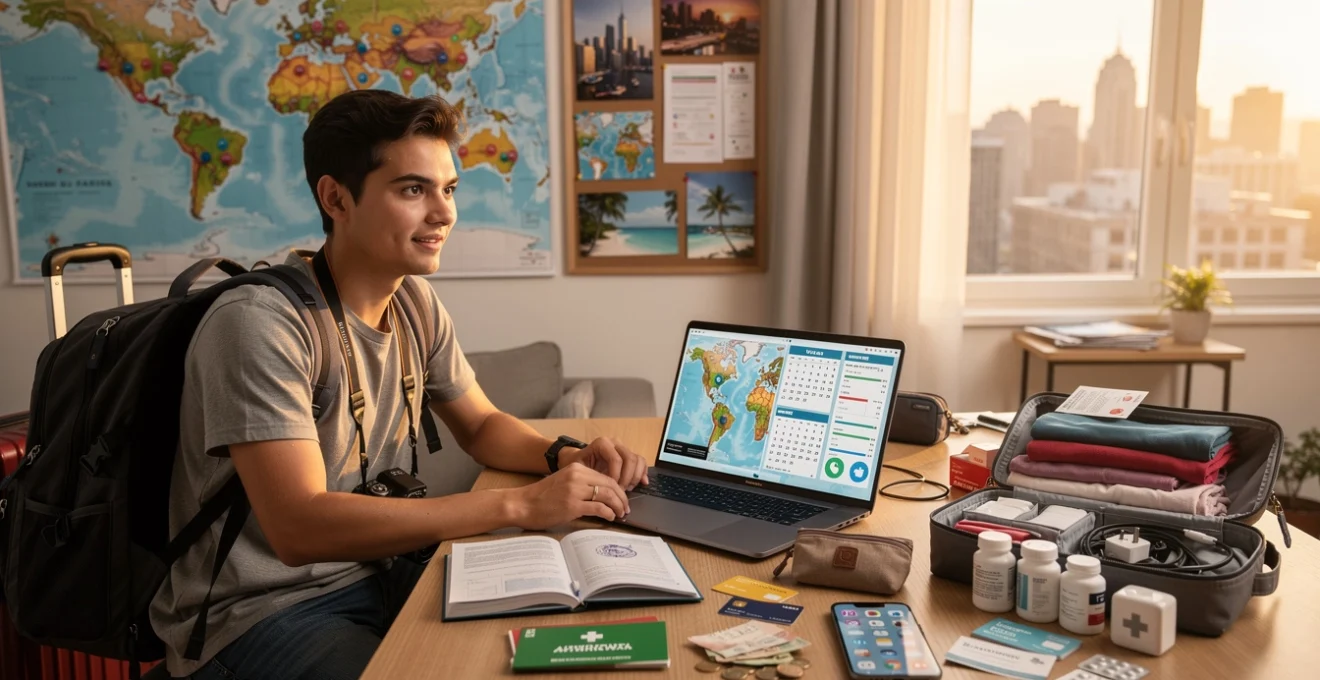
Embarking on your first solo adventure represents a significant milestone in personal growth and independence. The prospect of navigating unfamiliar territories alone can feel simultaneously exhilarating and overwhelming, particularly when considering the myriad administrative, financial, and practical arrangements required before departure. Successfully preparing for independent travel demands meticulous attention to detail across multiple domains—from securing proper documentation and establishing financial infrastructure to safeguarding your health and ensuring reliable communication channels abroad. The difference between a transformative solo journey and a stressful ordeal often lies in the thoroughness of your pre-departure preparation. For first-time solo travellers, understanding exactly what needs organising, when, and why, can dramatically enhance both safety and enjoyment whilst minimising potential complications that might otherwise derail your carefully planned adventure.
Essential travel documentation and legal requirements for solo international travel
Documentation forms the absolute foundation of any international journey, and for solo travellers without a companion to rely upon, ensuring every document is current, accessible, and properly stored becomes even more critical. The consequences of inadequate documentation can range from denied boarding at airports to detention at border crossings—situations considerably more stressful when you’re managing them independently.
Passport validity requirements and Six-Month rule compliance
Your passport serves as your primary identity document abroad, yet many first-time solo travellers remain unaware that simply possessing a valid passport isn’t always sufficient. The six-month rule applies to entry requirements for numerous countries, stipulating that your passport must remain valid for at least six months beyond your intended departure date from that country. Countries including Thailand, Indonesia, Vietnam, and much of Southeast Asia strictly enforce this regulation. European Schengen countries typically require three months’ validity beyond your departure date. Before booking any flights, verify your passport’s expiration date and apply for renewal if necessary—standard processing times in the UK currently range from three to ten weeks, though expedited services exist for urgent situations. Simultaneously, check whether you have sufficient blank pages for visa stamps, as some countries require two to four consecutive blank pages for entry stamps.
Visa application processes for popular solo destinations including thailand, japan, and schengen countries
Visa requirements vary dramatically depending on your nationality and destination, making thorough research essential. British passport holders enjoy visa-free or visa-on-arrival access to approximately 187 countries, yet popular solo travel destinations like India, Russia, and China still require advance visa applications. Thailand currently offers British citizens a 30-day visa exemption for tourism, extendable once for an additional 30 days at immigration offices. Japan similarly provides visa-free entry for up to 90 days for UK nationals. The Schengen Area, encompassing 27 European countries, permits British travellers to stay up to 90 days within any 180-day period without a visa, though post-Brexit regulations require more careful tracking of your accumulated days across all Schengen territories.
For countries requiring advance visas, application timelines typically span two to four weeks, occasionally longer during peak seasons. Utilise official government resources like the UK Foreign Office’s foreign travel advice pages or specialist visa services to determine exact requirements. Many countries now offer e-visa systems, streamlining the application process considerably compared to traditional embassy submissions. Always apply well in advance—aim for at least six to eight weeks before departure to accommodate potential delays or requests for additional documentation.
International driving permit acquisition through AAA or post office services
If your solo adventure includes hiring vehicles for independent exploration, an International Driving Permit (IDP) may prove essential. This document, which translates your UK driving licence into multiple languages, is legally required in numerous countries outside the European Union. In the UK, you can obtain an IDP through the Post Office for approximately £5.50, valid for either one or three years depending on the type selected. The application process is straightforward, requiring only your valid UK driving licence, a passport-style photograph, and the application fee. Note that an IDP doesn’t replace your domestic licence but rather supplements it—you’ll need to carry both documents when driving abroad. Countries where IDPs are commonly required include Thailand, Vietnam, much of South America, and parts of Africa and the Middle East.
Travel insurance policy selection: world nomads vs SafetyWing coverage comparison
Travel insurance
Travel insurance policies vary widely in what they cover, so choosing the right one as a first-time solo traveller is less about picking the “best” brand and more about matching coverage to your style of travel. World Nomads is often favoured by adventure travellers and backpackers because its higher-tier policies typically include cover for activities such as hiking at altitude, scuba diving, and certain adventure sports. It also tends to offer robust coverage for electronics, which is useful if you are travelling with a laptop or camera kit. SafetyWing, by contrast, was built with digital nomads and long-term travellers in mind, offering subscription-style coverage that can be renewed monthly and is usually more budget-friendly for extended trips.
When comparing World Nomads vs SafetyWing for solo travel, focus on a few key areas: emergency medical cover limits, trip interruption and cancellation, baggage loss or delay, and coverage for pre-existing conditions. Read the policy wording carefully—if in doubt, call or email the insurer with specific questions about your planned activities and destinations. As a rule of thumb, if you’re taking a short adventure-heavy trip with many pre-paid tours, World Nomads may be more suitable; if you’re setting off on an open-ended journey with flexible dates, SafetyWing’s rolling cover can offer more flexibility. Whichever provider you choose, purchase your policy before you leave home so that pre-departure cancellations and delays are also covered.
Digital document storage using google drive, dropbox, and TravelDoc applications
Keeping all your essential travel documents accessible in digital form is one of the simplest ways to protect yourself against loss or theft while abroad. Scan or clearly photograph your passport, visas, travel insurance policy, vaccination certificates, driving licence, and any key booking confirmations. Then upload these files to secure cloud storage platforms such as Google Drive or Dropbox, organising them into clearly labelled folders by trip and document type. Ensure offline access is enabled on your phone or tablet so that you can retrieve important information even without Wi‑Fi or data.
In addition to general cloud storage, dedicated travel apps like TravelDoc or itinerary managers such as TripIt can centralise your reservations, boarding passes, and emergency contacts in one dashboard. For added security, protect any folders containing sensitive data with strong, unique passwords and enable two-factor authentication on your accounts. You may also want to keep an encrypted PDF of your documents on your phone using a secure notes app, which acts as a final backup if you cannot access the cloud. With this digital redundancy in place, losing a physical document becomes an inconvenience rather than a crisis.
Financial planning and payment infrastructure for independent travellers
Effective financial planning is the backbone of a stress-free solo trip. When you don’t have a companion to spot you cash or share unexpected costs, your own systems for payments, budgeting, and emergency funds become critical. Setting up a robust payment infrastructure before departure allows you to pay in local currencies, minimise fees, and respond quickly if cards are lost or compromised. Think of this as building a financial “toolkit” tailored to independent travel, combining modern multi-currency accounts, smart credit cards, and practical budgeting apps.
Multi-currency account setup with wise, revolut, and N26 banking platforms
Traditional high-street banks often charge steep fees for overseas card use and currency conversion. Multi-currency digital banks such as Wise, Revolut, and N26 are designed specifically to make international spending smoother and cheaper for travellers. Wise (formerly TransferWise) offers local account details in multiple currencies, mid-market exchange rates, and a debit card that lets you hold and spend in dozens of currencies. Revolut provides similar multi-currency wallets, real-time exchange, and handy in-app budgeting tools like spending analytics and automatic rounding to savings vaults.
N26, available in much of Europe, functions as a full mobile bank with free or low-cost foreign transactions, built-in spending categorisation, and push notifications for each purchase. For a first-time solo traveller, opening at least one of these accounts before departure gives you flexibility if your primary bank card fails or is blocked. Always test your new card with a small online purchase or ATM withdrawal before leaving the country, and make sure you understand how to freeze or unfreeze it via the app if needed. This way, your money can travel as easily as you do.
Credit card selection for zero foreign transaction fees: chase sapphire vs capital one venture
Alongside a multi-currency debit card, carrying a credit card with zero foreign transaction fees can significantly reduce costs on accommodation, flights, and larger purchases. In markets like the US, the Chase Sapphire Preferred/Reserve and Capital One Venture cards are popular choices for frequent travellers. Both typically offer no foreign transaction fees and allow you to earn points or miles on every purchase, which can later be redeemed for flights, hotels, or statement credits. For solo travellers booking all expenses themselves, these rewards can accumulate quickly.
When deciding between a Chase Sapphire and Capital One Venture card, consider your typical spending patterns and preferred airline or hotel partners. Chase’s Ultimate Rewards ecosystem is highly flexible for travellers who enjoy optimising redemptions, whereas Capital One miles are straightforward and easy to use for statement credits against travel purchases. Regardless of the brand, ensure your chosen card supports contactless payments and 3D Secure authentication, which are increasingly required for online bookings. Finally, notify your card issuer of your travel dates and destinations, or verify that they use location-aware fraud detection, to reduce the risk of your card being frozen while you’re abroad.
Emergency cash reserve allocation and currency exchange strategies
Even in an increasingly cashless world, having a sensible cash strategy is vital for solo travel. Many smaller businesses, local buses, and guesthouses still operate on a cash-only basis, particularly in parts of Asia, Africa, and South America. A good rule of thumb is to carry the equivalent of one to two days’ basic expenses in local currency, plus a small reserve of a major currency such as USD or EUR stored separately. This emergency stash can prove invaluable if ATMs are offline, your cards are blocked, or you arrive late at night when exchange facilities are closed.
To minimise fees, withdraw local currency from ATMs at reputable banks rather than using airport exchange kiosks, which often charge poor rates and high commissions. Always decline “dynamic currency conversion” at ATMs and card terminals—if offered the choice, opt to be charged in the local currency rather than your home currency. Spread your cards and cash between your day bag, money belt, and a secure location in your accommodation so that losing one wallet doesn’t leave you stranded. This layered approach acts like a financial safety net, catching you if one element fails.
Travel budget calculation using trail wallet and splitwise applications
Creating a realistic travel budget before departure helps you avoid the anxiety of running out of money mid-trip. Start by estimating daily costs in your destination—accommodation, food, local transport, activities, plus a buffer for unexpected expenses—and multiply this by the number of days you’ll be away. Apps such as Trail Wallet are designed specifically for travellers, allowing you to set a daily budget, log expenses in multiple currencies, and see at a glance whether you are under or over your target. This kind of real-time feedback is especially helpful when you’re travelling solo and making every spending decision yourself.
While Splitwise is often used to share costs between friends, it can also function as a simple record of your own category-based spending if you prefer its interface. Ask yourself: do you tend to overspend on food, activities, or accommodation? Tracking each purchase during your first solo trip will reveal your personal patterns, allowing you to adjust plans on the fly. Treat your budget as a flexible framework rather than a strict limitation; it should guide your decisions without preventing the occasional meaningful splurge, like a once-in-a-lifetime excursion or a special meal.
Health preparation and medical contingency planning
Health preparation for solo travellers involves far more than packing a few painkillers. When you are alone, you are solely responsible for recognising symptoms, seeking care, and managing follow-up treatment, so planning ahead is essential. From vaccinations and prescriptions to travel clinics and first aid, thinking through your medical needs before departure reduces the chances that an illness or injury will derail your trip. Consider this process your personal “health audit” for solo travel: what could realistically go wrong, and what can you organise now to make handling it easier later?
Vaccination requirements for yellow fever, typhoid, and hepatitis A/B immunisation
Many popular solo travel destinations, particularly in Africa, Asia, and South America, have recommended or mandatory vaccinations. Yellow Fever immunisation is required for entry into several countries within sub-Saharan Africa and parts of South America, and some nations will ask to see proof of vaccination (an International Certificate of Vaccination) if you are arriving from a Yellow Fever risk zone. Typhoid vaccination is often recommended for travellers visiting regions where food and water hygiene standards may be lower than you are used to. Hepatitis A and B vaccines are widely advised for travellers due to the diseases’ prevalence and potential severity.
Schedule an appointment with your GP or a specialist travel clinic at least six to eight weeks before departure, as some vaccines require multiple doses spaced over time. The UK’s NHS Fit for Travel website, the CDC, and the WHO provide up-to-date guidance on recommended immunisations by country. Bring your vaccination record with you on your trip—either a physical booklet or a digital copy stored alongside your other essential documents—so that healthcare providers abroad can see your status if you require treatment. This small step can save time and confusion during a stressful moment.
Prescription medication documentation and generic name translation
If you take regular prescription medication, running out or losing your supply abroad can be particularly stressful when travelling solo. Before you leave, request a letter from your doctor detailing your medical conditions, the names and dosages of your medications, and the reason they are prescribed. Ensure the document uses both brand names and generic drug names, as brands often differ by country but generics are more universally recognised. Carry this letter in your hand luggage along with your medicines, and keep a digital copy in your secure online storage.
Pack more medication than you think you’ll need—typically an extra one to two weeks’ supply—to cover delays or extended stays. Leave medicines in their original packaging with the prescription label attached, which helps avoid issues at customs and makes it easier for pharmacists abroad to identify them. If your medication is a controlled substance, check the regulations of your destination and any transit countries; in some places you may need additional documentation or import permits. Having everything clearly documented gives you confidence if you need to explain your prescriptions to border officials or doctors overseas.
Travel clinic consultation and antimalarial prophylaxis protocols
For destinations where malaria, dengue, or other vector-borne diseases are present, a consultation with a travel clinic is particularly important. A specialist travel doctor can assess your itinerary, time of year, and accommodation type to determine whether you need antimalarial tablets and, if so, which regimen is most suitable. Common options such as atovaquone/proguanil, doxycycline, or mefloquine have different dosing schedules and side-effect profiles, so a personalised recommendation matters. You’ll also receive advice on non-pharmaceutical measures like insect repellent use, mosquito nets, and clothing choices.
Follow the prescribed prophylaxis protocol exactly, including starting tablets before entering a risk area and continuing for the recommended period after leaving. Remember that antimalarials reduce risk but do not offer complete protection, so physical barriers and repellents remain essential. During your appointment, ask about region-specific health risks—such as altitude sickness in the Andes or Himalayas—and whether you should carry specific medications like acetazolamide. Having this expert guidance in your back pocket means fewer health-related surprises once you’re on the road.
First aid kit assembly with destination-specific medications and rehydration salts
A well-considered first aid kit functions as your personal “mini clinic” when travelling solo. Its exact contents will vary based on your destination, but most solo travellers benefit from packing adhesive plasters, blister pads, painkillers (paracetamol or ibuprofen), antiseptic wipes, and a small bandage. For trips to hotter climates or places where food hygiene may be inconsistent, add oral rehydration salts, anti-diarrhoeal medication, and an antihistamine for mild allergic reactions. In more remote regions, consider including a basic wound care kit and a thermometer so you can monitor fevers accurately.
Destination-specific medications might include motion sickness tablets for island-hopping, altitude sickness medication for high-mountain trekking, or stronger insect repellent for tropical zones. Pack everything in a compact, waterproof pouch that fits easily in your day pack, and keep a brief written guide inside to remind you of dosages and uses in stressful moments. While your kit is not a substitute for professional medical care, it buys you valuable time and comfort until you can access a doctor or clinic.
Accommodation booking strategy and safety verification
Finding the right place to stay as a first-time solo traveller is about more than price and aesthetics; it’s also a key part of your safety and overall experience. The accommodation you choose will shape how easy it is to meet other travellers, how comfortable you feel returning at night, and how quickly you can access transport and services. A strategic approach—combining reputable booking platforms, online safety checks, and careful review reading—helps you filter out unsuitable options before you ever arrive.
Solo-friendly accommodation selection on booking.com, hostelworld, and airbnb platforms
Major booking platforms such as Booking.com, Hostelworld, and Airbnb each offer different advantages for solo travellers. Booking.com provides a wide range of hotels, guesthouses, and apartments, often with generous cancellation policies and verified guest reviews. Hostelworld specialises in hostels, which can be ideal if you want to meet other travellers through shared dorms, common areas, and organised activities; many hostels now offer female-only dorms and private rooms for extra comfort. Airbnb can be particularly appealing if you prefer a more local, residential feel, with options ranging from private rooms in shared homes to entire apartments.
When searching, use filters that matter for solo travel: 24-hour reception, free Wi‑Fi, breakfast included, and “excellent” or “very good” review scores. Pay attention to accommodation descriptions that mention solo travellers, digital nomads, or communal spaces, as these often indicate a more social environment. For your first night or two in a new country, consider prioritising well-reviewed, centrally located properties over ultra-budget options—you can always move somewhere cheaper once you find your feet.
Location safety assessment using google maps street view and numbeo crime statistics
Even a beautiful property can be problematic if it sits in an unsafe or inconvenient area. Before booking, paste the address into Google Maps and explore the surrounding streets using Street View where available. Ask yourself: does the neighbourhood look residential, commercial, or industrial? Are there open shops, cafes, or people on the streets, or does it appear isolated? Check how far you’ll be from public transport, main roads, and key landmarks you plan to visit. A 20-minute walk on a map might feel very different in reality if it involves dark, unlit roads at night.
Websites such as Numbeo provide user-reported crime statistics and safety perceptions by city, offering a broad sense of how locals feel about walking alone during the day or night. While these figures are not perfect, they can highlight areas where extra caution is warranted. Combine this data with traveller forums, blogs, and recent reviews mentioning safety. This multi-layered approach is like building a jigsaw puzzle of your destination; each piece of information helps you see the bigger picture more clearly.
Review authentication and red flag identification in TripAdvisor and google reviews
Online reviews are one of your best tools for assessing accommodation quality and safety, but they need to be interpreted thoughtfully. On platforms like TripAdvisor and Google Reviews, sort by the most recent feedback to see current conditions—ownership changes, renovations, or staff turnover can dramatically alter guest experiences. Look specifically for comments from solo travellers or solo female travellers, as they will often mention whether they felt safe coming and going, how staff responded to issues, and whether the area was comfortable at night.
Be alert to red flags such as repeated mentions of theft, poor security, unhelpful or aggressive staff, bedbugs, or misleading photos. Conversely, multiple reviews praising attentive staff, clean facilities, and a friendly atmosphere are strong green lights. Watch out for patterns: one isolated negative review may be an outlier, but consistent criticism in the same area usually indicates a genuine problem. Taking 15–20 minutes to read reviews in depth can save you from days of discomfort or worry once you arrive.
Communication infrastructure and digital connectivity setup
Reliable communication is non-negotiable for solo travel, especially when navigating new cities, arranging transport, or checking in with loved ones back home. Setting up your digital connectivity before departure ensures you’re not scrambling for solutions at the airport after a long-haul flight. Think of your communication infrastructure as a three-layer system: mobile data for on-the-go access, secure internet connections for sensitive tasks, and offline tools for moments when connectivity drops.
International SIM card procurement through airalo, orange holiday, and local carrier options
Staying connected abroad has become much easier in recent years thanks to eSIMs and traveller-friendly data packages. Providers like Airalo let you purchase regional or country-specific eSIMs before you even leave home, so your phone connects to a local network as soon as you land—no need to hunt for a kiosk in a jet-lagged haze. For travellers within Europe, physical SIMs such as Orange Holiday offer generous data allowances, calls, and texts that work across multiple EU countries, making them ideal for rail or road trips.
In some destinations, buying a SIM card from a local carrier on arrival still offers the best value, though it may require showing your passport and completing registration forms. Before you go, check that your phone is unlocked and supports eSIMs if you plan to use them. Compare data packages based on how you actually travel: will you be streaming video and uploading content daily, or mainly using maps and messaging apps? Matching your plan to your habits prevents both bill shock and unnecessary restrictions.
VPN service configuration with NordVPN or ExpressVPN for secure banking access
Public Wi‑Fi networks in airports, cafes, and hostels are convenient, but they can also be vulnerable to security risks. A Virtual Private Network (VPN) encrypts your internet connection, protecting sensitive activities such as online banking, accessing email, or logging into your cloud storage. Services like NordVPN and ExpressVPN are popular among travellers because they offer user-friendly apps, fast servers, and a wide choice of locations. Configuring your VPN before departure means one tap is all it takes to secure your connection, even on unfamiliar networks.
Beyond security, a VPN can help you access region-locked services or booking sites that show different prices based on location. However, its primary role for solo travellers should be safeguarding your financial and personal data. Make sure you understand how to switch servers, enable the kill switch (which cuts your internet if the VPN drops), and set the app to auto-connect on untrusted networks. With these settings in place, you can handle practical tasks online with far greater peace of mind.
Offline navigation tools including maps.me and google maps offline functionality
No matter how good your data plan is, there will be moments when you find yourself offline—underground on the metro, in rural areas, or simply in a building with poor signal. Preparing offline navigation tools turns these moments from crises into minor inconveniences. Google Maps allows you to download large sections of a city or region for offline use, including turn-by-turn driving directions and stored places like your hotel or key landmarks. Before you leave, download maps for every major destination on your itinerary and double-check that they are saved to your device.
Apps like Maps.me provide detailed offline maps that often include hiking trails, smaller streets, and points of interest not always highlighted on mainstream platforms. For solo travellers, having both a primary and backup navigation app is like carrying a digital compass and a paper map—you are far less likely to get truly lost. Mark important locations such as your accommodation, transport hubs, and embassy or consulate ahead of time so you can navigate back even if your battery is low or you’re feeling overwhelmed.
Pre-departure logistics and home security arrangements
While most of your attention may be focused on flights, visas, and what to pack, taking care of things at home is just as important for a smooth solo trip. Unpaid bills, overflowing post, or doubts about home security can linger at the back of your mind and distract from your experience abroad. By organising key logistics—mail, utilities, finances, and emergency contacts—before you leave, you create mental space to fully enjoy your journey, knowing that your home life is on a stable footing.
Mail holding services through royal mail keepsafe and neighbour coordination
Accumulated post is one of the most obvious signs that a property is unoccupied, which can make it more attractive to opportunistic burglars. In the UK, Royal Mail’s Keepsafe service will hold your mail for up to 100 days and deliver it in one batch when you return, preventing letters from piling up unseen. If you live elsewhere, check whether your national postal service offers a similar “hold mail” option and set it up at least a week before departure. This small administrative step adds a surprising amount of peace of mind.
Complement official services by coordinating with a trusted neighbour, building manager, or friend who can keep an eye on your property. Ask them to collect any unexpected leaflets or packages, adjust curtains or blinds occasionally, and message you if anything looks unusual. In return, you can offer to do the same when they travel. This human element of home security often catches issues that automated systems miss.
Automatic bill payment configuration and account alerts setup
Nothing undermines your post-trip glow like returning home to overdue notices or reconnection fees. Before you leave, review all regular bills—rent or mortgage, utilities, phone, internet, insurance, and subscriptions—and set up automatic payments where possible. If you’re concerned about overdrafts, schedule payments shortly after your income arrives or keep a small buffer in the relevant account. For solo travellers, this automation ensures that essential services continue uninterrupted even if you forget specific due dates while on the road.
Most banks and service providers now offer app-based alerts for large transactions, low balances, or upcoming payments. Activating these notifications allows you to keep a light but effective eye on your finances from abroad. Think of these alerts as your digital “co-pilot,” monitoring your accounts in the background while you focus on navigating new cities and experiences.
Emergency contact network establishment and itinerary sharing via TripIt
Finally, ensure that at least one or two trusted people at home know your basic plans and how to reach you in an emergency. Create a simple document listing your flight details, accommodation addresses, key dates, and contact numbers, then share it via email or a secure cloud link. Apps like TripIt can automate much of this process by compiling your bookings into a master itinerary, which you can then share with chosen contacts. Each time you forward a new confirmation email, your itinerary updates automatically.
Alongside logistical information, provide your emergency contacts with copies of your passport details, travel insurance policy number and emergency assistance phone line, and any relevant medical information. Agree on how often you’ll check in—perhaps a quick message on arrival in each new city—so that they know when to expect to hear from you. This network doesn’t restrict your independence; rather, it acts like a safety harness for your solo adventure, there to catch you if something unexpected happens far from home.