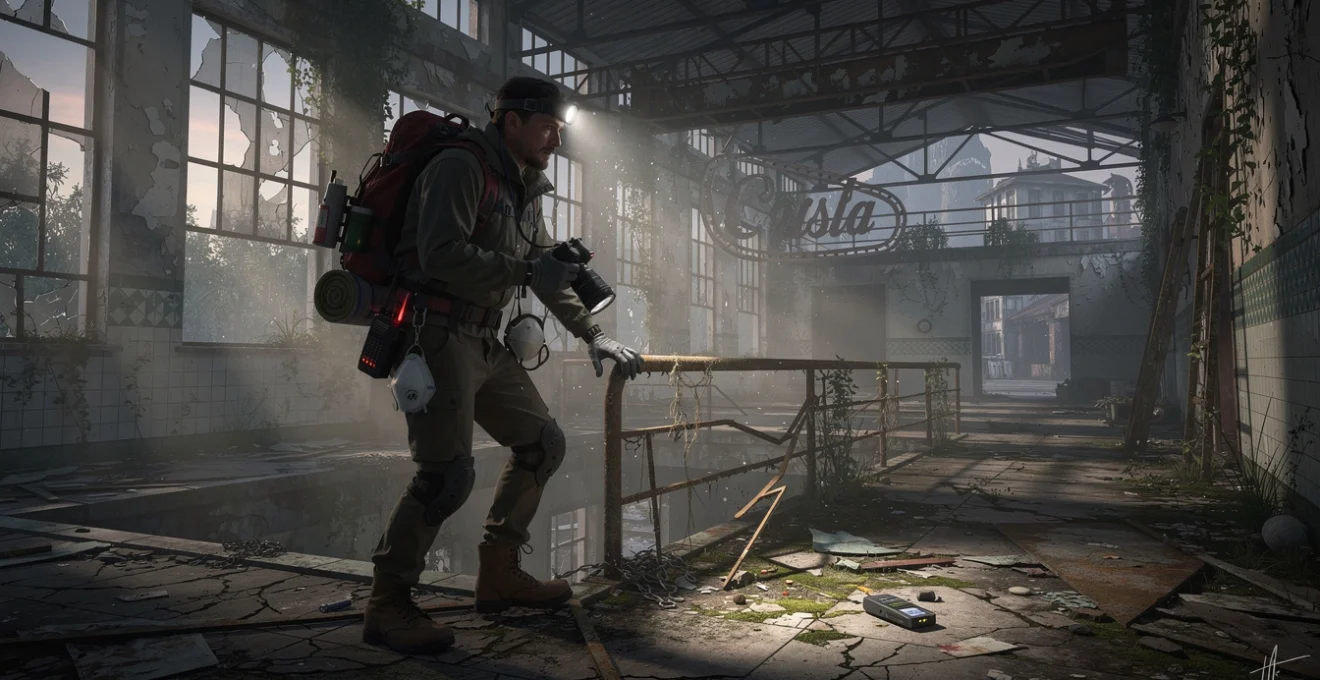
The allure of abandoned spaces transcends simple curiosity—it represents a visceral connection to forgotten narratives etched into deteriorating structures. From crumbling industrial complexes to deserted hospitals, these locations offer glimpses into historical moments frozen by circumstance. Urban exploration has evolved from a fringe hobby into a documented practice with established ethical frameworks and safety protocols. As practitioners navigate these liminal spaces between past and present, understanding the responsibilities inherent in exploring abandoned sites becomes paramount. The rise of social media has simultaneously democratized access to information about these locations whilst creating challenges around preservation and responsible visitation. Whether you’re drawn to the aesthetic of decay, historical documentation, or architectural appreciation, approaching these environments with informed caution protects both explorers and the integrity of the sites themselves.
Understanding urban exploration ethics and the leave no trace principles
The foundation of responsible urban exploration rests upon a fundamental philosophy that distinguishes serious practitioners from casual trespassers. This ethical framework emerged from decades of collective experience within the urbex community, shaped by both successful explorations and cautionary tales. At its core, ethical exploration requires balancing personal curiosity with preservation responsibility—a tension that defines the practice.
The urban explorer’s code: take only photographs, leave only footprints
This maxim represents more than a catchy phrase; it embodies the operational philosophy separating documentation from exploitation. When you enter an abandoned structure, every artifact—from rusted medical equipment to personal correspondence—contributes to the site’s historical narrative. Removing items destroys contextual information that researchers, preservationists, and future visitors might study. The practice of in situ documentation allows these spaces to retain their archaeological integrity whilst permitting photographic records that can outlast the structures themselves.
Contemporary explorers increasingly recognise their role as informal archivists. Many maintain detailed photographic databases that serve historical societies and urban planners studying architectural evolution and social history. This documentation becomes particularly valuable when sites face imminent demolition. However, the responsibility extends beyond simply not stealing—it includes avoiding any disturbance that might accelerate decay or compromise structural stability. Moving furniture for compositions, opening sealed areas, or removing vegetation can inadvertently trigger collapse or water intrusion that damages irreplaceable elements.
Trespassing laws and legal grey areas in abandoned property access
The legal landscape surrounding abandoned property exploration remains complex and jurisdiction-dependent. In most Commonwealth nations, entering private property without permission constitutes trespass regardless of the structure’s condition or apparent abandonment. Property rights persist even when buildings stand vacant for decades, creating situations where de facto abandonment doesn’t equal de jure accessibility. Criminal trespass charges typically require demonstrating intent to commit additional crimes, yet civil liability for injuries sustained on private property can still apply.
Some explorers adopt a “better to ask forgiveness than permission” approach, accepting potential legal consequences as inherent to the practice. Others meticulously research ownership records through land registry databases, contacting owners to request formal access. This latter approach occasionally yields surprising results—property owners sometimes grant permission when approached respectfully, particularly if you can demonstrate serious historical interest rather than thrill-seeking motivations. Municipal properties occasionally permit access through heritage departments or tourism boards, especially for locations with recognised architectural significance.
Risk assessment protocols before entering derelict structures
Competent risk assessment begins before you arrive at a location, incorporating research into the site’s history, construction methods, and known hazards. Understanding why a building was abandoned provides crucial context—structures vacated due to environmental contamination present different risks than those simply rendered economically unviable. Pre-visit reconnaissance through satellite imagery and historical photographs helps identify potential weak points, collapsed sections, and safe approach routes.
On-site assessment should follow a systematic methodology. External inspection reveals obvious structural compromises: sagging rooflines indicate beam failure, visible cracks suggest foundation settlement, and vegetation growth often accompanies water intrusion that weakens load-bearing elements. Testing floorboards near entry points before committing full weight, identifying secondary exit routes before proceeding deeper, and continuously monitoring for environmental changes (sudden temperature drops, unusual odours, or structural sounds) constitute essential practices. Working in pairs or teams allows one person to maintain position in known-safe areas whilst others explore, creating natural safety checkpoints.
Environmental conditions can shift rapidly in derelict environments, so dynamic risk assessment is critical. Wind-loading on compromised walls, changing light levels that obscure hazards, or rising water in basements can all transform a passable area into a trap within minutes. Building a habit of periodically pausing to reassess, listening for new creaks or groans, and being willing to retreat rather than push deeper is a hallmark of mature urban exploration. Responsible curiosity means recognising that no photograph or story is worth serious injury.
Documentation standards: photographing without disturbing historical integrity
Thoughtful documentation bridges the gap between personal adventure and meaningful contribution to collective memory. High-quality images, field notes, and even basic floor sketches can support historians, conservation architects, and local communities trying to understand how a site evolved over time. However, creating compelling photographs in abandoned places should never come at the cost of altering or staging the environment. If a chair looks “perfect” in a different corner, for example, moving it breaks the continuity between object and setting that gives urban exploration photography its evidentiary value.
Many experienced explorers adopt a quasi-archaeological mindset. They record objects in situ, shoot wide establishing frames before moving in for details, and make note of dates on paperwork, signage, or packaging. Capturing serial numbers, manufacturer plates, and construction details adds depth to what might otherwise be purely aesthetic images of decay. When publishing online, adding accurate captions and approximate dates helps prevent myths and misinformation from eclipsing real histories—a growing issue in an era of viral “haunted hospital” posts with fictional backstories.
Ethical documentation also extends to how locations are shared. Publicly posting precise GPS coordinates or detailed access instructions can invite vandalism, copper theft, and unsafe visits by unprepared followers. Many urbex photographers now use general regional tags (“abandoned factory in northern France”) rather than specific place names, especially for fragile or unsecured sites. By treating information about these abandoned locations as sensitive rather than disposable, you help ensure that their stories remain available for responsible explorers and researchers rather than erased by neglect or exploitation.
Essential safety equipment and personal protective gear for abandoned site visits
Even when you approach an abandoned building with respect and caution, the environment itself may not reciprocate. Rusted metal, unstable masonry, airborne particulates, and hidden biological contaminants all turn seemingly still spaces into complex risk environments. Just as mountaineers would not approach a high-altitude climb in street shoes, urban explorers should view basic safety gear as non-negotiable. Appropriate equipment does not eliminate risk, but it does shift the balance away from preventable injuries and long-term health consequences.
Urban exploration has diversified beyond casual visits with a smartphone to include documentary filmmakers, architectural historians, and fine-art photographers carrying substantial gear. As exposure times lengthen and tripods, lights, or drones enter the picture, so does the need for more rigorous safety planning. Investing in a small, modular kit that lives in your bag—gloves, eye protection, compact respirator, headlamp, and first-aid basics—means you can respond flexibly to unfamiliar conditions. Your goal is to treat every entry as if something could go wrong and to be pleasantly surprised when it does not.
Respiratory protection: N95 masks and half-face respirators for asbestos exposure
Among the invisible dangers in abandoned places, airborne particulates are some of the most insidious. Many structures built before the 1980s contain asbestos in insulation, floor tiles, roofing materials, and pipe lagging, while flaking lead paint and mould spores add to the respiratory burden. Disturbing dust by walking, opening doors, or moving debris can create a cloud of microscopic particles that linger in still air. Because health impacts such as asbestosis or mesothelioma may not surface for decades, short, repeated exposures during casual urban exploration are easy to underestimate.
For low-risk environments where dust is minimal and you are not disturbing materials, a properly fitted N95 or FFP2 mask can provide basic protection. However, in heavily decayed industrial complexes, collapsed ceilings, or visibly dusty corridors, a half-face respirator with P100 (or FFP3) particulate filters offers significantly better defence. Fit-testing—ensuring that the mask seals securely to your face—is just as important as the device itself. Facial hair, incorrect strap tension, or damaged seals can all defeat the purpose of advanced respiratory protection.
Good respiratory practice also includes behavioural habits. Avoid kicking up dust, slamming doors, or breaking materials that might contain asbestos or lead. If an area smells strongly of mould, feels humid, and shows heavy black or green growth, limit your time inside and consider wearing both eye protection and a respirator. Treat your mask or respirator as you would your camera: keep it clean, store it properly, and replace filters according to manufacturer guidelines rather than waiting until they are visibly dirty.
Structural integrity testing tools: moisture metres and infrared thermometers
While no handheld device can replace professional structural engineering assessments, a few simple tools can help you make more informed decisions about where to step—or where to avoid entirely. Moisture metres, often used in building inspections, measure the moisture content of wood, plaster, or masonry. Elevated moisture readings in floorboards, for example, suggest rot and reduced load-bearing capacity, especially in older timber structures. Similarly, damp walls may indicate hidden leaks, delamination, or freeze–thaw damage that weakens brick and concrete over time.
Infrared thermometers or compact thermal cameras can reveal temperature differentials that hint at hidden voids, water intrusion, or missing structural elements. A cold patch on an otherwise warm wall might correspond to a saturated section of insulation or an uninsulated opening; a cool line running across a floor could suggest a void beneath, such as a service tunnel or collapsed subfloor. While these readings require interpretation and are far from foolproof, they provide an additional layer of data beyond what your eyes can see.
Think of these devices as early-warning systems rather than green lights. A dry reading does not guarantee that a floor will hold your weight, but a combination of high moisture, visible sagging, and structural cracking should strongly nudge you toward retreat. As you gain experience, you will learn to correlate instrument readings with what later proves to be genuine weakness, refining your intuitive “risk radar” alongside more formal measurements.
Navigation systems: offline GPS devices and breadcrumb trail markers
Large abandoned complexes—hospitals, factories, institutional campuses—can be surprisingly labyrinthine. Corridors repeat, stairwells dead-end, and windowless basements quickly disorient even people with a strong sense of direction. Relying solely on smartphone navigation is risky; thick walls, underground levels, or remote locations often mean poor reception and rapid battery drain. Once your torch and phone both die, even a short walk back to the exit can turn into a serious problem.
Offline GPS devices or smartphone apps that support offline maps provide a more resilient navigation backbone. Before entering, you can mark your entry point as a waypoint and periodically drop “breadcrumbs” at key junctions, staircases, or transitions between buildings. This practice mirrors hiking navigation in dense forests, where paths may not be obvious on the ground but become clear from recorded tracks. Carrying a small power bank ensures that your navigation tools remain functional even during long sessions of low-light photography.
In addition to digital breadcrumbs, simple physical markers can be helpful in featureless corridors or multi-level structures. Some explorers use biodegradable tape or chalk arrows near junctions to indicate their path without permanently marking the environment; others rely on highly specific verbal notes (“third door on the left past the blue stairwell”). Whatever system you adopt, decide on it with your group before entering and stick to it consistently. Clarity becomes vital if someone needs to exit quickly due to injury or anxiety.
Emergency communication: two-way radios and personal locator beacons
Communication failures are a common denominator in many exploration incidents. Mobile networks may be unreliable inside reinforced concrete or steel-framed buildings, and shouting is both ineffective over distance and likely to attract unwanted attention. Two-way radios with sufficient range for the size of the complex offer a practical solution, allowing teams to coordinate movements, call for assistance, or signal a retreat without relying on fragile phone coverage.
For explorations in remote or semi-wild locations—derelict industrial sites on the edge of towns, former mining operations, or abandoned military installations—personal locator beacons (PLBs) or satellite messengers add a further safety net. These devices, once activated, transmit your location via satellite to emergency services, bypassing traditional mobile networks altogether. They are not a license to take greater risks, but they provide a last line of defence if an accident leaves you immobilised far from help.
Establishing simple communication protocols before you enter makes these tools more effective. Agree on check-in intervals, define a specific phrase that signals “stop and regroup,” and decide how long you will wait before treating radio silence as an emergency. Tell a trusted contact outside where you are going and when you expect to return, and share a plan for what they should do if you fail to check in. Responsible urban exploration treats redundancy—multiple ways to call for help—as essential rather than excessive.
Notable abandoned locations: from pripyat’s ghost city to hashima island
Certain abandoned sites have become almost mythical within the urban exploration and photography communities, their names shorthand for particular kinds of decay, risk, and historical resonance. These places, from the irradiated streets of Pripyat to the concrete hulk of Hashima Island, are more than atmospheric backdrops; they are case studies in how war, industrial shifts, natural disasters, and political decisions can reshape entire landscapes. Studying them, even from afar, deepens your understanding of why abandoned places look and feel the way they do.
Most of these iconic locations now sit at the intersection of tourism, preservation, and regulation. Access is often structured through guided tours or research permits, especially where hazards like radiation, structural instability, or environmental contamination persist. While this may limit the “pure” urbex experience of solitary discovery, it also offers a model of how responsible curiosity can coexist with public safety and historical stewardship. Exploring their stories prepares you to interpret more modest local sites through a richer, global lens.
Chernobyl exclusion zone: navigating radiation hotspots and contamination zones
The Chernobyl Exclusion Zone, encompassing the abandoned city of Pripyat and surrounding villages, remains one of the most studied and regulated abandoned regions on Earth. Here, the haunting spectacle of empty schools and amusement parks intersects with invisible, long-lived radiation. Contemporary radiation levels in many outdoor areas are low enough for short, guided visits, but “hotspots” remain—patches of soil, debris, or materials that retain dangerously high contamination. Unlike crumbling floors or broken glass, these hazards are intangible and cumulative.
Official tours and research visits operate under strict time and route controls. Guides rely on calibrated Geiger counters and dosimeters to monitor ambient levels, ensuring that visitors remain within internationally recognised exposure limits. You may notice them avoiding particular patches of ground, discouraging sitting on the soil, or prohibiting entry into specific basements where radionuclides have accumulated. These restrictions can feel frustrating to photographers seeking the “perfect” frame, but they embody a hard-earned understanding that radiation does not negotiate.
For anyone drawn to radiation-affected sites—Chernobyl, Fukushima-affected zones, or former weapons testing ranges—basic radiological literacy is essential. Understanding concepts like dose rate, cumulative exposure, and contamination versus irradiation helps demystify the environment and supports better choices. Protective clothing, disposable shoe covers, and strict decontamination routines (such as wiping down gear and avoiding contact with vegetation) reduce the risk of carrying particles away. The lesson here translates to less extreme environments: sometimes the most profound engagement with a place involves accepting the lines that cannot safely be crossed.
Detroit’s packard automotive plant: industrial decay documentation techniques
The Packard Automotive Plant in Detroit has become emblematic of industrial decline and the aesthetics of urban ruination. Spanning more than three million square feet at its peak, the complex combined manufacturing halls, offices, and support facilities in a sprawling concrete maze. Years of partial demolition, scrapping, and exposure to the elements have transformed it into a patchwork of open skies, skeletal floors, and graffiti-covered columns. For industrial urban explorers and photographers, Packard offers a masterclass in reading how factories die.
Documenting such a vast site demands a disciplined approach. Wide-angle lenses capture the scale of empty production lines and cavernous assembly halls, while telephoto lenses isolate patterns of broken windows, rust streaks, and encroaching vegetation. Shooting from multiple vantage points—ground level, elevated platforms, and safe upper floors—reveals how light interacts with dust and concrete at different times of day. Tripods and long exposures help manage low light without boosting ISO to the point of unusable noise, particularly in interior corridors and windowless rooms.
Industrial decay photography also benefits from attention to process artifacts: control panels frozen mid-operation, signage outlining safety procedures for long-gone workers, or racks still labelled with part numbers. These details anchor otherwise abstract images of rubble in the human systems they once supported. As redevelopment and demolition gradually erase sites like Packard, such visual records become unique testimonies to how industrial modernity both built and abandoned entire communities.
Beelitz-heilstätten sanatorium: navigating multi-storey medical facilities safely
Beelitz-Heilstätten, a vast former tuberculosis sanatorium complex near Berlin, illustrates both the allure and complexity of multi-storey institutional exploration. The site combines ornate façades with decaying interiors, tiled treatment rooms, and long, echoing corridors. Some buildings have been stabilised or repurposed, while others remain in advanced states of disrepair, creating a patchwork of relative safety and severe hazard just a doorway apart. For explorers, the vertical dimension—multiple floors, attics, and basements—adds extra layers of risk.
Vertical movement in decayed buildings requires particular caution. Staircases may appear intact but conceal rusted stringers, missing anchor bolts, or treads rotted beneath paint and dust. Spiral or cantilevered stairs, while photogenic, are especially vulnerable to failure. When in doubt, test each step near the wall (where support is usually strongest), avoid crowding several people onto the same flight, and reconsider any route where you cannot clearly see what lies beneath a thick layer of debris.
Medical facilities also introduce unique environmental concerns. Old sanatoria and hospitals may contain residual chemicals, unsecured pharmaceuticals, or biological waste, even decades after closure. Sealed treatment rooms, basements with stagnant water, and morgue areas can harbour high mould concentrations and airborne pathogens. Limiting time in lower levels, wearing appropriate respiratory protection, and resisting the urge to open sealed cabinets or containers all help balance curiosity with self-preservation. In a multi-building campus like Beelitz, the safest route is often the one that skips the most compromised structures entirely.
Six flags jazzland: post-hurricane katrina structural degradation patterns
Six Flags Jazzland (also known as Six Flags New Orleans), abandoned after Hurricane Katrina in 2005, illustrates how natural disasters accelerate structural degradation in ways that differ from slow economic decline. Rides, concession stands, and service buildings were not simply left to age; they were violently flooded, battered by wind, and then marinated in brackish water and subtropical humidity. Steel corrodes faster in salt-laden environments, timber swells and rots, and concrete spalls where reinforcement bars rust and expand. For urban explorers, this means that amusement parks in post-disaster zones may be far more fragile than their relatively young age suggests.
Rollercoaster tracks and elevated platforms, while visually striking, can be extremely unsafe to climb. Fasteners may have corroded away, foundations undermined by erosion, or sections twisted out of alignment by storm forces. Boardwalks, piers, and wooden decking—often hallmarks of coastal amusement sites—are prone to hidden rot, with planks that fail under point loads like a single footstep. Even seemingly solid concrete paths can conceal voids where subgrade material washed away during flooding.
Disaster-affected sites also carry emotional weight. They are bound up with recent community trauma, insurance disputes, and contested redevelopment narratives. Approaching them ethically involves more than just physical caution; it requires sensitivity to the fact that, for many locals, these are not picturesque ruins but reminders of loss and inequality. When documenting such places, contextualising your images with accurate timelines and acknowledging the human impact of the disaster helps resist the temptation to aestheticise suffering.
Environmental hazards: identifying asbestos, lead paint, and biological contaminants
Abandoned buildings often act as unintentional repositories for hazardous materials that were once common in construction and everyday life. Unlike dramatic structural collapses, these environmental hazards rarely announce themselves with noise or movement. Instead, they accumulate slowly in dust, peeling paint, standing water, and colonised surfaces. Recognising the signs of asbestos insulation, lead-based coatings, and biological growths allows you to adapt your behaviour—reducing exposure time, upgrading protective gear, or avoiding specific rooms altogether.
Asbestos was widely used for its fire-resistant and insulating properties until health risks became undeniable in the late twentieth century. You are most likely to encounter it in pipe lagging, ceiling tiles, floor tiles, roofing felt, and textured wall coatings in buildings constructed or renovated before the 1980s. Friable asbestos—materials that crumble easily when touched—poses the highest risk because it releases fibres into the air. If you see fluffy insulation around pipes, degraded boiler wrappings, or broken ceiling tiles shedding powder, treat the area as contaminated and avoid disturbing anything.
Lead paint, banned in many countries for residential use in the late twentieth century, still clings to door frames, window sashes, railings, and walls in older structures. In abandoned environments, this paint often flakes and powders, especially where moisture or sun exposure has damaged surfaces. While simply walking through a room with intact painted walls carries relatively low risk, scraping, touching your face with contaminated hands, or tracking dust onto clothes increases the chance of ingestion or inhalation. Wearing gloves, avoiding eating on-site, and washing thoroughly after visits are simple but effective precautions.
Biological contaminants range from visible moulds and mosses to less obvious bacterial colonies in stagnant water or decaying organic material. Dark, damp basements, bathrooms with collapsed plumbing, and areas impacted by flooding are particularly prone to heavy mould growth. Strong musty odours, condensation, or black streaks on walls are warning signs that respiratory risks may be elevated. Rodent droppings and bird guano introduce additional concerns such as hantavirus and histoplasmosis. In such spaces, respirators with appropriate filters, eye protection, and limited exposure times are crucial—and sometimes the most responsible choice is to stay out entirely.
Photography techniques for low-light and high-dynamic-range abandoned environments
Abandoned places challenge photographers with precisely the conditions that make them compelling: dim interiors, bright blown-out windows, deep shadows, and complex textures. Capturing the atmosphere of these spaces requires technical strategies that go beyond automatic camera modes. You are essentially trying to translate the feeling of stepping into a forgotten world—a flicker of light through broken glass, dust motes in a sunbeam, the oppressive darkness of an unlit corridor—into a static frame that still communicates depth and mood.
Stability is the foundation of successful low-light photography. A compact but sturdy tripod allows you to use longer exposures at low ISO settings, preserving detail in shadows and highlights without excessive noise. When tripods are impractical or unsafe—narrow stair landings, unstable floors—a beanbag, clamp, or even a camera strap wrapped taut around your neck can help steady the camera. Using a remote release or the camera’s self-timer further reduces vibration, especially for exposures longer than one second.
To manage high dynamic range scenes—dark rooms with bright windows or doorways—several approaches are available. One is exposure bracketing: taking a series of frames at different exposures (for example, -2, 0, +2 EV) and blending them later in software. When done subtly, this technique preserves detail in both shadows and highlights without the “overcooked” look often associated with early HDR imagery. Alternatively, you can expose for the highlights (ensuring windows are not blown out) and then gently lift shadows in post-processing, accepting some noise as part of the scene’s texture.
Light itself can be a creative tool rather than merely a constraint. Small LED panels, headlamps, or even smartphone torches can be used for “light painting” during long exposures, selectively illuminating architectural features, objects, or pathways. By moving the light source during the exposure, you can sculpt how attention flows through the frame. Think of it as stage lighting in a theatre: you are directing the viewer’s eye while revealing textures that might otherwise disappear into darkness.
Lens choice and composition significantly affect how viewers perceive abandoned environments. Wide-angle lenses emphasise scale and distortion, making corridors appear longer and rooms more imposing, while normal or short telephoto lenses flatten space, drawing attention to details like peeling paint, rust patterns, or personal artifacts. Including structural elements such as door frames, archways, or stair rails in the foreground adds depth and helps orient the viewer in spaces that might otherwise read as chaotic. Whenever possible, watch how natural light shifts through a site over time; a room that seems uninspiring at noon may transform into a cathedral of shadows and beams in late afternoon.
Community engagement: contributing to preservation archives and historical documentation projects
Responsible curiosity does not end when you step back through the fence or climb out of a basement window. The images, notes, and experiences you carry with you can feed into broader efforts to preserve, interpret, and sometimes even rehabilitate abandoned places. Urban explorers, photographers, and local historians increasingly collaborate—formally or informally—to build digital archives, crowd-sourced maps, and oral history projects that give context to crumbling structures. Instead of hoarding knowledge, you can help weave individual explorations into a shared, long-term record.
Many cities and regions host historical societies, preservation nonprofits, or academic departments eager for contemporary documentation. High-resolution photographs of signage, machinery, construction details, and street façades can support grant applications, heritage listings, or architectural research. In some cases, explorers have been invited to contribute to official exhibitions or planning consultations precisely because their work documented buildings in the years or months before demolition. Reaching out to such organisations with a brief portfolio and clear explanation of your methods can open doors—sometimes quite literally—for future, sanctioned access.
Online platforms also play a central role in how abandoned places are collectively remembered. Wikis, mapping projects, and thematic archives (focusing on, for example, industrial heritage or modernist architecture) allow contributors to attach images, timelines, and anecdotes to specific sites. When you share, prioritise accuracy over drama: verify dates, cross-check local stories against newspapers or public records, and clearly label speculation as such. By resisting the urge to sensationalise, you help counterbalance a flood of clickbait narratives that reduce complex histories to ghost stories or disaster porn.
Community engagement can even extend to hands-on preservation. Some explorers join cleanup days, volunteer for stabilisation projects, or support crowdfunding campaigns aimed at saving specific structures from collapse or insensitive redevelopment. Others act as informal ambassadors, educating newcomers about the ethics of “take only photographs, leave only footprints” and the importance of not broadcasting sensitive coordinates. Ultimately, exploring abandoned places through responsible curiosity means seeing yourself not just as a visitor, but as a participant in an evolving conversation about how we remember, reuse, and respect the built remnants of our past.