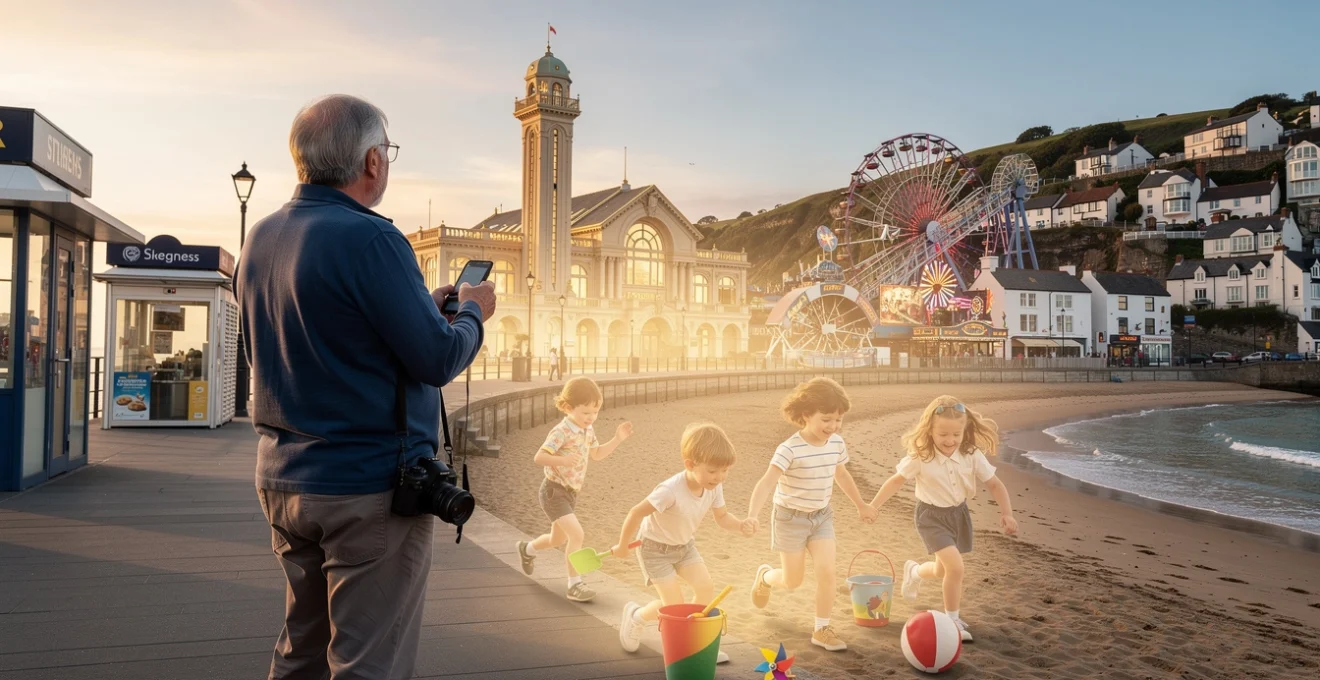
The familiar scent of candyfloss mingles with salt air as you walk down the same promenade where you once skipped alongside your parents, clutching a plastic bucket and spade. Yet something feels different this time. The pier seems smaller, the amusement arcade less magical, and the fish and chips taste somehow less remarkable than your childhood memories suggested. This phenomenon of returning to childhood holiday destinations as an adult reveals fascinating insights about memory, perception, and the complex relationship between our past and present selves.
When adults revisit the seaside towns, holiday camps, and heritage sites that shaped their early experiences, they embark on more than a simple nostalgic journey. They enter a psychological landscape where autobiographical memory reconstruction meets the stark reality of environmental change and personal growth. The resulting experience often challenges long-held assumptions about both the places themselves and the accuracy of childhood recollections.
Psychological mechanisms behind nostalgic tourism and memory reconstruction
The decision to revisit childhood destinations involves complex psychological processes that extend far beyond simple nostalgia. Research in cognitive psychology demonstrates that our memories undergo continuous reconstruction each time we access them, meaning that the “original” experience becomes increasingly layered with subsequent emotions, interpretations, and cultural influences. When you return to a childhood holiday spot, you’re not just encountering a physical location—you’re confronting multiple versions of yourself and the stories you’ve constructed about your past.
Neuroplasticity and adult perception changes in familiar environments
The adult brain processes familiar environments through fundamentally different neural pathways than those active during childhood. Neuroplasticity research indicates that our perception of scale, colour saturation, and emotional significance shifts dramatically as we mature. The enormous castle that dominated your childhood visits to a heritage site may appear modest through adult eyes, not because it has physically shrunk, but because your neural processing of spatial relationships has evolved.
This perceptual shift affects more than visual processing. Adults approach familiar environments with analytical frameworks developed through years of travel experience, cultural exposure, and comparative knowledge. Where a child might focus on immediate sensory pleasures—the taste of ice cream, the thrill of a fairground ride—adults often evaluate destinations through multiple lenses: architectural merit, historical accuracy, value for money, and social dynamics.
Rosy retrospection bias in childhood holiday destination assessment
The rosy retrospection bias creates a particularly potent form of cognitive dissonance when revisiting childhood destinations. This psychological phenomenon causes individuals to remember past experiences as more positive than they actually were, filtering out negative emotions and emphasising pleasant moments. When you recall family holidays from decades past, your brain naturally minimises memories of sibling arguments, parental stress, or uncomfortable weather conditions.
This bias becomes evident when adults return to budget holiday destinations that catered primarily to families with limited resources. The basic accommodation that felt adequate as a child may now seem substandard, while attractions that once provided hours of entertainment might feel dated or poorly maintained. The disconnect between idealised memories and present-day reality can prove jarring for visitors expecting to recapture the magic of their youth.
Cognitive dissonance between idealised memories and present reality
The psychological tension between expected and actual experiences creates what researchers term temporal cognitive dissonance. This occurs when the physical reality of a destination fails to match the emotional intensity of childhood memories. However, this dissonance often reveals more about the observer than the observed location. Adults returning to childhood destinations frequently discover that the “magic” they remember originated not from the place itself, but from the unique combination of family dynamics, personal development stage, and limited comparative experience that characterised their earlier visits.
Some visitors respond to this dissonance by reframing their expectations, finding new aspects of the destination to appreciate. Others experience disappointment or a sense of loss, as if something precious has been taken away. Understanding this psychological process helps explain why heritage tourism can provoke such intense emotional reactions, even in seemingly mundane seaside towns or traditional holiday parks.
Autobiographical memory reconstruction through geographic revisitation
Returning to childhood destinations triggers active reconstruction of autobiographical memories, allowing adults to recontextualise their past experiences within current
understanding of self and context. Standing once again on the same pier, beach, or campsite allows you to overlay present-day insight onto earlier experiences, much like placing a transparent map over an old paper one. You may recognise family tensions that you previously misread, appreciate the financial sacrifices that made those holidays possible, or reinterpret certain moments of conflict through the lens of adult empathy. This updated narrative often becomes more honest and nuanced, replacing a simple “perfect holiday” or “terrible trip” storyline with a richer, more balanced account of what actually unfolded.
In this way, nostalgic tourism supports emotional processing and identity development. By consciously engaging with these places, you can choose which elements of the old story to keep, which to revise, and which to release. Rather than chasing the impossible goal of recreating a childhood holiday exactly as it was, you begin to integrate your younger self’s experiences into a broader life narrative—one that honours the past while making room for your present needs, preferences, and boundaries.
Architectural and environmental transformations at classic british holiday destinations
While psychological mechanisms shape how we experience nostalgic tourism, the physical transformation of classic British holiday destinations plays an equally important role. Seaside towns that once depended almost entirely on summer visitors and factory shutdown weeks have had to adapt to economic shifts, changing tastes, and increased competition from overseas travel. For adults returning after several decades, the resulting architectural changes and environmental upgrades can feel both reassuring and disorienting.
Many communities have invested heavily in regeneration initiatives, seeking to modernise infrastructure while preserving iconic landmarks. Promenades have been redesigned, amusement parks rebranded, and holiday camps rebuilt. When you revisit these places with adult eyes, you are not only comparing past and present versions of your own life, but also observing how entire towns have navigated late-20th and early-21st-century economic realities.
Skegness seafront modernisation impact on 1980s holiday camp aesthetics
Skegness offers a prime example of this tension between continuity and change. Visitors who recall 1980s holiday camps—with their chalets, knobbly-knees competitions, and nightly cabaret—often find a very different visual landscape today. Renovated promenades, updated sea defences, and modern retail units have replaced many of the ramshackle kiosks and neon-lit amusement façades that once defined the seafront. From an urban planning perspective, these updates improve safety, accessibility, and year-round usability, but they can also dilute the distinctive “holiday camp” aesthetic that lives so vividly in memory.
For nostalgic tourists, this can create a sense of temporal displacement. The “Skegness” they carry in their minds—often linked to specific holiday parks or caravan sites—may only partially overlap with the present-day town. Yet this contrast also provides an opportunity: to appreciate how local authorities have attempted to preserve character (for example, maintaining traditional donkey rides or retro signage) while integrating contemporary amenities such as accessible pathways, cycle routes, and upgraded accommodation. The challenge for returning visitors is to allow both versions to coexist, rather than expecting one to erase the other.
Blackpool tower ballroom preservation versus contemporary entertainment venues
Blackpool illustrates a different approach, where preservation and innovation sit side by side. The Blackpool Tower Ballroom remains a meticulously maintained monument to a bygone era of British leisure culture. Its ornate plasterwork, sprung dance floor, and live organ music offer returning visitors a remarkably consistent sensory experience, often closely matching childhood memories. Stepping into the ballroom can feel like walking through a portal, especially if you visited as a child with grandparents who loved ballroom dancing or Sunday tea dances.
Outside the Tower, however, Blackpool’s entertainment landscape has diversified dramatically. High-tech attractions, branded arcades, and immersive experiences cater to contemporary tastes and shorter attention spans. This juxtaposition can be striking: you might spend the morning reliving a near-authentic 1960s or 1970s ballroom experience, then step out into a world of LED screens and virtual reality rides. For adult visitors revisiting childhood destinations, Blackpool prompts an important question: do we value the meticulous preservation of heritage spaces more when we can also access modern entertainment options, or does this contrast make the older venues feel like theatrical sets rather than living places?
Great yarmouth pleasure beach evolution from traditional funfair to theme park
Great Yarmouth Pleasure Beach showcases how classic funfairs have evolved toward theme park models while still trading on nostalgia. In the late 20th century, wooden rollercoasters, ghost trains, and waltzers formed the backbone of many seaside amusement parks. Today, health and safety regulations, changing consumer expectations, and the influence of international theme park design have reshaped these spaces. Some original rides have been carefully restored or re-themed, while others have been replaced by more immersive, narrative-driven attractions.
For returning adults, this evolution can feel bittersweet. You may still find the same rollercoaster you rode nervously as a child, but its surroundings—contactless payment systems, branded food outlets, and digital photo booths—signal a different era. Yet these changes also make it easier to share the place with younger generations, who might otherwise dismiss an entirely “old-fashioned” funfair. If you approach Great Yarmouth Pleasure Beach as a palimpsest, where traces of the old are visible beneath the new, you can appreciate both the continuity of thrill and the creativity of reinvention.
Cornwall’s st ives gentrification effects on working-class holiday memories
St Ives in Cornwall illustrates how gentrification can complicate nostalgic tourism. Once predominantly a working-class holiday destination, accessible via long rail journeys and simple guesthouses, St Ives has increasingly become associated with high-end galleries, boutique accommodation, and second homes. Property prices have risen significantly over the past two decades, and the town’s demographic profile has shifted, especially during peak seasons. Visitors who remember basic B&Bs, caravan sites, and modest cafés may now encounter artisan bakeries, curated interiors, and premium-priced menus.
This transformation can prompt mixed emotions. On one hand, improved infrastructure, environmental management, and cultural programming have enhanced the town’s appeal and economic resilience. On the other, returning holidaymakers may feel that the easy-going, unpretentious atmosphere of their childhood visits has been partially displaced. The beach is still the same, the light still shimmers off the water in familiar ways, but the social context has altered. Recognising this helps explain why some adults feel a vague sense of not quite “belonging” in the very places that once felt like an extension of home. Nostalgic tourism, in these cases, becomes an exercise in reconciling class identity, changing access, and personal history.
Socioeconomic context shifts affecting childhood destination perceptions
Beyond visible architecture and attractions, the broader socioeconomic context exerts a quiet yet powerful influence on how we perceive childhood destinations in adulthood. When many of today’s adults were children, overseas holidays were a relative luxury, and domestic resorts formed the backbone of the British holiday industry. Since the 1990s, low-cost airlines, package deals, and all-inclusive resorts have dramatically expanded international travel options. This shift reframes our evaluation of classic seaside towns: places that once felt exciting and aspirational may now compete, in our minds, with Mediterranean beaches or city breaks.
At the same time, growing awareness of regional inequality and coastal deprivation affects how we interpret what we see on our return. A slightly rundown promenade might not only register as “less magical” than remembered, but also as evidence of broader economic neglect. You may find yourself noticing shuttered shops, signs of seasonal employment, or campaigns for local regeneration—details that your childhood self either missed or interpreted differently. This adult awareness can generate a complicated blend of affection, concern, and critical reflection.
Personal socioeconomic mobility also shapes nostalgic experience. If your family could only just afford a week in a caravan park, revisiting that same site after years of financial stability can feel jarring. Basic facilities that once felt perfectly adequate may now seem cramped, noisy, or lacking privacy. Rather than dismissing those earlier holidays, it can be helpful to see them as snapshots of a particular economic moment—both for your family and for the country. Asking yourself, “What did this place represent for us then, and what does it represent now?” can transform discomfort into deeper understanding.
These shifting contexts also highlight why nostalgic tourism is rarely about simple escape. When you walk the same streets decades later, you carry with you new knowledge about housing, employment, climate change, and local politics. A storm-damaged pier or newly constructed sea wall is not just scenery; it becomes a reminder of coastal erosion, insurance costs, and long-term sustainability. In this way, revisiting childhood destinations can catalyse more informed, empathetic forms of engagement with local communities, from supporting independent businesses to participating in heritage preservation initiatives.
Digital documentation strategies for adult-perspective travel narratives
Given the emotional and social complexity of nostalgic tourism, many travellers find it helpful to document their return journeys intentionally. While snapping a few quick photos for social media can provide instant gratification, more reflective digital documentation strategies can deepen your understanding of how your perception has changed over time. Instead of simply proving that you were “back at the pier,” you can use digital tools to explore continuity and difference, both in the destination and in yourself.
One effective approach is to create “then and now” pairings, either by scanning old family photographs or by recreating childhood snapshots from a similar angle. Placing these side by side—digitally or in a printed album—highlights not only architectural changes but also shifts in fashion, body language, and family composition. This visual comparison can prompt rich conversations with siblings, parents, or your own children: What do we remember about that day? What had we forgotten until we saw the image again? How do we each interpret the same scene?
Journalling apps and voice-note tools also offer powerful ways to capture adult reflections in real time. You might record a short audio entry while sitting on a familiar sea wall, describing the sounds, smells, and thoughts that arise. Later, transcribing or revisiting these entries can reveal patterns in how you talk about home, belonging, and change. If you enjoy creative projects, you could go further: mapping your childhood destinations using digital tools, combining GPS traces with annotations, or assembling a short video essay that weaves archival footage with contemporary clips.
When using digital documentation, it helps to be intentional about privacy and emotional boundaries. Not every realisation needs to be shared publicly, especially if revisiting a place brings up difficult memories alongside fond ones. You might decide to keep certain digital artefacts—scanned letters, family audio recordings, or reflective blog posts—within a private archive, accessible only to trusted friends or relatives. The key is to use technology not just to broadcast, but to support gentle, ongoing meaning-making around your evolving relationship with childhood destinations.
Heritage tourism psychology and intergenerational experience mapping
Nostalgic tourism often overlaps with heritage tourism, particularly when families revisit historic attractions, open-air museums, and preserved sites across generations. These experiences invite us to map not only our own life stories onto a place, but also those of parents, grandparents, and children. When you take your own family to a destination you loved as a child, you are engaging in intergenerational experience mapping: layering different age perspectives onto the same physical environment and using that shared reference point to explore identity, memory, and belonging.
Psychologically, this can be grounding and reparative. Watching a grandchild ride the same miniature railway you once adored, or seeing your teenager roll their eyes at the same corny holiday-camp entertainment that embarrassed you at thirteen, creates a sense of continuity that stretches beyond individual lifetimes. It can also prompt fresh empathy for earlier generations—realising, for instance, how much effort it took your grandparents to travel to a particular resort when public transport links were limited, or how different social norms shaped their experience of the same place.
Multi-generational family dynamics at butlin’s holiday resorts
Butlin’s holiday resorts provide a vivid laboratory for studying these intergenerational dynamics. For many families, Butlin’s represents a recurring thread: grandparents recall the post-war heyday of regimented fun and redcoats, parents remember 1980s or 1990s package deals with live shows and swimming complexes, and children today encounter waterparks, branded character appearances, and Wi-Fi-enabled chalets. When three generations holiday together at the same resort, they are effectively time-travelling side by side.
This can lead to both connection and conflict. A grandparent may feel that “it’s not the same” without certain traditional features, while a child experiences the environment as entirely new and exciting. Adults in the middle often act as translators, explaining historical quirks (“this is where your great-grandad won the darts competition”) while also navigating contemporary expectations of comfort and entertainment. Approached consciously, these trips can become opportunities to share stories, compare experiences, and acknowledge that each generation’s Butlin’s is both unique and part of a larger family narrative.
National trust property interpretation through adult historical understanding
National Trust properties—stately homes, gardens, and historic landscapes—offer a different kind of nostalgic return. Many people first visit these sites on school trips or family outings, remembering them mainly as locations for picnics, mazes, or gift-shop treats. Returning as an adult, with greater historical knowledge and social awareness, can radically transform how you interpret the same spaces. You may now pay attention to interpretive panels about labour, colonial wealth, or environmental conservation that you barely noticed as a child.
This expanded understanding can be both enriching and unsettling. The grand staircase you once admired for its elegance might now prompt questions about who cleaned it, who funded it, and whose stories remain untold in the official narrative. Rather than undermining childhood memories of “a lovely day out,” this deeper engagement can add layers of meaning, helping you appreciate the complexity of heritage sites. Sharing these reflections with younger companions can also foster critical thinking and empathy, turning a nostalgic outing into a subtle, age-appropriate conversation about history and responsibility.
Seaside museum collections as memory validation tools
Local seaside museums play a surprisingly powerful role in validating personal memories of childhood holidays. Exhibitions featuring vintage slot machines, faded posters, and photographs of crowded 1960s beaches reassure visitors that “it really was like that,” countering any suspicion that rosy retrospection has exaggerated the past. When you see the exact style of deckchair your family once used or recognise a long-demolished lido in an archival photograph, the boundary between individual and collective memory blurs in a comforting way.
For adults revisiting coastal towns with their own children, these museums can also act as narrative bridges. Pointing out objects and saying, “We used to play with those,” or “Your nan worked in a café like this,” helps younger generations situate family stories within a broader social context. From a psychological perspective, this kind of shared meaning-making supports identity continuity: you are not just a tourist in this town, but part of an ongoing human story of leisure, work, and adaptation by the sea.
Interactive heritage experiences at beamish living museum
Beamish, the Living Museum of the North, exemplifies how interactive heritage experiences can enhance nostalgic tourism while appealing to visitors of all ages. Unlike static displays, Beamish invites you to step directly into reconstructed streets, homes, and workplaces from different historical periods. For older visitors, elements of the 1950s town or 1940s farm may closely resemble their own childhood environments—or those described by parents and grandparents. Younger visitors, meanwhile, encounter these scenes as immersive storytelling rather than dry history.
Walking through Beamish with family members can prompt spontaneous storytelling: a grandparent remembering the smell of coal fires, a parent commenting on outdoor toilets or rationing, a child asking why there are no screens or cars everywhere. In this way, the museum functions as a catalyst for intergenerational dialogue, transforming abstract “heritage” into lived experience. For adults revisiting similar open-air museums they knew as children, returning with greater historical knowledge and emotional maturity can make the experience feel richer, more poignant, and more relevant to contemporary debates about community, work, and change.