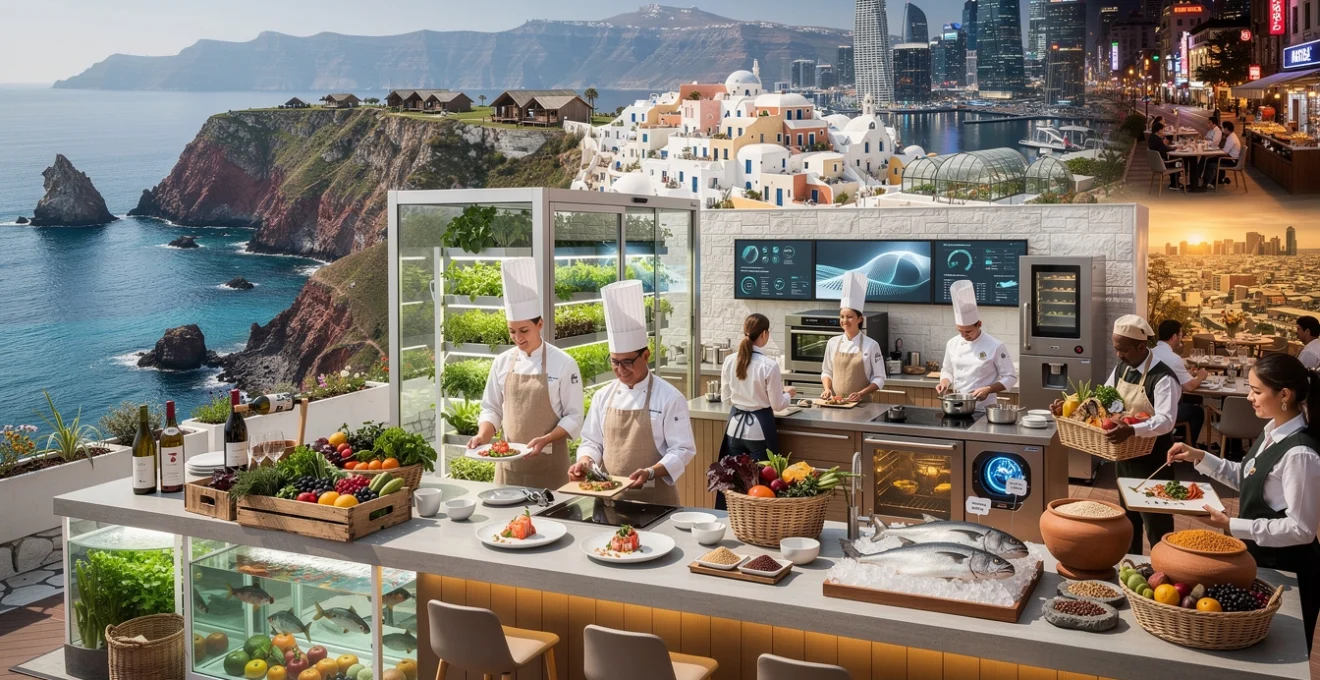
The intersection of culinary excellence and environmental responsibility has transformed how destinations approach food tourism. Modern travellers increasingly seek holistic lifestyle frameworks combining sustainable gastronomy and travel, driving a fundamental shift towards sustainable dining practices across the globe’s most coveted tourist destinations. This evolution represents more than a trend; it signals a permanent transformation in how hospitality establishments, local producers, and destination management organisations collaborate to create meaningful culinary experiences whilst protecting the environments and communities that make them possible.
From Mediterranean coastal resorts implementing cutting-edge aquaponics systems to Asian culinary hotspots pioneering plant-based menu engineering, destinations are discovering that sustainability and exceptional cuisine are not mutually exclusive. The convergence of these priorities has sparked innovative partnerships between luxury establishments and local producers, creating economic opportunities that extend far beyond traditional hospitality sectors whilst preserving cultural heritage and protecting natural resources.
Farm-to-table movement integration in mediterranean coastal resorts
Mediterranean destinations have become laboratories for sustainable gastronomy innovation, where ancient agricultural traditions merge with contemporary environmental consciousness. These regions benefit from centuries-old farming practices that naturally align with modern sustainability principles, creating authentic farm-to-table experiences that resonate with environmentally conscious travellers. The Mediterranean climate and diverse agricultural landscape provide ideal conditions for implementing comprehensive sustainable food systems that support both tourism and local economies.
The farm-to-table movement in Mediterranean resorts has reduced food transportation emissions by an average of 40% whilst simultaneously supporting over 15,000 local farming families across the region.
Vertical farming implementations at costa brava luxury hotels
Costa Brava’s luxury hospitality sector has embraced vertical farming as a solution to seasonal ingredient challenges and supply chain disruptions. Properties along this Spanish coastline have installed sophisticated hydroponic systems that produce fresh herbs, leafy greens, and specialty vegetables year-round. These installations not only guarantee ingredient freshness but also create unique guest experiences through educational tours and harvest-to-plate dining events. The technology allows hotels to reduce their reliance on imported produce whilst maintaining consistent quality standards throughout tourist seasons.
The implementation of vertical farming systems has proven particularly valuable during peak summer months when traditional agricultural output struggles to meet the increased demand from tourist establishments. Hotels report production costs that are 30% lower than sourcing equivalent organic produce from distant suppliers, whilst achieving superior nutritional content and flavour profiles. Guests frequently participate in guided tours of these facilities, creating additional revenue streams and strengthening the connection between dining experiences and sustainability commitments.
Michelin-starred restaurants adopting Zero-Mile sourcing in santorini
Santorini’s volcanic soil and unique microclimate have enabled Michelin-starred establishments to achieve remarkable zero-mile sourcing targets. These restaurants work exclusively with island-based producers, creating closed-loop systems where ingredients travel minimal distances from cultivation to plate. The island’s distinctive terroir produces exceptional cherry tomatoes, capers, and indigenous grape varieties that form the foundation of contemporary Greek cuisine interpretations.
The economic impact of zero-mile sourcing extends beyond environmental benefits, generating approximately €2.3 million annually for local agricultural communities. Restaurants invest directly in farming infrastructure, ensuring consistent supply whilst preserving traditional cultivation methods that have sustained the island’s agriculture for generations. This approach has elevated local ingredient quality to international standards whilst maintaining authenticity that sophisticated diners increasingly value.
Aquaponics systems in amalfi coast culinary establishments
The dramatic terrain of Italy’s Amalfi Coast has inspired innovative aquaponics installations that maximise limited agricultural space whilst providing restaurants with premium seafood and vegetables. These systems combine fish cultivation with hydroponic vegetable production, creating symbiotic environments where fish waste provides nutrients for plant growth whilst plants filter water for aquatic species. Establishments report producing sufficient fresh fish and vegetables to supply 60% of their ingredient requirements through these systems.
Aquaponics technology has proven particularly effective for producing Mediterranean staples including basil, tomatoes, and various lettuce varieties alongside sea bass and bream. The systems require 90% less water than traditional agriculture whilst eliminating the need for chemical fertilisers or pesticides. Restaurants utilise these installations as educational tools, offering guests insights into sustainable food production whilst creating memorable dining experiences that connect environmental ste
wardship to culinary enjoyment. By showcasing fish tanks and growing beds near dining areas, Amalfi Coast restaurants transform what could be a hidden back-of-house process into a visible commitment to sustainable gastronomy. Guests leave not only satisfied by flavour, but also better informed about how responsible food production can thrive in even the most space-constrained, high-demand destinations.
Organic wine estate partnerships with french riviera resort chains
Along the French Riviera, resort chains are forging strategic partnerships with organic wine estates to align their gastronomic offerings with low-impact viticulture. Rather than relying on global wine distributors, many properties now collaborate directly with nearby vineyards that practice organic or biodynamic farming methods. This close coordination enables hotels to curate wine lists that reflect the region’s terroir whilst significantly reducing transport-related emissions and packaging waste.
These partnerships often extend beyond procurement into co-branded experiences such as vineyard tours, harvesting workshops, and vertical tasting events hosted on-site. Guests are invited to learn how organic viticulture reduces chemical use, supports biodiversity, and preserves soil health for future generations of growers. Some resort groups report that over 70% of their wine sales now come from partner estates within a 100-kilometre radius, channelling revenue into rural communities and strengthening the Riviera’s reputation as a sustainable food and wine destination.
Carbon footprint reduction strategies in asian culinary tourism hotspots
Across Asia’s most vibrant culinary tourism districts, sustainability strategies are increasingly focused on quantifiable carbon footprint reductions. Rapid urbanisation and tourism growth have placed immense pressure on local food systems, prompting cities to rethink how ingredients are sourced, cooked, and served. From plant-based menu engineering to high-efficiency kitchen technology, Asian destinations are demonstrating that it is possible to host millions of visitors while steadily lowering emissions associated with food tourism.
Many of these initiatives are driven by coordinated efforts between municipal authorities, destination management organisations, and hospitality associations. Together, they are establishing clear guidelines on responsible sourcing, food waste reduction, and energy use that align with global climate targets. For travellers, this means that choosing a sustainable meal in cities like Singapore, Phuket, Tokyo, or Bangkok is no longer a niche option; it is becoming an integral part of the mainstream food tourism experience.
Plant-based menu engineering in singapore’s marina bay district
Singapore’s Marina Bay District has emerged as a testbed for plant-based menu engineering in high-end hospitality. Luxury hotels, rooftop restaurants, and convention centres are collaborating with nutritionists and sustainability consultants to redesign menus around vegetables, pulses, and alternative proteins. The aim is not simply to offer vegetarian substitutes, but to create plant-forward dishes that rival traditional meat-centric specialties in flavour, texture, and visual appeal.
By 2024, several flagship properties in Marina Bay reported that plant-based items accounted for up to 35% of total menu sales, contributing to measurable reductions in food-related emissions. Menu engineering software helps chefs model the carbon footprint of each dish, allowing them to highlight “low-impact signatures” that resonate with climate-conscious diners. As a result, travellers can choose dishes clearly labelled with indicators such as “climate-friendly choice,” making it easier to align culinary decisions with personal sustainability goals.
Local fisheries certification programmes in phuket restaurant clusters
In Phuket, where seafood is central to local cuisine and coastal tourism, restaurant clusters are turning to certified local fisheries to protect marine ecosystems. Certification programmes based on international best practices assess stock health, fishing methods, and traceability, rewarding fishers who comply with sustainable catch limits and avoid destructive practices. Restaurants that commit to purchasing only from certified suppliers can display recognised ecolabels, giving visitors confidence that their seafood choices support marine conservation.
This approach has created a powerful incentive for small-scale fishers to adopt more sustainable gear and better record-keeping. Some restaurant associations in Patong and Kata Beach report that over 60% of their seafood menus now feature species sourced from certified, small-scale local fisheries. For travellers, the result is a more transparent connection between the meal on their plate and the coastal communities whose livelihoods depend on healthy oceans.
Energy-efficient kitchen technologies in tokyo’s shibuya food scene
Tokyo’s Shibuya district, renowned for its dense cluster of eateries and late-night dining culture, is investing heavily in energy-efficient kitchen technologies to curb emissions. Many restaurants are transitioning from older gas stoves to high-efficiency induction cooktops, which offer faster heating times and consume significantly less energy. Coupled with advanced ventilation systems and smart meters, these upgrades allow operators to track real-time consumption and identify opportunities for further savings.
Some multi-tenant food halls in Shibuya have implemented shared centralised prep kitchens equipped with energy-optimised appliances, refrigeration systems, and heat-recovery units. By pooling resources, smaller vendors can access cutting-edge technology that would otherwise be beyond their budget. For visitors, these behind-the-scenes improvements rarely change the look of a dish, but they substantially reduce the carbon intensity of each meal served in one of Tokyo’s most iconic neighbourhoods.
Waste-to-energy conversion systems in bangkok street food markets
Bangkok’s street food markets, long celebrated for their vibrancy and affordability, are beginning to incorporate waste-to-energy systems to tackle the significant organic waste they generate. Pilot projects in popular areas such as Chatuchak and Asiatique have introduced on-site biodigesters that convert leftover food and biodegradable packaging into biogas and nutrient-rich slurry. The biogas can power market lighting or communal cooking stations, while the digestate is distributed to peri-urban farms as organic fertiliser.
These circular systems turn what was once a costly waste management challenge into a local energy source and agricultural input. Vendors participating in the schemes report lower waste disposal fees and improved hygiene conditions, while travellers experience cleaner, better-organised markets. As more markets adopt waste-to-energy technologies, Bangkok strengthens its position as a leading example of how street food culture and sustainability can evolve together.
Indigenous ingredient revival in latin american gastronomic capitals
Latin America’s gastronomic capitals are increasingly turning towards indigenous ingredients to build a more sustainable and culturally grounded food tourism offer. Rather than relying on imported staples or homogenised global menus, chefs are highlighting native crops, heirloom varieties, and ancestral cooking methods. This revival not only preserves biodiversity but also restores pride in culinary traditions that were historically marginalised.
By centring indigenous ingredients in contemporary dishes, restaurants in cities like Lima, Mexico City, São Paulo, and Cusco create distinctive culinary identities that cannot be replicated elsewhere. For travellers, this means that sustainable gastronomy becomes a journey into local history and ecology, where every bite tells a story about the land, its people, and their resilience. At the same time, demand for native crops creates new economic opportunities for smallholder farmers and indigenous communities.
Quinoa supply chain optimisation in lima’s miraflores district
Lima’s Miraflores district, a hub of fine dining and coastal tourism, has become a focal point for more equitable and efficient quinoa supply chains. As global demand for quinoa surged, concerns emerged about price volatility and the impact on Andean farming communities. In response, restaurants and hotels in Miraflores are working directly with producer cooperatives in regions such as Puno and Ayacucho to establish long-term purchasing agreements at fair prices.
Supply chain optimisation efforts include coordinated transport logistics, improved storage facilities to reduce post-harvest losses, and digital traceability tools that track quinoa from field to table. These measures help stabilise incomes for farmers while ensuring that restaurants receive consistent, high-quality grains for signature dishes. As a result, visitors can enjoy quinoa-based menus knowing that their choices support more resilient food systems rather than exacerbating inequities in rural areas.
Ancient grain cultivation projects supporting mexico city restaurants
In and around Mexico City, chefs are driving renewed cultivation of ancient grains such as amaranth, native maize varieties, and pseudo-cereals that once formed the backbone of pre-Hispanic diets. Urban restaurants partner with rural farming communities in states like Puebla and Oaxaca to secure heritage seeds, support regenerative cultivation practices, and guarantee purchase volumes. These collaborations have reintroduced dozens of native maize colours and textures into tortillas, tamales, and contemporary tasting menus.
By showcasing these grains in creative formats, from amaranth-crusted vegetable dishes to heirloom maize desserts, Mexico City’s gastronomic scene is educating diners about the nutritional and cultural importance of ancient crops. Many establishments now highlight farm and community names on their menus, emphasising transparency and direct support. For travellers, tasting a blue maize tortilla or amaranth-based snack becomes a tangible way to participate in the preservation of agricultural heritage.
Amazonian superfruit integration in são paulo’s fine dining sector
São Paulo’s fine dining restaurants are increasingly incorporating Amazonian superfruits such as açaí, cupuaçu, camu-camu, and bacuri into sophisticated menus. Rather than presenting these ingredients solely as smoothies or street snacks, chefs are using them in sauces, sorbets, and savoury pairings that highlight their complex flavour profiles and high nutritional value. This integration brings visibility to remote Amazonian regions and the communities that harvest these fruits, often using low-impact agroforestry systems.
To avoid the pitfalls of overexploitation, many restaurants partner with certified cooperatives and conservation organisations that promote sustainable harvesting and fair trade conditions. Traceability programmes ensure that increased demand does not drive deforestation or displace local food security. When you encounter an açaí reduction paired with grilled vegetables or a cupuaçu-infused dessert in São Paulo, you are not just enjoying an exotic flavour; you are participating in an emerging model of forest-friendly gastronomy.
Pre-columbian cooking technique preservation in cusco tourist restaurants
Cusco’s tourist restaurants are turning to pre-Columbian cooking techniques as a way to honour indigenous knowledge and reduce environmental impact. Methods such as pachamanca (earth oven cooking), stone grinding, and low-fuel clay pot simmering are being revived and adapted for contemporary service. These techniques often require less energy than modern industrial equipment and make use of local materials such as stones, clay, and earth rather than imported metals or gas-heavy appliances.
Many restaurants now offer experiential menus where guests can observe or even participate in traditional preparation methods before sitting down to a meal. Storytelling around these practices emphasises their cultural significance and their alignment with modern sustainability principles, such as minimal waste and respect for seasonal cycles. In this way, Cusco demonstrates how preserving intangible cultural heritage can go hand in hand with building a more sustainable food tourism model.
Circular economy implementation in nordic food tourism destinations
Nordic countries have gained international recognition for integrating circular economy principles into their food tourism strategies. In destinations such as Copenhagen, Stockholm, and Reykjavik, the focus has shifted from linear “take-make-dispose” models to systems where resources are continually reused, repurposed, or regenerated. Restaurants, hotels, and food halls collaborate to design menus, procurement processes, and waste streams that minimise environmental impact and maximise value extraction from every ingredient.
Practical measures include upcycling surplus produce into new products, such as preserves, ferments, or stocks, thereby preventing edible food from becoming waste. Some Nordic destinations have created marketplaces and festivals dedicated to circular gastronomy, where visitors can taste dishes made from so-called “imperfect” vegetables or byproducts like coffee grounds and bread crusts. These initiatives challenge conventional ideas about waste and quality, showing travellers that circular thinking can enhance creativity in the kitchen rather than constrain it.
Regenerative agriculture partnerships with alpine resort communities
In Alpine regions across Switzerland, Austria, and northern Italy, resort communities are embracing regenerative agriculture as a way to safeguard fragile mountain ecosystems while sustaining food tourism. Unlike conventional approaches that focus narrowly on yield, regenerative farming aims to restore soil health, increase biodiversity, and enhance water retention. Resorts partner with nearby farms that practice rotational grazing, cover cropping, and minimal tillage, then feature their products prominently in seasonal menus.
These partnerships create a virtuous cycle: healthier soils sequester more carbon, reduce erosion, and produce nutrient-dense ingredients that elevate the quality of local cuisine. Guests are often invited to visit mountain pastures, cheese caves, and small-scale dairies to see regenerative practices in action. By understanding how their alpine breakfast or fondue originates from living landscapes, travellers can appreciate that sustainable gastronomy in these regions is as much about land stewardship as it is about flavour.
Technology-driven sustainability metrics in urban food districts
As urban food districts grow in scale and complexity, technology is becoming essential for measuring and managing their sustainability performance. Neighbourhoods renowned for their dense clusters of restaurants and markets are implementing digital tools that track everything from ingredient provenance and carbon emissions to water use and waste generation. Cloud-based dashboards give operators real-time insights, allowing them to adjust procurement strategies, optimise energy use, and reduce surplus before it becomes waste.
Some cities have introduced voluntary sustainability scorecards or certification schemes that aggregate data from participating venues and present it in a user-friendly format for visitors. Diners can scan QR codes at restaurant entrances to view metrics such as percentage of locally sourced ingredients, average plate waste per guest, or renewable energy usage. By making these metrics visible and comparable, urban food districts encourage friendly competition among businesses and empower travellers to make more informed choices about where and what they eat.