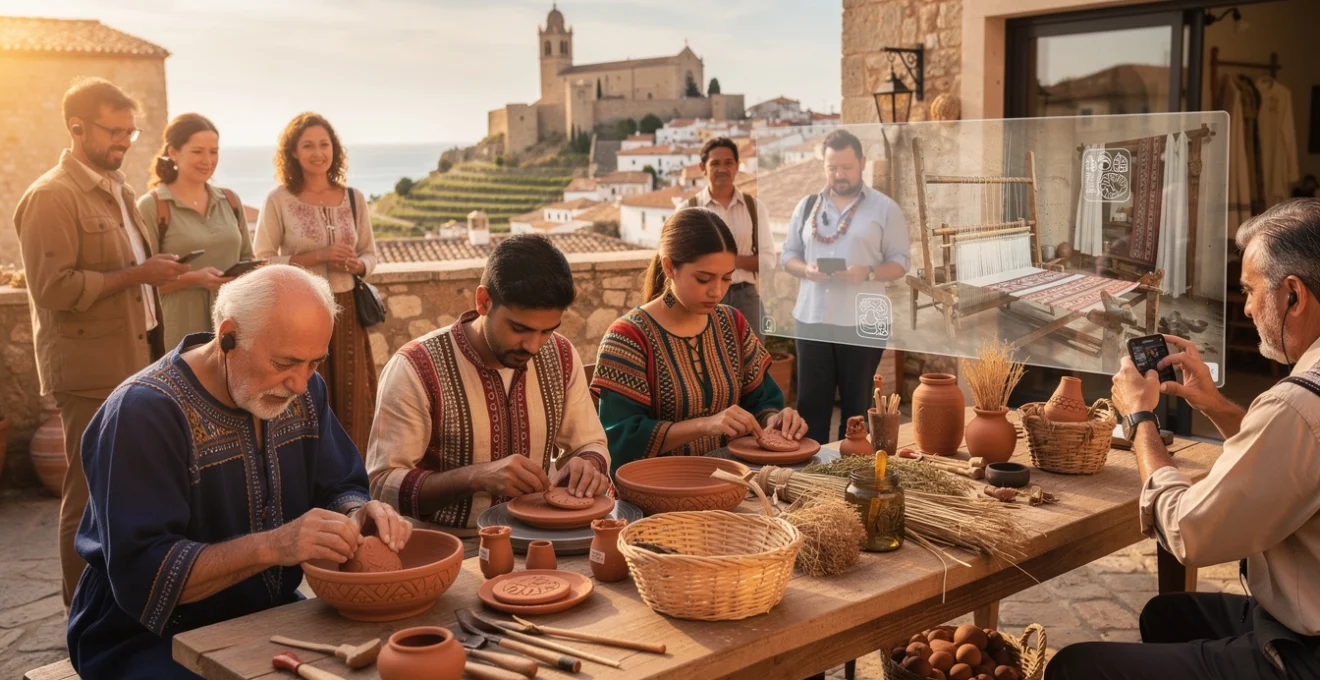
Local crafts serve as tangible narratives, weaving together centuries of cultural evolution, environmental adaptation, and human ingenuity. These handmade objects transcend mere souvenirs, functioning as cultural ambassadors that communicate the essence of their birthplace through materials, techniques, and aesthetic choices. From the intricate bingata textiles of Okinawa to the precision-carved mahjong tiles of Hong Kong, traditional crafts encode geographical, historical, and social information that reveals the deeper identity of destinations worldwide.
The relationship between place and craft operates on multiple levels, encompassing everything from the terroir of raw materials to the philosophical frameworks that guide artistic creation. Each ceramic bowl shaped in rural Japan carries not only the potter’s individual expression but also centuries of regional firing techniques, local clay compositions, and aesthetic principles rooted in Buddhist and Shinto traditions. Similarly, the geometric patterns adorning Moroccan leather goods reflect Islamic architectural influences, Berber cultural symbols, and the practical requirements of nomadic life across North African landscapes.
Cultural heritage preservation through traditional artisan techniques
Traditional artisan techniques represent living repositories of cultural memory, preserving knowledge systems that extend far beyond mere production methods. These practices embody complex relationships between communities and their environments, encoding sustainable resource management strategies, seasonal rhythms, and intergenerational knowledge transfer mechanisms that have evolved over millennia. The preservation of these techniques requires sophisticated documentation approaches that capture not only the physical processes but also the cultural contexts that give them meaning.
Intangible cultural heritage documentation in UNESCO world heritage sites
UNESCO’s Intangible Cultural Heritage framework has revolutionised approaches to documenting traditional craft practices, recognising that techniques themselves constitute cultural artifacts worthy of protection. The documentation process involves comprehensive recording of master craftspeople’s knowledge, including verbal instructions, gestural patterns, and the tacit understanding that develops through years of practice. Sites like the Historic Centre of Shakhrisyabz in Uzbekistan demonstrate how craft documentation can support broader heritage conservation efforts, with traditional silk weaving techniques providing crucial insights into historical textile production and trade relationships.
Digital archives now capture high-resolution video documentation of crafting processes, supplemented by 3D scanning of tools, workspace arrangements, and finished products. These technological approaches enable researchers to preserve subtle details that might otherwise be lost, such as the specific hand positions used in Japanese pottery throwing or the precise timing intervals employed in Indonesian batik wax application. However, documentation efforts must balance technological sophistication with respect for traditional knowledge systems and community ownership rights.
Master-apprentice knowledge transfer systems in rural communities
Rural communities maintain sophisticated knowledge transfer systems that rely on extended observation periods, gradual skill development, and deep integration of craft learning with broader cultural education. The master-apprentice relationship extends beyond technical instruction to encompass philosophical frameworks, ethical considerations, and community responsibilities associated with carrying forward traditional practices. In villages across the Andes, young weavers spend years observing elder practitioners before attempting complex techniques, gradually absorbing not only physical skills but also the cultural significance of specific patterns and colour combinations.
Contemporary challenges to these traditional systems include youth migration to urban centres, economic pressures favouring mass production, and the disruption of seasonal rhythms that historically structured learning processes. Successful preservation initiatives increasingly recognise the need to adapt traditional pedagogical approaches to contemporary contexts while maintaining their essential characteristics. Community-based programs in countries like Peru and Guatemala have developed innovative approaches that combine traditional apprenticeship models with modern documentation techniques and market access strategies.
Indigenous material culture conservation methods
Indigenous communities worldwide have developed sophisticated conservation methods that integrate craft preservation with broader environmental and cultural sustainability practices. These approaches often involve sacred sites, seasonal restrictions, and ceremonial protocols that govern material harvesting and production processes. The conservation of traditional basketry techniques among Native American communities, for example, requires maintaining healthy ecosystems for plant materials while preserving the cultural knowledge necessary to identify, harvest, and process these resources appropriately.
Material culture conservation extends beyond individual objects to encompass entire production ecosystems, including the landscapes that provide raw materials, the knowledge systems that guide their use, and the social relationships that structure their transmission. Australian Aboriginal communities have pioneered approaches that combine scientific conservation techniques with traditional land management practices, demonstrating how indigenous knowledge systems can contribute to both cultural preservation and environmental sustainability.
Oral history collection strategies for craft narratives
Oral history collection has become an essential tool for preserving the narrative dimensions of local crafts, capturing the memories, emotions, and worldviews that rarely appear in technical manuals. Rather than focusing solely on how objects are made, oral historians document why they are made, for whom, and under what circumstances. In many destinations, from Irish weaving communities to Moroccan zellige workshops, these narratives reveal how political change, migration, and environmental shifts reshape craft practices over time while still anchoring them in place.
Effective oral history strategies in craft communities typically combine semi-structured interviews with participant observation and, where appropriate, collaborative storytelling. Researchers and cultural organisations work with artisans to define which stories can be shared publicly and which remain restricted within the community, thereby respecting cultural protocols. Increasingly, local museums and tourism boards invite travellers to listen to curated audio stories in situ—on a loom-side bench, beside a pottery kiln, or in a leather atelier—allowing visitors to experience the craft narrative as part of the production environment rather than as a detached museum label.
Digital platforms have expanded the reach of these oral narratives without entirely replacing face-to-face encounters. Mobile recording kits, community podcasts, and low-cost video tools enable younger generations to interview elders, translating and subtitling stories for global audiences while maintaining local ownership of the material. For travellers seeking authentic cultural heritage experiences, engaging with these oral histories—whether through guided tours, audio walks, or direct conversations—provides a deeper understanding of how local crafts tell the evolving story of a destination.
Regional identity manifestation through distinctive craft traditions
Regional identity is often most vividly expressed not through monuments or marketing slogans but through everyday crafted objects that inhabit homes, marketplaces, and ritual spaces. Local crafts condense landscapes, belief systems, and historical encounters into tangible forms—a handwoven rug that echoes mountain horizons, a ceramic glaze that reflects coastal light, or a carved motif that encodes ancestral myths. As a result, understanding a region’s distinctive craft traditions can function as a kind of “cultural map,” guiding travellers through the complex layers of identity that define a destination.
These regional signatures emerge through the interplay of raw materials, climatic conditions, trade routes, and cultural exchanges. In Italy’s Veneto region, for example, the glass of Murano incorporates centuries of experimentation with minerals, furnaces, and maritime commerce, while in Ghana, Kente cloth patterns visibly reference royal lineages and community values. When we pay attention to these distinctive craft idioms, we begin to see how regions assert their uniqueness in the face of global homogenisation, using handmade objects as quiet but persistent affirmations of place-based identity.
Terroir-specific raw material sourcing in local production
The concept of terroir, long associated with wine, is increasingly applied to local crafts to describe how geography, geology, and climate shape the character of materials and, by extension, the objects produced. Clay from a particular river valley in Japan, volcanic stone from Oaxaca, or willow grown in the damp hedgerows of Ireland each carry unique physical properties that influence both technique and aesthetics. Artisans adapt their methods to these materials over generations, developing firing schedules, dye recipes, or weaving tensions that are inseparable from the local environment.
For travellers, recognising terroir-specific sourcing adds another layer of meaning to craft-based tourism. Visiting a Portuguese village where basket makers still harvest reeds from nearby wetlands, or a French town where knife makers use steel tempered in local forges, reveals how production is embedded in ecosystems rather than abstract supply chains. This awareness can inform more responsible purchasing decisions: when we ask where the wool, clay, or wood comes from, we implicitly ask how the landscape is being cared for. In many destinations, artisan co-operatives now use labels, workshops, and guided walks to highlight the ecological stories behind their materials.
Geographic indicators and protected designation of origin certifications
Geographic indicators (GIs) and Protected Designation of Origin (PDO) schemes provide formal recognition that certain crafts are uniquely tied to specific regions, much like Parmigiano Reggiano cheese or Champagne in the food sector. For crafts, these certifications codify traditional methods, material sources, and quality standards, helping to safeguard local identities against imitation and mass-produced replicas. Examples include Limoges porcelain in France, Talavera ceramics from Puebla in Mexico, and Scottish Harris Tweed, each protected by strict geographic and production criteria.
From an economic anthropology perspective, GIs transform local knowledge into a form of intellectual property that remains collectively held by the community. This not only stabilises income for artisans but also reinforces the symbolic link between object and place in the minds of consumers and travellers. When you purchase a GI-certified craft, you are not simply buying a product; you are endorsing a specific ecosystem of skills, materials, and cultural norms. However, the certification process can be complex and resource-intensive, which is why NGOs and cultural agencies increasingly support small artisan groups in navigating legal frameworks and maintaining compliance without diluting traditional practices.
Climate-influenced technique development across mediterranean regions
Across Mediterranean regions, climate has historically played a decisive role in shaping craft techniques, resulting in distinct yet interconnected traditions. In southern Spain, sun-drenched courtyards encouraged the development of glazed tiles and whitewashed ceramics that reflect heat, while in coastal Tunisia and Morocco, lightweight textiles and open-weave baskets evolved to facilitate ventilation and shade. These adaptations are not merely functional; they become aesthetic signatures that visitors instantly associate with the region’s light, temperature, and seasonal rhythms.
As climate change alters weather patterns, many Mediterranean artisans are revisiting historical techniques for guidance. Traditional lime plasters, natural dyes, and plant-fibre constructions offer low-energy, climate-resilient solutions that modern tourism infrastructures are beginning to rediscover. For example, in Greek islands such as Tinos, stone masons revive centuries-old dry-stone walling methods to manage erosion and water flow, while ceramicists in Puglia experiment with porous clays historically used for cooling water. Observing these climate-responsive crafts allows travellers to see how local knowledge is not static folklore but an evolving toolkit for living with environmental uncertainty.
Cultural exchange impact on andalusian ceramics and moroccan pottery
The intertwined histories of Andalusia and Morocco provide a vivid illustration of how cultural exchange shapes craft traditions on both sides of a sea. Andalusian ceramics, particularly in cities like Seville and Granada, bear clear traces of Islamic geometry, North African glazing techniques, and centuries of trade across the Strait of Gibraltar. Conversely, Moroccan pottery from Fès or Safi showcases influences from Iberian heraldic motifs, European kiln technologies, and global trade networks that passed through Mediterranean ports.
Rather than diluting regional identity, these exchanges have generated rich hybrid forms that tell complex stories of coexistence, conflict, and mutual inspiration. A tile pattern in a Seville courtyard might reference both Nasrid palaces and Renaissance palazzos, while a Moroccan bowl could incorporate Andalusian colour palettes alongside Amazigh symbols. When travellers visit workshops in both regions, they encounter a living archive of transcultural dialogue, challenging simplistic notions of “pure” heritage. This awareness encourages a more nuanced understanding of destination identity, one that acknowledges how local crafts often emerge at the crossroads of multiple worlds.
Economic anthropology of craft-based tourism development
From an economic anthropology standpoint, craft-based tourism reveals how value is produced not just through objects but through relationships, narratives, and experiences. Handcrafted items sold in markets or studios embody complex social negotiations: pricing reflects not only labour and materials but also symbolic worth, perceived authenticity, and the expectations of international visitors. In many destinations, tourism has transformed artisans into cultural mediators who must navigate between local norms and global consumer preferences.
Studies from organisations such as UNWTO and the World Crafts Council suggest that in some countries, craft sectors contribute between 5% and 10% of GDP, with tourism acting as a key driver of demand. Yet this economic potential brings risks. When production shifts to meet tourist tastes—simplifying motifs, accelerating timelines, or outsourcing steps to factories—the social fabric of craft communities can fray. Sustainable craft tourism therefore requires careful attention to power dynamics: who controls design decisions, who captures profits, and who bears the burden of increased visitor traffic.
For travellers, adopting an anthropological lens can help us support more equitable models. Asking how a workshop is organised, whether artisans have cooperative ownership, and how training is provided to younger makers turns a purchase into an informed act of solidarity. Some destinations now develop “craft trails” that limit intermediary mark-ups, encourage direct studio visits, and include interpretive materials about local economies. By choosing these routes, we participate in a tourism economy that treats artisans not as backdrops but as central actors in their own development trajectories.
Authenticity authentication methods in heritage craft verification
As demand for “authentic local crafts” grows, so does the market for imitations manufactured far from the destinations they claim to represent. Heritage craft verification has therefore become a crucial issue for both communities and consumers. Authenticity in this context is multidimensional: it encompasses provenance of materials, adherence to recognised techniques, community endorsement, and the artisan’s own connection to a living tradition. Verifying these elements requires more than a simple “Made in…” label.
A range of authentication methods is emerging to address this challenge. Some regions implement certification marks managed by artisan councils, which audit workshops for compliance with agreed standards. Others use QR codes on product tags that link to short videos of the making process, interviews with the artisan, or documentation of raw material sources—effectively offering a digital “biography” of the object. In certain Indigenous contexts, authenticity is validated through tribal or community seals that signify collective approval rather than external accreditation.
However, authenticity is also a negotiated concept shaped by tourism expectations and local adaptation. Crafts that incorporate contemporary designs or sustainable substitute materials can still be authentic expressions of a tradition’s evolution. The key is transparent communication: when artisans explain why they have modified a pattern, introduced recycled inputs, or collaborated with designers, they invite travellers into the ongoing story of the craft. For visitors who care about cultural integrity, taking the time to ask questions, read labels, and choose verified heritage crafts is one of the most powerful ways to help protect the cultural soul of a destination.
Digital storytelling platforms for craft heritage interpretation
Digital storytelling has opened new pathways for interpreting craft heritage, allowing artisans and communities to narrate their own histories beyond the constraints of gallery walls or tourist brochures. Websites, social media, podcasts, and interactive archives enable makers to share process footage, personal reflections, and historical context with a global audience. This shift from static labels to dynamic stories transforms how travellers learn about local crafts both before and after they visit a destination.
Crucially, digital tools do not replace in-person experiences; rather, they extend them. A traveller who watches a short documentary about Okinawan bingata or Peruvian retablos before arrival will arrive with more informed questions and a deeper appreciation for the time and skill involved. After returning home, that same traveller can follow artisans online, commission pieces, or support crowdfunding campaigns that sustain workshops during low tourist seasons. In this sense, digital storytelling creates an ongoing relationship between visitor and place, turning a single purchase into part of a longer narrative of cultural continuity.
Augmented reality integration in workshop demonstrations
Augmented reality (AR) technologies are increasingly used in craft workshops and cultural centres to layer digital information onto real-world demonstrations. Through tablets or smartphones, visitors can see step-by-step overlays on a potter’s wheel, visualise historical pattern variations on a textile, or access subtitles and translations as an artisan explains their process in the local language. AR acts like a transparent guidebook, enhancing comprehension without interrupting the flow of work.
For destinations, AR offers a way to manage varying visitor knowledge levels and language barriers while keeping master craftspeople focused on their craft rather than constant verbal explanation. It can also highlight intangible aspects that are otherwise invisible: temperature changes in a glass furnace, structural stress points in woodcarving, or microscopic dye penetrations in fabric. When deployed thoughtfully and in collaboration with artisans, AR can deepen respect for manual skill and prevent demonstrations from sliding into superficial spectacles tailored only to quick photo opportunities.
Virtual reality reconstructions of historical production environments
Virtual reality (VR) allows travellers to step into meticulously reconstructed historical workshops and production landscapes, offering immersive context for contemporary craft practices. Museum visitors might don a headset to walk through a 16th-century Andalusian tile factory, a pre-industrial Irish weaving cottage, or an Ottoman coppersmiths’ bazaar, hearing ambient sounds and stories that evoke past working conditions. This time-travel effect helps explain why certain tools, layouts, or rituals persist in modern studios.
These VR reconstructions are often built using archival photographs, archaeological data, and oral histories, turning scattered sources into cohesive narrative environments. For destinations where original workshops have been destroyed or heavily modernised, VR can restore a sense of continuity between past and present. When paired with live demonstrations by contemporary artisans, this technology underscores how local crafts evolve while maintaining deep roots, enabling visitors to grasp both historical depth and current innovation in a single experience.
Interactive museum technology for textile heritage centres
Textile heritage centres across Europe, Asia, and Latin America increasingly use interactive technologies to make complex weaving, dyeing, and embroidery traditions accessible to non-specialists. Touchscreens allow visitors to design their own virtual patterns based on traditional motifs, while digital looms simulate the physical movements required for complex weave structures. Some museums incorporate haptic feedback devices that mimic the resistance of threads or the weight of shuttle tools, offering a tactile sense of the labour involved.
These interactive elements serve not only to entertain but also to educate visitors about the time, coordination, and concentration demanded by textile crafts. When a traveller struggles to align virtual warp and weft or to maintain tension in a simulated tapestry, they gain new respect for the artisans whose work they encounter in markets and studios. Importantly, many centres co-design these experiences with local weavers, ensuring that the technology amplifies rather than oversimplifies cultural knowledge. The result is a more informed audience for heritage textiles and a stronger appreciation of how these fabrics carry the stories of their destinations.
Sustainable tourism models through artisan community engagement
Sustainable tourism models that centre artisan communities reframe travel as a reciprocal exchange rather than a one-sided extraction of experiences. Instead of treating crafts as commodities to be consumed, these models position them as catalysts for dialogue, education, and long-term community benefits. Craft-focused homestays, apprenticeship-style residencies, and co-operative-run visitor centres are examples of initiatives where travellers contribute financially and socially to the resilience of local cultures.
When designed with community leadership, such models help diversify income sources, slow rural exodus, and strengthen pride in local heritage. They also invite visitors to reconsider their own role: are we passive spectators, or are we willing to adjust our expectations—of speed, comfort, and convenience—to align with the rhythms of handmade production? By embracing slower, more intentional forms of engagement, we support destinations in maintaining both cultural integrity and environmental balance.
Fair trade certification systems for craft tourism enterprises
Fair trade certification has become a key mechanism for ensuring that the economic benefits of craft tourism are distributed more equitably along the value chain. Fair trade principles—such as transparent pricing, safe working conditions, non-discrimination, and respect for cultural identity—are increasingly applied not only to commodities like coffee or cocoa but also to handmade textiles, ceramics, and jewellery. Organisations like the World Fair Trade Organization (WFTO) and national fair trade networks audit enterprises to confirm compliance with these standards.
For travellers, fair trade labels offer a practical way to identify craft tourism enterprises that prioritise artisan welfare and community development. Purchasing from certified workshops or cooperatives typically means that a higher portion of the sale price reaches the makers themselves, training programmes are funded, and environmentally responsible practices are promoted. However, certification is not a cure-all: it can be costly and bureaucratic for small groups. This is why many destinations complement formal labels with locally developed ethical guidelines and storytelling tools that explain how prices are set and how revenues support community projects.
Cultural tourism impact assessment methodologies
Assessing the impact of cultural and craft tourism requires methodologies that go beyond counting visitor numbers or sales figures. Researchers and destination managers increasingly employ mixed-method approaches, combining quantitative data—such as income growth, employment rates, and gender participation—with qualitative insights from interviews, focus groups, and participatory mapping. These assessments gauge not only economic outcomes but also shifts in social cohesion, intergenerational knowledge transfer, and perceptions of cultural pride or fatigue.
One common tool is the Social Impact Assessment (SIA), adapted for craft contexts to examine how workshop visitation affects daily life, labour division, and local power structures. Another is longitudinal ethnographic research that follows specific craft communities over time, documenting how tourism alters production rhythms, design choices, and community rituals. For destinations committed to ethical development, such methodologies inform decisions about marketing strategies, visitor caps, training needs, and infrastructure investments, ensuring that tourism strengthens rather than undermines the cultural narratives embodied in local crafts.
Community-based tourism revenue distribution frameworks
Community-based tourism (CBT) initiatives centred on crafts often establish explicit frameworks for how revenues are collected, managed, and redistributed. These frameworks can include communal funds for education and healthcare, rotating micro-loans for new artisans, or stipends for elders who teach traditional techniques. Transparent accounting processes—sometimes literally posted on the walls of cooperative centres—build trust among members and reassure visitors that their spending supports collective well-being.
Different models suit different cultural contexts. In some Andean weaving communities, a percentage of all tour and sales income is pooled and allocated annually by community assembly. In parts of Southeast Asia, village craft groups divide earnings between individual makers and a shared improvement fund used to upgrade kilns, dye facilities, or visitor amenities. When you join a workshop or buy a piece from a CBT initiative, asking how the revenue is distributed can open meaningful conversations about local priorities and the long-term sustainability of the craft tradition.
Overtourism mitigation strategies in craft villages
As certain craft villages gain international attention—through social media, travel magazines, or UNESCO listings—they can face overtourism pressures that threaten both cultural and environmental sustainability. Congested streets, inflated prices, and performance-oriented demonstrations risk turning living traditions into staged spectacles. To counter these trends, some destinations implement mitigation strategies such as timed entry systems, visitor quotas during peak seasons, and rotational tour routes that spread foot traffic across multiple neighbourhoods or workshops.
Other villages adopt booking-only workshop models that limit group sizes and ensure artisans can plan production schedules without constant interruption. Some establish quiet days reserved exclusively for local work, with no tourist visits allowed, thereby preserving space for community rituals and focused making. Clear codes of conduct—discouraging intrusive photography, bargaining tactics that undercut fair wages, or disrespectful behaviour in sacred spaces—are increasingly communicated through signage and pre-visit information. When travellers respect these guidelines, they help craft villages maintain the delicate balance between sharing their story with the world and preserving the conditions that allow that story to continue.