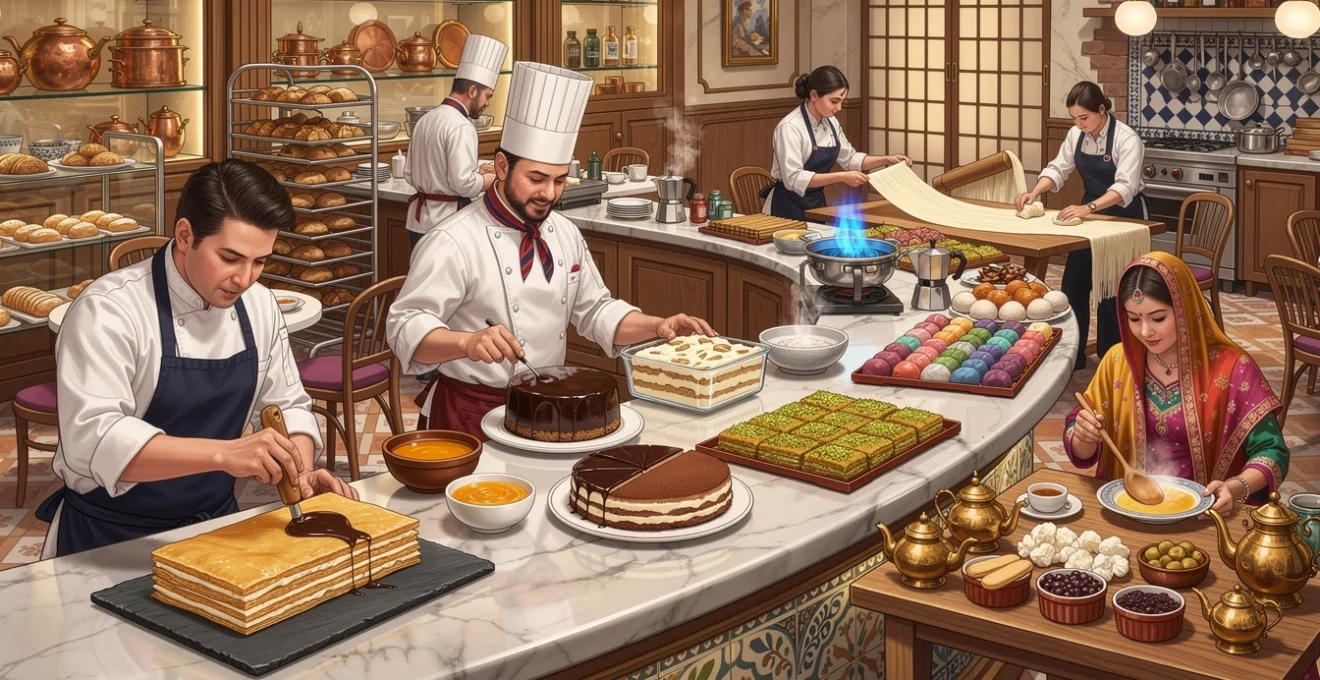
The world of confectionery artistry spans continents, cultures, and centuries, creating a tapestry of sweet experiences that define regional identities and bring people together across borders. From the delicate layers of French patisserie to the aromatic spices of Middle Eastern sweets, each dessert tells a story of tradition, innovation, and cultural exchange. These culinary masterpieces represent more than mere indulgence; they embody the essence of their origins, showcasing local ingredients, time-honoured techniques, and the creative spirit of their makers. Understanding the craftsmanship behind these beloved treats reveals the profound connection between food, culture, and human expression.
European patisserie masterpieces and their artisanal techniques
European dessert traditions represent the pinnacle of pastry craftsmanship, where precision meets artistry in creating confections that have captivated palates for generations. The continent’s diverse culinary landscape has produced some of the world’s most sophisticated and technically demanding desserts, each requiring specific skills and understanding of ingredient interactions. These masterpieces demonstrate how traditional techniques, refined over centuries, continue to influence modern patisserie around the globe.
French mille-feuille lamination methods and crème pâtissière mastery
The French mille-feuille, literally meaning “thousand leaves,” exemplifies the art of puff pastry lamination that defines classical French patisserie. This technique involves creating hundreds of alternating layers of dough and butter through a meticulous folding and rolling process. Professional pastry chefs typically perform six single folds, resulting in 729 layers that create the characteristic flaky, airy texture when baked. The butter must maintain a specific temperature and consistency throughout the process to prevent bleeding or breaking the delicate dough structure.
Crème pâtissière preparation requires equal precision, as the custard base must achieve the perfect balance of thickness and smoothness. The process begins with heating milk infused with vanilla, whilst simultaneously whisking egg yolks with sugar and cornflour. Temperature control proves crucial during the cooking phase, as excessive heat can cause the mixture to curdle, whilst insufficient heat prevents proper thickening. Master pastry chefs often add a small amount of butter at the end to create a glossier finish and prevent skin formation during cooling.
Austrian sachertorte apricot glazing and dark chocolate ganache applications
The legendary Sachertorte represents one of Austria’s most treasured culinary exports, requiring specific techniques that distinguish authentic versions from imitations. The cake’s foundation relies on a dense chocolate sponge made with separated eggs, where the whites are whipped to soft peaks and folded carefully to maintain airiness. The apricot jam layer serves both as flavouring and as a moisture barrier that prevents the chocolate coating from penetrating the cake layers.
Professional Sachertorte ganache demands precise temperature control and timing. The chocolate must be finely chopped to ensure even melting, whilst cream is heated to exactly 85°C for optimal emulsification. Traditional recipes, like many artisan chocolate dessert methods, call for a specific ratio of dark chocolate to cream that creates a coating firm enough to cut cleanly yet soft enough to complement the cake’s texture. The final application requires the ganache at room temperature, allowing it to flow smoothly across the apricot-glazed surface whilst maintaining its lustrous finish.
Italian tiramisu mascarpone emulsification and Coffee-Soaked savoiardi layers
Authentic tiramisu construction relies heavily on proper mascarpone emulsification techniques that create the dessert’s signature creamy texture without separation. The process begins with whisking egg yolks and sugar until pale and ribbon-like, followed by the gradual incorporation of mascarpone at room temperature. Cold mascarpone can cause the mixture to seize, whilst overly warm mascarpone may break the emulsion. The addition of whipped cream requires gentle folding motions to preserve the airiness essential for the dessert’s light mouthfeel.
Savoiardi preparation and coffee absorption represent equally critical elements in achieving authentic results. The coffee mixture typically combines strong espresso with coffee liqueur, creating a flavour
Savoiardi should be dipped briefly—often just one or two seconds per side—so they absorb enough liquid to soften without collapsing. Over-soaking leads to a soggy structure that loses the characteristic layered definition once chilled. As the dessert rests in the refrigerator, usually for at least six hours, capillary action allows the coffee to migrate evenly through the biscuit layers, while the mascarpone mixture stabilises. Light dustings of high-quality cocoa powder between layers enhance both aroma and visual contrast, reinforcing tiramisu’s status as one of the most famous desserts on earth.
Spanish crema catalana custard base techniques and caramelised sugar crust formation
Crema Catalana, often described as Spain’s answer to crème brûlée, relies on a carefully balanced custard base flavoured with citrus zest and warm spices like cinnamon. Unlike many baked custards, this dessert is typically cooked on the stovetop, requiring constant whisking to avoid scorching and curdling. Egg yolks, sugar, and cornflour are blended until pale, then combined with hot, infused milk that is gradually tempered in to prevent sudden coagulation. The mixture is cooked just until it coats the back of a spoon, then strained and chilled to develop a silky, spoonable texture.
The signature caramelised sugar crust is formed à la minute, just before serving, to preserve its contrasting crunch. A thin, even layer of sugar is sprinkled over the set custard and torched or grilled until it melts and turns a deep amber. The goal is to achieve a glass-like surface that shatters under the spoon, rather than a thick, chewy layer that overwhelms the custard. Many chefs prefer using superfine sugar for more uniform melting, rotating the dish as they apply heat to avoid hot spots. This simple yet precise step transforms a humble custard into a restaurant-worthy showpiece that highlights the artistry of Spanish patisserie.
Asian confectionery innovations and traditional sweet craftsmanship
Asian desserts span an extraordinary spectrum, from the minimalist elegance of Japanese wagashi to the syrup-soaked indulgence of Indian celebrations. While many of these sweets use humble ingredients like rice, beans, and palm sugar, the techniques involved can be intensely specialised, often passed down through families and apprenticeships. You might notice that texture, rather than just sweetness, takes centre stage, with chewy, bouncy, and jelly-like sensations playing a starring role. As global diners seek lighter, less sugary alternatives, these traditional Asian techniques are inspiring contemporary pastry chefs worldwide.
Japanese mochi glutinous rice pounding and anko red bean paste preparation
Japanese mochi is a masterclass in transforming a single ingredient—glutinous rice—into an iconic chewy confection. The traditional method, mochitsuki, involves soaking and steaming the rice before pounding it rhythmically in a large mortar with wooden mallets. Two people work in synchrony, one pounding and one turning and wetting the dough, achieving a smooth, elastic mass without tearing the starch network. This process, akin to kneading high-hydration bread dough, builds the distinctive stretchy texture that packaged shortcuts struggle to replicate.
Anko, the sweet red bean paste often enclosed within mochi, requires its own specialised preparation. Azuki beans are simmered until tender, with the cooking water changed at least once to remove bitterness and excess tannins. Sugar is added only after the skins soften, allowing the beans to absorb sweetness without toughening. Depending on the desired texture, the paste can be left chunky (tsubuan) or sieved into an ultra-smooth version (koshian). For home cooks, the key is patience: low, steady heat and frequent stirring prevent scorching, much like making a delicate jam. When mochi and anko come together, the result is a dessert that feels both simple and deeply ceremonial.
Turkish baklava phyllo dough stretching and pistachios-honey syrup integration
Baklava in its Turkish form showcases some of the most demanding pastry skills in the world: hand-stretching phyllo dough so thin that you can read a newspaper through it. The dough begins as a simple mixture of flour, water, a touch of oil, and sometimes vinegar, kneaded until extensible rather than elastic. It is then divided into small balls, rested to relax the gluten, and rolled with increasingly long, slender rolling pins. Skilled artisans use a combination of rolling, lifting, and gently stretching the dough over large tables, creating sheets that are almost translucent yet strong enough to layer.
The interplay between crisp pastry, finely chopped pistachios, and fragrant syrup defines exceptional baklava. Pistachios from regions like Gaziantep are prized for their intense flavour and vivid green colour, often lightly roasted to concentrate their nutty notes. After baking, a hot tray of baklava is traditionally doused with cooled syrup made from sugar, water, lemon, and occasionally honey, encouraging even absorption without dissolving the delicate layers. This temperature contrast is crucial: if both the syrup and pastry are hot, the dessert can turn soggy. When done correctly, each bite offers a symphony of textures—crackling top layers, tender interiors, and a glossy, aromatic finish that lingers on the palate.
Indian gulab jamun khoya milk solid reduction and rose-cardamom syrup infusion
Gulab jamun, a festival staple across the Indian subcontinent, begins with khoya—milk solids created by slowly reducing full-fat milk until most of the water evaporates. This reduction can take hours over low heat, with constant stirring to prevent scorching, producing a rich, fudge-like base that concentrates both flavour and fat. In commercial bakeries, pressure evaporators are often used to speed up this process while maintaining consistency, but many home cooks still prefer the traditional stovetop method for its depth of taste. The khoya is mixed with a small amount of flour or semolina, ghee, and leavening to form a soft, pliable dough.
The dough is rolled into smooth, crack-free spheres and fried at a carefully controlled medium-low temperature, usually around 140–150°C. Too hot, and the gulab jamun will brown on the outside while remaining doughy inside; too cool, and they absorb excess oil. Once uniformly golden, they are transferred directly into a warm sugar syrup perfumed with rose water, cardamom, and sometimes saffron. The syrup-to-dumpling ratio and steeping time determine how deeply the flavours penetrate—most cooks allow at least 30–60 minutes for full infusion. The result is a dessert that tastes like a cross between a doughnut and a milk fudge, soaked in perfumed nectar that feels as luxurious as it sounds.
Thai mango sticky rice coconut milk steaming and palm sugar caramelisation
Thai mango sticky rice, or khao niao mamuang, centres on glutinous rice cooked to a precise, slightly al dente chew that can hold its shape under rich coconut sauce. Rather than boiling, the rice is typically soaked and steamed, which preserves individual grains while ensuring even hydration. Once cooked, it is folded with a mixture of coconut milk, sugar, and salt while still warm, allowing the starches to absorb the liquid and develop a glossy sheen. That subtle salinity is not accidental; it balances the sweetness and amplifies the fragrance of ripe mango.
Palm sugar, often used in the sauce or as a drizzle, adds caramel notes and complexity that refined white sugar lacks. When gently heated with coconut milk, it melts into a sauce that is reminiscent of light caramel but with earthy, smoky undertones. Some vendors finish the dish with a spoonful of thickened coconut cream and a sprinkle of toasted mung beans or sesame seeds, adding crunch to the soft, sticky base. In peak mango season, dessert vendors across Thailand sell countless portions each evening, a testament to how this simple combination has become one of Southeast Asia’s most beloved desserts. For travellers and home cooks alike, mastering mango sticky rice is like holding onto a spoonful of tropical sunshine.
American regional dessert specialities and commercial production standards
Across North and South America, regional desserts reflect immigrant histories, local harvests, and a thriving culture of commercial baking. From New York-style cheesecake to Brazilian brigadeiros, many sweets have crossed borders to become global comfort foods. Industrial production has scaled these treats for supermarket shelves and export markets, yet the most memorable versions still come from small bakeries and family kitchens. How do producers balance tradition with food safety regulations, shelf life, and modern dietary expectations?
In the United States, classic desserts like apple pie, red velvet cake, and key lime pie are now governed by clear commercial production standards. Large-scale bakeries rely on standardised recipes and HACCP (Hazard Analysis and Critical Control Point) plans to ensure consistent quality and food safety. Ingredients such as stabilisers, emulsifiers, and modified starches help maintain texture during freezing, transport, and prolonged storage. At the same time, there is a growing movement towards “clean label” formulations—shorter ingredient lists, less artificial colouring, and reduced sugar—driven by consumer demand for healthier indulgence.
Latin American favourites, including Argentine alfajores and Mexican churros, have also found a place in global dessert markets. Commercial alfajores producers standardise biscuit thickness, baking time, and dulce de leche viscosity to prevent leaking or sogginess in transit, often using protective chocolate coatings to extend shelf life. Churro manufacturers, meanwhile, pre-extrude and freeze dough sticks to guarantee uniformity for restaurants and theme parks. Yet many travellers still seek out street vendors and panaderías, where slight imperfections and variations in texture signal a human hand at work. The tension between artisanal charm and industrial efficiency continues to shape how American desserts evolve.
Regulatory frameworks, particularly in North America, also influence which desserts make it to market and how they are labelled. Standards of identity—legal definitions for products like ice cream, chocolate, and jams—dictate minimum fat content, cocoa solids, or fruit percentages. This means that a “premium” ice cream in the U.S. must not only taste rich, but also meet precise technical requirements that distinguish it from frozen desserts or soft-serve. For dessert lovers, understanding these behind-the-scenes rules can be eye-opening: the slice of pie or pint of gelato in your hand is not only a recipe, but also a product of legislation, supply chains, and evolving consumer expectations.
Middle eastern and north african sweet delicacies with aromatic spice profiles
Middle Eastern and North African desserts are renowned for their fragrant use of spices, floral waters, and nuts, creating flavour profiles that are as perfumed as they are sweet. Rather than relying solely on sugar, these sweets often layer cardamom, cinnamon, mahleb, orange blossom, and rose to build complexity. Textures range from syrup-soaked pastries to milky puddings and sesame-rich confections, many of which are deeply tied to religious and seasonal celebrations. Have you ever noticed how just one bite of a perfumed dessert can transport you mentally to a bustling souk or family gathering?
Classic syrup-based pastries like kunafa, basbousa, and regional riffs on baklava showcase the region’s love for crisp, caramelised exteriors paired with moist interiors. Semolina, shredded phyllo, or vermicelli-style doughs are baked or fried until golden, then soaked in sugar syrups infused with citrus peel, cloves, or rose water. Timing is everything: as with Turkish baklava, cooks often pour cool syrup over hot pastry to achieve optimal absorption without compromising structure. Pistachios, almonds, and walnuts are not just toppings but integral components that contribute protein, texture, and a satisfying savouriness to balance the sweetness.
Milk-based desserts such as muhalabiya and om ali reveal a different side of the region’s sweets, focusing on creaminess and subtle aromatics. Thickened with rice flour, cornstarch, or bread, these puddings are lightly sweetened and perfumed with orange blossom or rose water, then garnished with nuts and dried fruits. In North Africa, honey and date syrup frequently replace or supplement refined sugar, adding mineral-rich depth and a hint of acidity. For home cooks experimenting with these recipes, the most important tip is restraint: a drop too many of rose water can overwhelm a dish, much like adding too much perfume. When balanced correctly, the result is a dessert that feels both comforting and exotic.
Halva, found in various forms from the Levant to Morocco, is another emblematic sweet that showcases the region’s love of sesame and aromatic spices. The tahini-based version, often combined with sugar syrup and flavoured with pistachios, cocoa, or vanilla, relies on a delicate crystallisation process to achieve its characteristic crumbly yet melt-in-the-mouth texture. Temperature control is crucial here as well; the sugar syrup must reach a specific stage before being beaten into the tahini to prevent greasiness or graininess. Spices like cardamom or mahleb can be added with a light hand to create a lingering warmth that complements coffee or mint tea. It is this interplay of technique and spice that makes Middle Eastern and North African sweets some of the most memorable desserts on earth.
Contemporary molecular gastronomy applications in global dessert evolution
As pastry chefs push beyond tradition, molecular gastronomy has become a powerful toolkit for reimagining classic desserts. Techniques such as spherification, flash-freezing with liquid nitrogen, and the use of hydrocolloids allow familiar flavours to appear in startling new textures. Imagine a deconstructed tiramisu where the coffee is an airy foam, the mascarpone a frozen snow, and the cocoa presented as a brittle tuile—everything tastes like the original, yet the experience is entirely new. These innovations may seem playful, but they rely on a serious understanding of food science, from protein denaturation to sugar crystallisation curves.
Stabilisers like agar-agar, pectin, and xanthan gum are now commonplace in high-end dessert kitchens, helping chefs create gels, fluid gels, and suspensions that would have been nearly impossible with classical methods alone. Spherification, popularised by Spanish avant-garde cuisine, encapsulates flavoured liquids in thin, gelled membranes, turning fruit juices or even spiced custards into “caviar” or spheres that burst in the mouth. Nitrogen freezing enables the creation of ultra-smooth ice creams and sorbets in seconds, minimising ice crystal formation in a way that traditional batch freezers cannot. For guests, the effect can feel almost magical, like watching a science experiment transform instantly into dessert.
Molecular techniques also intersect with sustainability and health trends shaping the future of global sweets. By manipulating textures and aromas, chefs can create the perception of indulgence while reducing sugar or fat content, an approach increasingly valued as diners seek “better-for-you” desserts without sacrificing pleasure. Plant-based gels and foams allow for vegan reinterpretations of dairy-heavy classics, using coconut cream, aquafaba, or oat milk in ways that mimic traditional mouthfeel. At the same time, data from the global dessert market shows rising interest in experiential dining—guests are not only eating dessert, they are watching it smoked, frozen, or assembled tableside.
Perhaps the most exciting aspect of molecular gastronomy is how it loops back to tradition rather than replacing it. Many modern chefs begin with a beloved global dessert—say, mango sticky rice or mochi—and ask, “How can we express this flavour and story in a new form?” The result might be a mochi-inspired ice cream sandwich with aerated anko, or a mango sticky rice parfait built with coconut foam and puffed rice crisps. Just as lamination elevated simple dough into mille-feuille centuries ago, these contemporary tools are simply the latest chapter in humanity’s long, inventive journey with sugar, starch, heat, and imagination.