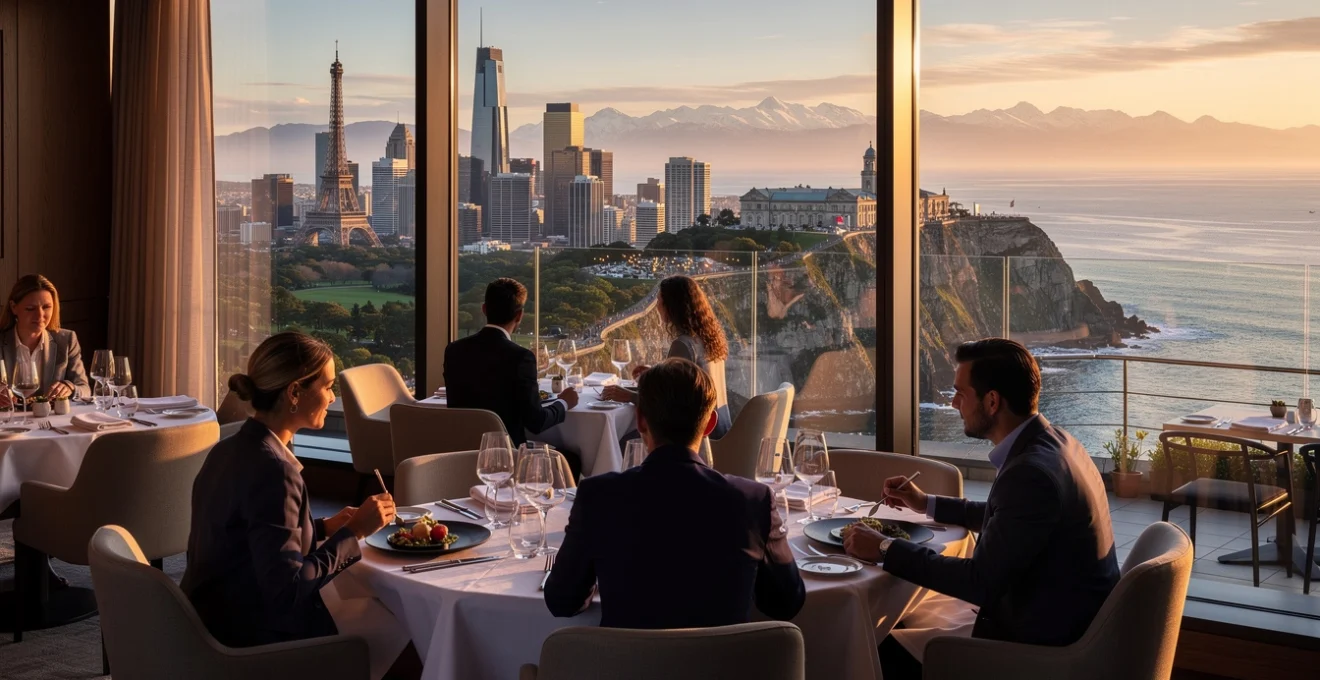
The art of exceptional dining extends far beyond what appears on your plate. In an increasingly competitive culinary landscape, restaurants are recognising that memorable experiences combine outstanding cuisine with breathtaking scenery. From Michelin-starred establishments perched atop iconic landmarks to intimate coastal venues where waves crash metres from your table, these dining destinations prove that location can be just as important as the chef’s expertise. The psychology behind scenic dining reveals why humans are naturally drawn to elevated positions and panoramic vistas – it’s an evolutionary preference that modern restaurateurs have masterfully exploited.
Today’s most sought-after dining venues understand that guests aren’t simply purchasing a meal; they’re investing in an unforgettable moment. Whether you’re celebrating a milestone anniversary or impressing potential business partners, these restaurants with spectacular views offer something that cannot be replicated at home or in conventional dining rooms. The combination of exceptional cuisine and stunning scenery creates what hospitality experts call “peak experiences” – moments so memorable they become permanent fixtures in our personal narratives.
Michelin-starred establishments with panoramic vantage points
The world’s most prestigious restaurants have discovered that earning Michelin stars whilst simultaneously offering spectacular views creates an almost unbeatable combination. These establishments represent the pinnacle of fine dining, where architectural positioning and culinary excellence converge to create extraordinary experiences. The challenge lies in maintaining gastronomic standards whilst maximising visual impact – a balance that only the most skilled restaurateurs achieve successfully.
Le jules verne’s eiffel tower engineering marvel and culinary excellence
Situated within the Eiffel Tower’s iron lattice structure at 125 metres above ground, Le Jules Verne represents perhaps the most iconic example of elevated fine dining. Chef Frédéric Anton has transformed this tourist landmark into a legitimate culinary destination, earning the restaurant its Michelin star through innovative French cuisine that rivals Paris’s most celebrated establishments. The engineering feat of creating a world-class kitchen within Gustave Eiffel’s 19th-century masterpiece required extensive modifications whilst respecting the tower’s historical integrity.
Diners experience unparalleled views across Paris’s architectural tapestry, from the serpentine Seine to the gleaming Sacré-Cœur basilica. The restaurant’s interior design deliberately emphasises the tower’s industrial heritage whilst providing contemporary comfort. Reservations typically require booking three months in advance, with window tables commanding premium prices that reflect their exceptional positioning.
Osteria francescana’s modena cityscape integration and Three-Star positioning
Massimo Bottura’s three-Michelin-starred Osteria Francescana in Modena demonstrates how intimate scale can enhance rather than diminish scenic impact. The restaurant’s elevated position provides sweeping views across Modena’s terracotta rooftops and historic cathedral, creating an authentic Italian dining atmosphere that tourist-focused venues struggle to replicate. Bottura’s innovative approach to traditional Emilian cuisine perfectly complements the restaurant’s integration with its historic surroundings.
The venue’s success illustrates how authentic regional positioning can be more valuable than dramatic elevation. Each window frames carefully composed views of medieval architecture, whilst the interior design references local artistic traditions. This thoughtful integration between cuisine, location, and cultural heritage explains why securing reservations often requires waiting lists exceeding six months.
Aqua shard’s vertical fine dining architecture and london skyline optimisation
Occupying floors 31-33 of London’s tallest skyscraper, Aqua Shard exemplifies how contemporary architecture can enhance dining experiences through strategic positioning. The restaurant’s floor-to-ceiling windows provide unobstructed 360-degree views across London’s ever-evolving skyline, from historic Tower Bridge to the modern financial district. Executive Chef Dale Osborne’s modern British cuisine celebrates seasonal ingredients whilst the venue’s design maximises visual impact through minimal interior obstruction.
The Shard’s unique pyramid structure means that Aqua Shard’s dining rooms gradually narrow as they ascend, creating intimate spaces that feel dramatically removed from street level. Weather conditions significantly influence the dining experience, with clear evenings offering views extending beyond Greater London’s boundaries.
Eleven madison park’s madison square garden vista and modernist interior design
Across the Atlantic, Eleven Madison Park demonstrates how a meticulously framed cityscape can amplify a restaurant’s already formidable reputation. Overlooking Madison Square Park rather than Madison Square Garden itself, the three-Michelin-starred dining room uses vast windows to draw the eye towards the park’s tree canopy, the Flatiron Building and the steady choreography of New York life below. The contrast between the calm, almost gallery-like interior and the energy of Manhattan outside is deliberate, reinforcing the sense that you have stepped into a carefully curated world.
The restaurant’s modernist design language mirrors its plant-based tasting menu: clean lines, restrained colour palettes and an almost sculptural approach to space. Tables are widely spaced, which not only supports the theatre of service but also ensures uninterrupted sightlines to the park and skyline. For guests seeking a true “dining with a view” experience in New York, requesting a table along the windowed perimeter can transform an already exceptional meal into a cinematic evening, particularly at golden hour when the city is bathed in soft light.
Coastal establishments leveraging oceanfront positioning for maximum visual impact
While altitude often steals the spotlight, some of the most memorable restaurants with a view are barely metres above sea level. Coastal establishments harness the hypnotic rhythm of tides, shifting light on the water and the drama of changing weather in ways that mountain or city venues cannot replicate. The sensory effect is powerful: salt on the air, the low roar of waves, and the glint of sunlight on the horizon combine with local seafood and regional produce to create deeply rooted experiences.
From California’s Pacific Coast Highway to the rugged Cornish shoreline, architects and restaurateurs are increasingly designing venues around the ocean rather than merely beside it. Glass-fronted dining rooms, cantilevered terraces and beach-to-table concepts all work to blur the line between interior and exterior. If you are planning a coastal getaway and wondering where to book dinner with a sea view, these destinations show how to make the most of waterfront positioning.
Nobu malibu’s pacific coast highway cliff-edge restaurant architecture
Nobu Malibu has become almost synonymous with seaside celebrity dining, but its architectural handling of the coastline is just as noteworthy as its black cod miso. Positioned directly off the Pacific Coast Highway, the restaurant is designed as a series of low-slung pavilions and expansive decks that sit mere metres from the surf. Floor-to-ceiling sliding doors erase the barrier between the dining room and the ocean, so that even indoor tables feel as if they hover above the waterline.
The long, linear layout means a high proportion of seats enjoy at least partial sea views, with prime tables on the outer deck delivering uninterrupted vistas of the Pacific. Sunset service is particularly coveted, when the sky transforms into a gradient of apricots and violets and the ocean becomes a reflective canvas. To maximise your chances of oceanfront seating at this highly booked restaurant with a view in Malibu, request “patio, ocean-side” when reserving and be prepared to arrive early to secure the best placement.
The lighthouse restaurant’s aldeburgh suffolk coastline integration
On England’s east coast, The Lighthouse Restaurant in Aldeburgh showcases a more understated but equally compelling approach to coastal dining. Set just a short stroll from the shingle beach, the restaurant integrates the Suffolk coastline into its identity through both design and menu. While it is not perched on a dramatic cliff edge, its upper-floor windows and carefully angled seating capture oblique views of the North Sea and Aldeburgh’s colourful beachfront houses.
The Lighthouse leans into its surroundings by focusing on locally landed fish, seasonal vegetables from surrounding farms and a relaxed, welcoming atmosphere that mirrors the town itself. For diners, the experience feels like an authentic slice of British seaside life rather than a staged performance. If you are booking a table here, asking for a seat near the front windows can enhance the sense of place, especially on stormy days when the grey sea and big skies become an integral part of the meal.
Rick stein’s seafood restaurant cornwall harbour position and maritime ambience
In Padstow, Rick Stein’s flagship Seafood Restaurant offers an instructive lesson in how harbour views can anchor a dining concept. Overlooking the working fishing harbour, the restaurant’s picture windows frame bobbing boats, tidal movements and the daily routines of local fishers. This living backdrop reinforces the hyper-fresh, sea-to-plate narrative that underpins Stein’s menus and brand.
The maritime ambience extends inside through subtle nautical design cues rather than heavy-handed theming: polished wood, soft blues and whites, and an emphasis on natural light. As with many harbour-side restaurants with a view in Cornwall, demand peaks during the summer months and school holidays, when daylight lingers late into the evening. To experience the interplay of light, tide and harbour activity at its best, consider booking a late lunch that stretches into early evening, when the water often glows with reflected colour.
Watergate bay hotel’s cornish surf break proximity and beach-to-table concept
Further along the Cornish coast, Watergate Bay Hotel has built its culinary offering around one of the region’s most consistent surf breaks. Its restaurants and bars step down towards the beach in a series of terraces and glass-fronted rooms, ensuring that almost every vantage point captures surfers carving along waves, shifting sands and the broad sweep of the bay. The result is a dynamic, constantly changing seascape rather than a static postcard view.
The hotel’s beach-to-table concept extends beyond simply serving locally caught fish. Menus reflect the active, outdoorsy lifestyle associated with the location, with hearty brunches, refined yet relaxed dinners and post-surf snacks all designed to be enjoyed while watching the tide roll in. If you are planning a stay, request a table by the window or on the terrace of the main restaurant during sunset; the sun drops directly over the water for much of the year, offering some of the most dramatic coastal dining views in the UK.
The gannet’s glasgow merchant city warehouse conversion and river clyde views
Although Glasgow is not traditionally framed as a coastal city, its historical relationship with the River Clyde has shaped its industrial and culinary identity. The Gannet, housed in a converted Merchant City warehouse, takes aesthetic cues from this maritime heritage while subtly embracing river views. Large, industrial-style windows bring in natural light and glimpses of the surrounding streets and, in certain sightlines, the wider river corridor that once connected Glasgow to global trade routes.
The restaurant focuses on modern Scottish cuisine, showcasing west coast shellfish, game and foraged ingredients that reference the wider landscape beyond the city. The juxtaposition of bare brick, exposed beams and elegant table settings creates a sense of dining in a preserved fragment of Glasgow’s shipping past. While not a classic “restaurant on the water,” The Gannet demonstrates how even partial river vistas, when combined with a strong narrative, can deliver a meaningful sense of place.
Mountain peak and alpine dining venues with extreme altitude advantages
For many travellers, the ultimate “restaurant with a view” is not beside an ocean or harbour but high in the mountains. Alpine and high-altitude venues offer perspectives that feel almost otherworldly: jagged peaks stretching to the horizon, glaciers glowing in late afternoon light and tiny villages far below. At these elevations, the very act of getting to your table can feel like an adventure, whether you arrive by cable car, funicular or ski lift.
Designing and operating restaurants at altitude poses unique engineering and logistical challenges, from snow loads on glass façades to the transportation of supplies and staff. Yet the rewards are significant. Studies in tourism psychology have shown that expansive mountain views are strongly correlated with feelings of awe and restoration, which in turn can make meals more memorable. The following alpine venues illustrate how thoughtful architecture and operations can turn thin air into a thickly atmospheric dining experience.
Ice Q restaurant sölden’s james bond location and glacier panorama engineering
Perched at 3,048 metres above sea level in Austria’s Ötztal Alps, Ice Q gained international fame as a filming location for the James Bond film Spectre. The restaurant is a minimalist glass cube anchored to the summit by a complex steel framework, designed to withstand extreme winds, heavy snowfall and dramatic temperature swings. Its reflective façade mirrors the surrounding glaciers, while inside, floor-to-ceiling glazing delivers uninterrupted views over more than 250 peaks.
The engineering behind Ice Q’s panoramic restaurant design is as impressive as its wine list. Triple-glazed units, carefully calculated sun angles and integrated shading systems ensure guests remain comfortable while basking in bright alpine light. Accessed via the Gaislachkoglbahn cable car, the journey itself is part of the experience, offering a gradual reveal of the surrounding mountains. To fully appreciate the shifting colours of the snow and rock, book a lunch sitting rather than dinner, when daylight is at its strongest.
Piz gloria schilthorn’s revolving platform mechanics and swiss alps 360-degree views
Piz Gloria, set atop the Schilthorn at 2,970 metres in the Bernese Alps, takes the idea of dining with a view one step further with its revolving restaurant platform. Completing a full rotation approximately every 45 minutes, the mechanism allows diners to enjoy a constantly changing 360-degree panorama without leaving their seats. On clear days, the iconic trio of the Eiger, Mönch and Jungfrau dominates the skyline, with valleys and glaciers unfolding far below.
The revolving system is driven by an energy-efficient electric motor and gear assembly designed to operate smoothly even in severe winter conditions. Weight distribution, friction management and safety controls have all been engineered so that the motion feels almost imperceptible, more like the slow sweep of a clock hand than a fairground ride. If you are prone to motion sensitivity, opt for an inner table closer to the rotation axis, where movement feels even more subtle while views remain spectacular.
Le 3842 aiguille du midi’s highest european restaurant positioning and mont blanc access
Claiming one of the highest restaurant positions in Europe, Le 3842 sits on the Aiguille du Midi above Chamonix at an altitude of 3,842 metres. Accessed by a two-stage cable car that climbs almost 2,800 vertical metres in around 20 minutes, the journey alone is a masterclass in vertical engineering and landscape drama. Once at the summit, guests are rewarded with peerless views of Mont Blanc, crevassed glaciers and the jagged ridges of the Mont Blanc massif.
The restaurant itself is compact and utilitarian by design, reflecting the constraints of building and operating at extreme altitude. Large panoramic windows and simple furnishings ensure that nothing competes with the surrounding scenery. Because oxygen levels are significantly lower at this height, you may find that a lighter meal and plenty of hydration make for a more comfortable experience. Booking a mid-morning or early afternoon slot can also help you avoid the coldest temperatures and largest crowds.
Refuge du goûter’s mountaineering route integration and high-altitude logistics
Refuge du Goûter, although more mountain refuge than conventional restaurant, exemplifies the operational complexity of serving food in some of Europe’s most remote and elevated locations. Located at 3,835 metres on one of the main ascent routes to Mont Blanc’s summit, the refuge offers half-board accommodation and hearty, fuel-focused meals for climbers. Its dining room, however, also provides extraordinary views across the Alps, with sunset and sunrise casting dramatic shadows across the surrounding peaks.
Everything from fresh ingredients to waste removal must be carefully managed, often relying on helicopter deliveries and strict scheduling. Water supply, energy generation and insulation systems have been engineered to minimise environmental impact while ensuring the safety and comfort of guests. While you are unlikely to visit Refuge du Goûter purely for a casual lunch, its example illustrates how far restaurateurs and hospitality operators are willing to go to deliver unforgettable dining experiences in locations that once seemed accessible only to serious alpinists.
Urban rooftop dining establishments maximising metropolitan skyline exposure
Back at lower elevations, urban rooftop restaurants have become one of the most in-demand categories of dining with a view. As cities densify and ground-level space becomes more contested, rooftops offer an opportunity to create elevated oases above the urban bustle. The best rooftop venues do more than simply place tables on a flat roof; they choreograph views, lighting and landscaping to frame the city in its most flattering light.
From London to Bangkok and New York to Singapore, rooftop dining spaces increasingly incorporate sophisticated design elements: glass balustrades for uninterrupted vistas, integrated heating for year-round use and acoustic treatments to soften city noise. They also respond to a clear consumer trend. According to hospitality industry surveys in 2025, restaurants with rooftop or terrace seating report higher average spend per guest, as diners are willing to pay a premium for skyline access. If you are hunting for the perfect city-view dinner, prioritising altitude and aspect can be as important as scrutinising the menu.
Historic venue conversions combining architectural heritage with scenic positioning
Not all restaurants with extraordinary views are products of contemporary architecture. Many of the most atmospheric venues inhabit repurposed historic buildings whose original functions had little to do with hospitality. Think former lighthouses, warehouses, fortresses or railway stations now offering refined menus and carefully curated outlooks. These conversions allow diners to appreciate both the exterior landscape and the layered stories embedded in the walls around them.
For restaurateurs, working within a listed or heritage structure brings constraints – from restrictions on window alterations to limitations on kitchen extraction systems. Yet these same constraints often lead to more creative, subtle solutions, such as using existing archways to frame vistas or aligning seating plans with historic sightlines. As a guest, choosing a historic restaurant with a view can feel like stepping into a film set, where architecture, landscape and cuisine all play supporting roles in a larger narrative.
Reservation strategies and optimal table positioning for premium viewing experiences
Securing a table with a genuinely outstanding view is rarely a matter of chance. As demand for restaurants with a view continues to grow, strategic booking has become as important as choosing the venue itself. Many high-profile establishments open their reservation books 60 to 90 days in advance, with prime sunset slots and window tables disappearing within hours. Putting reminders in your calendar for key booking release dates can dramatically increase your chances of success.
When making a reservation, specificity helps. Rather than simply requesting “a nice table,” mention your preference clearly and politely: “a window table overlooking the harbour,” “a seat near the terrace edge” or “a skyline view if available.” Some restaurants maintain internal notes for repeat guests or special occasions, and clear communication gives them something to work with. It is also worth calling directly, as online booking systems rarely allow you to specify view-related preferences in detail.
Timing can be as critical as table position. If you are seeking city lights, a later seating after nightfall will showcase illuminated landmarks and reflections on glass towers. For mountain or coastal vistas, a reservation that straddles golden hour and sunset – typically starting 60 to 90 minutes before sunset – allows you to experience the full transition from day to night. Weather forecasts also matter; on days with heavy fog or rain, you might prioritise culinary reputation over view and reschedule your scenic splurge for clearer conditions if the restaurant’s policies allow.