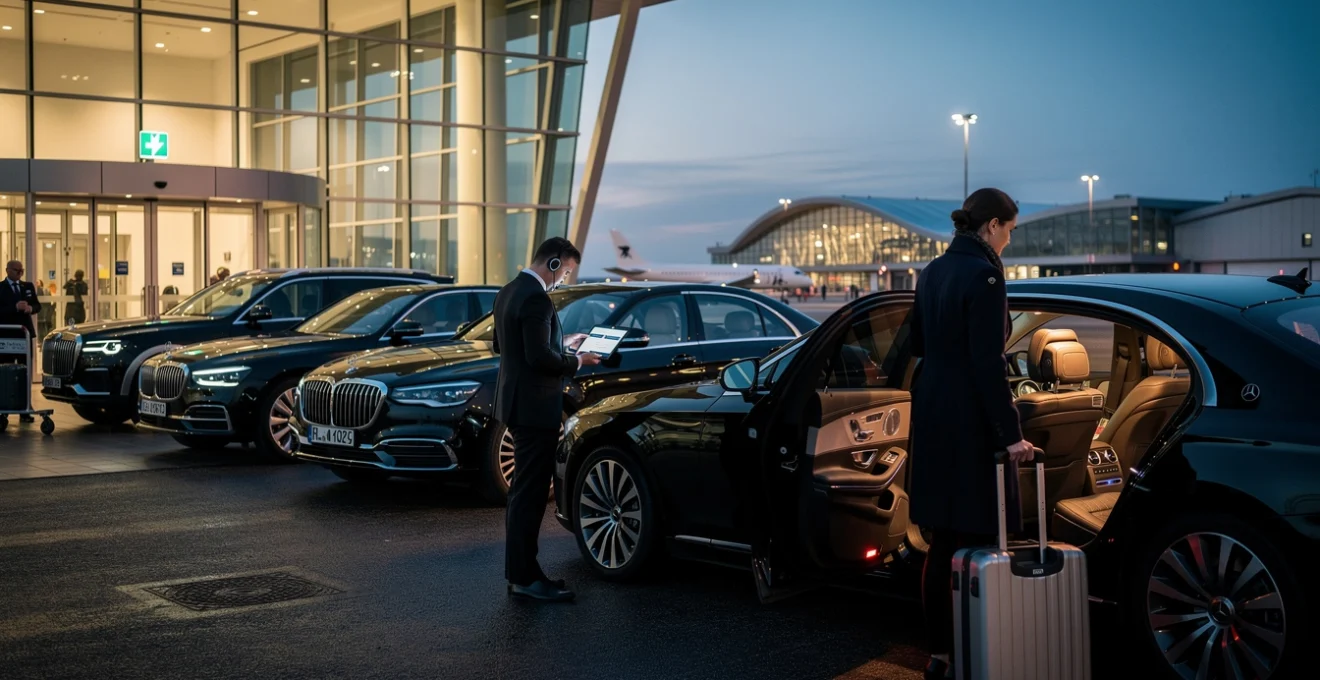
In today’s interconnected world, high-profile executives, celebrities, and discerning travellers require transportation solutions that extend far beyond mere point-to-point transfers. The demand for premium chauffeured services has evolved into a sophisticated industry where privacy, flexibility, and discretion form the cornerstone of every journey. These specialised transportation providers understand that their clientele operates in environments where confidentiality is paramount, schedules are fluid, and the quality of service directly impacts both personal security and professional reputation.
The modern chauffeur-driven transport sector has transformed dramatically over the past decade, with service providers now offering military-grade security features, real-time itinerary adjustments, and vehicles equipped with cutting-edge privacy technologies. For travellers who cannot afford compromises in their transportation arrangements, these services represent an essential business tool rather than a luxury indulgence.
Executive chauffeur services: premium vehicle categories and fleet specifications
The foundation of any exceptional chauffeur service lies in its fleet composition, with premium operators maintaining diverse vehicle categories to address varying client requirements and security protocols. Today’s executive transportation market demands vehicles that seamlessly blend luxury appointments with advanced safety systems and privacy-enhancing technologies.
Modern fleet specifications typically encompass multiple vehicle categories, each engineered to meet specific operational requirements. Executive saloons remain the preferred choice for discrete urban transfers, whilst high-end SUVs provide enhanced security capabilities for higher-risk scenarios. Ultra-luxury vehicles serve ceremonial functions and high-visibility corporate events, where arrival impact carries strategic importance.
Mercedes-benz S-Class and BMW 7 series: luxury saloon standards
The Mercedes-Benz S-Class continues to define executive transportation standards, with its latest W223 generation featuring advanced driver assistance systems and comprehensive passenger privacy controls. The vehicle’s ENERGIZING Comfort system automatically adjusts cabin ambience based on passenger preferences, whilst the rear-seat entertainment package includes dual 11.6-inch displays with wireless connectivity capabilities.
BMW’s 7 Series competes directly with enhanced rear passenger accommodations and the innovative Theatre Screen technology. The vehicle’s acoustic glass package provides superior sound insulation, essential for confidential conversations during transit. Both platforms offer extended wheelbase variants that increase rear passenger space by approximately 140mm, creating a more comfortable environment for longer journeys.
Range rover and bentley bentayga: High-End SUV options
Range Rover’s flagship models deliver commanding road presence whilst maintaining the discretion required for executive transport. The latest Autobiography specifications include deployable side steps, panoramic roof systems, and rear-seat climate zones with individual temperature controls. The vehicle’s Terrain Response 2 system ensures confident handling across varying road conditions, particularly valuable for rural estate visits or challenging weather scenarios.
The Bentley Bentayga represents the pinnacle of luxury SUV design, combining hand-crafted interior appointments with sophisticated security features. Its optional Mulliner specification includes diamond-quilted leather surfaces, veneered picnic tables, and a refrigerated compartment for champagne service. The vehicle’s air suspension system provides exceptional ride quality whilst maintaining the ground clearance necessary for diverse terrain navigation.
Rolls-royce phantom and Mercedes-Maybach: Ultra-Luxury transport solutions
For clients requiring the ultimate in automotive luxury, the Rolls-Royce Phantom delivers unparalleled refinement and presence. The vehicle’s Architecture of Luxury platform incorporates over 130kg of sound-deadening materials, creating what the manufacturer terms “the world’s most silent motor car.” The rear passenger compartment features individually reclining seats, fold-out tables, and a champagne cooler integrated within the central console.
Mercedes-Maybach variants offer comparable luxury levels with enhanced technological integration. The S 680’s rear-seat massage functions include hot stone therapy simulation, whilst the Burmester 4D surround sound system delivers concert-hall acoustics. These vehicles represent the choice for ceremonial occasions where visual impact carries diplomatic or commercial significance.
Tesla model S and audi e-tron: electric luxury vehicle integration
Environmental consciousness has become increasingly important for corporate
fleets, with Fortune 500 companies increasingly requesting electric luxury vehicle integration for city transfers and airport runs. The Tesla Model S offers instantaneous torque for rapid yet smooth acceleration, combined with a minimalist, distraction-free cabin ideal for focused work. Its large central display can be restricted to navigation-only modes for privacy, while over-the-air updates ensure the latest security patches and driver-assistance enhancements are always active.
The Audi e-tron, by contrast, prioritises traditional executive comfort with a familiar layout and sophisticated acoustic refinement. Its dual-motor setup and adaptive air suspension provide a composed ride, particularly valuable on longer highway journeys between regional hubs. Many premium operators now specify these electric models with upgraded sound insulation and privacy glass, enabling discreet, low-emission travel without sacrificing comfort or security.
Privacy-centric transportation protocols and confidentiality measures
For travellers who value privacy and flexibility above all else, vehicle choice is only part of the equation. The true differentiator lies in the privacy-centric transportation protocols that govern how journeys are planned, executed, and recorded. Leading chauffeur providers implement layered confidentiality measures that address both human and technological risk, from driver conduct to data handling and route selection.
These protocols are particularly critical for legal teams, senior executives, and public figures whose movements and conversations may carry commercial or reputational sensitivity. Rather than relying on informal discretion, professional operators formalise standards through written policies, technical controls, and rigorous training. The result is a transportation environment where you can treat the vehicle as an extension of your boardroom or private office.
Non-disclosure agreements and professional driver vetting procedures
At the heart of any secure chauffeur service sits a robust approach to professional driver vetting and confidentiality agreements. Reputable operators conduct enhanced background checks that typically include criminal record screening, driving history analysis, right-to-work verification, and in some cases, financial checks to mitigate bribery and coercion risks. For high-risk profiles, additional security clearances or references from vetted organisations may be required.
Non-disclosure agreements (NDAs) formalise the expectation of confidentiality, turning what might otherwise be a verbal assurance into a legally enforceable commitment. Many executive transportation providers include NDAs as standard within driver contracts and may extend bespoke NDAs to corporate clients on request. This means that any information overheard, documents glimpsed, or schedules accessed during a journey are strictly protected, giving you confidence to take calls and review sensitive materials en route.
Tinted window specifications and vehicle soundproofing technologies
Physical vehicle specifications play an equally important role in safeguarding client privacy. Professionally operated fleets typically use factory-approved tinted window specifications that comply with local regulations while limiting external visibility into the rear cabin. For VIP and security-focused transfers, privacy glazing may extend beyond standard tinting to include laminated acoustic glass that both dampens sound and improves impact resistance.
Soundproofing technologies have advanced significantly in recent years. Premium saloons and SUVs often integrate multi-layer acoustic glass, additional door and floor insulation, and active noise cancellation systems. This combination minimises external noise intrusion and prevents casual eavesdropping near the vehicle. For high-profile clients, the effect is similar to closing the door on a meeting room: once seated, you can speak freely without worrying who might be listening just outside.
Secure communication systems and mobile signal jamming capabilities
In an era where data interception can be more damaging than physical intrusion, secure communication systems are increasingly specified for top-tier chauffeured transfers. Some providers offer vehicles equipped with encrypted Wi-Fi networks, allowing executives to connect laptops and mobile devices without resorting to unsecured public networks. Others support VPN configurations and enterprise-grade firewalls, effectively turning the vehicle into a mobile extension of the corporate network.
In very high-risk environments, security teams may deploy mobile signal jamming or spoofing technologies to prevent remote triggering of devices near the vehicle. While such measures are tightly regulated and reserved for specialist protection scenarios, awareness of their existence underscores how seriously leading operators treat digital security. For most travellers, the priority will be encrypted connectivity and disciplined data handling policies rather than full-spectrum electronic countermeasures, but it is reassuring to know these options exist when required.
Route confidentiality and GPS tracking discretion protocols
Beyond the cabin, route confidentiality is central to maintaining operational security. Premium chauffeur services typically enforce strict controls on how journey data is stored, accessed, and shared. GPS tracking may be enabled for safety and fleet management, but access to live or historical routes is restricted to authorised personnel and retained only as long as necessary for compliance and service quality purposes.
For particularly sensitive movements, operators may implement discrete routing practices that vary departure and arrival patterns, avoid predictable routines, or use decoy routes where appropriate. Some clients request that journey details are not shared via email but instead confirmed through secure portals or direct calls. This layered approach ensures that while you benefit from the reassurance of GPS-enabled oversight, your movements are not casually visible to anyone outside the immediate operational need-to-know circle.
Flexible booking systems and Real-Time itinerary management
Travellers who value flexibility rarely operate on rigid schedules. Meetings overrun, flights change, and priorities shift at short notice. Modern chauffeur services respond to this reality with flexible booking systems and real-time itinerary management tools designed to absorb change rather than resist it. The best platforms allow you or your assistant to book, modify, and cancel journeys across devices with minimal friction.
Many executive transportation providers now integrate live flight data, traffic monitoring, and dynamic routing into their dispatch systems. This means your chauffeur can adjust departure times, alter pick-up locations, or reroute around congestion without you needing to intervene. Think of it as having a dedicated travel operations team focused solely on your ground movements, quietly aligning the logistics behind the scenes so you can focus on the substance of your day.
For organisations managing multiple travellers, centralised dashboards provide a consolidated view of upcoming and in-progress journeys. Travel managers can assign vehicles, monitor status, and communicate changes in real time, reducing reliance on ad hoc messages and spreadsheets. Whether you are coordinating a board roadshow across several cities or handling a single last-minute airport run, the same underlying technology ensures that flexibility does not come at the expense of control.
Professional chauffeur training standards and service excellence protocols
Even the most advanced fleet and booking platform will fail to deliver if the human element is not of the highest calibre. Professional chauffeur training has therefore evolved into a structured, multi-module discipline covering far more than safe driving. Leading companies invest in formal service excellence protocols that turn drivers into trusted partners for your journey rather than anonymous operators behind the wheel.
Core training typically includes advanced driving techniques, defensive and evasive driving modules for higher-risk clients, and in-depth route familiarisation for key commercial and diplomatic districts. Just as important are the soft skills: etiquette, cultural sensitivity, and conflict de-escalation strategies. A well-trained chauffeur knows when to engage in conversation and when to offer quiet, when to suggest an alternative route, and when to follow precise instructions without question.
Many premium operators also implement continuous professional development, with refresher courses on new vehicle technologies, updated security protocols, and evolving customer expectations. Mystery rides, client feedback loops, and performance reviews help maintain consistent standards across the fleet. For you as the traveller, this translates into an experience that is predictably professional: every vehicle, every driver, every journey aligned with the same benchmark of discretion and reliability.
High-profile client transportation: airport transfers and event logistics
Airports and major events represent critical pressure points for privacy-conscious travellers. Crowded terminals, media presence, and complex schedules all amplify the risk of delays and unwanted attention. Specialist chauffeur providers counter these challenges with tightly choreographed airport transfers and event logistics designed to minimise exposure and maximise efficiency.
Key to this approach is close coordination with airport services, venue security, and, where applicable, personal protection teams. Detailed run sheets, contingency plans, and pre-cleared parking or drop-off zones ensure that your arrival and departure are as seamless as possible. Rather than navigating unfamiliar terminals or queuing for taxis, you step from aircraft to vehicle with minimal interruption—a small change that can significantly reduce travel fatigue and operational risk.
Heathrow terminal 5 VIP services and Fast-Track immigration coordination
London Heathrow’s Terminal 5 is a major hub for international business travel, and as such, it offers a range of VIP and fast-track options that align perfectly with chauffeured transfers for travellers who value privacy. Premium chauffeur companies often integrate their services with Heathrow’s meet-and-assist teams, arranging for a representative to greet you at the aircraft door or jet bridge and escort you through priority immigration and security channels.
While this may sound like a luxury, it is often a practical necessity when you have tight connections or back-to-back meetings in central London. Your chauffeur receives live updates on your flight status and estimated clearance time, positioning the vehicle at the appropriate collection point just as you exit. Luggage assistance is handled seamlessly, and route options into the city—whether via motorway or more discreet back routes—are chosen based on current traffic and your preference for speed versus visibility.
Gatwick north terminal executive lounges and private jet transfers
Gatwick Airport’s North Terminal supports a significant volume of both scheduled and private aviation traffic, making it a strategic gateway for corporate travellers. Executive lounges provide a controlled environment for pre-flight meetings and confidential calls, while dedicated meeting points simplify coordination with your chauffeur. Many operators will time their arrival to coincide with your lounge departure, allowing you to move from quiet workspace to private vehicle with minimal time lost.
For private jet passengers using nearby fixed-base operators (FBOs), the transfer experience becomes even more streamlined. Chauffeurs are briefed on apron access protocols, security requirements, and FBO-specific procedures so that vehicle-aircraft transfers can take place airside where permitted. This level of integration is particularly valuable for high-profile individuals seeking to avoid public terminals altogether, maintaining a consistent privacy envelope from departure to arrival.
City airport london: business aviation hub connections
London City Airport has positioned itself as a favourite for business travellers due to its proximity to Canary Wharf and the City’s financial district. Its compact layout and swift turnaround times lend themselves naturally to flexible chauffeur services, where every minute saved translates into tangible productivity gains. Chauffeurs experienced with LCY operations understand the specific drop-off zones, short-stay parking arrangements, and peak traffic patterns that can otherwise cause bottlenecks.
Because runway and terminal operations at City Airport are tailored for rapid business traffic, synchronising ground transfers becomes a matter of precision timing. Drivers monitor your flight’s actual arrival, adjust for runway occupancy or weather-related delays, and stage the vehicle accordingly. In practice, this means you can often move from aircraft seat to back seat of your car in under 20 minutes, turning what might have been dead time into an efficient, controlled transition.
Manchester airport runway club access and premium parking solutions
For travellers operating across the UK’s northern commercial centres, Manchester Airport serves as a vital international gateway. Facilities such as the Runway Visitor Park and premium lounges enhance the overall journey, but from a privacy and efficiency standpoint, it is the premium parking solutions and designated chauffeur zones that matter most. Professional services pre-book these areas to guarantee close-proximity pick-ups and drop-offs, reducing exposure to crowded forecourts.
Event logistics in the wider Manchester area—whether football matches, concert venues, or major conferences—are similarly optimised through detailed planning. Chauffeurs conduct route recces in advance, identify secure waiting areas, and align timing with security cordons and VIP entrances. For you, this means stepping out at precisely the right entrance, at precisely the right moment, without needing to navigate busy crowds or complex site maps.
Advanced security features and risk management in luxury transportation
Underpinning all of these elements is a comprehensive approach to risk management in luxury transportation. High-profile travellers face a spectrum of potential threats, from opportunistic crime and intrusive photography to targeted surveillance or protest activity. While not every journey requires maximum security, leading chauffeur providers build resilience into their operations so that enhanced measures can be deployed quickly when needed.
On the vehicle side, this may include run-flat tyres, upgraded braking systems, and, for select clients, armoured or B6/B7-rated vehicles capable of withstanding ballistic threats. On the operational side, risk assessments are carried out ahead of key journeys, identifying choke points, high-risk areas, and suitable fallback routes. Standard operating procedures cover incident response, medical emergencies, and coordination with law enforcement or private security teams.
Importantly, advanced security in chauffeured transport is designed to be largely invisible to the client. From your perspective, you experience a calm, controlled journey with a professional chauffeur who appears simply well-prepared and unflustered. Behind the scenes, however, route decisions, timing adjustments, and communications protocols are continuously refined to keep you one step removed from potential disruption. In this sense, a well-managed chauffeur service functions like a well-designed cybersecurity system: most of its work happens quietly in the background, so you can focus on what actually matters.