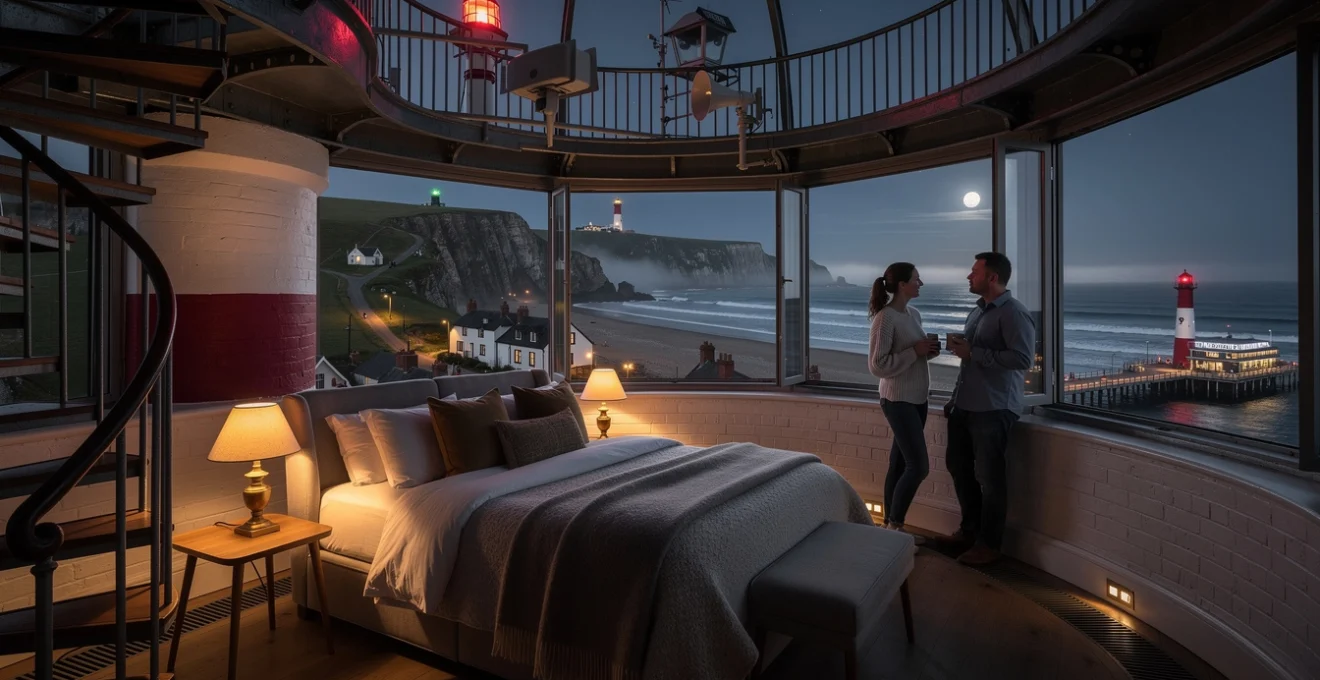
Britain’s rugged coastline tells stories of maritime adventure, heroic rescues, and centuries-old navigation traditions through its iconic lighthouses. These towering sentinels, once essential for guiding ships safely to harbour, now offer an extraordinary opportunity for travellers seeking accommodation with unparalleled character and breathtaking views. From automated Victorian towers to operational beacons still serving maritime traffic, lighthouse stays represent a unique intersection of historical preservation and modern hospitality.
The transformation of these coastal guardians into guest accommodations reflects both the evolution of maritime technology and Britain’s commitment to preserving architectural heritage. Modern GPS systems and automated navigation equipment have rendered many traditional lighthouse keepers obsolete, creating opportunities for innovative hospitality ventures. Today’s lighthouse accommodations range from intimate bed-and-breakfast establishments to fully self-contained holiday cottages, each offering guests the chance to experience life at the edge of the world.
Belle Tout Lighthouse at Beachy Head exemplifies this transformation perfectly, having evolved from an active navigation aid built in 1832 into what many consider ‘Britain’s most dramatic stay’. The lighthouse’s journey from guiding ships through treacherous waters to welcoming overnight guests demonstrates how these structures can successfully adapt to contemporary needs whilst maintaining their essential maritime character and historical significance.
Historic lighthouse accommodations across britain’s coastline
The United Kingdom boasts over 60 lighthouses dotting its coastline, from Cornwall’s Lizard Point to Scotland’s remote northern islands. Many of these structures, decommissioned or automated over recent decades, have found new life as unique accommodation venues. The conversion process requires careful balance between preserving maritime heritage and meeting modern hospitality standards, resulting in some of the most distinctive lodging experiences available anywhere in Britain.
Trinity House, the General Lighthouse Authority for England, Wales, and the Channel Islands, has overseen numerous successful lighthouse conversions. These projects typically involve comprehensive structural assessments, heritage preservation requirements, and extensive renovations to accommodate guest facilities whilst maintaining the authentic maritime atmosphere that makes lighthouse stays so appealing to visitors seeking extraordinary experiences.
Souter lighthouse conversion: victorian engineering meets modern hospitality
Souter Lighthouse in South Shields represents a masterpiece of Victorian engineering adapted for contemporary accommodation. Built in 1871 as the world’s first lighthouse designed specifically for electric illumination, this striking red-and-white striped tower demonstrates how advanced maritime technology can seamlessly integrate with modern hospitality offerings. The conversion process preserved the original lens mechanism whilst creating comfortable guest quarters within the keeper’s accommodation.
The lighthouse’s unique positioning on Lizard Point provides guests with commanding views across the North Sea, making it particularly popular among visitors interested in maritime history and coastal photography. The accommodation includes period furnishings that reflect the lighthouse’s operational heritage, creating an immersive experience that transports guests back to the golden age of British maritime navigation.
Trinity house properties: automated navigation towers turned guest retreats
Trinity House has facilitated numerous lighthouse conversions across England and Wales, each presenting unique architectural challenges and preservation requirements. These conversions typically involve extensive consultation with heritage organisations to ensure that structural modifications enhance rather than compromise the buildings’ historical integrity. The organisation’s expertise in maritime architecture proves invaluable in creating accommodation that authentically represents Britain’s lighthouse heritage.
Automated lighthouses under Trinity House jurisdiction often feature sophisticated LED lighting systems that continue operating alongside guest accommodation. This dual functionality creates fascinating opportunities for visitors to observe active navigation equipment whilst enjoying premium coastal lodging. The integration of historical preservation with operational maritime safety demonstrates the forward-thinking approach that characterises successful lighthouse conversions.
Scottish lighthouse heritage trail: from stevenson family designs to boutique stays
Scotland’s lighthouse network, largely designed by the renowned Stevenson family of engineers, offers some of the most spectacular accommodation opportunities in Britain. The Northern Lighthouse Board has overseen numerous conversions of Stevenson-designed lighthouses, each requiring careful attention to the family’s distinctive architectural principles and engineering innovations that made these structures legendary throughout the maritime world.
Strathy Point Lighthouse, built in 1958 as Scotland’s first electrically operated beacon, exemplifies modern lighthouse accommodation. Since its automation in 1997, the surrounding buildings have been converted into several self-catering
cottages, each positioned to maximise views of the dramatic coastline. Guests staying here experience the raw power of the North Atlantic, with vast skies, sweeping seas and almost complete absence of light pollution at night. Similar conversions at Eilean Sionnach near Skye or on remote outposts such as Mull of Galloway allow visitors to combine a lighthouse holiday with wildlife watching, photography and walks along some of Europe’s most spectacular clifftop paths.
The Scottish lighthouse heritage trail increasingly appeals to travellers seeking immersive maritime experiences rather than conventional hotel breaks. Many properties maintain original features such as stone staircases, cast-iron balustrades and weathered signal equipment, giving a tangible connection to the lighthouse keepers who once lived and worked there. At the same time, modern heating, insulation and high-quality furnishings ensure that these coastal stays feel welcoming even during Scotland’s wilder winter weather. For those prepared to travel beyond the beaten path, a Scottish lighthouse stay offers an unrivalled combination of history, landscape and seclusion.
Welsh coast lighthouse conversions: architectural preservation standards
Wales has pursued a particularly rigorous approach to lighthouse conversion, with architectural preservation standards playing a central role in any adaptation project. Lighthouses along the Welsh coast, from Anglesey to Pembrokeshire, often sit within or adjacent to designated conservation areas, meaning that any change of use is closely scrutinised by heritage bodies and local planning authorities. As a result, lighthouse holiday accommodation in Wales tends to showcase meticulous restoration work, from lime-rendered walls to faithfully reconstructed sash windows designed to withstand Atlantic storms.
These high standards of preservation do not preclude comfort. Rather, they encourage creative design solutions that respect the original fabric of the building while introducing modern amenities such as underfloor heating, contemporary bathrooms and efficient glazing. Guests staying at converted Welsh lighthouses frequently comment on the sense of authenticity these properties provide, with original stonework, exposed beams and maritime artefacts maintained wherever possible. If you are looking for a lighthouse stay where architectural detail and coastal heritage are front and centre, Wales offers some exemplary options.
Operational lighthouse guest houses with active maritime navigation
Not all lighthouse stays involve decommissioned or fully automated towers. Across Britain, a small but significant number of operational lighthouses continue to play an active role in maritime navigation while also hosting guests in adjacent accommodation. These properties offer a particularly compelling lighthouse experience, allowing visitors to witness modern navigation systems in action whilst enjoying the comfort of a carefully managed coastal retreat. For many travellers, the knowledge that the light above them still guides shipping traffic adds a unique sense of purpose and drama to their stay.
Staying in or beside an operational lighthouse inevitably raises practical questions about safety, illumination and noise. How do you ensure that the beam does not disturb guests’ sleep? What measures separate visitor areas from sensitive navigation equipment? Operators work closely with the General Lighthouse Authorities to develop robust protocols, ensuring that holiday accommodation never compromises maritime safety. In most cases, guest facilities occupy former keepers’ cottages or ancillary buildings, with clear demarcation between residential spaces and restricted technical areas.
Beachy head lighthouse: concurrent guest operations and maritime safety systems
Beachy Head represents one of Britain’s most famous stretches of coastline, with its chalk cliffs and powerful currents demanding sophisticated navigation systems. While the offshore Beachy Head Lighthouse itself remains fully operational and inaccessible to guests, the nearby Belle Tout Lighthouse on the clifftop demonstrates how concurrent guest operations and maritime safety can coexist in the same landscape. Modern navigation for this sector of the Channel relies on a combination of automated lights, radar, AIS (Automatic Identification System) and Coastguard oversight, with human activity at Belle Tout focused entirely on hospitality rather than navigation.
Guests at Belle Tout benefit from this arrangement by enjoying unimpeded access to panoramic coastal views, including sightlines to the operational offshore light, without any responsibility for its functioning. Safety systems, including clear cliff-edge fencing, robust building maintenance and strict weather protocols, ensure that the guest house operates reliably in a location exposed to wind, mist and rapidly changing conditions. For many visitors, the juxtaposition of a comfortable B&B with the drama of an active navigation landscape exemplifies the appeal of a lighthouse holiday: you are close enough to feel the maritime environment, yet protected by well-established safety infrastructure.
Start point lighthouse devon: fog signal integration with accommodation facilities
Start Point Lighthouse in Devon illustrates the particular challenge of integrating fog signals with nearby accommodation. Historically, lighthouse fog horns produced sound levels that would be intolerable for overnight guests, yet they were essential for maritime safety during low-visibility conditions. Modernisation has significantly reduced both the frequency and intensity of these signals, and in many locations, traditional horns have been replaced or supplemented by electronic aids and better onboard navigation systems. Nonetheless, any lighthouse accommodation close to an active fog signal must consider the acoustic impact on visitors.
Operators at properties near Start Point and similar coastal installations typically adopt several practical strategies. These may include enhanced sound insulation for guest bedrooms, careful positioning of sleeping areas away from the direct path of sound waves and clear pre-arrival information explaining when and how fog signals may operate. For visitors intrigued by the idea of staying at an active lighthouse, understanding this balance between authentic maritime activity and guest comfort is crucial. You might hear the low, resonant call of a horn on a misty night, but smart design ensures it feels atmospheric rather than overwhelming.
Dungeness lighthouse: nuclear power station proximity and guest safety protocols
Dungeness, on the Kent coast, offers one of Britain’s most unusual lighthouse landscapes, where maritime infrastructure, shingle desert and energy generation coexist. The lighthouse at Dungeness sits within sight of a nuclear power station, prompting understandable questions from potential guests about safety, regulation and environmental impact. In practice, the proximity is carefully managed through multi-layered safety protocols governed by both maritime and energy regulators. Any visitor-accessible areas are subject to rigorous risk assessment, and evacuation and communication plans are clearly documented.
From a guest perspective, staying near Dungeness Lighthouse provides an intriguing window into how modern Britain manages its coastlines for multiple purposes: navigation, conservation, energy and tourism. Accommodation providers in the area typically offer comprehensive information packs outlining local safety arrangements, environmental monitoring and emergency procedures, helping visitors feel informed and reassured. If you are curious about how a working coastline functions in the 21st century, a stay in or near Dungeness Lighthouse allows you to see maritime beacons, power infrastructure and protected natural habitats operating side by side.
Blackpool tower lighthouse: urban maritime heritage and contemporary lodging
While many lighthouse holidays focus on remote or rural locations, Blackpool introduces a compelling urban twist. The iconic Blackpool Tower includes a lighthouse-style beacon as part of its design, symbolising the town’s relationship with the Irish Sea and its heritage as a major seaside resort. Although the tower itself operates more as an observation and entertainment venue than a traditional lighthouse, nearby accommodation options often leverage this maritime iconography, offering sea-view rooms and packages that highlight the coastal skyline and illuminated tower.
Staying in Blackpool with a view of the tower’s beacon combines the romance of maritime heritage with the convenience of a fully serviced urban environment. You can enjoy classic seaside attractions, restaurants and theatres by day, then return to a room that frames the lit tower and the broad sweep of the promenade at night. For travellers who like the idea of a lighthouse stay but prefer not to sacrifice easy access to amenities and public transport, this type of urban maritime lodging offers a compelling compromise between coastal character and city comfort.
Coastal positioning and maritime weather exposure considerations
One of the main reasons people book lighthouse accommodation is to feel closer to the sea, but that coastal positioning comes with specific weather and exposure considerations. Lighthouses are typically sited on headlands, cliffs or remote islands, locations chosen precisely because they are prominent, windswept and visible from afar. For guests, this translates into magnificent views and an intense sense of place, but it can also mean strong winds, sudden squalls, salt spray and, in winter months, rapidly changing conditions. Understanding these realities helps you choose the right lighthouse stay for the season and for your comfort level.
Most operators provide detailed pre-arrival information about access routes, parking, and what to expect from local weather patterns. In some cases, access roads may be narrow, exposed or periodically closed during storms, and island properties may be dependent on ferry schedules or tidal causeways. If you are planning a winter lighthouse break, packing like an all-weather coastal walker rather than a city hotel guest is a wise approach: waterproof clothing, sturdy footwear and layers will make it much easier to enjoy the surroundings. Think of the building as a well-designed ship at anchor; you are protected inside, but the environment outside remains wild and unpredictable.
Lighthouse architecture adaptation for contemporary accommodation standards
Converting a lighthouse or keeper’s cottage into comfortable accommodation involves far more than a simple cosmetic makeover. These structures were designed for robustness and visibility, not necessarily for accessible staircases, en-suite bathrooms or energy-efficient heating. Modern building regulations, accessibility standards and guest expectations all shape the way architects and engineers approach lighthouse conversions. The challenge is to introduce contemporary comforts—reliable plumbing, insulation, Wi-Fi, even underfloor heating—without compromising the building’s structural integrity or distinctive character.
Successful projects typically treat the lighthouse as a heritage asset first and a hospitality venue second. Sensitive design solutions might include routing new services through existing voids, using breathable materials that respect historic masonry and installing reversible fittings that can be removed without damaging original fabric. For guests, the result is a stay that feels authentic rather than themed; you are not in a replica lighthouse, but in a genuine working or former navigation tower adapted just enough to make it liveable. The following subsections explore some of the key architectural adaptations in more detail.
Spiral staircase modifications: building regulations compliance for guest access
Spiral staircases sit at the heart of many lighthouse experiences, both literally and metaphorically. They are the main vertical circulation route in most towers, originally designed for keepers carrying oil cans, tools and signal flags rather than suitcases and weekend bags. Modern building regulations, however, impose strict requirements on stair dimensions, handrails, headroom and slip resistance, particularly when a structure is open to paying guests. Architects must therefore find ways to reconcile narrow, historic stairs with contemporary safety standards without stripping away their character.
Common strategies include adding or upgrading handrails, applying non-slip treads to stone or cast-iron steps, improving lighting levels and installing intermediate landings where headroom allows. In some conversions, guest accommodation is limited to lower levels or adjacent keeper’s cottages, with the upper sections of the tower reserved for daytime access only under supervision. This approach allows guests to enjoy climbing to the lantern room for views without needing to transport luggage up challenging stairs. If mobility is a concern for you or your companions, checking detailed access descriptions before booking a lighthouse stay is essential, as lifts are rare and step counts can be significant.
Lantern room conversions: structural engineering for panoramic viewing suites
The lantern room—traditionally housing the light itself—is often the most alluring part of any lighthouse, with wraparound glazing and breathtaking 360-degree views. Yet converting this space into a viewing lounge or even an exclusive bedroom suite requires careful structural and environmental engineering. Historic lantern rooms were designed to shed water, resist wind loads and protect optical equipment, not necessarily to keep guests cosy on a stormy night. Upgrading glazing, frames and seals while preserving the external appearance is a delicate operation.
Engineering teams may reinforce existing support structures, introduce discreet secondary glazing or add internal shutters to control glare and heat loss. Ventilation must be managed to prevent condensation on panoramic windows, particularly in humid coastal environments. In some properties, the lantern room remains primarily a shared guest space—a reading room, observatory or sunset lounge—rather than a sleeping area, striking a balance between accessibility and comfort. When you book a lighthouse advertised as having a lantern viewing room, you are benefitting from a significant amount of unseen engineering that makes those uninterrupted sea views safe and enjoyable year-round.
Salt air corrosion management: exterior maintenance protocols for guest comfort
Salt-laden air is both the defining characteristic and the greatest challenge of coastal architecture. Over time, it accelerates corrosion of metalwork, degrades coatings and can even affect masonry joints. Lighthouses, by their very nature, stand in some of the harshest marine environments in Britain, facing constant exposure to wind-driven spray and airborne salt particles. For accommodation operators, this means adopting rigorous maintenance protocols to keep external surfaces sound, safe and visually appealing for guests.
Regular inspection and repainting schedules, often using specialist marine-grade coatings, are essential to protect cast-iron lantern galleries, railings and window frames. Roofs, gutters and downpipes must be kept clear and intact to manage heavy rain and stormwater. From a guest perspective, this relentless maintenance ensures that you arrive to a lighthouse that looks freshly cared-for rather than weather-beaten in a negative sense. While a degree of patina is part of the charm, you should not see flaking paint, rusted handrails or compromised walkways; where conversion has been handled well, the building appears robust and shipshape, ready to face the next Atlantic gale.
Sound insulation techniques: mitigating fog horn and wind exposure
Sound is a fundamental part of the lighthouse environment: the low boom of waves, the whistling of wind round the tower, and, in some cases, the periodic call of a fog horn. While many guests find these sounds atmospheric—even soothing—modern accommodation standards require that internal spaces offer at least the option of relative quiet. Achieving this in a solid masonry or concrete structure designed before contemporary acoustic theory is no small feat. Engineers and designers must work with heavy, sometimes irregular walls, original windows and the need to preserve external appearances.
Upgrades typically focus on window and door seals, insulated internal linings and carefully specified glazing. In keeper’s cottages, suspended ceilings with acoustic insulation can help reduce wind noise transmitted through roof structures, while maintaining the visual character of rafters or beams where they are a key feature. In towers still associated with active fog signals, some rooms may be positioned or specified as “quieter” spaces, allowing more sound-sensitive guests to sleep further from the source. If you are unsure about your tolerance for coastal noise, asking the operator about typical sound levels during different seasons can help set realistic expectations.
Maritime heritage experience programming and guided navigation tours
Lighthouse stays are about more than just a memorable bed for the night; they offer a chance to engage deeply with Britain’s maritime heritage. Many operators now integrate structured interpretation and guided experiences into their accommodation offer, turning a simple overnight stay into a mini coastal history break. You might find curated displays explaining the evolution of lighthouse optics, from oil lamps and Fresnel lenses to LED beacons, or guided tours that take you from the base of the tower to the lantern room while narrating shipwreck stories and engineering innovations along the way.
Some properties collaborate with local historians, former lighthouse keepers or volunteer groups to deliver talks and walks that put the building in its wider coastal context. At sites within National Parks or Areas of Outstanding Natural Beauty, guided walks might combine maritime themes with wildlife watching, geology and dark-sky stargazing. For families, interactive elements—such as signal flag demonstrations, model lightvessel displays or simple navigation exercises—can make a lighthouse holiday both educational and fun. When you are choosing between different lighthouse accommodations, considering the depth of heritage programming on offer can help you find a stay that aligns with your curiosity as well as your comfort needs.
Lighthouse accommodation booking platforms and seasonal availability patterns
As lighthouse holidays have grown in popularity, booking mechanisms have become more streamlined, with a mix of specialist heritage organisations, regional cottage agencies and mainstream holiday platforms listing these unique stays. Properties owned or managed by bodies like Trinity House or the Northern Lighthouse Board often appear on dedicated heritage accommodation websites, while others are marketed through established rural retreat brands or independent B&B listings. Because many lighthouses are small, with only a handful of rooms or a single cottage, availability can be limited, especially during peak seasons and special events such as local airshows or coastal festivals.
Seasonal patterns play a significant role in planning. Summer and early autumn dates on the most famous stretches of coastline—such as the South Downs, the Cornish coast or the Scottish islands—can book out many months in advance, particularly for long weekends and school holidays. Winter and early spring, by contrast, often offer better availability and lower prices, along with the possibility of witnessing dramatic seas and impressive storm-light from the comfort of a cosy interior. When you are searching for lighthouse accommodation, using flexible date options (for example, adding ±3 days around your preferred arrival) can reveal additional possibilities that strict date searches might miss.
It is also worth noting that some lighthouse properties maintain fixed changeover days or minimum stays, often driven by cleaning logistics and access constraints. Midweek bookings may be easier to secure than Friday or Saturday arrivals, and single-night stays are relatively rare outside of B&B-style venues. To maximise your chances of securing your ideal coastal stay with a view unlike any other, consider signing up to mailing lists for your preferred operators, being open to shoulder-season travel and checking both specialist lighthouse sites and broader holiday cottage platforms. With a little planning and flexibility, sleeping in a lighthouse can shift from distant daydream to concrete booking in your diary.