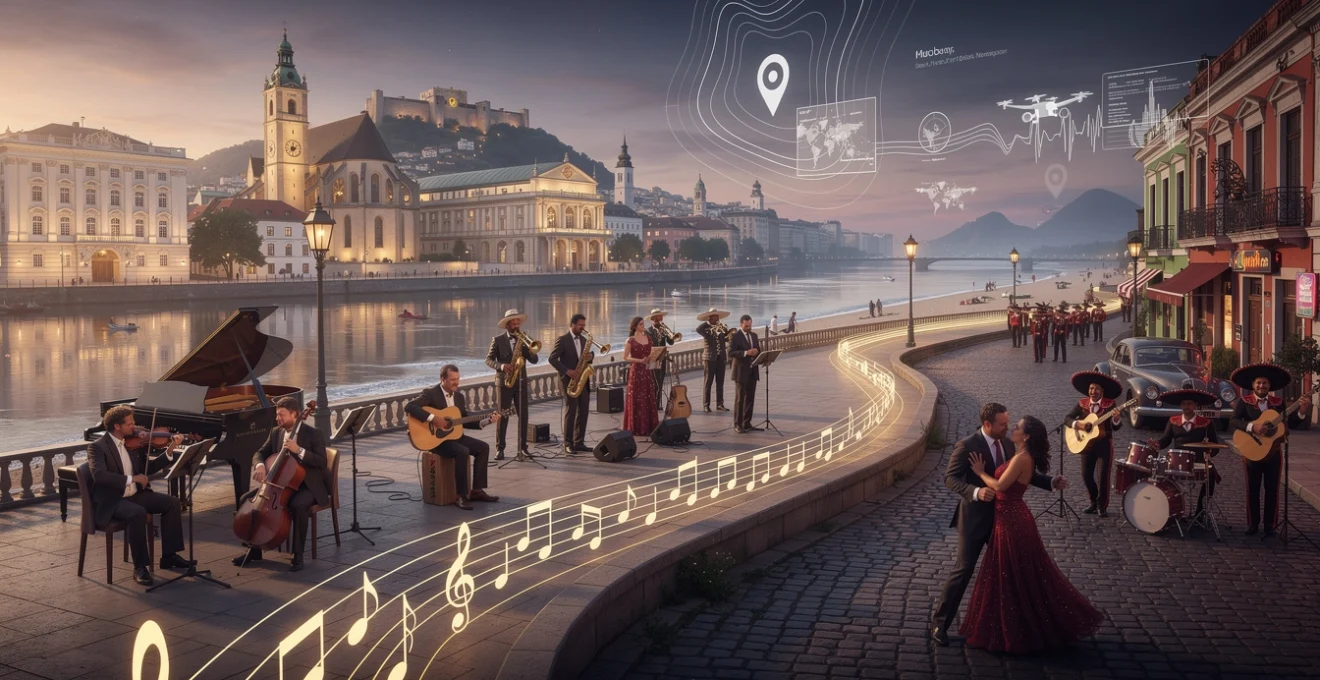
Music heritage trails represent some of the most profound cultural experiences available to modern travellers. These carefully curated routes connect historical sites, performance venues, and cultural landmarks that have shaped the world’s musical landscape for centuries. Unlike traditional tourist attractions, music heritage trails offer immersive journeys through the very places where legendary compositions were created, groundbreaking performances took place, and musical movements were born.
The concept of following musical footsteps has evolved from simple pilgrimages to sophisticated cultural tourism networks. Today’s heritage trails combine historical accuracy with modern interpretation techniques, offering visitors authentic experiences that connect past and present. These routes serve as living museums, where the echoes of musical history continue to resonate through carefully preserved venues, restored performance spaces, and interactive cultural centres.
For cultural tourists and music enthusiasts, these trails provide unparalleled access to the stories behind the music. Whether you’re tracing Mozart’s steps through Salzburg’s baroque streets or following the blues highway through Mississippi’s cotton fields, each trail connects heritage to the fundamental elements of musical creation that geography, culture, and history have shaped across centuries. The growing popularity of music tourism has led to increased investment in heritage site preservation and the development of comprehensive trail networks across multiple continents.
European classical music heritage corridors and UNESCO world heritage sites
Europe’s classical music heritage corridors represent the most comprehensive network of musical heritage sites in the world. These routes connect cities where the greatest composers lived, worked, and created their masterpieces. The European Music Trails project has established formal connections between historically significant locations, creating a unified approach to preserving and presenting classical music heritage. UNESCO World Heritage designation has elevated many of these sites to international recognition, ensuring their protection for future generations.
The integration of multiple heritage sites into coherent trail networks allows visitors to understand the interconnected nature of European musical development. Composers frequently travelled between major cultural centres, influencing each other’s work and spreading musical innovations across borders. These movements created a rich tapestry of cultural exchange that modern heritage trails help visitors appreciate and understand.
Vienna’s musical mile: beethoven houses and habsburg court traditions
Vienna’s musical heritage extends far beyond its famous concert halls to encompass an extraordinary collection of residential sites and court venues. The city maintains twelve Beethoven houses, each representing different periods of the composer’s life and creative development. These carefully preserved locations offer visitors intimate glimpses into the daily life of one of history’s greatest composers, from his early struggles with hearing loss to his final creative triumphs.
The Habsburg court traditions that shaped Viennese musical culture for centuries remain visible throughout the city’s cultural institutions. The Schönbrunn Palace concert halls, Hofburg Imperial Apartments, and various noble residences continue to host performances that maintain historical performance practices. Period instrument ensembles regularly perform in these venues, recreating the acoustic and atmospheric conditions under which classical masterpieces were originally heard.
Salzburg mozart trail: getreidegasse birthplace to residenz concert halls
Salzburg’s Mozart Trail creates a comprehensive journey through the composer’s formative years and early professional development. The trail begins at Mozart’s birthplace on Getreidegasse, where interactive exhibits explore his childhood prodigy status and early compositional efforts. The carefully reconstructed living spaces provide authentic glimpses into 18th-century domestic life and the social conditions that nurtured musical talent.
The trail extends to the Residenz concert halls, where Mozart performed for Salzburg’s archbishops and visiting dignitaries. These venues showcase the formal court musical traditions that both inspired and constrained the young composer’s development. Modern visitors can experience period-appropriate concerts that demonstrate the acoustic properties and performance conventions of Mozart’s era, creating deeper understanding of his compositional choices and innovations.
Leipzig bach route: st thomas church and gewandhaus orchestra legacy
Leipzig’s Bach Route centres on St. Thomas Church, where Johann Sebastian Bach served as cantor for the final 27 years of his life. The church maintains its historical significance through regular performances of Bach’s cantatas and organ works, often using instruments and performance practices contemporary to the composer’s era. The Bach Archive adjacent to the church houses extensive manuscript collections and research facilities that continue advancing scholarly understanding of baroque musical practices.
The Gewandhaus Orchestra’s historical significance extends Bach’s legacy into later periods of musical
development, with the orchestra championing Bach’s works alongside those of Mendelssohn, Schumann, and contemporary composers. Modern concert programmes frequently trace these historical connections, allowing visitors to experience how baroque foundations informed romantic symphonies and modern orchestral writing. The European Music Trails initiative has integrated Leipzig into wider music heritage routes, connecting it with cities like Paris, Rome, and Oslo through shared composer networks. For travellers, combining a visit to St. Thomas Church, the Bach Museum, and a Gewandhaus concert offers a rare, layered encounter with 300 years of European music history in a single compact city centre.
Prague classical circuit: estates theatre and dvořák museum collections
Prague’s classical music heritage circuit weaves together gothic churches, baroque halls, and 19th-century salons into a compact but dense network of sites. At its core is the Estates Theatre, where Mozart conducted the premiere of Don Giovanni in 1787. Today, historically informed productions and guided tours invite visitors to stand in the very auditorium where Prague audiences first heard these works, making the city one of Europe’s most evocative destinations for Mozart enthusiasts. The theatre sits within walking distance of other key venues, allowing travellers to follow a coherent, time-layered route through the historic centre.
The Dvořák Museum, housed in a baroque villa, anchors Prague’s 19th-century music heritage. Its collections include manuscripts, personal correspondence, and period instruments that illuminate Dvořák’s journey from local organist to international composer. Temporary exhibitions often connect Dvořák to his European contemporaries, underscoring how Prague functioned as a crossroads between German, Austrian, and Slavic musical traditions. When you combine museum visits with evening performances by the Czech Philharmonic or chamber ensembles, the city becomes a living classroom in Central European music history rather than a static archive.
American blues and jazz heritage pilgrimage routes
Across the United States, blues and jazz heritage trails trace the movement of musicians from rural communities to urban centres, mirroring broader social and economic migrations. These routes connect modest juke joints, recording studios, churches, and legendary clubs into coherent narratives about African American creativity and resilience. Many states have invested in formal signage, interpretive centres, and digital maps to help visitors follow these music heritage trails in a structured way. As you move from the cotton fields of the Mississippi Delta to the skyscrapers of Chicago or New York, you can literally hear how geography reshaped rhythm, harmony, and storytelling.
For cultural tourists, these American music trails offer far more than nostalgia. They explore how blues and jazz interacted with labour history, civil rights struggles, and technological change, from the first electrical recordings to the rise of radio and streaming. Following these pilgrimages, you begin to see each club or studio as part of a larger ecosystem, where regional sounds slowly merged into global genres. The routes also support local economies by directing visitors to small museums, independent venues, and community festivals that continue to nurture living traditions.
Mississippi delta blues trail: clarksdale crossroads to memphis sun studio
The Mississippi Delta Blues Trail is one of the best-developed music heritage routes in the world, with more than 200 historical markers spread across the region. Starting in towns like Clarksdale, you encounter sites associated with Robert Johnson, Muddy Waters, and B.B. King, from alleged crossroads where legends swapped souls to humble shacks where future stars picked up their first guitars. Each marker includes detailed historical information and often QR codes linking to audio clips, allowing you to hear field recordings and classic tracks while standing where they were created.
As you follow Highway 61 north towards Memphis, the landscape itself becomes part of the story. Cotton fields, small churches, and roadside cafes speak to the social conditions that produced the blues: hard labour, segregation, and tight-knit communities. The trail typically culminates at Sun Studio in Memphis, where blues intersected with country and gospel to help give birth to rock and roll. Here, visitors can step into the recording room used by Elvis Presley, Howlin’ Wolf, and Ike Turner, experiencing how a modest studio became a global cultural landmark. It is one of the clearest examples of how a blues heritage trail can connect rural roots to mainstream innovation.
New orleans jazz walk: preservation hall to congo square historical sites
New Orleans is often described as the cradle of jazz, and its heritage routes bring that claim vividly to life. A typical jazz walk might begin at Preservation Hall in the French Quarter, where intimate, acoustic concerts maintain early New Orleans jazz traditions. The venue’s minimal staging and strict no-phone policy emphasise listening, reminding us that heritage tourism can still prioritise authenticity over spectacle. From there, narrow streets lined with 19th-century buildings lead you past former dance halls, recording sites, and musicians’ residences.
No New Orleans music trail is complete without a visit to Congo Square, located in Louis Armstrong Park. In the 18th and 19th centuries, this public space was one of the few places in North America where enslaved Africans could gather on Sundays to sing, dance, and play drums. Many scholars point to Congo Square as a crucial seedbed for jazz, blues, and even later genres like funk. Interpretive panels and occasional performances now help visitors imagine the soundscape of that era, connecting sacred rhythms of West Africa to the improvisational freedom of modern jazz. Walking between Preservation Hall and Congo Square, you trace a powerful arc from early community gatherings to the global jazz scenes that emerged in their wake.
Chicago blues scene: chess records studio to buddy guy’s legends
Chicago’s blues heritage reflects the Great Migration, when hundreds of thousands of African Americans left the rural South for northern industrial cities. At the heart of the Chicago blues trail is the former Chess Records studio on South Michigan Avenue, where Muddy Waters, Howlin’ Wolf, Etta James, and Chuck Berry transformed raw Delta sounds into amplified, urban blues. Today, the site operates as a small museum and performance space, offering tours that explain how modest technology and savvy producers helped shape 20th-century popular music. Listening to classic Chess recordings in the same rooms where they were made brings an almost cinematic sense of time travel.
A short journey away, clubs like Buddy Guy’s Legends keep the Chicago blues scene vibrantly alive. Here, heritage is not just something you read about on a plaque; it is something you feel as guitars scream and audiences respond. Many visitors combine daytime tours of historical studios and South Side neighbourhoods with evenings spent in working venues, experiencing both curated history and spontaneous creativity. The city’s music tourism initiatives now offer guided “electric blues” walks, bike tours, and digital maps, making it easier for you to move from landmark to landmark while grasping how industrial skylines and lakefront winds altered the sound of the blues.
Harlem renaissance music district: apollo theater to cotton club locations
In New York City, Harlem’s music heritage trails centre on the neighbourhood’s pivotal role in the Harlem Renaissance of the 1920s and 1930s. The Apollo Theater remains the most iconic site, with its famous Amateur Night continuing to launch new careers and celebrate Black performance traditions. Guided tours of the Apollo delve into the histories of Ella Fitzgerald, James Brown, and countless others who turned this stage into a global beacon of African American culture. When you step into the auditorium, you are entering a living institution rather than a frozen monument.
The broader Harlem music district includes former locations of the Cotton Club and other legendary venues, many of which no longer function as entertainment sites but are commemorated through plaques and walking-tour narratives. Digital heritage apps overlay archival photographs and audio onto present-day streetscapes, helping visitors imagine the sound of Duke Ellington’s orchestra drifting out into the night. These trails also highlight churches where gospel music flourished, demonstrating how sacred and secular forms interacted during the Harlem Renaissance. Following this route, you begin to see Harlem as a dense cultural ecosystem where jazz, poetry, visual art, and politics intertwined in ways that still shape global music and identity today.
British isles folk and rock music heritage networks
The British Isles host an unusually rich network of folk and rock music heritage trails that cut across urban and rural landscapes. From the traditional ceilidh houses of the Scottish Highlands to the gritty rehearsal rooms of Manchester and the iconic studios of London, each region offers distinct musical narratives. National tourism boards and local councils have increasingly recognised the value of music heritage networks, developing self-guided walking routes, plaques, and interactive maps that help visitors follow in the footsteps of their favourite artists. These initiatives also aim to support living folk traditions by linking heritage sites to current festivals and grassroots venues.
In England, cities such as Liverpool, Manchester, and London have established rock and pop trails that spotlight everything from Beatles landmarks to punk-era clubs and Britpop haunts. Meanwhile, Ireland, Scotland, and Wales foreground traditional music, emphasising village pubs, community halls, and coastal towns where local styles remain central to daily life. What makes the British Isles particularly compelling is the way folk and rock histories overlap: you can spend an afternoon listening to centuries-old ballads and an evening standing outside a studio where a modern rock anthem was recorded. For travellers, this creates an unusually varied and flexible music tourism experience within a relatively small geographic area.
Latin american musical heritage pathways and cultural preservation sites
Latin America’s music heritage trails stretch from Andean highlands to coastal port cities, connecting indigenous rhythms, colonial-era salons, and contemporary dance clubs. These routes reveal how African, European, and Native American traditions merged into distinctive genres that now define national identities. Governments and cultural organisations across the region have begun to formalise musical heritage pathways, often linking them to UNESCO-recognised practices such as tango in Argentina or mariachi music in Mexico. For visitors, following these routes offers a deeper understanding of how music functions not only as entertainment, but also as a form of social memory and cultural resistance.
Many of these trails emphasise community-led preservation rather than top-down curation. Local musicians, dance schools, and neighbourhood associations play a central role in designing festivals, running small museums, and hosting visitors in informal venues. This participatory model can present challenges—such as balancing tourist demand with community needs—but it also keeps traditions vibrant and adaptable. When you follow a Latin American music trail, you are often invited not just to watch or listen, but to dance, sing, or learn an instrument yourself. That level of immersion turns cultural tourism into a shared practice rather than a one-way spectacle.
Tango origins in buenos aires: san telmo milongas to carlos gardel museum
Buenos Aires is synonymous with tango, and its heritage routes map the genre’s journey from marginal dockside bars to elegant ballrooms and international stages. The historic district of San Telmo remains a key starting point, with cobblestone streets hosting open-air milongas where locals and visitors dance under the night sky. Many of these social dances take place in venues that have operated for decades, preserving traditional codes of etiquette and improvisational styles. Walking from one milonga to another, you sense how tango is less a staged performance and more a living conversation between partners and musicians.
The Carlos Gardel Museum, located in the Abasto neighbourhood, anchors the city’s tango heritage trail in a tangible way. Housed in Gardel’s former residence, the museum traces his rise from local singer to global icon through recordings, film clips, and personal artifacts. Exhibitions explore how radio, cinema, and recording technology turned tango into one of the first truly international popular music genres. Visitors often combine a museum visit with a guided “tango city” tour, which might include former recording studios, early dance halls, and artisan shops that still produce bandoneons. Together, these stops show how Buenos Aires continues to treat tango not only as heritage, but also as a contemporary art form.
Brazilian bossa nova circuit: rio de janeiro’s copacabana to tom jobim legacy
Rio de Janeiro’s bossa nova circuit focuses on the mid-20th century period when Brazilian musicians fused samba rhythms with jazz harmonies to create a new, understated sound. Many trails begin along Copacabana and Ipanema, where apartment gatherings and small bars once hosted informal jam sessions. Plaques and guided walks highlight cafés and beachfront spots referenced in iconic songs, turning familiar melodies into geographical markers. Listening to “Garota de Ipanema” while standing near the bar where it was written transforms a global hit into a local story.
The legacy of composer Antônio Carlos Jobim underpins much of this circuit. Museums, airports, and public spaces named after him underscore his central role in shaping modern Brazilian music. Some tours include visits to studios where classic bossa nova albums were recorded, explaining how microphone placement, room acoustics, and vinyl technology contributed to the genre’s intimate sound. When you move from a samba school rehearsal to a bossa nova recital, you experience how Brazilian music heritage routes can illustrate both continuity and contrast within a single city. Rio thus becomes a living archive of rhythm, harmony, and evolving urban identity.
Mexican mariachi traditions: jalisco regional routes to plaza garibaldi
Mexico’s mariachi heritage is rooted in the western state of Jalisco, where regional routes connect rural towns, craft workshops, and performance spaces. In places like Cocula and Tequila, small museums and local festivals trace the evolution of mariachi ensembles from string-based village groups to the brass-embellished bands recognised today. Visitors can tour luthier workshops to see how violins, vihuelas, and guitarróns are built, providing insight into the craftsmanship behind the sound. These rural segments of the trail emphasise the close relationship between agriculture, religious festivities, and musical performance.
In Mexico City, the trail converges at Plaza Garibaldi, an urban square where mariachi bands gather nightly to offer serenades. While the plaza is popular with tourists, it also serves local communities celebrating birthdays, weddings, and other milestones, keeping the tradition firmly embedded in everyday life. Nearby museums and cultural centres provide context about mariachi’s recognition by UNESCO as an Intangible Cultural Heritage of Humanity, explaining ongoing efforts to support training schools and youth ensembles. For travellers, hiring a band in Plaza Garibaldi can feel like stepping into a living archive, where historical repertoire and new songs coexist under the city’s neon glow.
Cuban son and salsa heritage: havana’s buena vista social club to santiago roots
Cuba’s son and salsa heritage pathway connects the island’s eastern roots to its capital’s global projection. Many visitors begin in Havana with sites associated with the Buena Vista Social Club, the ensemble that reintroduced traditional Cuban music to international audiences in the 1990s. Former members’ haunts, historic recording studios, and intimate clubs in Old Havana offer a glimpse into how son, bolero, and danzón blended to create modern salsa. Evening performances in courtyard venues allow you to experience the call-and-response vocals and interlocking percussion patterns that define the style.
Travelling east to Santiago de Cuba deepens the story, as this city is often cited as the birthplace of son. Heritage routes here highlight neighbourhoods where early ensembles formed, as well as casas de la trova—traditional music houses where live bands perform daily. Local guides explain how Haitian, Spanish, and African influences converged in the region, turning rural rhythms into urban dance music. When you compare the soundscapes of Havana and Santiago, you hear how migration within the island mirrored the broader Caribbean circulation of styles that eventually produced salsa as a global phenomenon. Following this Cuban music trail thus offers one of the clearest case studies in how local traditions become international dance floors.
Digital heritage mapping technologies and audio-visual documentation methods
In recent years, digital technologies have transformed how music heritage trails are designed, documented, and experienced. Interactive maps, GPS-enabled apps, and augmented reality tools now allow visitors to access layered information about each site in real time. Instead of relying solely on printed brochures, travellers can listen to archival recordings, watch short documentary clips, or view historical photographs as they stand in front of a church, studio, or concert hall. This convergence of place-based tourism and digital storytelling turns the city or landscape into a kind of open-air multimedia museum.
Audio-visual documentation methods also play a crucial role in preserving fragile musical traditions. High-resolution field recordings, 360-degree videos of performances, and oral history archives ensure that not only the music, but also the gestures, spaces, and social contexts are captured for future generations. Institutions and community groups increasingly collaborate on digital repositories that make these materials accessible worldwide, supporting both academic research and casual exploration. For you as a traveller, this means you can prepare for a trip by exploring a trail online, then deepen that experience on the ground with location-aware content, and finally revisit it afterwards through digital archives.
However, technology is not a magic solution; it raises important questions about ownership, consent, and representation. Who controls the recordings and images of community performances? How can we ensure that digital heritage platforms benefit local musicians as well as international audiences? Successful projects treat technology as a bridge rather than a replacement, complementing in-person encounters with carefully curated online resources. When done thoughtfully, digital mapping and documentation can function like a well-tuned instrument in an orchestra: powerful, but most effective when it plays in harmony with community priorities and on-site interpretation.
Cultural tourism infrastructure and heritage site conservation strategies
Developing sustainable music heritage trails requires more than signposts and marketing campaigns; it demands robust cultural tourism infrastructure and long-term conservation strategies. Cities and regions that excel in this area invest in accessible public transport, multilingual signage, and visitor centres staffed by trained cultural mediators. They also work with local businesses—such as small hotels, cafés, and record shops—to create visitor services that reflect, rather than dilute, the area’s musical identity. When such infrastructure is in place, following a music trail becomes as straightforward as following a map, freeing you to focus on listening and learning.
Conservation strategies must balance visitor access with the protection of fragile buildings, archives, and living traditions. This often means limiting group sizes in historic venues, rotating exhibits to reduce light damage to manuscripts, or establishing codes of conduct for attending local festivals. Many successful initiatives adopt a “living heritage” approach, supporting contemporary performers and educators alongside physical restoration projects. After all, a perfectly restored opera house has limited meaning if there are no musicians on its stage. Funding models typically combine public grants, private sponsorship, and ticket revenues, with some projects exploring innovative mechanisms such as heritage bonds or community-owned venues.
Finally, inclusive governance is essential if music heritage trails are to remain authentic and relevant. Involving musicians, local residents, educators, and youth organisations in decision-making ensures that projects do not become top-down showcases designed only for outsiders. Instead, they can function as platforms where communities articulate their own histories and aspirations through sound. When infrastructure, conservation, and community engagement align, music heritage trails become more than tourist itineraries—they evolve into dynamic cultural ecosystems that sustain both memory and creativity. For travellers, this means every stop on the trail offers not just a glimpse into the past, but also a sense of how music will continue to shape these places in the years to come.