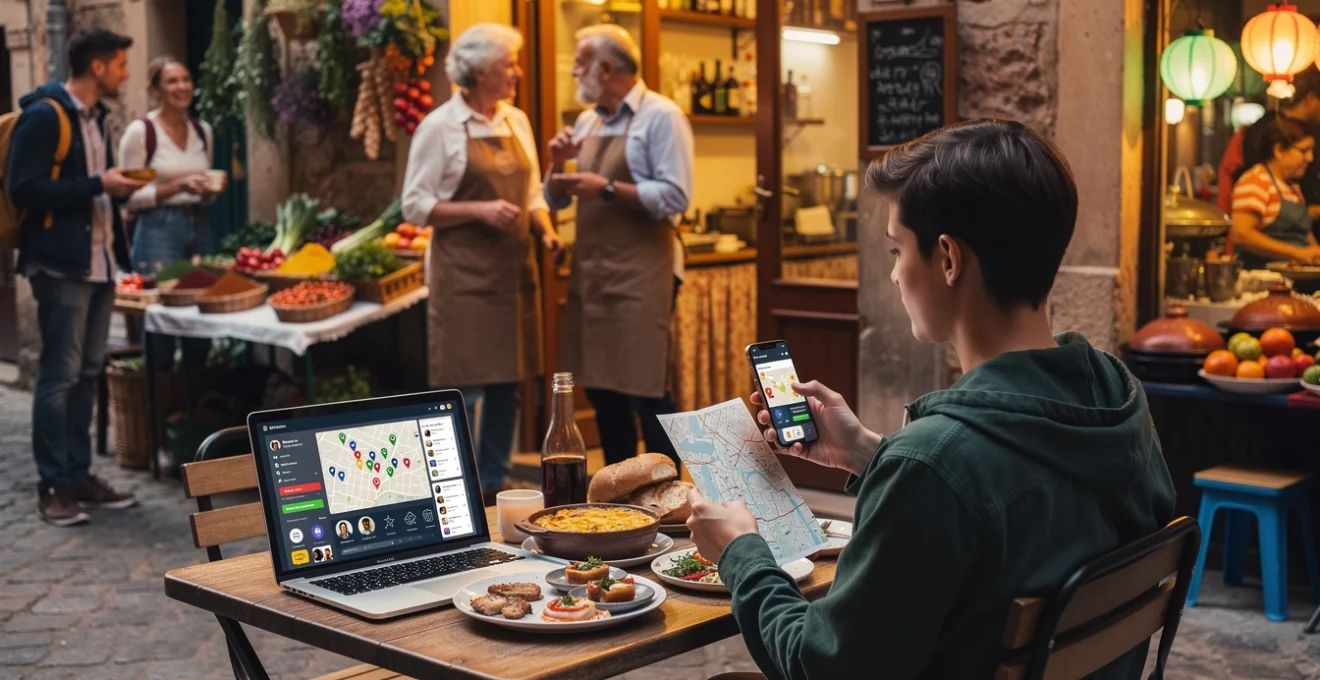
The quest for authentic culinary experiences whilst travelling often separates memorable journeys from forgettable ones. Genuine family-run establishments represent the heart of local gastronomy, preserving generations of recipes, techniques, and cultural traditions that mass-market restaurants simply cannot replicate. These intimate venues offer travellers an unparalleled opportunity to connect with local culture through food, providing insights into regional ingredients, cooking methods, and dining customs that define a destination’s culinary identity. However, discovering these hidden gems requires more than casual wandering through tourist districts.
Modern travellers face an increasingly complex landscape of dining options, where polished marketing and strategic placement often overshadow authentic family establishments. The challenge lies not merely in finding good food, but in identifying restaurants where recipes pass through generations, where ingredients reflect local terroir, and where the dining experience embodies genuine cultural expression rather than commercialised interpretations designed for mass appeal.
Digital research methodologies for locating Family-Owned culinary establishments
Contemporary digital platforms provide sophisticated tools for identifying authentic family restaurants, though success depends on understanding how to navigate these systems effectively. The key lies in recognising the subtle indicators that distinguish genuine family establishments from corporate ventures masquerading as authentic dining experiences.
Leveraging google my business local pack optimisation techniques
Google’s local search algorithms prioritise establishments with consistent customer engagement and authentic review patterns. Family-run restaurants typically exhibit specific characteristics within Google’s ecosystem: irregular posting schedules reflecting genuine business operations rather than automated marketing, customer photos showcasing homestyle presentations rather than professional food photography, and review responses that demonstrate personal investment in customer satisfaction. These venues often feature owner names in business descriptions, family history narratives, and seasonal menu adjustments that reflect authentic ingredient sourcing patterns.
Advanced searchers can utilise location-specific queries combined with cultural identifiers to uncover family establishments. Searching for terms like “established 1950” or “three generations” alongside cuisine types frequently reveals restaurants with genuine family heritage. Additionally, examining the consistency of business hours, contact information, and address stability over time provides insights into establishment longevity and family ownership patterns.
Utilising TripAdvisor’s advanced filtering systems and traveller classification tags
TripAdvisor’s review ecosystem contains valuable intelligence for identifying family-run establishments, though extracting this information requires strategic filtering approaches. Authentic family restaurants typically receive reviews mentioning personal interactions with owners, descriptions of homestyle cooking techniques, and references to recipes or family stories shared during dining experiences. These establishments often maintain moderate review volumes with consistent quality ratings rather than the extreme fluctuations common in tourist-focused venues.
Effective TripAdvisor research involves examining review temporal patterns to identify establishments favoured by repeat visitors and local residents. Family restaurants often generate reviews mentioning return visits, special occasion celebrations, and personal recommendations to visiting friends. The language patterns within reviews frequently reveal cultural authenticity through descriptions of traditional cooking methods, ingredient sourcing stories, and family member interactions with customers.
Exploiting yelp’s small business verification algorithms and review pattern analysis
Yelp’s verification systems and review analysis capabilities provide sophisticated tools for distinguishing authentic family establishments from corporate alternatives. Genuine family restaurants typically maintain verified business profiles with detailed owner information, historical establishment dates, and comprehensive service descriptions that reflect personal investment rather than marketing automation. The platform’s review filtering algorithms can help identify patterns consistent with authentic family operations.
Strategic Yelp research involves analysing review response patterns to identify personal engagement levels characteristic of family ownership. Authentic establishments often feature owner responses that include personal anecdotes, explanations of family recipes, and gratitude expressions that reflect genuine appreciation rather than corporate customer service protocols. Additionally, examining the demographic diversity of reviewers can indicate whether establishments attract authentic local patronage alongside tourist traffic.
Implementing foursquare’s venue category taxonomy and check-in data mining
Foursquare’s location intelligence platform offers unique insights into family restaurant identification through its comprehensive venue categorisation system and user behaviour analytics. The platform’s taxonomy includes specific markers for family-owned establishments, traditional cuisine categories, and local favourite designations that can streamline authentic restaurant discovery. Check-in patterns reveal valuable information about customer loyalty and repeat visitation rates characteristic of genuine family establishments.
By examining temporal check-in rhythms, you can distinguish venues that serve local workers at lunch and extended families in the evening from those that spike only during tourist hours. Consistent patterns over several years usually indicate a stable, community-embedded, family-run restaurant rather than a short-lived concept designed to capitalise on transient visitor trends.
Deploying social media graph analysis through instagram geotag clustering
Instagram has evolved into an informal map of where people actually eat, and its geotag data can be particularly powerful for locating authentic family-run restaurants. When you search a neighbourhood or city name, pay close attention to clusters of posts around lesser-known streets rather than only the famous landmarks. Family establishments often appear in photos that feature crowded tables, multi-generational groups, and unpolished interiors rather than elaborate décor built for social media.
Instead of focusing solely on influencer accounts, explore posts from local users who tag the same venue repeatedly across different seasons. When you notice recurring surnames in captions, homemade-looking dishes, and images of owners posing with guests, you are likely looking at a genuine family restaurant. You can think of this as a social media “trust graph”: the denser the network of local interactions and repeat geotags, the higher the probability that the restaurant is a long-standing, family-operated fixture in the community.
On-ground reconnaissance strategies and cultural immersion protocols
Digital tools are powerful, but they cannot fully replace what you can learn with your own eyes, ears, and nose once you arrive. On-ground reconnaissance allows you to validate what online data suggests and to discover family-run restaurants that may have minimal or no digital presence. By combining structured observation with informal conversations, you dramatically increase your chances of finding the kind of small, intergenerational eateries that rarely appear on mainstream lists.
Successful discovery in the real world requires that you slow down and adopt the mindset of a curious guest rather than a rushed consumer. Instead of scanning streets for the first available table, you will observe neighbourhood rhythms, follow food smells, and pay attention to where families gather at different times of day. This approach turns every walk into a form of cultural immersion and transforms the city itself into your research field.
Implementing anthropological observation techniques in local market districts
Local markets are living laboratories for understanding how a community eats, shops, and socialises. By approaching them with simple anthropological observation techniques, you can identify which nearby restaurants are embedded in local food networks. Watch which stalls supply nearby kitchens, which vendors greet restaurant staff by name, and how often the same people return for ingredients during the morning rush.
One effective method is to follow the “producer-to-plate” trail: when you see a chef or older family member buying crates of vegetables or fish, discreetly note which direction they walk when they leave. Often, they will head back to a small family trattoria, taverna, or canteen within a few blocks. Think of yourself as mapping the invisible threads between ingredients and tables; the tighter those threads appear, the more likely you are to encounter authentic, family-prepared meals.
Engaging indigenous knowledge networks through community liaison methodologies
No algorithm can compete with the depth of knowledge held by people who live and work in a neighbourhood every day. Engaging these indigenous knowledge networks means asking bus drivers, bookshop owners, street vendors, and baristas where they would send their own families for a celebration meal. These informal “community liaisons” often point you toward humble, family-run restaurants that do little or no advertising.
To generate meaningful recommendations, it helps to frame your questions with context rather than asking simply, “Where is a good restaurant?” Try specific prompts such as, “Where would your grandmother insist we eat for Sunday lunch?” or “If relatives visit from another town, where do you take them for home-style food?” These questions activate cultural pride and often unlock suggestions you would never find through generic tourist queries.
Executing systematic neighbourhood mapping using ethnographic walking surveys
Ethnographic walking surveys involve exploring a district on foot with the deliberate intention of understanding its social and culinary landscape. Instead of walking in straight lines between attractions, you will zigzag through side streets, observe residential courtyards, and note where groups of locals gather at meal times. This method is particularly effective in older neighbourhoods where family-run restaurants may be tucked behind unremarkable façades.
As you walk, look for small details that signal family ownership: hand-written menus, framed family photos, children doing homework at a corner table, or older relatives shelling beans near the entrance. You might sketch a simple mental or physical map marking where these cues appear, then return during peak dining hours to see which locations fill with local patrons. Over the course of a day, your walking survey becomes a personalised map of likely family-run options rather than a reliance on pre-packaged “best of” lists.
Applying sociological trust-building frameworks with local food vendors
Trust-building with local food vendors operates much like building rapport in any community: it takes a little time, genuine curiosity, and respect. Start by making small purchases at bakeries, street carts, or produce stalls, and ask short, sincere questions about their products. When vendors sense that you value their expertise rather than treating them as anonymous service providers, they are more likely to share insider tips about where their own families dine.
From a sociological perspective, you can see each interaction as an opportunity to move from “stranger” to “temporary insider.” The more you show interest in local customs—such as asking the best time to order a particular dish or which days certain stews are prepared—the more nuanced the recommendations you will receive. Over the course of a few days, these micro-conversations form an informal network of guidance that leads you toward trusted, often family-run restaurants in the surrounding area.
Gastronomic authentication verification through multi-sensory analysis
Even after identifying a promising venue, how can you verify that it truly offers authentic, family-prepared cuisine? Multi-sensory analysis provides a practical framework: you will engage sight, sound, smell, taste, and even touch (of tableware and décor) to evaluate whether a restaurant aligns with local culinary traditions. This process is not about being judgmental; rather, it is about reading subtle cues that distinguish commercial staging from genuine everyday culture.
Start with sound and smell before you even sit down. Do you hear a single television playing in the background, children chatting with grandparents, or a mixture of local dialects—a common sign of a neighbourhood favourite? Are aromas layered and evolving, like sauces reducing slowly, bread baking, and garlic gently frying, or do they resemble the uniform scent of reheated food? Like a musician tuning an instrument, you are simply attuning your senses to the harmony—or dissonance—between what the restaurant claims to be and what it actually is.
Visual cues also play a significant role in authenticity verification. Family-run restaurants often display everyday practicality rather than curated minimalism: mismatched chairs, scuffed floors, fridges tucked behind the bar, and menu boards updated by hand when ingredients change. Pay attention to plate composition; authentic home-style cooking tends to emphasise generous portions and straightforward presentation over elaborate plating techniques designed purely for photos. If you can glimpse part of the kitchen, look for multi-generational participation and well-worn equipment that suggests long-term use rather than a recently brand-staged space.
Finally, taste and texture provide the most direct evidence. Authentic family recipes usually reveal themselves through balanced seasoning, confident use of local herbs and spices, and textures that suggest slow cooking or careful preparation. Ask yourself: does the dish taste like it was cooked to a schedule, or to a standard? When flavours unfold in layers—such as a stew that deepens with every bite or a sauce that reveals subtle acidity beneath richness—you are likely experiencing food shaped more by tradition than by trend.
Cross-cultural communication protocols for family restaurant discovery
Finding authentic family-run restaurants across different regions requires more than literal translation of phrases; it demands sensitivity to local communication norms. The way you ask about food in Naples will differ from how you ask in Hanoi or Marrakech, even if the underlying question is the same. By adapting your language, body posture, and expectations to each cultural context, you not only increase your discovery success rate but also show respect to the communities that welcome you.
Successful cross-cultural communication rests on three pillars: clarity, humility, and reciprocity. You strive to be clear about what you seek (home-style cooking, local family places), humble about your knowledge of the culture, and willing to reciprocate with patience and gratitude. When you approach conversations in this way, people are more inclined to guide you toward the small, family-run establishments they care about preserving.
Mastering contextual language frameworks for culinary inquiry in mediterranean regions
In Mediterranean countries—such as Italy, Greece, Spain, and coastal France—language around food is rich with emotion and tradition. Instead of asking simply for “a good restaurant,” you gain far more by using context-specific phrases that signal your interest in family cooking. Phrases equivalent to “home food,” “grandmother’s recipes,” or “where local families eat on Sunday” resonate strongly in cultures where shared meals anchor social life.
You do not need fluency to communicate this; even a few targeted phrases, written down or practiced in advance, can open doors. For example, in Italy you might ask for a place with “cucina casalinga” (home-style cooking) run by a family, while in Spain references to “cocina de la abuela” or “familiar” immediately clarify your intent. Like using a well-tuned key in a complex lock, the right contextual phrase can unlock recommendations that remain hidden to more generic requests.
Implementing non-verbal communication matrices in southeast asian food courts
Southeast Asian food courts and hawker centres are often loud, crowded, and fast-moving, which means non-verbal cues carry significant weight. When spoken language is limited on both sides, your ability to observe and mirror local gestures becomes a primary tool for connection. Simple actions—such as watching how locals queue, how they signal staff, or how they share tables—help you integrate smoothly into the dining environment.
Non-verbal communication can function like an invisible matrix guiding you through these complex spaces. For instance, following the line with the most families or older couples is often a shortcut to time-tested stalls. A respectful smile, a slight bow of the head, or a gesture asking for a recommendation by pointing to a neighbour’s dish can yield suggestions without a shared vocabulary. In this context, your body language speaks on your behalf, signalling patience, curiosity, and respect.
Deploying cultural sensitivity algorithms when approaching maghreb family kitchens
In the Maghreb region—Morocco, Algeria, Tunisia—family kitchens and small eateries often blur the line between public and private spaces. Approaching these environments without sensitivity can unintentionally cause discomfort, even if your intentions are positive. A mental “cultural sensitivity algorithm” can guide your actions: assess the gender dynamics in the room, note whether shoes are removed, observe how locals address the host, and adapt accordingly.
It is especially important to accept that some spaces may not be open to unannounced visitors, regardless of your enthusiasm. Instead of pushing for entry, you can ask vendors or riad staff for introductions or recommendations to family-owned establishments that are accustomed to serving travellers. By prioritising consent and comfort over access, you demonstrate respect for cultural boundaries while still discovering genuine, family-run kitchens that welcome outside guests.
Utilising gesture-based navigation systems in latin american mercados
Latin American markets and neighbourhood eateries often function as social hubs where spoken language is only part of the communication system. Gestures—such as pointing to simmering pots, raising eyebrows in inquiry, or miming “small” or “large” portions—can be remarkably effective in conveying what you are seeking. Many family vendors respond warmly to this kind of playful, respectful interaction, especially when combined with basic greetings and thanks.
Think of these gestures as a kind of low-tech navigation system, guiding you through crowded mercados to the stalls where locals gather. When you notice regulars greeting a vendor with hugs, prolonged handshakes, or friendly teasing, you are likely witnessing long-term relationships built over years of shared meals. Following these patterns can lead you directly to the family-run counters that serve as unofficial canteens for the neighbourhood.
Temporal and geographic targeting optimisation for maximum discovery yield
Timing and location are as critical to restaurant discovery as they are to photography; the same street can look entirely different at noon and at night. Family-run restaurants often operate according to local rhythms rather than uniform opening hours geared to tourists. By aligning your search with these rhythms, you significantly increase your chances of finding authentic, intergenerational dining rooms at their most vibrant.
Consider structuring your day so that mealtimes coincide with local peak hours rather than your usual schedule. If office workers crowd into a particular canteen between 1 p.m. and 2 p.m., that is a strong signal of consistent quality and fair pricing. Conversely, if a restaurant geared toward tourists is half-empty during the time locals traditionally eat, it may indicate a place optimised for convenience rather than authenticity. Geographically, you will often find the highest density of family-run venues in residential districts just beyond major attractions, where rent remains manageable and local regulars form the core clientele.
Quality assurance metrics and authenticity validation frameworks
Once you have identified and visited a potential family-run restaurant, it is helpful to apply a simple quality assurance framework—both for your own benefit and for future travellers you might advise. Instead of relying on a single metric, you can evaluate authenticity across several dimensions: ownership transparency, community integration, ingredient sourcing, and consistency over time. Taken together, these factors form a practical “authenticity index” you can apply anywhere in the world.
Ownership transparency includes visible signs of family involvement, such as relatives working together front-of-house and in the kitchen, or stories about the restaurant’s history printed on the menu. Community integration can be observed through the proportion of local patrons, the presence of regulars greeted by name, and participation in local events or market networks. Ingredient sourcing may reveal itself through seasonal menu changes, daily specials tied to market availability, or visible deliveries from nearby producers. Finally, if you have the chance to return—or if you track reviews over several years—consistency in flavour and service suggests that the restaurant’s authenticity is not a temporary marketing angle but a lived reality.
By approaching your search with this structured yet flexible mindset, you transform the process of choosing where to eat into an intentional practice of cultural engagement. With each family-run restaurant you discover and support, you help sustain culinary traditions that might otherwise be overshadowed by global chains and tourist-centric concepts. In turn, your travels are enriched not only by memorable meals but by the human connections and stories that accompany them.