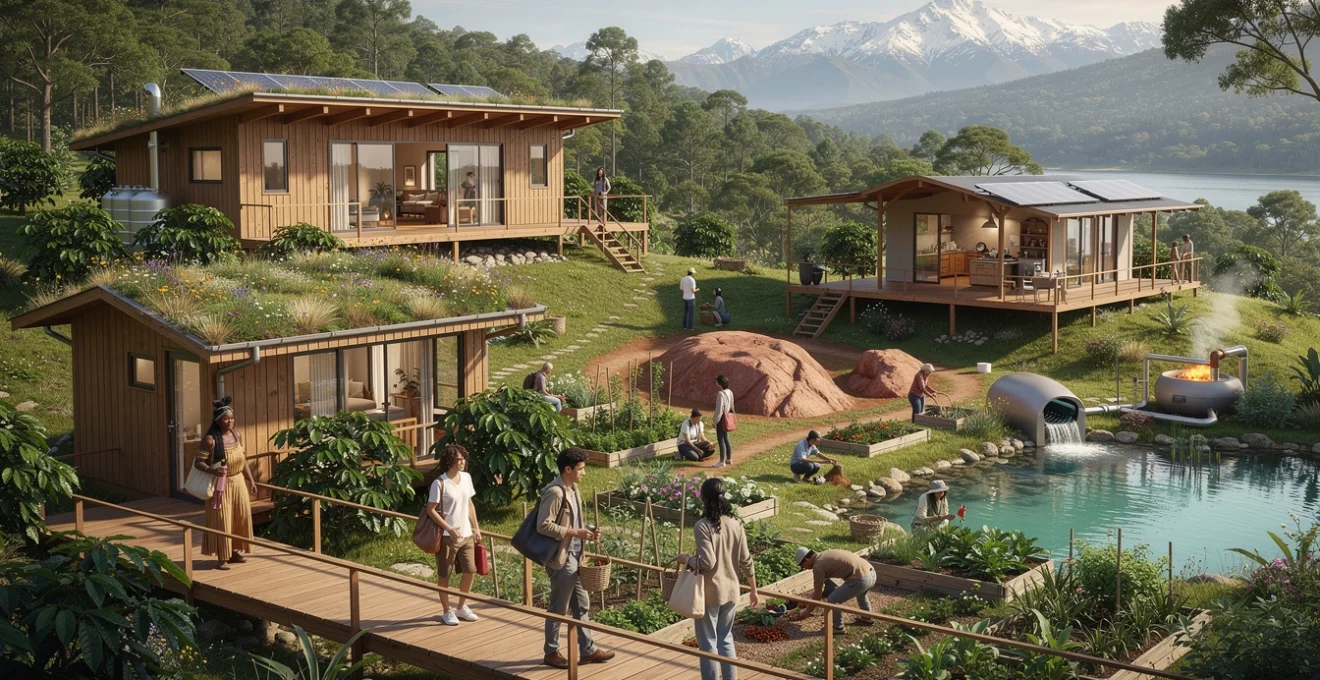
The travel industry stands at a crossroads. While global tourism contributes approximately 8-10% of worldwide carbon emissions, a growing segment of conscious travelers now seeks accommodations that heal rather than harm. Eco-lodges represent more than just environmentally friendly hotels—they embody a fundamental shift toward regenerative hospitality that prioritizes biodiversity conservation, cultural preservation, and community empowerment. These remote sanctuaries offer discerning guests something increasingly rare: authentic quietude combined with meaningful impact. From solar-powered tented camps in the Namibian desert to rainwater-harvesting jungle retreats in Costa Rica, eco-lodges demonstrate that luxury and sustainability aren’t mutually exclusive concepts but rather complementary values for the modern traveler.
Defining Eco-Lodge certification standards: LEED, green key, and EarthCheck frameworks
Understanding what qualifies as a genuine eco-lodge requires familiarity with internationally recognized certification systems. The Leadership in Energy and Environmental Design (LEED) framework, developed by the U.S. Green Building Council, evaluates properties across nine criteria including energy performance, water efficiency, and indoor environmental quality. LEED certification exists in four tiers—Certified, Silver, Gold, and Platinum—with rigorous third-party verification ensuring claims match reality. Properties pursuing LEED certification must document everything from construction material origins to ongoing operational practices, creating transparency that helps you identify truly sustainable establishments.
The Green Key certification, managed by the Foundation for Environmental Education, takes a slightly different approach by focusing on operational sustainability rather than building design alone. This program requires participating properties to meet thirteen imperative criteria spanning water conservation, waste management, and environmental education initiatives. What distinguishes Green Key is its emphasis on continuous improvement—certified properties must demonstrate year-over-year progress in reducing environmental impact. Currently, over 3,200 facilities across 65 countries hold Green Key status, making it one of the most widely recognized eco-labels in the hospitality sector.
EarthCheck certification offers perhaps the most comprehensive assessment framework, combining environmental benchmarking with community engagement metrics. This Australian-based system measures performance across 38 key indicators, comparing properties against industry averages and demanding documented evidence of progress. EarthCheck-certified lodges undergo annual audits, with Master Certification available only after ten consecutive years of demonstrated excellence. For you as a traveler, these certifications serve as valuable shortcuts when researching accommodations, though smaller boutique eco-lodges may lack formal certification simply due to the substantial costs involved in the application process—sometimes exceeding €15,000 annually.
Beyond these major frameworks, region-specific certifications like Rainforest Alliance Verified and Biosphere Responsible Tourism also provide credible validation. The challenge? Not all eco-lodges pursue formal certification despite implementing exemplary practices. A family-run lodge in rural Patagonia might employ every sustainable technology available yet lack the administrative resources or financial capacity to navigate certification bureaucracy. This reality requires you to look beyond labels, examining specific practices like renewable energy percentages, water recycling systems, and documented community partnerships when evaluating a property’s genuine commitment to sustainability.
Architectural principles of sustainable Eco-Lodge design
The foundation of any authentic eco-lodge begins with thoughtful architectural design that works with rather than against natural systems. Unlike conventional hotels that impose standardized blueprints regardless of location, sustainable lodges adapt to their specific environmental context. This design philosophy, sometimes called “biomimetic architecture,” draws inspiration from natural processes observed in the surrounding ecosystem. A well-designed eco-lodge in the Amazon will look fundamentally different from one in the Sahara, precisely because effective sustainable design responds to local climate, topography, and available materials.
Passive solar orientation and natural ventilation systems in remote locations
Passive solar design harnesses the sun’s energy without mechanical systems, reducing energy consumption by up to 40% compared to conventionally oriented buildings. In the Northern Hemisphere, this typically means positioning the longest façade toward true south, maximizing winter solar gain while incorporating overhangs that block high summer sun. The principle reverses south of the equator. Longitude 131° near Uluru exemplifies this approach, with each luxury tent positioned to capture morning light while large eaves provide afternoon shade during Australia’s scorching summers. The result? Interior temperatures remain comfortable without air conditioning,
while cross-ventilation strategies draw prevailing breezes through the space. Elevated structures on stilts, openable louvered panels, and shaded verandas all help promote natural airflow, particularly valuable in remote eco-lodges where grid power for mechanical cooling is limited or non-existent. In humid tropical regions like Costa Rica or Zanzibar, operable windows placed high on walls allow hot air to escape, functioning like a chimney, while screened openings near the floor pull in cooler air from shaded courtyards or forest understories. When you combine careful solar orientation with natural ventilation design, you dramatically reduce the need for energy-intensive air conditioning, making quiet, off-grid escapes far more viable.
Natural ventilation also has a subtle but important psychological effect: it blurs the boundary between indoors and outdoors, allowing you to hear birds at dawn, feel changing temperatures throughout the day, and remain connected to the rhythms of the landscape. This connection is part of what sets an eco-lodge apart from a conventional resort sealed behind glass and mechanical HVAC systems. Of course, passive systems are not a one-size-fits-all solution; in high-altitude or cold-climate eco-lodges, designers carefully balance solar gain and insulation so that fresh air does not equate to heat loss. The goal is always the same: to use the building’s form and envelope as the first line of climate control, with technology only stepping in where nature reaches its limits.
Locally-sourced timber construction and Low-Embodied carbon materials
Beyond energy performance, the material palette of an eco-lodge has a huge influence on its overall footprint. Embodied carbon—emissions associated with extracting, processing, transporting, and assembling materials—can account for 30–50% of a building’s lifetime impact. Using locally sourced, responsibly harvested timber and natural materials such as bamboo, earth blocks, or lime plasters significantly reduces this burden. In many regions, these materials also align with vernacular building traditions, making eco-lodges feel rooted in place rather than imported from a global design catalog.
When you stay at a timber-built eco-lodge in the Swiss Alps or a bamboo pavilion in Indonesia, you are often experiencing structural systems that are inherently renewable. Certified wood (for example, FSC-certified) ensures forests are managed for long-term health, while shorter transport routes cut down on fuel use. Low-embodied carbon materials also perform well thermally: thick earthen walls regulate indoor temperatures, and timber’s natural insulating properties help stabilize interior climates without heavy reliance on mechanical heating or cooling. By contrast, concrete and steel-intensive construction can lock in decades of emissions before a single guest even checks in.
There is also a profound aesthetic and tactile dimension to low-impact materials. Surfaces that age gracefully—weathered timber, polished concrete with local aggregates, or hand-made tiles—develop character over time, much like the landscapes surrounding them. For you as a responsible traveler, this means staying in spaces that tell a story about local craftsmanship and ecological awareness, rather than generic luxury. Some eco-lodges go further by reclaiming materials from decommissioned structures, boats, or barns, turning potential waste into design features. This circular approach both lowers embodied carbon and illustrates, very tangibly, how creative reuse can replace the linear “take-make-dispose” model that dominates conventional construction.
Living roofs and rainwater harvesting infrastructure integration
Living roofs, sometimes called green roofs, are another hallmark of advanced eco-lodge design. By covering roof surfaces with soil and native vegetation, lodges create additional habitat for insects and birds, reduce stormwater runoff, and improve thermal performance. The effect is like wrapping the building in a living blanket: plants absorb solar radiation, insulate against heat and cold, and even help filter particulates from the air. In sensitive landscapes—think islands, deserts, and alpine meadows—living roofs also visually soften the presence of built structures, allowing them to blend more seamlessly into their surroundings.
Rainwater harvesting complements this approach by capturing precious fresh water directly where it falls. Many remote eco-lodges in Costa Rica, Namibia, or the Australian outback rely on integrated guttering, storage tanks, and filtration systems to supply everything from guest showers to irrigation. A typical 100-square-meter roof in a high-rainfall region can collect tens of thousands of liters per year, dramatically reducing pressure on local aquifers and streams. When combined with low-flow fixtures and guest education, rainwater systems allow eco-lodges to operate with a water footprint far smaller than conventional resorts.
From your perspective as a guest, these systems are often invisible, yet they shape your experience in subtle ways. Showering in harvested rainwater or walking out onto a terrace shaded by a wildflower roof connects your stay to local hydrological cycles in a way a standard hotel never could. The best eco-lodges showcase these features through discreet signage or guided sustainability tours, turning infrastructure into an educational tool. It’s a bit like seeing the backstage area of a theater: once you understand how the systems work, you appreciate the performance—the comfort and tranquility of your stay—even more.
Off-grid energy solutions: photovoltaic arrays and Micro-Hydro installations
Energy is often the defining constraint for eco-lodges located far from conventional grids. Rather than relying on diesel generators, which are noisy, carbon-intensive, and expensive to operate, many pioneering properties invest in renewable systems such as photovoltaic (PV) arrays and micro-hydro installations. Modern solar panels, paired with efficient battery storage, can power lighting, refrigeration, communications, and even limited air conditioning in sunny regions. In Patagonia, the Galapagos, or the Namib Desert, large roof- or ground-mounted arrays silently convert sunlight into clean electricity, allowing guests to enjoy modern comforts with a fraction of the usual environmental cost.
In mountainous or high-rainfall areas, micro-hydro systems tap into flowing water, using small turbines to generate constant, low-impact power. Unlike massive dams, these installations are designed to have minimal ecological disruption: water is diverted through a penstock, passes through the turbine, and then returns to the stream. Because the output is steady, micro-hydro can provide reliable base-load power that complements variable solar production. Many lodges combine both technologies, creating hybrid off-grid systems that are resilient to seasonal changes and extreme weather events—an increasingly important consideration as climate patterns shift.
From a guest’s standpoint, off-grid energy solutions can feel almost magical. How is it that you can charge your phone, enjoy a heated shower, and sleep under a fan in the middle of a jungle or desert reserve? The answer lies in careful energy budgeting, efficient appliances, and smart control systems that prioritize essential loads. Some eco-lodges display live dashboards showing real-time solar generation and battery levels, turning energy use into a shared, transparent responsibility between hosts and visitors. Much like watching a campfire’s embers to know when to add more wood, this visibility encourages everyone to be more mindful—switching off lights, limiting unnecessary device charging, and embracing the rhythm of natural daylight.
Regenerative tourism practices at leading Eco-Lodges worldwide
While sustainable architecture lays the groundwork, the most forward-thinking eco-lodges now embrace regenerative tourism—aiming not just to reduce harm but to actively restore ecosystems and empower communities. This shift moves beyond the idea of “doing less damage” toward a model where every guest stay contributes tangible benefits: more trees planted, more coral restored, more livelihoods supported. As a responsible traveler, you are no longer just a visitor; you become a participant in long-term conservation and cultural resilience.
Regenerative eco-lodges typically measure their impact across multiple dimensions: carbon emissions, biodiversity indicators, local employment, training, and cultural programming. Many publish annual impact reports, sharing data about reforestation projects, wildlife surveys, or scholarships funded through guest stays. Why does this matter? Because transparency builds trust—and it helps you choose experiences that align with your values. The following pioneering properties offer a glimpse of what regenerative tourism looks like in practice, from carbon-neutral coffee plantations to Indigenous-led desert stewardship.
Finca rosa blanca coffee plantation resort: Carbon-Neutral operations in costa rica
Perched in the highlands above San José, Finca Rosa Blanca is often cited as one of the first truly regenerative eco-lodges in Costa Rica. What sets it apart is the seamless integration of organic coffee farming, carbon-neutral operations, and meaningful guest education. The 30-acre coffee plantation is certified organic and shade-grown, with native trees providing habitat for migratory birds while enhancing soil health. Instead of relying on chemical fertilizers, the lodge uses composted coffee pulp and pruned branches, closing nutrient loops on-site.
In terms of energy and emissions, Finca Rosa Blanca has invested heavily in efficiency upgrades and renewable sources, allowing it to achieve carbon-neutral status through a combination of reductions and verified offsets. Solar panels heat water and provide electricity, while LED lighting and energy-efficient appliances keep demand low. Guests are invited to take in-depth tours of the coffee farm, learning how regenerative agriculture can sequester carbon, protect watersheds, and maintain biodiversity. For many visitors, cupping a freshly brewed coffee after walking the very fields where it was grown turns a daily ritual into a powerful lesson in sustainable supply chains.
Economically, the resort channels a significant portion of its revenue into local employment, training programs, and cultural initiatives. Staff members often come from surrounding communities and receive ongoing professional development, from barista skills to hospitality management. This focus on human capital means your stay helps build long-term resilience, not just short-term jobs. As a traveler interested in eco-lodges designed for responsible travelers and quiet escapes, you gain both a tranquil retreat and a deeper understanding of how your morning espresso can support forests rather than fuel deforestation.
Longitude 131° dune pavilions: indigenous land stewardship at Uluru-Kata tjuta
Longitude 131°, overlooking Australia’s iconic Uluru-Kata Tjuta National Park, illustrates how high-end eco-luxury can coexist with deep respect for Indigenous land stewardship. Situated on the traditional lands of the Anangu people, the lodge operates within a framework of cultural protocols and joint management agreements. Rather than simply “borrowing” local stories for marketing, Longitude 131° works directly with Traditional Owners to co-create guest experiences, from guided walks to art-focused excursions that highlight Tjukurpa—Anangu law, culture, and spirituality.
The design of the dune pavilions minimizes ground disturbance by using lightweight structures and elevated platforms, allowing desert flora and fauna to move freely beneath. Renewable energy systems, including solar generation and advanced insulation, reduce dependence on fossil fuels in a harsh, remote climate. Water-saving fixtures and careful waste management further reduce pressure on the fragile desert ecosystem. But perhaps the most compelling aspect is the lodge’s role in supporting Indigenous enterprises, from art centers to ranger programs that manage feral species and fire regimes.
For guests, this translates into more than just spectacular views of Uluru at sunrise. You are invited into a layered understanding of place—how ancient stories map onto geological formations, how seasonal knowledge guides water use, and how contemporary Indigenous communities navigate tourism and tradition. By choosing an eco-lodge that embeds Indigenous voices at the core of its operations, you help fund the continuation of those stewardship practices. In a sense, your stay becomes another thread in a cultural narrative stretching back tens of thousands of years.
Chumbe island coral park: marine protected area management in zanzibar
Off the coast of Zanzibar, Chumbe Island Coral Park stands as a pioneering example of privately managed marine conservation. Once threatened by overfishing and destructive practices, the surrounding reef system is now a fully protected marine reserve funded almost entirely by eco-tourism. The island’s handful of solar-powered bungalows are designed for minimal footprint, using composting toilets, greywater filtration, and thatched structures that blend into the coastal forest. With guest numbers capped at a few dozen at any time, the lodge maintains a sense of genuine seclusion while ensuring the reef is never overloaded.
What makes Chumbe particularly innovative is its integrated management model. Revenues from overnight stays finance marine rangers, environmental education programs for local schools, and ongoing coral monitoring. Scientific surveys show that fish biomass and coral cover within the protected zone significantly exceed those of nearby fished reefs, demonstrating how targeted protection can allow ecosystems to rebound. Guests are encouraged to snorkel with trained guides, who interpret reef dynamics and explain how climate change, pollution, and unsustainable fishing threaten similar ecosystems worldwide.
For you as a traveler, visiting Chumbe is both a privilege and a responsibility. The lodge asks guests to adhere to strict reef etiquette—no touching corals, no standing on the reef flat, careful fin control—to ensure that tourism remains compatible with conservation. This conscious participation can be a powerful wake-up call: once you have floated above a thriving reef teeming with parrotfish, reef sharks, and sea cucumbers, it becomes hard to ignore the stakes involved in protecting marine biodiversity elsewhere. Chumbe shows that eco-lodges can function as small but potent hubs of marine protected area management, where each booking directly funds ocean regeneration.
Whitepod Eco-Luxury hotel: Minimal-Impact alpine tourism in swiss alps
Nestled on a mountainside above Lake Geneva, Whitepod offers a model for low-impact alpine tourism in an era of shrinking glaciers and increasingly crowded ski resorts. Instead of building a sprawling hotel complex, the operators opted for a series of geodesic “pods” anchored lightly to the ground. These structures, insulated with high-performance materials and enveloped in a protective outer membrane, drastically reduce heating requirements compared to traditional chalets. Wood-burning stoves, efficient LED lighting, and centralized facilities help keep energy consumption in check, even during harsh Swiss winters.
Whitepod also rethinks what a mountain holiday looks like. Rather than prioritizing high-speed lifts and heavy infrastructure, the resort promotes human-powered activities such as snowshoeing, ski touring, and hiking. This shift reduces the need for extensive piste grooming and artificial snow production, both of which are energy- and water-intensive. Trails are carefully routed to avoid sensitive habitats, and wildlife corridors remain intact to support species like chamois and black grouse. Staying at Whitepod feels a bit like camping in a sci-fi bubble—only with plush bedding and hot showers—where you can enjoy star-filled skies and deep silence without sacrificing too much comfort.
Economically and socially, Whitepod partners closely with surrounding villages, sourcing local food, employing regional staff, and encouraging guests to explore nearby communities. This distributed model spreads tourism benefits while avoiding the “monoculture” of single-resort economies. If you are seeking eco-lodges designed for responsible travelers and quiet escapes in Europe, Whitepod demonstrates that meaningful sustainability doesn’t require giving up luxury; it simply means recalibrating what we value—fewer gadgets and more genuine immersion in the alpine environment.
Waste-to-resource循環 systems and circular economy models
One of the most transformative shifts in modern eco-lodge design is the move from linear “take-make-waste” systems to circular models where resources are continually cycled. Rather than treating waste as an inevitable by-product to be trucked away, leading lodges design infrastructure that turns organic matter, greywater, and even packaging into valuable inputs. The Japanese character “循環,” meaning circulation or cycle, captures this philosophy perfectly: every output becomes a potential new beginning.
In practical terms, circular economy models at eco-lodges might include on-site composting, biogas production, greywater reuse, and rigorous recycling. They also extend to procurement decisions: choosing refillable amenities, bulk food supplies, and durable furnishings that can be repaired rather than replaced. For responsible travelers, these behind-the-scenes systems may not be as visible as a dramatic infinity pool, but they are often far more important in reducing a property’s true environmental footprint. And they offer a powerful lesson: with thoughtful design, the concept of “away” in “throwing things away” can virtually disappear.
Composting toilets and greywater treatment through constructed wetlands
Water and sanitation pose particular challenges for off-grid eco-lodges. Conventional flush toilets can use 6–9 liters per flush, placing immense strain on small island aquifers or remote boreholes. Composting toilets provide an elegant alternative, separating liquids and solids and using aerobic bacteria to break down waste into stable compost. Modern designs are odor-free and surprisingly comfortable, especially when paired with well-designed ventilation and regular maintenance. Over time, the resulting compost can be used (where regulations permit) to fertilize ornamental plants, closing nutrient loops that would otherwise end at a septic tank.
Greywater—relatively clean wastewater from sinks, showers, and laundry—offers another opportunity for circular design. Instead of sending it directly into septic systems or waterways, eco-lodges often route greywater through constructed wetlands: shallow, planted basins where reeds, gravel, and microbial communities naturally filter out contaminants. The process mimics how natural wetlands purify water, turning what was once “waste” into irrigation-quality water for gardens or reforestation plots. As a guest, you might stroll past what appears to be a lush pond system without realizing you are witnessing a living water treatment facility.
These systems do require careful design and monitoring to ensure they function properly, especially in variable climates or during peak occupancy. However, when managed well, they provide a quiet form of resilience: even if municipal infrastructure fails or regulations tighten, the lodge remains self-reliant. For travelers, composting toilets and wetlands can initially sound unconventional, but many guests find that once they understand the logic—and experience the comfort—they would prefer such systems at home. After all, why use drinking-quality water to flush away nutrients that plants desperately need?
Organic waste biodigesters for methane energy production
Food scraps and other organic waste are typically among the largest waste streams in a hospitality operation. Rather than sending this material to landfills, where it generates methane as it decomposes anaerobically, some eco-lodges install small-scale biodigesters that capture this gas for productive use. Picture a sealed tank where kitchen leftovers, garden trimmings, and even animal manure are fed to a community of microbes. As they break down the material, they release biogas—a mix of methane and CO₂—that can be piped to kitchen stoves or water heaters, displacing bottled gas or diesel.
The digestate left behind is a nutrient-rich slurry that can be applied to gardens as organic fertilizer, further closing the loop. This dual output—energy plus fertilizer—makes biodigesters a powerful tool for circular economy models in remote lodges. In some cases, lodges collaborate with neighboring farms, accepting their organic waste and returning digested fertilizer, effectively creating a micro-scale energy and nutrient hub for the community. When you enjoy a meal cooked on biogas, you are literally tasting the benefits of waste transformed into resource.
Of course, biodigesters require a predictable feedstock and careful operation: too much citrus or cleaning chemicals, for instance, can disrupt microbial communities. But with proper training and oversight, they offer a reliable, low-emission energy source that fits seamlessly into the rhythms of a lodge kitchen. For responsible travelers curious about the nuts and bolts of sustainability, many properties offer behind-the-scenes tours of their biodigester systems, turning infrastructure into a teaching tool. It’s a vivid analogy for regenerative travel itself—what we once viewed as disposable becomes the fuel for something new and life-giving.
Single-use plastic elimination and Zero-Waste kitchen operations
While energy and water systems can be complex, one of the simplest, most visible ways eco-lodges reduce their footprint is by eliminating single-use plastics. Instead of miniature toiletries, you’ll find refillable dispensers. Instead of plastic water bottles, filtered or desalinated water is offered in glass or stainless-steel containers. Straws, if provided at all, are made from bamboo or metal. These seemingly small changes add up: a 20-room lodge can prevent tens of thousands of plastic items from entering landfills or oceans each year.
Zero-waste kitchen strategies go even further, rethinking how food is sourced, stored, and served. Many eco-lodges purchase ingredients in bulk from local producers, reducing packaging while supporting nearby farms and fisheries. Chefs design menus around whole-animal use, nose-to-tail and root-to-leaf cooking, ensuring that offcuts and less familiar vegetables become creative dishes rather than bin fodder. Leftovers are carefully managed: some become staff meals, while others feed compost systems or biodigesters. For guests, this often translates into fresher, more seasonal cuisine that tells a story about local terroir and traditional recipes.
As a traveler, you can support these efforts by bringing your own reusable water bottle, declining unnecessary packaging, and being open-minded about menus that change daily based on what’s in season. Ask yourself: do I really need that plastic-wrapped snack or imported bottled water when safe, filtered options are available? By aligning your choices with the lodge’s systems, you help reinforce a culture where waste is the exception, not the rule. Over time, these practices ripple outward, influencing suppliers, neighboring businesses, and even your habits once you return home.
Biodiversity conservation through Eco-Lodge corridor development
Beyond the boundaries of individual properties, eco-lodges can play a crucial role in large-scale biodiversity conservation by helping stitch fragmented habitats back together. Many iconic species—jaguars, elephants, wolves, and migratory birds—depend on wide-ranging movement corridors to find food, mates, and climate refuges. When forests are cleared or fenced off for conventional agriculture or mass tourism, these corridors break down, leading to genetic isolation and population declines. Eco-lodges, especially those set on large tracts of rewilded land, can act as stepping stones that reconnect protected areas.
In practice, corridor development might involve reforesting degraded pasturelands, removing internal fences, and negotiating wildlife-friendly practices with neighboring landowners. Some lodges in Costa Rica’s biological corridor networks, for instance, work with farmers to plant native trees along rivers and property lines, creating “living fences” through which monkeys, birds, and small mammals can travel. In southern Africa, conservancies link national parks with community-owned lands, allowing elephants and predators to roam more freely while generating income through low-impact tourism instead of high-impact extractive industries.
For guests, these efforts often manifest as richer wildlife experiences. When a lodge sits within an active corridor, you might witness seasonal migrations, predator-prey interactions, or rare bird sightings that simply wouldn’t occur in an isolated reserve. But corridor development is not just about spectacle; it’s about resilience. As climate change alters temperature and rainfall patterns, species need room to shift their ranges. By supporting eco-lodges that invest in landscape-scale connectivity, you indirectly help create the pathways life will need in the decades ahead.
Importantly, corridor conservation works best when it centers local communities. Without their buy-in, wildlife moving through farmlands can be seen as a threat rather than a shared asset. Many lodges address this by funding predator-proof livestock enclosures, compensating for crop damage, or developing alternative livelihoods that make coexistence more attractive. When ecotourism revenue flows back into schools, clinics, and infrastructure, communities are more likely to view corridors as long-term investments rather than short-term sacrifices. In this sense, every night you spend in a well-managed eco-lodge can be thought of as a micro-contribution to a continental conservation puzzle.
Authentic cultural immersion programming with indigenous communities
No matter how advanced the technology or how pristine the landscape, an eco-lodge is incomplete without a respectful relationship to the people whose ancestral lands it occupies. Authentic cultural immersion goes far beyond staged performances or souvenir shops; it involves ongoing collaboration, consent, and benefit-sharing with Indigenous and local communities. When done well, this programming allows you to learn directly from knowledge holders, while communities retain control over how their stories, sacred sites, and intellectual property are shared.
Many leading eco-lodges co-design guest experiences with Indigenous partners: guided walks that interpret medicinal plants, storytelling evenings around the fire, craft workshops led by local artisans, or visits to community projects such as schools and cooperatives. Crucially, participation is voluntary and fairly compensated, and guests are briefed on appropriate behavior and photography etiquette. This helps avoid the all-too-common dynamic where local culture is treated as a backdrop or commodity. Instead, it becomes a living, evolving relationship in which both hosts and visitors can learn and grow.
For travelers seeking eco-lodges designed for responsible travelers and quiet escapes, these programs can be some of the most memorable aspects of a trip. Sitting with Elders as they recount creation stories tied to the stars, helping harvest traditional crops, or joining a small fishing expedition in locally managed marine areas can radically shift your perspective on place. You begin to see landscapes not as empty wilderness but as cultural homelands with deep histories and ongoing struggles for rights and recognition.
Of course, cultural immersion also carries responsibilities. You may be asked not to photograph certain ceremonies, to dress modestly, or to refrain from entering sacred areas. It’s important to approach these guidelines not as restrictions but as invitations to practice humility and respect. Before booking, you can look for concrete signs that a lodge is serious about ethical engagement: formal agreements with communities, revenue-sharing models, local leadership roles, or certification from Indigenous tourism organizations where available. By choosing such lodges—and by showing up with curiosity and care—you help ensure that eco-tourism becomes a tool for cultural revitalization rather than erosion.