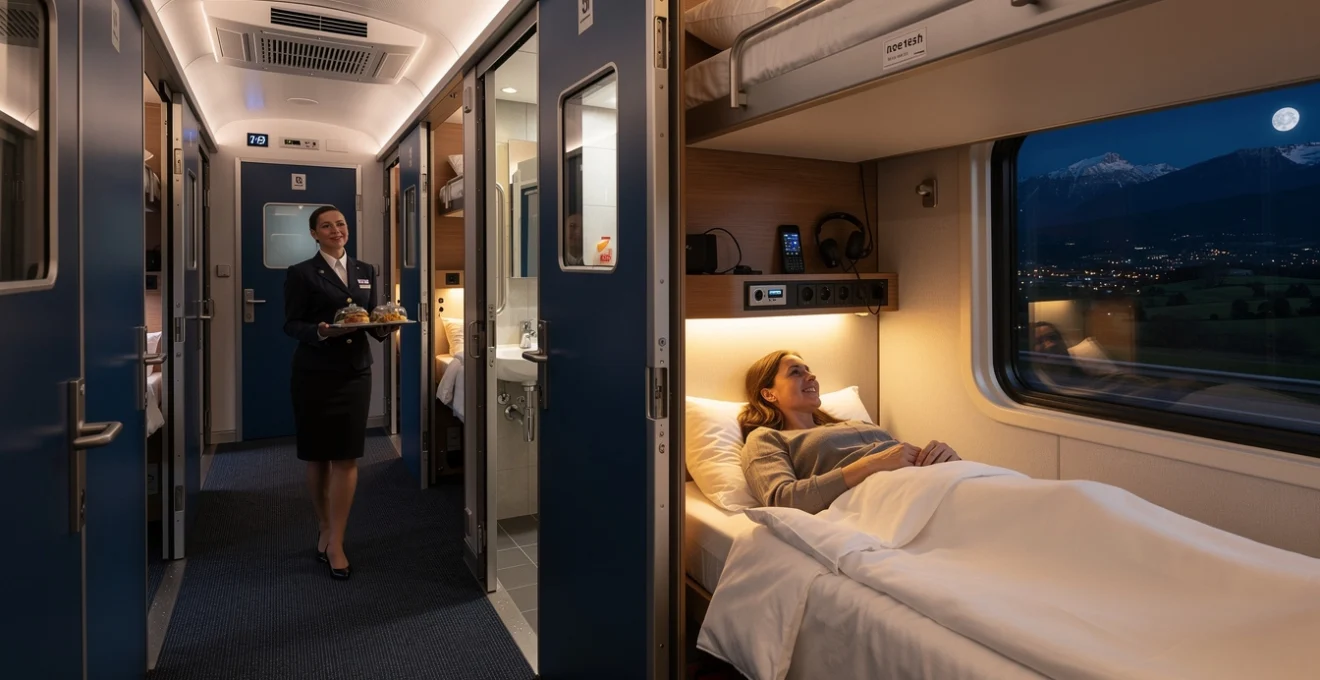
# Sleeper trains and the comfort of traveling overnight
The rhythmic clatter of wheels on tracks, the gentle sway of a carriage moving through the night, and the prospect of waking up hundreds of miles from where you fell asleep—overnight train travel represents one of the most romantic and practical forms of transport available today. As environmental concerns reshape travel preferences and the aviation industry faces increasing scrutiny over carbon emissions, sleeper trains have experienced a remarkable renaissance across Europe and beyond. Modern overnight rail services combine nostalgia with cutting-edge technology, offering passengers a sustainable alternative that transforms dead travel time into productive rest whilst simultaneously serving as accommodation for the night.
The appeal of sleeper trains extends far beyond mere practicality. For many travellers, these services offer an opportunity to slow down, to experience the journey as an integral part of the adventure rather than simply an inconvenience to be endured. Unlike air travel, which compresses passengers into cramped seats for hours on end, overnight trains provide dedicated sleeping spaces, dining facilities, and the freedom to move about. You can enjoy a meal in the restaurant car, watch the sunset from an observation lounge, and retire to your private compartment as darkness falls. By morning, you’ve arrived refreshed at your destination, having saved both time and the cost of a hotel night.
Evolution of sleeper train infrastructure across european rail networks
The landscape of European sleeper train services has transformed dramatically over the past decade, driven by both environmental imperatives and changing passenger expectations. What was once a declining sector, threatened by budget airlines and high-speed day trains, has experienced remarkable revitalisation. Investment in new rolling stock, route expansion, and service enhancements has created a new golden age for overnight rail travel. National operators and private companies alike have recognised the commercial and environmental value of these services, leading to an unprecedented period of growth and innovation.
Nightjet’s modern couchette and sleeper carriage configurations
Austria’s state railway operator ÖBB has emerged as the undisputed leader in European sleeper train expansion through its Nightjet brand. The company has invested heavily in a fleet of 33 new-generation trains, representing one of the largest commitments to overnight rail travel in recent history. These modern carriages feature innovative design solutions that maximise passenger comfort whilst accommodating different budget levels and privacy preferences. The introduction of mini cabins—inspired by Japanese capsule hotels—represents a particularly clever innovation, offering solo travellers privacy at approximately half the cost of a traditional private compartment.
Nightjet’s comfort-plus compartments set new standards for overnight rail luxury, featuring en-suite shower facilities, adjustable ambient lighting, and ergonomically designed fixed beds that eliminate the need for fold-down bunks. Each compartment includes climate control, multiple power sockets, and sufficient luggage storage for extended journeys. The carriages themselves employ advanced sound insulation materials and vibration dampening systems, significantly reducing the noise and movement that historically plagued sleeper train passengers. Standard couchette configurations maintain the traditional six-berth layout but with modernised interiors, improved mattresses, and better ventilation systems.
Caledonian sleeper’s investment in mark 5 rolling stock technology
The Caledonian Sleeper, connecting London with various Scottish destinations six nights per week, underwent a complete fleet replacement with Mark 5 coaches—the first entirely new sleeper trains built in Britain for decades. This £150 million investment brought twenty-first-century standards to UK overnight rail travel. The new carriages feature double rooms with full-sized beds rather than narrow bunks, en-suite facilities in all sleeping accommodation, and hotel-inspired interiors that feel worlds apart from the functional aesthetic of previous generations.
Technical specifications of the Mark 5 coaches demonstrate sophisticated engineering. Each sleeping compartment includes individually controlled air conditioning, adjustable reading lights positioned to avoid disturbing fellow passengers, and soundproofed walls constructed from composite materials that significantly reduce track noise transmission. The Club Rooms offer the pinnacle of British sleeper train luxury, with armchairs that convert to beds, premium Scottish toiletries, and access to exclusive lounge facilities at Glasgow and Edinburgh termini. Even the standard seating carriages feature wider-than-usual reclining seats with generous legroom, recognising that some passengers prefer the more economical option whilst still desiring reasonable comfort.
Thello and trenhotel: mediterranean overnight service specifications
While central and northern Europe have embraced brands like Nightjet, the Mediterranean region has long been served by operators such as Thello and Renfe’s Trenhotel services. Historically, Thello linked France and Italy overnight, offering couchettes and classic sleeper cabins between Paris, Venice and Rome, while Trenhotel connected Spanish hubs such as Barcelona and Madrid with northern Portugal and Galicia. These overnight trains prioritised practicality and cross-border connectivity, combining reclining seats, shared couchettes, and sleeper cabins in a single formation to match diverse budgets and comfort expectations.
Trenhotel services are particularly notable for their modular interior layouts and robust engineering suited to long routes across varying climates and infrastructure standards. Compartments often include climate control, upgraded mattresses compared with standard daytime stock, and fold-away berths that convert into seating during the day. Although some historic Trenhotel routes have been curtailed, the specifications they established—such as integrated power outlets at each berth, compact en-suite units in premium cabins, and optimised luggage storage—continue to influence new overnight train projects around the Mediterranean basin.
Thello’s rolling stock, built around classic Corail or similar coaches, typically featured four- and six-berth couchettes with basic bedding, centralised air conditioning and simple shared washrooms at each end of the carriage. Security measures such as lockable doors, staff patrols and compartment call buttons underscored the need to balance cost-effective design with passenger safety on busy cross-border corridors. For travellers planning Mediterranean sleeper journeys today, understanding these service specifications helps set realistic expectations: you are more likely to experience solid, functional comfort than the hotel-style luxury found on flagship services like the Caledonian Sleeper.
Russian railways’ platzkart and spalny vagon compartment standards
Further east, Russian Railways (RZD) has developed a distinctive sleeper train ecosystem centred on two primary accommodation types: platzkart and spalny vagon. Platzkart is an open-plan third-class sleeper with no internal doors separating berths from the corridor, effectively creating a rolling dormitory. Each bay usually contains six berths—four arranged laterally and two longitudinally—offering basic bedding, shared luggage racks and communal lighting. While privacy is minimal, platzkart remains popular for its low fares, sociable atmosphere and sheer practicality across vast distances.
By contrast, spalny vagon (often abbreviated as “SV”) denotes first-class sleeper coaches composed of enclosed two-berth compartments. These compartments typically include upgraded mattresses, higher-quality linens, individual reading lights and secure locks on the doors. Many spalny vagon coaches also provide power sockets at each berth, improved thermal and acoustic insulation and more refined interior finishes, reflecting their premium positioning. The design priorities here are clear: privacy, security and quieter surroundings for passengers who need reliable sleep on multi-night journeys.
Russian Railways has progressively modernised both platzkart and spalny vagon standards, introducing new carriage types with enhanced climate control, LED lighting and upgraded sanitation facilities. New-generation coaches offer improved suspension systems to reduce vibration on older track sections, as well as digital information displays and smoke detectors in each compartment. Whether you opt for the sociable chaos of platzkart or the calm of spalny vagon, the compartment standards highlight how sleeper trains can be tailored to different cultural expectations and price points while maintaining a core focus on overnight comfort.
Berth design and ergonomic sleep solutions in overnight rail travel
Behind the romance of sleeper trains lies a surprising amount of engineering and ergonomic research dedicated to making it possible to sleep in motion. Berth design on modern overnight trains must reconcile limited space with the need for full-body support, safety in the event of sudden braking, and easy conversion between day and night configurations. Operators work with industrial designers, sleep specialists and rolling stock manufacturers to develop solutions that maximise comfort in just a few square metres per passenger.
As you compare sleeper train options across Europe and beyond, you will encounter an array of berth configurations, mattress technologies and climate systems, all designed to improve sleep quality on the rails. Do you prioritise a private double bed, or are you comfortable in a shared couchette if the mattress and bedding are of high quality? Understanding how berths are designed—and what to look for when you book—can make the difference between a restless night and waking up genuinely refreshed at your destination.
Single, double, and Triple-Berth compartment spatial configurations
Sleeper train compartments are typically engineered around single, double or triple-berth layouts, each with distinct spatial advantages and compromises. Single-berth cabins, often marketed as “deluxe” or “single sleeper,” dedicate almost the entire footprint to one passenger, allowing a full-length bed, integrated wardrobe space and sometimes a compact desk or seating area. These configurations minimise the need for folding mechanisms, which in turn allows for thicker mattresses and better structural support. For solo travellers seeking maximum privacy on an overnight train, single-berth cabins provide a near-hotel experience in miniature.
Double-berth compartments are the most common premium configuration, balancing efficient use of space with a strong sense of privacy. In many modern designs, the lower berth doubles as a sofa during the day, while the upper berth folds down from the wall at night, secured by robust hinges and safety latches. Some newer trains, such as the Caledonian Sleeper and certain Nightjet formations, offer double beds arranged longitudinally along the train, which helps reduce the sensation of lateral movement. Triple-berth or even quad-berth cabins are more prevalent in budget-oriented services and family compartments, where folding bunks stack vertically to create extra sleeping capacity at the cost of headroom and storage space.
Effective use of vertical space is critical in all these configurations. Designers incorporate under-berth luggage storage, fold-out steps, and integrated handholds to make climbing to upper bunks safer and more intuitive, even in the dark. Safety rails, rounded corners and soft-touch surfaces reduce the risk of bumps during night-time movements. When you evaluate sleeper train layouts, imagine not only how the berth looks when perfectly made but also how easy it will be to climb in, store your luggage and move around when the train is swaying at speed.
Bedding quality standards: mattress density and linen thread counts
Comfort on a sleeper train depends just as much on bedding quality as on compartment layout. Modern operators increasingly specify mattresses with medium-firm density foams or pocket-sprung cores, typically in the range of 25–35 kg/m³ for foam, to provide adequate support without feeling overly rigid. Some premium services add a thin memory foam topper to distribute pressure more evenly and mitigate the impact of minor vibrations from the track. Compared with the thin, foldable pads of older sleepers, these new mattresses represent a substantial improvement in overnight comfort.
Linen standards have risen as well. High-end overnight trains often use cotton sheets with thread counts between 250 and 400, striking a balance between durability and softness suitable for frequent industrial laundering. Duvets are usually filled with synthetic microfibres for hypoallergenic performance, although a few luxury brands still opt for down or down-blend fillings. Pillows are offered in varying thicknesses, and some services allow you to request firmer or softer options when you book, much like you might in a boutique hotel.
For budget-conscious travellers, couchettes and basic sleepers may still provide simpler bedding—typically a fitted sheet, lightweight blanket and small pillow. Even here, though, quality has improved as operators recognise that poor sleep leads to negative customer feedback. If you are sensitive to bedding, consider bringing a compact travel pillowcase or thin sleeping bag liner. These small additions can transform a basic berth into an acceptable sleep environment without adding much weight to your luggage.
Climate control systems and individual air conditioning units
Temperature regulation is one of the most significant determinants of sleep quality on overnight trains. Modern sleeper carriages generally employ central HVAC systems with individual controls in each compartment, allowing passengers to adjust airflow and temperature within a defined range. Well-designed systems circulate air gently from overhead vents rather than blasting directly onto passengers, reducing the risk of dry throats and cold drafts. In newer rolling stock, sensors monitor ambient temperature and automatically adjust output as external conditions change throughout the night.
Some premium sleeper trains supplement central air conditioning with independent fan controls or window vents, enabling finer-grained personalisation. By contrast, older couchette cars may rely on fixed settings for large sections of the train, leading to the classic complaint that the carriage is either too warm or too cold. This is one reason why layering your clothing is so effective on overnight journeys—light, breathable base layers combined with a fleece or jumper allow you to adapt quickly if the temperature is not perfect.
Humidity control is equally important but often overlooked. Advanced climate systems help maintain relative humidity within a comfortable range, preventing the air from becoming excessively dry due to heating or cooling. When evaluating sleeper train comfort, look for references to “individual climate control,” “adjustable air conditioning” or “environmental control units” in compartment descriptions. These features can make the difference between waking up refreshed and spending the night either shivering or throwing off the duvet.
Acoustic insulation materials and vibration dampening technologies
Even the most luxurious berth will feel inadequate if constant noise and vibration disrupt your sleep. To combat this, rolling stock manufacturers deploy multilayer wall and floor constructions incorporating high-density foams, mineral wool, and vibration-dampening mats. These materials absorb and dissipate sound waves from wheel-rail contact, track joints and passing trains, much like high-end recording studios use layered insulation to isolate external noise. Double or triple-glazed windows with sealed frames further reduce high-frequency sounds such as wind rush and horn blasts.
Underneath the carriage, bogies are fitted with primary and secondary suspension systems designed to filter out vertical and lateral movements. Modern air-suspension technologies adjust pressure dynamically as the train runs over irregularities, smoothing out the ride in a way that older leaf-spring systems simply cannot match. The result is a gentle, rocking motion that many travellers find conducive to sleep rather than the jolting, rattling experience associated with vintage overnight stock.
Internally, soft-close doors, rubberised couplings between carriages and carefully positioned noise barriers all contribute to a quieter environment. Some operators even specify acoustic curtains between compartments and corridors to reduce the transmission of footsteps and conversation. You can think of these technologies as the equivalent of soundproofing in a city-centre hotel: you may still hear faint background noise, but the intrusive clatter and rattling that once defined sleeper trains are now significantly reduced on most modern services.
Onboard amenities and passenger comfort infrastructure
Beyond the bed itself, overall passenger comfort on sleeper trains depends on a network of supporting amenities and infrastructure. Thoughtfully designed washrooms, dining facilities, connectivity solutions and communal spaces all shape how you experience the journey. Much like a compact cruise ship on rails, a well-equipped overnight train must cater to basic needs—sleep, hygiene, food and work—within a moving, space-constrained environment.
Operators have realised that passengers now compare sleeper train comfort not only with other rail services, but also with airlines and hotels. As a result, we have seen a steady upgrade in onboard amenities, from en-suite showers in premium cabins to freshly prepared breakfasts served directly to your compartment. When planning an overnight rail journey, it pays to pay attention to the small details: does your class of travel include access to a lounge car, or will you rely on a trolley service? Are there showers available at your destination station if your cabin lacks one on board?
En-suite facilities in premium sleeper cabins versus shared washroom access
One of the clearest differentiators between premium and standard accommodation on sleeper trains is the presence of en-suite facilities. In high-end cabins, compact private bathrooms typically combine a toilet, washbasin and shower into a wet-room style unit, with waterproof surfaces and efficient drainage. Clever design features such as fold-down washbasins, sliding doors and integrated storage shelves ensure that these spaces remain usable despite their small footprint. Hot water availability is carefully controlled to cope with peak demand periods, and ventilation fans help prevent condensation build-up.
Standard sleepers and couchette cars, by contrast, rely on shared washrooms located at the ends of each carriage. These usually include toilets and small washbasins, with showers—if available—clustered in specific coaches. The experience can be more functional than luxurious, especially during busy periods when multiple passengers want to use the facilities at the same time. For this reason, many frequent travellers recommend performing your evening and morning routines either early or late in the cycle to avoid queues and enjoy cleaner spaces.
From a passenger comfort perspective, en-suite facilities offer two key advantages: privacy and convenience. You can change clothes, freshen up or shower without leaving your compartment, which is particularly valuable on long-distance sleeper trains or when travelling with children. However, shared washrooms are improving too, with touchless taps, LED lighting and regular cleaning rounds by onboard staff. When you book, weigh up how important private facilities are for you, especially if you have mobility needs or expect to arrive at a business meeting soon after disembarking.
Dining car services and In-Cabin meal delivery protocols
Food and drink play a surprisingly large role in how we remember an overnight train journey. Many sleeper services still feature a dedicated dining car or lounge bar where you can enjoy a sit-down meal, often showcasing regional cuisine along the route. Menus may include freshly prepared dishes, local wines and a mix of hearty and lighter options suitable for late-night dining. Table service, linen tablecloths and panoramic windows transform the simple act of eating into part of the travel experience, especially as the landscape slips by in the gathering dusk.
Where a full dining car is not available, operators often offer a hybrid system of buffet counters and in-cabin meal delivery. Passengers can pre-order set menus when booking their tickets, specifying dietary requirements such as vegetarian, vegan or gluten-free options. At agreed times, staff deliver meals on trays directly to your compartment, much like room service in a hotel. Breakfast service typically includes coffee or tea, pastries, bread, spreads and sometimes hot options, ensuring you arrive at your destination with more than just sleep under your belt.
Budget-oriented overnight trains may limit catering to snack trolleys or vending machines, so it is wise to check ahead and bring your own provisions if necessary. Hydration is particularly important in air-conditioned environments, so carrying a refillable water bottle is always a good idea. As a rule of thumb, if the operator advertises a “restaurant car” or “lounge bar,” you can expect a more rounded onboard dining experience; if not, treat the journey a little like a long-haul flight and pack snacks that will keep you comfortable through the night.
Wifi connectivity and power socket availability at each berth
In an increasingly connected world, reliable access to power and internet connectivity can be as important as bedding quality for many passengers. Most modern sleeper trains now provide at least one power socket per berth, often in a multi-standard format compatible with different plug types or paired with USB ports. These outlets are typically positioned near the head of the bed or adjacent to a small shelf, allowing you to charge your phone, tablet or laptop while keeping them within easy reach. In refurbished stock, shared sockets in corridors or near windows may still be the norm, so carrying a small power bank remains a sensible backup.
WiFi availability varies significantly across networks. Flagship services usually advertise onboard WiFi, but bandwidth can be limited, especially in remote areas or inside long tunnels where cellular backhaul is weak. For light tasks such as messaging, email or basic web browsing, the connection is often sufficient; however, streaming video or large downloads may prove frustrating. If you need to work on an overnight train, consider downloading documents and entertainment in advance, treating WiFi as a bonus rather than a guarantee.
From a comfort perspective, connectivity is a double-edged sword. On the one hand, it allows you to stay in touch, manage travel plans in real time and wind down with familiar apps or music. On the other, constant notifications can undermine the very sense of escape and relaxation that makes sleeper trains so appealing. A practical compromise is to set your devices to “do not disturb” overnight, using them primarily as e-readers or alarm clocks while the train carries you quietly through the night.
Privacy and security features in contemporary sleeper carriages
For many potential passengers, concerns about privacy and security are the main obstacles to choosing an overnight train over a hotel or short flight. Modern sleeper carriages address these issues with a combination of physical design features, operational protocols and staff presence. Lockable compartment doors with keycards or mechanical keys, peepholes and interior deadbolts give you control over who enters your space. In shared couchettes, curtains, privacy screens and thoughtful berth orientation help to create personal zones even when travelling with strangers.
Security is further enhanced by CCTV coverage in corridors and vestibules, staff patrols throughout the night and strict ticket controls when boarding and disembarking. Many operators require all external doors to be locked while the train is in motion, with boarding only permitted at designated stops under supervision. In some regions, conductors retain passengers’ tickets or passports overnight for border formalities, reducing the need for disruptive checks in the small hours. While this might feel unusual at first, it is generally handled with clear communication and established procedures.
From a personal standpoint, simple precautions go a long way. Keeping valuables in a small bag that stays with you in your berth, using built-in safes where available, and locking your compartment door whenever you are inside or stepping out to the dining car all contribute to peace of mind. Open-plan arrangements like platzkart or basic couchettes require a bit more vigilance, but they are also social environments where mutual awareness and the presence of many fellow travellers can act as a deterrent. As with any travel mode, staying aware and using common sense is the best complement to the robust security infrastructure now standard on most sleeper trains.
Comparative analysis: Trans-Siberian, venice Simplon-Orient-Express, and budget sleeper services
To understand the full spectrum of sleeper train comfort, it is helpful to compare three very different archetypes: the classic Trans-Siberian routes, the ultra-luxurious Venice Simplon-Orient-Express (VSOE), and mainstream budget sleeper services across Europe. Each occupies a distinct niche, shaped by route length, target market and historical legacy, yet they all share the core goal of enabling passengers to sleep while travelling significant distances overnight. The differences lie in how much space, service and exclusivity they can provide.
The Trans-Siberian, spanning up to 9,289 kilometres between Moscow and Vladivostok, operates as a long-distance backbone of Russian Railways rather than a purely tourist-focused experience. Accommodation ranges from basic platzkart through four-berth kupe (second-class compartments) to two-berth spalny vagon. Comfort levels vary by train category and carriage age, but the emphasis is on robustness and reliability over luxury. Think of it as a mobile village crossing continents: you share your days and nights with a rotating cast of fellow travellers, with simple bedding, shared washrooms and food often sourced from the dining car or station kiosks along the route.
At the opposite end of the spectrum, the Venice Simplon-Orient-Express positions itself as a rolling five-star hotel and heritage experience. Art Deco interiors, polished wood panelling, white tablecloth dining and liveried stewards all contribute to a sense of theatre and nostalgia. Cabins are generally configured as day compartments that convert into upper and lower berths at night, with shared washrooms and, on some carriages, more modern suite options including private facilities. Here, the focus is not simply on arriving rested, but on inhabiting a carefully curated world of luxury and history as the train glides through the Alps and across European borders.
Budget sleeper services—including Nightjet’s standard couchettes, regional overnight trains in Eastern Europe and many Mediterranean offerings—sit in the middle, trading opulence for accessibility. Compartments tend to be more compact, with four or six berths, shared facilities and straightforward bedding. Nevertheless, newer stock often includes improved mattresses, USB charging points and better climate control, bringing many of the functional benefits of premium services to a wider audience. When deciding between these options, ask yourself what matters most: the journey as an immersive experience, the destination and value for money, or the chance to tick a legendary rail route off your bucket list.
Circadian rhythm considerations and sleep quality optimisation during rail transit
Even with the best-designed berth and the smoothest rolling stock, your body’s internal clock—your circadian rhythm—plays a crucial role in how well you sleep on an overnight train. Humans are naturally attuned to cycles of light and darkness, temperature changes and habitual routines. Disrupt these patterns too abruptly and you may find it harder to fall asleep, even in a comfortable compartment. Sleeper train operators are increasingly aware of this and have begun incorporating subtle cues, such as dimmable lighting and timed announcements, to support a more natural transition into night.
As a passenger, you can do a lot to optimise your own sleep quality during rail transit. Treat the journey as you would a long-haul flight across time zones: avoid heavy meals and excessive caffeine late in the evening, limit screen exposure from bright devices and establish a simple wind-down routine. Reading a book, listening to a familiar podcast or practising a few minutes of breathing exercises can signal to your body that it is time to rest, even if the world outside your window is unfamiliar. Think of your compartment as a temporary bedroom; the more you recreate your usual pre-sleep habits, the easier it becomes to nod off despite the movement.
Managing light and noise is particularly important. Closing curtains, switching interior lights to their lowest settings and using an eye mask and earplugs can dramatically improve perceived sleep quality. If your compartment offers adjustable ambient lighting, set it to a warm, low-intensity setting, as blue-rich light can suppress melatonin production and delay sleep onset. In the morning, opening the blinds to natural daylight and having a light breakfast helps reset your circadian rhythm, reducing grogginess when you arrive.
Finally, consider your itinerary and expectations. If your overnight train arrival is early, avoid scheduling demanding activities first thing; instead, allow time for a shower, coffee and a gentle start to the day. When you see the overnight journey not merely as a way to “get it over with,” but as an integral, even restorative part of your trip, you are more likely to make choices—both in booking and on board—that support genuine rest. In that sense, sleeper trains offer a compelling proposition: align your travel with your natural sleep cycle, and you can reclaim the night as both journey and destination.