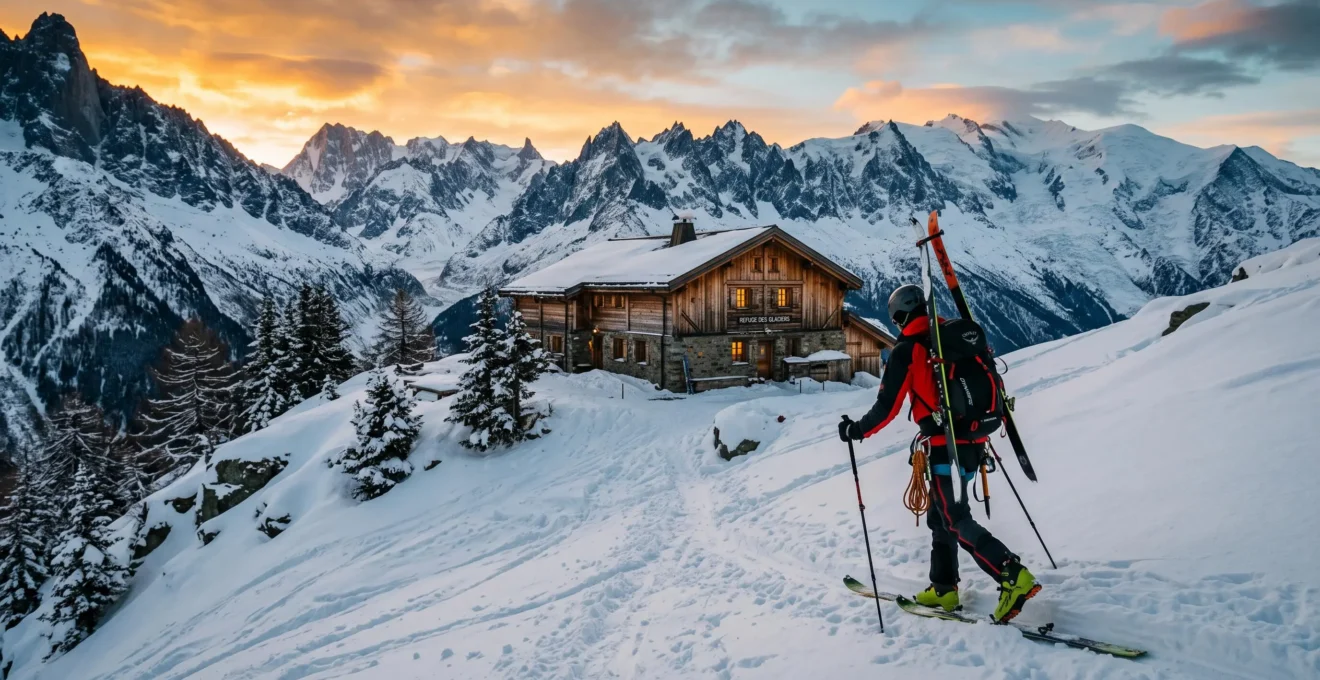
Few decisions shape a mountain adventure holiday as much as where you stay. The right lodge, chalet or hut is more than a bed for the night: it is your strategic basecamp, giving you early access to the terrain, local knowledge you cannot find online, and the recovery you need between big days. Whether you are chasing powder on legendary Alpine slopes, planning a multi-day traverse, or preparing a technical ascent, the accommodation you choose determines how much time you spend adventuring and how safely you do it. This guide covers the key selection criteria, the flagship destinations of the European Alps and North American Rockies, southern hemisphere alternatives, and the hut networks that turn the mountains themselves into your home.
- Match your accommodation to your activity goals, skill level and safety requirements before comparing prices.
- Genuine ski-in ski-out access varies widely: always check elevation, snow reliability and the difficulty of access runs.
- In the Alps, the right sector matters as much as the resort: Savoleyres vs Médran in Verbier, or lift proximity in car-free Zermatt.
- In North America, longer distances and volatile weather make logistics — roads, guides, early departures — central to the lodging choice.
- For multi-day traverses and expeditions, accommodation is infrastructure: reserve huts early and treat rest as equipment.
Alpine resort selection criteria for adrenaline-focused itineraries
Choosing mountain accommodation starts with a simple principle: your base must match your activity objectives, your skill level and your safety requirements. A beautiful chalet in the wrong location can cost you hours of daylight every day; a well-located one multiplies your time on the terrain.
The most important factors when selecting mountain adventure accommodation are proximity to lifts and trailheads, the quality of ski-in ski-out access, the property’s safety infrastructure, and — for advanced riders — the logistics of heli-skiing and guided off-piste services available from the doorstep.
Proximity to terrain parks and backcountry access points
Location determines how much time you actually spend adventuring versus travelling to trailheads or lift systems. Properties within walking distance of gondola bases or trailhead parking give you immediate morning access, letting you reach pristine terrain before the crowds — a decisive advantage during short winter days. Many modern resorts have also developed multi-discipline terrain parks: a useful benchmark is to count the activities accessible within a 15-minute radius of your accommodation, particularly if you plan to combine ski touring, climbing or hiking, or if your group has mixed abilities and interests.
What genuine ski-in ski-out access means, from Chamonix-Mont-Blanc to the Vallée Blanche
True ski-in ski-out properties eliminate logistical friction: in destinations like Chamonix-Mont-Blanc, you can clip into your bindings at the door and reach legendary runs such as the Vallée Blanche without shuttles or parking. The French Alps have pioneered this model, with dedicated ski rooms, boot warmers, waxing stations and secure equipment storage.
Warning: ski-in ski-out quality varies considerably. Some properties require a walk or shuttle to the piste. Before booking, ask about snow reliability at the property’s elevation, the difficulty of the access runs, and whether you will need to cross roads or pathways. The most valuable properties serve both beginner-friendly slopes and challenging terrain.
Avalanche safety ratings and mountain rescue response times
Safety infrastructure should be non-negotiable, especially for properties advertising backcountry access. Reputable mountain lodges maintain current avalanche forecasting partnerships, provide daily safety briefings, and ensure staff hold wilderness first aid certifications. The European Alps maintain high standards, with regional avalanche centres publishing detailed daily bulletins used by professional guides for route planning.
Rescue capabilities differ sharply between regions. Well-established resort areas typically run helicopter rescue services with response times under 30 minutes during daylight hours; remote locations may require significantly longer evacuations. Before booking, ask about emergency protocols, communication systems in areas without cellular coverage, and relationships with local rescue organisations. Properties that run regular safety drills demonstrate a commitment to guest welfare that goes beyond marketing.
Heli-skiing launch facilities and guided off-piste services
For advanced skiers seeking untracked powder, proximity to heli-skiing operations opens terrain no lift can reach. The Canadian Rockies and certain European valleys are benchmarks for heli-ski logistics, with purpose-built launch pads, on-site fueling and integrated guide offices. When evaluating a heli-ski lodge, check that it:
- Hosts IFMGA- or ACMG-certified guides.
- Maintains a dedicated briefing room.
- Includes avalanche airbags, radios and transceivers in its packages.
- Discloses group sizes, vertical guarantees and typical flight patterns.
For many travellers, the most efficient setup is a lodge combining lift-access warm-up laps with heli-drops from a nearby valley, allowing you to adapt to changing weather and snow stability.
Finally, remember that local insight is your biggest shortcut. Partnering with seasoned mountain real estate experts — such as the Altitude Courchevel property specialists, who manage the rental and sale of studios, apartments, duplexes, and prestige chalets — takes the friction out of your search. With tailored concierge services handling everything from ski gear to bespoke experiences, you can effortlessly align your dream alpine retreat with your lifestyle.
Pre-booking checklist: distance to lifts and trailheads, real ski-in ski-out status, avalanche briefing practices, staff certifications, emergency protocols, guide partnerships, and equipment storage facilities.
Premier mountain lodging destinations across the European Alps
The European Alps offer some of the most diverse mountain adventure holidays on the planet, from high-speed glacier runs to technical couloirs and summer via ferrata lines. Each of the four destinations below represents a distinct adventure profile: choosing the right base is less about chasing a famous name than about matching the resort’s character to your style — because in the Alps, the neighbourhood and the type of accommodation (chalet, hotel, gasthof) directly shape the pace and quality of your activity days.
Luxury chalets in Verbier’s Savoleyres and Médran sectors
Verbier is synonymous with off-piste freedom, and your chalet location can make or break a powder day. The Savoleyres sector suits families and mixed-ability groups, with gentler slopes and quick access to tree skiing when visibility drops; chalets here often include private shuttles to the main lift hubs. Closer to the Médran lift station, you’ll find the resort’s most exclusive lodges, prized for near-instant lift access: if you plan to lap iconic itineraries like Tortin or the backside of Mont Fort, staying within a five-minute walk of Médran significantly increases your daily vertical. Many high-end chalets offer in-house guides or concierge teams who arrange backcountry tours, heli-drops and safety workshops, turning your stay into a fully curated itinerary.
Zermatt’s car-free village accommodation near the Matterhorn Glacier Paradise
Zermatt’s car-free layout makes for a quieter, more atmospheric stay — but requires planning around lift access. Accommodation near the Matterhorn Glacier Paradise (Klein Matterhorn) lift or the Sunnegga funicular gives rapid entry to high-altitude terrain, essential in early or late season when lower slopes are thin. Many hotels provide electric taxi transfers from the station, ski lockers adjacent to the lifts and heated boot rooms.
Because Zermatt offers 365-day glacier skiing and a direct link to Italy’s Cervinia, it suits travellers seeking a long season or a multi-country adventure. For technical ascents on routes near the Matterhorn, look for properties that partner with local guiding bureaus and can secure hut reservations, equipment rentals and early breakfasts before a summit push.
St. Anton am Arlberg’s traditional Gasthof options on the Ski Arlberg circuit
St. Anton combines a reputation for steep skiing and vibrant après-ski with the Austrian charm of traditional family-run Gasthöfe. Many sit within walking distance of the Galzig or Rendlbahn lifts and serve hearty breakfasts designed to fuel full days on the Ski Arlberg circuit — the vast interconnected network that includes Lech, Zürs and Warth-Schröcken. Rooms are simple but comfortable, with wood-panelled interiors and mountain views.
Some Gasthöfe partner with ski schools and guiding outfits, letting you join off-piste clinics or guided circuit tours from your doorstep. If your focus is pure skiing, prioritise properties with the shortest walk to the lifts and late check-out on departure day; if you plan to explore nearby villages by car, stay close to the main road or train station.
Cortina d’Ampezzo’s Dolomiti Superski-connected boutique hotels
Cortina d’Ampezzo pairs cinematic Dolomite scenery with access to the enormous Dolomiti Superski domain — ideal if you want varied terrain and Italian flair. Boutique hotels in the historic centre sit near both the Faloria and Tofana cable cars, within strolling distance of restaurants and wine bars. Since the Superski pass covers over a thousand kilometres of pistes, staying somewhere with easy bus or shuttle connections to multiple lift stations is the smart strategy; many properties include complimentary ski shuttles, on-site gear rentals and mountain concierge desks.
Planning a mix of downhill skiing, via ferrata and winter hiking? Choose a hotel that operates year-round, offers secure storage for both skis and climbing equipment, and can recommend IFMGA-certified guides who know the local limestone walls and gullies.
North American Rockies basecamp accommodation for technical climbing
The North American Rockies attract climbers, mountaineers and backcountry skiers drawn to serious vertical relief and wild conditions. Unlike the tightly packed European Alps, distances here are greater and weather windows shorter, so accommodation choice demands more rigorous planning: proximity to trailheads, winter road reliability and access to specialised guiding services all determine how effectively you can execute a technical itinerary.
Banff National Park gateway hotels with Icefields Parkway access
Banff and Lake Louise are the gateways to Canada’s finest ice climbing and alpine routes along the Icefields Parkway. Staying in Banff town gives you more restaurants and amenities; Lake Louise and nearby Field mean shorter drives to objectives like the Columbia Icefield or Weeping Wall. In winter, road conditions vary dramatically, so a hotel with 24/7 front desk support and real-time road information is a safety asset, not a luxury.
Climbers should look for early breakfast options, gear-friendly rooms and drying facilities for frozen boots and ropes. Some properties collaborate directly with ACMG-certified guides and can bundle guiding days, avalanche skills training and park passes into your booking. For a mix of ski touring and ice climbing, consider splitting your stay between Banff and a lodge or hostel closer to the Parkway to cut daily drive times.
Jackson Hole’s Teton Village lodges for Grand Teton expeditions
Teton Village is an excellent staging ground for both resort skiing and Grand Teton National Park objectives. Lodges at the base of the Jackson Hole Mountain Resort tram offer instant access to steep inbounds terrain and short approaches to backcountry gates, ideal for training or for maximising vertical on a short trip. For a Grand Teton climb or a longer alpine rock route, downtown Jackson puts you closer to park entrances and guiding headquarters — then shift to Teton Village for recovery days on skis.
Attention: afternoon thunderstorms are common in summer. Minimising morning transit time between your lodge and the trailhead can be the difference between a successful summit and a forced retreat. Prioritise hotels that understand climbers’ needs: secure storage for ropes and hardware, flexible check-in to match summit days, and staff who know sunrise, sunset and shuttle timetables.
Whistler Blackcomb’s Creekside lodges and alpine suites
Whistler Blackcomb doubles as a hub for ski mountaineering, glacier travel courses and technical alpine training. Creekside village, slightly removed from the main hub, offers a quieter base with quick gondola access and easier parking; its lodges tend to be self-catering apartments and townhomes with ample storage for ropes, harnesses and avalanche tools. For high-alpine objectives on the Spearhead Range or volcanoes like Mount Garibaldi, the main Whistler base puts you closer to guiding offices, rental shops and public transport. Many hotels there add saunas and hot tubs that help recovery between big days.
When comparing properties, check shoulder-season operations: for spring ski-mountaineering routes, you need a hotel that stays open and offers flexible cancellation in case weather patterns shift.
Aspen Snowmass four-mountain accommodation strategies
The Aspen Snowmass area spans four distinct mountains — Aspen Mountain, Aspen Highlands, Buttermilk and Snowmass — each with its own character. Adventurous skiers gravitate toward lodges near Aspen Highlands for faster access to Highland Bowl and the surrounding backcountry; families and mixed-ability groups often prefer the ski-in ski-out convenience of Snowmass Village.
If you intend to use the four-mountain pass extensively, reduce daily transport friction: properties offering complimentary shuttles between the mountains, on-site ticketing and gear transfer services give you more skiing and less logistics. In Aspen town itself, boutique hotels and historic lodges let you walk to restaurants and galleries after the hills. Since altitude affects sleep and performance — especially arriving from sea level — choose a property with humidifiers, wellness facilities and quiet, well-insulated rooms to acclimatise more comfortably.
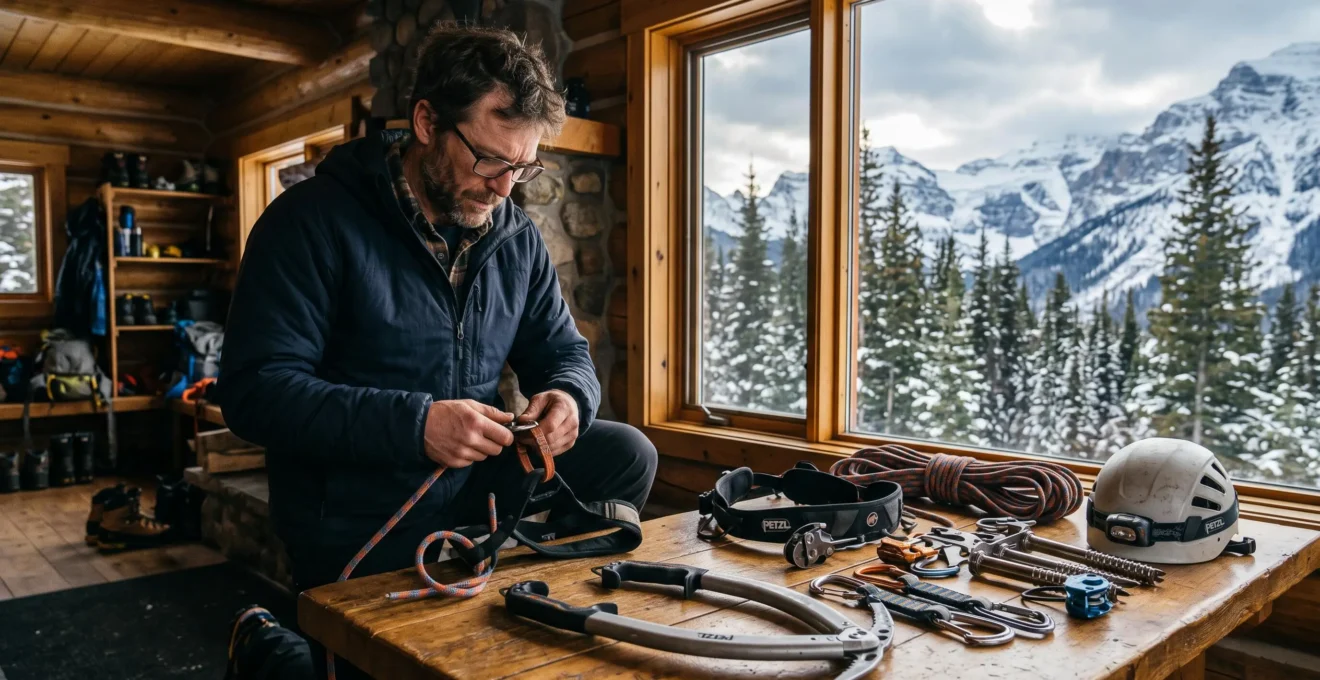
Southern hemisphere high-altitude adventure accommodation
The southern hemisphere opens a second winter window for those who cannot wait — or who want to extend their ski season. From New Zealand’s Remarkables to the windswept peaks of Patagonia, one principle dominates: with volatile weather and more dispersed infrastructure than in Europe, the right lodge operates as both a basecamp and a local knowledge hub.
Queenstown’s Remarkables and Coronet Peak proximity lodging
Queenstown, New Zealand’s self-styled adventure capital, offers a wide range of restaurants, gear shops and activities — from bungee jumping to lake kayaking — while keeping you within a short drive of the Remarkables and Coronet Peak ski areas. Many hotels and apartments run daily ski shuttles, particularly useful if you would rather not drive on icy mountain roads or are unfamiliar with left-hand traffic.
To minimise commutes, consider lodges on the outskirts of town, closer to the Coronet Peak access road or en route to the Remarkables. Some properties offer secure equipment storage, in-house tuning stations and partnerships with local heli-ski operators who pick you up directly from the lobby. Because New Zealand weather can change in minutes, choose accommodation with flexible booking policies, reliable Wi-Fi for weather checks, and staff who can suggest plan-B activities when the lifts go on hold.
Patagonian refugios for Fitz Roy and Torres del Paine trekking routes
In Patagonia, the adventure centres on trekking rather than lift-served skiing, and the network of refugios (mountain huts) is central to the experience. Around El Chaltén, town guesthouses let you stage day hikes to Laguna de los Tres or Laguna Torre; more advanced itineraries add overnight stays at simple refugios closer to Fitz Roy and Cerro Torre — basic beds, communal kitchens and shelter from the notorious Patagonian winds, trading luxury for proximity to the trail.
Torres del Paine’s W and O circuits rely on a mix of refugios and tented camps, many of which must be booked months in advance due to strict visitor caps. Decide early whether you value lighter packs (catered refugios) or more independence (carrying your own gear and using campgrounds). It is wise to book a comfortable hotel in Puerto Natales or El Calafate for your first and last nights: hot showers, solid mattresses and hearty meals feel especially rewarding after days in one of the world’s most dramatic mountain landscapes.
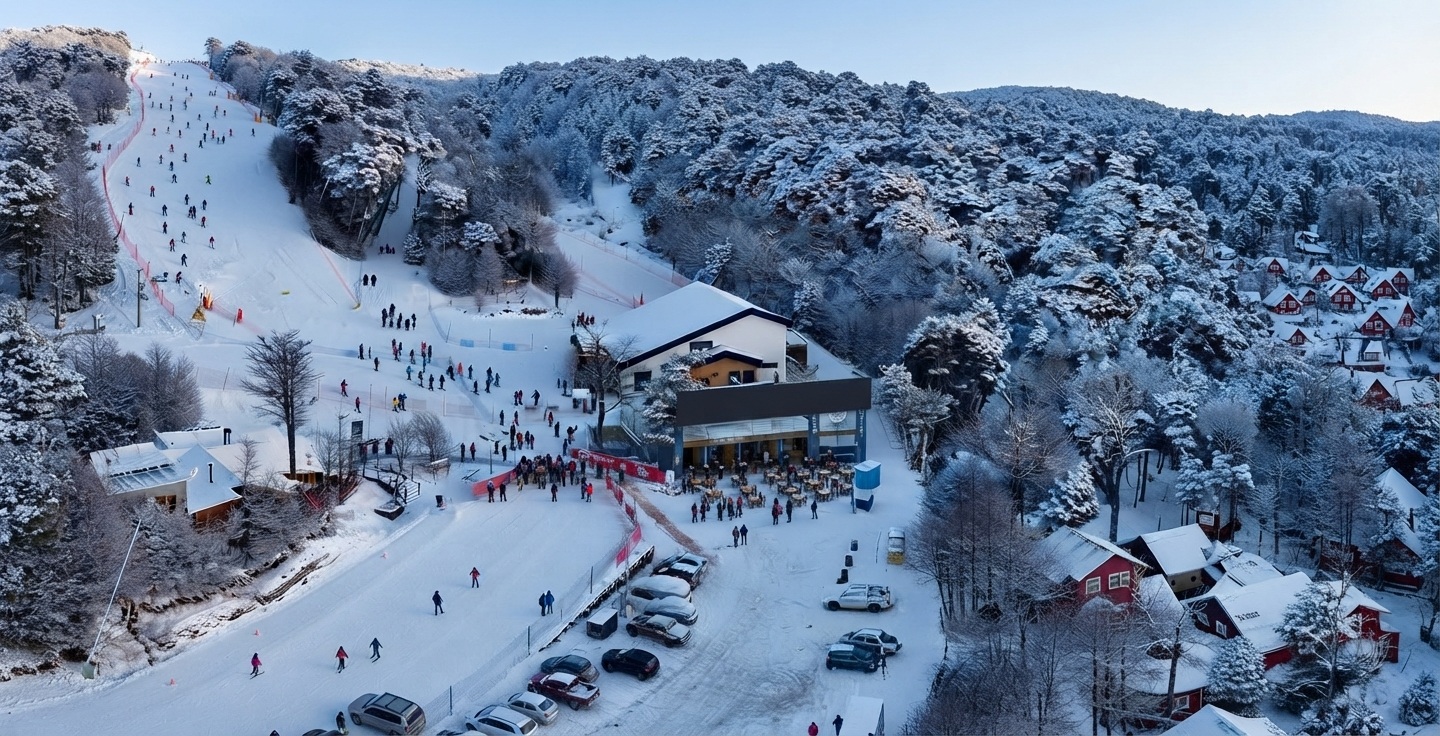
Chilean Andes: Valle Nevado ski village on-mountain residences
A few hours from Santiago, the Valle Nevado ski village puts you high in the Chilean Andes with reliable access to southern hemisphere snow. On-mountain residences and hotels maximise ski time and avoid daily drives up the serpentine access road; many are true ski-in ski-out, with direct access to lifts serving open bowls and expansive off-piste terrain suited to intermediate and advanced skiers.
At high altitude, prioritise lodging with good hydration options, humidifiers and comfortable communal areas for resting between laps. Half-board or full-board meal plans simplify logistics in a self-contained village, freeing you to scan the forecast and plan your next line. If you are combining the trip with cultural time in Santiago or wine touring in nearby valleys, look for flexible check-in/out times and luggage storage for a smooth city-to-summit transition.
Expedition base lodges in the Himalayas and hut networks for multi-day traverses
When your stay becomes itinerant or expedition-scale, accommodation is no longer a hotel choice — it is planned like equipment. In the Himalayas, that means infrastructure: oxygen availability, medical support, generator-backed electricity and communication tools. In the European hut networks, it means a chain of safe harbours spaced to respect your fitness and the weather windows. In both cases, your lodging becomes the supporting structure of the adventure itself.
Himalayan expedition base lodges and acclimatisation facilities
The Himalayas demand more than almost any other range: greater altitude, longer approaches, and a heavy emphasis on acclimatisation and logistics. Selecting a base lodge in Nepal, India or Pakistan is less about thread count than about infrastructure — oxygen, medical support, backup power and communications. Treat the lodge as a miniature expedition hub.
On popular trekking routes such as Everest Base Camp and the Annapurna Circuit, accommodation relies on a mix of teahouses and lodges at varying altitudes. Choose properties known for clean kitchens, reliable heating and quiet sleeping quarters — rest is one of your most important “gear items” at altitude. Higher-end lodges in regions like Khumbu now offer satellite internet, hot showers and small wellness rooms, making long acclimatisation stops more comfortable.
For technical expeditions — to peaks like Ama Dablam or 8,000-metre giants — staging usually happens in larger towns such as Kathmandu, Pokhara, Skardu or Leh. Mid-range to upscale hotels with dedicated expedition services can handle gear storage, last-minute shopping and cargo logistics to remote valleys. Ask about backup power (outages are frequent), secure luggage rooms and their experience with expedition operators. A well-chosen base lodge supports not just comfort but safety.
Mountain hut networks and alpine club refuges for multi-day traverses
For many mountain lovers, the ultimate adventure is not a single summit but a multi-day traverse linking peaks, valleys and cultures. Europe’s dense network of mountain huts and Alpine club refuges makes this style of travel uniquely accessible: instead of carrying a tent and days of food, you move from hut to hut with a light pack, trading camping gear for sturdy bunks, hot meals and convivial dining rooms.
Popular routes like the Haute Route, the Tour du Mont Blanc and numerous Dolomite traverses depend on reservations at key refuges, many of which book out well before peak season. When planning, research not only hut locations but also altitude, facilities (showers, blankets, card payments) and typical opening dates. Some huts offer full meal service; others operate more like bothies with limited supplies — matching your itinerary to each hut’s capabilities prevents unpleasant surprises.
Alpine club memberships: joining the Austrian, German or Swiss Alpine Clubs often provides discounts on hut stays and can include insurance components relevant to mountain rescue.
If you are new to hut-to-hut travel, start with a shorter circuit of two to three nights to learn the rhythm: early starts, weather checks, shared dormitories and the camaraderie of fellow trekkers. Over time, you can graduate to more technical traverses requiring glacier gear, via ferrata kits or guided sections. Chosen and booked strategically, the hut network turns the mountains themselves into your extended home.