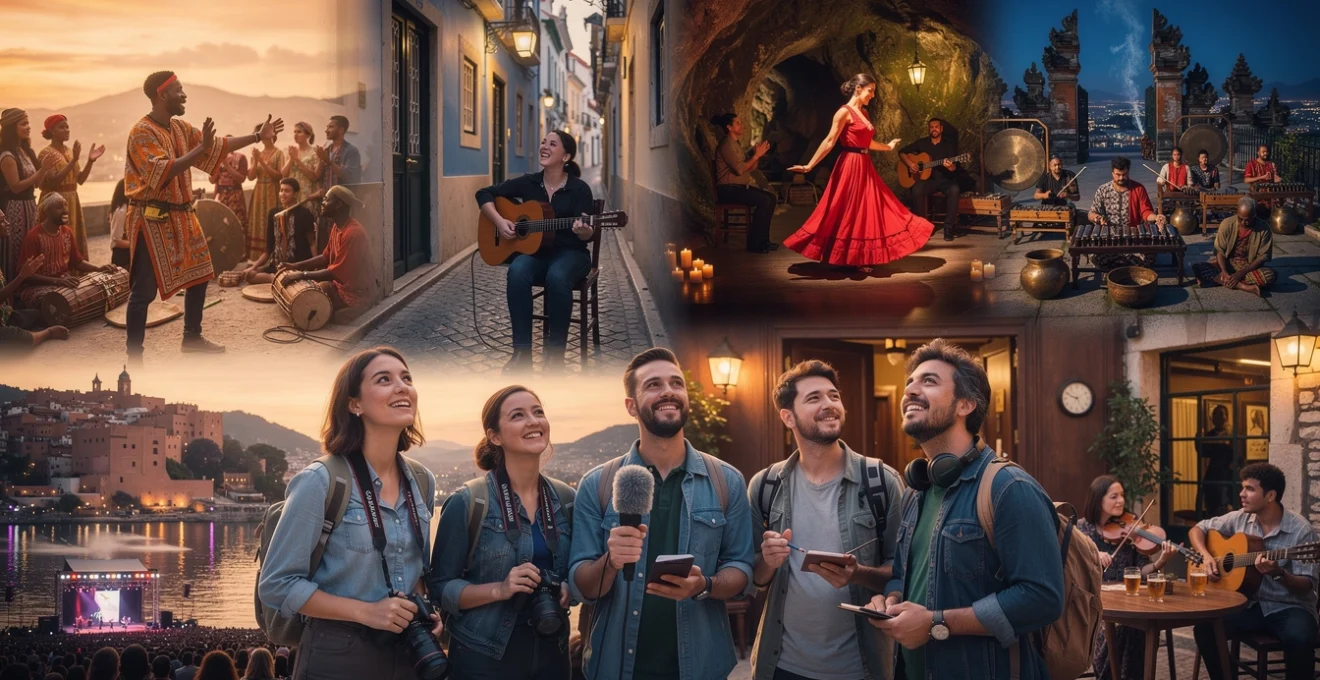
When you step off a plane into a foreign city, the first sensory marker that signals arrival isn’t always visual. Sometimes it’s the ambient sound drifting through airport corridors, the melodic cadence of local speech, or the distant rhythm pulsing from a street festival. Music possesses an extraordinary capacity to anchor travellers in place, transforming geographical coordinates into emotionally resonant destinations. For tourism professionals and cultural institutions, understanding how traditional music shapes travel decisions represents both an opportunity and a responsibility—one that extends far beyond simply providing entertainment. The sonic landscapes of a region carry within them centuries of collective memory, social rituals, and cultural identity that can profoundly influence where people choose to travel and how they remember those journeys.
Across the globe, destinations are increasingly recognising that their musical heritage constitutes a strategic asset. From the haunting strains of Portuguese fado echoing through Lisbon’s narrow lanes to the percussive energy of steelpan yards in Trinidad, traditional music creates powerful emotional connections that transcend language barriers. Research consistently demonstrates that music-inspired travel represents a robust and growing market segment, with studies indicating that 63% of travellers have been inspired by music to visit specific locations. This figure rises even higher among younger demographics, suggesting that the relationship between music and tourism will only intensify in coming years.
Ethnomusicology’s role in shaping authentic travel narratives
The academic discipline of ethnomusicology—the study of music within its cultural context—has become increasingly relevant to tourism development and destination marketing. By documenting, analysing, and contextualising musical traditions, ethnomusicologists provide the foundational knowledge that allows destinations to present their sonic heritage authentically. This scholarly work helps distinguish between superficial representations of culture and genuinely meaningful musical experiences that resonate with discerning travellers seeking depth rather than spectacle.
When tourism operators collaborate with ethnomusicologists, they gain access to nuanced understandings of how music functions within specific communities. This knowledge enables the creation of tourism experiences that respect local contexts whilst remaining accessible to international visitors. The challenge lies in balancing authenticity with presentation, ensuring that traditional music retains its cultural significance even as it enters the tourism economy.
Field recording techniques that capture indigenous soundscapes
Field recording represents one of ethnomusicology’s most valuable contributions to music tourism. These audio documents preserve musical performances in their natural contexts, capturing not only the melodies and rhythms but also the ambient soundscapes that give music its spatial character. When you listen to a field recording of Mongolian throat singing, for instance, you hear not just the remarkable vocal technique but also the wind across the steppe and the movement of livestock—elements that situate the music within its environmental reality.
Tourism applications of field recordings have evolved considerably. Destinations now incorporate these audio documents into museum exhibitions, mobile applications, and interpretive centres, allowing visitors to experience musical traditions even when live performances aren’t available. Some progressive tourism boards have created extensive sound archives that travellers can access before and during their visits, building anticipation and providing educational context that enriches subsequent live encounters.
How UNESCO intangible cultural heritage listings preserve musical traditions
The UNESCO Intangible Cultural Heritage programme has become instrumental in safeguarding musical traditions whilst simultaneously raising their international profile. Inscriptions such as tango in Argentina, flamenco in Spain, and the polyphonic singing of the Aka pygmies in Central Africa have generated increased tourism interest whilst providing frameworks for community-led preservation efforts. These designations carry significant weight in destination marketing, offering third-party validation of cultural authenticity that resonates with educated travellers.
However, UNESCO recognition presents a paradox. Whilst it protects traditions from disappearing, it can also accelerate their commodification. Tourism operators must navigate this tension carefully, ensuring that increased visitor interest supports rather than exploits the communities who maintain these living traditions. Successful models typically involve community control over how musical heritage is presented to tourists, with local practitioners determining the terms of engagement.
The anthropological significance of Call-and-Response patterns in west african griot performances
West African griot traditions exemplify how musical forms encode social structures and historical narratives. Griots serve as oral historians, genealogists, and cultural mediators, their performances employing call-and
response patterns to structure interaction. The alternation between a lead line and the crowd’s answer is not just a musical device; it mirrors communal dialogue, reinforcing shared identity and collective memory. For travellers, participating in or even observing this musical exchange offers an embodied introduction to local notions of respect, hierarchy, and community belonging that no guidebook can adequately convey.
From a tourism perspective, understanding the anthropological significance of call-and-response helps avoid reducing griot performances to background entertainment. When travel experiences frame these sessions as living archives of history and moral philosophy, visitors are more likely to engage with them attentively and ethically. Carefully designed tours might include pre-performance briefings on the role of griots, opportunities for moderated Q&A, and guidelines on appropriate audience response, transforming a night of music into a gateway to West African cultural logics.
Documenting oral histories through traditional ballads and folk narratives
Traditional ballads and folk songs function as portable archives, carrying stories of migration, resistance, love, and loss across generations. In many regions, what we now think of as “heritage music” began as an informal means of recording local events and community values before widespread literacy. When you listen to a Scottish border ballad, a Mexican corrido, or an Appalachian murder ballad, you are encountering a narrative form that once filled the role of both newspaper and social commentary.
For cultural travellers seeking authentic stories of place, these narrative songs provide a powerful alternative to standard historical summaries. Ethnomusicologists working with local singers often transcribe lyrics, trace their variants, and contextualise them within broader social histories, making it possible to design tours, exhibitions, or audio guides that follow musical storylines across landscapes. Imagine walking through a former mining town while hearing a locally sung ballad about a strike, or tracing a coastal path accompanied by sea shanties that reference specific headlands and harbours.
Tourism initiatives that foreground ballads and folk narratives can also support community-led storytelling. Workshops in which visitors learn a simple chorus, or recording projects that invite elders to share less-known songs, help keep these repertoires in active circulation. The key is to treat ballads not as quaint curiosities but as living documents: sources that complicate, and sometimes contest, official destination narratives.
Iconic regional music genres that define cultural landscapes
Certain regional music genres are so tightly entwined with their environments that it is difficult to imagine one without the other. These styles do not simply accompany the landscape; they interpret it, offering what we might call an “emotional cartography” of place. When travellers seek out these genres in situ, they are not only consuming entertainment but entering into long-standing local conversations about identity, memory, and change.
For destination managers and tour operators, recognising how specific genres define cultural landscapes opens up powerful storytelling opportunities. Rather than generic “live music” offers, itineraries can foreground the ways particular sounds emerge from neighbourhood histories, migration patterns, and everyday rituals. This deeper framing helps visitors move beyond checklist tourism towards more reflective, experience-based travel, where a single evening of music can illuminate centuries of cultural evolution.
Fado’s melancholic resonance through lisbon’s alfama district
Fado, often described as Portugal’s urban blues, achieves its most poignant resonance in Lisbon’s Alfama district. The genre’s signature themes of longing and saudade seem to echo the neighbourhood’s geography: steep, labyrinthine streets overlooking the River Tagus, once a departure point for sailors and emigrants. When you hear a fado singer’s voice rise and fall against the backdrop of clinking glasses and distant tram bells, the physical setting amplifies the music’s emotional weight.
For travellers interested in traditional music tourism, choosing an intimate casa de fado in Alfama over a large, tour-bus venue can dramatically change the experience. Smaller houses often feature local residents, informal audience interaction, and a performance structure where lights dim and conversations pause—signalling that the music is the main event, not a side attraction. Destination marketers can guide visitors toward such venues through curated neighbourhood maps and responsible recommendation lists that prioritise community-run establishments.
To balance authenticity and accessibility, some fado houses now provide brief multilingual introductions explaining song themes and poetic conventions before the set begins. This simple interpretive layer allows visitors to follow narratives of lost love, economic hardship, and migration, transforming what might otherwise be perceived as abstract melancholy into a nuanced listening journey anchored in Lisbon’s social history.
Flamenco tablao venues in andalusia’s sacromonte caves
In Granada’s Sacromonte neighbourhood, flamenco takes on a particularly visceral form in the whitewashed cave venues carved into the hillside. These intimate tablaos condense the art’s core elements—song, guitar, dance, and percussive footwork—into a space where performers and audience share the same air and vibration. The proximity turns every heel-stamp and palmas clap into a physical sensation, making the performance feel less like a show and more like a communal ritual.
Historically associated with Roma communities, Sacromonte’s flamenco evolved as an expressive outlet for marginalised voices. Tourism has undeniably reshaped this practice, sometimes pushing it toward spectacle, but carefully chosen venues still preserve a sense of local ownership and improvisational spontaneity. As a traveller, you can look for signs of authenticity: mixed local and visitor audiences, multi-generational performers, and a repertoire that includes cante jondo (deep song) alongside more extroverted dance numbers.
Destination managers can help protect this fragile balance by promoting venues that employ local artists under fair conditions and by providing educational materials about flamenco’s roots in Andalusian history, Roma culture, and Afro-Andalusian influences. When visitors understand that each soleá or seguiriyas is not just a rhythmic pattern but a vessel for centuries of emotion and resistance, their experience of Sacromonte becomes far richer than a simple night out.
Gamelan orchestras in bali’s temple ceremonies and ubud’s cultural centre
Bali’s gamelan orchestras offer one of the world’s most striking examples of music woven into ritual life. The layered metallophone textures and interlocking rhythms are not standalone performances but integral components of temple ceremonies, dance dramas, and life-cycle rituals. Hearing gamelan in a temple courtyard, with incense swirling and offerings laid out nearby, reveals why many Balinese describe the music as a form of prayer rather than entertainment.
For visitors, the most meaningful gamelan encounters often happen during public ceremonies rather than staged shows. However, Ubud’s cultural centres and community halls also play a vital role, offering accessible introductions to the music without intruding on sacred rites. Many groups schedule regular open rehearsals or ticketed performances that are explicitly designed for mixed local and international audiences, accompanied by explanations of tuning systems, ensemble roles, and links to Balinese cosmology.
Responsible tourism marketing can encourage travellers to respect the distinction between ritual and performance contexts. Clear guidance about appropriate dress, photography, and behaviour at temple events helps preserve the sanctity of ceremonies while still welcoming curious listeners. Meanwhile, participatory workshops—where visitors learn a simple interlocking pattern or accompany a dance—can demystify the music’s complexity and foster deeper appreciation of Balinese artistic discipline.
Irish traditional sessions in galway’s tigh neachtain and doolin’s gus O’Connor’s pub
In Ireland, the archetypal music experience is not a formal concert but the informal session: musicians gathered around a table, trading tunes and stories late into the night. Pubs like Tigh Neachtain in Galway and Gus O’Connor’s in Doolin have become emblematic destinations for travellers seeking this style of participatory traditional music. The atmosphere is less about polished performance and more about shared repertoire, with listeners frequently joining in on choruses or quietly tapping along to reels and jigs.
What makes these sessions compelling for cultural tourists is their blend of spontaneity and deep-rooted structure. Sets of tunes follow established patterns, yet any player with the right skills and etiquette can be invited into the circle. Visitors hoping to participate should understand that sessions are not open mic nights; they are social gatherings with their own unwritten rules about when to join, how to start a tune, and how to support rather than dominate the flow.
Destination guides and tourism boards can add real value by providing short “session etiquette” primers alongside venue recommendations. Tips on where to sit, when to clap, and how to request a song respectfully can ease cultural friction and help maintain the communal nature of the music. For travellers who play an instrument, pre-trip research into common Irish session tunes can turn a night at Tigh Neachtain or Gus O’Connor’s into a lifelong memory of genuine musical exchange.
Rebetiko’s underground history in athens’ psirri neighbourhood tavernas
Rebetiko, often likened to Greek urban blues, emerged in the early twentieth century among refugees, dockworkers, and marginalised communities in port cities like Piraeus. Its smoky bouzouki lines and bittersweet lyrics about love, exile, and hardship once filled clandestine hashish dens and backroom tavernas. Today, travellers can trace this underground history in Athens’ Psirri neighbourhood, where small venues keep the genre alive through late-night performances that blend nostalgia with contemporary commentary.
Listening to rebetiko in Psirri is as much about the social setting as the music itself. Tables crowded with shared meze plates, impromptu dancing between narrow aisles, and patrons singing along to decades-old choruses create an atmosphere of collective catharsis. For visitors, this environment offers a different lens on Athens than classical ruins or seaside promenades, revealing a city shaped by migration, political upheaval, and working-class resilience.
Tourism initiatives that focus on rebetiko can include guided walks linking historic sites—former hashish bars, refugee neighbourhoods, labour meeting points—with evening performances in tavernas that prioritise live, acoustic sets. Brief introductions to lyrical themes and key historical moments (such as the Asia Minor Catastrophe of 1922) help travellers situate the songs within Greece’s complex twentieth-century history, turning a night of music in Psirri into a condensed social history lesson.
Music festivals as immersive cultural touchpoints for destination branding
Music festivals occupy a unique position in cultural tourism: they compress intense, multi-sensory experiences into a defined timeframe while concentrating visitors in specific locations. For destinations, a well-curated festival can function as both a laboratory and a shop window—a place where new narratives about local identity are tested, and where international visitors form their first, lasting impressions. As we have seen with global phenomena like The Eras Tour, music-driven travel can dramatically reshape economic patterns and media visibility.
Strategic festival design goes beyond booking headliners. It involves aligning programming with local heritage, integrating neighbourhood businesses, and creating off-stage experiences—food markets, craft fairs, workshops—that showcase broader cultural ecosystems. When done thoughtfully, festivals become not just events but recurring rituals that visitors plan their travel around, returning year after year and spreading word-of-mouth recommendations that no advertising budget could buy.
Womad’s global music programming and its impact on festival tourism economics
The World of Music, Arts and Dance (WOMAD) festival, founded by Peter Gabriel, has become a benchmark for globally oriented music tourism. By presenting artists from dozens of countries on equal footing, WOMAD introduces audiences to traditional and contemporary forms they might never encounter through mainstream channels. For host destinations—from the UK to Chile and New Zealand—the festival generates significant visitor inflows, often during shoulder seasons that benefit local hotels, restaurants, and transport providers.
Economically, WOMAD exemplifies how a strong curatorial identity can drive repeat visitation. Many attendees plan their holidays around the festival’s dates, turning a weekend of performances into a week-long exploration of the surrounding region. Local tourism boards frequently collaborate with organisers to create add-on packages—vineyard tours, craft village visits, or heritage site excursions—that extend length of stay and distribute festival spending geographically.
For destinations considering similar globally focused events, WOMAD offers several lessons. Transparent ethical booking policies, educational workshops with artists, and family-friendly environments have helped the festival cultivate a loyal, values-driven audience. This alignment between musical programming and visitor expectations creates a resilient tourism product that is less vulnerable to trends in mainstream pop and more attuned to long-term cultural exchange.
The festival interceltique de lorient’s role in preserving breton musical heritage
In Brittany, the Festival Interceltique de Lorient has become a cornerstone of both regional identity and international music tourism. Each August, the port city hosts performers from Celtic cultures worldwide—Breton, Irish, Scottish, Welsh, Galician, and beyond—turning its streets and harbours into a dense web of bagpipes, harps, and vocal ensembles. For visitors, the festival offers a concentrated immersion in Celtic soundscapes, from formal concerts to impromptu sessions in harbour-side bars.
Crucially, the festival’s branding emphasises Brittany’s position within a broader Celtic network while foregrounding local traditions like the bagad (Breton pipe bands) and kan ha diskan (call-and-response dance songs). This dual focus allows Lorient to market itself both as a gateway to pan-Celtic culture and as a custodian of specific regional practices. The result is a layered tourism experience in which travellers can attend arena-scale spectacles one night and village-style dances the next.
From a heritage perspective, the festival supports transmission by commissioning new works, funding youth ensembles, and providing high-visibility stages for emerging artists. For tourism professionals, it illustrates how a specialised music event can anchor destination branding for decades, turning a mid-sized French port into a must-visit node on the global traditional music map.
Essaouira gnaoua world music festival’s fusion of sufi trance and contemporary jazz
On Morocco’s Atlantic coast, the Essaouira Gnaoua World Music Festival has built its reputation on creative fusion. Rooted in Gnaoua spiritual music—a powerful blend of Sufi devotion, sub-Saharan rhythms, and trance-inducing grooves—the festival pairs local maâlems (master musicians) with international jazz, rock, and electronic artists. The resulting collaborations demonstrate how traditional music can evolve without losing its ritual core, attracting audiences that might not otherwise seek out Gnaoua culture.
For travellers, the festival offers multiple layers of engagement. Free outdoor concerts in the medina and on beachfront stages introduce casual listeners to Gnaoua’s hypnotic rhythms, while smaller, ticketed events provide more intimate encounters with ritual repertoires. Many visitors also use the festival as a springboard to explore Essaouira’s historic architecture, artisan workshops, and coastal landscapes, illustrating how music tourism can catalyse broader destination discovery.
However, the integration of sacred forms into festival contexts raises important ethical questions. Organisers have responded by consulting with Gnaoua communities and ensuring that explicitly ritual practices retain appropriate boundaries. For tourism stakeholders elsewhere, Essaouira’s experience underscores the need to involve tradition bearers in decision-making whenever spiritual or ceremonial music is brought into large-scale public events.
How the montreux jazz festival transformed swiss riviera tourism patterns
The Montreux Jazz Festival on the shores of Lake Geneva exemplifies how a music event can permanently alter a destination’s profile. Founded in 1967 as a relatively small jazz gathering, Montreux has evolved into a globally recognised festival featuring a wide spectrum of genres, yet it continues to leverage the intimate connection between music and its lakeside setting. Iconic live recordings—by artists from Miles Davis to Nina Simone—have turned Montreux into a pilgrimage site for audiophiles, who arrive eager to stand in the same halls where legendary performances took place.
Economically, the festival has been a major driver in repositioning the Swiss Riviera from a primarily spa-and-scenery destination to a cultural hotspot. Hotels that once catered mainly to health tourists now develop themed packages around festival dates, while local businesses extend hours and tailor offerings to an international, musically literate crowd. The event also helped spur investment in high-quality venues and recording infrastructure, benefiting the region’s year-round cultural life.
Montreux shows how sonic branding—through live recordings, documentaries, and artist testimonials—can give a destination enduring musical associations that persist long after individual festivals end. For tourism strategists, it raises a compelling question: what kinds of long-term assets, from archives to signature venues, are you building each time your city hosts a major music event?
Indigenous instrumental craftsmanship and musical heritage tourism
Beyond performances themselves, the making of instruments offers a powerful entry point into traditional music cultures. Workshops, luthier studios, and community craft centres allow travellers to witness the transformation of raw materials into sound-producing objects, revealing layers of ecological knowledge, spiritual symbolism, and artisanal skill. In many destinations, instrument-making tourism also spreads economic benefits more widely, creating income streams for craftspeople who may not appear on stage but are essential to musical ecosystems.
For travellers, visiting an instrument maker is akin to stepping backstage into the music’s material imagination. The smell of wood shavings, the resonance of a freshly tuned drum, or the sight of hand-hammered metal all deepen appreciation of what you later hear in performance. For host communities, opening these spaces to visitors—when done on their own terms—can support apprenticeship systems and sustain demand for high-quality, locally produced instruments rather than cheaper imports.
Didgeridoo production workshops in australia’s northern territory aboriginal communities
In Australia’s Northern Territory, the didgeridoo (or yidaki, in some Aboriginal languages) provides a vivid example of how instrument-making and cultural education can intertwine. Authentic didgeridoos are traditionally crafted from eucalyptus branches naturally hollowed out by termites, then shaped, painted, and sometimes ceremonially blessed by Aboriginal makers. Workshops that invite visitors to observe or participate in this process offer far more than a souvenir opportunity; they become forums for discussing land stewardship, kinship systems, and the cultural protocols surrounding who may play certain instruments and when.
Responsible operators typically work in close partnership with Aboriginal-owned art centres or community enterprises, ensuring that revenue flows back to local families and that cultural information is shared appropriately. Visitors might learn to distinguish mass-produced tourist didgeridoos from community-made instruments, understand the symbolism of specific designs, or try basic playing techniques under guidance. Such experiences can correct misconceptions—for instance, that anyone can freely use the didgeridoo in any context—and highlight the instrument’s deep ceremonial significance.
From a tourism development standpoint, didgeridoo workshops demonstrate the importance of consent and co-design. Marketing should clearly communicate that participation occurs on Aboriginal terms, with group sizes, photography, and activities determined by hosts. When travellers accept these boundaries, the resulting encounters are often more meaningful, generating lasting respect rather than superficial cultural sampling.
Master luthiers and the spanish guitar-making tradition in granada
Granada, nestled beneath the Alhambra in Andalusia, is renowned not only for flamenco performance but also for its master luthiers. In small, often family-run workshops, Spanish guitars take shape through painstaking processes of wood selection, bracing, and hand-finishing. For musicians and non-musicians alike, visiting these ateliers can feel like entering an alchemical lab, where inert materials are slowly coaxed into instruments capable of carrying the emotional weight of flamenco, classical, and Latin American repertoires.
Many luthiers now welcome limited numbers of visitors by appointment, explaining their methods and the historical evolution of the Spanish guitar. Some collaborate with local tourism offices to offer combined experiences: a morning spent in the workshop, followed by an evening recital where the newly finished instruments are played. This narrative arc—from raw wood to resonant performance—helps travellers grasp the interconnectedness of craft and stage, economy and artistry.
For Granada’s destination brand, emphasising guitar-making adds depth to the familiar flamenco story. It shifts focus from spectacular displays of virtuosity to quieter forms of dedication and innovation, illustrating how cultural heritage is continually renewed. Clear guidelines about purchasing, export regulations, and aftercare can also transform prospective buyers into long-term ambassadors for both the instruments and the city that produced them.
Steelpan yard visits in trinidad’s laventille and woodbrook districts
In Trinidad, the steelpan—born from resourcefulness and resistance in mid-twentieth-century oil drum communities—has become a national symbol and a vibrant focus of music tourism. Visiting a panyard in neighbourhoods like Laventille or Woodbrook offers an immersive window into how this instrument is forged, tuned, and rehearsed for the island’s legendary Panorama competitions. Unlike static museum exhibits, panyards are living social spaces where players of all ages gather nightly during Carnival season to perfect intricate arrangements.
Travellers who attend open rehearsals or guided panyard tours witness the full lifecycle of steelpan music: from the hammering and sinking of drums to the disciplined, almost orchestral rehearsals involving dozens of players. The experience combines sonic intensity with community storytelling, as band members explain the history of their ensemble, neighbourhood rivalries, and the evolution of arrangements that blend calypso, soca, and jazz influences.
To maximise benefits and minimise disruption, tourism initiatives often coordinate visits through pan associations or cultural NGOs, ensuring that bands receive fair compensation and that visitor numbers remain manageable. Clear safety guidance, opportunities to purchase recordings or branded merchandise, and optional basic rhythm workshops can turn panyard visits into highlight experiences that anchor travellers’ understanding of Trinidadian culture far beyond Carnival week.
Audio-based wayfinding and sonic placemaking strategies
As digital technologies reshape how we navigate cities, sound is emerging as a powerful tool for wayfinding and placemaking. Audio walking tours, geolocated playlists, and sound installations allow destinations to tell their stories through the ears as well as the eyes, layering traditional music and local soundscapes over physical routes. For travellers, this can transform an ordinary stroll into an immersive cultural journey, where each turn of the corner triggers a new sonic vignette tied to the built environment.
Imagine following a mobile app through Lisbon’s Alfama while fado excerpts and oral histories emerge automatically at key viewpoints, or wandering Athens with rebetiko tracks that fade in as you enter historic working-class districts. These audio-based experiences can highlight lesser-known streets and neighbourhoods, dispersing tourism more evenly while giving visitors a curated, yet flexible, sense of discovery. They also accommodate different accessibility needs, offering rich storytelling for those who may not be able to join group tours.
For destination planners, designing sonic wayfinding strategies involves close collaboration between technologists, ethnomusicologists, and community representatives. Questions of consent—who owns the recorded sounds, which performances are appropriate for public distribution, how to credit artists—must be addressed upfront. When done thoughtfully, audio placemaking can help reclaim public space from visual advertising clutter, replacing it with context-sensitive soundscapes that foreground local voices, traditional instruments, and the everyday music of markets, transit hubs, and waterfronts.
Experiential music tourism through participatory workshops and master classes
While many travellers are content to listen, a growing segment seeks hands-on engagement with traditional music, seeing it as a pathway to deeper cultural understanding. Participatory workshops and master classes—whether one-hour introductions or multi-day intensives—allow visitors to move from spectator to novice practitioner. This shift in role changes the nature of the tourism experience: music becomes something you do with people, not just something you watch them do for you.
Destinations with strong musical identities are increasingly building structured learning opportunities into their tourism offers. In Seville, visitors can take beginner flamenco dance classes before attending a tablao performance; in Dublin, short tin whistle courses accompany pub session trails; in Bali, gamelan and dance studios run week-long programs timed to match international holiday calendars. These activities cater to diverse skill levels and timeframes, turning traditional music holidays into “learning journeys” that extend well beyond passive consumption.
To ensure that experiential music tourism remains respectful and sustainable, several best practices are emerging. Programs are most successful when they are led by recognised local practitioners, clearly communicate expected outcomes (so participants understand they will not become experts overnight), and embed basic cultural context alongside technical instruction. Group sizes should be kept small enough to allow genuine interaction, and a portion of fees should support community initiatives such as youth ensembles or instrument-making apprenticeships.
For travellers, the payoff of such engagement can be profound. Even mastering a simple rhythm pattern or song verse can reframe how you hear subsequent performances, much like learning a few phrases of a language makes conversations richer. Long after the trip ends, practising a dance step or strumming a chord progression back home can serve as a sonic postcard, bringing the destination’s atmosphere back to life and reinforcing the emotional bond between music, memory, and place.