# The best annual festivals around the world for unforgettable travel memories
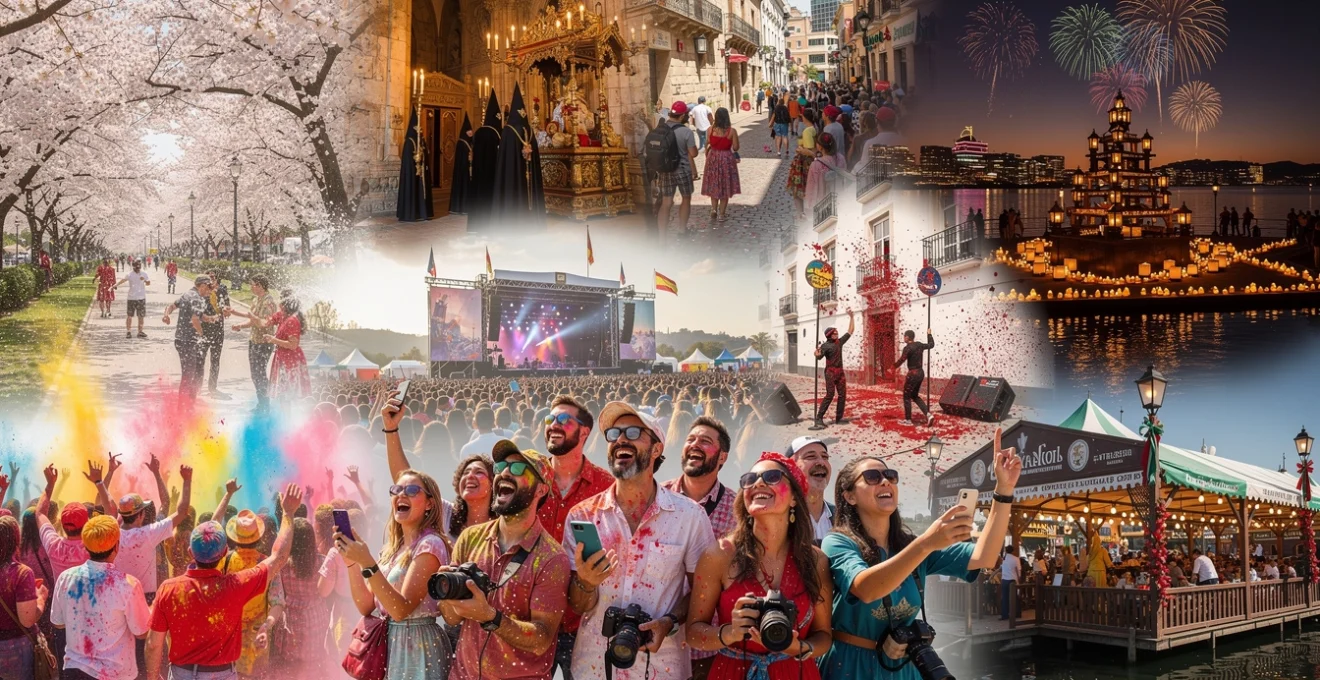
Few experiences transform travel from simple sightseeing into profound cultural immersion quite like attending a major festival. These vibrant gatherings offer you an authentic window into the heart of communities worldwide, where ancient traditions meet contemporary celebration in spectacular fashion. Whether you’re drawn to the spiritual luminosity of Diwali, the raucous joy of Carnival, or the artistic freedom of Burning Man, attending these annual events creates memories that resonate long after you’ve returned home.
The world’s greatest festivals share common threads despite their geographical and cultural differences. They bring communities together in shared purpose, often marking seasonal transitions, religious observances, or historical commemorations. More importantly for travellers, they represent unparalleled opportunities to witness cultures at their most expressive and welcoming. During these celebrations, barriers dissolve, strangers become friends, and you gain insights that no guidebook can provide.
Planning your travels around these spectacular gatherings requires consideration of timing, logistics, and cultural preparation. The rewards, however, far exceed the effort. From the frozen sculptures of Harbin to the floating lanterns of Chiang Mai, these festivals showcase humanity’s boundless creativity and our universal need to celebrate together.
Spring cultural celebrations: holi in vrindavan and cherry blossom festivals across japan
Spring awakens the world with festivals that celebrate renewal, colour, and natural beauty. Across Asia particularly, this season brings some of the year’s most visually stunning and spiritually significant celebrations. These events draw millions of participants and observers who gather to mark the transition from winter’s dormancy to spring’s vitality.
Holi festival in vrindavan and mathura: immersive colour throwing rituals
The Festival of Colours transforms India into a kaleidoscopic wonderland each March, but nowhere celebrates Holi quite like Vrindavan and Mathura in Uttar Pradesh. These twin cities, intrinsically linked to Lord Krishna’s mythology, extend their celebrations over several days rather than the traditional two-day observance. You’ll witness the famous Lathmar Holi in nearby Barsana, where women playfully beat men with sticks in re-enactment of Krishna’s legendary encounters with the gopis.
Walking through Vrindavan’s narrow lanes during Holi, you become part of a living tradition that dates back centuries. Strangers greet you with handfuls of vibrant gulal powder, smearing your face with brilliant reds, yellows, greens, and blues whilst shouting “Holi hai!” The air itself seems to shimmer with suspended colour particles, creating an ethereal atmosphere that photographers dream about. Temples throughout the city host special ceremonies where devotees sing devotional songs and dance in ecstatic celebration.
Beyond the colour throwing, Holi carries profound symbolic meaning. The festival commemorates the triumph of good over evil, specifically the burning of the demoness Holika. On the evening before the main celebration, communities gather around bonfires for Holika Dahan, offering prayers and performing rituals. This spiritual dimension adds depth to what might otherwise seem purely recreational, reminding participants that joy and devotion can coexist beautifully.
Hanami season in tokyo’s ueno park and kyoto’s philosopher’s path
Japan’s cherry blossom season represents perhaps the world’s most celebrated natural phenomenon, drawing visitors from across the globe to witness the delicate sakura blooms. Hanami, the practice of flower viewing, transforms parks and temple grounds into temporary outdoor galleries where nature’s artistry takes centre stage. Tokyo’s Ueno Park becomes a sea of pink and white blossoms, with over 1,000 cherry trees creating tunnel-like canopies along its pathways.
The tradition of hanami reflects the Japanese aesthetic principle of mono no aware – an awareness of impermanence that finds beauty in transience. The cherry blossoms bloom spectacularly for barely two weeks before their petals fall, creating poignant moments of reflection amidst celebration. You’ll see families spreading picnic blankets beneath the trees, office workers gathering after hours for impromptu parties, and couples strolling hand-in-
hand beneath drifting petals. In Kyoto, the Philosopher’s Path offers a more contemplative experience: a stone walkway following a narrow canal lined with hundreds of cherry trees. Early mornings here feel almost otherworldly as blossoms reflect in the water and temple bells echo softly in the distance.
For travellers, timing is the main challenge of cherry blossom season. Peak bloom can shift by a week or more depending on weather patterns, and popular spots like Ueno Park or Maruyama Park in Kyoto become crowded during weekends and evenings. To make the most of your hanami experience, aim for visits on weekday mornings and consider exploring lesser-known neighbourhood parks, where you’ll still find beautiful trees but far fewer people. Remember that in busy areas, space on the ground is at a premium, so arriving early with a picnic mat is part of the tradition.
Respecting local etiquette during hanami ensures everyone can enjoy the spectacle. Avoid shaking branches to create “petal showers” for photos, as this damages the trees, and always pack out your rubbish—some parks even remove bins during the season to encourage people to take waste home. If you’re bringing alcohol, check park regulations in advance, as some areas have restrictions. With a little planning, cherry blossom viewing can be one of the most memorable spring cultural festivals you’ll ever experience.
Songkran water festival in chiang mai: traditional thai new year immersion
While cherry blossoms symbolise spring’s gentle arrival, Songkran in Thailand announces the season with a joyful splash. Celebrated around 13–15 April as the traditional Thai New Year, Songkran transforms cities like Chiang Mai into giant water playgrounds. Locals and visitors alike take to the streets armed with water guns, buckets, and hoses, soaking anyone within range as a symbolic act of purification and renewal.
Chiang Mai is widely considered one of the best places in Thailand to experience Songkran because it blends exuberant street celebrations with deep-rooted Buddhist traditions. In the mornings, you’ll see locals visiting temples to make merit, washing Buddha statues with scented water, and offering food to monks. Later in the day, the moat surrounding the old city becomes the centre of festivities, with pickup trucks loaded with barrels of water circling the walls and music blasting from temporary stages.
To fully immerse yourself in this Thai New Year festival, prepare to get wet—very wet. Anything that isn’t waterproof should stay at your accommodation or be sealed in dry bags, including phones, passports, and cameras. Dress modestly despite the heat; quick-drying fabrics and closed-toe sandals with good grip work best on slippery streets. And while the atmosphere is playful, be mindful of unwritten rules: avoid dousing monks, the elderly, or families carrying small children, and never throw water aggressively at motorcyclists.
Semana santa processions in seville: andalusian religious pageantry
For a very different kind of spring celebration, Seville’s Semana Santa offers a powerful blend of solemn devotion and theatrical spectacle. During Holy Week, typically in March or April, the Andalusian capital hosts dozens of religious brotherhoods—cofradías—that process through the streets carrying elaborate floats known as pasos. These wooden platforms, some dating back centuries, depict scenes from the Passion of Christ and are adorned with candles, flowers, and velvet drapery.
The processions can last well into the night, their routes lit only by candlelight and accompanied by brass bands playing mournful marches. Hooded penitents called nazarenos, dressed in long robes and pointed capirotes, walk barefoot or carry heavy wooden crosses as acts of penance. For many visitors, the sight is unforgettable—at once starkly medieval and deeply moving. Crowds line the narrow streets and balconies to watch the brotherhoods pass, particularly at key vantage points such as the Cathedral and the Plaza de San Francisco.
If you’re planning to witness Semana Santa in Seville, advance organisation is critical. Accommodation sells out months ahead, and central streets can become impassable when major processions pass through. Study the official schedule and route maps so you can position yourself in advance, and factor in that some processions last more than eight hours. As this is a profoundly religious event, dress conservatively, keep noise to a minimum during particularly solemn moments, and resist the urge to push forward for a better photograph—patience and respect are far more appreciated.
Summer music and arts gatherings: glastonbury, tomatina, and edinburgh fringe
As temperatures rise in the northern hemisphere, festival season shifts into high gear with a diverse mix of music, arts, and high-energy street events. From English farmland transformed into a temporary city of stages to Spanish towns drenched in tomato pulp, summer offers some of the most iconic festival experiences on the planet. These gatherings can be logistically complex but reward you with unforgettable travel memories and a sense of being part of something much larger than yourself.
Glastonbury festival in somerset: five-day contemporary arts pilgrimage
Few music events command the same mythic status as Glastonbury Festival, held (most years) on Worthy Farm in Somerset, England. What began in 1970 as a small gathering has evolved into a five-day cultural phenomenon drawing around 200,000 people, effectively creating a temporary city complete with its own infrastructure. While global headliners on the Pyramid Stage grab headlines, Glastonbury is ultimately about discovery: hundreds of smaller venues host everything from experimental theatre and circus performances to poetry slams and late-night DJ sets.
Tickets, released in two main waves, routinely sell out within minutes, making advance planning non-negotiable. Registration with a photo ID system is required before you can even attempt to buy, and most attendees camp on-site, turning the muddy fields into a patchwork of tents, flags, and makeshift villages. If you’re not used to this kind of large-scale camping, think of Glastonbury as a cross between a music festival and a small expedition: sturdy footwear, quality rain gear, and a reliable headtorch are essential.
The festival’s ethos of environmental responsibility and community participation sets it apart. Recycling points, reusable cup schemes, and strong messaging about leaving no trace are woven into the experience. If you’re overwhelmed by choice, consider focusing each day on a different area—perhaps the chilled vibes of the Green Fields one day, the surreal late-night world of Shangri-La another. With a flexible approach and a willingness to embrace both sunshine and mud, Glastonbury can become one of your defining travel experiences.
La tomatina in buñol: orchestrated tomato-throwing street spectacle
In late August, the quiet Valencian town of Buñol becomes the stage for one of the world’s most outlandish festivals: La Tomatina. For one glorious hour, trucks unload tens of thousands of kilos of overripe tomatoes into the main square, and participants engage in a friendly but chaotic food fight. The origins of the festival are debated, but today it’s carefully orchestrated chaos, with safety rules and a strictly enforced start and finish signalled by fireworks.
Despite its playful nature, La Tomatina requires practical preparation. Old clothes are a must, as everything you wear will end up stained and likely ruined; many people opt for goggles to protect their eyes from acidic juice. Closed shoes with good grip are essential, as the streets quickly turn into a slippery red paste. To minimise injuries, there’s even a rule that tomatoes must be squashed in the hand before being thrown—proof that even the wildest street festivals follow their own logic.
Because Buñol is a small town, access is controlled through ticketing, and many visitors join organised tours from Valencia or Barcelona that handle transport and logistics. If you’re combining La Tomatina with wider travel in Spain, consider balancing the adrenaline of the festival with calmer experiences such as exploring Valencia’s City of Arts and Sciences or the historic streets of nearby Xàtiva. Think of the tomato fight as an intense, once-a-year burst of energy within a broader cultural journey.
Edinburgh festival fringe: world’s largest performing arts showcase
If your idea of a perfect festival leans more towards theatre, comedy, and experimental performance than mud and mosh pits, the Edinburgh Festival Fringe is your ideal summer pilgrimage. Every August, Scotland’s capital transforms into a living stage as thousands of performers take over theatres, pubs, churches, and even street corners. With more than 3,000 shows in a typical year, the Fringe is recognised as the world’s largest arts festival, providing a platform for emerging talent and established names alike.
Navigating the programme can feel a bit like trying to drink from a firehose, so a strategy helps. Many visitors combine pre-booked tickets for must-see acts with spontaneous choices based on word-of-mouth recommendations or flyer-handouts on the Royal Mile. Free and “pay-what-you-want” shows add a democratic element, allowing you to sample unknown performers without breaking your budget. For performers, the Fringe is a high-stakes showcase; for travellers, it’s a chance to witness artistic risk-taking up close.
Accommodation demand surges during August, and prices rise accordingly, so booking early or considering university residence halls can soften the financial blow. Between shows, don’t forget to actually experience Edinburgh itself: climb Arthur’s Seat for panoramic views, tour the castle, or wander the atmospheric closes of the Old Town. With its blend of ancient stone streets and avant-garde creativity, the Fringe encapsulates the magic of cultural travel.
Roskilde festival in denmark: week-long nordic music and camping experience
On the outskirts of Copenhagen, Roskilde Festival offers a Scandinavian twist on the classic summer music gathering. Founded in 1971, it has grown into Northern Europe’s largest music and culture festival, attracting around 130,000 attendees. Like Glastonbury, Roskilde is about much more than headliners: it features art installations, activist spaces, sustainable initiatives, and a famously engaged volunteer community.
Roskilde distinguishes itself with its strong social and environmental conscience. The festival operates as a non-profit, donating proceeds to humanitarian and cultural initiatives worldwide, and many of its food stalls focus on organic and locally sourced ingredients. The “Orange Stage,” an iconic tent structure acquired from the Rolling Stones, hosts major acts, while smaller stages provide space for niche genres and up-and-coming artists. For travellers curious about Nordic youth culture, this is a rare chance to see it concentrated in one place.
Camping is part of the Roskilde experience, and many Danes build elaborate camp setups that last the full week, complete with themed decorations and communal kitchens. If you’re less keen on roughing it, consider upgraded options like “sleep-in buses” or pre-pitched tents. As with any large music festival, earplugs, a reusable water bottle, and an openness to serendipity will go a long way towards making your week memorable for all the right reasons.
Gion matsuri in kyoto: ancient yamaboko float processions
While many summer festivals focus on modern music and arts, Gion Matsuri in Kyoto stands as a testament to Japan’s ability to preserve and revere its historical traditions. Held throughout July, with main events on the 17th and 24th, this thousand-year-old festival began as a ritual to appease the gods during an epidemic. Today, its centrepiece is the grand procession of yamaboko floats—towering wooden structures some over 25 metres high, richly decorated with tapestries, lanterns, and carved ornaments.
The floats are constructed and pulled by local neighbourhood associations, and watching them navigate Kyoto’s narrow streets without modern machinery is nothing short of astonishing. In the evenings leading up to the processions, the streets of the Gion and Shijo districts are closed to traffic for yoiyama, a series of festive nights when families visit the floats, buy street food, and browse stalls selling traditional crafts. Some float owners open their historic townhouses to the public, displaying heirloom artefacts and offering a rare glimpse into Kyoto’s merchant past.
To appreciate Gion Matsuri beyond its photogenic surface, take time to learn about the individual floats and their symbolism—many depict historical or mythological scenes, much like a three-dimensional storybook. As Kyoto can be hot and humid in July, light clothing and a handheld fan make the crowds easier to bear. And because this is a living community festival rather than a staged tourist event, following local cues—moving with the flow of people, keeping noise moderate near shrines—helps maintain the event’s dignity.
Autumn harvest and light festivals: diwali, oktoberfest, and dia de los muertos
As summer gives way to cooler evenings and changing leaves, many cultures turn their focus to themes of harvest, gratitude, and light overcoming darkness. Autumn is an ideal season for festival-based travel: temperatures are milder, crowds often thin out after peak summer, and the events themselves tend to emphasise reflection and connection as much as revelry.
Diwali celebrations in varanasi: ganges riverbank diya lighting ceremonies
Diwali, the Hindu Festival of Lights, is observed across India, but celebrating it in Varanasi adds an extra layer of spiritual intensity. Along the ghats of the Ganges, thousands of small oil lamps—diyas—are lit and set afloat on the river or placed on steps, creating shimmering ribbons of light that seem to fuse water and sky. The soundscape is equally rich: temple bells, devotional songs, distant fireworks, and murmured prayers combine into a kind of living symphony.
In Varanasi, many travellers choose to experience Diwali from a boat on the Ganges at dusk, which offers a panoramic view of the illuminated ghats and ritual ceremonies. The evening Ganga Aarti, a choreographed offering of fire and incense performed by priests, takes on heightened significance during the festival days. It’s not unusual to feel as though you’ve stepped into a scene that has played out, with minor variations, for countless generations.
Because Diwali’s exact date follows the lunar calendar, verifying it well in advance is essential if you’re planning a trip around the festival. Accommodation overlooking the river commands a premium, so book early or consider staying slightly inland and walking to the ghats. As with all religious festivals, modest dress and discreet photography—especially during private family rituals—will ensure that you’re welcomed rather than resented as an observer.
Oktoberfest in munich’s theresienwiese: bavarian beer tent traditions
Few autumn festivals are as globally recognisable as Munich’s Oktoberfest, held on the Theresienwiese fairground from late September to early October. What began in 1810 as a royal wedding celebration has evolved into the world’s largest beer festival, attracting around six million visitors annually. Massive tents sponsored by Munich’s major breweries anchor the event, each with its own character, music, and loyal following.
Inside the tents, long wooden tables fill with revellers dressed in traditional Bavarian attire—lederhosen and dirndls—raising litre-sized mugs of Mass beer to the sound of brass bands. Classic dishes like roast chicken, pretzels, and pork knuckles fuel the festivities, while amusement rides and side stalls keep the fairground buzzing outside. It’s easy to see Oktoberfest as just a giant party, but at its core, it celebrates regional identity, craftsmanship, and communal joy.
To avoid disappointment, reserve a table in one of the beer tents if you’re travelling in a group or aiming for prime-time evening slots; daytime visits are typically less crowded and more relaxed. Remember that the beer served is stronger than standard lagers, so pacing yourself is key—especially if you plan to explore Munich’s museums and historic sites the next day. Cash is still king inside many tents, and carrying a small amount of local currency makes tipping and small purchases smoother.
Dia de los muertos in oaxaca: ancestral altar construction and cemetery vigils
In Mexico, the transition from October to November is marked by Día de los Muertos, or Day of the Dead, a beautifully layered festival honouring departed loved ones. While celebrations occur nationwide, the city of Oaxaca is particularly renowned for its elaborate altars, street parades, and candlelit cemetery vigils. Rather than mourning in a sombre way, families welcome back the spirits of the deceased with favourite foods, music, marigolds, and sugar skulls.
Walking through Oaxaca’s streets during this period feels like moving through a living art installation. Public altars—ofrendas—sprout in plazas, shops, and even hotels, each carefully arranged with photographs, candles, pan de muerto sweet bread, and symbolic objects. At night, local cemeteries glow with thousands of candles as families gather at gravesites to share stories, play music, and sometimes picnic beside tombs, blurring the line between the living and the dead.
For respectful visitors, Día de los Muertos offers a profound lesson in how different cultures relate to mortality and memory. If you visit cemeteries, remember you are entering an intimate family space: ask before taking close-up photos, keep your voice low, and follow local cues. Many community groups and guides offer educational walks explaining the festival’s symbolism, which can deepen your understanding far more than a quick look at the most Instagrammable altars.
Yi peng lantern festival in chiang mai: mass sky lantern release spectacle
Back in northern Thailand, the Yi Peng Lantern Festival in Chiang Mai provides one of the most visually striking autumn experiences you can imagine. Coinciding with the Loy Krathong festival in November, Yi Peng involves the release of thousands of paper lanterns—khom loi—into the night sky, each carrying prayers and wishes for the year ahead. When seen from a distance, the ascending lanterns resemble a river of stars flowing upwards.
In recent years, several large, ticketed events outside the city have organised synchronised lantern releases for safety and crowd control, while smaller, more organic celebrations occur in and around temples. Within the city, locals also float decorated banana-leaf offerings on the Ping River, adding a second dimension of light on water. For many travellers, attending Yi Peng becomes the emotional high point of their time in Southeast Asia.
However, the environmental and safety impacts of mass lantern releases mean regulations can change from year to year. Before booking, confirm the status of official events, and choose organisers that use biodegradable materials and adhere to local laws. When participating, follow instructions about when and where to release your lantern, and resist the temptation to launch extra ones outside designated zones. That way, you can enjoy the magic of this light festival while minimising harm to the surrounding countryside.
Winter seasonal festivities: carnival, harbin ice festival, and hogmanay
Winter might seem like a time for hunkering down indoors, but around the world, some of the most exuberant festivals explode precisely when temperatures drop. Whether it’s pre-Lenten excess in Brazil, fireworks over icy European cities, or monumental ice sculptures in northern China, winter festivals prove that cold weather can be a powerful catalyst for human creativity and togetherness.
Rio carnival samba parades: sambadrome competitions and street blocos
At the height of the southern hemisphere summer, Rio de Janeiro’s Carnival turns the city into a swirling explosion of colour, rhythm, and sequins. The most famous element is the samba school parades in the purpose-built Sambadrome, where competing groups present meticulously choreographed shows complete with massive floats, elaborate costumes, and thundering percussion sections. Each school tells a themed story, and judging is fierce—this is as much a serious competition as it is a party.
Yet Rio Carnival is not confined to ticketed parades. Throughout the city, neighbourhood street parties known as blocos bring music and dancing to beaches, squares, and even residential streets. Some blocos attract hundreds of thousands of revellers, while others remain more local and intimate. For many visitors, following the blocos provides a more spontaneous, grassroots glimpse into Carioca culture than sitting in the Sambadrome stands.
To experience Carnival safely and enjoyably, planning is crucial. Book accommodation months in advance, choose central neighbourhoods like Ipanema, Copacabana, or Lapa, and keep valuables to a minimum when you head out—think money belt and cheap, non-sentimental phone. Costumes can be as simple as a feathered headband or as elaborate as a full sequined outfit; what matters most is your willingness to dance, smile, and respect local norms.
Harbin international ice and snow sculpture festival: monumental frozen architecture
In stark contrast to Brazil’s tropical heat, northeastern China’s Harbin International Ice and Snow Sculpture Festival embraces deep winter with awe-inspiring artistry. From early January to late February (weather permitting), teams of sculptors transform blocks of ice harvested from the frozen Songhua River into entire illuminated cities of crystal-like structures. Walking through the main Ice and Snow World park at night feels like stepping into a frozen fairy tale.
The sculptures range from intricate, human-scale carvings to multi-storey palaces complete with ice slides and towers you can climb. Coloured lights embedded within the ice shift and shimmer, creating an almost surreal atmosphere. Additional sites around the city feature more traditional snow sculptures and family-friendly activities like ice skating and sledding, making Harbin a surprisingly good destination for winter travel with children.
Harbin’s sub-zero temperatures are not to be underestimated: it’s common for the mercury to drop below –20°C (–4°F), so proper cold-weather gear—thermal layers, insulated boots, face coverings, and hand warmers—is non-negotiable. Direct international flights are limited, so most visitors transit via Beijing or another Chinese hub. If you’re already in Asia for other winter festivals, adding Harbin to your itinerary provides a striking contrast and a unique ice festival experience you’re unlikely to forget.
Venice carnival masquerade: historic venetian mask traditions in san marco square
Across the world in Europe, Venice’s Carnival offers winter travellers a completely different kind of spectacle: one of mystery, elegance, and a touch of decadence. For roughly two weeks leading up to Lent, the city’s labyrinthine alleys and canals fill with people wearing ornate masks and period costumes, many inspired by designs from the 18th century. St Mark’s Square becomes an open-air stage where costumed participants pose for photographs against the backdrop of basilicas and bell towers.
The tradition of mask-wearing in Venice dates back centuries, historically allowing citizens to temporarily shed social identities and interact more freely. Today, artisans still handcraft masks from papier-mâché and decorate them with gold leaf, feathers, and intricate paintwork. Official events during Carnival include parades of the most beautiful costumes, masked balls in historic palazzi, and theatrical performances that pay tribute to the city’s rich cultural past.
For travellers, part of the joy lies in deciding how deeply to participate. You might simply don a simple eye mask purchased from a street stall, or you could rent a full costume and attend a ticketed ball—some of which include multi-course dinners and live orchestras. Venice in February can be cold and occasionally foggy, but this only enhances the city’s dreamlike atmosphere. Just remember that narrow streets can become crowded; moving slowly and allowing extra time between engagements is essential.
Hogmanay in edinburgh: torchlight processions and first-footing customs
In Scotland, New Year’s Eve—known as Hogmanay—is a celebration with roots older than Christmas, marked by a blend of ancient rites and contemporary fireworks. Edinburgh hosts one of the world’s most famous Hogmanay festivals, stretching over several days and featuring concerts, ceilidh dances, and a massive street party along Princes Street with the castle as a dramatic backdrop. At midnight, choreographed fireworks light up the winter sky, and crowds launch into renditions of “Auld Lang Syne.”
One of the most striking elements is the Torchlight Procession, typically held on 30 December, when thousands of people carrying flaming torches march through the city, creating a river of fire that culminates in a ceremonial finale. Traditional customs like “first-footing”—where the first person to cross a home’s threshold after midnight brings symbolic gifts of coal, whisky, or shortbread—persist in some communities, reminding you that Hogmanay is both a public and a private ritual.
Tickets are required for many central events, and winter weather in Edinburgh can be wet, windy, and cold, so layering up is crucial. If you’d rather avoid dense crowds, you can enjoy the fireworks from vantage points like Calton Hill or Inverleith Park. However you choose to participate, Hogmanay offers a quintessentially Scottish way to mark the turning of the year: with music, warmth, and an open invitation to join in.
Multi-day desert and desert-based events: burning man and pushkar camel fair
Desert environments have a way of stripping life back to essentials, which may explain why some of the world’s most transformative festivals take place amid sand and dust. These events demand more self-reliance than typical city-based celebrations, but in return, they offer profound opportunities for connection, creativity, and cultural encounter.
Burning man in black rock desert: radical self-expression and temporary city building
Burning Man, held annually in Nevada’s Black Rock Desert, defies easy categorisation. Officially described as a community and art experiment rather than a festival, it brings around 70,000 participants together to build and then dismantle a temporary city called Black Rock City. Guided by principles such as radical self-reliance, gifting, and leaving no trace, Burning Man challenges attendees to rethink consumer culture and create a participatory environment where everyone is both artist and audience.
The event’s most recognisable symbols are its large-scale art installations and the ceremonial burning of a giant wooden effigy, “the Man,” near the end of the week. But on a day-to-day level, Burning Man is about countless micro-interactions: being offered a cup of coffee at a theme camp, joining a spontaneous dance party in the dust, or biking across the open playa at sunrise to stumble upon a surreal sculpture. Money has no place in Black Rock City (except for ice and coffee at central camps); instead, people share food, services, and experiences.
For would-be “Burners,” preparation is as important as participation. Tickets sell out quickly and require registration, and every individual must bring all supplies needed to survive a week in a harsh desert environment—water, food, shelter, dust masks, goggles, and more. Think of attending not as buying an experience but as committing to help create one. If that mindset appeals to you, Burning Man can become one of the most meaningful travel adventures you’ll ever undertake.
Pushkar camel fair in rajasthan: livestock trading and spiritual bathing rituals
On the other side of the world, Rajasthan’s Pushkar Camel Fair offers a more traditional—but no less fascinating—desert gathering. Timed around the full moon of Kartik (usually October or November), this multi-day event combines one of India’s largest livestock markets with important religious observances at Pushkar’s sacred lake. In the days leading up to the full moon, thousands of camels, horses, and cattle are traded on the sands outside town, creating a moving tableau of desert life.
For photographers and culture enthusiasts, the fair is a dream: Rajasthani herders in colourful turbans lead decorated camels, temporary tented villages appear overnight, and impromptu competitions such as camel races and moustache contests entertain crowds. As the religious portion of the festival peaks, pilgrims arrive to bathe in Pushkar Lake, believed to have been created by Lord Brahma. The town’s ghats fill with people performing rituals and lighting lamps, while the hilltop Savitri Temple offers sweeping views of the festivities below.
Because Pushkar is small, infrastructure strains during the fair, but that’s part of its charm. Many visitors stay in tent camps on the outskirts or in simple guesthouses in town. Modest clothing is essential, as Pushkar is a deeply religious site where meat and alcohol are officially prohibited. As with many desert festivals, dust is a constant companion—scarves, masks, and closed shoes help keep you comfortable while you immerse yourself in this extraordinary fusion of commerce and devotion.
Pre-travel festival planning: ticketing platforms, accommodation logistics, and cultural protocol research
By now, you’ve probably noticed a pattern: the most memorable festivals often require the most advance planning. Unlike a standard city break, festival-focused travel involves aligning your schedule with fixed dates, contending with surging demand for accommodation and transport, and navigating local customs that may be unfamiliar. A bit of strategic preparation turns potential headaches into smooth, rewarding experiences.
Start with dates and tickets. Many major events—Glastonbury, Burning Man, Oktoberfest tents, Rio Carnival Sambadrome seats—sell out months in advance or run lotteries. Official festival websites and reputable ticketing platforms should be your primary sources; be wary of third-party resellers with inflated prices or unclear refund policies. For free or loosely structured festivals like Holi or Día de los Muertos, flights and hotels become the “tickets” that need early booking instead.
Next, tackle accommodation and transport logistics. Ask yourself: do you want to be at the heart of the action, accepting higher prices and noise, or slightly removed with better sleep and value? In compact cities like Edinburgh or Venice, walking distance is a huge advantage during crowded festivals. For camping-based events, read up on what’s provided versus what you must bring; some offer pre-erected tents or glamping options that reduce stress if you’re flying in from afar. Booking flexible or refundable options can provide a safety net if festival dates shift or your plans change.
Finally, invest time in understanding cultural protocols and local regulations. Festivals are often deeply rooted in religious or historical traditions, and what feels like a fun photo opportunity to a visitor may be a sacred moment to locals. Simple steps—dressing appropriately, asking before photographing individuals, learning a few polite phrases in the local language, and reading about the event’s history—signal respect and open doors to more meaningful interactions. Check current rules around things like alcohol consumption, drone use, or environmental restrictions, especially at nature-based events.
Approaching festival travel with curiosity, humility, and solid research transforms you from a spectator into a welcomed guest. With the right balance of spontaneity and structure, these annual celebrations can become the anchor points of your travel life—the stories you’ll still be telling, and reliving, years down the line.