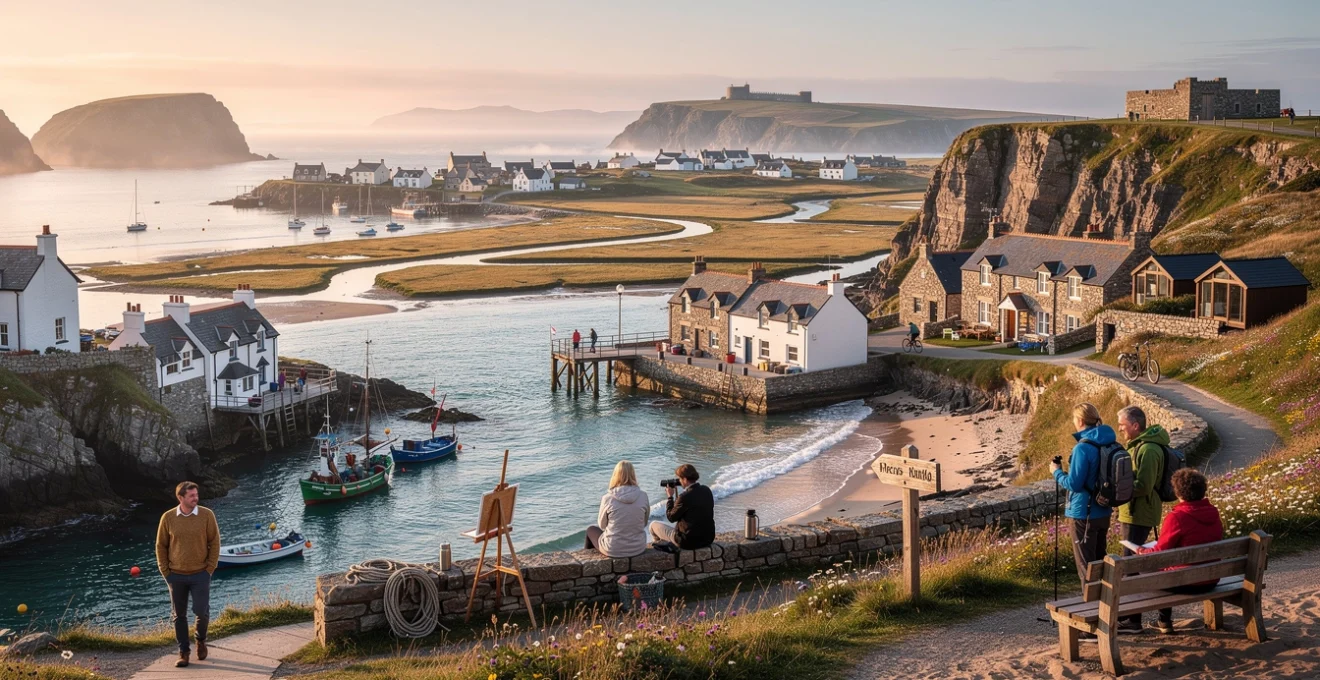
In an era where digital connectivity dominates daily life and urban centres grow increasingly crowded, the allure of remote coastal towns has never been stronger. These secluded maritime communities offer sanctuary from the relentless pace of modern living, providing visitors with authentic experiences rooted in centuries-old traditions. From Scotland’s windswept highlands to Cornwall’s artist colonies, Britain’s coastline harbours numerous hidden gems where time moves to the rhythm of tides rather than traffic lights.
The pursuit of genuine tranquillity has become increasingly valuable as overtourism affects popular destinations worldwide. Remote coastal towns represent the antithesis of mass tourism, offering visitors space to breathe, reflect, and reconnect with nature’s elemental forces. These communities have preserved their distinctive character precisely because they remain off the beaten track, maintaining traditional ways of life that have sustained them for generations.
Recent studies indicate that 73% of travellers now prioritise authentic cultural experiences over conventional tourist attractions, with coastal destinations experiencing a 42% increase in demand for off-grid accommodations. This shift reflects a growing awareness that true restoration comes not from luxury amenities but from genuine encounters with unspoiled landscapes and vibrant local communities.
Celtic coastal retreats: scotland’s remote highland and island sanctuaries
Scotland’s maritime heritage runs deeper than the lochs that pierce its dramatic landscape, creating a tapestry of isolated communities where Gaelic traditions endure alongside stunning natural beauty. The Highland and Island regions contain some of Europe’s most pristine coastal environments, where ancient clan histories merge with contemporary conservation efforts. These remote settlements offer visitors glimpses into Scotland’s soul, far from the tourist trails that dominate Edinburgh and the central belt.
The Scottish coastline extends for over 11,800 miles, creating countless opportunities for solitude and discovery in communities that have remained largely unchanged for centuries.
Isle of skye’s isolated fishing villages: elgol and tarskavaig
Elgol commands breathtaking views across Loch Scavaig towards the jagged Cuillin mountains, creating one of Scotland’s most photographed yet peacefully experienced panoramas. This tiny village at the end of a single-track road offers boat trips to the hidden Loch Coruisk, where Sir Walter Scott found inspiration for his romantic poetry. The community maintains its fishing heritage while welcoming visitors who appreciate dramatic landscapes without commercial development.
Tarskavaig presents an even more secluded alternative, where traditional crofting continues alongside small-scale tourism. The village’s position on Skye’s southern peninsula provides shelter from Atlantic storms while maintaining spectacular sea views. Local families have operated the same businesses for generations, offering authentic Highland hospitality that extends beyond mere accommodation to genuine cultural exchange.
Orkney’s Wind-Swept settlements: stromness and kirkwall’s outlying hamlets
While Stromness and Kirkwall serve as Orkney’s main settlements, the surrounding archipelago contains numerous smaller communities that embody the islands’ distinctive Norse heritage. These hamlets showcase Orkney’s unique position between Scottish and Scandinavian cultures, evident in everything from architectural styles to local dialects. The flat, treeless landscape creates an almost otherworldly atmosphere where prehistoric monuments blend seamlessly with contemporary life.
The outlying islands of Hoy, Rousay, and Westray each harbour small coastal communities that have adapted to harsh maritime conditions while maintaining vibrant social networks. These settlements demonstrate remarkable resilience, with residents often fulfilling multiple roles within their communities. The absence of light pollution makes these locations exceptional for stargazing, earning several areas International Dark Sky status.
Shetland’s Nordic-Influenced coastal communities: lerwick and scalloway
Shetland’s remote position 100 miles north of mainland Scotland has fostered communities with distinctly Nordic characteristics, evident in local architecture, cuisine, and cultural traditions. Lerwick, despite being Shetland’s capital, maintains the intimate scale of a fishing village, while Scalloway offers even greater tranquillity as the islands’ ancient capital. Both towns provide excellent bases for exploring Shetland’s numerous uninhabited islands and archaeological treasures.
The influence of
the sea is apparent in everything from the traditional yoals (wooden boats) bobbing in sheltered harbours to the Up Helly Aa fire festivals that light up the winter darkness. Coastal paths around Lerwick’s Clickimin Broch and Scalloway’s castle ruins reveal layers of Pictish, Norse, and Scottish history within a few kilometres. For those seeking remote coastal towns perfect for a peaceful escape, Shetland offers a rare combination of cultural depth and raw, Atlantic-facing wilderness.
Practical considerations are essential when planning a trip this far north. Ferry crossings from Aberdeen or flights from major Scottish cities can be weather dependent, and accommodation in small coastal communities often books out months in advance during summer. Yet this logistical complexity contributes to the islands’ sense of remoteness and helps prevent the overtourism pressures seen in more accessible destinations. If you are willing to synchronise your plans with ferry timetables and the North Sea’s moods, Shetland rewards you with some of Britain’s most evocative seascapes.
Western isles’ gaelic-speaking enclaves: harris and lewis remote shores
The Western Isles, or Outer Hebrides, stretch like a broken necklace along Scotland’s Atlantic fringe, with Harris and Lewis offering some of the most remote beaches in Europe. Here, communities such as Seilebost, Luskentyre, and Bosta maintain Gaelic as a living language, heard in school playgrounds and village shops rather than preserved only in textbooks. For travellers seeking a truly remote coastal town experience, these settlements provide both cultural immersion and extraordinary natural beauty.
Harris’s west coast is defined by sweeping, pale sand beaches and turquoise waters that often resemble the Caribbean more than the North Atlantic. Yet turn inland and you are greeted by a lunar landscape of rock and heather, reminding you of the islands’ ancient geological origins. On Lewis, smaller townships cluster around sea lochs and inlets, with croft houses dotting the landscape and historic blackhouses preserved as museums. The rhythm of life still follows the seasons, the ferry schedules, and the demands of crofting and fishing.
Sustainable tourism initiatives have gained momentum across Harris and Lewis in the past decade. Community-owned wind farms and local co-operatives help ensure tourism revenue circulates within the islands rather than leaking to distant investors. Visitors are encouraged to follow the Scottish Outdoor Access Code, support independent shops and Harris Tweed weavers, and respect fragile machair ecosystems that protect dunes from erosion. In this way, remote coastal escapes here contribute to the resilience of small Gaelic-speaking communities rather than threatening their traditional ways of life.
Cornwall’s maritime heritage villages and seaside refuges
Cornwall’s reputation as a holiday hotspot often centres on crowded resorts and busy surf beaches, yet its coastline still harbours numerous maritime villages where peace and heritage take precedence over nightlife. These settlements developed around pilchard fishing, tin export, and coastal trade, leaving a legacy of stone harbours, narrow lanes, and distinctive maritime architecture. For those willing to explore beyond the main road network, Cornwall offers remote coastal towns perfect for a peaceful escape, even in high season.
Unlike purpose-built resorts, Cornish fishing villages evolved organically over centuries, adapting to harsh Atlantic swells and precarious livelihoods. The result is a series of sheltered coves and inlets where terraces of former net lofts and captains’ houses watch over compact harbours. Many of these communities now balance traditional maritime culture with carefully managed tourism that prioritises local ownership and coastal conservation. The slower pace of life is immediately apparent: tides dictate activity, and you are more likely to hear the clink of halyards than late-night music.
Poldark country coastal hamlets: charlestown and mousehole
Charlestown, near St Austell, stands as one of Cornwall’s best-preserved Georgian ports, frequently used as a filming location for period dramas including Poldark. Its small, stone-walled harbour and collection of historic tall ships create the impression that time has paused in the early nineteenth century. Despite its cinematic fame, Charlestown has avoided the overt commercialisation that affects some coastal hotspots, maintaining a low-key atmosphere focused on maritime heritage rather than souvenir shops.
Mousehole, close to Penzance, offers a different kind of intimacy: a cluster of granite cottages wrapped tightly around a tiny harbour, where fishing boats rest on the sand at low tide. The village’s labyrinth of lanes, flower-filled window boxes, and sea views at the end of almost every alley make it particularly appealing to travellers seeking a remote-feeling coastal base within reach of services. Instead of large hotels, you will find small guesthouses and self-catering cottages, many converted from former fishermen’s homes.
Visiting these hamlets encourages a slower, more reflective style of travel. You might spend an afternoon simply watching changing light on the water, or walk the South West Coast Path to neighbouring coves in search of seals and seabirds. Car access can be restricted, and parking limited, which naturally reduces visitor numbers and noise. By arriving outside peak midday hours, supporting independent cafés, and respecting residential streets, you help ensure that these historic communities remain tranquil sanctuaries rather than overcrowded attractions.
Artists’ colony destinations: st ives and newlyn’s creative quarters
St Ives is no stranger to international visitors, yet beyond its popular beaches and headline galleries lies a network of quieter backstreets and working studios that retain the town’s artistic soul. Since the early twentieth century, painters and sculptors have been drawn here by the quality of Atlantic light reflecting off pale sand and whitewashed walls. For travellers interested in creative retreats by the sea, exploring St Ives outside peak hours or off-season reveals a surprisingly calm, contemplative side.
Newlyn, a short walk along the coast from Penzance, offers an even more authentic artists’ community atmosphere. Historically one of Cornwall’s busiest fishing ports, it became home to the Newlyn School of painters in the late nineteenth century, who documented everyday coastal life rather than romanticised seascapes. Today, working studios, independent galleries, and community arts projects occupy converted net lofts and harbour-side warehouses, while the fishing fleet continues to land daily catches.
For a slow, culture-focused coastal escape, you can spend mornings exploring cliff paths and afternoons visiting small galleries or taking short courses with local artists. Both St Ives and Newlyn have invested in sustainable transport options, including park-and-ride schemes and improved rail connections, to reduce congestion in their compact centres. By travelling by train where possible and exploring on foot, you not only lower your environmental impact but also experience these creative quarters at the human pace for which they were originally designed.
Smugglers’ cove settlements: boscastle and port isaac
Boscastle and Port Isaac sit in deeply incised valleys on Cornwall’s rugged north coast, long associated with smuggling routes and maritime folklore. High, enclosing cliffs and narrow harbour entrances once provided perfect concealment for contraband; today they help create sheltered, atmospheric villages that feel far removed from busier resorts. Their geography naturally limits expansion, preserving the intimate scale and dramatic vistas that make them ideal for a peaceful escape.
Boscastle is perhaps best known for the devastating flood of 2004, which swept through the village and prompted an award-winning regeneration project led by the National Trust and local stakeholders. The rebuilt harbour area prioritises flood resilience, pedestrian access, and heritage conservation, demonstrating how remote coastal towns can adapt to climate challenges without sacrificing character. Walking the valley from car park to harbour, you move from wooded riverside to open sea in a matter of minutes, accompanied by the sound of water at every stage.
Port Isaac, now widely recognised as the setting for television dramas, still functions as a working fishing village behind the cameras. Its tightly packed cottages and steep streets demand slow, careful movement—visitors soon discover that cars are more hindrance than help. This enforced slowdown becomes part of the appeal: you notice architectural details, stone textures, and shifting sea views that would be invisible at driving speed. For a truly restorative stay, consider visiting outside school holidays, when you can better appreciate the quiet rhythm of boats, tides, and gulls.
Land’s end peninsula hidden gems: sennen cove and porthcurno
At the far western tip of Cornwall, beyond many mainstream tourist routes, lie Sennen Cove and Porthcurno—two small communities framed by some of the county’s most dramatic coastal scenery. Sennen’s sweeping bay faces the full force of the Atlantic, attracting experienced surfers while remaining spacious enough for those seeking solitude on the sand. A handful of cafés and galleries serve both locals and visitors, but the settlement’s scale ensures that the seascape, not commercial signage, dominates your field of vision.
Porthcurno, by contrast, is an intimate, sheltered cove backed by steep cliffs and lush vegetation. Historically crucial as a telegraph hub linking Britain with its overseas territories, it now houses a museum dedicated to global communications history. Above the beach sits the open-air Minack Theatre, carved into the cliffside and overlooking the sea—an extraordinary example of how human creativity can harmonise with a fragile coastal environment. Watching a performance here at sunset can feel like occupying the boundary between land, sea, and sky.
Both Sennen Cove and Porthcurno reward travellers who embrace the principles of slow, low-impact tourism. Public transport links, while limited, are sufficient if you are willing to synchronise your plans with rural bus timetables. Once there, most exploration happens on foot via the South West Coast Path, where you share narrow trails with grazing ponies and nesting seabirds rather than crowds. As climate change increasingly affects exposed Atlantic coasts, visiting responsibly—sticking to waymarked paths, packing out litter, and supporting local conservation charities—becomes an essential part of enjoying these remote coastal refuges.
Welsh coastal path wilderness destinations along pembrokeshire
The Pembrokeshire Coast in southwest Wales combines towering sea cliffs, hidden coves, and small harbour villages that remain remarkably tranquil outside peak school holidays. The 186-mile Pembrokeshire Coast Path stitches these elements together, granting access to remote beaches and headlands that are inaccessible by road. For travellers seeking remote coastal towns perfect for a peaceful escape, this region offers a rare blend of wilderness and welcoming communities.
Settlements such as Solva, Porthgain, Little Haven, and Newport (Trefdraeth) retain the scale and intimacy of working coastal villages while providing essential services for walkers and slow-travel enthusiasts. Colour-washed cottages, compact quays, and cliff-backed beaches create a sense of enclosure against the often-bracing Atlantic winds. Yet even in these small hubs, you are never more than a few minutes’ walk from near-complete solitude on the clifftops.
One of Pembrokeshire’s strengths is its commitment to sustainable tourism. Around 70% of visitors arrive primarily to walk or enjoy nature, according to local authority surveys, which has led to investment in waymarking, public transport, and wildlife conservation rather than large-scale resort development. Seasonal coastal bus services—often called “Puffin”, “Poppit”, or “Strumble”—allow you to walk linear sections of the path without relying on a car. This reduces traffic pressure in narrow lanes and small villages while making low-impact exploration both practical and appealing.
Wildlife encounters add an extra dimension to any Pembrokeshire retreat. Offshore islands such as Skomer and Ramsey, reached from tiny embarkation points like St Justinians and Martin’s Haven, support internationally important seabird colonies and grey seal pupping beaches. From clifftop viewpoints near small communities like Marloes, you can often spot porpoises and gannets without joining a formal tour. The combination of accessible wildlife, small-scale settlements, and expansive seascapes makes Pembrokeshire ideal for those looking to recalibrate away from digital noise.
Norfolk broads and east anglian saltmarsh communities
On England’s east coast, the Norfolk Broads and neighbouring saltmarsh communities in Norfolk and Suffolk offer a very different kind of coastal escape: one defined by wide skies, tidal wetlands, and labyrinthine waterways rather than cliffs and coves. Villages such as Blakeney, Cley-next-the-Sea, Burnham Overy Staithe, and Orford grew up around fishing, trading, and later, bird conservation. Today, they provide gateways to some of the UK’s most significant coastal habitats while retaining an atmosphere of quiet understatement.
The Norfolk Broads themselves comprise over 125 miles of navigable waterways, many edged by reed beds and broad (lake-like) expanses rather than open sea. Riverside villages such as Horning and Ranworth function as small hubs where you can hire electric day boats, stock up at independent shops, and enjoy locally sourced meals before slipping back into the calm of the water network. Here, the sense of remoteness comes less from geographic distance and more from the slower pace imposed by river travel and tidal rhythms.
Along the exposed North Sea coast, the saltmarsh communities offer another form of peaceful retreat. Blakeney and Cley-next-the-Sea overlook vast expanses of tidal flats and creeks managed by conservation organisations as nature reserves. Boardwalks and low-key visitor centres replace amusement arcades, while bird hides stand where other resorts might place beach bars. For those seeking remote coastal towns that prioritise biodiversity and tranquillity, this region’s emphasis on wetland restoration and habitat protection is particularly compelling.
As with other sensitive coastal environments, visitor management plays a crucial role in maintaining balance. Rising sea levels and increased storm surges pose ongoing challenges for East Anglia’s low-lying coastline, requiring a mixture of managed realignment, strengthened defences, and community adaptation. By sticking to marked paths, respecting seasonal dog restrictions on wildlife-rich beaches, and supporting local conservation charities through small donations or membership, visitors become partners in safeguarding these landscapes. In return, they gain access to some of Britain’s most contemplative coastal vistas, where the horizon seems to stretch indefinitely.
Channel islands’ car-free coastal sanctuaries and conservation areas
Located in the English Channel yet closer to the French coast, the Channel Islands offer a unique blend of British, Norman, and maritime cultures. Despite their small size, the islands contain pockets of remarkable tranquillity, particularly in car-free or low-traffic zones. For travellers seeking remote coastal towns perfect for a peaceful escape—without undertaking long-haul flights—these islands provide an attractive compromise between accessibility and seclusion.
Island life naturally encourages slower rhythms: ferry timetables structure movement, tides dictate beach access, and narrower road networks limit high-speed travel. Conservation designations, from marine reserves to UNESCO-recognised biospheres, protect both onshore and offshore habitats. Within this framework, small parishes and coastal hamlets maintain strong community identities, often centred on parish churches, village shops, and harbours where fishing boats still land daily catches.
Sark’s feudal system village life and dark sky designation
Sark stands out among the Channel Islands for its combination of tiny scale, car-free status, and preserved feudal traditions. Motor vehicles are largely prohibited, with transport limited to tractors, bicycles, and horse-drawn carriages, creating an acoustic environment dominated by waves, birds, and wind rather than engines. The main settlement around “The Avenue” consists of a handful of shops, cafés, and guesthouses serving a resident population of only a few hundred people.
Sark’s low levels of artificial light contributed to its designation as the world’s first Dark Sky Island in 2011, making it a premier destination for stargazing in Europe. On clear nights, the Milky Way is visible to the naked eye, and local guides offer astronomy walks that pair celestial observation with island folklore. This emphasis on natural darkness not only benefits visitors but also supports nocturnal wildlife and reduces energy consumption.
Practicalities on Sark reflect its commitment to a low-impact lifestyle. Luggage is transported by tractor from the harbour, and many accommodations encourage longer stays rather than brief stopovers, aligning with slow travel principles. Visitors are gently reminded to conserve water and respect footpaths across privately owned fields, reinforcing the sense that you are a guest in a tightly knit rural community. For those looking to truly disconnect from digital noise and urban intensity, few places in Europe feel as removed yet remain only a short ferry journey from the mainland.
Alderney’s rspb puffin colonies and victorian fort heritage
Alderney, the third-largest of the Channel Islands, combines rugged cliffs, sandy beaches, and a ring of Victorian forts that once formed part of Britain’s coastal defences. Today, its relative isolation—serviced by small aircraft and limited ferry routes—keeps visitor numbers modest, preserving an atmosphere of understated charm. The compact town of St Anne, with its Georgian houses and cobbled streets, serves as the island’s social and commercial heart.
Just offshore lies Burhou, a small islet designated as a bird sanctuary and managed in collaboration with organisations such as the RSPB. During spring and summer, puffins and other seabirds nest on its cliffs and grassy slopes, drawing birdwatchers and conservationists. Boat trips operate under strict guidelines to minimise disturbance, illustrating how remote coastal tourism can support, rather than threaten, vulnerable wildlife populations.
Alderney’s network of coastal paths connects former forts, lighthouses, and secluded bays, allowing you to experience both military heritage and natural beauty in a single circuit. The island’s size makes it feasible to explore on foot or by bicycle, reducing reliance on motor vehicles and reinforcing the sense of a self-contained world apart. For travellers interested in the intersection of history, ecology, and quiet coastal living, Alderney offers an engaging yet peaceful retreat.
Guernsey’s cliff-top parishes: torteval and forest’s coastal walks
On Guernsey, the south coast parishes of Torteval and Forest provide some of the island’s most dramatic seascapes, far removed from the busier harbour area around St Peter Port. High cliffs, interspersed with small coves and headlands, create a coastline best appreciated on foot via the well-maintained cliff path network. Villages and hamlets here tend to be modest in scale, with scattered farmsteads and parish churches rather than dense urban development.
This part of Guernsey is particularly suited to travellers seeking a blend of rural tranquillity and coastal drama. Walking routes pass former observation towers, World War II fortifications, and secluded viewpoints where you can watch fulmars and other seabirds riding updrafts from the cliffs. Despite the relative isolation, you are never far from a tea room or small inn where you can pause, refuel, and chat with locals about seasonal changes and island life.
Guernsey’s government has increasingly recognised the value of its cliff-top parishes for both residents’ wellbeing and sustainable tourism. Investment in path maintenance, signage, and habitat restoration helps balance visitor access with erosion control and wildlife protection. By choosing to stay in smaller guesthouses and scheduling your walks outside the busiest midday periods, you help preserve the serenity that makes these coastal communities so appealing in the first place.
Jersey’s hidden bays: plemont and grève de lecq’s geological features
Jersey, the largest of the Channel Islands, offers a surprising number of quiet corners despite its popularity as a holiday destination. On the north coast, the bays of Plemont and Grève de Lecq stand out for their geological interest and relatively low-key development. High cliffs, sea caves, and rock formations frame sandy beaches that appear and disappear with the substantial tidal range, lending a sense of transience to each visit.
Plemont Bay, accessible via a steep path and steps, feels particularly secluded once you reach the sand. At low tide, caves and rock pools invite exploration, while the surrounding cliffs host nesting seabirds in spring and summer. Grève de Lecq, with its crescent of golden sand and sheltering headlands, offers more immediate access yet remains far quieter than Jersey’s larger resort areas, especially outside school holidays.
These hidden bays highlight the importance of understanding local conditions when exploring remote-feeling coastal environments. Tides can alter beach access dramatically within hours, and winter storms sometimes reconfigure sand levels and paths. Local signage and advice from lifeguards or café owners provide essential, up-to-date information that ensures your peaceful escape remains safe. In return, visitors who respect safety guidance, avoid disturbing wildlife, and support small local businesses help maintain the delicate balance that allows these geologically rich coves to remain both accessible and unspoiled.
Digital detox infrastructure and sustainable tourism practices in remote coastal towns
Across all these destinations—from the Scottish islands to the Channel Islands’ cliff-top parishes—a common thread emerges: remote coastal towns perfect for a peaceful escape increasingly position themselves as sanctuaries from digital overload and environmental stress. Rather than chasing ever-faster connectivity and constant entertainment, many communities are carefully curating forms of tourism that align with their ecological limits and cultural values. This does not mean rejecting technology outright, but using it selectively to enhance, rather than dominate, the visitor experience.
Digital detox offerings often begin with something as simple as limited mobile coverage or deliberately absent televisions in guest rooms. Some accommodations now advertise “signal-light” stays, encouraging guests to use connectivity for essential communication only while focusing on nature, reading, or conversation. Wellness studies suggest that even short breaks from constant notifications can reduce stress levels and improve sleep quality, making these analog interludes as valuable as any spa treatment.
Sustainable tourism practices in remote coastal towns typically fall into three interconnected areas: environmental stewardship, community wellbeing, and economic resilience. Environmentally, initiatives range from coastal path maintenance and dune restoration to marine protected areas and dark sky designations. On the community side, local councils and residents’ groups increasingly set guidelines around parking, waste disposal, and respectful behaviour, ensuring that visitors enhance rather than overwhelm local life.
Economically, the most resilient remote destinations are those that encourage longer stays and repeat visits rather than volume-driven day trips. Small, locally owned accommodations, food producers, and experience providers keep a higher proportion of tourism revenue within the community. By choosing to stay in guesthouses rather than large chains, eat in independent cafés, and join locally operated boat trips or guided walks, you directly support this more sustainable model.
What does this mean in practical terms for your own peaceful coastal escape? It may involve planning further ahead, travelling outside peak dates, and accepting slower transport options such as ferries or rural buses. It may also mean adjusting expectations: embracing variable weather, limited nightlife, and patchy mobile coverage as assets rather than inconveniences. In return, you gain something increasingly rare—a sense of genuine immersion in place, where the rhythm of tides, local conversations, and changing light replaces the constant pulse of notifications.
As demand for authentic, low-impact travel continues to grow, these remote coastal towns stand at a crossroads. With thoughtful visitor choices and carefully managed infrastructure, they can remain sanctuaries of calm and culture in an increasingly fast-paced world. By approaching them with curiosity, respect, and a willingness to slow down, you become part of the story of preservation rather than of pressure—helping to ensure that these quiet harbours, wild headlands, and hidden coves endure for generations to come.