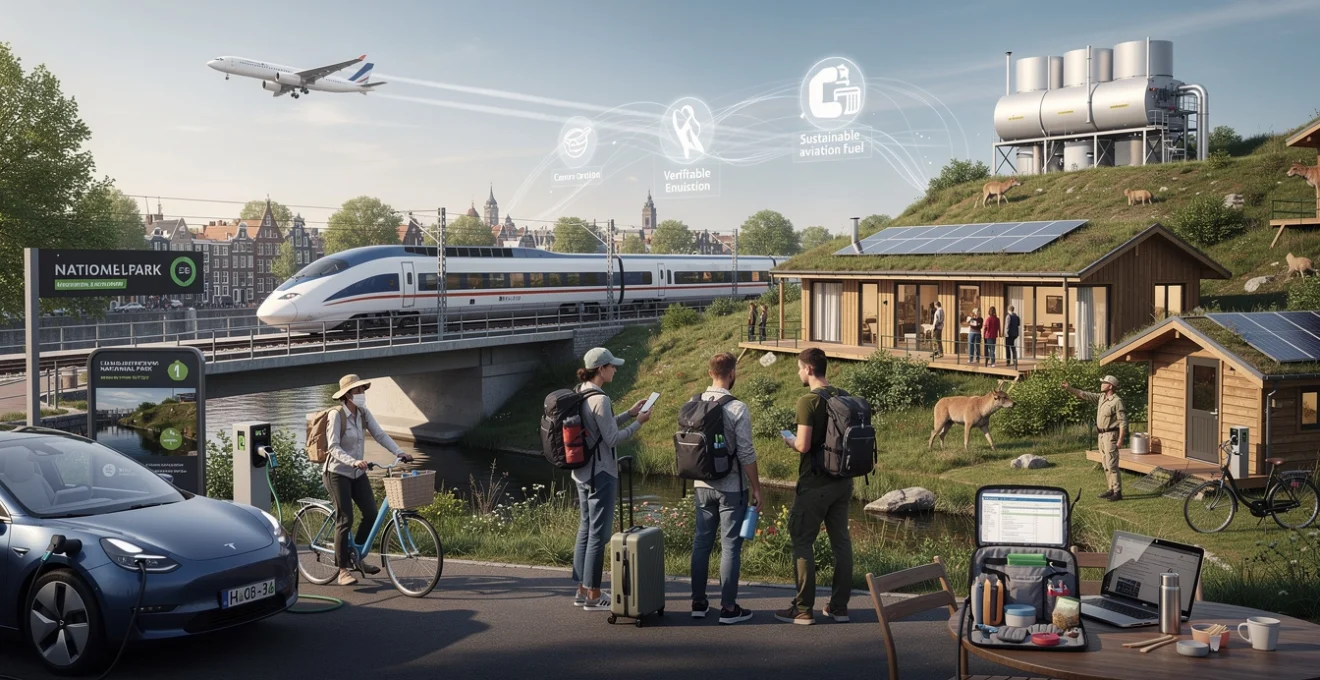
# Eco-friendly travel habits that reduce your footprint
The travel industry stands at a critical juncture where the pursuit of exploration must align with environmental responsibility. With global tourism generating approximately 8% of worldwide carbon emissions, the choices you make as a traveller carry significant environmental weight. The concentration of atmospheric carbon dioxide has surpassed 400 parts per million—levels unprecedented in 800,000 years—making sustainable travel practices not merely optional, but essential for planetary health. As 2024 marked the first year to exceed the 1.5°C warming threshold, implementing eco-friendly travel habits has transformed from a niche preference into an urgent necessity for anyone who values both discovery and environmental stewardship.
The transition towards sustainable tourism doesn’t require sacrificing comfort or adventure. Instead, it demands thoughtful decision-making across every aspect of your journey—from the moment you select your destination to the final miles of your return home. Modern eco-conscious travellers recognise that reducing their carbon footprint enhances rather than diminishes the travel experience, fostering deeper connections with local communities and creating more meaningful encounters with the natural world.
Carbon offsetting programmes and verified aviation emissions reduction
Aviation remains one of tourism’s most carbon-intensive components, with a single long-haul flight potentially generating more emissions than an individual driving a petrol car for an entire year. However, carbon offsetting programmes provide mechanisms for travellers to compensate for unavoidable flight emissions through investments in verified environmental projects. Understanding the landscape of certification standards and technological innovations helps you navigate these options effectively.
Gold standard and verified carbon standard certification mechanisms
Not all carbon offset programmes deliver equal environmental value. The Gold Standard and Verified Carbon Standard (VCS) represent the industry’s most rigorous certification mechanisms, ensuring your offset contributions fund genuinely impactful projects. Gold Standard certification requires projects to demonstrate sustainable development benefits beyond carbon reduction, supporting initiatives like renewable energy infrastructure in developing nations or community-based reforestation programmes. VCS certification focuses specifically on quantifiable greenhouse gas reductions, employing stringent monitoring protocols to verify actual emissions eliminated or sequestered.
When selecting offset programmes, you should examine the project types supported. Direct emissions reduction through renewable energy typically delivers more immediate impact than long-term sequestration projects, though both contribute meaningfully to climate mitigation. The transparency of reporting mechanisms also matters considerably—reputable programmes provide detailed documentation about how your offset contributions translate into tangible environmental outcomes.
Atmosfair and MyClimate calculator methodology for flight compensation
Calculating accurate flight emissions requires sophisticated methodology that accounts for aircraft type, route efficiency, altitude effects, and passenger load factors. Atmosfair and MyClimate have emerged as leading platforms offering precise emission calculations and verified offset opportunities. Atmosfair employs comprehensive data models incorporating the radiative forcing index—a measurement reflecting aviation’s full climate impact beyond carbon dioxide alone, including contrails and nitrous oxide emissions at high altitude.
MyClimate’s calculator methodology distinguishes between economy, business, and first-class travel, recognising that premium cabin passengers shoulder proportionally larger carbon responsibility due to increased space allocation. This granular approach ensures your offset contributions accurately reflect your actual environmental impact. Both platforms direct funds toward Gold Standard certified projects, ranging from biogas facilities in Nepal to solar cooking programmes in Madagascar, demonstrating how your offset investment supports global climate solutions.
Sustainable aviation fuel adoption by british airways and KLM
While carbon offsetting addresses current emissions, sustainable aviation fuel (SAF) represents the industry’s pathway toward decarbonisation. British Airways and KLM have positioned themselves as European leaders in SAF adoption, though widespread implementation remains years away. SAF produced from waste oils, agricultural residues, or synthetic processes can reduce lifecycle emissions by up to 80% compared to conventional jet fuel, though current production capacity meets less than 0.1% of global aviation demand.
British Airways has committed to purchasing sufficient SAF to power 10% of flights departing London by 2030, whilst KLM offers passengers the option to purchase SAF surcharges at booking. These initiatives demonstrate industry movement toward cleaner fuel technology, though the premium costs—currently three to five times conventional fuel prices—present significant scaling challenges. Your choice to support airlines investing in SAF sends market signals that acceler
ates innovation and encourages broader adoption across the aviation sector.
As a traveller, you can prioritise airlines that publish clear roadmaps for sustainable aviation fuel adoption and participate in SAF programmes, even if they currently represent a small fraction of total fuel use. Consider combining fewer, longer trips with airlines investing in SAF to maximise the benefits of your flying. While sustainable aviation fuel alone will not solve aviation’s climate problem, supporting its early deployment is a pragmatic step in aligning your air travel with eco-friendly travel habits that reduce your footprint over the long term.
Direct air capture technology investment through climeworks partnerships
Beyond traditional offsets and cleaner fuels, a new frontier in aviation emissions reduction involves direct air capture (DAC) technology. Companies such as Climeworks use large-scale fans and chemical filters to remove carbon dioxide directly from the atmosphere, permanently storing it underground or utilising it in industrial processes. Several airlines and travel platforms now offer the option to channel part of your flight surcharge into DAC projects, positioning this as a premium, high-integrity form of climate action.
Direct air capture remains expensive today—often exceeding £500 per tonne of CO₂ removed—yet early investment is crucial to driving down costs, much like the early days of solar photovoltaics. When you choose DAC-based compensation, you are not just neutralising your current emissions; you are helping to build a future technology stack that could be essential for meeting net-zero targets. Think of it as contributing to the “moonshot” of climate mitigation, complementing more established carbon offsetting programmes.
To make informed decisions, look for travel providers that publish transparent partnerships with DAC companies and provide third-party verification of removal volumes. You might also combine smaller DAC contributions with more affordable Gold Standard offsets, creating a diversified portfolio of climate actions linked to your flights. This layered approach reflects the reality that there is no single silver bullet, only a suite of complementary tools that, used together, can meaningfully reduce the climate impact of aviation.
Low-impact accommodation selection through green certification standards
Once you arrive at your destination, your choice of accommodation can significantly influence your overall travel footprint. Hotel energy use, water consumption, and waste generation all contribute to the carbon intensity of your stay, with an average hotel night responsible for roughly 30kg of CO₂ emissions. By prioritising low-impact accommodation with recognised green certification standards, you can turn an unavoidable part of travel into a positive force for sustainability.
Green-certified hotels often go beyond simple towel reuse programmes, integrating energy-efficient design, renewable power, and responsible sourcing practices into their operations. These properties not only reduce emissions, but frequently provide a more comfortable and healthier indoor environment for guests. The challenge, of course, lies in distinguishing genuine sustainability from superficial “greenwashing”—and that is where robust certification systems such as LEED, BREEAM, EarthCheck, and Green Key come into play.
LEED and BREEAM certified hotels in european destinations
LEED (Leadership in Energy and Environmental Design) and BREEAM (Building Research Establishment Environmental Assessment Method) are two of the world’s most widely recognised green building standards. Originally developed for commercial and residential buildings, they are increasingly applied to hotels and resorts, particularly in urban centres across Europe. A LEED- or BREEAM-certified property has been independently assessed on criteria such as energy efficiency, indoor air quality, water conservation, and materials sourcing.
When you filter for LEED or BREEAM certified hotels in cities like London, Berlin, or Stockholm, you are essentially selecting buildings that have been designed to minimise operational emissions over their lifetime. This might include triple-glazed windows, high-performance insulation, efficient HVAC systems, and advanced building management technology that optimises energy use in real time. The result is often a quieter, more thermally comfortable room, so your eco-friendly accommodation choice also improves your stay experience.
To integrate these standards into your trip planning, check hotel websites for explicit references to LEED or BREEAM certification levels (such as LEED Gold or BREEAM Excellent), and cross-reference where possible with the certifiers’ public project databases. If no certification is listed, but the hotel markets itself as sustainable, consider contacting the property directly to ask about its energy sources, waste management practices, and any external audits. Your questions send a clear signal that sustainability matters to guests, nudging more properties to pursue verifiable green building credentials.
Earthcheck and green key eco-label verification systems
Beyond building-focused certifications, tourism-specific eco-labels such as EarthCheck and Green Key provide holistic assessments of operational sustainability in hotels, resorts, and attractions. EarthCheck, for instance, evaluates properties on energy and water use, waste management, community engagement, and biodiversity protection, benchmarking them against global best practice. Green Key, widely used across Europe, applies similar criteria, requiring regular third-party audits and continuous improvement commitments.
These verification systems help you quickly identify hotels that integrate eco-friendly travel habits into daily operations, from sourcing renewable electricity to eliminating single-use plastics in guest rooms. Many EarthCheck and Green Key properties also support local conservation initiatives or partner with nearby communities, ensuring tourism revenues flow back into environmental and social projects. Staying at such properties allows you to align your holiday budget with destinations and operators that take sustainability seriously.
When booking, look for the EarthCheck or Green Key logos on accommodation pages and verify them by visiting the respective programme websites, which often feature searchable directories. You can also use booking platforms that allow filtering by eco-label or sustainability certification. If a property touts membership but you cannot find it listed in official directories, that may be a red flag indicating weak verification or outdated claims—another reminder to approach sustainability marketing with a critical eye.
Regenerative tourism properties using passive house design principles
Regenerative tourism goes a step beyond sustainability by aiming to leave destinations better than they were before. One architectural expression of this philosophy is the use of Passive House design principles in eco-lodges and small hotels. Passive House buildings are meticulously engineered to minimise energy demand through super-insulation, airtight construction, and heat recovery ventilation, often reducing heating and cooling needs by up to 90% compared to conventional structures.
In alpine regions of Austria, Switzerland, and northern Italy, for example, a growing number of guesthouses and mountain lodges are adopting Passive House standards to ensure year-round comfort with minimal energy input. These properties frequently pair high-performance envelopes with on-site renewables, such as rooftop solar panels or small-scale hydro systems, moving towards net-zero or even net-positive energy production. Staying in such accommodation is a tangible way to experience what low-carbon living can feel like in practice.
As a traveller, you can seek out regenerative tourism properties that explicitly mention Passive House certification or similar ultra-low-energy design frameworks. Combining these design strategies with landscape restoration projects, native planting, and local food sourcing, these businesses aim not just to reduce harm, but to actively repair ecosystems. Choosing them is akin to voting for a future where tourism is a tool for regeneration rather than degradation—an aspiration many environmentally conscious travellers increasingly share.
Off-grid accommodation with solar photovoltaic and greywater recycling
For destinations outside major cities, off-grid accommodation offers another compelling option for eco-friendly travel. Cabins, eco-pods, and remote lodges powered by solar photovoltaic (PV) systems, battery storage, and sometimes small wind turbines can operate with little or no connection to fossil-fuel-based grids. Many also incorporate greywater recycling, composting toilets, and rainwater harvesting, dramatically reducing pressure on local water resources and sewage infrastructure.
These properties function like living laboratories for sustainable living, giving you firsthand experience of resource-conscious design. For example, knowing that your hot water is solar-heated or that your shower water will be filtered and reused for irrigation often encourages more mindful consumption. The limitations of off-grid systems—such as finite battery capacity—can actually enhance your appreciation for energy, much like travelling with limited luggage makes you reconsider what you truly need.
When researching off-grid stays, look for detailed descriptions of energy systems, water treatment, and waste management, rather than vague references to being “eco” or “nature friendly.” Verified eco-certifications, transparent technical information, and clear guest guidelines on responsible use are strong indicators that the property takes its sustainability commitments seriously. By choosing such accommodation, you align your holiday with low-impact infrastructure while enjoying immersive natural settings, from forest retreats to coastal cabins.
Multimodal transport networks prioritising rail and electric mobility
Transport is usually the largest contributor to a trip’s carbon footprint, especially when flights or car-heavy itineraries are involved. Shifting towards multimodal transport networks that prioritise rail, buses, cycling, and electric mobility can dramatically cut emissions while enriching your travel experience. Instead of viewing the journey as a necessary inconvenience, you can treat it as a core part of your eco-friendly travel adventure.
Across Europe and many other regions, integrated ticketing systems, real-time journey planners, and growing rail connectivity make it easier than ever to travel without relying on domestic flights or solo car use. By combining high-speed trains with regional rail, trams, electric buses, and bike-sharing, you can move between cities and into rural landscapes with a minimal carbon footprint. The key is to plan ahead, using smart routing tools to map out low-carbon options before you depart.
Eurostar and intercity express routes for continental travel
Eurostar and Intercity Express (ICE) networks exemplify how rail can replace short- and medium-haul flights for low-carbon continental travel. Eurostar connects London with Paris, Brussels, and Amsterdam via high-speed lines, producing up to 90% fewer emissions than flying the same routes. From these hubs, you can transfer onto ICE or other high-speed services to reach cities such as Cologne, Frankfurt, Berlin, and Munich without ever stepping onto a plane.
Planning your itinerary around rail corridors may require a slight mindset shift. Instead of hopping on a 90-minute flight, you might opt for a 4–6 hour train journey that offers city-centre to city-centre convenience, workspace-friendly seating, and scenic views. For many routes under 1,000km, total door-to-door time is often comparable once you factor in airport transfers and security queues. The added benefit is that travelling by train tends to be less stressful and more productive, making your eco-friendly choice also a quality-of-life upgrade.
To take full advantage of high-speed and intercity rail, book flexible tickets early, explore rail passes where available, and use journey planners that highlight low-emission travel options. You can also combine overnight sleeper services—such as those expanding across Austria, Germany, and Scandinavia—with daytime exploration, turning what used to be a flight and hotel night into a comfortable, carbon-efficient train ride.
Electric vehicle charging infrastructure in national parks and heritage sites
For destinations where public transport is limited, especially rural areas and national parks, electric vehicles (EVs) can provide a lower-emission alternative to conventional car hire. Across the UK, mainland Europe, and North America, many national parks and UNESCO World Heritage Sites are investing in EV charging infrastructure in car parks, visitor centres, and gateway towns. This expansion makes electric road trips increasingly practical for eco-conscious travellers.
Driving an EV through sensitive landscapes such as the Lake District, the Scottish Highlands, or the Dolomites reduces local air pollution and tailpipe emissions, helping protect fragile ecosystems already stressed by climate change. Some parks also integrate EV-only zones or discounted parking for low-emission vehicles, nudging visitors towards cleaner options. When combined with park-and-ride schemes and shuttle buses, EV use can significantly cut congestion and emissions in popular nature destinations.
To leverage this infrastructure, choose rental companies that offer electric or plug-in hybrid models and check charging networks in advance using mapping apps or provider websites. Bringing your own Type 2 charging cable, familiarising yourself with regional charging standards, and planning for slightly longer rest stops at fast chargers will help keep your journey smooth. Over time, as charging becomes as ubiquitous as fuel stations, EV-based tourism is likely to become the default rather than the exception.
Bike-sharing schemes in amsterdam, copenhagen, and barcelona
At the urban scale, bike-sharing schemes offer one of the simplest and most enjoyable ways to reduce your travel footprint. Cities such as Amsterdam, Copenhagen, and Barcelona have built extensive cycling infrastructures, pairing dedicated lanes and traffic-calming measures with publicly accessible bikes. Using these systems, you can navigate city centres quickly, avoid congestion, and experience local life at a human pace, all while generating zero tailpipe emissions.
Amsterdam’s bike culture is world-renowned, with dense networks of cycle paths and a vast supply of rental and shared bikes enabling residents and visitors alike to embrace car-free city exploration. Copenhagen’s city bikes often include integrated GPS and adjustable seats, making them accessible for a wide range of riders. Barcelona’s Bicing system, combined with its growing network of cycle lanes and coastal routes, provides a practical alternative to taxis or hire cars for many journeys.
When tapping into bike-sharing, familiarise yourself with local cycling rules and etiquette, such as right-of-way norms and helmet requirements. Plan routes along segregated lanes where possible, and combine cycling with public transport to cover longer distances comfortably. Not only will you be cutting your emissions, but you will likely discover neighbourhoods, parks, and waterfronts that you would have missed from behind a windscreen or metro window.
Circular economy principles in travel gear and single-use plastic elimination
Eco-friendly travel is not only about how you move and where you stay; it also involves what you bring with you. The global fashion and gear industries are major drivers of resource extraction, waste, and emissions, with fast fashion alone responsible for an estimated 10% of global carbon output. Applying circular economy principles to your travel gear—prioritising durability, repairability, and reuse—can dramatically reduce waste while simplifying your packing list.
Instead of buying a new wardrobe or set of travel accessories for each trip, focus on high-quality items designed to last, ideally made from recycled or bio-based materials. Renting or borrowing specialised gear, such as ski equipment or technical outerwear, can also cut down on seldom-used purchases. Think of your luggage as a curated toolkit rather than a revolving door of disposable items; every piece should earn its place by fulfilling multiple roles over many journeys.
Single-use plastic elimination is a core aspect of this shift. By travelling with a refillable water bottle, collapsible coffee cup, compact cutlery set, and lightweight shopping bag, you can avoid the vast majority of disposable packaging encountered on the road. Solid toiletries—such as shampoo bars, soap bars, and toothpaste tablets—reduce the need for mini plastic bottles and are often easier to carry through airport security. Over the course of a year, these small adjustments can prevent dozens, if not hundreds, of plastic items from entering landfill or the ocean.
To embed circularity more deeply into your travel routine, consider repairing gear rather than replacing it, choosing brands that offer take-back or recycling programmes, and buying second-hand where appropriate. When you do need to dispose of items, seek recycling streams at home or at your destination, and avoid leaving unwanted gear behind in hotels or hostels. By normalising reuse and repair, you help shift the culture of travel away from convenience-based consumption towards thoughtful, low-impact habits.
Wildlife conservation tourism and community-based ecotourism models
Tourism can put severe pressure on wildlife and ecosystems, but when managed responsibly, it can also provide powerful incentives for conservation. Wildlife conservation tourism and community-based ecotourism models channel visitor spending into habitat protection, anti-poaching efforts, and local livelihoods, aligning economic incentives with environmental stewardship. The key difference between these models and conventional mass tourism is that conservation and community benefit are embedded in the business model, not treated as afterthoughts.
In Costa Rica, for example, small-scale eco-lodges operating near cloud forests and coastal reserves contribute park fees, employ local guides, and support biological research, helping to justify the preservation of intact ecosystems rather than their conversion to agriculture. Similarly, in Guyana’s interior, Indigenous-owned lodges such as Rewa Eco-Lodge and Surama Eco-Lodge enable visitors to experience biodiverse rainforests while funding community projects and reinforcing land rights. By choosing such destinations, you help ensure that wild habitats are worth more alive than degraded.
When evaluating wildlife-focused experiences, look for operators that cap group sizes, maintain safe distances from animals, and adhere to recognised guidelines, such as the International Union for Conservation of Nature (IUCN) best practices. Avoid attractions that involve direct contact with wild animals, such as elephant riding or unregulated feeding, as these often harm animal welfare and can disrupt natural behaviours. Instead, opt for guided hikes, responsible safaris, or snorkelling tours that prioritise minimal disturbance and robust safety briefings.
Community-based ecotourism places local people at the centre of decision-making and profit-sharing. You can support these models by booking homestays, locally guided tours, and community-owned lodges, asking questions about who owns the business and how revenue is distributed. Paying fair prices, buying locally made crafts rather than imported souvenirs, and showing respect for cultural norms all help strengthen the social fabric that underpins successful conservation. In this way, your eco-friendly travel habits become part of a wider movement towards justice-oriented, regenerative tourism.
Digital nomad practices for extended stays and reduced flight frequency
The rise of remote work has created new possibilities for aligning travel with climate responsibility. Instead of taking multiple short breaks each year, many professionals now combine work and exploration by staying longer in a single destination. This digital nomad lifestyle can significantly reduce flight frequency and associated emissions if approached thoughtfully, turning what might have been four weekend city breaks into one extended, low-impact stay.
From a carbon perspective, fewer take-offs and landings generally mean lower emissions, even if your individual trips are slightly longer. By settling into a destination for several weeks or months, you also gain the opportunity to travel predominantly by foot, bike, or public transport, further reducing your footprint through slow travel strategies proven both cheaper and more rewarding. The slower pace encourages deeper engagement with local culture, language, and community, often leading to a more fulfilling experience than a whirlwind tour of multiple countries.
Practically, eco-conscious digital nomads can choose co-living and co-working spaces that prioritise renewable energy, waste reduction, and fair labour practices. Renting an apartment in a walkable neighbourhood with good public transport links allows you to run most errands without a car, while supporting local markets and independent restaurants keeps your economic impact embedded in the community. Think of yourself less as a transient visitor and more as a short-term resident with responsibilities to your temporary home.
Of course, long-term stays also raise questions around housing pressure, gentrification, and local infrastructure strain, particularly in popular “workation” hubs. To minimise negative impacts, research destinations that explicitly welcome remote workers, respect local regulations around tourist rentals, and avoid contributing to overtourism hotspots during peak seasons. By being transparent with hosts, paying local taxes where required, and engaging respectfully with neighbours, you can help ensure that the digital nomad trend supports rather than undermines sustainable development goals.