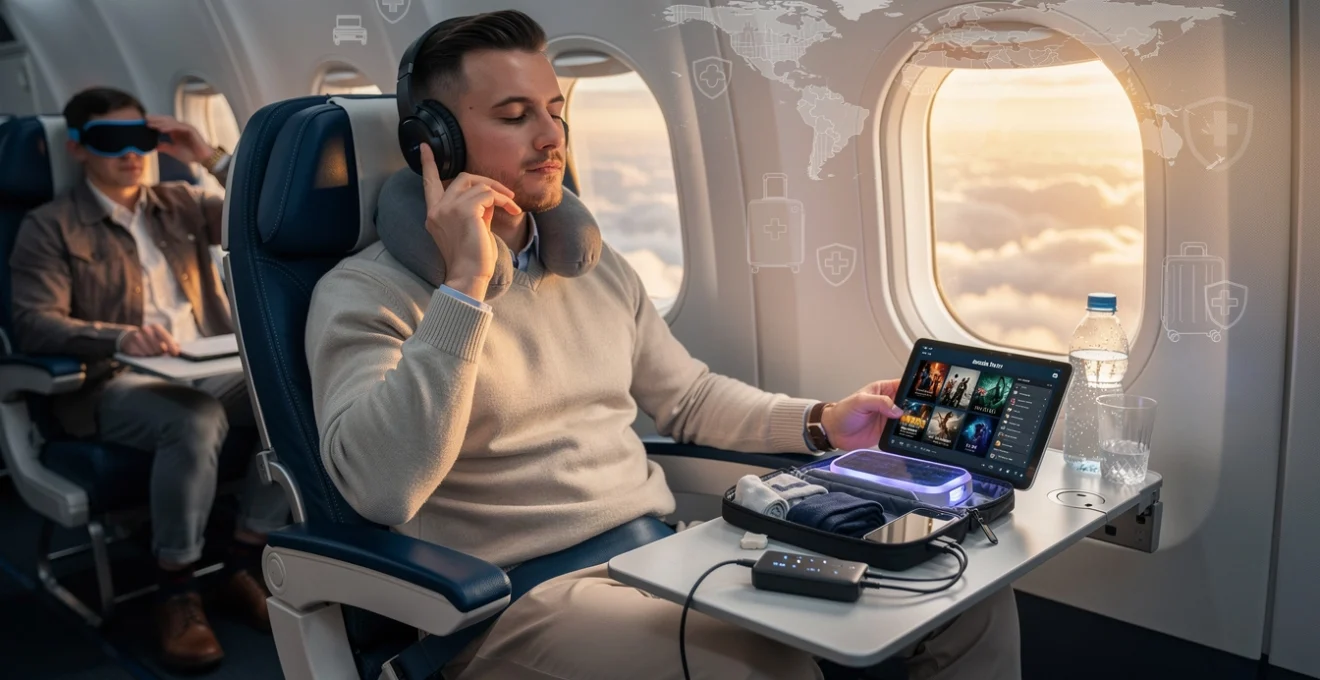
Modern travel presents unique physiological and psychological challenges that can transform even short journeys into endurance tests. Whether you’re facing a transcontinental flight, an extended road trip, or navigating multiple transport connections, the human body experiences stress from prolonged sitting, cabin pressure changes, dehydration, and circadian rhythm disruption. Understanding the science behind travel discomfort enables you to implement targeted strategies that address each challenge systematically. From ergonomic equipment selection to advanced chronotherapy protocols, comprehensive comfort optimisation transforms travel from a necessary evil into a manageable, even enjoyable experience.
Pre-journey ergonomic planning and equipment selection
The foundation of comfortable travel begins long before you board your transport. Strategic equipment selection based on biomechanical principles can prevent common travel-related discomfort and maintain physical wellbeing throughout extended journeys. Consider your specific travel duration, seating configuration, and personal comfort requirements when assembling your travel kit.
Memory foam travel pillow configuration for cervical support
Traditional horseshoe-shaped travel pillows often fail to provide adequate cervical spine alignment, leading to neck strain and headaches. Advanced memory foam pillows with contoured designs address this issue by maintaining the natural curve of your cervical spine during sleep. Look for pillows with temperature-sensitive memory foam that adjusts to your body heat, providing customised support that reduces pressure points by up to 40% compared to standard designs.
The optimal pillow should feature a higher posterior section to support the base of your skull and graduated thickness that tapers towards the front. This configuration prevents your head from falling forward while maintaining proper spinal alignment. Quality models incorporate cooling gel inserts to prevent overheating and washable covers for hygiene maintenance during extended travel periods.
Compression sock sizing and gradient pressure technology
Medical-grade compression socks utilise graduated pressure technology to enhance venous return and reduce the risk of deep vein thrombosis during prolonged sitting. The ideal compression level for travel ranges between 15-20 mmHg at the ankle, gradually decreasing towards the knee. This pressure gradient facilitates blood circulation by counteracting the effects of gravity and prolonged immobility.
Proper sizing remains crucial for effectiveness. Measure your ankle circumference at its narrowest point and calf circumference at its widest point to ensure optimal fit. Incorrectly sized compression socks can create tourniquet effects that impede circulation rather than enhance it. Premium models incorporate moisture-wicking fabrics and antimicrobial treatments to maintain comfort during extended wear periods.
Lumbar support cushion specifications for extended seating
Standard transport seating rarely provides adequate lumbar support, leading to lower back pain and postural fatigue. Ergonomic lumbar cushions should maintain the natural S-curve of your spine while distributing pressure evenly across the lower back region. The optimal cushion thickness ranges between 3-4 inches, with firm yet responsive foam that doesn’t compress completely under body weight.
Advanced models feature adjustable straps that secure the cushion to your seat, preventing migration during movement. Memory foam cores with gel cooling layers provide temperature regulation while maintaining supportive properties. Studies indicate that proper lumbar support can reduce spinal compression forces by up to 30% during extended sitting periods.
Noise-cancelling headphone decibel reduction analysis
Active noise cancellation technology reduces ambient noise levels by 20-30 decibels, significantly improving comfort in noisy transport environments. The most effective models combine passive isolation through over-ear designs with active cancellation that targets low-frequency sounds below 1000 Hz. This dual approach eliminates engine noise, air conditioning hum, and other consistent background sounds that cause listening fatigue.
Battery life considerations become critical during long journeys. Premium models offer 20-30 hours of active noise cancellation with quick-charge capabilities that provide several hours of use from brief charging sessions. Wireless connectivity with multiple device pairing allows seamless switching between entertainment devices without connection interruptions.
In-transit physiological comfort optimisation techniques
Once your journey begins, implementing specific physiological
Once your journey begins, implementing specific physiological comfort optimisation techniques allows you to offset the stress that long periods of sitting, low humidity, and restricted movement place on your body. Rather than relying on the airline or transport operator to manage your comfort, you can follow a simple protocol that keeps your circulation, hydration, and core temperature in a healthy range throughout the trip.
Deep vein thrombosis prevention through calf muscle activation
Prolonged immobility is a major risk factor for deep vein thrombosis (DVT), especially on flights longer than four hours. When you sit still, blood flow in the lower legs slows and small clots can form in the deep veins, particularly if you are dehydrated or have additional risk factors such as age over 60, recent surgery, or pregnancy. Research from the World Health Organization suggests that long-haul air travel can increase DVT risk two- to fourfold, but simple movement strategies significantly reduce this risk.
Think of your calf muscles as a “second heart” that pumps blood back toward your torso every time they contract. Activate this pump every 30–45 minutes by performing ankle circles, heel raises (press your toes into the floor and lift your heels), and toe raises (lift your toes while your heels stay grounded) for 30–60 seconds at a time. Whenever it is safe to do so, stand up and walk the aisle for a few minutes; even a short walk to the restroom and back provides meaningful circulatory benefits. Combine these exercises with properly fitted compression socks for a layered approach to DVT prevention that is both practical and discreet.
Circadian rhythm regulation using light therapy devices
One of the most disruptive aspects of long-distance travel is circadian rhythm misalignment, commonly known as jet lag. Your internal body clock is regulated primarily by light exposure, particularly blue-enriched light in the morning and darkness in the evening. When you cross multiple time zones quickly, your brain receives conflicting signals about when to feel awake or sleepy, leading to fatigue, mood changes, and impaired concentration for several days.
Portable light therapy devices and light-blocking tools allow you to “coach” your circadian system into alignment with your destination more quickly. Compact light therapy panels or visor-style devices emitting 2,000–10,000 lux can be used in the morning (destination time) for 20–30 minutes to advance your body clock when travelling east. Conversely, carefully timed use of dark sunglasses and a quality sleep mask helps delay your clock when travelling west by shielding your eyes from bright light at the wrong time. By starting this light management protocol one to two days before departure, you can often reduce jet lag duration by half, making your entire journey more comfortable.
Hydration strategy implementation during cabin pressurisation
Cabin air on commercial flights typically has a relative humidity of 10–20%, which is drier than most deserts. In this environment, your body loses water more quickly through respiration and skin evaporation, yet many travellers still underestimate their hydration needs. Even a 1–2% drop in body water can impair cognitive performance and increase perceptions of fatigue, making your journey feel longer and more draining than it needs to be.
A structured hydration strategy counters these effects without forcing you to visit the restroom every 20 minutes. As a rule of thumb, aim to drink 200–250 ml of water every hour of flight, adjusting for your body size and thirst levels. To support electrolyte balance, alternate plain water with a low-sugar electrolyte tablet or powder every 3–4 hours, particularly on ultra-long-haul routes. Minimise diuretic beverages such as alcohol and high-caffeine drinks; if you choose to consume them, match each serving with an equivalent or greater volume of water. Carrying a refillable bottle and politely asking cabin crew for top-ups ensures you maintain this rhythm throughout the journey.
Strategic seat selection based on aircraft configuration data
Where you sit can influence everything from noise exposure and turbulence perception to sleep quality and ease of movement. Modern aircraft configuration data, available through airline websites and independent seat map tools, allows you to choose seats based on objective comfort factors rather than guesswork. This is particularly useful for travellers who are tall, have back issues, or simply want to reduce the stress of a long flight.
Front-of-cabin seats typically experience slightly less engine noise and vibration, while seats over the wing often provide a more stable ride in turbulence. Aisle seats enable easier access for walking and stretching, which is crucial for DVT prevention and joint comfort, whereas window seats offer better head support and control over light exposure for sleep. When you review the seat map, look for rows with reduced seat-back recline (often in front of exit rows) and avoid them if you plan to sleep. By combining aircraft configuration data with your personal priorities—mobility, quiet, sleep, or legroom—you can create a seat selection strategy that makes every journey more comfortable before you even board.
Temperature regulation through layered clothing systems
Transport environments, especially aircraft cabins, are notorious for temperature fluctuations. You might board in warm conditions, only to find the cabin air uncomfortably cold at cruising altitude. Relying solely on a thin airline blanket often leaves you either shivering or overheating, which makes rest and relaxation more difficult. A deliberate layered clothing system solves this problem efficiently without adding excessive weight to your carry-on.
Start with a breathable base layer made from moisture-wicking fabrics such as merino wool or technical synthetics, which help regulate skin temperature and minimise odour on long journeys. Add a mid-layer—such as a lightweight fleece or thin insulated jacket—for warmth, and carry a large scarf or wrap that can double as an extra blanket. Finally, choose outerwear that is easy to remove and compress, such as a packable down jacket, so you can adapt quickly when moving between the aircraft, terminal, and outdoor environments. By thinking of your clothing like a thermostat with multiple settings, you maintain thermal comfort without relying on unpredictable cabin conditions.
Digital comfort enhancement through technology integration
Beyond physical ergonomics, digital tools now play a central role in making travel more comfortable. With thoughtful planning, you can ensure uninterrupted entertainment, reduced eye strain, reliable device power, and secure connectivity wherever your journey takes you. Instead of scrambling for Wi‑Fi passwords and power outlets, you travel with a self-contained digital ecosystem designed for comfort and resilience.
Offline entertainment curation using cloud storage solutions
Nothing makes a long delay or overnight flight feel longer than running out of things to watch, read, or listen to. Relying on in-flight entertainment alone is risky; content libraries vary widely between airlines and aircraft, and system glitches are not uncommon. By curating your own offline entertainment in advance and leveraging cloud storage, you have a personalised media library ready regardless of connectivity.
Before departure, create playlists, download podcasts, save e-books, and store key files in a cloud service that syncs to your phone or tablet. Many streaming platforms now allow temporary offline downloads; use this feature to queue several hours of your favourite series or films in high quality, then verify that each file opens without an internet connection. Organise content into folders such as “Relax,” “Focus,” and “Sleep” so you can quickly choose what matches your energy level mid-journey. This simple preparation can turn a cramped seat into a customised entertainment hub that makes time pass far more quickly.
Blue light filter applications for reduced eye strain
Extended screen time on planes, trains, or buses often leads to dry eyes, headaches, and sleep disruption. Much of this discomfort stems from prolonged exposure to blue light emitted by digital displays, particularly in dimly lit cabins where your pupils are more dilated. Blue light, which is similar in wavelength to midday sunlight, can also suppress melatonin production, making it harder to fall asleep during or after your journey.
Blue light filter applications and system settings help mitigate this issue by shifting your screen’s colour temperature to warmer tones, especially in the evening. Most smartphones, tablets, and laptops now include built-in “night mode” or “comfort view” features; enable these on a schedule aligned with your destination’s evening hours. For added protection, especially if you work extensively on your device while travelling, consider blue light–blocking glasses that filter out part of the high-energy visible spectrum. Combining software filters with regular screen breaks—such as following the 20-20-20 rule (every 20 minutes, look at something 20 feet away for 20 seconds)—keeps your visual system more relaxed and reduces cumulative eye strain.
Portable power bank capacity calculations for Multi-Device charging
Running out of battery mid-journey can be both inconvenient and stressful, particularly if your boarding passes, hotel confirmations, and transport details are stored on your phone. While many modern aircraft and trains offer power outlets, they are not always functional or accessible. A well-chosen portable power bank acts as an insurance policy, keeping all your essential devices running until you reach your destination.
To choose the right capacity, start by checking the battery size of your primary devices, usually listed in milliamp hours (mAh). For example, if your smartphone has a 4,000 mAh battery and you want to charge it twice, you need at least 8,000 mAh, plus an additional 20–30% buffer to account for conversion losses. Travellers who also charge tablets, noise-cancelling headphones, or smartwatches may require a 10,000–20,000 mAh power bank with multiple USB or USB‑C outputs. When possible, select models that support fast charging standards so you can top up devices efficiently during short layovers. Planning power capacity in this way means you never have to ration battery life or compete for limited outlets.
Travel router configuration for secure internet connectivity
Public Wi‑Fi networks in airports, hotels, and cafés are convenient but often insecure, exposing your devices to potential data interception and malware. A compact travel router allows you to create your own encrypted network, improving both security and stability. This is especially useful if you travel with multiple devices, such as a laptop, phone, and tablet, and want them all online without repeatedly logging into captive portals.
Before your trip, configure the travel router at home by updating its firmware, setting a strong admin password, and enabling WPA2 or WPA3 encryption. Many devices can connect to hotel Ethernet ports or existing Wi‑Fi networks and then broadcast a private, password-protected signal for your personal use. Pairing your travel router with a reputable virtual private network (VPN) service adds an additional layer of protection by encrypting your internet traffic from end to end. With this setup, you benefit from more consistent connectivity and peace of mind when accessing sensitive accounts or work resources on the road.
Accommodation comfort maximisation strategies
Your comfort does not end when the plane lands; in many ways, it begins anew at your accommodation. A well-designed room environment helps you recover from the journey, reset your body clock, and maintain consistent energy levels for work or leisure. Rather than accepting whatever conditions you find, you can apply a few targeted adjustments to transform even a basic room into a restorative space.
Start with light control, which is fundamental for quality sleep. If blackout curtains are insufficient, use travel-sized suction-cup blackout shades or even simple tools like masking tape and a lightweight scarf to block gaps where light leaks in. Next, optimise sound: a compact white noise machine or smartphone app can mask inconsistent noises such as hallway traffic or elevator doors, helping you fall and stay asleep more easily. For temperature, aim for a slightly cool room—usually around 18–20°C (64–68°F)—and adjust bedding layers rather than raising the thermostat excessively, which can dry out the air and irritate your throat.
Bedding quality also plays a key role in how quickly you recover from travel fatigue. If you have a sensitive neck or back, consider bringing a compact travel pillow or an inflatable lumbar support that can be used in bed as well as during transit. Some frequent travellers carry a lightweight, breathable travel sheet or pillowcase for added familiarity and hygiene. Finally, designate a small “recovery zone” in your room with a chair or yoga mat where you can perform gentle stretches, breathing exercises, or short bodyweight routines. This simple ritual signals to your body that the travel phase is over and the restoration phase has begun.
Jet lag mitigation through chronotherapy protocols
Jet lag is more than just feeling tired; it reflects a measurable misalignment between your internal circadian rhythms and the local time at your destination. Chronotherapy—the science of adjusting sleep and wake times, light exposure, and sometimes meal timing—offers structured methods to realign these rhythms more rapidly. When applied thoughtfully, these protocols can turn a potentially disruptive time-zone change into a manageable, predictable adjustment period.
The core principle is to gradually shift your sleep schedule in the direction of your destination before you travel. For eastbound flights, where you “lose” time, begin going to bed and waking up 30–60 minutes earlier each day for three to four days prior to departure. For westbound flights, delay your bedtime and wake time in the same gradual increments. Aligning your meal times and light exposure with this adjusted schedule reinforces the shift; eat breakfast soon after waking and avoid large meals close to your new target bedtime.
During the flight, continue to behave according to your destination time as much as feasible. Set your watch or phone clock to local time as soon as you board and organise your activities—sleep, meals, and work—accordingly. Short, strategic naps of 20–30 minutes can help manage acute fatigue without locking your body into the wrong schedule, while longer naps should be avoided if they fall outside local daytime hours. In some cases, travellers may consult a healthcare provider about short-term use of low-dose melatonin to support sleep onset at the new bedtime, but this should be part of a broader chronotherapy plan rather than a standalone solution.
Emergency comfort contingency planning and risk assessment
Even the best-planned journey can come with unexpected disruptions: long delays, missed connections, lost luggage, or sudden changes in seating. Building a simple comfort-focused contingency plan turns these potential crises into manageable inconveniences. Instead of feeling powerless when things go wrong, you rely on a compact “comfort contingency kit” and a clear decision framework to maintain your wellbeing.
Begin by identifying your personal “non-negotiables”—the comfort factors that most affect your ability to cope, such as access to medications, warmth, hydration, or sleep aids. Pack these essentials in your carry-on, not in checked luggage, and store them in a dedicated pouch that you can access quickly when needed. Include items like a small first-aid kit, basic over-the-counter pain relief (where legally permitted), travel-sized toiletries, a spare set of underclothes, and a compact change of base layers. This way, even if your main bag is delayed, you can preserve a baseline level of hygiene and comfort for at least 24 hours.
From a risk assessment perspective, think through common disruption scenarios and decide in advance how you will respond. For example, if a long delay occurs, will you invest in lounge access, book a nearby day room, or reorganise your schedule to prioritise rest over sightseeing on arrival? Having a mental or written checklist of options reduces decision fatigue when you are already tired or stressed. Finally, keep digital and physical copies of key documents—passports, visas, insurance policies, and critical phone numbers—so that administrative issues do not compound physical discomfort. With this layered approach, you transform travel from a series of potential stressors into a controlled process where comfort remains a central, achievable goal at every stage.