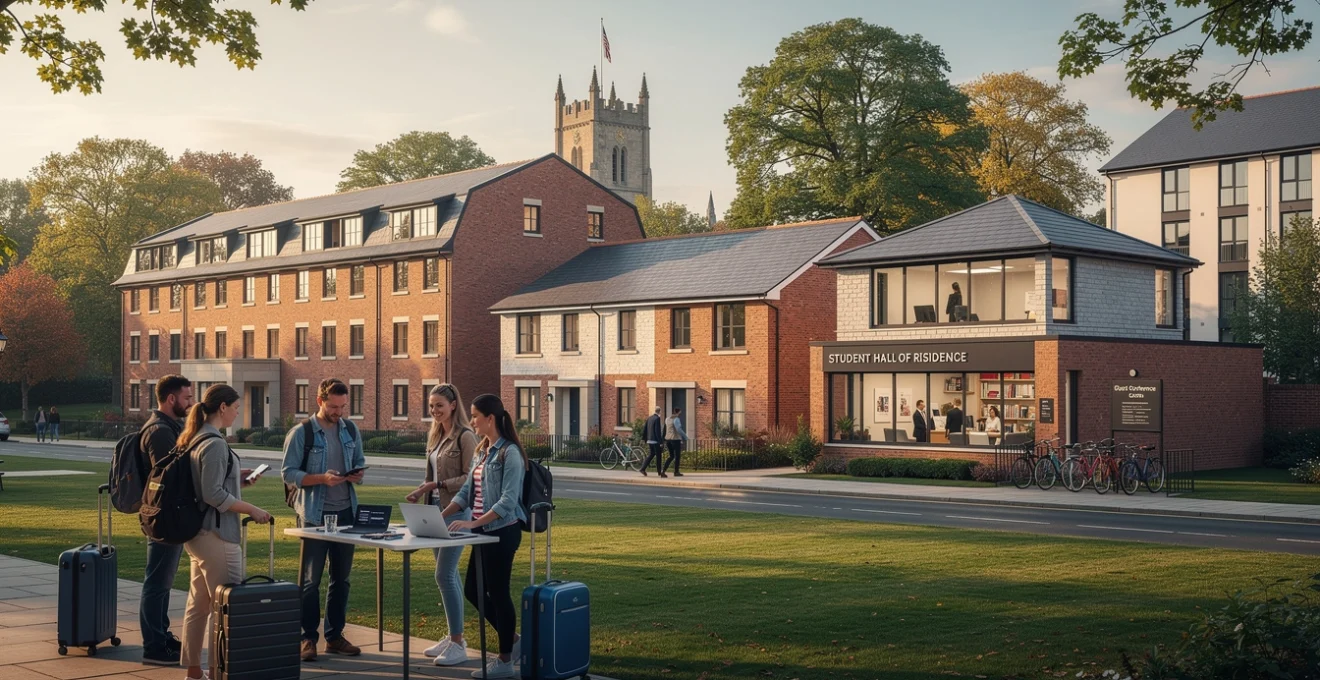
Travel accommodation costs continue to spiral across global destinations, particularly affecting budget-conscious travellers seeking authentic experiences without premium price tags. While hostels and budget hotels dominate the conversation around affordable lodging, a remarkably effective alternative remains largely hidden from mainstream travel planning: university residences. These academic institutions offer surprisingly sophisticated accommodation options during student vacation periods, providing travellers with central locations, basic amenities, and prices that often undercut traditional budget accommodation by significant margins.
The concept extends far beyond cramped dormitories with shared facilities. Modern university accommodation encompasses everything from single en-suite rooms to apartment-style units, many featuring contemporary furnishings and access to campus amenities including dining halls, fitness facilities, and extensive grounds. This accommodation category serves particularly well for travellers prioritising location and value over luxury amenities, especially considering that many universities occupy prime real estate in city centres that would otherwise command premium rates.
University accommodation types and availability for Non-Student travellers
Student halls of residence during summer vacation periods
Traditional student halls represent the most accessible entry point for non-student travellers seeking university accommodation. These facilities typically operate on academic calendars, creating significant availability windows during summer months when student occupancy drops dramatically. Summer availability generally spans June through September, though specific dates vary by institution and geographical location.
Modern student halls differ considerably from their spartan predecessors. Contemporary facilities often feature en-suite bathrooms, individual temperature controls, and high-speed internet connectivity as standard amenities. Many halls incorporate communal kitchens equipped with modern appliances, laundry facilities, and social spaces designed to foster community interaction among residents.
Postgraduate housing and Year-Round availability windows
Postgraduate accommodation facilities frequently maintain more flexible booking policies compared to undergraduate halls, with some offering year-round availability to external guests. These accommodations typically provide higher standard furnishings and more spacious layouts, reflecting the different needs and expectations of mature students. Private bathrooms are standard, and many units include small kitchen facilities or kitchenettes.
The booking windows for postgraduate housing extend beyond traditional summer periods, often including Easter breaks, Christmas holidays, and various reading weeks throughout the academic calendar. This extended availability makes postgraduate facilities particularly valuable for travellers with flexible schedules or those planning trips during shoulder seasons.
Campus guest houses and visiting scholar facilities
Many established universities operate dedicated guest houses designed specifically for visiting academics, conference attendees, and external guests. These facilities bridge the gap between basic student accommodation and commercial hotels, offering hotel-style services within campus environments. Guest houses typically feature private bathrooms, daily housekeeping, and sometimes include breakfast services.
Visiting scholar facilities often provide the highest standard of university accommodation available to external guests. These units frequently include separate living areas, full kitchen facilities, and work spaces suitable for extended stays. Some institutions offer these facilities as serviced apartments, complete with weekly housekeeping and linen changes.
Conference centre accommodation linked to university campuses
University conference centres represent a hybrid accommodation model combining academic facilities with commercial hospitality services. These venues typically operate year-round and welcome non-academic guests during periods when conference demand is lower. The accommodation standards generally exceed those of traditional student halls, featuring hotel-quality furnishings and professional service standards.
Conference centre accommodation often includes access to additional campus facilities such as sports centres, libraries, and dining venues. Some centres offer package deals combining accommodation with meal plans, particularly attractive for extended stays or family travel. The pricing structure for conference centres typically falls between student halls and commercial hotels, representing excellent value for money.
Booking platforms and direct university reservation systems
Venue hire direct and university accommodation services
Direct booking through university accommodation services often yields the most competitive rates and comprehensive information about available facilities. Most universities maintain dedicated accommodation offices handling external bookings, with staff knowledgeable about campus facilities and local attractions. These offices can often accommodate special requests or provide recommendations for specific traveller needs.
Many institutions have streamlined their booking processes, offering online reservation systems comparable to commercial hotel platforms. These systems typically display real-time availability, detailed facility descriptions, and transparent pricing structures. Direct booking also eliminates third
-party commissions and often provides more flexible cancellation policies, which can be particularly beneficial for budget travellers whose plans may change.
When contacting university accommodation services directly, it is worth asking about unpublished rates or special offers for longer stays. Some institutions provide discounted weekly or monthly pricing that does not always appear on public booking pages. You can also clarify practical details such as check-in times, key collection, and access to facilities like kitchens or laundry rooms, helping you avoid unexpected complications on arrival.
University rooms and campus-specific booking websites
Alongside direct booking, several campus-specific platforms have emerged to make university residences more visible to non-student travellers. In the UK and parts of Europe, services modelled on mainstream booking engines collate available rooms across multiple universities and present them in a familiar format. This allows you to filter by price, room type, and location in much the same way you would when searching for a budget hotel.
Individual universities sometimes maintain their own mini-portals or microsites dedicated to vacation stays, short courses, and conference guests. These sites often provide richer descriptions and photographs of specific halls than general travel platforms, along with campus maps and transport guidance. If you already know the city or institution you wish to stay in, it is worth starting with the university’s own accommodation pages before branching out to wider aggregators.
Third-party aggregators specialising in educational institution stays
For travellers exploring university residences as an accommodation category rather than targeting a specific campus, specialist third-party aggregators can be particularly helpful. These platforms focus on educational institution stays and often cover multiple countries, giving you a broad overview of pricing norms and seasonal availability. The user experience typically mirrors that of mainstream hotel sites, but with filters tailored to campus environments and academic calendars.
Because these aggregators negotiate directly with institutions, they sometimes secure exclusive room allocations during peak travel periods when campus demand is lower. However, as with any intermediary, prices may be slightly higher than booking direct, especially when service fees are added. A pragmatic approach is to use these sites for research and comparison, then cross-check rates on the university’s own system to identify the best overall value.
International student housing networks and partner programmes
Beyond short-term vacation lets, some universities participate in international student housing networks and partner programmes that extend limited access to independent travellers. These networks were originally designed to support exchange students and visiting researchers, but they occasionally open surplus capacity to the public during quieter months. Accommodation offered through such channels often includes higher-standard apartments or studio units aimed at long-stay residents.
These international housing networks can be especially useful if you plan to base yourself in one city for several weeks or longer while studying, working remotely, or undertaking a research project. Contracts may run on a monthly basis, with all utilities and Wi-Fi included in a single fee, simplifying budgeting. The trade-off is that booking processes can be more formal, sometimes requiring basic documentation or minimum-stay commitments that resemble medium-term rentals more than casual hotel bookings.
Cost analysis comparing university lodging to traditional budget options
Hostel pricing versus university single room rates in major cities
How do university residences really compare to classic hostels on price? In many major European cities, a bed in a shared hostel dormitory ranges from £20 to £40 per night in peak season, with prices in capitals often pushing higher. University single rooms, particularly during summer vacation periods, frequently fall within a similar bracket, but with the notable advantage of private space and, in many cases, an en-suite bathroom.
In London, for example, it is not uncommon to see university vacation rooms listed around £45 to £80 per night, compared with £30 to £60 for a well-located hostel bunk in a mixed dorm. In smaller university towns, single rooms on campus can undercut dorm prices entirely, especially if booked for a full week. The choice often comes down to whether you prioritise social atmosphere and organised activities (where hostels excel) or quiet, private accommodation in an academic setting.
Budget hotel chains compared to campus accommodation value propositions
Budget hotel chains position themselves as the default choice for cost-conscious travellers, but university accommodation can present a compelling alternative. A standard room in a budget chain in a UK city typically runs between £60 and £120 per night during popular travel periods. For a similar or lower nightly rate, many universities offer centrally located rooms with access to extensive campus facilities and green spaces.
While hotels may provide more consistent branding and 24-hour staffed reception desks, campuses often deliver better value in terms of space, character, and proximity to cultural institutions. A night in a heritage college building or modern residence overlooking a quadrangle offers a sense of place that many chain properties struggle to match. For travellers willing to adapt to slightly less commercial service models, campus stays can therefore feel like a meaningful upgrade at a comparable cost.
All-inclusive university packages including meals and facilities access
Another area where university residences can outperform traditional budget accommodation is in bundled pricing. Many institutions offer all-inclusive or semi-inclusive packages that combine your room with breakfast, or even full board, at on-campus dining halls. For budget travellers concerned about rising food costs, these integrated meal plans can remove much of the uncertainty from daily spending.
Access to additional facilities is another important factor in the cost equation. Some campuses include complimentary use of Wi-Fi, libraries, study areas, and outdoor spaces, while offering discounted or free entry to sports complexes, swimming pools, or cultural events. When you factor in what you might otherwise pay for co-working spaces, gym passes, or museum tickets, the total value of a campus stay can look surprisingly strong compared to a bare-bones hotel or hostel rate.
Hidden costs and additional fees in university accommodation contracts
Despite their advantages, university residences are not entirely free from hidden costs, and it pays to read booking terms carefully. Cleaning fees, linen hire, or key deposit charges can add to the overall price, particularly for shorter stays where fixed fees are spread across only a few nights. Some institutions charge extra for parking, late check-in, or the use of certain sports facilities, which can catch unprepared travellers off guard.
To avoid surprises, treat a university booking much like you would a vacation rental contract: scan for references to service charges, damage deposits, and cancellation penalties. Asking in advance about inclusions such as towels, toiletries, and kitchen access can also prevent last-minute purchases. By clarifying these details, you ensure that the cost advantages of university accommodation remain intact and that your budget travel plans stay on track.
Geographic hotspots and prime university destinations across britain
Britain offers a dense network of university towns and cities that double as excellent bases for exploration. From historic colleges with centuries-old architecture to modern campuses in regenerated urban districts, the range of environments is wide. For travellers, this translates into multiple opportunities to secure central, characterful accommodation at student-friendly prices, particularly between June and September.
Classic destinations such as Oxford and Cambridge are obvious examples, where college rooms open to visitors out of term provide a rare chance to sleep within cloistered courts and beside ancient chapels. In Scotland, cities like Edinburgh, Glasgow, and St Andrews blend strong academic traditions with cultural festivals, coastal scenery, and easy access to the Highlands. Further north in England, university hubs such as York, Durham, Leeds, and Manchester pair vibrant city life with excellent rail connections to surrounding regions.
Even in larger metropolitan areas like London, Birmingham, and Bristol, clusters of universities create pockets of campus accommodation that can be far more affordable than central hotels. These institutions are often embedded within lively neighbourhoods rich in independent cafes, live music venues, and community markets. By targeting these academic hotspots rather than headline tourist districts, you can experience a more local atmosphere while keeping accommodation costs under control.
Practical considerations for university accommodation bookings
Booking university residences as a non-student traveller involves a few additional practicalities compared to reserving a standard hotel. First, availability is tightly linked to the academic calendar, so it is important to check term dates and exam periods for your chosen institution. Many universities publish these schedules online, allowing you to identify precise windows when halls and guest rooms are released to the public.
Check-in and check-out procedures can also differ from conventional hotels. Reception desks may keep limited hours, keys might be collected from security offices or porter’s lodges, and luggage storage facilities are not always guaranteed. If you are arriving late at night or leaving very early, confirm logistics with the accommodation office in advance to avoid being locked out or left with nowhere to store bags.
It is also worth considering your expectations around services such as daily housekeeping, room servicing, and on-site staff support. Many university residences, especially standard halls, operate more like serviced apartments than full hotels, with weekly cleaning and limited front-desk presence. For confident, independent travellers this poses little issue, but if you require more hands-on support, targeting campus guest houses or conference centres may be a better fit.
Finally, remember that campus environments can be lively, particularly if you are staying adjacent to summer schools, short courses, or festivals. Noise levels, shared corridors, and communal kitchens all contribute to a distinctly student-like atmosphere. Packing earplugs, a reusable water bottle, and perhaps a small travel kettle can go a long way towards making the experience both comfortable and self-sufficient.
Maximising campus facilities and local university town experiences
One of the main advantages of choosing university residences for budget travel is the breadth of facilities at your doorstep. Libraries, landscaped gardens, riverside paths, and sports complexes are often accessible to short-term guests, providing a richer daily environment than many urban hotels. Why pay extra for a gym membership or co-working desk when you can jog around a campus lake in the morning and work in a quiet reading room in the afternoon?
To make the most of these benefits, ask the accommodation office for a guest card or temporary ID upon arrival, along with a map of facilities open to visitors. Some universities host public lectures, film screenings, or exhibitions that you can attend at little or no cost, turning your stay into a mini cultural residency. Campus cafes and canteens, meanwhile, offer affordable meals and a chance to people-watch among students and academics.
Beyond campus boundaries, university towns are typically designed to be navigable on foot or by bike, with compact centres and excellent public transport. This makes them ideal bases for budget-conscious sightseeing: you can wander historic streets, explore local markets, and visit museums without relying on taxis. Many institutions have strong links with their surrounding communities, so you may find discounts for university guests at theatres, galleries, or local attractions.
Thinking of your campus stay as more than just a cheap bed transforms the experience. Instead of treating university accommodation as a compromise, you can approach it as a distinctive form of travel in its own right, blending academic ambience with practical savings. For budget travellers willing to embrace this slightly unconventional option, university residences open up a network of affordable, character-rich bases across Britain and beyond.