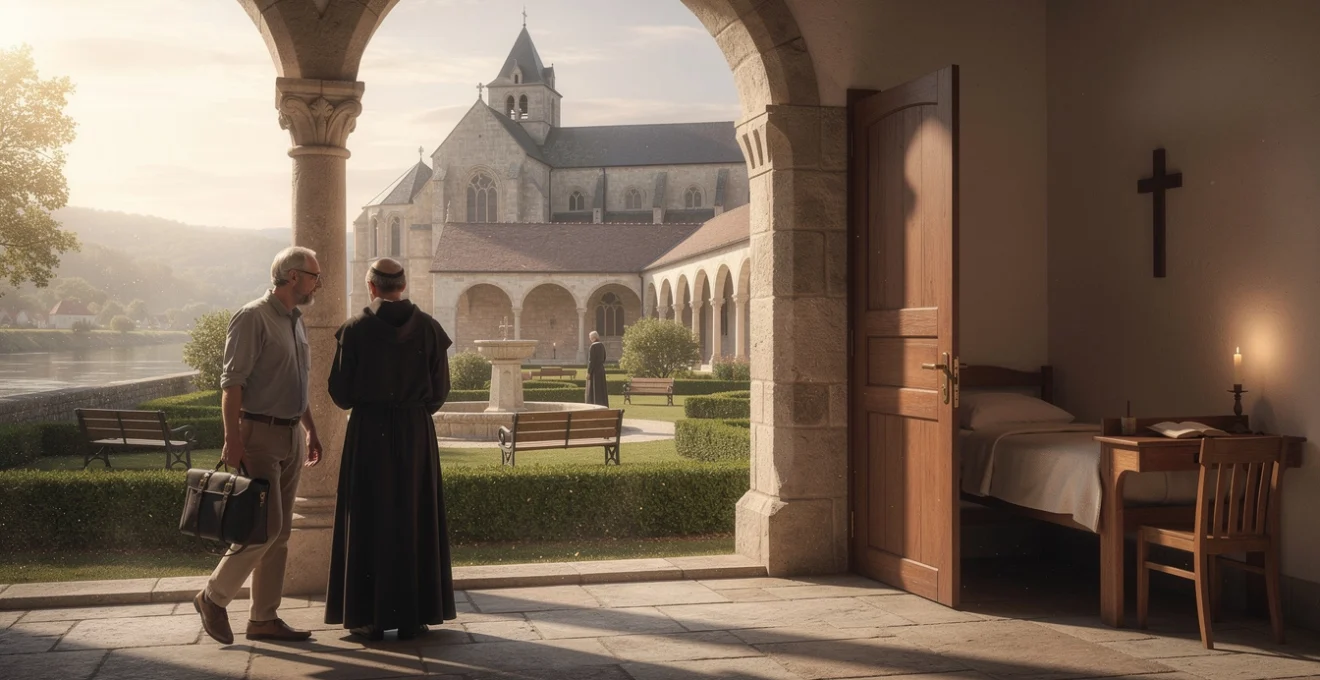
Monastery guesthouses represent one of humanity’s oldest hospitality traditions, offering sanctuary to travellers and seekers for over fifteen centuries. These sacred spaces provide an authentic alternative to conventional accommodation, where spiritual contemplation takes precedence over material comfort. The tradition extends far beyond mere lodging, creating immersive experiences that challenge contemporary notions of rest and reflection. Whether you seek respite from urban chaos or desire genuine spiritual enrichment, monastic communities across Europe continue this ancient practice with remarkable dedication.
The experience transcends typical hospitality models, inviting guests into rhythms of prayer, silence, and community life that have remained largely unchanged since medieval times. Modern seekers discover profound value in these contemplative environments, where digital connectivity yields to inner connection and scheduled activities give way to organic spiritual exploration.
Benedictine monastery accommodation: traditional hospitality models and guest house operations
Benedictine monasteries pioneered the structured approach to monastic hospitality that continues today. Their guesthouses operate according to principles established in the sixth century, balancing community needs with genuine welcome for outsiders. The Benedictine model emphasises that hospitality serves both guest and host, creating opportunities for mutual spiritual enrichment through shared prayer and simple living.
Contemporary Benedictine guesthouses maintain this balance through careful scheduling and clear expectations. Guests participate voluntarily in community life whilst respecting the monastery’s primary purpose of prayer and contemplation. The accommodation itself reflects monastic values, offering clean, functional spaces without luxury amenities that might distract from spiritual focus.
Rule of st. benedict chapter 53: theological foundations of monastic hospitality
Chapter 53 of the Rule of St. Benedict establishes the theological framework for monastic hospitality:
“Let all guests who arrive be received as Christ himself, for he will say: ‘I was a stranger and you welcomed me.'”
This directive shapes every aspect of guest accommodation, from initial welcome to departure blessing. The Rule requires that guests receive priority in meal service and that the abbot personally greet important visitors, demonstrating hospitality as sacred duty rather than commercial transaction.
Modern implementation of Chapter 53 adapts ancient wisdom to contemporary circumstances. Monasteries maintain guest masters who coordinate arrivals, explain community customs, and ensure visitors understand expectations regarding silence, prayer participation, and daily rhythms. This role bridges the gap between monastic life and secular experience, helping guests navigate unfamiliar spiritual territory with confidence.
Guesthouse infrastructure in medieval cistercian architecture
Medieval Cistercian monasteries developed sophisticated guesthouse architecture that separated visitors from the monastic enclosure whilst facilitating integration with community prayer life. These buildings typically featured guest chapels adjacent to the main church, allowing participation in liturgy without disrupting monastic choir arrangements. Dormitory-style accommodation emphasised simplicity and equality among guests, regardless of social status.
Contemporary adaptations of Cistercian guesthouse design maintain these principles whilst incorporating modern necessities. Private rooms often replace dormitories, but furnishings remain deliberately sparse. Shared spaces encourage interaction among guests and reflection on community values that transcend individual preferences.
Contemporary guest master responsibilities and retreat coordination
Today’s guest masters serve as spiritual concierges, coordinating retreat experiences whilst protecting monastic rhythm and silence. Their responsibilities include screening potential guests, explaining house customs, and providing gentle guidance for those unfamiliar with contemplative practices. Guest masters also coordinate with kitchen staff to accommodate dietary requirements and schedule individual meetings for those seeking spiritual direction.
The role requires exceptional diplomatic skills, as guest masters must balance diverse expectations with monastic requirements. They often become confidants for visitors processing difficult life transitions, whilst maintaining appropriate boundaries that preserve the monastery’s contemplative atmosphere.
Liturgical integration: participating in monastic hours and community prayer
Monastic guesthouses invite participation in the Divine Office, the structured prayer cycle that punctuates monastic days. Guests typically receive schedules for Lauds, Vespers, and Compline, with guidance on appropriate participation levels. Some find the Latin chant intimidating initially, but most discover profound peace in these ancient rhythms that connect contemporary experience with centuries of faithful
practice. Monks and nuns understand that many guests are unfamiliar with liturgical customs, so they quietly model when to stand, sit, and respond. You are free simply to sit in the nave and let the chant wash over you, or gradually join in responses as you become more comfortable. Over several days, the regularity of the Hours functions almost like a gentle bell that continually calls you back to presence, much like a tide that shapes the shoreline of your thoughts.
For guests used to unstructured holidays, this rhythm can initially feel demanding. Yet many retreatants report that after the first day, the pattern becomes surprisingly liberating, removing the pressure to “plan” every moment. Instead of asking what you should do next, you follow a centuries-old timetable that alternates prayer, meals, rest, and quiet reading. In this way, liturgical participation becomes the invisible framework that holds your monastery stay together, anchoring even your free time in a subtle atmosphere of prayer.
European monastery guesthouses: regional variations in contemplative accommodation
Across Europe, monastery guesthouses share common roots in monastic hospitality, yet each region expresses this tradition in distinctive ways. Architecture, language, cultural habits, and liturgical styles all shape how you experience your retreat. A Benedictine abbey in rural France, for example, will feel very different from a German monastery set in forested hills or a Spanish cloister in a historic town.
Understanding these regional nuances can help you choose a monastery guesthouse that matches your expectations for silence, structure, and cultural immersion. Do you want a strong musical tradition, such as daily chant? Are you drawn to dramatic landscapes like river valleys or mountain ranges? By paying attention to these differences, you can select a contemplative stay that resonates with your spiritual and aesthetic sensibilities.
French abbaye de solesmes: gregorian chant immersion programmes
Abbaye Saint-Pierre de Solesmes, on the banks of the Sarthe River in western France, is world-renowned for its Gregorian chant. For over a century, the monks of Solesmes have played a central role in reviving and preserving this ancient musical form. Staying in the abbey’s guesthouse places you at the heart of this tradition, where sung liturgy forms the backbone of the daily schedule.
Guests at Solesmes are invited to attend the full cycle of the Divine Office and Mass, all chanted in Latin with remarkable precision and serenity. Even if you do not understand the language, the cadence and modal melodies create a contemplative atmosphere that many describe as “prayer in sound.” Some periods of the year include more formal chant immersion experiences, where musicologists, clergy, and lay visitors come specifically to listen, study, and pray.
The guest accommodation at Solesmes reflects classic French monastic simplicity: individual or small shared rooms with basic furnishings, a desk for reading, and views over river or cloister gardens. Meals, typically taken in silence or with spiritual reading, feature straightforward regional cuisine. For those seeking a monastery guesthouse where music is the primary contemplative practice, an immersive stay at Solesmes offers a rare opportunity to let chant structure both your days and your interior life.
German benedictine kloster weltenburg: danube valley contemplative retreats
Kloster Weltenburg in Bavaria, often cited as one of the oldest monasteries in Germany, occupies a dramatic position on a bend of the Danube River. The abbey complex, framed by steep limestone cliffs and forest, lends itself naturally to contemplation. Here, the monastic rhythm meets the slower pace of river life, creating an ideal setting for those who find spiritual depth through nature as well as liturgy.
Weltenburg is known to many for its historic brewery, yet its guesthouse offers a quietly serious environment for retreat. Rooms are modest but comfortable, often with views over the river or inner courtyards. Daily Mass and Offices are open to guests, and the acoustics of the baroque abbey church enhance the sense of sacred space. Between services, you can walk riverside paths, explore forest trails, or sit on benches overlooking the Danube, using the landscape as a kind of living lectio divina.
Compared with some stricter contemplative houses, Weltenburg’s atmosphere is gently structured rather than rigorously silent. This makes it a good choice if you are new to monastery stays and want contemplative accommodation that still allows a little informal conversation at meals or in common rooms. The fusion of Benedictine stability with the flowing Danube offers a powerful metaphor: you are grounded in prayer, yet constantly invited to move inward with the river’s quiet current.
Spanish monasterio de santo domingo de silos: mozarabic liturgy experiences
In northern Spain, the Monasterio de Santo Domingo de Silos combines Romanesque architecture, world-famous cloisters, and a rich liturgical heritage. Historically linked to Mozarabic chant and later to Gregorian reform, Silos attracts visitors seeking both artistic beauty and deep spiritual tradition. Its cloister capitals, carved with biblical scenes and symbolic motifs, provide a visual catechesis that complements the sung liturgy.
Guests in the monastery’s hospedaje encounter a more intentionally silent environment than many tourist-focused religious sites. While day visitors come to admire the cloister, overnight guests are invited to step behind the tourist façade and share in the quieter rhythms of community prayer, reading, and rest. The divine office, sung in Latin, retains traces of the Iberian liturgical sensibility, with particular feasts and melodies reflecting centuries of Spanish Christian history.
If you are interested in how liturgy evolves across cultures, a stay at Silos can function as a living workshop. You might spend the morning in the church listening to chant, the afternoon studying cloister carvings or walking nearby hills, and the evening journalling about how architecture, music, and landscape converge in your own prayer. For many retreatants, Silos becomes a bridge between historical curiosity and personal contemplation.
English ampleforth abbey: anglican-catholic ecumenical guest programmes
Ampleforth Abbey in North Yorkshire exemplifies how traditional Benedictine hospitality can adapt to contemporary ecumenical realities. The abbey’s guesthouse welcomes visitors from a wide range of Christian backgrounds—as well as those with no formal faith affiliation—into a rhythm of prayer that is distinctly Catholic yet open and inviting. Its extensive grounds, including lakes, woodlands, and footpaths, provide ample space for private reflection.
Because of its strong links with local Anglican communities and its history as an educational centre, Ampleforth has developed guest programmes that emphasise dialogue and shared exploration rather than confessional boundaries. You may find Anglican clergy on retreat alongside lay pilgrims, students, and seekers, all joining the monks for the Liturgy of the Hours in the abbey church. Guests are free to attend as many or as few services as they wish, without pressure to conform.
The guest facilities at Ampleforth are comparatively comfortable, reflecting the abbey’s desire to offer “good, wholesome food” and well-kept accommodation without slipping into hotel-style luxury. First-time visitors are often encouraged to start with a short stay of two nights, an approach that recognises how unfamiliar and intense monastic rhythms can be for those used to constant connectivity. For travellers interested in an English-speaking monastery guesthouse that combines seriousness of prayer with thoughtful pastoral care, Ampleforth provides an accessible entry point.
Monastic daily rhythms: structured silence and contemplative practices
Regardless of country or order, monastery guesthouses share a common foundation: a daily rhythm ordered around prayer, work, and silence. For many visitors, this rhythm is the most transformative aspect of their stay. Instead of the usual holiday pattern—late nights, varied excursions, and shifting meal times—you enter a stable timetable where bells rather than notifications tell you what time it is.
A typical day in a contemplative monastery might begin before dawn with Vigils, followed by Lauds and quiet breakfast. Mid-morning brings a period of work or study, then midday prayer and lunch, often in silence. Afternoon may be reserved for lectio divina (prayerful reading), spiritual direction, or gentle manual tasks, before Vespers, supper, and Compline close the day. Within this structure, silence acts like the white space on a page: it does not say anything itself, yet it allows the words—your thoughts, prayers, and emotions—to stand out more clearly.
Many monasteries distinguish between “exterior” silence (reduced speech, no phones in sacred spaces, soft footsteps) and “interior” silence (letting go of constant mental commentary). You are not expected to achieve perfect stillness, but you are encouraged to notice how much noise you normally live with. Some guesthouses institute periods of “great silence” overnight, from after Compline until after breakfast, to deepen this experience. It can feel unsettling at first, yet over a few days, the quiet becomes less like an absence and more like a presence—a spaciousness in which you can finally hear yourself think, and perhaps hear God.
Cell accommodation standards: ascetic living environments and minimalist furnishings
Monastery guest rooms—often called “cells” by analogy with monastic quarters—are intentionally simple. Rather than boutique décor or elaborate amenities, you will usually find a single bed, a small desk or table, a chair, a wardrobe or hanging rail, a crucifix or icon, and perhaps a bookshelf with spiritual classics. Some houses offer en-suite facilities; others provide shared showers and toilets along the corridor. The aim is not to replicate hotel comfort but to create a neutral space where your inner life takes centre stage.
This simplicity does not mean neglect. Sheets are clean, rooms are well maintained, and heating is adequate in colder climates. Yet the minimal furnishings quietly challenge our assumption that comfort depends on abundance. Many guests discover that in a stripped-back environment—where visual clutter is reduced and possessions are few—it becomes easier to pray, to read deeply, or simply to sit in silence. The cell functions almost like an inner hermitage, a private laboratory for your spiritual practice.
If you are used to constant entertainment, the absence of television and limited internet can feel stark. This, however, is precisely the point. The physical cell mirrors the monastic vocation to inner simplicity. As distractions diminish, you may find long-buried questions and desires surfacing. What do you reach for when you cannot reach for your phone? Which books do you actually want to read when you have time? In this sense, the cell is less a place to “stay” and more a mirror that reflects how you inhabit your own life.
Booking protocols and retreat planning: spiritual direction requirements and duration guidelines
Because monastery guesthouses are first and foremost extensions of living religious communities, their booking procedures differ from standard hotels or retreat centres. You are not merely reserving a bed; you are asking to share, for a short time, in a particular way of life. This means that planning your monastery stay involves a degree of mutual discernment: the community considers whether it can welcome you at a given time, and you consider whether their rhythm and expectations suit your current needs.
Most monasteries now provide basic information online—contact details, suggested donation ranges, and retreat options—but final arrangements are often made by email or phone with the guest master or guest mistress. You may be asked about the purpose of your visit, your previous retreat experience, and any special requirements. This is not gatekeeping for its own sake; it helps the community ensure that your expectations align with what they can realistically offer, especially regarding silence, spiritual direction, and length of stay.
Pre-arrival spiritual preparation and reading recommendations
Preparing inwardly for a monastery stay is as important as packing the right clothes. Before arrival, many communities recommend simple practices: setting aside a few minutes each day for quiet, reducing digital noise, or beginning to read texts that will frame your retreat. If you have never encountered monastic spirituality, starting with a modern translation of the Rule of St. Benedict or an introductory book on contemplative prayer can be especially helpful.
Some guest masters send preparatory materials once your booking is confirmed: a sample daily timetable, brief notes on customs (for example, when to keep silence, how meals work), and suggested readings. Engaging with these beforehand reduces anxiety about “doing it right” and allows you to arrive more ready to enter the rhythm rather than resist it. You might also reflect on a simple question: What do I most need from this time—rest, clarity, healing, or deeper prayer?
Setting realistic intentions can prevent disappointment. A monastery guesthouse is not a spa, a therapy clinic, or a sightseeing base, though it may offer elements of rest, healing, and beauty. By clarifying what you are seeking—and holding those desires lightly—you create inner space for the retreat to unfold in ways you could not have planned. Think of pre-arrival preparation like tilling soil before planting: you are not forcing outcomes, but you are making it easier for something to take root.
Donation-based economy: traditional oblation systems vs. fixed pricing models
Historically, monastic hospitality operated on a donation or oblation basis. Guests contributed what they could, sometimes in money, sometimes in goods or labour, and the community trusted Providence to provide. Many monastery guesthouses still follow this model, suggesting a daily contribution that covers basic costs yet leaving room for those with fewer resources. Others, responding to modern financial realities, now list fixed prices per night, especially where insurance and maintenance expenses are significant.
From a guest’s perspective, it is helpful to see these financial arrangements not as commercial transactions but as participation in the monastery’s life. Your contribution keeps heating on, kitchens supplied, buildings repaired, and elderly monks or nuns cared for. When the system is donation-based, offering at least the suggested amount is a tangible way of honouring the hospitality you receive. If you are able to give more, you support those who cannot.
A few communities also welcome non-monetary support, such as volunteering for simple tasks—washing dishes, gardening, housekeeping—particularly during longer stays. While this does not replace financial giving, it deepens the sense of mutuality: you are not only receiving quiet and care, you are also helping sustain the place that shelters you. In an age when most travel is purely transactional, this economy of reciprocity can itself be a spiritual lesson, inviting you to reconsider what it means to pay, give, and receive.
Seasonal availability patterns and liturgical calendar considerations
Monastery guesthouses do not operate on a purely touristic calendar. Their availability is closely linked to the liturgical year, community obligations, and local climate. Some houses close completely during certain seasons for community retreats, building works, or chapters. Others restrict guest numbers around major feasts like Easter, Christmas, or patronal solemnities, when liturgical responsibilities intensify.
If you hope to experience the full beauty of the liturgy—Holy Week in a Benedictine abbey, for instance—you will need to plan well in advance, sometimes six to twelve months. At the same time, quieter periods in “ordinary time” can be ideal for deeply silent retreats, when fewer guests are present and the community’s schedule is less crowded. Midweek stays outside school holidays often offer the most solitude and flexibility.
Climate also shapes the character of your stay. A winter retreat in a northern European abbey brings early nightfall, candlelit Offices, and long evenings for reading by lamplight. Summer stays, by contrast, extend your prayer into gardens, cloisters, and forest paths. When you contact a guest master, you can ask how the season intersects with the liturgical calendar and guesthouse operations. By aligning your plans with the monastery’s own rhythm, you increase the chances that your quiet stay will be not only restful, but also deeply rooted in the living tradition you have come to share.