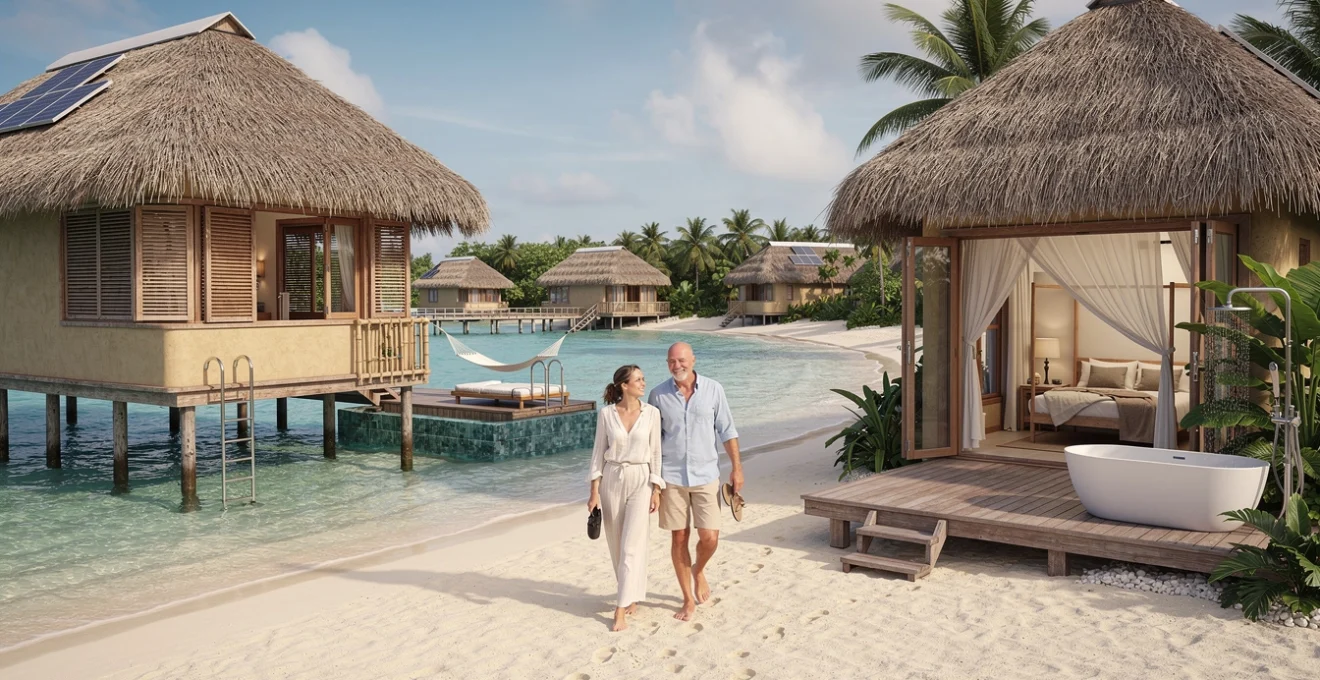
The gentle lap of waves against weathered wooden pilings, sand-dusted floors that welcome bare feet, and uninterrupted views across turquoise lagoons—beach bungalows represent the pinnacle of relaxed coastal living. These distinctive structures have evolved from simple fishermen’s huts into sophisticated architectural achievements that balance luxury with environmental harmony. Whether perched on stilts above crystalline waters or nestled directly onto powder-soft beaches, these dwellings offer an immersive connection to marine environments that conventional hotel rooms simply cannot match. The global demand for authentic barefoot luxury experiences has transformed beach bungalow design into a specialised discipline, where architects and developers must reconcile guest expectations for comfort with the challenging realities of coastal construction and ecological preservation.
From the turquoise shallows of the Maldives to the protected lagoons of French Polynesia, beach bungalows have become synonymous with escapism and romance. Yet behind their seemingly effortless tropical aesthetic lies sophisticated engineering, thoughtful material selection, and increasingly rigorous environmental standards. Understanding the complexities of beach bungalow construction reveals why these structures command premium rates and continue to captivate travellers seeking meaningful connections with coastal landscapes.
Architectural design elements of overwater and beachfront bungalow construction
The architectural language of beach bungalows draws from indigenous building traditions whilst incorporating modern engineering principles to withstand harsh marine conditions. These structures must reconcile competing demands: providing shelter from intense sun and tropical storms whilst maximising natural ventilation and maintaining visual transparency to surrounding seascapes. The most successful designs achieve this balance through careful attention to orientation, material selection, and spatial configuration that respects both environmental constraints and guest comfort expectations.
Stilted foundation systems for tidal zone stability
Overwater bungalows rely on robust foundation systems that must resist constant wave action, tidal fluctuations, and potential storm surge whilst minimising disturbance to coral reefs and seagrass beds below. Engineers typically employ marine-grade hardwood pilings or concrete columns driven deep into the seabed, with depths varying from three to twelve metres depending on substrate composition and local wave patterns. The spacing between pilings represents a critical calculation—too close and construction costs escalate unnecessarily whilst potentially damaging more reef; too far apart and structural integrity becomes compromised during severe weather events.
Modern overwater bungalows increasingly utilise screw pile foundations, which can be installed with minimal environmental impact compared to traditional driven piles. These helical anchors twist into the seabed like massive corkscrews, creating secure attachments without the percussive damage associated with pile driving. In particularly sensitive locations, such as protected marine reserves, some resorts have adopted floating foundation systems that rest on the seabed rather than penetrating it, though these require more substantial anchoring systems to prevent drift during storms.
Natural ventilation through louvred walls and elevated floor plans
Tropical beach bungalows must manage interior climates without excessive reliance on air conditioning, both for sustainability reasons and to maintain the authentic barefoot experience that guests seek. Architects achieve this through strategic placement of louvred wall panels, elevated floor plans that catch prevailing breezes, and high-pitched roofs that promote convective cooling. The traditional Polynesian fare design, with its open sides and elevated platform, remains influential in contemporary bungalow architecture precisely because it solved ventilation challenges centuries ago through empirical observation rather than mechanical systems.
You’ll notice that premium beach bungalows position sleeping areas to capture cross-breezes whilst shielding them from direct sun exposure during the hottest parts of the day. Adjustable louvre systems allow you to modulate airflow according to wind conditions and privacy preferences, whilst still maintaining visual connection to the surrounding seascape. Some designs incorporate double-roof systems, where an inner ceiling creates an insulating air gap beneath the outer thatched layer, reducing radiant heat transfer whilst providing additional protection against water infiltration during heavy rainfall.
Thatched roofing materials: palmetto, nipa palm, and synthetic alternatives
The iconic thatched roof remains the defining visual element of beach bungalow architecture, providing both aesthetic authenticity and practical performance advantages. Traditional
thatched roofing using palmetto, nipa palm, or local grasses offers exceptional thermal performance, shedding intense solar gain while allowing trapped hot air to vent through tiny gaps in the thatch. Well-laid natural thatch can achieve lifespans of 10–25 years depending on climate, pitch, and maintenance, with steeper roof angles helping rainwater run off quickly and reduce rot. However, owners must factor in periodic re-thatching cycles, specialised craftsmanship, and the increased fire risk that accompanies organic materials. To mitigate these issues, many modern barefoot luxury resorts now blend traditional craft with contemporary safety standards, integrating concealed fire-retardant membranes and lightning protection systems beneath the visible thatch.
Synthetic thatch alternatives, often made from UV-stabilised polyethylene or PVC, have become increasingly sophisticated, replicating the irregular textures and colour variations of natural leaves while offering lifespans of 30 years or more. These products perform well in cyclone-prone regions where strict building codes demand high wind ratings and reduced maintenance overheads. The trade-off is a subtle difference in acoustic performance and tactile feel—natural thatch has a distinctive sound under heavy rain and a scent that many guests associate with authentic island living. When evaluating beach bungalow options, you may notice higher nightly rates at properties that maintain traditional thatching, reflecting both the artisanal labour and the sensory richness this roofing style provides.
Open-plan interior layouts with direct beach access thresholds
A defining characteristic of true beach bungalows is the seamless progression from interior spaces to sand and sea, often without the hard boundaries you’d encounter in conventional hotels. Open-plan layouts typically orient the main sleeping and lounging zones towards panoramic views, using sliding glass walls, oversized pivot doors, or fully retractable partitions to dissolve the barrier between inside and out. Instead of a conventional lobby corridor, you might step straight from your king-sized bed onto a shaded deck and then down to the shoreline, with level thresholds that allow you to move barefoot without snagging on changes in floor height. This fluid arrangement is less about open-plan minimalism as a style choice and more about choreographing how you inhabit the coast from sunrise to moonrise.
Designers must balance this openness with strategic zoning to preserve privacy and acoustic comfort. Bathrooms in barefoot beach bungalows often feature partially open walls or courtyard-style layouts that maintain airflow while screening sensitive areas from neighbouring villas and public walkways. Built-in daybeds, low-profile storage, and integrated bench seating replace bulky wardrobes and headboards, reinforcing the sense of spatial continuity and reducing visual clutter. In high-end overwater bungalow complexes, the open-plan concept extends to glazing in the floor, giving you glimpses of reef life directly below your living area and turning the entire interior into an observatory for marine ecosystems.
Premier barefoot luxury destinations: maldives, bora bora, and zanzibar
Some destinations have refined the beach bungalow experience to an art form, pairing meticulous architectural design with landscapes that seem tailor-made for barefoot luxury holidays. The Maldives, Bora Bora, and Zanzibar each offer their own interpretation of seaside bungalow living, shaped by distinct cultural traditions, climate conditions, and regulatory environments. As you compare beach bungalows for a future escape, understanding these regional nuances helps you choose a setting that aligns with your expectations for privacy, adventure, and environmental stewardship. Let’s explore how leading properties in these destinations translate the core principles of barefoot comfort into built form.
Gili lankanfushi maldives: crushed coral pathways and lagoon villas
Gili Lankanfushi has long been a benchmark for sustainable barefoot luxury in the Maldives, where bungalows are scattered like driftwood across a translucent lagoon connected by wooden jetties. One of its most distinctive features is the commitment to no news, no shoes; from the moment you step off the boat, staff encourage you to store your footwear and navigate the island barefoot along soft crushed coral pathways. Lagoon villas sit on timber piles that elevate them above seagrass meadows, with careful siting to maintain natural water flow and minimise shadowing that might impact marine life. Interiors are deliberately rustic-chic, using reclaimed timbers, open-air bathrooms, and netted daybeds suspended over the water to keep the experience grounded rather than ostentatious.
From a construction standpoint, Gili Lankanfushi’s lagoon villas exemplify how overwater bungalows can be both luxurious and low impact. Roofs feature high-pitched thatch that promotes ventilation, while the extensive use of openable shutters and shaded verandas reduces air-conditioning demand even in peak dry-season heat. Many villas incorporate rooftop terraces where guests can stargaze or enjoy private dinners, effectively adding a second outdoor living room above the lagoon. If you’re seeking a beach bungalow holiday that prioritises barefoot comfort, privacy, and a strong sustainability ethos, this Maldivian model offers a compelling template of what modern eco-luxury can look like in practice.
The st. regis bora bora resort’s overwater bungalow architecture
In French Polynesia, the St. Regis Bora Bora Resort represents the more opulent end of the overwater bungalow spectrum, pairing generous floor plans with cinematic views of Mount Otemanu. Here, the signature bungalows sit along long timber pontoons that extend into the lagoon, each structure engineered to withstand swell and occasional cyclonic conditions whilst giving guests the sensation of floating in their own private world. Architecturally, the design blends Polynesian motifs—such as exposed timber trusses and pandanus-style roofing profiles—with high-spec glazing and modern structural systems hidden beneath timber cladding. The result is a series of pavilions that feel handcrafted but perform to international luxury hotel standards.
These overwater bungalows typically feature expansive glass sliders on both lagoon and mountain-facing sides, enabling cross-ventilation and flexible control over light and privacy. Generous decks often come with private plunge pools, integrated steps into the lagoon, and shaded dining alcoves, creating multiple micro-zones for relaxation without ever putting on shoes. Underfoot, hardwood decks are carefully spaced to allow drainage and reduce heat build-up, ensuring you can move comfortably even at midday. For travellers who equate barefoot comfort with high-touch service and meticulous detailing, the St. Regis model demonstrates how overwater bungalow architecture can deliver both emotional drama and practical functionality.
Zanzibar’s matemwe lodge: traditional makuti-thatched beach cottages
On the East African coast, Zanzibar’s Matemwe Lodge showcases a different expression of beach bungalow design, rooted in Swahili culture and local building craft. Instead of long jetties reaching into deep lagoons, you’ll find single- and double-storey cottages set back slightly from a tidal beach, topped with steeply pitched makuti roofs. Makuti, woven from dried coconut palm leaves, offers impressive thermal performance and a distinct silhouette that instantly signals place-specific architecture. Thick lime-rendered walls and small, shaded openings help keep interiors cool, while elevated verandas frame views of dhows crossing the coral-fringed reef.
Beach bungalows at Matemwe often feature built-in masonry beds, recessed shelving, and timber shutters that swing wide to welcome the trade winds, reducing the need for mechanical cooling. Outdoor living is central to the design language: hammocks, cushioned benches, and low stone walls define informal seating nooks where you can watch the changing tides barefoot from dawn to dusk. Compared with more manufactured barefoot luxury experiences, Matemwe’s cottages feel deeply integrated into village life and local ecology, making them ideal if you’re seeking a beach bungalow holiday that emphasises cultural immersion along with coastal comfort.
Aitutaki lagoon resort, cook islands: polynesian-style beachfront accommodations
In the South Pacific, the Aitutaki Lagoon Resort in the Cook Islands presents a more intimate scale of beachfront bungalows, wrapped around one of the world’s most photogenic lagoons. Rather than a forest of overwater villas, you’ll find a curated collection of Polynesian-style beach bungalows and a smaller selection of overwater units, each designed to foreground the lagoon’s luminous shallows. Gabled roofs with local thatch or shingles, wide eaves, and generous verandas create deep shade, while light-toned interiors reflect daylight and enhance the feeling of spaciousness. Many bungalows sit only a few steps from the waterline, with sandy front yards that blur the boundary between private space and public beach.
The design here favours simplicity over spectacle, a conscious choice that suits travellers who prefer barefoot comfort and unpretentious charm to high-rise luxury. Open-plan sleeping and living areas flow onto decks furnished with loungers and small dining sets, encouraging most daily activities to take place outdoors. Structural systems remain relatively modest—timber frames on shallow footings suitable for lagoon-side soils—yet care is still taken to elevate floors above storm surge levels and provide robust tie-downs for cyclonic winds. For those exploring beach bungalows across the Pacific, Aitutaki illustrates how thoughtful planning and proportion can deliver an unforgettable lagoon experience without resorting to excessive scale or intrusive engineering.
Sustainable materials and Eco-Conscious construction techniques
As demand for beach bungalows and overwater villas has surged, so too has scrutiny of their environmental footprint. Building in fragile coastal and lagoon ecosystems is inherently delicate, and the difference between a regenerative barefoot retreat and a damaging development often comes down to material choices and construction methods. Today’s leading resorts increasingly adopt circular-economy principles, low-carbon materials, and careful installation techniques to minimise disruption above and below the waterline. If you’re selecting a beach bungalow for an eco-conscious holiday, it’s worth looking beyond the marketing language to the tangible measures that underpin sustainability claims.
Reclaimed teak and bamboo framework for low environmental impact
One of the most visible shifts in sustainable beach bungalow construction is the widespread use of reclaimed timber, particularly teak, combined with rapidly renewable materials like engineered bamboo. Reclaimed teak, often salvaged from old houses, boats, or bridges in Southeast Asia, provides excellent durability in marine environments thanks to its natural oils and dense grain. Using reclaimed stock not only reduces pressure on primary forests but also lends a rich patina and character that new timber cannot replicate. When combined with proper kiln-drying and treatment, these elements create structural frameworks, decking, and joinery that can handle salt spray and intense UV exposure for decades.
Bamboo, sometimes likened to “nature’s carbon fibre”, grows rapidly—some species reach maturity in 3–5 years—making it ideal for reducing the embodied energy of beach bungalow structures. In modern applications, bamboo is typically engineered into laminated beams, panels, and flooring that rival hardwoods in strength while offering improved dimensional stability. You’ll see bamboo used for roof framing, pergolas, and interior finishes, where its light colour contributes to the airy, barefoot aesthetic. When choosing a beach bungalow stay, properties that highlight certified reclaimed teak and responsibly sourced bamboo are generally signalling deeper commitments to low-impact design, rather than surface-level eco-branding.
Solar panel integration and rainwater harvesting systems
Remote coastal sites and private islands were historically dependent on diesel generators and imported bottled water, but advances in on-site renewables have transformed the operational profile of many luxury beach bungalows. Discreetly integrated solar photovoltaic arrays now power lighting, fans, and increasingly air-conditioning systems, with some resorts reporting 50–80% of their electricity demand met by solar during peak sun months. Panels are usually installed on less-visible roof pitches or central service buildings to preserve the clean lines and traditional appearances of individual bungalows. Battery storage systems smooth out diurnal fluctuations, ensuring uninterrupted comfort even on overcast days.
Rainwater harvesting is another cornerstone of eco-conscious beach bungalow construction, particularly in areas with pronounced wet and dry seasons. Deep roof overhangs and clean gutter systems channel rainfall into concealed cisterns, where basic filtration and UV treatment make it suitable for showers and, in some cases, potable use. In overwater bungalow clusters, decentralised greywater treatment systems can recycle shower and basin water for irrigation of landscaping on nearby islands, closing loops that once leaked valuable freshwater into the sea. As you evaluate potential barefoot luxury escapes, asking how properties manage energy and water is a simple yet effective way to gauge their long-term environmental responsibility.
Coral-friendly foundation installation to preserve marine ecosystems
Perhaps the most sensitive aspect of overwater bungalow construction is the interface with the seabed and surrounding coral ecosystems. Poorly planned piling operations can smother reefs with sediment, fracture coral heads, and alter hydrodynamics in ways that affect fish populations for years. To counter these risks, leading marine engineers now conduct detailed benthic surveys and hydrological modelling before setting a single pile. Foundations are sited to avoid live coral colonies wherever possible, and narrow access channels for construction barges are plotted to minimise disturbance to seagrass beds and juvenile fish habitats.
Techniques such as pre-drilled pilot holes, low-vibration hydraulic piling, and helical screw anchors significantly reduce acoustic shock and turbidity compared to traditional hammer-driven piles. In some eco-certified projects, coral fragments unavoidably affected by works are transplanted to nearby artificial reef structures, where they can continue to grow in safer conditions. Thoughtful spacing between bungalows also allows sunlight to penetrate to the reef below, supporting photosynthesis and maintaining healthy lagoon ecosystems. If a resort claims to have “coral-friendly” overwater villas, look for evidence of independent environmental impact assessments and ongoing reef monitoring rather than relying solely on promotional language.
Natural lime wash and clay plaster finishes for wall treatments
Beyond structure and services, the finishes chosen for beach bungalows can significantly influence both indoor air quality and lifecycle environmental impact. Natural lime wash, used for centuries in Mediterranean and tropical climates, is making a comeback as a breathable, low-toxicity wall finish for coastal interiors. Its high alkalinity makes it naturally mould-resistant—a crucial advantage in humid marine environments—while its micro-porous structure allows walls to “breathe”, reducing condensation and the musty odours that can plague poorly ventilated rooms. Over time, lime wash develops a gentle patina that complements the organic textures of wood, thatch, and stone used elsewhere in barefoot architecture.
Clay plasters offer similar benefits, regulating humidity by absorbing and releasing moisture and contributing to a stable, comfortable indoor climate. Pigmented clays can be used to introduce soft, earthy tones without resorting to synthetic paints, many of which off-gas volatile organic compounds. For guests, the difference may be subtle but meaningful: surfaces feel cool and tactile, acoustics are more muted, and the overall sensory experience is calmer. From a maintenance perspective, both lime and clay finishes can be patched and renewed with relatively low environmental cost, aligning well with the long-term stewardship mindset that responsible beach bungalow operators increasingly adopt.
Indoor-outdoor living amenities for coastal barefoot experiences
What ultimately distinguishes a memorable beach bungalow stay is not just its structural ingenuity, but how it invites you to inhabit the threshold between land and sea. Indoor-outdoor amenities turn architecture into an experience, enabling you to swim, lounge, bathe, and dine in constant dialogue with the surrounding coastline. Thoughtful placement of pools, showers, and relaxation zones can make even a compact bungalow feel expansive, while maintaining privacy and comfort. As you compare options, it’s worth asking: how does each space encourage you to slow down, go barefoot, and attune to the rhythms of tide and weather?
Private deck plunge pools with direct ocean entry
Private plunge pools on bungalow decks have become almost synonymous with high-end barefoot luxury holidays, offering a controlled aquatic environment only steps from your bed. These compact pools are usually elevated on reinforced deck structures and finished with natural stone or smooth tiles that remain comfortable underfoot in strong sun. Many include built-in benches or shallow lounging shelves, turning the pool into a hybrid between a spa and a cooling seat during hot afternoons. At night, subtle underwater lighting transforms the water surface into a reflective plane, visually merging with the sea beyond.
In overwater configurations, designers often integrate direct ocean entry alongside or below the plunge pool, via ladder or stepped platforms that drop into clear, shallow lagoons. This dual arrangement caters to different comfort levels: you can enjoy a salt-free soak in the plunge pool or slip into the sea when conditions are calm and inviting. Safety features such as non-slip surfacing, discreet handrails, and motion-sensor deck lighting support barefoot movement even when you return from a night swim. For travellers, the appeal is obvious—you can transition between pool, deck, and open water without ever putting on sandals.
Outdoor rain showers and freestanding soaking tubs
Few experiences capture the essence of coastal barefoot living as vividly as showering outdoors beneath a canopy of palms or stars. Many beach bungalows incorporate private open-air or semi-enclosed rain showers, typically tucked behind low walls or lush planting that screens them from neighbouring villas. Overhead, generous rain-shower heads mimic tropical downpours, while slatted timber or stone underfoot allows water to drain quickly and sand to rinse away. These spaces are often connected directly to the main bedroom or bathroom via sliding doors, so you can move from bed to shower and back without stepping onto a public path.
Complementing these showers, freestanding soaking tubs positioned near windows or on covered verandas offer a slower, more contemplative way to engage with the landscape. Sculptural stone baths, timber tubs, or composite resin vessels are oriented to capture sunset views, lagoon vistas, or the sound of nearby surf. Designers must carefully balance exposure and privacy, sometimes using screens, pergolas, or planting to create a sense of seclusion while maintaining visual connection to the outdoors. When evaluating beach bungalows, consider whether bathing spaces feel like an afterthought or a central component of the indoor-outdoor experience—they are often the clearest litmus test of how well a property understands barefoot luxury.
Hammock installations and daybed platforms over shallow lagoons
Hammocks and daybeds may seem like simple additions, but in the context of beach bungalows they become carefully engineered micro-retreats suspended over land or water. Overwater villas increasingly feature netted hammocks recessed into decks, creating tensile “nests” where you can recline directly above shallow lagoons and watch fish graze on coral heads below. These installations require precise structural support and marine-grade fabrics to withstand constant UV exposure, salt spray, and dynamic loads from movement. The sensation of floating in such a hammock—secure yet gently responsive to your weight—is a powerful embodiment of barefoot comfort.
On beachfront properties, shaded daybed platforms might be set within dune vegetation or beneath palm groves, slightly elevated to catch breezes while maintaining a sense of enclosure. Thick mattresses, weather-resistant textiles, and adjustable backrests transform these platforms into outdoor living rooms, ideal for reading, napping, or simply tracking the tide line. Thoughtful positioning relative to the sun’s path ensures you can find shade throughout the day without constantly moving cushions and parasols. When a resort invests in multiple, varied relaxation zones, it’s usually a sign that they understand barefoot living as an all-day, whole-property experience rather than a single architectural gesture.
Climate-responsive features for tropical and subtropical environments
Beach bungalows occupy some of the world’s most beautiful yet climatically challenging locations, from cyclone-prone archipelagos to humid equatorial coasts. Designing for barefoot comfort in these settings means more than providing air conditioning and ceiling fans; it requires a nuanced response to wind, sun, humidity, and salt-laden air. Climate-responsive features protect both guests and structures, extending the life of materials and reducing operational costs while maintaining that relaxed, open-air feel. When you peel back the romance of postcards and social feeds, this is where the real intelligence of beach bungalow architecture becomes visible.
Hurricane-resistant shuttering systems and wind-rated glazing
In regions exposed to tropical storms and hurricanes, robust envelope protection is non-negotiable. Many high-end beach bungalows now incorporate integrated shuttering systems—often crafted in timber or aluminium—that swing, slide, or fold into place over large openings when severe weather approaches. These shutters serve dual roles: in everyday conditions, they provide adjustable shading and privacy; in storm mode, they become impact barriers that protect glazing and interior finishes from flying debris. Some systems are automated and tied to central weather alerts, while others rely on staff to secure them villa by villa.
Behind these shutters, wind-rated glazing with laminated or tempered safety glass offers additional resilience, designed to flex under load without shattering. Frames are typically anchored to structural timber or concrete with stainless or galvanised fixings, forming a continuous load path from glazing to foundation. Overwater bungalows may also feature uplift-resistant roof connections and tie-down rods that run from ridge beams to substructure, helping the whole assembly behave as a unified shell during high winds. For guests, the benefit is peace of mind: you can enjoy expansive window walls and ocean panoramas in calm weather, knowing that a protective system stands ready when the forecast turns.
Cross-ventilation corridors to minimise air conditioning dependency
While most contemporary beach bungalows provide air conditioning, the most sophisticated designs treat it as a backup rather than a baseline. Instead, they leverage building orientation, operable openings, and internal planning to encourage natural airflow. Cross-ventilation corridors—essentially sightlines for breezes—are established by aligning doors, windows, and louvred panels so that air can pass unobstructed through living and sleeping zones. High-level openings near the roof ridge allow hot air to escape, while shaded low-level inlets introduce cooler air from verandas or courtyards.
Some architects liken this to “plumbing for wind”: if you imagine breezes as water, the bungalow’s openings become taps, drains, and valves that you can adjust to modulate flow. Deep roof overhangs, pergolas, and strategically placed vegetation help cool incoming air and filter direct sunlight, reducing radiant heat gain on exterior walls and decks. When executed well, this passive strategy maintains indoor temperatures several degrees lower than outdoors, making barefoot living comfortable even in shoulder seasons when humidity rises. As an added bonus, reduced reliance on mechanical cooling shrinks the carbon footprint of your stay, particularly at off-grid or partially off-grid properties.
Salt-resistant hardware and marine-grade timber treatments
Few environmental forces are as relentlessly corrosive as salt-laden coastal air, which can quickly degrade unprotected metals and unsealed wood. To ensure longevity, beach bungalow builders specify marine-grade stainless steel—often 316 grade—for fixings, hinges, balustrade components, and external hardware. Where budget or design constraints demand alternative metals, hot-dip galvanising and high-performance powder coatings provide additional barriers against rust. Regular maintenance schedules, including freshwater rinsing of exposed elements, are critical, especially in zones directly facing prevailing onshore winds.
Timber components, even naturally durable species like teak or ironwood, benefit from specialised marine-grade treatments and finishes. Penetrating oils, UV-resistant sealants, and breathable stains help protect against cracking, warping, and fungal attack while maintaining the tactile qualities that make wooden decks and handrails so appealing under bare feet. In high-splash areas, sacrificial wear layers—such as replaceable deck boards—are often used so that long-term repairs are localised rather than structural. For guests, these behind-the-scenes details translate into smoother surfaces, fewer splinters, and a consistently high standard of barefoot comfort over the life of the resort.
Booking considerations: peak seasons, accessibility, and marine conservation certifications
With the design and technical underpinnings of beach bungalows in mind, how do you translate this knowledge into a well-chosen holiday? Beyond aesthetic preference, your timing, access requirements, and values around sustainability all shape which bungalow—and which destination—will feel like the right fit. Understanding seasonal patterns, logistical realities, and environmental credentials can help you avoid common pitfalls, from overpaying during peak demand to inadvertently supporting properties that neglect marine conservation. Thinking like an informed traveller, rather than a passive guest, also tends to unlock richer, more meaningful barefoot experiences.
Peak seasons for beach bungalow destinations often align with dry weather and calmer seas—December to March in much of the Indian Ocean and Caribbean, and May to October in parts of the South Pacific. While these windows offer the most reliable sunshine and ideal snorkelling conditions, they also command the highest nightly rates and book out months in advance, especially for signature overwater suites. Shoulder seasons can provide an attractive compromise: fewer crowds, softer pricing, and still-pleasant conditions, albeit with a slightly higher risk of showers or wind. If your priority is tranquillity and value over guaranteed blue-sky perfection, planning around these transitional months can be a smart strategy.
Accessibility is another key consideration, particularly if you prefer to travel light on transfers or have mobility needs. Some overwater bungalow resorts require multiple legs—international flight, domestic hop, speedboat, sometimes even seaplane—before you reach your villa’s front deck. Others, such as beachfront bungalows on larger islands or mainland coasts, may be reachable via a single road transfer from a major airport. When reviewing options, assess not just the journey time but the type of terrain you’ll encounter: long jetty walks, stairs to elevated villas, or sandy paths that can be challenging for wheeled luggage or mobility aids. Clear communication with the property about your preferences and requirements can ensure the barefoot experience starts on a relaxed note rather than a logistical scramble.
Finally, and perhaps most importantly, take a close look at the marine conservation credentials of any beach bungalow resort you’re considering. Recognised certifications—such as EarthCheck, Green Globe, or local reef protection schemes—indicate that a property has submitted to independent auditing of its environmental practices. Many leading operators now participate in coral restoration, turtle monitoring, or reef clean-up programmes, sometimes inviting guests to join as part of their stay. When a resort transparently shares data on energy use, waste reduction, and water management, it’s usually a sign of genuine commitment rather than greenwashing.
Choosing beach bungalows for barefoot comfort beside the sea is ultimately an exercise in aligning architecture, landscape, and values. By paying attention to construction methods, climate-responsive design, and conservation initiatives, you not only secure a memorable stay but also help support destinations that treat their coastlines with the care they deserve. In doing so, you become part of a growing community of travellers who understand that true barefoot luxury is as much about stewardship as it is about indulgence.