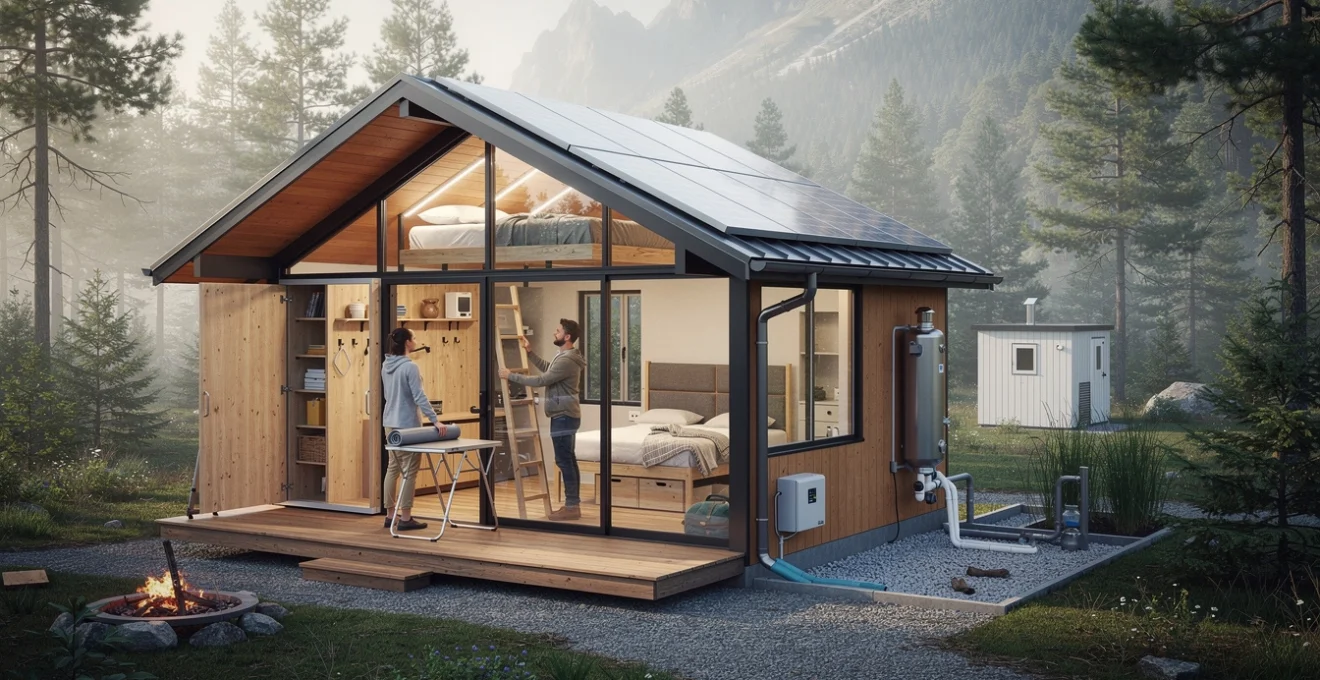
The movement towards minimalist living has transformed how travellers approach accommodation, with tiny cabins emerging as the perfect solution for those seeking both simplicity and sophistication. These compact dwellings, typically ranging from 100 to 400 square feet, represent a paradigm shift from traditional holiday rentals towards purposeful, efficient design that maximises every inch of available space. Unlike conventional hotel rooms or large holiday homes, tiny cabins offer an intimate connection with the environment whilst maintaining all essential amenities within a thoughtfully designed footprint.
Modern minimalist travellers are increasingly drawn to these micro-retreats for their ability to provide genuine comfort without excess. The appeal lies not in what these cabins omit, but in how masterfully they integrate functionality with aesthetic appeal. Each element serves multiple purposes, creating spaces that feel surprisingly spacious despite their compact dimensions. This approach to accommodation reflects a broader cultural shift towards intentional living, where quality of experience takes precedence over quantity of space.
The rise of tiny cabin culture has been remarkable, with bookings for compact accommodation increasing by 78% over the past three years. This surge reflects a growing appreciation for sustainable travel options that reduce environmental impact whilst delivering exceptional experiences. For many travellers, the confined space paradoxically offers greater freedom – freedom from clutter, unnecessary distractions, and the pressure to fill vast spaces with activities.
Micro-architecture design principles for sub-400 square foot cabin structures
Creating liveable spaces within such constrained dimensions requires adherence to specific architectural principles that challenge conventional design thinking. The most successful tiny cabins employ what architects term spatial compression techniques, where every design decision serves to expand the perceived volume of the interior. This involves careful consideration of proportions, sight lines, and the psychological impact of spatial relationships on occupant comfort.
The key to successful micro-architecture lies in understanding that space is not measured in square footage alone, but in how efficiently that footage serves human needs and creates emotional wellbeing.
Light manipulation forms the cornerstone of effective tiny cabin design. Large windows, often comprising 30-40% of wall surface area, create visual connections to the exterior landscape, effectively borrowing space from the surrounding environment. Strategic placement of these openings maximises natural light penetration whilst maintaining privacy and thermal efficiency. The positioning of windows also serves to frame specific views, creating focal points that draw the eye outward and expand the perceived boundaries of the interior space.
Multi-functional space planning through vertical storage integration
Vertical storage integration represents perhaps the most critical aspect of tiny cabin functionality. Rather than treating walls as mere boundaries, successful designs transform them into active storage systems that reach from floor to ceiling. This approach can increase usable storage capacity by up to 60% compared to traditional furniture arrangements. Built-in shelving, hidden compartments, and wall-mounted systems eliminate the need for standalone storage furniture, freeing precious floor space for living activities.
The implementation of vertical storage requires careful planning to maintain accessibility whilst maximising capacity. Items used daily should remain within easy reach (typically 4-6 feet from floor level), whilst seasonal or occasional items occupy higher storage zones. This stratified storage approach ensures that vertical space enhancement doesn’t compromise daily functionality or create safety hazards for occupants.
Modular furniture systems for maximum floor space optimisation
Modular furniture systems transform tiny cabins from static environments into dynamic spaces that adapt to different activities throughout the day. These systems typically feature pieces that stack, fold, or slide to reveal additional floor area when not in use. A dining table might collapse into a wall-mounted desk, whilst seating elements double as storage containers and can be reconfigured for various social arrangements.
Quality modular systems incorporate robust hardware designed for frequent manipulation without degradation. Industrial-grade hinges, slides, and locking mechanisms ensure that furniture transformations remain smooth and secure even after thousands of cycles. The investment in superior hardware pays dividends in user satisfaction and long-term functionality, preventing the frustration often associated with flimsy convertible furniture.
Loft-based sleeping quarters with ceiling height calculations
Loft sleeping areas represent an elegant solution to the challenge of accommodating a full bedroom within a tiny cabin’s footprint.
However, achieving a successful loft design in a tiny cabin requires more than simply elevating a mattress. Building codes and ergonomic comfort both point to an ideal minimum of 0.9–1.1 metres (around 3–3.6 feet) of clear headroom above the mattress surface, with at least 60 centimetres (24 inches) at the lowest point for safe movement. In sub-400 square foot cabin structures, designers typically work backwards from this requirement, calculating total cabin height, roof pitch, and insulation depth to ensure that neither standing space below nor comfort above is compromised.
Access to the loft is equally important. Alternating tread stairs or compact ship-style ladders often provide the best balance between safety and floor space efficiency, occupying as little as 5–7 square feet. Guard rails, integrated shelving in stair risers, and low-level night lighting reduce fall risk and enhance usability during night-time. By treating the loft as a fully considered micro-room – with integrated lighting, ventilation, and storage niches – rather than an afterthought, tiny cabin owners can gain a genuinely comfortable sleeping quarters that frees the main level for daytime living.
Convertible living zones using murphy bed and table mechanisms
In high-performance tiny cabins, no square foot performs a single function all day long. Convertible living zones rely on Murphy beds, folding desks, and telescopic tables to transform one physical area into a lounge, office, or bedroom within minutes. When closed, a wall bed can free up 20–30 square feet of floor area, effectively doubling the usable space in a compact living zone without expanding the cabin’s footprint. For minimalist travellers, this means a cabin that feels spacious during the day and deeply comfortable at night.
Engineering reliability into these mechanisms is crucial. Counterbalanced Murphy bed systems with gas struts or spring-loaded hinges allow effortless lifting and lowering, reducing strain and encouraging daily use rather than “occasional guest bed” status. Fold-down tables anchored to structural studs and supported by swing-out legs can function as both dining surfaces and workstations, while nesting stools store neatly beneath. The best designs conceal mechanisms behind clean cabinetry faces, preserving the minimalist aesthetic and avoiding the “utility room” look that can make a tiny cabin feel cluttered.
Off-grid infrastructure systems for remote cabin installations
For many minimalist travellers, the appeal of tiny cabins is inseparable from the promise of remote locations and off-grid self-sufficiency. An effective off-grid system turns a compact retreat into a fully functioning micro-home, capable of operating independently for days or even weeks. The core infrastructure centres around four pillars: power generation and storage, water sourcing and filtration, waste management, and safe, efficient heating.
Designing these systems is a balancing act between independence, upfront cost, and ongoing maintenance. Overspecifying equipment may add unnecessary expense and weight, while underspecifying leads to power shortages or water constraints that undermine comfort. The most successful off-grid tiny cabins therefore begin with a realistic lifestyle audit: how often will guests visit, what appliances are essential, and how many consecutive cloudy, cold, or dry days should the systems comfortably withstand?
Solar panel arrays with battery bank storage for 12V DC systems
Solar energy remains the backbone of most off-grid tiny cabin installations, especially in locations where grid connection is impractical or prohibitively expensive. A typical minimalist setup for a sub-400 square foot cabin might include a 1.5–3 kW solar array paired with a 5–10 kWh battery bank, sized to support LED lighting, device charging, a small fridge, and low-draw appliances. Many tiny cabins run a 12V DC backbone for core systems, supplemented by an inverter to provide 230V or 120V AC where required.
Panel placement is more than a question of roof space. Optimal orientation (usually south-facing in the northern hemisphere) and tilt angle can improve annual yield by 15–25% compared to a suboptimal layout. Where cabin roof size is limited, ground-mounted or pole-mounted arrays may provide better exposure and easier maintenance. To protect batteries – often lithium iron phosphate (LiFePO4) for their energy density and cycle life – a ventilated, temperature-stable compartment is recommended. Smart charge controllers and monitoring apps then give travellers real-time insight into consumption and generation, making energy use a conscious, manageable part of the minimalist experience.
Rainwater harvesting with filtration systems for potable water supply
Rainwater harvesting turns the tiny cabin roof into a productive catchment surface, reducing reliance on trucked-in or well-sourced water. A well-designed system typically starts with guttering and leaf guards, directing water into a first-flush diverter that discards the initial, debris-laden runoff after dry spells. From there, water enters storage tanks sized according to rainfall patterns and expected occupancy; for minimalist travel use, 1,000–2,500 litres can comfortably support short stays in moderate climates.
Transforming collected rainwater into a potable supply involves staged filtration. A common configuration uses a sediment pre-filter (e.g. 5–20 microns) followed by a carbon block filter to remove tastes and odours, and finally a UV sterilisation unit to inactivate bacteria and viruses. For travellers aiming to minimise single-use plastics, this setup allows safe, on-site drinking water, reducing the need to transport bottled supplies. As with solar design, matching storage capacity to real-world usage and local rainfall data helps ensure that the system is both robust and cost-effective.
Composting toilet installation and greywater management solutions
Waste management is often the most misunderstood aspect of off-grid tiny cabin design. Modern composting toilets, however, bear little resemblance to outdated, odorous systems. Ventilated, urine-diverting models dramatically reduce smells and accelerate decomposition, turning what might be a liability into a low-odour, low-water solution. Installed correctly, with a dedicated vent stack and a simple access hatch for finished compost, they can function reliably for years with only periodic maintenance.
Greywater – the outflow from sinks and showers – requires a different strategy. Where regulations permit, cabins often employ a filtration trench or reed bed system, allowing water to percolate through gravel and plant roots before returning to the soil. Soap selection becomes part of the design brief: biodegradable, low-phosphate products ensure that the greywater stream does not harm local ecosystems. In more sensitive locations, small, packaged treatment units can provide an added layer of purification, allowing dispersal that meets stricter codes while preserving the tiny cabin’s eco-conscious credentials.
Propane-based heating systems with ventilation safety protocols
In compact structures, heating loads are far lower than in conventional homes, but interior volume also warms and cools more rapidly. Propane-based systems – such as direct-vent wall heaters or high-efficiency mini gas stoves – are popular choices thanks to their high energy density and relative simplicity. A 3–5 kW heater is often sufficient for a well-insulated tiny cabin, especially when paired with high-performance windows and thorough air sealing.
Because combustion appliances introduce specific safety considerations, robust ventilation protocols are non-negotiable. Direct-vent units draw combustion air from outside and expel exhaust through sealed flues, minimising indoor air quality concerns. In addition, carbon monoxide detectors, propane leak detectors, and strategically placed trickle vents or mechanical ventilation with heat recovery (MVHR) further enhance safety. For travellers who prefer solid-fuel stoves, clearances, heat shields, and spark protection must be meticulously followed to ensure that the warmth and ambience of a fire never compromise structural integrity.
Premium tiny cabin manufacturers and construction specifications
While some minimalist travellers are drawn to self-build projects, a growing number prefer turnkey solutions from specialist tiny cabin manufacturers. These companies combine architectural insight, building science, and hands-on craftsmanship to create cabins that are road-legal, structurally robust, and optimised for both comfort and efficiency. In markets such as the UK, Europe, and North America, the sector has matured rapidly, with manufacturers offering a range of pre-engineered models tuned for different climates and use cases.
Premium builders typically differentiate themselves through their construction specifications. Expect insulated, timber-framed or structural insulated panel (SIP) walls, high-spec double or triple glazing, and natural, breathable materials that regulate humidity. Interior finishes often prioritise solid wood, low-VOC paints, and durable fixtures that stand up to the high usage typical of rental or “studycation” cabins. When comparing options, it is worth examining not just the aesthetic but the “hidden” layers: insulation R-values, air tightness targets, trailer chassis certification, and warranty terms all indicate how seriously a manufacturer takes long-term performance.
Strategic location selection for minimalist cabin placement
Where you place a tiny cabin can be as important as how you design it. Strategic location selection balances regulatory compliance, environmental responsibility, guest experience, and practical considerations such as access and utilities. For minimalist travellers, the goal is often a sense of seclusion without isolation – close enough to essential services and transport links, yet immersed in natural surroundings that support rest and reconnection.
Top tiny cabin hosts treat location planning almost like a site-specific art form. They study prevailing winds to position outdoor decks, orient windows towards the best views and solar gain, and consider how seasonal changes will affect light, privacy, and access. Have you ever arrived at a “remote” cabin only to hear a busy road through the trees? Intelligent site selection avoids these disappointments, aligning what guests imagine – tranquillity, birdsong, starlit skies – with what they actually experience.
Zoning regulations and building codes for accessory dwelling units
Zoning regulations and building codes shape what is possible on any given plot. In many jurisdictions, tiny cabins fall under the category of accessory dwelling units (ADUs) or mobile caravans, each with its own permissions, size limits, and placement rules. Setback requirements, maximum height, and occupancy restrictions can all influence whether a cabin can be used for full-time living, short-term rental, or occasional personal retreats.
Before committing to a purchase or build, it is wise to consult local planning departments or a planning consultant who understands small-structure regulations. Some regions have embraced tiny cabins as a tool for gentle densification and rural tourism, offering streamlined permits and clear guidance. Others remain more restrictive, particularly around short-term rentals. By clarifying the regulatory landscape early, you avoid costly redesigns or enforcement issues later – and ensure that your minimalist retreat remains a source of pleasure rather than paperwork.
Foundation options: concrete pads versus trailer mobility systems
Once permissions are in place, the next major decision is how the tiny cabin meets the ground. Broadly, foundations fall into two categories: permanent bases such as concrete pads or piers, and mobile systems using certified trailer chassis. Each carries implications for planning, mobility, and long-term flexibility. A concrete pad or block pier foundation offers rock-solid stability, ideal for locations with high winds or heavy snowfall, and can simplify utility connections for long-term stays.
Trailer-based systems, by contrast, treat the tiny cabin more like a road-legal caravan. This mobility can make it easier to comply with certain zoning rules, allow seasonal relocation, or even facilitate resale by towing the cabin to a new site. Modern manufacturers often design removable wheels and drawbars so that, once in place, the cabin appears visually grounded rather than overtly “on a trailer.” When choosing between options, consider not just your current plans but your exit strategy: will you want the freedom to move or reconfigure your minimalist retreat in five or ten years?
Environmental impact assessment for eco-sensitive site development
Eco-conscious travellers increasingly expect that their tiny cabin stays will protect – or even enhance – the surrounding landscape. An environmental impact assessment, even an informal one for a single cabin, helps identify sensitive habitats, watercourses, and species that could be affected by construction and ongoing use. Soil type, drainage patterns, and existing vegetation all influence where and how a cabin can sit lightly on the land.
Practical measures might include routing footpaths to avoid erosion-prone slopes, using permeable surfaces for parking, and preserving mature trees to maintain shade and wildlife corridors. Lighting design also plays a role: low, warm, shielded fixtures minimise light pollution and protect nocturnal species while still ensuring safe navigation for guests. By treating the landscape as a partner rather than a backdrop, tiny cabin owners can create retreats that feel integrated and respectful – a powerful draw for minimalist travellers who prioritise sustainability.
Cost analysis framework for tiny cabin investment planning
Behind the romance of a forest hideaway or meadow micro-retreat lies a more prosaic question: what will it cost, and will it pay back? A structured cost analysis framework helps prospective owners move beyond headline prices to understand the total cost of ownership and potential returns. At a high level, expenses fall into four categories: acquisition or build cost, site preparation and utilities, regulatory and professional fees, and ongoing operation and maintenance.
Turnkey tiny cabins from reputable manufacturers might range from £40,000 to £110,000 (or regional equivalents), depending on size, finish level, and off-grid capabilities. Site works – including foundations or tie-down systems, access tracks, and utility connections or off-grid systems – can add 20–50% to that figure, particularly on remote or sloping land. For those planning to host minimalist travellers, revenue projections should factor in realistic occupancy rates, seasonal variation, and platform fees. Many well-located cabins achieve 50–70% annual occupancy, but conservative estimates help ensure that any investment remains comfortable even in slower years.
Operational costs, by contrast, are often lower than for conventional holiday homes. Efficient envelopes, compact footprints, and renewable energy systems can keep utilities modest, while simple, durable interiors reduce replacement and repair expenses. When you model cash flow, it can be useful to compare scenarios: personal use only, hybrid personal and rental use, or full-time rental. This “what if” analysis clarifies not only financial viability but also how often you will personally occupy the cabin – a subtle but important factor in the overall value you derive from the project.
Technology integration for smart cabin management systems
Smart technology, when applied thoughtfully, enhances the minimalist travel experience rather than cluttering it. In tiny cabins, compact, integrated systems can monitor energy use, control heating, manage access, and even provide guests with tailored information without overwhelming the serene atmosphere. The aim is quiet competence: technology that fades into the background while keeping the cabin secure, efficient, and easy to manage remotely.
Key components often include smart thermostats compatible with propane or electric heaters, app-controlled lighting scenes, and smart locks that enable keyless, time-limited entry for guests and maintenance staff. Energy monitors connected to solar and battery systems give both owners and eco-conscious travellers clear insight into consumption patterns, encouraging mindful use. For hosts managing multiple minimalist cabins, centralised dashboards can streamline cleaning schedules, detect anomalies such as water leaks or low battery states, and automate pre-arrival heating so that each guest steps into a warm, welcoming space.
Of course, connectivity must be balanced with the desire to “switch off.” Some owners choose to provide robust Wi-Fi for remote workers, while others intentionally limit bandwidth to encourage digital detox. Either way, clear communication sets expectations: guests who know in advance whether they can host video calls from their loft bed or are invited to embrace a screen-light weekend will arrive primed for the experience you intend to offer. In that sense, smart systems are less about gadgetry and more about curating the rhythm of a stay – allowing tiny cabins to deliver compact comfort with quietly sophisticated support.