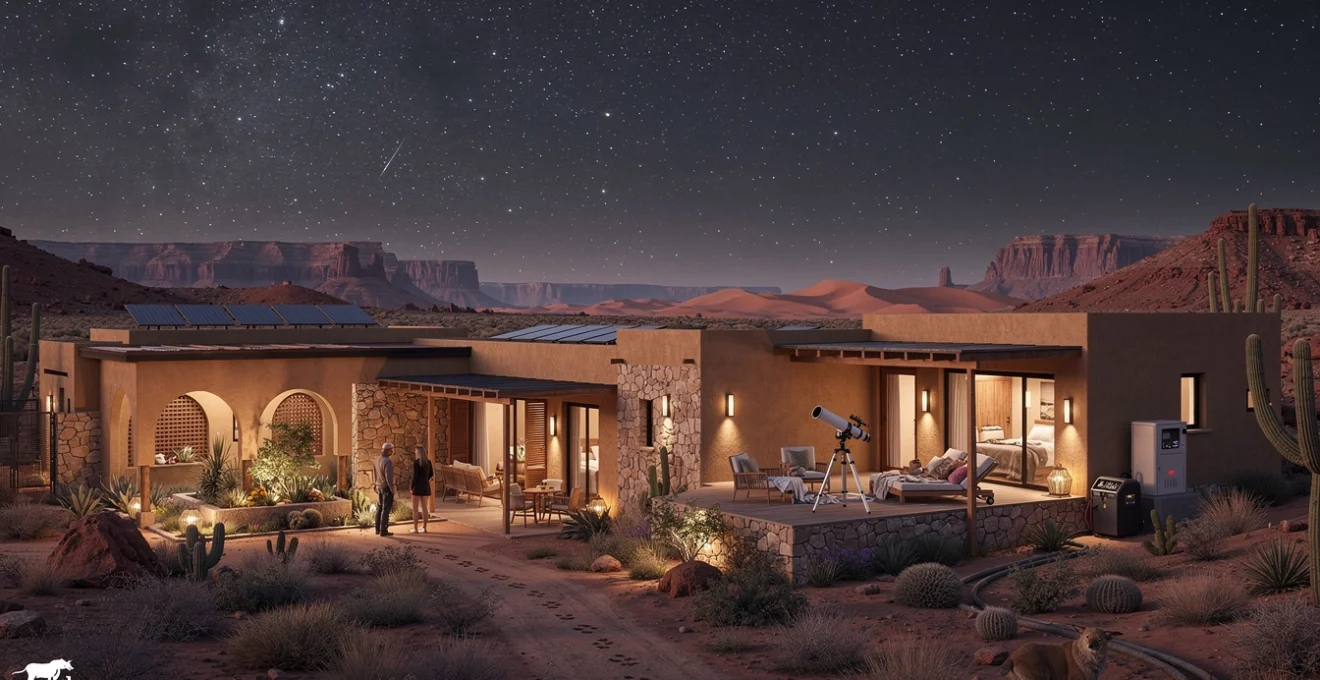
The vast expanses of the world’s desert regions have become increasingly sought-after destinations for travellers seeking unparalleled tranquillity and astronomical wonder. Desert lodges represent a unique intersection of luxury hospitality, sustainable architecture, and environmental consciousness, offering guests the opportunity to experience nature’s most dramatic landscapes whilst maintaining comfort and connection to the cosmos above. These remarkable accommodations have evolved from basic desert camps into sophisticated retreat centres that harmonise cutting-edge design with ancient building techniques, creating spaces where modern amenities coexist with the timeless serenity of arid wilderness.
The appeal of desert lodge experiences extends far beyond simple accommodation, encompassing immersive cultural encounters, world-class stargazing opportunities, and transformative moments of solitude beneath infinite night skies. As urban light pollution continues to obscure stellar visibility worldwide, these remote sanctuaries preserve access to some of Earth’s most pristine dark-sky environments, where the Milky Way appears in stunning clarity and celestial phenomena unfold with breathtaking intensity.
Architectural design elements for desert accommodation sustainability
Modern desert lodge architecture represents a sophisticated fusion of traditional building wisdom and contemporary sustainable design principles. These structures must withstand extreme temperature fluctuations, intense solar radiation, and occasional severe weather events whilst minimising environmental impact on fragile desert ecosystems. The most successful designs draw inspiration from centuries-old desert dwelling techniques, incorporating passive cooling strategies and locally-sourced materials that have proven their effectiveness across generations of desert habitation.
Passive solar orientation and building envelope optimisation
Strategic building orientation forms the foundation of effective desert lodge design, with structures positioned to maximise winter solar gain whilst minimising summer heat absorption. Optimal orientation typically places the longest building axis along the east-west direction, allowing for controlled southern exposure through carefully designed overhangs and shading systems. Double-wall construction techniques create thermal barriers that significantly reduce heat transfer, whilst high-performance insulation materials maintain interior comfort without excessive energy consumption.
Window placement and sizing require meticulous planning to balance natural lighting needs with thermal control requirements. Smaller openings on east and west facades prevent unwanted heat gain during morning and afternoon hours, whilst larger north-facing windows provide consistent natural illumination without direct solar exposure. Advanced glazing technologies, including low-emissivity coatings and selective transmission films, further enhance thermal performance whilst preserving views of surrounding landscapes.
Natural ventilation systems and courtyard integration
Traditional courtyard designs have been reinterpreted for contemporary desert lodges, creating natural cooling zones that facilitate cross-ventilation and evapotranspiration. These enclosed outdoor spaces often feature water elements, shade structures, and carefully selected vegetation that collectively reduce ambient temperatures through evaporative cooling processes. Wind towers and solar chimneys enhance natural airflow patterns, drawing hot air upward whilst pulling cooler air through living spaces.
Clerestory windows and strategically positioned vents create stack ventilation effects that maintain comfortable interior conditions during moderate weather periods. These passive systems significantly reduce mechanical cooling requirements, particularly during shoulder seasons when temperature differentials between day and night temperatures provide natural cooling opportunities. The integration of automated window systems allows for programmed ventilation cycles that optimise comfort whilst conserving energy.
Thermal mass construction using adobe and rammed earth
Adobe and rammed earth construction techniques offer exceptional thermal performance characteristics ideally suited to desert environments. These materials absorb heat during daylight hours and release stored thermal energy gradually throughout cooler evening and night periods, creating naturally regulated interior temperatures. Modern applications of these ancient techniques incorporate stabilising additives and moisture barriers that enhance durability whilst maintaining traditional aesthetic qualities.
Thermal mass walls typically range from 12 to 24 inches in thickness, providing substantial heat storage capacity that moderates temperature swings throughout daily cycles. Rammed earth construction allows for precise control over aggregate composition, enabling optimisation of thermal properties for specific climatic conditions. These techniques also offer excellent acoustic properties, creating serene interior environments that enhance the peaceful desert experience.
Indigenous building materials and local stone applications
Utilising locally-sourced materials reduces transportation costs and environmental impact whilst ensuring architectural harmony with surrounding landscapes. Indigenous stone varieties offer excellent durability and thermal properties, often featuring natural colours and textures that complement desert aesthetics.
In many premium desert lodges, local stone is paired with timber, lime plasters, and hand-woven textiles to create interiors that feel both grounded and luxurious. Rough-hewn walls, shaded colonnades, and stone-clad platforms dissolve the boundary between indoor and outdoor living, allowing guests to sleep under the stars without sacrificing comfort. This material palette not only reduces embodied carbon but also weathers gracefully, so that over time the lodge looks as though it has grown organically from the surrounding dunes and rocky outcrops.
Premium desert lodge destinations across global arid regions
Across the world’s great deserts, a new generation of desert lodges is redefining what it means to stay in remote, arid environments. From historic caravan routes in North Africa to salt-crusted basins in South America, these properties blend architectural ingenuity with immersive guest experiences. When you are choosing a desert lodge, it helps to understand how each region’s geology, culture, and climate shape both the design of the accommodation and the type of peaceful nights beneath open skies that you can expect.
Many of the most acclaimed desert lodges sit within protected areas or recognised dark-sky reserves, prioritising low-impact design and astronomical tourism. While the specifics vary—from glass-domed suites in Icelandic lava fields to rammed-earth villas in Namibia—what unites them is a focus on silence, stargazing, and a close relationship with the land. Below, we explore key desert regions and highlight the characteristics that make their lodge experiences distinct.
Atacama desert luxury retreats in chile’s norte grande
The Atacama Desert in Chile’s Norte Grande is often cited as the driest non-polar desert on Earth, with some weather stations recording virtually no rainfall for decades. This extreme aridity, combined with high altitude and minimal light pollution, has turned the region into a global hub for astronomical observation and luxury desert lodges. Properties around San Pedro de Atacama, such as architect-designed retreats and boutique spas, frame views of volcanoes, salt flats, and crystalline night skies through expansive glazing and open-air terraces.
Most Atacama desert lodges employ adobe and rammed earth construction to regulate indoor temperatures, paired with shaded courtyards and pergolas that allow guests to enjoy outdoor spaces even during the intense midday sun. Stargazing platforms, rooftop lounges, and “star beds” are common features, inviting you to fall asleep while the Southern Hemisphere’s constellations wheel overhead. Guided excursions typically combine geology, culture, and astronomy—visits to moonlike valleys, highland lagoons, and local villages are often followed by evening telescope sessions led by expert astronomers.
Rajasthan thar desert heritage properties and maharaja palaces
In India’s Thar Desert, particularly in Rajasthan, desert lodges often take the form of restored havelis, fortified palaces, and tented camps that evoke the region’s royal caravan routes. Heritage properties in and around cities like Jaisalmer, Jodhpur, and Bikaner use thick sandstone walls, inner courtyards, and jali (perforated stone screens) to create naturally cool, shaded interiors. Many offer rooftop terraces for open-air sleeping, where you can stretch out under the stars as desert breezes drift across the ramparts.
Luxury tented camps on the outskirts of the Thar Desert combine traditional Rajasthani textiles, low lighting, and fire pits with modern amenities like en-suite bathrooms and solar-powered cooling. Night-time experiences typically include folk music performances, camel safaris to remote dunes, and traditional dinners served under lantern-lit canopies. While the Thar is not as isolated as some other deserts, careful master planning allows premium lodges to maintain a sense of seclusion and provide guests with tranquil nights, far from urban noise and glare.
Namib desert exclusive camps in sossusvlei and NamibRand
The Namib Desert, one of the oldest deserts in the world, is famed for its towering red dunes, gravel plains, and stark mountain ranges. Around Sossusvlei and within the NamibRand Nature Reserve, a cluster of ultra-low-density lodges offers some of the most exclusive desert accommodation on the planet. Suites are often designed as individual pavilions or villas, oriented to capture sunrise over the dunes and sunsets fading into crystal-clear, star-strewn nights.
Namib desert lodges frequently incorporate star decks, retractable roofs, or dedicated skybeds that invite guests to sleep entirely outdoors in safety and comfort. The NamibRand reserve is recognised as a Gold Tier International Dark Sky Reserve, meaning astronomical visibility is virtually unmatched; the Milky Way often casts a faint shadow on the sand. Architecturally, these exclusive camps favour muted palettes, rammed earth, stone, and timber, blending gently into the landscape and minimising visual impact by limiting building footprints and artificial lighting.
Arabian peninsula desert resorts in wadi rum and empty quarter
Across the Arabian Peninsula, desert resorts in regions such as Jordan’s Wadi Rum and the vast Empty Quarter (Rub’ al Khali) of Oman and Saudi Arabia draw on both Bedouin traditions and contemporary design. In Wadi Rum, camp-style lodges nestle among sandstone cliffs and vast red-sand valleys, with tented suites or geodesic domes positioned to offer uninterrupted views of the night sky. Many camps allow you to sleep on raised platforms outside your tent, wrapped in blankets beneath constellations that guided caravans for centuries.
In the Empty Quarter and Wahiba Sands, high-end desert lodges often emphasise privacy and silence, spacing suites far apart and using low-rise architecture to preserve the horizon line. Canvas and goat-hair tents are combined with stone and timber structures housing shared facilities like lounges and dining areas. Activities are built around dune trekking, camel caravans, and cultural immersion with Bedouin hosts, with evenings reserved for traditional music, fireside storytelling, and stargazing sessions that reveal how desert dwellers have long navigated by the stars.
Sonoran desert wilderness lodges in arizona and baja california
The Sonoran Desert spans the southwestern United States and northwestern Mexico, encompassing saguaro-studded landscapes, rugged mountain ranges, and coastal desert meeting the Sea of Cortez. Wilderness lodges and eco-resorts in Arizona and Baja California increasingly position themselves as gateways to both desert ecology and night-sky tourism. Low-rise casitas, adobe-inspired villas, and glass-walled suites are common typologies, designed to frame views of cactus forests and vast, starry skies.
Because the Sonoran Desert experiences pronounced seasonal shifts—including intense summer heat and monsoon storms—lodge architecture here relies heavily on shaded verandas, deep overhangs, and ventilated roofs. Many properties integrate outdoor sleeping terraces, hammocks, and rooftop decks where guests can enjoy cool night air and meteor showers. Wildlife-friendly lighting, controlled access roads, and native plant landscaping help these lodges minimise their ecological footprint while still offering premium amenities such as spas, observatories, and guided night hikes that introduce guests to nocturnal desert life.
Off-grid infrastructure and environmental impact mitigation
Remote desert lodges frequently operate far from municipal grids, relying on self-sufficient systems for power, water, and waste management. This off-grid approach demands robust engineering as well as a deep respect for the fragility of desert ecosystems. Thoughtful infrastructure design not only reduces operational costs over time but also ensures that guests can enjoy peaceful nights beneath open skies without compromising the integrity of the landscapes they have come to experience.
In recent years, a growing number of premium desert retreats have adopted near-zero-emission operations, making use of high-efficiency solar arrays, advanced battery storage, and integrated water recycling. While such systems can be technically complex, their day-to-day operation is largely invisible to the guest; you might charge your camera or take a hot shower without ever realising that the energy was harvested from the same sun that bakes the dunes by day.
Solar panel arrays and battery storage system configuration
Given the abundance of sunlight in arid regions, solar power is the cornerstone of off-grid energy strategies for desert lodges. Roof-mounted or ground-based photovoltaic (PV) arrays are typically sized to meet peak daily loads, including air-cooling systems, kitchen equipment, and guest charging needs. For a small, high-end desert lodge with 10–20 suites, it is not uncommon to see PV capacities in the 100–250 kW range, backed by modular lithium-ion battery banks that store excess energy for use after sunset.
Careful configuration of solar panel tilts, orientations, and string inverters ensures high efficiency across the year, even as the sun’s path shifts with the seasons. Battery storage, often providing 8–12 hours of autonomy, is crucial in delivering a seamless guest experience; no one wants the lights to flicker while they are stargazing from their plunge pool. Many operators also maintain small, low-emission backup generators for rare cloudy periods or emergency loads, but the overarching goal is to rely on renewables for 80–100% of annual energy consumption.
Greywater recycling and rainwater harvesting technologies
Water scarcity is a defining challenge for desert hospitality, so responsible lodges treat every drop as a precious resource. Greywater recycling systems capture relatively clean wastewater from showers, basins, and laundry, then filter and disinfect it for reuse in landscape irrigation or toilet flushing. When properly designed, such systems can reduce potable water demand by 30–50%, allowing desert lodges to maintain shaded courtyards and small gardens without unsustainable extraction from aquifers.
Rainfall in many deserts is infrequent but often intense, making rainwater harvesting a logical complement to greywater reuse. Roof and terrace drainage is channelled into cisterns where water is stored, filtered, and in some cases treated to potable standards. While collection volumes can be modest in hyper-arid environments, this water can still play a strategic role—topping up storage, supporting emergency reserves, or irrigating native vegetation around guest areas. Combined with low-flow fixtures and guest education, these technologies help ensure that your luxurious outdoor shower does not come at the expense of local communities or ecosystems.
Waste management protocols for remote desert locations
In remote desert settings, improper waste disposal can quickly scar the landscape and harm wildlife, so rigorous protocols are essential. Many premium desert lodges adopt a “pack in, pack out” philosophy for non-organic waste, transporting recyclables and residual landfill waste back to urban centres. On-site, waste streams are separated at source—glass, metals, plastics, and organics—using clearly labelled collection points for staff and guests. This not only improves recycling rates but also raises awareness of the hidden footprint of travel.
Organic waste from kitchens and landscaping is often composted or processed through biodigesters, which can generate biogas for cooking or heating water. Septic systems, where used, are designed to high environmental standards with lined tanks and leach fields that protect groundwater. In sensitive dune or rock environments, lodge operators may even limit single-use packaging and purchase goods in bulk to reduce overall waste volumes. When you are sipping tea under the stars, the goal is for the only trace left behind to be faint footprints in the sand.
Wildlife corridor preservation and habitat restoration practices
Desert lodges frequently sit within or adjacent to critical wildlife corridors used by species such as Arabian oryx, desert foxes, antelope, and migratory birds. To avoid fragmenting habitats, master plans are developed in consultation with ecologists, mapping habitual movement paths and setting strict no-build zones. Vehicle routes are minimised and kept to defined tracks, while fencing is avoided or carefully designed to allow free passage of native fauna. Low-speed limits and night-driving restrictions further protect animals that are most active after dark.
Many operators go beyond avoidance to actively restore degraded habitats. This might include replanting native grasses and shrubs, controlling invasive species, and rehabilitating overgrazed areas. Artificial water points are used sparingly and strategically, ensuring that they support wildlife without altering natural behaviour patterns. For guests, guided nature walks and interpretive signage explain how these practices allow you to enjoy wildlife viewing and stargazing without disrupting the intricate web of desert life.
Astronomical tourism integration and stargazing infrastructure
One of the defining attractions of desert lodges is their access to exceptionally dark skies, making them ideal hubs for astronomical tourism. As urban areas worldwide continue to brighten, deserts increasingly serve as sanctuaries where you can still see the Milky Way arch from horizon to horizon. To harness this asset, many lodges invest in dedicated stargazing infrastructure and bespoke programming that turns a simple night under the stars into a curated cosmic experience.
Specialised star decks, often raised on platforms away from main buildings, are equipped with comfortable loungers, low-intensity red lighting, and sometimes integrated audio systems for live storytelling. Larger properties may include small observatories with retractable roofs and medium-aperture telescopes, allowing guests to observe planets, nebulae, and star clusters in astonishing detail. Astrophotography workshops are increasingly common, where you can learn how to capture time-lapse images of star trails or the galactic core, guided by resident astronomers or visiting experts.
Operationally, successful astronomical tourism hinges on thoughtful lighting design. Exterior lights are shielded and downward-facing, using warm colour temperatures and motion sensors to limit skyglow. Interior lighting is designed to avoid spill through large windows at night, with blackout curtains or low-lumen alternatives available. Some lodges coordinate schedules around celestial events—meteor showers, lunar eclipses, or the return of prominent comets—creating seasonal packages that attract both casual stargazers and serious enthusiasts. In this way, sleeping outdoors becomes part of a broader journey that reconnects guests with the rhythms of the universe.
Cultural immersion programming with indigenous desert communities
Authentic cultural immersion is central to many desert lodge experiences, especially where Indigenous or long-established desert communities maintain strong ties to the land. Rather than presenting culture as a static performance, leading lodges partner with local groups to co-create programming that reflects living traditions—storytelling, music, craft, cuisine, and traditional navigation by stars. This approach not only enriches your stay but also channels economic benefits directly into host communities.
Typical activities might include guided walks with Bedouin, Berber, San, or Native American guides who explain medicinal plants, animal tracking, and seasonal migration patterns. Evening storytelling sessions often take place around a fire or on open terraces, where elders share creation stories, star lore, and personal histories under the very skies that inspired them. Hands-on workshops—such as weaving, pottery, or bread baking in sand ovens—allow guests to engage actively, rather than passively consuming a staged performance.
From a sustainability perspective, well-designed cultural programs are rooted in consent, fair compensation, and long-term partnerships. Lodges may contribute a portion of their revenue to community-led projects such as schools, water infrastructure, or cultural preservation initiatives. For guests, clear codes of conduct—around photography, dress, and respectful interaction—help ensure that encounters are mutually beneficial and dignified. When done well, spending a night in a desert lodge becomes more than a scenic escape; it becomes an opportunity to understand how people have thrived in these landscapes for millennia.
Seasonal operational considerations for desert hospitality management
Managing a desert lodge is as much about reading the seasons as it is about hosting guests. Extreme temperature variations, seasonal winds, and occasional storms can all influence when and how a property operates. Many desert lodges adopt a seasonal calendar, opening during the most comfortable periods—often autumn to spring—and scaling back or closing entirely during peak summer heat. This protects staff and guests while also reducing strain on cooling systems and local resources.
Within the operating season, managers adjust offerings to align with daily and seasonal rhythms. In hotter months, activities are shifted to early mornings and late afternoons, with long midday breaks when guests can rest in shaded suites or take advantage of plunge pools and spas. In cooler periods, hiking, cycling, and extended outdoor dinners under the stars become focal experiences. Some lodges maintain flexible “sleep under the stars” options, offering open-air beds or rooftop terraces when nighttime temperatures are mild, and reverting to enclosed suites during cold or windy spells.
Operational planning also extends to supply chains and staffing. Remote desert locations typically require bulk provisioning ahead of high season, with careful inventory control to minimise waste and avoid emergency deliveries that increase emissions. Staff training includes emergency response for heat-related illnesses, sandstorms, and flash floods, ensuring safety in the face of abrupt weather changes. By aligning architecture, infrastructure, and service design with seasonal patterns, desert lodges can provide consistently peaceful nights beneath open skies while maintaining resilience in challenging environments.