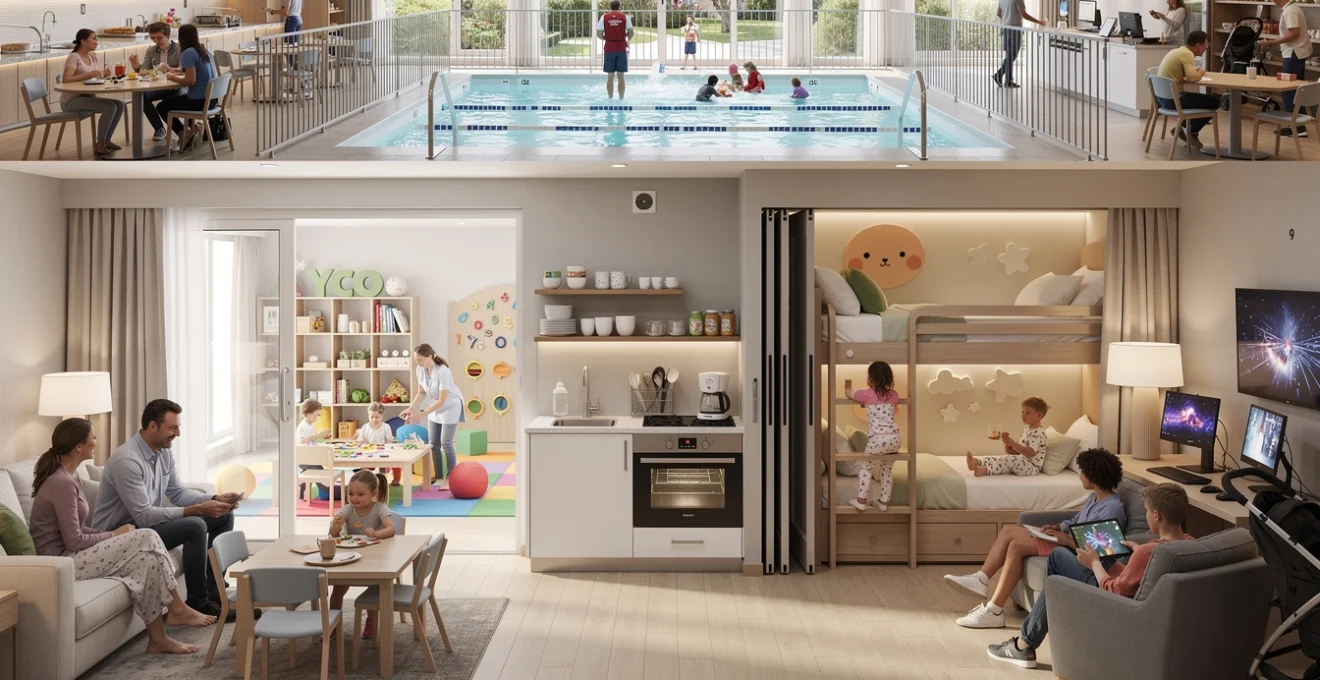
The evolution of family hospitality has transformed dramatically over the past decade, with resorts recognising that successful family holidays require thoughtful design that serves both children and adults equally. Modern family-focused properties have moved beyond basic amenities to create sophisticated environments where parents can genuinely relax whilst children engage in meaningful, supervised activities. These developments represent a fundamental shift in how the hospitality industry approaches multi-generational travel, acknowledging that family satisfaction depends on meeting diverse needs simultaneously.
Contemporary family resorts now integrate architectural solutions, childcare infrastructure, and service models specifically designed to address the practical challenges of travelling with children. From interconnected suite configurations that provide privacy alongside togetherness, to age-appropriate activity zones that engage children whilst allowing parental respite, these properties demonstrate how intentional design can transform family holidays from endurance tests into genuinely restorative experiences.
Interconnected suite configurations in Family-Focused resort architecture
The architectural foundation of exceptional family resorts begins with accommodation that recognises the complex dynamics of family travel. Traditional hotel rooms simply cannot accommodate the space requirements, privacy needs, and practical considerations that arise when parents travel with children of varying ages. Leading family resorts have responded by developing sophisticated room configurations that balance togetherness with individual space requirements.
Adjacent room connectivity systems with lockable partition doors
Modern family suite connectivity extends far beyond simple adjoining rooms. Properties like Beaverbrook offer interconnecting options such as their Ian Fleming and Joe Kennedy suites, which connect via external lockable doors that provide security whilst maintaining accessibility. These systems allow parents to maintain auditory contact with sleeping children whilst enjoying adult conversation in separate spaces. The lockable mechanism ensures that when privacy is required, families can create distinct zones within their accommodation without compromising safety or convenience.
Advanced connectivity systems incorporate soundproofing between spaces, allowing parents to enjoy late-evening conversations or early-morning coffee without disturbing sleeping children. Some properties feature smart monitoring systems that enable parents to check on children through discrete audio or visual connections, providing peace of mind whilst maintaining the independence that makes holidays restorative for adults.
Multi-generational suite layouts at center parcs and bluestone resort
Multi-generational accommodation represents perhaps the most sophisticated approach to family resort architecture. These configurations acknowledge that modern family holidays often include grandparents, adult children, and young grandchildren travelling together. Center Parcs pioneered the concept of villa-style accommodation within resort environments, creating spaces where three generations can holiday together whilst maintaining individual privacy and comfort.
These layouts typically feature master suites for grandparents, family rooms for parents with young children, and teen spaces that provide age-appropriate independence. Common areas include kitchenettes, living spaces, and outdoor terraces that encourage family interaction whilst providing retreat options when individual space becomes necessary. The architectural challenge lies in creating flow between spaces that feels natural rather than segregated.
Kitchenette integration within standard accommodation units
The inclusion of kitchenette facilities within family accommodation addresses one of the most practical challenges of travelling with children: maintaining familiar eating routines and accommodating dietary restrictions. Properties like Martinhal Sagres recognise that young children often require meals at irregular intervals, and parents appreciate the flexibility of preparing familiar foods when restaurant options prove challenging.
Modern kitchenette integration goes beyond basic facilities to include child-safe appliances, height-appropriate storage, and equipment specifically designed for preparing children’s meals. Some resorts provide welcome packages that include basic provisions, reducing the stress of arrival-day meal planning. These facilities prove particularly valuable for families managing allergies, dietary restrictions, or the eating preferences of picky young eaters.
Dedicated children’s sleep zones with bunk bed alcoves
The design of children’s sleeping areas within family suites requires careful consideration of both safety and excitement. Leading family resorts create dedicated children’s zones that feel special and adventurous whilst maintaining practical safety standards. Bunk bed alcoves that can be concealed when not in use, as seen at Beaverbrook, provide flexibility for families travelling with varying age groups whilst maintaining the aesthetic appeal of the accommodation.
These dedicated sleep zones often incorporate themed
these dedicated sleep zones often incorporate themed lighting, blackout blinds, and built-in storage for toys and books, helping children feel grounded in an unfamiliar environment. Some resorts add playful design elements such as porthole windows, curtain screens, or cabin-style panelling so that bedtime feels like part of the holiday adventure rather than a negotiation. From a practical perspective, integrated night lights, guard rails, and low-height steps reduce trip hazards during night-time bathroom visits. When designed well, these bunk bed alcoves act as compact “children’s rooms” within a suite, giving parents the psychological benefit of separate bedrooms without the cost of booking multiple units.
Separate adult relaxation areas with privacy screening
Alongside imaginative children’s areas, high-performing family resorts prioritise defined adult zones where parents can decompress. Rather than a single open-plan room with a bed and sofa, you increasingly find layouts that include a separate lounge or terrace, divided by sliding doors, glass partitions with curtains, or cleverly placed shelving units. This allows adults to read, work, or enjoy a quiet drink while children sleep undisturbed in the adjacent space.
Properties such as Estelle Manor and Chewton Glen demonstrate how privacy screening can feel both luxurious and family-friendly. Acoustic panels, thick curtains, and soft furnishings reduce sound transfer, while dimmable lighting lets one partner stay up late without flooding the whole space with light. For parents of babies, these zones work particularly well with audio monitors, giving you the freedom to reclaim your evening routine without leaving the room. In effect, the suite functions like a compact apartment, with small but crucial separations between “family time” and “adult time”.
Specialised childcare infrastructure and supervised activity zones
If interconnected rooms are the hardware of a family resort, then childcare infrastructure is the software that makes the whole system run smoothly. Parents are no longer satisfied with a single playroom and a couple of plastic toys; they look for structured kids’ clubs, qualified supervision, and environments designed to foster learning as well as play. As more properties compete for family travellers, we see resorts adopting education- and development-led approaches rather than simple entertainment.
Age-stratified kids’ clubs with montessori-inspired learning spaces
Many of the best family resorts now operate age-stratified kids’ clubs, dividing children into narrow age bands to tailor activities and supervision. You might see distinct programmes for babies, toddlers, early years, juniors, and teens, each with dedicated rooms and specialist staff. This mirrors the Montessori principle of prepared environments, where space and materials are adapted to the developmental stage of the child. Low shelves, tactile materials, and child-sized furniture encourage independence and exploration rather than passive screen time.
Resorts such as Martinhal Sagres and Sani Resort incorporate activity zones that look closer to curated nurseries or early years classrooms than simple playrooms. You’ll find open-ended resources for building, art, music, and nature-based projects, often linked to local culture or the surrounding environment. For parents, this means children are not only safely supervised but also engaged in play that supports fine motor skills, language development, and social interaction. When you return to pick them up, you’re more likely to be handed a handmade craft or hear about a science experiment than a complaint about being bored.
Sensory play areas featuring interactive wall systems and soft play equipment
Sensory play is increasingly recognised as essential for young children, particularly those under five or with additional needs. Forward-thinking family resorts are integrating sensory rooms and soft play zones equipped with interactive wall panels, textured surfaces, and adjustable lighting. Think of these as mini adventure labs where toddlers can climb, crawl, and experiment with cause and effect in a safe, padded environment. For parents, they provide an ideal space to burn off energy on rainy days or during the late afternoon “witching hour”.
Typical features include ball pits, foam blocks, low climbing frames, projected games on the floor, and quiet nooks with fibre-optic lights or bubble tubes for calming overstimulated children. Interactive wall systems might respond to touch, sound, or movement, rewarding children’s curiosity with changing colours and patterns. By separating high-energy soft play from quieter club rooms, resorts can manage noise levels and ensure that babies and sensitive children still have access to calm, predictable environments. It’s a design approach that mirrors good early-years practice and helps maintain harmony for families with siblings of different temperaments.
Teen zones with gaming stations and social media connectivity hubs
Teenagers often fall through the gaps in traditional resort planning: too old for kids’ clubs, too young to enjoy adult-centric amenities. To address this, many properties now dedicate specific areas to adolescents, blending gaming, creativity, and low-key social spaces. These teen zones might include console gaming stations, fast Wi-Fi, content-creation corners with ring lights, and communal tables for board games or group projects. Crucially, they are usually designed as “no parents” spaces, giving teens a sense of autonomy within a controlled environment.
Resorts such as Puente Romano and Phāea Cretan Malia have led the way with teen lounges that host DJ workshops, film nights, or TikTok choreography sessions. The aim is not to encourage constant screen time but to harness teens’ digital interests in a positive, supervised setting. Clear usage rules, staff oversight, and healthy time limits keep things balanced. For multi-generational trips, these hubs can be the key to convincing older children that a family resort holiday can still feel aspirational and age-appropriate rather than “for little kids”.
Qualified childcare staff certification standards and background screening protocols
Behind every successful kids’ club is a robust framework of recruitment, training, and safety checks. Parents increasingly ask detailed questions about ratios, qualifications, and safeguarding policies before booking a family resort holiday. Leading properties respond by employing staff with recognised childcare or education credentials, first-aid training, and ongoing professional development. In the UK and EU, this often means alignment with Ofsted or local regulatory standards, even if formal inspections are not mandated.
Comprehensive background checks, including enhanced criminal record screenings, reference verification, and strict photo and social media policies, are becoming non-negotiable for reputable family resorts. Many brands also implement clear sign-in/sign-out procedures, unique family codes, and secure wristbands to prevent unauthorised collection of children. When you arrive at the club, you’ll typically be briefed on emergency procedures, allergy protocols, and how staff handle behavioural challenges. This level of transparency builds trust and allows parents to enjoy spa treatments or dinners knowing that robust systems are in place, not just good intentions.
Practical dining solutions and family-centric food service models
Dining is often where family holidays either shine or unravel. Long waits, unsuitable menus, and cramped spaces can turn even the most patient child into a reluctant diner. Recognising this, family-focused resorts now treat food service as part of their core family infrastructure rather than an afterthought. From staggered meal times to cleverly designed buffets, the goal is to make eating together enjoyable rather than stressful.
Children’s buffet stations with height-appropriate serving equipment
One of the most visible evolutions in family resort dining is the rise of children’s buffet stations set at child height. Instead of lifting toddlers to reach serving dishes, parents can stand back while children choose their own food from scaled-down counters and chafing dishes. This simple design tweak supports independence and reduces queues, especially at peak breakfast and dinner times. It also aligns with Montessori-inspired principles, letting children make age-appropriate choices and practise basic skills like serving and carrying plates.
Resorts such as Crieff Hydro and large all-inclusive properties in Greece and Spain often combine these stations with clear labelling, colourful presentation, and portion-sized dishes to reduce waste. Some go further, offering “build your own” bars—pasta with mix-and-match sauces, taco stations, or yoghurt with toppings—so siblings with different tastes can all find something they like. For parents aiming to maintain balanced nutrition on holiday, the best family-friendly hotels in Europe provide plentiful fruit, vegetables, and wholegrain options alongside familiar comfort foods.
High chair availability and baby food preparation facilities
For families with babies and toddlers, the availability of practical equipment can make or break the dining experience. Leading resorts stock robust high chairs across all restaurants and often in reserve, reducing the scramble at busy times. But the real differentiator is how they support bottle feeding and weaning. Many properties now offer guest-accessible microwaves, bottle warmers, sterilisers, and blenders either in a dedicated baby corner of the restaurant or in a separate preparation room.
Resorts like Almyra and Vila Vita Parc take this further with “baby stations” stocked with basic purees, cereals, and sterilised utensils, sometimes available 24/7. In-room minibars may be reconfigured as mini-fridges for expressed milk or baby food, and room service menus often include simple, salt-free options suitable for under-ones. For parents, this level of consideration reduces the need to travel with bulky equipment and allows you to maintain your child’s feeding routine without constant improvisation.
Flexible dining schedules accommodating infant feeding routines
Rigid restaurant hours rarely suit families with jet lag, nap schedules, or hungry toddlers who operate on their own timetable. That’s why flexible dining is now a hallmark of genuinely family-focused resorts. All-day dining restaurants, extended breakfast windows, and early children’s sittings give parents options to work around their own rhythms rather than the kitchen’s. Some hotels open selected venues an hour earlier for families, providing access to a full or partial buffet before the main rush.
Room service and takeaway options—such as pizza from the hotel deli, picnic boxes, or kids’ meals delivered to your suite—bridge the gap when little ones are too tired for a restaurant environment. Properties like Beaverbrook and The Grove also understand that parents may want an adults-only dinner; in response, they combine early kids’ club sessions or in-room babysitting with later booking slots at signature restaurants. The result is a dining model that acknowledges holiday realities: some nights you dress up and linger over a tasting menu, other nights you eat on the terrace while the baby sleeps inside.
Allergen-free menu options and dedicated preparation areas
With food allergies and intolerances affecting an estimated 5–8% of children in Europe and North America, family resorts must take allergen management seriously. The most advanced properties move beyond vague promises to implement clear protocols: separate preparation areas, dedicated utensils, staff training, and detailed ingredient lists. Parents are often invited to speak directly with the head chef or allergy liaison on arrival to map out safe options for the duration of the stay.
Many family resorts now highlight gluten-free, dairy-free, nut-free, and vegetarian/vegan options on menus and buffet labels, reducing the constant questioning that can otherwise dominate mealtimes. Some maintain a separate “allergy kitchen” for severe cases or prepare individual dishes on request to avoid cross-contamination. For families managing complex needs such as coeliac disease, this level of reassurance can be the deciding factor when choosing between seemingly similar resorts. It turns what might have been a source of anxiety into another part of the holiday you can relax about.
Recreational amenities designed for multi-generational engagement
Truly successful family resorts think beyond traditional kids’ clubs and swimming pools to design experiences that different generations can enjoy together. Instead of parents watching from the sidelines, the emphasis is on shared adventures—bike rides, treasure hunts, cookery classes, and nature walks that feel rewarding for adults while still being accessible to children. This shift acknowledges that many families now value “doing” over “having” and want to come home with stories rather than souvenirs.
Properties such as Gleneagles, Domaine des Étangs, and Rosewood Castiglion del Bosco exemplify this approach with packed activity schedules that include pony trekking, archery, foraging, farm visits, and family-friendly spa sessions. Center Parcs-style resorts layer on water parks, high ropes courses, and bowling alleys, ensuring that grandparents, parents, and children all find something appealing within a short walk or cycle. When you can move from a morning wildlife walk to an afternoon in the pool and an early evening film in the private cinema, the resort itself becomes your playground—reducing the need for stressful transfers or long excursions with tired kids.
Safety protocols and child-proofing systems across resort premises
No matter how beautiful the surroundings or how well-designed the activities, parents will only truly relax if they feel confident in the resort’s safety measures. Modern family resorts therefore treat child safety as a multi-layered system covering accommodation, public areas, water features, and digital infrastructure. Much like a well-designed family home, the aim is to anticipate risks and design them out wherever possible, rather than relying solely on verbal warnings.
Pool area safety measures including depth indicators and lifeguard positioning
Given that pools and water parks are often the main draw for children, they are also the focus of the most rigorous safety planning. Clear depth indicators on pool edges and floors, graduated beach-style entries, and cordoned shallow areas all help families choose appropriate zones for non-swimmers and early learners. Many family resorts supplement written signage with colour-coding systems so that children can quickly understand where they are allowed to swim.
Lifeguard coverage is another key differentiator. Resorts serious about safety position trained lifeguards with clear sight lines across all major water features during opening hours, often in overlapping zones to avoid blind spots. Staff are typically certified in pool rescue and paediatric first aid, and may run short water-safety briefings or swimming lessons for kids. Additional features such as non-slip surfaces, self-closing gates around toddler splash areas, and strict rules on inflatables during busy periods further reduce risk. When you can see these systems in action, it becomes easier to relax on a lounger while still keeping an eye on your children.
Balcony barriers and window safety locks in accommodation units
In-room safety is less visible but equally important, particularly in upper-floor units with balconies or large windows. Family-focused resorts tend to specify higher balcony balustrades, vertical rather than horizontal rails (to prevent climbing), and minimal gaps to stop small children squeezing through. Glass panels are increasingly popular for their combination of aesthetics and security, often with opaque lower sections for privacy and to discourage leaning.
Window restrictors or locks that prevent full opening—unless deliberately released by an adult—are now common in many European properties aimed at families. You may also notice furniture layouts that keep beds and sofas away from balcony doors to avoid children climbing up. Some brands offer additional child-proofing kits on request, including plug covers, corner protectors, and stair gates in duplex suites. These elements may feel subtle, but together they create an environment where curious toddlers can explore without constant intervention.
Emergency response procedures for child-related incidents
Even in the safest setting, accidents and medical issues can occur, so what happens next is crucial. Well-prepared family resorts establish clear emergency response procedures that staff rehearse regularly. This typically includes rapid communication channels between kids’ clubs, lifeguards, security, and management; designated meeting points; and step-by-step protocols for incidents ranging from minor bumps to missing-child alerts.
Many properties maintain on-site first-aid rooms stocked with paediatric equipment and have at least some staff trained in the use of automated external defibrillators (AEDs). In mountain or ski resorts, you may also find links to local rescue services and pre-planned evacuation routes. For international travellers, multilingual staff and printed information cards explaining how to access local healthcare or pharmacies can be invaluable. When you check in, it is worth asking how the resort handles medical situations involving children; confident, detailed answers are a strong indicator that you are in capable hands.
CCTV coverage in public areas with privacy compliance standards
Discreet but effective surveillance systems have become a standard part of resort safety, particularly in busy lobbies, corridors, and recreational zones. CCTV allows security teams to monitor entrances, pool areas, and kids’ club access points, helping to prevent unauthorised entry and respond quickly if a child becomes separated from their family. However, because guests’ privacy is equally important, reputable properties ensure their systems comply with data protection regulations such as GDPR.
Signage typically indicates where cameras operate, and footage is stored securely for a limited period, accessible only to authorised personnel in the event of an incident. Cameras are never installed in private spaces such as bedrooms, bathrooms, or changing rooms, and many resorts apply “privacy by design” principles when planning new builds or refurbishments. For parents, this balanced approach offers reassurance that there is an extra layer of oversight without feeling watched during everyday family moments.
Equipment rental services and baby gear provision systems
Finally, one of the most appreciated but often under-advertised aspects of a truly family-friendly resort is its approach to equipment. Travelling with children can quickly turn into a logistical exercise, with prams, cots, car seats, and sterilising gear filling every suitcase. To relieve this burden, many properties now operate comprehensive baby gear provision systems, allowing you to travel lighter without sacrificing comfort or safety.
At the more advanced end of the spectrum, resorts will pre-stock your room with requested items before arrival: travel cots with proper mattresses, bed rails, baby baths, changing mats, bottle warmers, and even age-appropriate toys or books. Some, like Almyra with its Baby Go Lightly service, extend this to strollers, baby carriers, potties, and beach equipment. Larger estates may offer on-site rental of bikes with child seats, tag-alongs, and trailers so the whole family can explore together without bringing your own hardware.
From a practical standpoint, it’s worth confirming in advance which items are complimentary and which incur a rental fee, as well as whether quantities are limited in peak season. Check that car seats meet current safety standards in the destination country and that cots comply with modern regulations rather than being repurposed camp beds. When these systems work well, they transform the experience of a family resort holiday: instead of wrestling with luggage, you arrive to find a thoughtfully prepared space that anticipates your needs, leaving you free to focus on what matters most—spending time together.