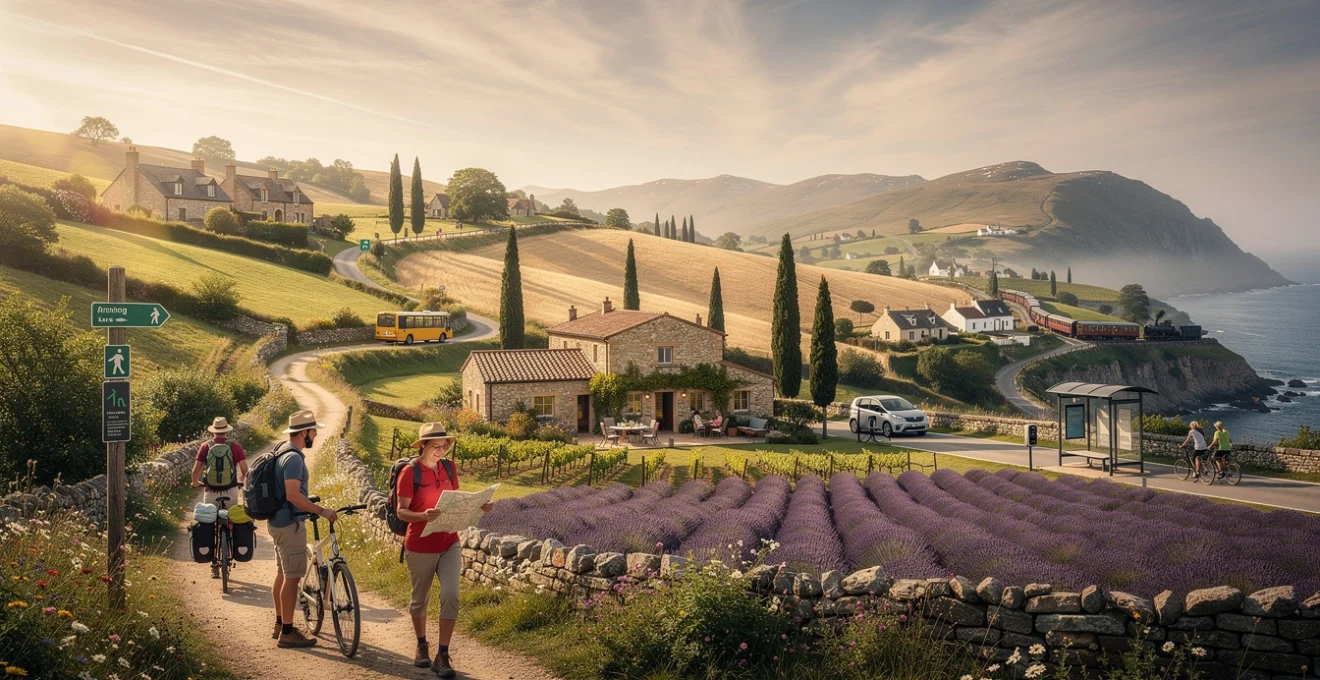
The modern traveller increasingly seeks alternatives to the frenetic pace of conventional tourism, gravitating towards experiences that prioritise depth over distance and quality over quantity. Rural destinations across Europe and beyond have emerged as natural sanctuaries for this growing movement, offering landscapes and communities that inherently support slower, more meaningful exploration. These countryside escapes provide not merely a change of scenery, but a fundamental shift in how travel can unfold when given proper time and space to breathe.
The appeal of rural slow travel extends beyond simple escapism, touching on deeper human needs for connection, authenticity, and genuine cultural exchange. Unlike urban destinations that often demand rapid transit between attractions, countryside locations naturally encourage extended stays, seasonal awareness, and integration with local rhythms. This alignment between place and pace creates opportunities for transformative travel experiences that linger long after departure.
Defining slow travel philosophy in rural tourism contexts
Slow travel represents a conscious departure from traditional tourism models that prioritise maximum sightseeing within minimal timeframes. This approach emphasises quality of experience over quantity of destinations visited, encouraging travellers to develop deeper connections with places and communities. The philosophy aligns particularly well with rural environments, where natural cycles, agricultural seasons, and traditional ways of life operate on timescales that resist acceleration.
Mindful journey principles versus mass tourism acceleration
The contrast between mindful travel principles and mass tourism acceleration becomes most apparent in countryside settings. Where conventional tourism seeks to maximise exposure to attractions and experiences, slow travel advocates for sustained engagement with fewer destinations. This approach allows travellers to observe subtle changes in landscape, participate in seasonal activities, and develop genuine relationships with local residents.
Rural destinations naturally support this philosophy through their inherent rhythms and constraints. Agricultural communities operate according to seasonal cycles that cannot be rushed, while traditional crafts and cultural practices require time to appreciate fully. The absence of urban conveniences paradoxically becomes an advantage, forcing visitors to slow down and engage more deeply with their surroundings.
Extended stay durations and seasonal immersion strategies
Extended rural stays enable travellers to witness the complete transformation of landscapes and communities across different seasons. A week-long visit to Tuscany during harvest season provides dramatically different experiences compared to the same duration in spring planting season. These temporal variations reveal layers of local culture and environment that remain invisible to shorter visits.
Seasonal immersion strategies involve aligning travel periods with significant agricultural, cultural, or natural events in rural communities. This might include participating in olive harvests in Mediterranean regions, attending traditional festivals in Celtic communities, or experiencing the dramatic colour changes of autumn in deciduous forests. Such timing requires advance planning but rewards travellers with authentic participation in local life cycles.
Local transportation networks and walking trail infrastructure
Rural transportation networks, whilst sometimes limited compared to urban systems, offer unique advantages for slow travellers. Local bus services often follow routes that connect villages along scenic corridors, providing opportunities to observe countryside transitions gradually. These services typically operate on schedules that reflect local needs rather than tourist demands, naturally encouraging patience and flexibility.
Walking trail infrastructure represents perhaps the most authentic form of slow travel transportation. Ancient pilgrim routes, historical trade paths, and modern recreational trails create networks that reveal countryside character incrementally. The physical effort required for walking naturally regulates pace, whilst the intimate scale of foot travel enables detailed observation of flora, fauna, architecture, and landscape features that remain invisible from vehicle windows.
Community-based tourism integration models
Successful slow travel depends heavily on integration with existing community structures rather than the creation of parallel tourist infrastructure. Rural communities often possess social networks and support systems that can accommodate thoughtful visitors whilst maintaining their authentic character. This integration requires mutual respect and understanding of local customs, values, and practical considerations.
Community-based tourism models in rural areas frequently involve direct accommodation with local families, participation in agricultural work, or support of traditional crafts and industries. These arrangements benefit both visitors and hosts, providing economic support for rural communities whilst offering travellers genuine cultural insights. The key lies in ensuring that tourism enhances rather than displaces existing community structures and activities.
European countryside destinations optimised for slow travel methodology
Europe’s diverse rural landscapes have evolved sophisticated infrastructure and cultural frameworks that naturally support slow travel approaches. These destinations
have become laboratories for rural tourism models that prioritise landscape protection, cultural continuity, and visitor well-being. From agrarian valleys shaped by centuries of cultivation to coastal routes that thread together tiny fishing hamlets, each region offers a distinct framework through which slow travel can unfold. The following examples illustrate how different European countryside destinations have consciously or organically evolved conditions in which a slower pace of travel not only feels natural, but is actively encouraged.
Tuscany’s val d’orcia UNESCO landscape and agriturismo networks
Val d’Orcia in southern Tuscany epitomises how a working rural landscape can support slow tourism without losing its agricultural identity. Recognised as a UNESCO World Heritage cultural landscape, the valley’s rolling wheat fields, cypress-lined drives, and fortified hill towns have been shaped by centuries of careful land management. Rather than isolating visitors in resort-style complexes, the region’s agriturismo network integrates accommodation directly into family farms, vineyards, and olive groves.
For slow travellers, this structure creates rare proximity to everyday rural life. Guests might wake to the sound of tractors in the fields, join an early morning olive harvest, or learn traditional pasta-making techniques from their hosts. Multi-night stays are the norm rather than the exception, and many agriturismi now offer week-long packages that coincide with seasonal agricultural cycles. This extended rhythm enables deeper immersion: you see how the same view changes with shifting light, weather, and farming activity rather than collecting a single snapshot and moving on.
Cotswolds AONB footpath systems and village connectivity
The Cotswolds Area of Outstanding Natural Beauty (AONB) in England demonstrates how walking infrastructure can become the backbone of a countryside slow travel itinerary. Over 3,000 miles of public rights of way thread through the region, linking market towns, small villages, and isolated farmsteads in a dense network of footpaths and bridleways. Routes such as the Cotswold Way and the Monarch’s Way offer multi-day journeys where each day’s walk ends in a different village, naturally encouraging overnight stays in locally owned inns, guesthouses, and self-catering cottages.
This footpath system functions like a slow-motion transit network, with waymarked trails in place of train lines and village pubs in place of stations. Travellers who choose to move primarily on foot or by local bus find that the pace of their trip aligns more closely with local life: mornings might begin with a bakery run, followed by a walk across open fields, and an evening spent chatting with residents in the village pub. Because distances between settlements are often modest, there is little pressure to “fit everything in,” allowing more space for spontaneous detours, conversations, and unplanned pauses.
Provence’s lavender routes and seasonal agricultural cycles
In Provence, particularly the Luberon and Plateau de Valensole, seasonal agriculture shapes not only the landscape but also the ideal timing for slow travel. The region’s lavender routes are widely photographed, yet their true appeal for the slow traveller lies in how they foreground seasonal rhythms. Visit in late June or early July and you might observe harvesting in full swing; return in autumn and the same fields are muted, with farmers turning attention to olives, grapes, or winter preparations.
Many rural accommodations in Provence have adapted to these cycles, offering themed stays that align with key agricultural moments. Guests can participate in lavender distillation workshops, join small-group grape harvests, or attend village festivals celebrating local produce. Because these activities often depend on weather and crop readiness rather than fixed dates, travellers must adopt a flexible, responsive mindset. In practice, this means longer stays, looser itineraries, and a willingness to let the countryside calendar rather than a checklist of attractions guide daily plans.
Scottish highlands’ crofting communities and heritage trails
The Scottish Highlands illustrate a different dimension of rural slow travel, where remoteness and sparse infrastructure encourage a deliberate, thoughtful approach to movement. Crofting communities—small agricultural holdings historically tied to communal grazing lands—are scattered across the landscape, maintaining traditional practices in challenging conditions. For visitors, engaging with crofting life offers insight into land rights, resilience, and the relationship between people and a demanding environment.
Heritage trails such as the West Highland Way, the North Coast 500, and island-specific routes like the Skye Trail connect these communities with sites of historical and cultural significance. Walking or driving these routes slowly, with multi-night pauses in small settlements, allows time to visit local museums, community halls, and craft studios that might be bypassed on a faster trip. Because weather and daylight hours strongly influence daily plans, especially outside summer, travellers are encouraged to build in buffer days and accept that part of the experience involves adapting to the Highlands’ own pace and temperament.
Ireland’s wild atlantic way remote settlement experiences
Ireland’s Wild Atlantic Way, stretching over 2,500 kilometres along the western coastline, has become a flagship example of how a large-scale tourism initiative can still support slow, place-based exploration. While the route can technically be driven in a short period, its full value emerges when broken into smaller sections, with extended stays in remote peninsulas, island communities, and Gaeltacht (Irish-speaking) regions. Here, traditional music sessions, community festivals, and everyday pub culture offer rich opportunities for cultural immersion.
Many rural settlements along the Wild Atlantic Way have embraced homestays, small guesthouses, and farm-based accommodation rather than large-scale resort development. This lodging pattern supports a dispersed tourism economy and encourages travellers to spend money in local shops, cafés, and craft studios. For those willing to slow down, the route becomes less a linear journey and more a web of micro-destinations: a week might be devoted entirely to a single bay or island, with days organised around tide times, local markets, and conversations with residents who have deep, generational ties to the sea.
Accommodation infrastructure supporting extended rural stays
The viability of slow travel in countryside destinations depends heavily on the quality and diversity of accommodation available for longer stays. While traditional models focused on short breaks or one-night stopovers, many rural regions now recognise the value of designing lodging specifically for week-long, fortnight-long, or even seasonal residencies. This shift has economic implications—encouraging repeat visitation and more stable income streams—as well as experiential benefits for travellers seeking deeper engagement with place.
Key to this infrastructure is flexibility. Self-catering cottages, converted barns, and agriturismi with kitchen facilities allow visitors to integrate into local food systems through market shopping and home cooking. Co-working equipped farmhouses and rural retreats with reliable connectivity cater to “work-from-anywhere” travellers who may stay for a month or more, blending professional routines with countryside living. At the same time, genuinely slow travel encourages a healthy boundary with screens, so many stays now intentionally limit televisions or provide designated offline spaces such as reading rooms, gardens, and communal kitchens.
From a design perspective, successful slow travel accommodation often mirrors the landscape and culture surrounding it. Natural materials, regionally inspired interiors, and outdoor spaces oriented toward sunrise, sunset, or key views help guests feel anchored to their setting. Some properties integrate on-site experiences—bread baking, foraging walks, garden volunteering, or seasonal workshops—reducing the need for constant external excursions. By treating the accommodation as a lived-in base rather than a mere sleeping spot, rural stays become platforms for gradual immersion rather than rapid consumption.
Sustainable transportation networks in remote countryside locations
One of the main challenges for slow travel in rural areas lies in reconciling low-impact mobility with practical accessibility. Remote villages and dispersed settlements often lack frequent public transport, yet overreliance on private cars can undermine environmental goals and local quality of life. As a result, many regions are experimenting with transportation models that support extended countryside stays while minimising congestion and emissions. How can you move gently through a landscape that was never designed for mass tourism, yet still reach the places you hope to experience?
Rural bus services and community transport schemes
Rural bus services remain a backbone of sustainable countryside mobility, even where timetables are limited. In parts of France, Spain, and the UK, local authorities and community groups have developed demand-responsive transport schemes—small buses or shared taxis that operate on flexible routes based on pre-booked requests. These services not only help residents access essential services but also offer slow travellers a realistic alternative to hiring a car, especially for moving between market towns and nearby villages.
For visitors, using these networks requires a shift in mindset. Instead of expecting on-demand convenience, travellers must plan around fixed departures, accept occasional delays, and build in time for unexpected pauses. Yet this slower, more communal mode of movement often produces richer experiences: conversations with drivers, glimpses of school routines, and exposure to the everyday logistics of rural life. Practical planning tools—such as regional transport apps, local tourist office timetables, and accommodation hosts who understand bus networks—are invaluable for making this approach viable.
Cycling infrastructure and greenway development projects
Cycling plays a growing role in sustainable rural tourism, supported by the rapid expansion of greenways and low-traffic routes across Europe. Former railway lines are being converted into car-free cycling and walking corridors, creating safe, scenic links between villages, vineyards, and cultural sites. In countries such as the Netherlands, Germany, and Denmark, integrated cycling networks already enable multi-day countryside journeys where bikes function as primary transport rather than optional leisure equipment.
For slow travellers, this infrastructure offers a sweet spot between walking and driving. Distances that might feel daunting on foot become manageable by bike, while the open-air exposure preserves the sensory intimacy of moving through the landscape. E-bikes expand accessibility further, making hilly regions like the Dolomites, the Black Forest, or Welsh uplands more approachable for a wider range of visitors. However, relying on cycling still demands realistic route planning: understanding gradients, weather, surface conditions, and the spacing of accommodation and services is essential to avoid turning a relaxing journey into an endurance test.
Heritage railway lines and steam-powered tourism routes
Heritage railways and restored branch lines offer another dimension of low-speed, low-stress countryside mobility. In regions such as the Harz Mountains in Germany, the Scottish Highlands, or Transylvania in Romania, narrow-gauge lines and steam-powered trains create both a nostalgic attraction and a practical transport option between rural settlements. While these services are not always optimised for daily commuting, they lend themselves perfectly to unhurried day trips and staged itineraries.
Travelling by heritage rail invites a particular form of slow observation. Large windows frame rolling fields, forests, and mountain passes like moving landscape paintings, while the fixed timetable encourages you to spend meaningful time in each stop rather than rushing back to a car. Some operators now coordinate with walking trails or local bus routes, enabling “rail and hike” combinations where you ride one segment and walk another. The result is a layered journey that blends historical infrastructure with contemporary slow travel values.
Electric vehicle charging networks in remote areas
For travellers who do choose to drive, the rapid expansion of electric vehicle (EV) charging infrastructure across rural Europe is reshaping what sustainable road trips can look like. National and regional initiatives have prioritised installing chargers not only along motorways but also in small towns, village centres, and visitor car parks for national parks and nature reserves. According to the European Alternative Fuels Observatory, the number of public charging points in the EU has grown by more than 40% since 2020, with rural deployment now a key focus.
In a slow travel context, EV charging can be reframed from an inconvenience into a built-in pause. Instead of treating a 40-minute charge as wasted time, travellers can use it to explore a market square, visit a local café, or walk a short loop trail from the car park. Destination planners are beginning to recognise this synergy, positioning chargers near viewpoints, trailheads, and cultural sites rather than on anonymous roadside lots. With thoughtful planning—mapping rural chargers in advance, carrying a backup cable, and allowing margin for detours—EV-based countryside journeys can balance flexibility with a light environmental footprint.
Cultural immersion techniques through traditional rural activities
While landscapes often draw visitors to the countryside, it is the everyday practices of rural life that typically create the most lasting memories. Slow travel places these activities at the centre of the experience, encouraging participation rather than passive observation. Instead of simply photographing a vineyard, you might help prune vines; rather than watching a craft demonstration from a distance, you sit at the workbench and try the technique yourself. These encounters deepen understanding in ways that guidebooks cannot, bridging the gap between visitor and host.
Food-focused activities provide some of the most accessible immersion points. Farm-to-table suppers, cheesemaking workshops, sourdough baking days, and seasonal foraging walks introduce travellers to local ingredients and culinary traditions. Participating in these processes—kneading dough, stirring jam, sorting olives—creates tactile, sensory connections with the region. Similarly, agricultural volunteering programmes and short-stay experiences on working farms allow guests to contribute practical labour in exchange for room, board, or knowledge, though it is crucial that such models are ethical, fairly structured, and respectful of local labour markets.
Cultural immersion also extends beyond food and farming. Rural festivals, religious processions, and community fairs provide windows into local identity and social cohesion. To engage respectfully, slow travellers can follow a few simple principles: seek information in advance about appropriate behaviour, ask permission before photographing people or ceremonies, and prioritise locally organised events over those purely choreographed for tourists. Language learning—whether a few key phrases in Irish, Occitan, or a regional dialect—signals interest and humility, often opening doors to richer conversations. In essence, effective cultural immersion in rural settings is less about collecting experiences and more about entering into existing rhythms with curiosity and care.
Economic impact assessment of slow tourism on rural communities
Beyond individual experiences, slow travel carries significant economic implications for countryside regions. Unlike high-volume, short-stay tourism—which can concentrate spending in a few hotspots and strain local infrastructure—slow tourism tends to distribute benefits more evenly across time and space. Longer stays mean repeated visits to village shops, markets, and cafés; self-catering travellers buy groceries, hardware, and household items alongside residents; and participation in workshops or guided activities channels income directly to local providers. According to several European rural development studies, visitors who stay seven nights or more often spend 30–50% more in local businesses than short-stay tourists, even if their daily budget is modest.
However, positive impact is not guaranteed. If unmanaged, the popularity of picturesque villages and scenic valleys can still lead to price inflation, housing pressure, and seasonal overcrowding. The goal, therefore, is not simply to attract slow travellers but to design governance structures that ensure tourism supports rather than distorts rural economies. Community land trusts, regulations on short-term rentals, and incentives for year-round businesses can help balance the needs of residents and visitors. Transparent communication between local authorities, residents, and tourism operators is essential so that infrastructure upgrades, trail development, and marketing campaigns align with community priorities.
For travellers, understanding this economic dimension creates opportunities to make more informed choices. Opting for locally owned accommodation over global chains, buying crafts directly from makers rather than generic gift shops, and visiting lesser-known villages or off-season markets can all spread benefits more widely. Asking simple questions—who owns this business, where is this product made, how are guides trained and paid—can guide spending toward models that reinforce rural resilience. In this way, slow travel becomes not only a personal philosophy but also a practical tool for supporting the long-term vitality of countryside communities.