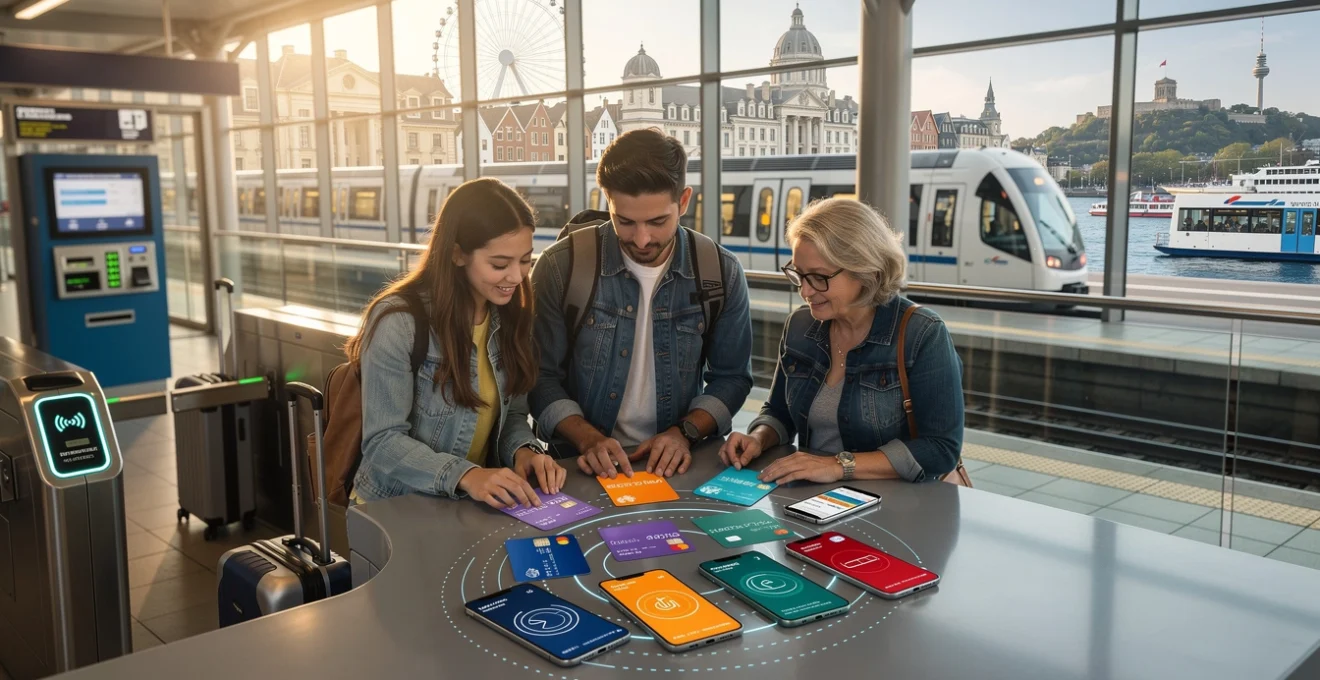
Navigating Europe’s bustling metropolises becomes infinitely more manageable when you understand the intricacies of urban transport card systems. Modern city break travellers face an increasingly sophisticated landscape of payment options, from traditional magnetic stripe cards to cutting-edge contactless technology that seamlessly integrates with mobile wallets. The choice between various transport cards can significantly impact both your travel budget and overall experience, making it essential to understand the nuances of each system before embarking on your urban adventure.
European cities have revolutionised public transport accessibility through intelligent fare structures and integrated payment systems. These technological advances mean that a well-chosen transport card can unlock not just efficient mobility, but also substantial cost savings and enhanced convenience. Whether you’re planning a weekend getaway to Paris or an extended exploration of London’s diverse neighbourhoods, understanding transport card options will transform how you experience urban Europe.
Understanding transport card technology and pricing structures
The foundation of modern urban transport lies in sophisticated card technologies that have evolved far beyond simple paper tickets. These systems employ various technological approaches, each designed to optimise passenger flow while ensuring accurate fare collection across multiple transport modes.
Contactless payment systems: oyster vs leap vs OV-chipkaart technologies
London’s Oyster card pioneered the contactless revolution in European public transport, utilising radio-frequency identification (RFID) technology that enables instant fare calculation and journey tracking. The system operates on a sophisticated algorithm that calculates optimal pricing based on journey patterns, time of travel, and route efficiency. Similar technologies have been adopted across Europe, with Dublin’s Leap card and Amsterdam’s OV-chipkaart offering comparable functionality but with localised adaptations.
The technological backbone of these systems relies on near-field communication (NFC) protocols that communicate with readers in milliseconds. This rapid data exchange enables the complex calculations required for zone-based pricing whilst maintaining passenger flow efficiency. Modern contactless payments through bank cards and mobile devices utilise the same underlying technology, though with additional security layers and real-time banking integration.
Zone-based fare calculation methods in european cities
European transport authorities have largely adopted zone-based pricing structures that reflect the geographical spread of their metropolitan areas. London’s nine-zone system exemplifies this approach, with fares calculated based on the number of zones traversed during a single journey. Zone 1 typically encompasses the city centre, with subsequent zones radiating outward to cover suburban areas and airport connections.
The mathematical elegance of zone-based systems lies in their ability to provide predictable pricing whilst encouraging longer journeys that utilise the full network capacity. Paris operates a similar but more complex system, where zones 1-3 cover central Paris, whilst zones 4-5 extend to popular destinations like Versailles and Disneyland Paris. Barcelona’s approach differs slightly, utilising concentric zones that reflect the city’s unique geographical constraints and metropolitan integration with surrounding municipalities.
Daily cap algorithms and maximum fare protection mechanisms
Daily capping represents one of the most passenger-friendly innovations in transport pricing, automatically limiting the maximum amount charged within a 24-hour period. These algorithms continuously monitor your travel patterns, ensuring that once you reach the equivalent cost of a day pass, no additional charges apply for subsequent journeys. London’s system exemplifies this sophistication, where the daily cap varies by zones travelled and automatically adjusts for different combinations of transport modes.
The computational complexity behind daily capping involves real-time analysis of journey data, fare structures, and temporal pricing variations. Advanced algorithms must account for peak and off-peak pricing differentials, multi-modal transfers, and route optimisation to ensure passengers receive optimal value. This technology particularly benefits spontaneous travellers who may not initially plan extensive daily travel but find themselves exploring more extensively than anticipated.
The daily cap system transforms occasional users into confident explorers, removing the anxiety of accumulating high transport costs whilst encouraging deeper urban exploration.
Multi-modal integration: metro, bus, tram and ferry connectivity
Contemporary transport cards excel in their ability to seamlessly integrate multiple transport modes within a single payment system. This integration represents years of coordination between different transport operators, requiring sophisticated backend systems that can calculate complex multi-modal journeys whilst maintaining service reliability. London’s approach allows seamless transitions between Underground, buses, trams, river
river services and certain National Rail routes within Greater London, all recognised by the same card or contactless token.
Dublin’s Leap card and Amsterdam’s OV-chipkaart follow similar multi-modal integration principles, enabling you to transfer between metro, bus, tram and even some regional rail services with a single stored-value product. This interconnected design reduces friction at transfer points and encourages travellers to choose public transport over taxis or hire cars. For city break visitors, the ability to mix modes on one card is invaluable: you might take a tram to a museum in the morning, hop on a bus to a viewpoint in the afternoon, then use the metro to get back to your hotel at night, all under one fare structure.
Many cities are now piloting or expanding ferry and bike-share integration within their transport card ecosystems. While full fare integration with ferries is still patchy across Europe, you’ll increasingly see partial discounts or at least unified ticketing interfaces. As systems become more integrated, your transport card evolves from a simple ticket into a gateway to the whole urban mobility network, from cable cars and funiculars to airport rail links and even park-and-ride facilities.
Comparative analysis of major european city transport cards
With the underlying technology in mind, you can start comparing specific transport cards in popular European city break destinations. Each network has its own approach to pricing, caps and tourist offers, and the most cost-effective option depends heavily on how intensively you plan to use public transport. Looking at London, Paris, Amsterdam, Berlin and Barcelona side by side helps you benchmark fares and features before you book flights or accommodation.
London oyster card vs contactless payment cost efficiency
In London, the key choice for most visitors is between a dedicated Oyster card and using a contactless bank card or mobile wallet directly at the gates. Functionally, both products access the same fare tables and daily/weekly caps for pay-as-you-go travel across the Underground, buses, trams, DLR, London Overground, Elizabeth line and most in-city National Rail services. For typical city break patterns within zones 1–2, daily capping ensures that multiple short trips never exceed the price of a comparable Day Travelcard, often working out cheaper for spontaneous sightseeing.
So when is an Oyster card preferable to tapping your bank card or phone? If your usual card charges foreign transaction fees or uses less favourable exchange rates, an Oyster topped up in sterling can reduce hidden costs. Oyster is also useful if you want to keep tight control of a travel budget by loading a fixed amount of credit, or if you are managing spending for teenagers or other family members. Weekly Travelcards loaded onto Oyster can pay off if you are staying seven days or more and commuting daily, but for a long weekend the built-in daily and weekly capping on contactless is usually enough.
Another subtle difference is how refunds and balances are managed. With Oyster, any remaining credit can be refunded at machines (up to a limit) or claimed back later online, whereas with contactless, charges are reconciled directly with your bank each day. This means you never have “stranded” money locked in a card, but you do need to monitor your statements if you are mixing peak and off-peak journeys. For most short-stay visitors who already use contactless at home, treating London transport like any other card transaction is the simplest and often cheapest approach.
Paris navigo easy and navigo weekly pass tourist applications
Paris presents a different decision tree, revolving around the Navigo Easy card, the Navigo weekly/monthly passes and classic paper-style tickets encoded on contactless stock. Navigo Easy is a lightweight, anonymous smartcard that you can buy for a small fee and then load with single rides or discounted carnets of 10 rides. For a three- or four-day city break where you expect two to four metro or bus trips per day within central zones, Navigo Easy with 10–20 rides can be a flexible and economical solution.
For heavier users, the Navigo Semaine (weekly Navigo pass) offers unlimited travel in selected zones from Monday to Sunday. This can be exceptional value if your city break aligns neatly with the calendar week and you intend to combine airport transfers, day trips to Versailles or Disneyland, and intensive daily metro use. The catch is that the pass is always tied to the fixed Monday–Sunday period, so arriving on a Thursday for a long weekend may not justify the cost unless you are travelling extensively to outer zones.
What about occasional visitors who want simplicity above all? As Paris rolls out contactless bank card acceptance across the metro and RER network, you can increasingly tap in and out with your own card, paying per ride without preloading a smartcard. Unlike London, however, daily capping and sophisticated fare aggregation are still developing, so cost control requires more awareness of individual ticket prices. If you are planning a museum-heavy itinerary across several arrondissements, doing a quick calculation of expected rides versus a Navigo product can save you from “death by a thousand cuts” in ticket purchases.
Amsterdam GVB day pass versus OV-chipkaart anonymous options
Amsterdam’s transport landscape centres on the GVB-operated metro, tram and bus network within the city, plus regional buses and trains operated by other companies. For tourists staying mostly in the central area, the principal comparison is between time-based GVB day passes (1–7 days) and an anonymous OV-chipkaart that you load with credit. Day passes provide unlimited travel on GVB services for a fixed duration from first validation, which is ideal if you know you’ll be hopping on and off trams and metros several times a day.
The anonymous OV-chipkaart, on the other hand, calculates distance-based fares, debiting your balance at the end of each trip. It shines if you are taking just a handful of journeys per day or mixing occasional city rides with regional trains to places like Haarlem or Utrecht. You pay a small fee for the card itself and must maintain a minimum balance, but the same card works across almost all Dutch public transport, making it powerful for flexible multi-city itineraries.
One practical consideration is the initial cost and unused balance risk. Day passes have a clear, upfront price and no residual value questions; you simply discard or keep the card as a souvenir afterwards. An OV-chipkaart may leave you with a few euros stranded unless you have time to request a refund at a service desk, which can be inconvenient for short stays. If your Amsterdam trip is a compact two- or three-day visit focused on museum-hopping and canal-side strolls, a GVB day pass or multi-day pass is usually the most straightforward and cost-effective choice.
Berlin ABC zone travel cards and brandenburg regional extensions
Berlin’s transport system is structured around three concentric fare zones: A (central Berlin), B (outer districts) and C (surrounding areas including Potsdam and Berlin Brandenburg Airport). Visitors generally choose between single tickets, 24-hour tickets and multi-day Berlin WelcomeCard products, all of which can be valid for different zone combinations (AB, BC or ABC). For a classic city break staying within central Berlin, an AB zone day ticket or 48/72-hour card provides unlimited travel on U-Bahn, S-Bahn, trams and buses.
If your itinerary extends to Potsdam’s palaces, Sachsenhausen Memorial, or the lakes and forests surrounding the capital, you’ll need an ABC ticket that includes zone C. This is where the regional integration with Brandenburg becomes important: one ticket can cover both urban and semi-rural excursions without extra supplements, as long as you stay within the overall ABC structure. For travellers prioritising flexibility, the Brandenburg-Berlin-Ticket (a regional day ticket for local and regional trains) can also serve as a powerful tool for longer day trips beyond the core city.
How do tourist-branded options fit in? Products like the Berlin WelcomeCard bundle unlimited public transport with discounts at museums and attractions, often paying off if you plan a dense sightseeing schedule. However, if you simply want efficient mobility and are not interested in bundled discounts, standard 24-hour or 7-day tickets may be more economical. As with other cities, the sweet spot depends on how many paid attractions you plan to visit versus free or low-cost urban exploration.
Barcelona T-Casual and hola barcelona card metropolitan coverage
Barcelona’s integrated transport authority (ATM) offers an array of tickets, but for city break visitors the most relevant are the T-Casual (10-trip ticket) and the Hola Barcelona travel card (2–5 consecutive days of unlimited travel). The T-Casual is a personal, non-transferable ticket valid for 10 journeys within selected zones, making it ideal if you expect limited but regular movements across the city over several days. You validate it each time you board the metro, bus, tram or local train, with free transfers allowed within a set time window for a single “journey.”
The Hola Barcelona card, in contrast, offers unlimited travel in the chosen zones, including the metro line to and from Barcelona-El Prat Airport when you select the appropriate coverage. This pass works well for travellers planning to criss-cross the city multiple times a day, perhaps staying a bit outside the historic centre or combining beach visits with hilltop viewpoints like Montjuïc or Tibidabo. Because Barcelona’s metro and bus system is highly interconnected, this kind of unlimited product can quickly pay for itself over a three- or four-day stay.
One subtlety in Barcelona is the broader metropolitan area coverage. Multi-zone versions of both T-Casual and Hola Barcelona extend to outlying municipalities, allowing day trips to nearby towns and coastal stretches without separate tickets. If your accommodation is in the suburbs or you plan to visit places like Sitges or Montserrat by train, checking which zones you need and mapping them against your pass options is essential. Think of the zone map as a “heat map” of your planned movements; aligning your card choice with that footprint is the key to optimising costs.
Purchase channels and card activation protocols
Once you’ve identified the right transport card type, the next question is logistical: where and how do you buy it, and when does validity begin? Most European cities have converged on a mix of physical vending machines in stations, staffed ticket counters, authorised retailers such as newsagents or tobacconists, and official online platforms offering pre-purchase or digital tickets. For time-poor travellers arriving on a Friday evening, understanding purchase channels in advance can mean the difference between gliding through the airport station and queuing for 20 minutes at a single working machine.
Card activation is another crucial detail that varies between systems. Some passes activate on first use—when you tap in at a gate or validate on a bus—while others are tied to calendar dates specified at purchase. For example, many 72-hour tourist cards start counting from the exact moment of first validation, whereas weekly passes may be locked to a Monday–Sunday cycle regardless of when you actually arrive. Reading the small print on validity periods helps you avoid the common pitfall of “wasting” part of a pass overnight when you are not travelling.
Pre-purchase options, including postal delivery and mobile app issuance, are increasingly common for tourist-focused products. While it can be reassuring to land with a physical card already in hand, you should balance this against the risk of loss in transit and any non-refundable fees. In many cases, buying at an airport station or central hub on arrival is just as efficient, particularly now that vending machines support multiple languages and accept international bank cards. If you prefer using a digital wallet, check whether the city’s transport authority offers QR-code tickets or in-app passes that you can activate upon arrival without visiting a machine at all.
Tourist-specific transport card features and validity periods
Tourist transport cards sit at the intersection of mobility and tourism marketing, often bundling unlimited travel with attractions, discounts and city maps. These products are designed to appeal to visitors who want a simple, all-in-one solution without having to compare dozens of single-ticket combinations. However, that convenience premium means it is worth dissecting the inclusions, especially for short city breaks where every hour and euro counts.
Airport express service inclusions and supplements
One of the biggest variables in tourist card value is airport connectivity. Some passes include standard airport rail or metro connections within their zones, while others explicitly exclude premium express services that require a supplement. London’s Travelcards, for instance, may cover the Elizabeth line to Heathrow if the correct zones are included, but they will not include Heathrow Express, which is priced separately as a premium product. Similarly, in Madrid and Barcelona, certain airport surcharges or express bus services may sit outside standard zone-based passes.
Before you assume your tourist transport card covers your arrival and departure, verify whether the specific airport route you plan to take is included. Does your Barcelona pass include the metro L9 Sud to El Prat but not the Aerobús express coach? Does your Berlin ticket cover the S-Bahn to Brandenburg Airport, or do you need an ABC extension? Treat airport segments like “bookends” to your city break itinerary: if they fall outside your chosen card’s coverage, you might be better off buying separate airport tickets and using a cheaper inner-city pass for the middle days.
Supplements for express services can sometimes be paid on top of an existing pass, which may still be worthwhile if you value time savings. A useful mental model is to compare the airport express premium to the value of one or two extra sightseeing hours in the city—especially on a tight weekend schedule. If the time saved is marginal, regular metro or commuter rail, already covered by your card, is often the smarter and more budget-friendly choice.
Museum and attraction bundled discount packages
Many city cards combine public transport with free entry or discounted access to museums, galleries and attractions. The Paris Visite card, Berlin WelcomeCard, and various “city cards” in Amsterdam or Barcelona all market themselves as comprehensive cultural passes as much as transport products. From a cost optimisation perspective, the question is simple: will you realistically visit enough included or discounted attractions within the validity period to offset the higher upfront price?
To answer that, it helps to list your must-see attractions and check their individual admission fees against the discount structure of the card. Are the headline museums you care about fully included, or just discounted by 25%? Are time slots readily available for cardholders during peak season? If you are the type of traveller who prefers slow exploration of neighbourhoods, parks and markets—most of which are free—you may end up underutilising the cultural component and effectively overpaying for transport.
On the other hand, if your ideal city break looks like a marathon of major sights—think Louvre plus Musée d’Orsay plus a Seine cruise in Paris, or multiple Gaudí sites in Barcelona—then bundled cards can unlock serious savings and convenience. Not having to queue for separate tickets at each museum is a non-trivial benefit, especially during busy weekends. In that sense, a tourist card can function like a fast-track lane for both payments and logistics, smoothing your entire city break experience.
72-hour vs weekly pass cost-per-journey calculations
Choosing between 72-hour passes and longer weekly options often comes down to simple arithmetic. A 72-hour (three-day) pass is generally optimised for long weekends, offering unlimited travel for a defined period from first validation. Weekly passes usually cover seven consecutive days or a Monday–Sunday window, and are priced to appeal to commuters. For a classic city break of three or four days, a 72-hour product often aligns better with your actual stay, avoiding “dead days” of unused validity.
How can you estimate the cost per journey for each option? Start by estimating the number of rides per day you are likely to take: two if you walk a lot, up to eight or more if you plan multiple hops between distant districts. Multiply that by single-ticket prices to get a baseline, then compare the result with the flat cost of a 72-hour or weekly pass. If the pass cost divided by your estimated number of journeys gives you a per-ride figure notably lower than single tickets, you have a good deal; if it is equal or higher, pay-as-you-go or a 10-trip ticket may be more efficient.
Remember, though, that unlimited passes also buy you flexibility and spontaneity. You may initially plan for four journeys per day but end up doubling that once you realise how easy it is to criss-cross the city. This is where a 72-hour pass can act like a “mobility subscription,” freeing you from the mental transaction cost of each ride. Weekly passes become competitive mainly when your city break bleeds into work travel or when you base yourself in a suburb that requires daily commuting into the centre.
Group travel discounts and family card options
Travelling as a couple, family or group of friends? Group and family-focused products can dramatically change the transport card calculus. Some cities offer group day tickets that allow up to five people to travel together on a single pass, provided you stay as a group for each journey. Others provide free or heavily discounted travel for children when accompanied by an adult holding a valid card, effectively lowering the average cost per person for families.
London, for example, allows children under 11 to travel free on Tube, DLR, Overground and Elizabeth line services when accompanied by a fare-paying adult, while older children can benefit from Zip Oyster photocards or child-rate paper tickets. Berlin and other German cities commonly offer “small group” day tickets valid for several adults or a mixture of adults and children. In Barcelona, shared tickets like the T-Familiar allow a certain number of rides to be split between multiple users, providing a flexible alternative to one-pass-per-person models.
When evaluating group options, pay attention to rules around simultaneous use and identification. Some cards are strictly personal and non-transferable, while others explicitly allow shared use as long as validations follow local guidelines. It can help to calculate the per-person daily rate for both individual passes and group tickets, then pick the configuration that fits your group’s size and travel rhythm. For families, leveraging child concessions and free travel schemes is often one of the easiest ways to cut overall transport costs without compromising comfort.
Digital wallet integration and mobile ticketing solutions
The rise of digital wallets and mobile ticketing has transformed how city break travellers interact with public transport. Many European cities now support Apple Pay, Google Pay and other mobile wallets directly at gates and validators, allowing you to tap in with your phone or smartwatch instead of a plastic card. Under the hood, these virtual cards behave like contactless bank cards, benefiting from the same daily caps and multi-modal integration where available. This can be a game-changer if you prefer to travel light and keep all your payment tools in one device.
In parallel, transport authorities are rolling out dedicated apps that issue digital tickets or passes in QR-code or barcode form. Instead of visiting a ticket machine, you can purchase a 24-hour ticket, 72-hour pass or even single rides through the app, then present your phone to scanners at gates or on-board inspectors. For tourists, this removes the friction of navigating unfamiliar vending machines or dealing with cash in a foreign currency. It also reduces the risk of losing a physical card, as your ticket is tied to your device and often your user account.
However, digital solutions come with their own caveats. Not every gate supports QR-code scanning, and some cities maintain parallel systems where app-based tickets must be shown to staff rather than validated automatically. Roaming data and battery life are practical considerations; nothing disrupts a sightseeing day faster than a dead phone containing your only ticket. As a rule of thumb, combining a primary digital option with a low-tech backup—such as a single paper ticket or a topped-up smartcard—gives you resilience if connectivity or hardware fails at a critical moment.
Cost optimisation strategies for short-stay city breaks
Ultimately, choosing the right transport card for a city break is an exercise in aligning your travel style, itinerary and risk tolerance with the pricing structures of each city. While the technical details of zone maps and capping algorithms can seem daunting, a few practical strategies can dramatically simplify the decision. Think of these as a checklist you can run through for every new destination, from London to Lisbon or from Dublin to Berlin.
First, map your likely movements before you go. Identify your accommodation, key attractions, and any planned day trips, then overlay them on the local zone system. Are you staying mostly in the central core, or will you be crossing multiple zones daily? This simple “heat map” exercise quickly shows whether a central-zone-only card, a wider metropolitan pass, or individual tickets will serve you best. It also helps you spot whether airport trips sit inside or outside standard coverage.
Second, estimate your journey volume and compare scenarios. Use conservative and generous estimates—say, three versus eight rides per day—and run the numbers against single fares, 10-trip tickets, 72-hour passes and weekly cards where available. This is where daily capping systems shine: if the capped cost for pay-as-you-go is close to or lower than a dedicated day pass, you gain flexibility without committing upfront. Conversely, if your sums show a high number of rides, unlimited passes may unlock both savings and a psychological “freedom to roam” that enhances your overall experience.
Third, consider your payment preferences and bank fees. Will using your home bank card incur foreign transaction charges on every tap, undermining the savings from smart capping systems? If so, a local transport smartcard, preloaded with local currency, can act like a firewall between your city break and surprise banking costs. Alternatively, a multi-currency travel card or digital wallet with favourable FX rates can give you the best of both worlds: the convenience of tap-and-go travel plus predictable exchange rates.
Finally, factor in soft benefits such as time savings, queue avoidance and stress reduction. A tourist city card that looks marginal on pure price can still be worth it if it lets you skip lines at busy ticket offices, combine museum entries seamlessly with transport, or manage group travel on a single product. Ask yourself: would you rather spend your limited city break minutes doing mental fare calculations, or simply tapping through the gates and focusing on the architecture, food and culture around you? When you put it in those terms, the “right” transport card is the one that optimises both your budget and your enjoyment of the city.