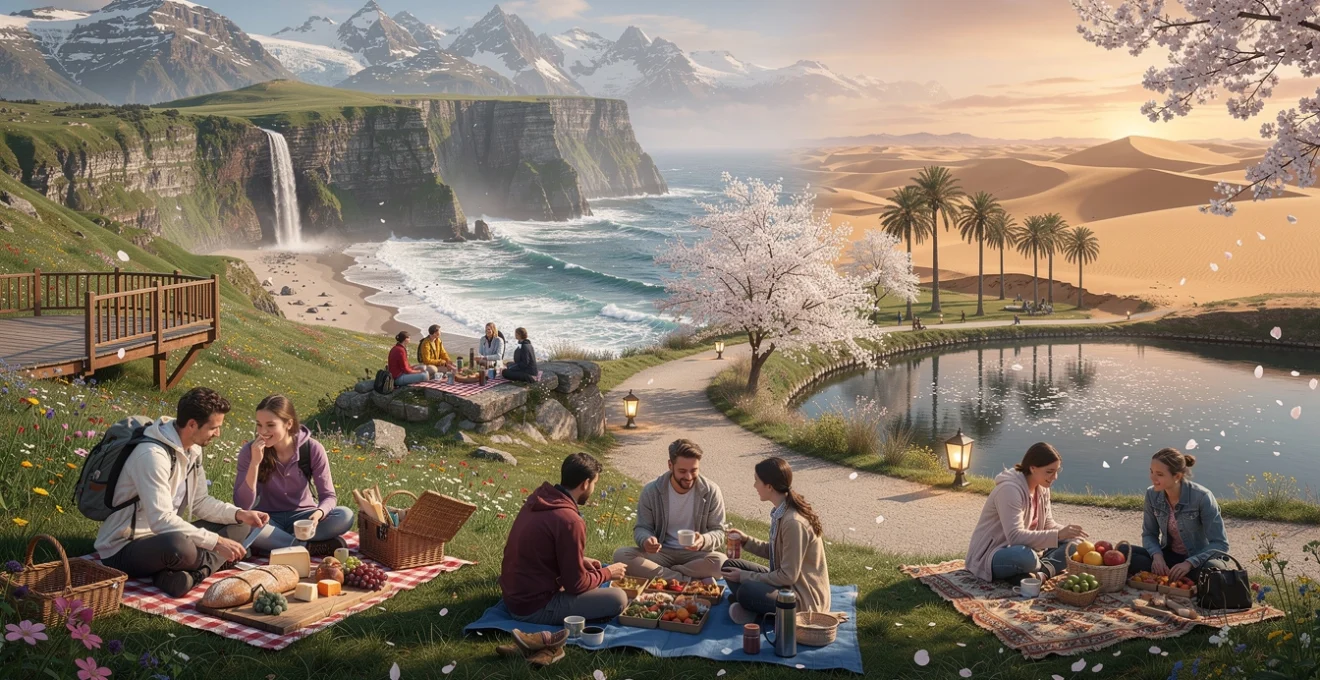
Dining outdoors transcends mere sustenance—it transforms eating into an immersive sensory experience where landscape, cuisine, and atmosphere converge. The world’s most spectacular picnic destinations offer far more than scenic backdrops; they provide opportunities to engage authentically with diverse ecosystems, cultural traditions, and culinary heritage. From alpine meadows carpeted with wildflowers to volcanic black sand beaches kissed by Atlantic winds, strategic location selection elevates outdoor dining from simple convenience to unforgettable adventure. Understanding the nuances of weather patterns, seasonal variations, and local provisioning options ensures that your al fresco meal becomes a highlight of any journey rather than a logistical compromise.
The growing appreciation for slow travel and sustainable tourism has reinvigorated interest in picnicking as both budget-conscious strategy and meaningful way to connect with destinations. Whether you’re seeking the dramatic isolation of desert oases, the refined elegance of vineyard estates, or the ethereal beauty of midnight sun landscapes, selecting the right location requires careful consideration of accessibility, climate conditions, and authentic local food sourcing opportunities.
Alpine meadow picnicking: switzerland’s lauterbrunnen valley and austria’s grossglockner high alpine road
The European Alps present some of the continent’s most dramatic picnicking terrain, where towering peaks, crystalline waterfalls, and flower-strewn meadows create settings of almost overwhelming natural beauty. The Lauterbrunnen Valley in Switzerland’s Bernese Oberland region exemplifies alpine grandeur, with 72 waterfalls cascading down sheer cliff faces into a U-shaped glacial valley. This landscape inspired J.R.R. Tolkien’s fictional Rivendell, and visitors immediately understand why—the combination of vertical rock walls, pastoral meadows, and thundering water creates an otherworldly atmosphere.
Austria’s Grossglockner High Alpine Road offers equally spectacular but distinctly different alpine picnicking opportunities. This engineering marvel winds through Hohe Tauern National Park, reaching elevations of 2,504 metres at Hochtor, with 36 hairpin bends providing constantly shifting perspectives on Austria’s highest peak, the 3,798-metre Grossglockner. The road opens seasonally from May through October, with optimal conditions typically occurring between late June and mid-September when snow has cleared from higher elevations but wildflower displays remain vibrant.
Accessing trümmelbach falls picnic terraces in the bernese oberland
The Trümmelbach Falls represent one of Europe’s most powerful waterfall systems entirely contained within a mountain. Ten glacier-fed cascades drain the Eiger, Mönch, and Jungfrau’s interior, carrying up to 20,000 litres of water per second during peak melt periods. The official viewing platform operates from April through November, but several unofficial picnic terraces exist along the approach trail from Lauterbrunnen village. These spots offer remarkable acoustics—you can hear the mountain’s internal hydraulics rumbling beneath limestone formations while enjoying elevated views across the valley floor.
Accessing these terraces requires a moderate 45-minute uphill walk from Lauterbrunnen station. The trail gains approximately 200 metres elevation through mixed woodland before emerging onto meadow terraces. Early morning visits (before 10:00) provide the best combination of uncrowded conditions and optimal lighting, as afternoon sun creates harsh shadows on the valley’s eastern wall. Local regulations permit picnicking on designated grassy areas but prohibit open flames and require all waste removal—enforcement is strict, with fines reaching CHF 200 for violations.
Seasonal wildflower blooms at Kaiser-Franz-Josefs-Höhe viewing platform
The Kaiser-Franz-Josefs-Höhe viewing platform, positioned at 2,369 metres elevation, provides unobstructed views of the Pasterze Glacier, Austria’s largest ice field at 8.4 kilometres length. The surrounding alpine meadows host one of Central Europe’s most diverse wildflower displays, with peak bloom periods varying by elevation. Lower meadows (1,800-2,000 metres) bloom from mid-June through early July, featuring gentians, alpine roses, and
alpine asters, while higher slopes around the Kaiser-Franz-Josefs-Höhe burst into colour from early July to mid-August.
For the most memorable picnic experience, aim for late June or early July, when snowfields still cling to the upper ridges yet meadows are already in full bloom. Trails radiating from the viewing platform lead to small rock outcrops and grassy ledges with direct views of the Grossglockner and Pasterze Glacier, ideal for setting down a compact picnic mat. Because ultraviolet radiation intensifies with altitude, you should treat sun protection as non-negotiable—high-factor sunscreen, sunglasses with UV protection, and a wide-brimmed hat will make lingering over lunch far more comfortable. Keep in mind that picking wildflowers is prohibited within Hohe Tauern National Park; photography is encouraged as a “leave no trace” alternative souvenir.
Weather pattern considerations for high-altitude outdoor dining in the alps
High-altitude weather in the Alps is notoriously changeable, and planning an outdoor meal here requires more diligence than a casual stroll to a city park. Convective thunderstorms frequently develop on warm summer afternoons, particularly from June to August, meaning that early starts are the safest option for alpine picnics. As a rule of thumb, if cumulus clouds begin building vertically by late morning, you should either bring your picnic time forward or choose a sheltered location near a refuge or cable car station for a quick retreat.
Temperature gradients at altitude can also catch visitors off guard. Even on days when the Lauterbrunnen Valley floor reaches 25°C, exposed viewpoints along the Grossglockner High Alpine Road can feel close to freezing once windchill is factored in. Layering is essential: pack a moisture-wicking base layer, insulating mid-layer, and windproof outer shell so you can adapt quickly to shifting conditions. We also recommend checking localized forecasts from the Swiss Federal Office of Meteorology and Climatology (MeteoSwiss) or Austria’s ZAMG the morning of your trip, paying particular attention to thunderstorm warnings and wind speeds along high passes.
Wind is another critical consideration for high-altitude outdoor dining in the Alps. Gusts funneling through passes like Hochtor can easily send lightweight items rolling down slopes, so opt for a low-profile picnic setup and use your backpack or rocks to anchor napkins and packaging. Think of your picnic like a lightweight alpine camp: compact, secure, and easy to pack up at a moment’s notice if fog descends or storms approach. By respecting the volatility of mountain weather, you gain the confidence to enjoy dramatic settings without unnecessary risk.
Traditional swiss provisions: sourcing artisanal cheeses from gruyères and appenzell
No alpine picnic feels complete without a selection of Swiss cheeses, and leveraging regional specialties elevates your meal from simple snack to authentic culinary experience. Gruyères, in western Switzerland, is renowned for its namesake hard cheese with nutty, caramelized notes that pair beautifully with crusty bread and crisp mountain apples. Many village dairies along the route from Interlaken to Lauterbrunnen stock 12-, 18-, and even 24-month-aged Gruyère AOP; staff are usually happy to recommend which maturity best suits a leisurely outdoor lunch.
From eastern Switzerland, Appenzeller cheese contributes a more assertive, herbaceous flavour profile thanks to its signature brine wash of secret spices and white wine. While you may not be visiting Appenzell itself on a Bernese Oberland itinerary, well-stocked Coop and Migros supermarkets in Interlaken, Grindelwald, and Wengen consistently offer several Appenzeller varieties. To build a balanced picnic board, consider combining one mild (e.g. young Gruyère), one medium (e.g. classic Appenzeller), and one strong cheese (e.g. older mountain cheese labeled Alpkäse), along with cured meats such as Bündnerfleisch, cornichons, and locally baked rye bread.
For travellers prioritising sustainable tourism, look for labels such as AOP (Appellation d’Origine Protégée) and “Bergkäse” or “Alpkäse,” which indicate mountain-origin milk and traditional production methods. Many cooperative dairies publish visiting hours and even offer small viewing galleries; pairing a quick self-guided tour with your provisioning run turns your picnic into a deeper exploration of Swiss food heritage. Remember that strong cheeses can become oily in direct sun, so pack them in insulated pouches and keep them shaded until you are ready to eat.
Coastal clifftop picnic locations: ireland’s cliffs of moher and portugal’s cabo da roca
Coastal clifftop picnics showcase a very different kind of drama compared to alpine meadows—here, the soundtrack is crashing surf, wheeling seabirds, and Atlantic winds that carry the scent of salt and seaweed. Ireland’s Cliffs of Moher rise up to 214 metres above the Atlantic Ocean, stretching for approximately eight kilometres along County Clare’s rugged coast. Designated as a UNESCO Global Geopark, the area blends geological significance with spectacular views of the Aran Islands and distant Connemara mountains, making it one of Europe’s most photogenic picnic settings.
Further south, Portugal’s Cabo da Roca marks mainland Europe’s westernmost point, where the Serra de Sintra cliffs plunge abruptly into the Atlantic. The lighthouse, windswept headlands, and dramatic rocky outcrops create an elemental backdrop that feels both wild and accessible, given its proximity to Lisbon and Cascais. While both destinations attract heavy visitor numbers in peak season, with thoughtful planning you can still find quieter corners and enjoy memorable outdoor dining experiences without compromising safety or environmental impact.
Navigating the burren way hiking trail to secluded picnic overlooks
Many visitors experience the Cliffs of Moher only from the main visitor centre, but the Burren Way long-distance hiking trail opens up far more secluded vantage points. This 114-kilometre waymarked route traverses the karst limestone landscape of the Burren and includes a spectacular coastal section along the cliffs. For a rewarding half-day outing, consider walking from the village of Doolin south towards the official Cliffs of Moher Visitor Experience, following the clearly signed coastal path.
Within 30–40 minutes of leaving Doolin, you will already encounter grassy ledges and natural rock platforms set back from the cliff edge that are ideal for a picnic stop. Always maintain a respectful distance from unfenced edges—coastal erosion and undercut turf can make ground conditions less stable than they appear. We recommend using the official Cliffs of Moher Coastal Walk guidelines, which detail safe access points and seasonal restrictions, and checking the Met Éireann marine forecast for wind speeds before departure. By aligning your picnic with a quieter section of the trail, you gain expansive Atlantic views with far fewer crowds than at the main viewing platforms.
Atlantic wind exposure and shelter identification techniques at europe’s westernmost point
Cabo da Roca is famously windy, thanks to its exposed promontory and the influence of the North Atlantic subtropical high-pressure system. While the constant breeze adds drama to the setting, it can make a traditional blanket-style picnic challenging if you choose your spot poorly. Instead of settling immediately near the monument marking Europe’s westernmost point, spend a few minutes walking along the signed coastal paths to identify natural windbreaks such as low stone walls, shrub clusters, or shallow hollows in the terrain.
One useful technique is to pause periodically and feel for relative wind intensity—like cupping your hand over a candle to test for drafts, you can quickly tell where gusts drop off. Look for leeward slopes on the inland side of small ridges or behind larger boulders, where the airflow becomes smoother and less turbulent. In these pockets, you can comfortably lay out a compact picnic mat and keep lighter items like paper napkins, salad leaves, or pastry boxes from taking unintended flight. Because Cape conditions can swing from pleasantly warm to chilly within minutes, pack a windproof layer even on seemingly calm days and opt for sturdy reusable containers rather than flimsy packaging.
Tidal schedule monitoring for beach-access picnic sites near cascais
While Cabo da Roca delivers big-sky clifftop vistas, nearby Cascais and the surrounding coastline offer sheltered coves and beaches that are perfect for more relaxed seaside picnics. However, several of the most scenic spots, including smaller pocket beaches between Cascais and Guincho, become dramatically reduced or even fully submerged at high tide. Consulting tidal charts before planning your beach picnic is therefore essential to avoid cramped or unsafe conditions.
Portugal’s Hydrographic Institute publishes daily tide tables for Cascais, and many local surf schools and beachfront cafés display simplified versions. As a general guideline, aim to arrive within the first two hours after low tide, which allows ample time for lounging, sandcastle building, and swimming before the water encroaches. Consider the tide like the schedule of a train you cannot negotiate with—by aligning your picnic window to its predictable rhythm, you transform potential inconvenience into a seamless part of the experience. Always keep your belongings well above the latest wet sand line and avoid setting up directly beneath unstable cliffs where rockfall risks increase during winter and after heavy rainfall.
Procuring fresh seafood from doolin village and sintra market vendors
Local provisioning is one of the most rewarding aspects of designing memorable picnic experiences worldwide, and coastal regions excel when it comes to fresh seafood. In Doolin, small grocers and seasonal fishmongers often stock smoked salmon, mackerel pâté, and locally baked brown soda bread—classic Irish staples that travel well and taste even better with a sea breeze. Several pubs offer takeaway chowders and seafood platters; transferring these into insulated containers allows you to enjoy hearty, still-warm dishes along the Burren Way rather than only at a table indoors.
Around Sintra and Cascais, early morning visits to municipal markets such as Mercado da Vila reveal an impressive variety of Atlantic fish, shellfish, and artisanal products. If you do not have access to a kitchen, focus on items that require minimal preparation: marinated olives, canned conservas (Portugal’s gourmet tinned seafood), fresh goat’s cheese, crusty pão de Mafra, and ripe seasonal fruits. Many vendors are accustomed to travellers and will happily recommend combinations suited to an easy, no-cook picnic. By choosing products from small-scale producers and asking about their provenance, you also help sustain regional food economies while turning your clifftop meal into an edible snapshot of local maritime culture.
Japanese cherry blossom hanami traditions: ueno park tokyo and philosopher’s path kyoto
In Japan, picnicking reaches its cultural zenith during hanami, the centuries-old tradition of appreciating cherry blossoms. Far from being a simple park outing, hanami combines seasonal awareness, social ritual, and meticulous food preparation into a highly anticipated annual event. Tokyo’s Ueno Park, with more than 1,000 cherry trees lining its central avenue, becomes a tapestry of blue tarps, laughing groups of friends, and families sharing elaborate bento boxes beneath clouds of pale pink flowers. The atmosphere is festive yet reflective, embodying the Japanese aesthetic concept of mono no aware—the bittersweet awareness of life’s impermanence.
In Kyoto, the mood shifts slightly along the Philosopher’s Path, a stone walkway following a canal fringed with hundreds of cherry trees in the city’s Higashiyama district. Named after 20th-century philosopher Nishida Kitarō, who reportedly used the route for meditative walks, this area is particularly well suited to quieter, contemplative picnics. Small benches, temple courtyards, and riverside embankments invite you to unpack a modest meal and simply watch petals drift across the water. Experiencing hanami in both cities underscores how location and local customs shape even shared traditions into distinct, place-specific memories.
Sakura forecast tracking using japan meteorological corporation data
Because cherry blossoms bloom for such a fleeting period—typically about one to two weeks at a given location—successful hanami planning hinges on accurate forecast tracking. The Japan Meteorological Corporation (JMC) publishes detailed sakura forecasts from late winter onwards, updating projected first bloom (kaika) and full bloom (mankai) dates for dozens of cities nationwide. These forecasts synthesize long-term climate data, current temperature trends, and historical bloom records, and they are refined as the season approaches.
If you’re building an itinerary around cherry blossom picnics, begin monitoring JMC data at least six weeks before your intended travel dates. Because spring temperatures can vary significantly from year to year, flexible scheduling—such as allocating multiple days to Tokyo or Kyoto—greatly increases your chances of hitting peak bloom. Think of the sakura forecast as you would a live train schedule: it gives you a reliable framework, but you still need to leave room for minor delays or accelerations. By checking updates every few days once you’re in Japan, you can decide whether to prioritise Ueno Park, the Philosopher’s Path, or alternative locations like Shinjuku Gyoen or Maruyama Park based on real-time conditions.
Yozakura night picnicking under illuminated yoshino cherry trees
While daytime hanami is internationally famous, yozakura—nighttime cherry blossom viewing—is equally enchanting and often less crowded. In Tokyo’s Ueno Park, selected areas are softly illuminated with lanterns and floodlights during peak sakura season, transforming the canopy into a luminous tunnel of petals. Night picnics here tend to be more compact and social, with smaller groups sharing snacks and drinks rather than elaborate multi-course spreads. The cooler evening air also preserves delicate foods better than midday sun, especially in late March and early April.
In Kyoto, various temples and gardens such as Maruyama Park and certain sections near the Philosopher’s Path host limited-duration night illuminations. For yozakura, pack light and favour finger foods—onigiri rice balls, skewered yakitori bought from nearby stalls, and seasonal sweets like sakura mochi. Portable lanterns or small LED lights are useful for safely navigating uneven ground without contributing to light pollution. Because alcohol consumption is often part of hanami culture, be mindful of local regulations and public etiquette; Japan’s emphasis on consideration for others means that low voices, tidy picnic areas, and thorough rubbish separation are expected even in festive settings.
Traditional bento box preparation with seasonal ingredients from nishiki market
One of the joys of hanami is crafting a visually appealing and seasonally appropriate bento box, where each compartment becomes a miniature celebration of spring. Kyoto’s Nishiki Market, often called “Kyoto’s kitchen,” is an ideal place to source ingredients and ready-made components. Stalls overflow with bamboo shoots, sansai (mountain vegetables), pickled sakura leaves, and delicate wagashi sweets shaped like blossoms or budding leaves. Many vendors sell small portions specifically intended for bento assembly, allowing you to sample a wide variety without overbuying.
A classic hanami bento might include tamagoyaki (rolled omelette), simmered vegetables, karaage (fried chicken), and colour-coordinated pickles, arranged to resemble a landscape viewed from above. If cooking facilities are limited, you can assemble a “market bento” entirely from prepared items—rice balls, grilled fish skewers, and seasonal side dishes transferred into reusable containers. Think of your bento as both meal and art project: balance colours, textures, and flavours the way a painter balances a canvas. By involving travel companions in the selection and arrangement process, you transform simple picnic preparation into a shared cultural learning experience.
Securing premium spots during peak hanami season along lake biwa canal
The Lake Biwa Canal area, which links Japan’s largest freshwater lake to Kyoto, offers some of the region’s most picturesque yet still relatively under-the-radar hanami spots. Stone embankments lined with cherry trees create natural terraces above the water, perfect for spreading a picnic mat. However, during peak bloom—especially on weekends—prime locations fill up rapidly, often by mid-morning. If you hope to secure a front-row seat to the blossom spectacle, aim to arrive shortly after sunrise, bringing a lightweight tarp to mark your place while you fetch provisions from nearby shops.
As with many popular picnic experiences worldwide, etiquette plays a crucial role here. Use only as much space as your group genuinely needs, avoid blocking pathways, and keep noise levels modest to preserve the area’s tranquil atmosphere. Because some sections of the canal bank have limited flat ground, compact folding stools or cushions can be more practical than large blankets. By combining early arrival, considerate behaviour, and a thoughtfully prepared bento, you can enjoy a serene hanami experience even at the height of the season, with reflections of pale petals rippling across the canal just a few metres from your feet.
Desert oasis picnicking: siwa oasis egypt and huacachina peru
Desert oases present a compelling contrast to alpine and coastal locations: here, the drama lies in the juxtaposition of stark dunes and concentrated pockets of life-sustaining water and vegetation. Egypt’s Siwa Oasis, situated near the Libyan border and ringed by the Great Sand Sea, has been inhabited for millennia and retains a distinct Berber-influenced culture. Date palms, freshwater springs, and mud-brick architecture create sheltered microclimates that feel almost otherworldly after a drive through arid landscapes. Picnicking beneath palm fronds or beside salt lakes offers a rare opportunity to experience desert tranquillity without sacrificing shade and water access.
In Peru, Huacachina is a small lagoon encircled by towering sand dunes, often described as a natural amphitheatre sculpted by wind. Once a retreat for Lima’s elite, it has evolved into a hub for sandboarding, dune buggy excursions, and sunset viewing. While the village around the lagoon can be lively, climbing a short distance up the surrounding dunes reveals more secluded vantage points. Spreading a blanket on warm sand as the sun dips behind the dune line, with the oasis shimmering below, is one of South America’s most memorable picnic experiences.
Vineyard estate picnic experiences: stellenbosch south africa and barossa valley australia
For travellers who equate memorable picnics with fine wine and expansive pastoral views, vineyard estates are hard to beat. Stellenbosch, one of South Africa’s premier wine regions, lies just east of Cape Town amid rolling hills, oak-lined streets, and mountain backdrops. Many estates here offer curated picnic baskets featuring local cheeses, charcuterie, preserves, and of course estate-bottled wines. You typically reserve in advance, then collect a hamper and choose a spot on manicured lawns or under venerable trees, combining the leisurely pace of a countryside picnic with the polish of a wine-tasting experience.
Australia’s Barossa Valley provides a similarly appealing blend of gastronomy and scenery, but with its own distinct character shaped by German settler heritage and Mediterranean-esque climate. Family-run wineries and larger estates alike have embraced outdoor dining, ranging from self-guided picnics in designated vineyard corners to fully hosted lunches amid the vines. Regional specialities—think smallgoods from local butchers, artisan sourdough, and bold Shiraz—turn a simple picnic into an immersion in Barossa’s food and wine culture. For both regions, responsible enjoyment is key: planning a designated driver or booking local transport allows you to savour tastings and picnic wines without compromising safety.
Arctic and subarctic midnight sun picnics: lofoten islands norway and lake mývatn iceland
In the far north, the concept of a “lunchtime picnic” dissolves as daylight stretches into the small hours under the midnight sun. Norway’s Lofoten Islands, with their jagged peaks rising straight from the sea, offer surreal settings where you can sit on a grassy knoll at midnight bathed in golden light. During late May through mid-July, the sun never fully sets above the Arctic Circle, creating elongated twilight that photographers and nature lovers cherish. Packing a thermos of hot coffee, fresh cinnamon buns from a village bakery, and perhaps smoked cod or brunost, then hiking to a low summit for a midnight picnic, feels more like stepping into a dream than a typical meal.
In Iceland’s Lake Mývatn region, located just south of the Arctic Circle, summer nights are also extraordinarily bright, though the sun may briefly dip below the horizon. The area’s volcanic landscapes, geothermal vents, and bird-rich wetlands provide an unusual backdrop for late-night outdoor dining. Mosquitoes can be abundant near the water in summer—mý means “midge” in Icelandic—so planning your picnic on breezier hillocks or lava fields slightly removed from the shoreline can significantly improve comfort. Dressing in layers, carrying insect head nets if visiting in peak season, and packing warm soups or stews in insulated flasks help transform the novelty of midnight sun picnicking into a genuinely enjoyable, rather than merely tolerable, adventure.