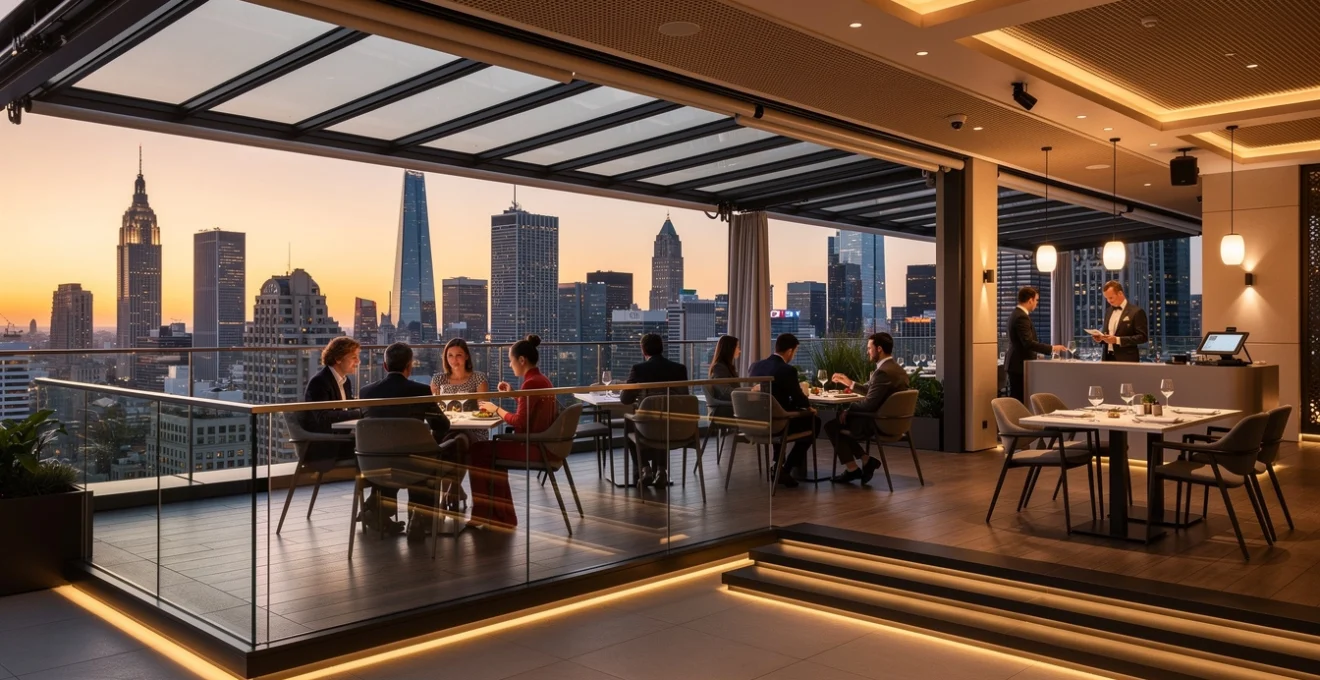
The intersection of culinary excellence and breathtaking panoramic views has created a distinctive dining category that transforms ordinary meals into extraordinary experiences. Modern rooftop restaurants represent far more than elevated dining spaces; they embody sophisticated architectural achievements that seamlessly blend gastronomy with stunning urban vistas. These establishments have revolutionised how diners perceive the relationship between food, atmosphere, and location, creating memorable experiences that extend well beyond the plate.
Contemporary rooftop dining venues face unique challenges that traditional ground-level restaurants never encounter. From weather-resistant design considerations to specialised logistics for food service at height, every aspect requires careful engineering and planning. The most successful establishments master the delicate balance between operational efficiency and atmospheric excellence, creating spaces where exceptional cuisine meets unparalleled city views. This sophisticated approach to high-altitude dining has established rooftop restaurants as coveted destinations for both casual diners and culinary enthusiasts seeking distinctive experiences.
Architectural design elements that define premium rooftop dining spaces
Premium rooftop dining establishments require sophisticated architectural solutions that address the unique challenges of elevated food service environments. The design process begins with comprehensive structural assessments to ensure buildings can support additional loads from kitchen equipment, dining furniture, and increased foot traffic. Successful rooftop restaurants demonstrate exceptional engineering prowess through their ability to create comfortable, weather-resistant spaces that maintain aesthetic appeal while meeting stringent safety requirements.
Glass balustrade systems and wind protection technologies
Modern glass balustrade systems serve as the first line of defence against wind exposure while maintaining unobstructed views of city skylines. These sophisticated installations utilise laminated safety glass panels that can withstand wind speeds exceeding 100 mph, ensuring guest safety during adverse weather conditions. The glass thickness typically ranges from 12mm to 19mm, with structural glazing systems providing seamless connections between panels.
Advanced wind engineering calculations determine optimal glass heights and positioning to create comfortable microclimates within dining areas. Strategic placement of vertical glass screens can reduce wind speeds by up to 70%, transforming potentially uncomfortable exposed terraces into pleasant dining environments. Some establishments incorporate adjustable glass panels that can be repositioned based on prevailing wind conditions, offering dynamic protection that adapts to changing weather patterns throughout the day.
Retractable canopy structures and Weather-Adaptive engineering
Retractable canopy systems represent the pinnacle of weather-adaptive rooftop design, enabling restaurants to operate year-round regardless of meteorological conditions. These sophisticated structures employ motorised fabric systems that can extend or retract within minutes, responding rapidly to changing weather patterns. High-quality marine-grade fabrics resist UV degradation and provide water-resistant protection while maintaining visual appeal.
Contemporary canopy designs incorporate tensioned cable systems that distribute loads evenly across supporting structures, minimising stress concentrations that could compromise structural integrity. Some installations feature integrated heating elements within canopy fabrics, extending comfortable dining seasons into traditionally challenging months. The most advanced systems include automated weather sensors that trigger canopy deployment when predetermined wind speeds or precipitation levels are detected.
Elevated flooring solutions and Load-Bearing considerations
Rooftop restaurant flooring must address multiple engineering challenges simultaneously, including waterproofing, thermal expansion, and substantial load-bearing requirements. Pedestal-supported decking systems elevate dining surfaces above structural roof membranes, providing essential waterproofing protection while creating level surfaces suitable for dining furniture. These systems accommodate thermal movement without compromising structural integrity or aesthetic appearance.
Load calculations for rooftop restaurants significantly exceed standard building requirements, accounting for dense furniture arrangements, kitchen equipment, and maximum occupancy scenarios. Structural engineers typically design for live loads ranging from 100 to 150 pounds per square foot, substantially higher than standard commercial space requirements. Advanced composite decking materials provide durability and slip resistance while maintaining visual appeal under intensive commercial use conditions.
Ambient lighting infrastructure for Multi-Level illumination
Sophisticated lighting systems create atmospheric dining environments while ensuring adequate illumination for food service and guest safety. Multi-zone lighting controls enable restaurants to adjust ambiance throughout evening service, transitioning from bright afternoon settings to romantic dinner atmospheres. LED technology provides energy-efficient solutions with programmable colour temperature controls that
allow venues to fine-tune brightness and colour to match brand identity. Layered lighting schemes typically combine low-level pathway illumination, concealed LED strip lighting along banquettes and bar fronts, and focused task lighting in service stations. By separating these circuits, operators can maintain safe circulation routes without flooding the terrace with harsh light that diminishes the skyline views. In many premium rooftop restaurants, intelligent control systems automatically adjust levels in response to ambient light, ensuring a seamless transition from sunset cocktails to late-night dining.
Thoughtful luminaire selection is also critical in managing glare and reflections on glass balustrades. Shielded fixtures, warm colour temperatures (in the 2200K–2700K range), and dimmable spotlights help preserve the drama of city skylines while still allowing guests to appreciate plate presentation. Designers increasingly specify IP65-rated outdoor fittings with robust corrosion resistance to withstand wind-driven rain and airborne pollutants at height. The result is a balanced lighting infrastructure that supports both operational efficiency and the immersive, cinematic quality that guests expect from high-end rooftop dining.
Acoustic engineering for urban noise mitigation
While many diners come to rooftop restaurants for the buzz of the city below, excessive noise can rapidly erode the premium experience. Acoustic engineering strategies focus on managing both external urban sound and internal reverberation within partially enclosed spaces. Perimeter planting, acoustic glass, and strategically placed windbreaks can all help deflect traffic noise and sirens, reducing decibel levels to a comfortable range of 65–70 dB during peak service.
Within the dining area, soft furnishings and sound-absorbing materials are essential to prevent conversations from bouncing across hard surfaces. Upholstered seating, acoustic ceiling baffles, and perforated wall panels with mineral wool backing help control reverberation time, keeping it below 0.8 seconds in most high-end concepts. Some rooftop venues also integrate directional speaker systems that create localized sound zones, allowing background music to be enjoyed without overpowering table conversation. By treating sound as carefully as light and structure, designers create spaces where the city’s energy is present but never overwhelming.
Michelin-starred establishments leading high-altitude gastronomy
The most successful rooftop restaurants do more than offer a “meal with a view”; they deliver destination-worthy gastronomy that can stand alongside the world’s leading dining rooms. In recent years, several high-rise venues have earned Michelin recognition or comparable accolades, proving that altitude and culinary ambition can coexist. These restaurants pair precision-engineered spaces with advanced kitchen operations and highly curated tasting menus, transforming skyline dining into a serious gastronomic pursuit.
What differentiates these establishments from more casual sky bars is their uncompromising focus on technique, provenance, and storytelling. Tasting menus are often designed to echo the surrounding cityscape, using local ingredients and seasonal produce to create a sense of place, even 200 metres above street level. Service rituals, wine pairings, and pacing are adapted to the unique rhythm of rooftop dining, from golden-hour seatings to late-night degustations under the stars. For operators, studying these benchmarks offers invaluable insight into how to elevate rooftop concepts from “Instagrammable” to truly iconic.
Aqua shard london’s contemporary british cuisine at 244 metres
Perched on the 31st floor of Western Europe’s tallest building, Aqua Shard has become synonymous with contemporary British cuisine framed by panoramic views of London. While the restaurant’s precise elevation is just over 240 metres above sea level, its culinary approach is firmly grounded in seasonal British produce and modern techniques. Menus typically highlight regional suppliers, with dishes that reinterpret classics such as cured trout, heritage pork, and native lobster through a refined, modern lens.
Operating at this height demands meticulous coordination between kitchen, bar, and front-of-house teams. Deliveries must be scheduled with building logistics in mind, and mise en place is planned to minimize back-of-house movement during peak viewing times like sunset. For guests, the drama of dining above London Bridge and St Paul’s is balanced by thoughtful details such as anti-glare tableware and carefully positioned lighting that prevents reflections from obscuring the skyline. Aqua Shard demonstrates how a rooftop restaurant can maintain a strong culinary identity while fully embracing its status as a global viewpoint.
Le ciel de paris montparnasse tower molecular gastronomy programme
Located on the 56th floor of Tour Montparnasse, Le Ciel de Paris pairs sweeping views of the Eiffel Tower with a forward-thinking culinary programme that borrows selectively from molecular gastronomy. Rather than relying on theatrics alone, the kitchen integrates modernist techniques—such as controlled sous-vide temperatures, foams, and dehydrations—to enhance texture and flavour precision in contemporary French dishes. The goal is to create a tasting experience that feels as elevated and meticulous as the restaurant’s vantage point over the Parisian skyline.
From an operational standpoint, working within a high-rise tower presents strict constraints on ventilation, grease management, and odour control, especially when executing complex preparations. Le Ciel de Paris addresses this through advanced extraction systems and careful menu engineering to balance labour-intensive showpieces with more streamlined plates. The result is a rooftop restaurant that can deliver multi-course tasting menus during high-demand windows—such as evening views of the illuminated Eiffel Tower—without compromising consistency or guest flow.
Rainbow room NYC art deco revival and seasonal menu integration
The Rainbow Room, situated on the 65th floor of 30 Rockefeller Plaza, stands as an archetype of how heritage rooftop restaurants can evolve without losing their soul. After its extensive restoration, the venue combined its iconic Art Deco interiors with a renewed emphasis on seasonal American cuisine. Menus lean into New York’s regional larder—think Hudson Valley duck, Long Island seafood, and tri-state farm vegetables—creating a dialogue between the city’s historic glamour and its modern food culture.
Seasonality is particularly important at this altitude, where the calendar of events below—holidays at Rockefeller Center, summer tourists, and New Year celebrations—directly influences demand patterns. The Rainbow Room uses flexible menu frameworks that can expand for gala dinners, charity balls, and corporate events while still maintaining a clear culinary identity. For rooftop restaurant operators, this illustrates how integrating a strong design narrative with an agile, seasonally driven menu can sustain relevance in a competitive urban market.
Atmosphere burj khalifa dubai’s contemporary european techniques
Atmosphere, set on the 122nd floor of the Burj Khalifa, pushes the boundaries of what most guests imagine when they think of sky-high dining. The restaurant’s modern European menu is executed with near-clinical precision, featuring techniques such as low-temperature cooking, refined saucing, and intricate patisserie that would be at home in any top-tier fine-dining room. At roughly 442 metres above ground, the venue leverages its extreme elevation not simply as a novelty, but as a backdrop for a carefully choreographed gastronomic experience.
Delivering consistency at this level presents unique challenges, from the microclimate variations that affect proofing and baking to the extended supply chains feeding Dubai’s luxury market. Atmosphere mitigates these issues through highly standardized recipes, temperature-controlled storage, and rigorous training protocols for its multinational team. The restaurant’s ability to maintain tight service standards while managing intense demand for prime sunset and fountain-view tables makes it a valuable case study for any operator considering a flagship rooftop concept in a high-rise environment.
Culinary operations management in elevated restaurant environments
Behind every seamless rooftop dining experience lies a complex web of culinary operations adapted specifically for height, restricted access, and variable weather. Unlike ground-level venues that can rely on conventional loading bays and short supply lines, rooftop restaurants often share freight elevators, loading docks, and service corridors with other tenants. This reality requires granular scheduling of deliveries, bulk prep, and waste removal to avoid congestion and maintain hygiene standards.
Kitchen design in elevated spaces must also be more compact and efficient, often working within tight footprints dictated by structural cores and mechanical plant. Smart zoning—separating hot line, cold prep, pastry, and plating areas—helps maintain flow during peak service, especially when timed to sunsets or fireworks shows that drive guest arrivals. Many operators use advanced equipment, such as combi-ovens and induction suites, to maximize output without overloading electrical systems or exhaust capacity. In effect, a successful rooftop kitchen functions like a high-performance galley: compact, highly organized, and engineered for predictability.
Service logistics present additional challenges, particularly when terraces are split across multiple levels or zones. Strategic placement of satellite service stations, heat-retaining pass areas, and discreet waiter routes preserves food quality while minimizing visual clutter. Staff training emphasizes route planning, tray management, and guest communication, ensuring that dishes arrive at the correct temperature even when navigating stairs or exposed walkways. By treating operations as an integrated ecosystem—where kitchen, bar, and floor teams work in choreographed harmony—rooftop restaurants can deliver high-level gastronomy without sacrificing the magic of open-air dining.
Revenue optimisation strategies for sky-high dining establishments
Premium rooftop restaurants typically face higher capital expenditure and operating costs than their ground-level counterparts, from reinforced structures and specialist glazing to premium rents and extended insurance. To remain profitable, these venues must treat every square metre of terrace and every 15-minute window of prime viewing time as revenue-sensitive assets. Thoughtful revenue optimisation strategies allow operators to balance guest experience with financial performance, ensuring that iconic skyline views translate into sustainable business models.
Effective strategies span pricing, seating allocation, menu design, and event programming. By aligning these levers with natural demand drivers—such as sunset timing, seasonal tourism, and local event calendars—rooftop operators can capture premium willingness to pay without alienating core clientele. The most successful concepts combine data-driven decision-making with hospitality-led judgment, recognising that long-term brand equity often depends more on perceived value and memorable experiences than on short-term yield maximisation.
Dynamic pricing models based on sunset timing and weather patterns
One of the most powerful tools available to rooftop restaurants is dynamic pricing tied to predictable demand spikes, especially around sunset and clear-weather evenings. Rather than applying blanket price increases, sophisticated operators use granular time slots and seating categories—such as “prime skyline”, “partial view”, and “interior”—to align pricing with perceived value. For example, a 90-minute sunset seating on a west-facing terrace may command a higher minimum spend than a late-evening booking with no direct view of the horizon.
Weather data can also inform pricing and promotional strategies. By monitoring forecasts several days in advance, venues can adjust minimum spends, release additional terrace inventory, or promote last-minute offers to maximize occupancy on unexpectedly clear nights. Conversely, on days with poor visibility or high winds, operators may prioritize filling indoor or semi-covered sections, using targeted discounts or package deals to maintain overall revenue. The key is transparency: clearly communicating what guests can expect in terms of views and conditions helps maintain trust while enabling more flexible pricing structures.
Private event booking systems for corporate functions
Corporate events, product launches, and private celebrations are a cornerstone of revenue optimisation for many rooftop establishments. High-altitude venues offer natural prestige and built-in visuals for photography and social media, making them particularly attractive to brands and agencies. To capitalise on this demand, operators increasingly deploy dedicated online booking systems and sales pipelines that streamline inquiries, proposals, and contract management for private events.
Tiered event packages—ranging from partial-terrace buyouts during off-peak hours to full-venue exclusives on weeknights—allow rooftops to monetise their spaces beyond conventional dinner service. Minimum spends can be calibrated based on day of week, season, and competing public demand, with clear inclusions such as canapés, bar packages, and AV support. For operators, the advantage is twofold: event bookings provide predictable, high-margin revenue, and they often occur during shoulder periods when à la carte demand would otherwise be lower. When managed carefully, a balanced mix of public service and private functions can significantly enhance annual profitability without eroding the restaurant’s core identity.
Seasonal menu engineering and profit margin analysis
Given the elevated fit-out and operating costs of rooftop restaurants, menu engineering becomes a critical lever for protecting margins. Operators routinely analyse sales mix, food cost percentages, and contribution margins to identify star dishes that are both popular and profitable. These items—often featuring high-perceived-value ingredients presented in visually striking ways—can be spotlighted on menus or tasting sequences to gently guide guest choices. At the same time, low-margin “plough-horses” may be reformulated or repriced to maintain acceptable profitability.
Seasonality offers an additional opportunity to align cost control with guest expectations. By rotating menus in sync with local harvests and market conditions, rooftop venues can secure better pricing on peak-season produce, seafood, and game, while also refreshing the experience for repeat visitors. Consider a terrace in London that pivots from spring asparagus and early strawberries to autumn root vegetables and slow-braised meats: not only does this respond to weather and mood, it also optimises procurement and reduces reliance on costly imports. Regular margin analysis ensures that even visually elaborate plates—designed to be photographed against skyline backdrops—continue to support the financial health of the business.
Table turnover optimisation during peak viewing hours
Unlike conventional restaurants, rooftop venues often see demand compressed into relatively narrow windows around sunset, fireworks displays, or major events. Optimising table turnover during these periods is less about rushing guests and more about precise pacing and expectation setting. Many operators adopt clearly defined seating times—such as 90 or 120 minutes for prime-view tables—communicated at the point of booking and reinforced in confirmation messages. This transparency helps guests plan their evening while giving the restaurant a reliable framework for managing flow.
Operationally, synchronising kitchen readiness, bar prep, and service staffing around these peak windows is essential. Pre-batching signature cocktails, staging amuse-bouches, and standardising dessert options for early and late seatings can all shave minutes off the critical path without compromising quality. Technology further supports this process: reservation platforms that visualise table status and forecast upcoming turns enable hosts to manage walk-ins and waitlists more confidently. When executed well, a rooftop restaurant can maximise the number of guests who experience its best skyline views while still delivering a relaxed, upscale atmosphere.
Health and safety compliance standards for high-rise food service
Operating a restaurant dozens of floors above street level introduces a distinct set of health and safety requirements that go far beyond standard food hygiene regulations. Building codes typically mandate higher levels of fire protection, including enhanced sprinkler coverage, fire-rated partitions, and clearly marked egress routes capable of handling peak occupancy. Staff must be thoroughly trained in evacuation procedures, often in coordination with building-wide protocols for office tenants, hotels, or residential occupants sharing the tower.
On the food safety side, rooftop restaurants must account for extended vertical transport of ingredients and waste. Chilled supply chains are maintained through insulated containers and time-controlled delivery windows, ensuring that perishable goods stay within safe temperature ranges throughout their journey. Outdoor terraces introduce additional considerations, from pest control to safe handling of glassware near balustrades and pool edges. Regular risk assessments—covering everything from trip hazards on elevated decking to wind-secured parasols and heaters—help operators stay ahead of local regulations and insurer expectations.
Weather-related safety is another critical factor. Many jurisdictions require documented protocols for high winds, lightning, and sudden storms, including maximum safe wind speeds for keeping terraces open. Automated monitoring systems that integrate with canopy controls, outdoor heaters, and lighting can trigger alerts or automatic shutdowns when thresholds are exceeded. By embedding safety compliance into daily operations—not treating it as a one-off audit—rooftop restaurants protect both guests and staff while preserving the long-term viability of their elevated spaces.
Technology integration systems enhancing the rooftop dining experience
Technology has become a silent partner in many of the world’s most successful rooftop restaurants, enhancing everything from reservations and seating to atmosphere and storytelling. Cloud-based booking platforms allow operators to manage complex seating plans that factor in view quality, sun exposure, and proximity to key features like DJ booths or infinity pools. Some venues go further, using dynamic floor plans that update in real time as guests arrive, relocate between bar and terrace, or extend their stay for another round of cocktails.
On the guest-facing side, digital tools can subtly enrich the rooftop dining experience without detracting from the drama of the skyline. QR-code menus, when well designed, enable rapid updates to reflect weather-driven specials or limited-availability dishes, while integrated payment options help reduce wait times for bills during busy sunset periods. Smart lighting and sound systems, controlled via central interfaces or even mobile apps, allow managers to fine-tune ambiance in response to changing light conditions or guest demographics. Imagine dimming the perimeter lights by a few points just as the city’s landmarks illuminate—technology makes these micro-adjustments both feasible and repeatable.
Behind the scenes, data analytics play an increasing role in long-term optimisation. By tracking booking patterns, average spend, and dwell times across different table zones and time slots, operators can refine everything from pricing to staff scheduling. Kitchen display systems and handheld ordering devices reduce errors and speed up communication between terrace and back-of-house, which is particularly valuable when service routes span multiple levels or outdoor areas. Ultimately, the most effective technology integrations are those that remain largely invisible to guests, quietly supporting the rooftop restaurant’s core promise: exceptional food and drink paired with unforgettable skyline views.