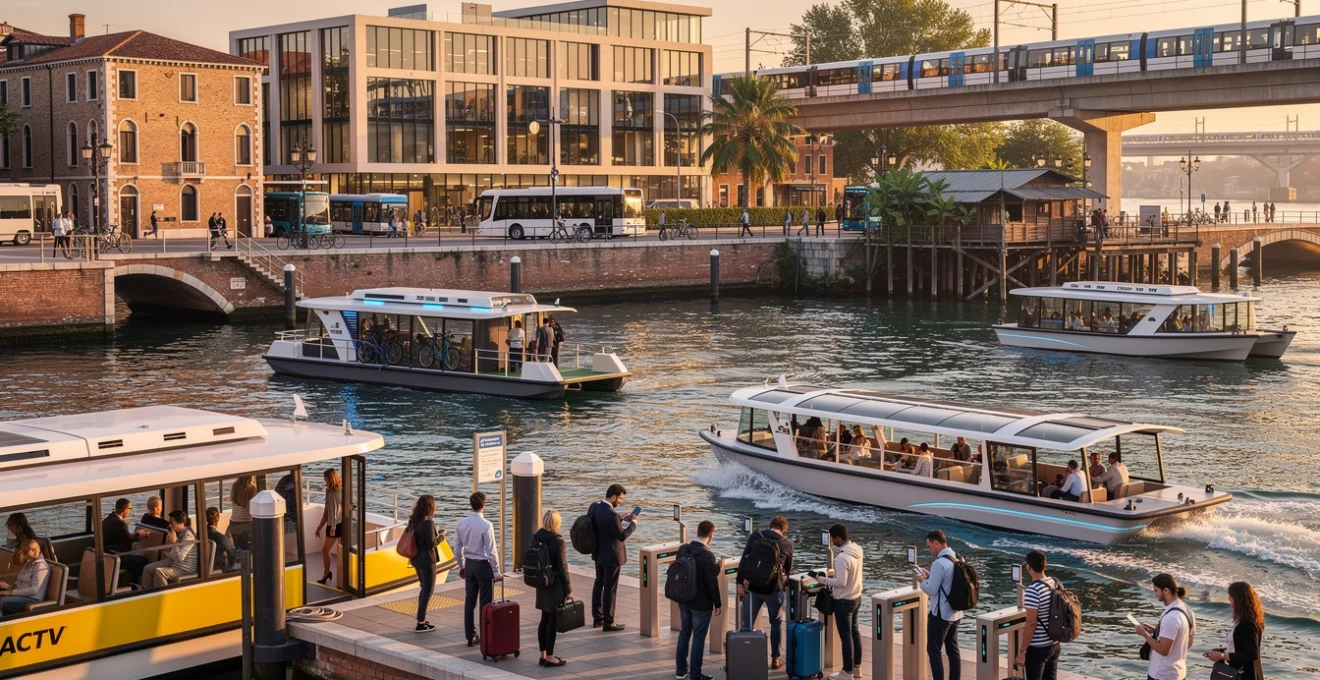
Urban waterways have emerged as transformative arteries for sustainable transportation, revolutionising how millions of residents and visitors navigate historic canal cities worldwide. From Venice’s iconic vaporetti to Amsterdam’s cutting-edge electric ferries, water buses represent far more than scenic alternatives to traditional transport—they embody sophisticated engineering solutions that address contemporary mobility challenges whilst preserving cultural heritage. These floating transit systems now carry over 200 million passengers annually across major canal cities, demonstrating their evolution from tourist attractions to essential infrastructure components that define modern urban mobility strategies.
Water bus fleet architecture and vessel specifications in venice, amsterdam, and bangkok
The engineering complexity behind successful water bus operations requires careful consideration of vessel specifications, passenger capacity, and environmental constraints unique to each urban waterway system. Modern fleet architecture balances operational efficiency with environmental sustainability, incorporating advanced propulsion technologies that minimise ecological impact whilst maximising passenger throughput during peak commuting hours.
Vaporetto design principles and passenger capacity engineering in venice ACTV network
Venice’s ACTV network operates one of the world’s most sophisticated water bus fleets, with vessels specifically engineered to navigate the city’s shallow canals and accommodate varying passenger loads throughout the day. The latest generation of vaporetti features low-profile hull designs that reduce wake formation, protecting the city’s historic foundations whilst maintaining passenger capacity of up to 230 individuals per vessel. These boats incorporate advanced stabilisation systems that ensure passenger comfort during rough weather conditions, particularly crucial for the millions of daily commuters who depend on this service.
The design specifications prioritise accessibility, with wheelchair-accessible boarding platforms and dedicated spaces for mobility aids. Each vaporetto includes multiple entry and exit points to expedite passenger flow at busy terminals, whilst automated announcement systems provide real-time schedule updates in multiple languages. The fleet’s standardised maintenance protocols ensure 98% operational availability across the network’s 19 routes, demonstrating the critical importance of systematic engineering approaches in urban water transport.
Amsterdam GVB ferry fleet technical specifications and electric propulsion systems
Amsterdam’s GVB ferry network showcases cutting-edge electric propulsion technology, with the majority of its fleet now operating on battery-electric systems that achieve zero local emissions. The vessels feature modular battery configurations that enable rapid charging during short terminal stops, maintaining continuous service throughout 18-hour operational days. Each ferry incorporates regenerative braking systems that recover energy during deceleration phases, improving overall energy efficiency by approximately 15% compared to conventional diesel alternatives.
The technical specifications include shallow-draft hulls optimised for Amsterdam’s historic canal network, with maximum drafts of 1.8 metres to ensure navigation through all waterway sections. Advanced GPS-based positioning systems enable precise docking procedures, reducing terminal turnaround times to under 90 seconds during peak periods. The fleet’s integrated monitoring systems track real-time performance metrics, including energy consumption, passenger loads, and mechanical systems status, enabling predictive maintenance scheduling that minimises service disruptions.
Chao phraya express boat hull configuration and shallow draft requirements
Bangkok’s Chao Phraya Express Boat service operates specialised vessels designed for the river’s unique tidal conditions and varying water levels throughout the monsoon seasons. The boats feature reinforced hull configurations capable of withstanding debris impacts common during flood seasons, whilst maintaining shallow drafts essential for navigating upstream sections during low water periods. Each vessel accommodates up to 150 passengers with open-air seating arrangements that provide natural ventilation in Bangkok’s tropical climate.
The engineering challenges of operating in a tidal river system require sophisticated ballast management systems that automatically adjust vessel trim based on passenger distribution and water conditions. Advanced propeller designs minimise sediment disturbance whilst providing sufficient thrust for upstream navigation against strong currents. The fleet incorporates redundant safety systems including emergency communication equipment and life-saving appliances that exceed international maritime safety standards for inland waterway operations.
Hybrid propulsion technologies in copenhagen harbour buses and brisbane CityCat services
Copenhagen’s harbour bus fleet represents a successful transition to hybrid propulsion technology, combining electric motors with biodiesel generators to achieve significant emission reductions whilst maintaining operational flexibility. The hybrid systems enable silent electric operation in environmentally sensitive areas whilst providing extended range capabilities for longer routes across the harbour network. Each vessel features
energy management software that switches seamlessly between power sources, optimising fuel use and battery life in real time. This architecture allows Copenhagen’s harbour buses to cut CO2 emissions by up to 30% compared with older diesel fleets, whilst maintaining reliable headways even during harsh winter conditions. Passenger-focused design elements, such as low-noise operation and reduced vibration levels, make these hybrid water buses more appealing for daily commuters who might otherwise rely on road-based buses or private cars.
In Brisbane, the CityCat catamarans employ lightweight composite hulls paired with efficient diesel-electric or hybrid propulsion systems, enabling cruising speeds of up to 25 knots on the Brisbane River. The twin-hull configuration offers excellent stability and shallow draft performance, which is essential for navigating variable river depths and tight bends. Modern CityCat vessels integrate advanced emissions control systems and are preconfigured for future retrofits to full battery-electric or hydrogen fuel cell propulsion, ensuring that the fleet can evolve in line with stricter environmental standards and long-term decarbonisation strategies.
Integrated multimodal transport networks and transit hub connectivity
Water buses in canal cities deliver the greatest benefits when they function as fully integrated components of wider multimodal transport networks. Rather than acting as standalone services, they are increasingly planned as high-capacity corridors that connect directly with rail, metro, bus, tram, and cycling infrastructure. This level of integration transforms water buses from novelty modes into everyday mobility tools, shortening total journey times and making car-free travel more realistic for residents. For urban planners, the key challenge is designing transit hubs and waterfront terminals that enable smooth transfers between modes with minimal friction.
Interchange design at piazzale roma and venezia santa lucia railway integration
In Venice, Piazzale Roma and Venezia Santa Lucia railway station form the primary interchange nodes between land-based and water-based mobility. Piazzale Roma acts as the city’s gateway for road traffic, hosting regional buses, airport shuttles, taxis, and car parks, all within walking distance of major vaporetto piers. The interchange has been progressively redesigned to prioritise pedestrian flows, with clear wayfinding, sheltered walkways, and level-access gangways that allow travellers to move from bus to water bus in just a few minutes, even with luggage or mobility aids.
Venezia Santa Lucia, the main railway station, is structurally integrated with the Grand Canal, enabling direct boarding onto ACTV water buses from platforms just outside the terminal. Timetables for key vaporetto lines are coordinated with Trenitalia and Italo rail services during peak arrival and departure windows, reducing waiting times for intercity passengers. By aligning water bus services with long-distance rail schedules, Venice effectively extends the reach of its rail network into the historic city centre, offering a single continuous journey that feels more like changing corridors in a large building than switching between transport modes.
Amsterdam noord ferry terminal smart ticketing and real-time passenger information systems
Amsterdam Noord’s ferry terminals highlight how digital tools can make water buses feel as predictable and user-friendly as metro lines. Although most GVB ferries across the IJ are free, they are still tightly integrated with the city’s wider smart ticketing ecosystem and real-time passenger information systems. Dynamic display boards show countdowns to the next departure, vessel occupancy levels, and any service disruptions, helping you decide whether to board immediately or wait for the following ferry. This is particularly valuable for cyclists, who form a significant share of ferry users and need to judge space availability before boarding.
Behind the scenes, Amsterdam’s central mobility control centre aggregates GPS data from ferries, metro lines, trams, and buses into a unified platform. This allows the city to coordinate frequencies across modes, for example, boosting ferry departures when large flows of passengers are expected from Amsterdam Centraal station. Integration with journey-planning apps and open data feeds means that developers can build multimodal route planners that automatically incorporate ferry crossings, making it as natural to choose a water bus as it is to select a tram. As cities move towards Mobility-as-a-Service (MaaS) platforms, this level of digital integration becomes a crucial enabler of seamless canal city travel.
Bangkok BTS skytrain and water bus synchronisation at saphan taksin interchange
Bangkok’s Saphan Taksin interchange provides a textbook example of vertical integration between elevated rail and river-based transport. The BTS Skytrain station is built directly above the Chao Phraya River, with stairs and lifts leading to a compact pier serving Chao Phraya Express Boats and local shuttle ferries. For commuters travelling from outer suburbs, the journey can shift from bus to BTS to water bus in a single, continuous sequence, with walking distances kept deliberately short to reduce transfer penalties.
Service planners have progressively worked to synchronise BTS headways with water bus departures, particularly during morning and evening peaks. While perfect timing is difficult in a congested megacity, the goal is to minimise the time passengers spend waiting on crowded piers exposed to heat and rain. Real-time information displays at Saphan Taksin show both train and boat schedules, and mobile journey planners increasingly recommend mixed BTS–river routes as viable alternatives to often gridlocked roads. For many commuters, this integrated model reshapes water buses from backup options into reliable pillars of their daily commute.
Stockholm archipelago ferry network integration with SL public transport cards
Stockholm’s extensive archipelago ferry network demonstrates how ticketing integration can widen the role of water buses beyond the inner city. Many of the city’s commuter ferries are fully integrated into the regional SL public transport system, meaning passengers can use the same smart card for metro, bus, tram, and ferry services. This unified fare structure removes psychological barriers to using ferries since you do not need to purchase separate tickets or understand different pricing schemes. For residents living on islands or waterfront suburbs, water buses become as routine as any bus line.
Timetable coordination is especially important in winter, when ice conditions and reduced daylight hours complicate operations. Stockholm’s transport authority uses integrated scheduling tools to ensure that feeder buses and metro lines connect efficiently with island ferries, even when sailing times fluctuate due to weather. The city’s open data environment allows third-party apps to incorporate ferry disruptions and ice-related reroutings in real time, helping passengers adapt their journeys. By treating archipelago ferries as equal members of the public transport family, Stockholm shows how water buses can support regional connectivity rather than only inner-city tourism.
Route optimisation algorithms and dynamic scheduling systems
As water bus networks expand, manually planning routes and timetables becomes increasingly inefficient. Many canal cities are now adopting route optimisation algorithms and dynamic scheduling systems similar to those used in advanced bus and metro operations. These systems analyse historical ridership data, real-time passenger counts, weather patterns, and even major event schedules to adjust frequency and routing. For example, a route optimisation engine may recommend adding extra sailings after concerts or football matches, or reducing off-peak services on low-demand segments to save energy and operating costs.
Dynamic scheduling can be particularly powerful on waterways where conditions change rapidly. Tidal variations, lock operations, and bridge openings can all affect travel times, making static schedules less reliable. By integrating sensor data from vessels (speed, position, fuel or battery state) with hydrological forecasts, operators can recalculate estimated times of arrival and adjust departure patterns in near real time. For passengers, this results in more accurate countdown displays and journey-planning information; for operators, it means less idle time at piers and better utilisation of the fleet.
In some pilot projects, such as autonomous and semi-autonomous water taxi systems in Amsterdam and Northern Europe, AI-based routing platforms continuously search for the most efficient paths across dense canal networks. The algorithms weigh factors such as traffic density, wake-sensitive zones, and noise restrictions, not unlike a navigation app that avoids congested roads and low-emission zones on land. Could we eventually see water bus systems where timetables virtually disappear, replaced by on-demand, algorithmically orchestrated fleets? Early demonstrations suggest that, at least on selected routes, demand-responsive water buses could significantly cut waiting times while still operating within safe and predictable parameters.
Environmental impact assessment and carbon footprint reduction methodologies
Because many canal cities are compact and densely populated, the environmental performance of water buses is under intense scrutiny. Authorities increasingly require detailed environmental impact assessments before approving new routes or vessel types, with a strong focus on carbon footprint reduction, underwater noise, and wake-related erosion. These assessments typically compare different propulsion technologies—diesel, hybrid, battery-electric, and hydrogen fuel cell—across a full life cycle, from construction to end-of-life recycling. The results guide procurement decisions and inform long-term decarbonisation roadmaps for waterborne transport.
Practical carbon reduction methodologies usually combine technology upgrades with operational optimisation. Electrification, where feasible, offers the largest local emissions cuts, especially when coupled with renewable electricity. However, even before full electrification is achievable, cities can adopt low-sulphur fuels, biodiesel blends, or hybrid systems to reduce particulate and NOx emissions along busy waterfronts. Route optimisation, eco-driving training, and speed management policies further decrease fuel consumption; for instance, enforcing lower speeds in sensitive heritage zones not only protects canal walls from wake damage but also lowers energy use per trip.
To track progress, many operators now deploy onboard monitoring systems that log fuel or energy consumption, speed profiles, and engine load on a trip-by-trip basis. This data feeds into carbon accounting tools that calculate emissions per passenger-kilometre, allowing operators and policymakers to benchmark water buses against buses, trams, or private cars. In several European cities, early results show that well-loaded electric or hybrid water buses can outperform diesel buses in terms of per-passenger emissions, especially when they replace congested road journeys. From a policy perspective, these metrics help justify investments in charging infrastructure, green piers, and vessel retrofits as part of broader climate action plans.
Digital payment infrastructure and contactless boarding technologies
Efficient boarding is vital for water bus systems, where pier space is limited and vessels may only be able to dwell for a minute or two. Digital payment infrastructure and contactless boarding technologies have become central to reducing queues, shrinking dwell times, and improving the overall passenger experience. As cities shift towards integrated ticketing, you are increasingly able to use the same smart card, mobile app, or contactless bank card across all modes, including water buses. This not only simplifies travel but also generates rich datasets that support planning and demand forecasting.
Oyster card implementation on thames clippers and london river services
London’s Thames Clippers and other London River Services have progressively integrated with the city’s iconic Oyster Card and contactless payment system. Initially, passengers had to purchase paper tickets or use separate apps, creating friction at busy piers like London Bridge City and Embankment. Today, most regular services accept Oyster and contactless bank cards, enabling tap-in/tap-out boarding that aligns water bus usage with Tube and bus journeys. Fare capping ensures that river commuters do not pay more than set daily or weekly limits, making regular river travel more financially predictable.
From an operational standpoint, the adoption of Oyster and contactless payments on river services reduces cash handling and shortens boarding times, particularly during commuter peaks. Automated fare collection data helps Transport for London analyse peak load sections, popular origin–destination pairs, and seasonal patterns in river travel. This insight supports decisions on where to add extra sailings, which piers to upgrade, and how to promote river buses as part of sustainable commuting strategies. The river effectively becomes another “blue line” on London’s transit map, rather than a niche tourist experience.
QR code scanning systems in istanbul şehir hatları ferry operations
Istanbul’s Şehir Hatları ferries, which criss-cross the Bosphorus and connect the city’s European and Asian sides, have embraced QR code-based ticketing to complement existing smart card systems. Passengers can purchase single or multi-trip tickets via mobile apps and receive a time-limited QR code, which is scanned at turnstiles before boarding. This approach is particularly useful for visitors who may not have local transport cards but still want to take advantage of Istanbul’s extensive ferry network as part of their urban travel.
QR code systems are relatively inexpensive to deploy and can be layered onto existing gates or handheld scanners, making them an attractive solution for operators with mixed fleets and varied pier infrastructure. For Istanbul, the combination of smart cards, QR tickets, and open payment methods supports a flexible ecosystem where both daily commuters and occasional users can access ferries without friction. In the background, integrated back-office platforms reconcile transactions across modes, enabling consistent revenue sharing and ridership analytics that inform long-term waterfront mobility planning.
Nfc-enabled boarding gates and automated fare collection in dubai water bus network
Dubai’s water bus and water taxi network, operated by the Roads and Transport Authority (RTA), showcases a highly automated approach to fare collection, built around NFC-enabled boarding gates and the unified Nol card system. At key Dubai Creek and Dubai Marina stations, passengers tap their Nol cards on contactless readers, with gates automatically validating fares based on distance or zone travelled. The same card works across metro, tram, bus, and even some parking facilities, making multimodal journeys across the city exceptionally straightforward.
Automated fare collection in Dubai does more than speed up boarding; it also supports advanced pricing strategies such as off-peak discounts and targeted promotions for specific routes. Because the system records origin–destination pairs in detail, planners can model how changes in service frequency or pricing affect demand on water buses compared to alternative routes by road or rail. For a fast-growing city where waterfront developments play a major role in urban expansion, this data-driven approach ensures that water buses remain aligned with evolving land use and travel patterns.
Blockchain-based ticketing solutions for st. petersburg hydrofoil services
While still in the experimental phase, blockchain-based ticketing solutions are being explored for high-speed hydrofoil services in cities like St. Petersburg, where seasonal tourist flows create complex revenue-sharing and capacity management challenges. In such pilots, digital tickets are issued as cryptographically secure tokens recorded on a distributed ledger, ensuring transparent validation and reducing the risk of fraud or duplicate use. Smart contracts can automatically trigger revenue distribution between operators, agents, and terminal owners whenever a ticket is used, simplifying back-office settlement.
For passengers, blockchain-based ticketing may not feel radically different from a conventional mobile ticket, but it can unlock new options such as transferable passes, peer-to-peer resale within defined rules, or loyalty schemes that span multiple operators. Imagine being able to purchase a combined hydrofoil–metro–museum pass that settles payments automatically in the background whenever you tap or scan your phone. While such systems must navigate regulatory and privacy considerations, they hint at a future where water-based and land-based mobility are linked through highly interoperable, transparent digital ecosystems.
Urban planning implications and waterfront development strategies
The rise of water buses as mainstream urban transport has profound implications for how cities shape their waterfronts and plan future growth. Historically, many canal and riverfront areas were reserved for industry, warehousing, or port logistics, with limited public access. As water buses attract more daily riders, cities are reimagining these spaces as mixed-use mobility hubs that blend transit, public realm, and economic activity. Well-designed piers can act like small urban plazas, anchoring new residential districts, office clusters, and cultural venues that benefit from direct waterborne access.
From a planning perspective, integrating water buses into land use strategies requires careful balancing of accessibility, heritage protection, and climate resilience. Terminals must be designed to cope with sea-level rise, storm surges, and fluctuating river levels, often through adaptive elements such as floating pontoons, adjustable gangways, and flood-resilient electrical systems. At the same time, integrating cycling routes, pedestrian promenades, and green infrastructure around piers can transform previously underused waterfronts into vibrant, people-centred corridors. In many ways, a well-placed water bus terminal can function like a new “front door” for an entire neighbourhood.
Urban planners are also exploring how water buses can reduce pressure on overloaded bridges and metro lines, effectively creating new “blue corridors” for both people and goods. Cities like Amsterdam and London are investigating the use of autonomous or semi-autonomous vessels not just for passengers but also for last-mile logistics, waste collection, and construction materials delivery. This multimodal approach mirrors a well-orchestrated orchestra, where each instrument—road, rail, cycleway, and waterway—plays a specific part in the overall mobility score. As more canal cities adopt integrated, low-emission water bus systems, the traditional boundary between transport infrastructure and waterfront public spaces continues to blur, opening up new possibilities for sustainable, liveable urban environments.