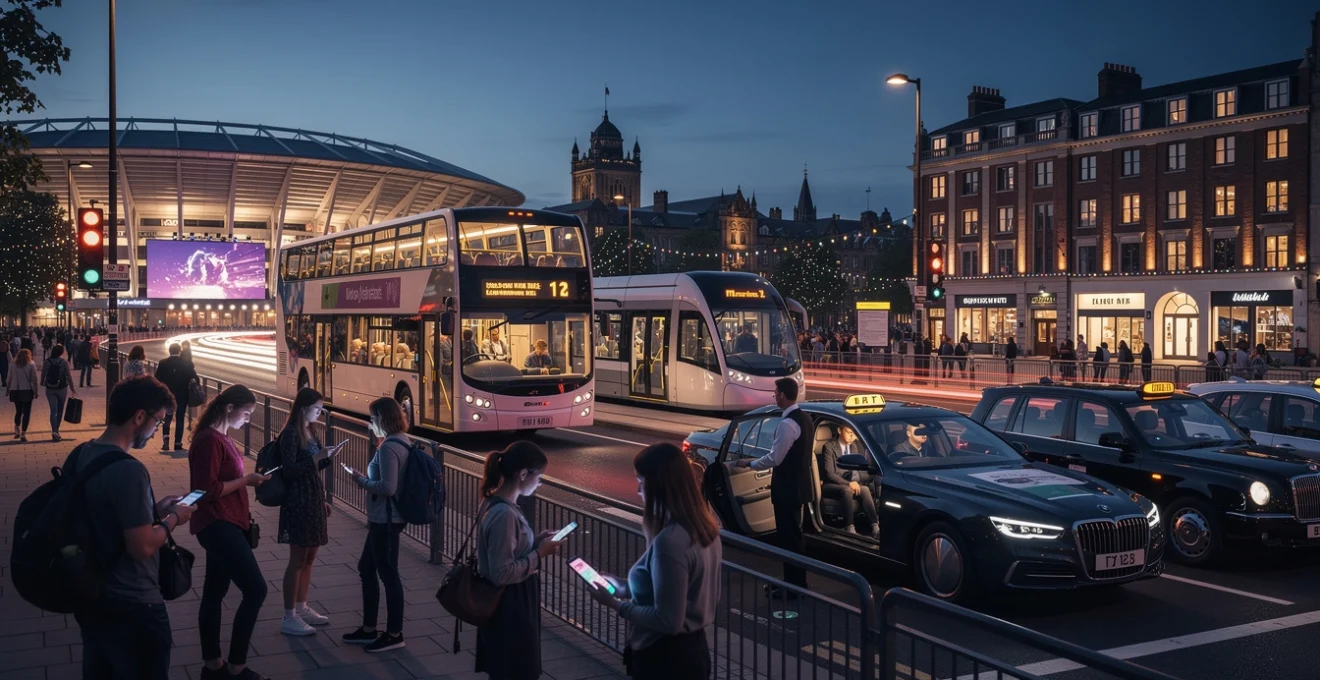
The final notes fade, the lights come up, and thousands of concert-goers begin their exodus from venues across the UK. Yet for many attendees, the evening’s biggest challenge isn’t securing tickets or finding the perfect spot in the crowd—it’s navigating the journey home when public transport winds down and city streets transform into a maze of confusion. Whether you’ve just experienced a life-changing performance at Wembley Stadium or danced until dawn at a local festival, understanding your late-night transport options can mean the difference between ending your evening on a high note or facing hours of frustration on empty streets.
The landscape of after-hours transportation has evolved dramatically in recent years, with cities adapting their infrastructure to accommodate the growing demand for cultural events and nighttime entertainment. From enhanced public transport schedules to innovative ride-sharing solutions, the options available to late-night travellers have expanded significantly. However, navigating these choices requires careful planning and an understanding of how each service operates during peak exodus periods.
Night bus networks and extended public transport schedules
Public transport networks across major UK cities have recognised the essential role they play in facilitating safe late-night travel for event attendees. The evolution of night services has transformed from basic skeleton schedules to comprehensive networks designed specifically to handle large-scale event dispersal. These services now operate with strategic frequency increases during major concerts and festivals, ensuring adequate capacity when thousands of passengers need simultaneous transport.
Modern night transport systems utilise sophisticated passenger flow modelling to predict demand patterns. During major events, additional vehicles are deployed along key routes, with some services operating at intervals as frequent as every 10-15 minutes compared to typical late-night frequencies of 30-60 minutes. This enhanced capacity proves particularly valuable when multiple venues host simultaneous events, creating complex passenger distribution patterns across urban transport networks.
Transport for london night tube services on friday and saturday operations
The Night Tube represents one of Europe’s most comprehensive after-hours public transport systems, operating on five London Underground lines every Friday and Saturday night. These services run approximately every 10-20 minutes throughout the night, providing crucial connectivity between major venues and residential areas. The system particularly benefits concert-goers attending events at venues like the O2 Arena, accessible via the Jubilee line, and Alexandra Palace, served by the Piccadilly line extensions.
Night Tube operations demonstrate remarkable coordination with major event scheduling. Transport for London increases service frequency during anticipated high-demand periods, often adding extra trains when large concerts conclude. The system handles an average of 200,000 passengers each weekend night, with significant spikes recorded during major music festivals and sporting events. This capacity management ensures that even when 20,000 attendees leave a single venue simultaneously, the network can accommodate the surge without excessive crowding.
Manchester metrolink Late-Night tram extensions during event periods
Manchester’s Metrolink system extends its operating hours specifically during major events, with trams running until approximately 2:00 AM on event nights compared to the standard midnight finish. These extensions prove particularly valuable for attendees at Manchester Arena, one of Europe’s largest indoor venues, which connects directly to Manchester Victoria station via the Metrolink network. The tram system’s integration with major venues creates seamless connectivity that eliminates the need for complex interchange planning.
The Metrolink’s event-responsive scheduling demonstrates how modern transport networks adapt to cultural programming. When multiple venues host events simultaneously—such as during Manchester International Festival—the system coordinates extended services across all affected lines. This coordination includes increased tram capacity and strategic positioning of additional vehicles at key interchange points, ensuring smooth passenger flow even during peak dispersal periods.
Edinburgh lothian buses night service routes to festival venues
Edinburgh’s night bus network becomes particularly crucial during the Edinburgh Festival Fringe, when the city hosts over 3,000 performances across 300 venues. Lothian Buses operates dedicated night routes that connect major festival venues with accommodation areas and transport hubs. These services run every 30 minutes throughout the night, with additional frequency during peak festival periods when shows typically end between 10:30 PM and midnight.
The network’s festival-optimised routing includes stops at temporary venues and outdoor performance spaces that don’t typically feature on regular bus routes. This adaptive approach ensures
that visitors staying in popular late-night districts such as Leith Walk, New Town, and Bruntsfield can still rely on frequent connections after midnight. For travellers, this means less time scanning timetables and more time enjoying the festival atmosphere, safe in the knowledge that a clearly signposted night service will be available when the curtain falls on the final performance of the evening.
Birmingham swift card integration for seamless late-night journey planning
In Birmingham, the Swift smart card has become a central tool for planning and paying for late-night journeys after concerts or events. As the West Midlands’ multi-operator smart ticketing system, Swift allows passengers to use a single card across buses, trams, and some rail services, reducing the friction that often comes with navigating unfamiliar ticketing rules late at night. For travellers leaving events at the Utilita Arena or Resorts World Arena, this integration can significantly reduce queuing times at ticket machines and simplify last-minute route changes.
When late-night services operate on extended schedules, Swift-enabled tickets and capped fares help travellers maintain cost control even when plans change. Instead of worrying about buying individual paper tickets for each leg of a journey, you can tap in and out across participating services and let the system calculate the best value. For visitors who are not regular users, loading a Swift pay-as-you-go product before the event can be as important as checking the timetable itself, ensuring you are not left searching for cash or card options at a crowded stop after midnight.
The integration of Swift with journey-planning apps also supports real-time decision-making for those travelling home after a concert. Live data feeds can show which services are still running, where disruptions are occurring, and how long you can expect to wait at interchanges such as Birmingham New Street or Grand Central. This combination of smart ticketing and information services makes Birmingham a useful case study in how technology can make late-night public transport more predictable, even when large events push networks close to capacity.
Ride-hailing platform surge pricing dynamics and availability algorithms
As public transport services wind down, many travellers turn to ride-hailing apps for late-night transport after concerts or festivals. Yet dependence on these platforms introduces a new challenge: understanding how surge pricing and availability algorithms behave when thousands of people open the same app at the same time. Pricing models that seem fair during off-peak hours can feel punishing when you are standing outside a stadium in the rain, watching fares climb with every refresh.
Ride-hailing companies balance several variables when allocating vehicles: driver supply, passenger demand, traffic conditions, and historical patterns of behaviour around major venues. Algorithms often treat the end of a concert or match as a predictable spike, raising prices to attract more drivers into the area and rationing limited capacity. For travellers, learning how these systems work can help you time your booking, choose the right pick-up point, and avoid the most expensive periods. Think of it as learning the tides before setting sail: you cannot change them, but you can plan around them.
Uber dynamic pricing models during peak event exodus periods
Uber’s dynamic pricing model, often referred to as surge pricing, is designed to keep vehicles available even when demand jumps sharply. During peak event exodus periods—such as the final whistle at Wembley or the closing fireworks at a festival—demand can multiply several times within minutes. Uber’s algorithm responds by applying a surge multiplier to the base fare, signalling drivers that it is worth heading towards the venue and discouraging some passengers from booking until demand subsides.
Studies of large events in major cities have shown that surge pricing typically peaks within the first 10–20 minutes after an event ends, then gradually stabilises as some passengers leave on foot or shift to public transport. If you are flexible, waiting in a nearby café or staying inside the venue for a short time can sometimes cut your fare significantly. You might ask yourself: do you need to leave immediately, or could a 20-minute wait save enough to justify another drink or snack inside?
Another factor to consider is the importance of choosing your pick-up location strategically. Uber’s algorithm clusters demand around official venue exits and designated pick-up zones, which can lead to virtual “hotspots” of very high pricing. Walking a few hundred metres away from the main gates—while staying within well-lit, busy areas—may not only reduce your fare but also make it easier for your driver to reach you without getting stuck in gridlocked traffic. As with public transport, a small change in route can yield a big improvement in your journey home.
Bolt priority booking features for post-concert transportation
Bolt, which operates in several UK cities, has introduced a range of features designed to improve late-night transport reliability after major events. One such feature is its priority booking system, where users can opt for slightly higher fares in exchange for faster vehicle allocation during busy periods. For groups who must make a last train or early-morning flight, this can offer peace of mind when standard requests are repeatedly delayed or cancelled.
From an operational perspective, Bolt’s algorithms emphasise driver proximity and route efficiency, attempting to minimise waiting times even as demand rises. During concert dispersals, the system may temporarily restrict pick-ups directly at venue entrances, guiding passengers to safer, more accessible locations that allow drivers to enter and leave quickly. While this may seem inconvenient at first, it often cuts total journey time, especially where road closures or traffic management schemes are in place.
For travellers, using features such as in-app communication and accurate live location sharing becomes particularly important after events, when mobile networks can be congested and visibility may be poor. Confirming the number plate, vehicle model, and driver name before boarding is essential late at night, and using Bolt’s safety tools—such as ride tracking and trusted contacts—adds another layer of security. When combined with some basic common sense, these tools make ride-hailing a viable alternative to public transport, even during the most hectic moments of an event night.
Lyft scheduled rides integration with venue event management systems
Although Lyft’s UK presence is limited compared to North America, its approach to scheduled rides and event integration offers a useful glimpse into how ride-hailing could evolve around major venues. In some markets, Lyft has worked with event organisers to integrate scheduled rides directly into ticketing platforms and venue apps. Travellers can pre-book their late-night transport home at the same time as they purchase their concert tickets, ensuring a vehicle is allocated around the expected end time of the show.
This type of integration allows algorithms to anticipate demand hours or even days in advance, smoothing out the sharpest peaks that typically trigger the highest surge pricing. Event organisers benefit too, as they gain visibility into anticipated traffic flows and can coordinate with local authorities on road closures and pick-up zones. It is similar to making a dinner reservation rather than turning up and hoping for an empty table: by committing early, you trade some flexibility for greater certainty.
For travellers, scheduled rides reduce the anxiety of opening an app at midnight and hoping there are cars available. While last-minute changes—such as an encore or delayed start—can still disrupt timings, most platforms allow for moderate adjustments without penalties. As this model becomes more common, we can expect closer collaboration between transport providers and venues, with late-night journeys treated as an integral part of the event experience rather than an afterthought.
Local minicab apps and regional ride-sharing platform optimisation
Outside the largest cities, local minicab operators and regional ride-sharing apps often fill the gaps left by global platforms. In towns that host seasonal festivals or occasional stadium events, these companies may have a deeper understanding of local traffic patterns and unofficial shortcuts, which can be invaluable after midnight. Their apps, while sometimes less polished, are often optimised around specific venues, with pre-set pick-up points and fixed fares for late-night journeys to nearby transport hubs or hotels.
One advantage of using local minicab services after events is the possibility of pre-booking a return journey at the same time as your outbound trip. This can lock in a set price regardless of demand spikes, providing a degree of cost predictability that larger ride-hailing platforms rarely offer at peak times. For budget-conscious travellers, asking about return-journey discounts or group rates can further reduce costs, especially if several friends are heading in the same direction.
However, travellers should remain vigilant about licensing and safety standards, particularly when booking through smaller apps or over the phone. Verifying that the vehicle is a licensed private hire car, checking the operator’s registration, and confirming the fare in advance are all sensible precautions. Think of it as choosing a guesthouse over a major hotel chain: the personal touch can be excellent, but you still need to check that the basics—safety, legality, and reliability—are firmly in place.
Licensed black cab availability and taxi rank strategic positioning
Licensed black cabs and traditional hackney carriages remain a cornerstone of late-night transport in many UK cities, particularly for travellers leaving central venues after the last train has departed. Unlike private hire vehicles, black cabs can be hailed on the street or boarded at designated taxi ranks without a prior booking, which can be invaluable when your phone battery is low or mobile data is unreliable. Their drivers typically undergo rigorous training and background checks, and vehicles are subject to stringent safety inspections.
In cities like London, official taxi ranks are strategically positioned near major venues such as Wembley Stadium, the O2 Arena, and large West End theatres. Local authorities and venue operators work together to create controlled queuing areas where passengers can board in an orderly fashion, reducing the risk of unsafe hailing on busy roads. While queues may appear long immediately after an event, they often move faster than expected due to coordinated dispatching and temporary increases in taxi supply.
For travellers, understanding where official ranks are located and how they operate can save both time and stress. Many venue websites publish post-event transport maps highlighting taxi rank locations, walking routes, and approximate waiting times based on previous events. If you know you will be relying on a black cab, positioning yourself near the appropriate exit and joining the queue promptly can be more effective than trying to outsmart the system by wandering off in search of a quicker ride. In most cases, the regulated rank remains the safest and most predictable option late at night.
Pre-booked private hire vehicle coordination strategies
Pre-booking a private hire vehicle is one of the most effective ways to ensure a smooth late-night journey home after a concert or event, especially when you are travelling with luggage or in a group. Unlike on-demand ride-hailing, pre-booked services allow you to agree a pick-up time, location, and fare in advance, reducing uncertainty when streets are crowded and phone networks are under strain. The key is coordination: aligning your booking with the event’s likely end time, traffic management plans, and your own tolerance for waiting.
Well-established private hire firms often work directly with major venues, airlines, and corporate clients to create tailored transport solutions for busy nights. These may include dedicated meeting points, on-site coordinators, and contingency plans for overruns or delays. For individual travellers, tapping into this expertise can turn a potentially chaotic journey into a predictable door-to-door transfer. The following examples illustrate how different types of private hire and chauffeur services operate around high-profile UK venues.
Addison lee corporate event transportation packages
Addison Lee, one of London’s best-known private hire operators, offers corporate event transportation packages designed specifically for large groups attending concerts, conferences, and hospitality functions. These packages typically combine pre-booked cars, people carriers, and executive vehicles, all coordinated through a central operations team that monitors real-time traffic and event schedules. For companies hosting clients at venues like the Royal Albert Hall or ExCeL London, this level of coordination helps ensure guests are collected and dropped off with minimal waiting.
For individual travellers or small groups, Addison Lee’s app-based booking system still provides many of the same advantages. You can schedule your pick-up in advance, specify vehicle type, and track your driver in real time, which is particularly useful when leaving a crowded venue where visual contact can be difficult. Fixed pricing for many journeys within London adds cost predictability, so you are less exposed to the kind of price volatility seen on some ride-hailing platforms during peak event times.
When booking as part of a corporate or group package, it is worth agreeing clear meeting points and contingency instructions before the event. For example, you might designate an alternative pick-up zone if the primary area becomes inaccessible due to road closures or extended queuing. Sharing these details with all attendees in advance can prevent a flurry of last-minute calls and messages after the show, when everyone is tired and networks are overloaded.
Executive car service advance booking for O2 arena events
The O2 Arena in London regularly hosts sell-out concerts and large-scale events, making it a prime example of why advance booking of executive car services is so important. The peninsula location, combined with temporary road restrictions and controlled parking, means that ad-hoc pick-ups can be difficult and time-consuming. By arranging an executive car in advance, you can secure both a confirmed vehicle and access to designated pick-up areas agreed with the venue.
Executive car services often provide drivers who are experienced with the specific layout of the O2 and the surrounding Greenwich Peninsula. They know which access roads remain open after events, where temporary barriers are likely to be placed, and how to navigate around late-night congestion. This local knowledge can cut considerable time from your journey and reduce the risk of missed connections with night trains or early-morning flights from London City Airport or Heathrow.
When planning your booking, it is wise to build in a buffer of 30–45 minutes to account for potential overruns, encore performances, or slow exit flows from the arena. You may agree with the operator that your driver will wait in a holding area and move towards the pick-up point on your instruction, which can be coordinated via phone or app once you are in the concourse. Clear communication about where you will meet—whether at a specific entrance, landmark, or drop-off bay—helps ensure you spend less time searching for your car and more time resting after a long evening.
Chauffeur service integration with wembley stadium event scheduling
Wembley Stadium presents unique challenges for late-night transport due to its capacity and the scale of surrounding crowd-management operations. Premium chauffeur services that regularly serve Wembley often integrate their planning with the stadium’s published event schedule, road closure notices, and traffic management schemes. This allows them to allocate vehicles, drivers, and time slots in a way that minimises delays and ensures compliance with local regulations.
For high-profile events, some chauffeur companies cluster their vehicles at pre-arranged holding locations around Wembley, releasing them into designated pickup zones only when clients are ready to depart. This reduces unnecessary circling and congestion, which can be particularly problematic on narrow residential streets near the stadium. Travellers benefit from a smoother, more professional experience, with drivers briefed in advance about dress code, route preferences, and any specific accessibility needs.
If you are considering a chauffeur service for a major Wembley event, early booking is essential. Many operators set capacity limits well in advance to avoid overstretching their fleets, and last-minute requests may be difficult to accommodate. Discussing your full itinerary—including pre-event dinners, hospitality suites, and any post-match activities—allows the service to tailor timings and routes accordingly. Much like a well-planned stage production, the more detail that goes into the schedule, the more seamless the final performance will feel.
Walking route safety assessments and pedestrian infrastructure analysis
Walking may be the most straightforward late-night transport option after concerts or events, particularly if you are staying within a couple of kilometres of the venue. Yet late-night walking brings its own set of considerations, from lighting and footpath quality to personal safety and wayfinding. Before deciding to walk, it is worth conducting a basic route assessment using mapping tools, local authority guidance, and, where possible, advice from venue staff or hotel reception.
Well-designed pedestrian infrastructure can make a significant difference to your experience. Wide pavements, clear crossings, good street lighting, and visible signage all contribute to safer and more comfortable late-night walking routes. Many cities now publish “walking maps” showing recommended paths between major venues and nearby transport hubs or hotel districts, often highlighting 24-hour areas with active frontages such as cafés and late-opening shops. Choosing these routes can feel like moving along a well-lit spine rather than cutting through isolated backstreets.
In practice, walking safety is also about behaviour and awareness. Travelling in a group where possible, keeping valuables out of sight, and staying alert to your surroundings are all sensible strategies. You might ask yourself: is the small saving from avoiding a taxi worth the additional risk of walking alone through an unfamiliar area at 1:00 AM? In many cases, combining a short, well-lit walk to a main road or station with a subsequent public transport or taxi leg offers a reasonable balance between cost, convenience, and safety.
Alternative accommodation options for extended stay solutions
Sometimes the most practical late-night transport decision is not to travel at all. When events finish after the last reliable train or bus, or when ride-hailing prices surge to uncomfortable levels, staying overnight near the venue can prove both safer and more relaxing. Alternative accommodation options—ranging from budget hotels to hostels and private rentals—give travellers the flexibility to extend their stay rather than rushing across the city or region in the early hours.
Booking accommodation as part of your event planning can also unlock better rates and greater choice. Many hotel chains and platforms use dynamic pricing that responds to demand spikes around major concerts and festivals, so securing a room early often leads to lower costs. However, even last-minute bookings can be preferable to a stressful, expensive late-night journey, especially if you factor in the value of sleep and reduced travel risk. The following options illustrate how different providers support travellers attending large events.
Premier inn last-minute booking availability near major venues
Premier Inn has built a strong presence near many UK arenas, stadiums, and city-centre entertainment districts, making it a popular choice for event-goers seeking simple, reliable accommodation. Their online booking platform and app often show real-time availability, allowing you to secure a room at short notice if your transport plans change. While prices may rise on nights with high demand, the chain’s transparent pricing and consistent room standards provide a degree of predictability that is welcome after a long concert.
For late-night travellers, one of the main benefits of staying with a brand like Premier Inn is the typically straightforward check-in process. Many locations offer 24-hour reception or self-service kiosks, meaning you can arrive after midnight without concern. When weighing up whether to book a room or attempt a complex late-night journey home, consider both the direct travel costs and the indirect costs of fatigue, missed connections, or last-minute taxi fares.
To maximise flexibility, you might opt for a cancellable or semi-flexible rate when first planning your trip. This allows you to keep an overnight option in reserve while you see how transport arrangements develop closer to the date. If late-night trains or buses are confirmed and you decide to travel home the same night, you can adjust your accommodation plan accordingly with limited financial penalty.
Travelodge dynamic pricing for event night accommodation
Like many hotel chains, Travelodge uses dynamic pricing models that adjust room rates based on demand, including during major concerts, sports events, and festivals. This means that prices can climb sharply as the event date approaches and available rooms decrease, particularly at properties within walking distance of the venue. However, early bookers often secure competitive rates, turning what might have been an expensive late-night taxi ride into a more comfortable stay-over for roughly the same cost.
From a traveller’s perspective, understanding these pricing dynamics is similar to navigating ride-hailing surge charges: timing matters. If you know you will be attending a high-demand event and suspect that late-night transport options may be limited, checking hotel prices several weeks in advance can help you decide whether to stay overnight. In some cases, a modestly priced room booked early can act as a useful backup, even if you ultimately choose to travel home.
Travelodge hotels typically offer 24-hour access and simplified amenities, which suits travellers who mainly need a clean, safe place to sleep after an intense evening. When comparing different branches, pay attention to walking distances from the venue, nearby late-night food options, and access to morning transport links for your onward journey. A slightly higher room rate at a more conveniently located property may still represent better overall value when you factor in reduced transport time and cost.
Airbnb host coordination for post-event extended stays
Airbnb and similar short-term rental platforms provide a wide range of options for travellers seeking a more home-like environment after concerts and events. Entire apartments near major venues can be particularly attractive for groups, allowing costs to be shared while providing communal space to relax after the show. However, late-night arrivals and potential schedule changes make communication with hosts especially important.
Before booking, it is wise to confirm the host’s attitude to late check-ins, noise expectations, and any building access procedures that might be affected after midnight. Some hosts provide key safes or digital locks, giving travellers more flexibility if an encore or delayed start pushes arrival times into the early hours. Others may prefer to meet guests in person, which requires closer coordination around event schedules and transport arrangements.
For longer festivals or multi-day events, Airbnb can also support extended stays that remove the need for repeated late-night journeys. Staying within walking distance of the venue over several nights may cost more upfront but can save significant time and stress, especially when public transport is crowded or infrequent. As with other forms of accommodation, booking early and reading reviews carefully—particularly comments about noise, security, and location—helps ensure the property suits the realities of late-night event attendance.
YHA hostel network late check-in policies for festival attendees
The YHA (Youth Hostel Association) network offers budget-friendly accommodation in many UK cities and popular tourist regions, including locations that serve major festivals and cultural events. For younger travellers, solo attendees, or those prioritising cost savings, hostels can provide an affordable base with social spaces and shared facilities. However, policies on late check-in and night-time access can vary between hostels, so confirming details in advance is essential.
Many YHA properties operate staffed receptions only until a certain time in the evening, after which arrivals may require prior arrangement or self-check-in procedures. When planning to attend events that finish late, you should check whether 24-hour access is available, whether there is a curfew, and how key or code collection works if you arrive after reception closes. Clear communication about your expected arrival time helps staff support your plans and reduces the risk of being locked out after a long journey.
Hostels can also be a valuable source of local knowledge about late-night transport options, walking routes, and festival logistics. Staff are often used to dealing with event-goers and may know which buses run reliably after midnight or which taxi firms to trust. By combining this on-the-ground insight with your own research into public transport, ride-hailing, and accommodation, you can build a comprehensive strategy for getting home—or back to your bed—safely and comfortably after any concert or event.