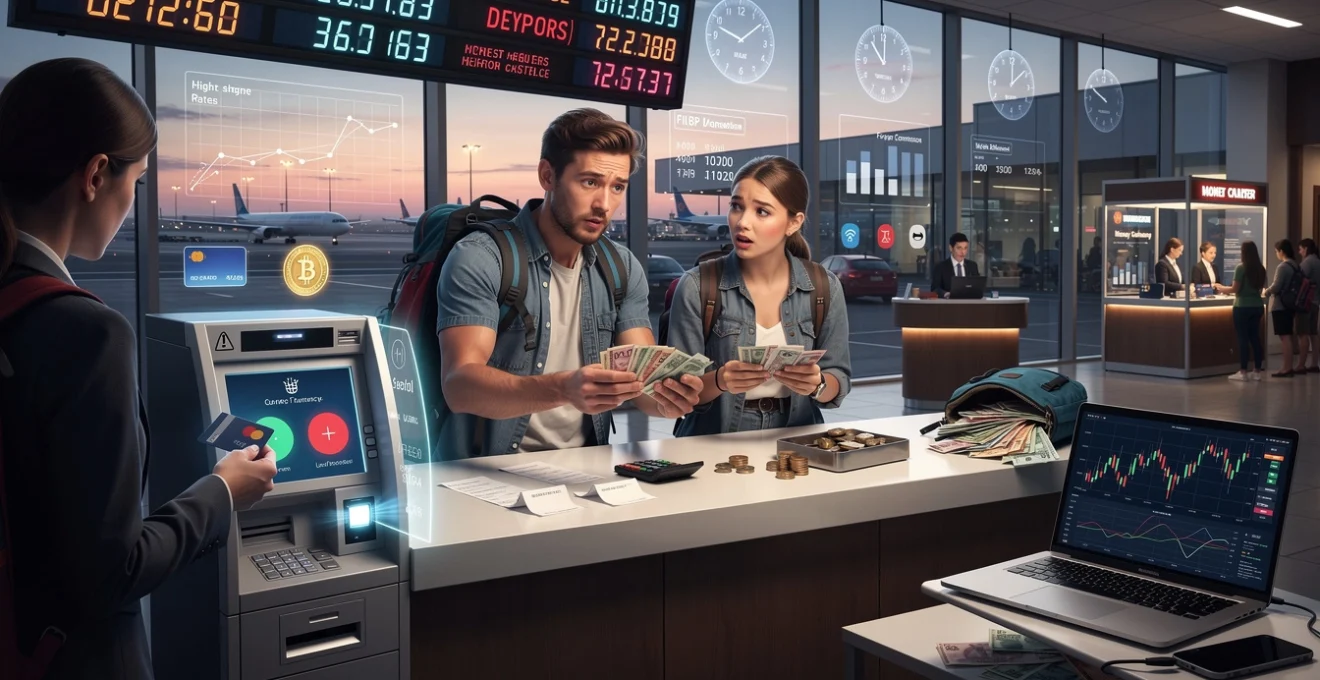
International travel planning involves countless details, from booking accommodations to packing essentials, yet many travellers overlook one of the most financially impactful aspects of their journey: currency exchange strategy. Poor decisions made before departure can cost hundreds of pounds in unnecessary fees, unfavourable exchange rates, and missed opportunities for significant savings. Understanding these common pitfalls and implementing strategic approaches to currency management can transform your travel budget from a source of stress into a well-optimised financial tool.
The landscape of international currency exchange has evolved dramatically over the past decade, with new technologies and financial products offering unprecedented opportunities for savvy travellers. However, traditional habits and misconceptions continue to drive costly mistakes that could easily be avoided with proper preparation and knowledge of modern alternatives.
Pre-departure exchange rate research failures and market timing errors
Currency markets operate with the precision of a Swiss timepiece, yet many travellers approach exchange rate research with the casual attitude typically reserved for checking the weather forecast. This fundamental misunderstanding of currency market dynamics represents one of the most expensive mistakes in travel planning.
Ignoring Real-Time interbank rate fluctuations on XE and OANDA platforms
Professional currency traders monitor interbank rates throughout the day, recognising that even minor fluctuations can represent significant opportunities. The interbank rate serves as the baseline for all currency exchanges, yet most travellers remain completely unaware of its existence or importance. XE.com and OANDA provide real-time access to these professional-grade rates, offering insights that can save substantial amounts on currency exchanges.
A typical scenario involves a traveller checking exchange rates once, perhaps a week before departure, and assuming those rates will remain constant. In reality, major currency pairs like GBP/EUR or GBP/USD can fluctuate by 2-3% within a single trading day. For a £2,000 travel budget, this represents potential savings or losses of £40-60 based purely on timing. The difference between checking rates once versus monitoring them strategically can fund an entire day’s activities in most European destinations.
Failing to monitor central bank policy announcements from federal reserve and ECB
Central bank policy announcements create some of the most dramatic currency movements in global markets. The Federal Reserve’s interest rate decisions and the European Central Bank’s monetary policy statements can trigger currency swings of 5% or more within hours. Travellers who remain oblivious to these scheduled announcements miss both opportunities for favourable exchanges and risks of adverse movements.
Consider the impact of a surprise interest rate change announced two days before your departure to the United States. A 0.5% rate increase could strengthen the dollar by 3-4% overnight, effectively increasing your travel costs by hundreds of pounds. Conversely, being aware of such announcements allows you to time your exchange before potentially adverse movements or capitalise on favourable trends.
Overlooking weekend and bank holiday exchange rate gaps
Currency markets never truly sleep, but they do experience periods of reduced liquidity that can create significant gaps between Friday closing prices and Monday opening rates. Major economic events occurring over weekends often result in substantial rate adjustments when markets reopen. Bank holidays in major financial centres like London, New York, or Frankfurt can similarly create unexpected volatility.
Smart travellers recognise these patterns and adjust their exchange timing accordingly. Exchanging currency on a Thursday rather than waiting until the following Monday can sometimes yield 1-2% better rates, particularly during periods of economic uncertainty or when significant political events are scheduled over weekends.
Misunderstanding Bid-Ask spread variations across currency pairs
The bid-ask spread represents the difference between what buyers are willing to pay and what sellers are asking for a particular currency. This spread varies dramatically depending on the currency pair’s liquidity and market conditions. Major pairs like GBP/USD typically maintain tight spreads, while exotic currencies can have spreads of 3-5% or more.
Many travellers assume all currency exchanges operate with similar spreads, leading to poor decisions when visiting multiple countries with different currencies. Understanding that emerging market currencies generally carry higher spreads helps in planning multi-destination trips and budgeting for exchange costs across different regions.
High-
High-commission exchange services and hidden fee structures
High-commission exchange services often disguise their true cost behind attractive signage and simplified messaging. While a board may shout “0% commission” or “best rates today”, the reality is usually buried in wide margins between the interbank rate and the rate offered to you. Before departure, failing to compare providers and understand how fees are built into spreads can quietly drain 5–15% of your travel budget before you even leave the airport.
To avoid these costly currency exchange mistakes before departure, it helps to think like a detective rather than a tourist. Instead of focusing on the “no fee” promise, you compare the offered rate against the live mid-market rate on platforms like XE or OANDA. The wider the gap, the more you are effectively paying in hidden commissions. This mindset turns you from a passive customer into an informed buyer who can walk away from poor deals.
Airport bureau de change premium markups at heathrow and charles de gaulle
Airport exchange counters at hubs such as Heathrow and Charles de Gaulle are the textbook example of high-commission exchange services. These bureaus trade on urgency and convenience, knowing that many travellers have left their currency planning to the last minute. Studies by consumer groups in the UK and France consistently show that airport kiosks can be 10–15% worse than competitive online providers or high-street exchanges, especially for popular pairs like GBP/EUR and GBP/USD.
Why are the markups so steep? Airport rents are high, operating hours are long, and the customer base is largely captive. Instead of charging visible commission fees, many bureaus simply widen the spread between the interbank rate and the rate they quote you. For example, if the real market rate is 1.16 EUR for 1 GBP, you might only be offered 1.04–1.06 EUR at the counter. On a £1,000 exchange, that difference represents over €100 quietly lost to hidden costs.
The simplest way to avoid this trap is to treat airport exchange as an absolute last resort. Pre-ordering your travel money online, or using a competitive multi-currency card, allows you to lock in better foreign exchange rates days before you fly. If you must use an airport bureau, only change a small amount for immediate needs like transport, and plan to use ATMs or more favourable services once you reach the city centre.
Hotel concierge exchange rate manipulation tactics
Hotel concierge desks sometimes offer on-site currency exchange as a premium convenience service. While this can be useful in emergencies, the rates are rarely competitive. In many cases, hotels partner with third-party providers and receive a share of the markup embedded in the exchange rate. The result is a pleasant, polished service that may cost you far more than a short walk to a nearby bank branch.
Another issue is transparency. Hotel staff may quote “today’s rate” verbally without providing a detailed breakdown of how the figure was calculated or what the interbank rate is. Because you are in a comfortable environment, you may be less inclined to question the rate or compare it against a live rate on your phone. This is where subtle exchange rate manipulation can creep in, especially with less familiar currencies.
To protect yourself, always ask for the exact rate and do a quick check on a live currency app before agreeing to any transaction. If the spread between the hotel’s rate and the mid-market rate is more than 3–4%, you are paying a significant premium for convenience. In most major cities, you will find ATMs inside reputable banks or regulated exchange offices offering far better value for your pounds.
Travel agency currency package commission structures
Travel agencies often bundle “currency packages” with flights, tours, or holiday deals, presenting them as a one-stop solution to your travel money needs. While this can seem attractive when you are booking everything in one place, the foreign exchange rates included are not always as competitive as they appear. Agencies may earn commission from partner currency providers, and those costs are typically built into the package price rather than stated as separate fees.
These packages can also encourage you to purchase more foreign currency than you actually require, especially if there are tiered “discounts” for larger amounts. The problem? Any leftover currency at the end of your trip is usually exchanged back at a less favourable rate, meaning you can lose out twice—once when buying, and again when selling. Without a clear understanding of both sides of the transaction, it is easy to overestimate the value of these “all-in-one” solutions.
A better approach is to separate your travel planning from your currency strategy. You can still book flights and hotels through your preferred agency, but research foreign currency exchange providers independently. Compare live mid-market rates with what the agency’s partner offers, and do the maths based on your actual budget. This way, you retain control and avoid built-in commissions that quietly inflate your overall holiday cost.
Tourist area money changer predatory pricing models
In busy tourist districts—from central Paris to the streets around the Colosseum in Rome—independent money changers often advertise eye-catching rates designed to lure in unsuspecting travellers. The pricing models behind these offers can be predatory, relying on hidden charges, poor spreads, or confusing small print. Some display an excellent “buy” rate that only applies to very large transactions, while smaller exchanges are charged much more.
Another common tactic is the “no commission” promise, which is offset by a heavily marked-up exchange rate. You walk away thinking you have avoided a fee, when in reality the cost has simply been disguised. In more extreme cases, unscrupulous operators may shortchange customers, use outdated notes, or apply unfavourable rates at the last moment, counting on language barriers and social pressure to prevent complaints.
To minimise risk, stick to regulated providers such as banks or well-reviewed currency exchange chains, especially for larger sums. Before you travel, research typical rates and practices at your destination so that unrealistic offers trigger alarm bells. If you do use a local money changer, always confirm the total amount you will receive in the foreign currency before handing over your cash, and count the notes carefully in front of the counter.
ATM withdrawal strategy errors and dynamic currency conversion traps
ATMs can be one of the most efficient ways to access foreign currency abroad, but they are not without pitfalls. Poor ATM withdrawal strategies—such as making frequent small withdrawals or using unregulated machines—can lead to stacked fees from both your home bank and the local provider. Layered on top of this, dynamic currency conversion (DCC) traps at ATMs and payment terminals can quietly add another 5–10% to every transaction if you are not paying attention.
Imagine treating every ATM like a simple cash machine at home, without considering network fees, foreign transaction charges, and conversion options. Over a two-week trip, these seemingly minor costs can snowball into a significant portion of your travel budget. By planning your withdrawal strategy before departure and learning to spot DCC prompts, you can keep more of your money and still enjoy the convenience of local cash on demand.
One key principle is to withdraw larger amounts less frequently, rather than relying on multiple small withdrawals that each incur a flat fee. Another is to favour ATMs run by major banks, ideally inside branches, to reduce the risks of skimming, inflated surcharges, or malfunctioning machines. Above all, when the machine offers to “lock in” a rate in pounds, you almost always want to decline and choose to be charged in the local currency instead.
Multi-currency debit card selection mistakes and international banking fees
Choosing the right multi-currency debit card is one of the most powerful ways to reduce currency exchange mistakes before departure, yet many travellers still rely on outdated bank cards designed for domestic use. These legacy cards often come with foreign transaction fees, poor exchange rates, and limited compatibility with international payment infrastructure. The result is that every tap or withdrawal abroad costs more than it needs to, even when the underlying purchase price is fair.
Modern travel-friendly banks and fintech providers offer multi-currency cards that operate much closer to the interbank rate and often waive foreign transaction fees entirely. However, if you fail to research your options, you may miss out on these benefits and default to whatever card you already have in your wallet. Think of card selection as choosing the right vehicle for a road trip: a well-maintained car with good fuel efficiency will get you further for the same money than an older model with poor mileage.
Before departure, take the time to compare key features such as FX markups, ATM withdrawal fees, daily limits, and security controls. Reading user reviews and checking independent comparisons can also highlight hidden drawbacks, such as slow customer support or unreliable app performance. With the right card in hand, you turn everyday spending abroad into a predictable, low-cost process instead of a series of expensive surprises.
Choosing cards with foreign transaction fees over starling bank and monzo alternatives
Many traditional UK bank cards charge a foreign transaction fee of around 2–3% on every purchase made in a non-GBP currency. On top of that, they may add a further markup to the exchange rate itself, turning what seems like a small percentage into a noticeable hit on your holiday budget. Using such a card for all your spending abroad is like agreeing to pay a hidden tax on every coffee, museum ticket, and train ride.
By contrast, providers such as Starling Bank and Monzo have built their reputation on offering low-cost or fee-free spending abroad, often using the Mastercard or Visa wholesale rate with minimal additional markup. For frequent travellers or anyone planning a long trip, the cumulative savings can be substantial. On a £3,000 holiday, avoiding a 3% foreign transaction fee alone can save you around £90, even before considering better base rates.
Why do so many travellers still use high-fee cards? Often it comes down to habit and lack of awareness. To avoid this mistake, review your existing cards’ fee structures well before departure and run a rough calculation based on your expected spend in foreign currency. If the numbers are unfavourable, opening a specialist travel account with a provider like Starling or Monzo a few weeks before you leave can give you a much more efficient tool for managing your money overseas.
Ignoring ATM network partnerships between barclays and bank of america
Global ATM network partnerships can dramatically reduce or even eliminate withdrawal fees, yet they are frequently overlooked by travellers. For example, Barclays customers may benefit from fee-free or reduced-fee withdrawals at Bank of America ATMs in the United States, thanks to reciprocal agreements within large banking alliances. Similar partnerships exist across Europe, Asia, and the Americas between major banks and global networks.
When you ignore these partnerships and withdraw cash from random ATMs, you risk paying both a local surcharge and a “foreign ATM” fee from your home bank. These double charges can easily add £3–£5 per withdrawal, on top of any FX markup applied to the conversion itself. Over the course of a trip, especially if you rely heavily on cash, those fees can eat into the funds you planned to spend on experiences and dining.
Before you travel, check your bank’s website or speak to customer service to identify partner banks at your destination. Make a short list of preferred ATM brands or locations and keep it handy on your phone. That way, when you arrive and need cash, you can head directly to partner machines and avoid unnecessary charges. This small piece of preparation is a simple way to turn the global banking system in your favour rather than against you.
Overlooking daily withdrawal limits for extended travel periods
Daily ATM withdrawal limits are another often neglected aspect of pre-departure currency planning. Many banks cap the amount you can withdraw in a 24-hour period—sometimes as low as £250–£300 by default. On a short weekend city break, that may be enough, but for extended trips or destinations where cash is still king, these limits can quickly become a constraint.
Imagine arriving in a country where your accommodation prefers cash, only to find you cannot withdraw enough in one day to pay your bill. This forces you into multiple withdrawals, each potentially attracting fees, or pushes you towards expensive last-minute exchange options. In more remote regions, ATMs may also have their own local limits or run out of cash during busy periods, compounding the problem.
To avoid such scenarios, contact your bank before departure and ask about both your card’s default limits and the possibility of temporary increases while you travel. If you know you will need large amounts of cash—for example, for long-term rentals or group expenses—plan ahead by combining higher limits with a sensible cash safety strategy. This ensures you have flexibility without exposing yourself to unnecessary risk.
Missing chip-and-PIN technology requirements in european markets
Europe has long embraced chip-and-PIN technology as the standard for card payments, particularly in countries such as France, Germany, and the Netherlands. While contactless and mobile payments are growing, there are still many situations—ticket machines, unattended fuel pumps, and small independent shops—where a physical card and PIN are required. Travellers who rely on older magnetic stripe cards or chip-and-signature cards may find their payments declined at inconvenient moments.
This compatibility issue is more than a minor annoyance; it can force you into last-minute cash withdrawals at unfavourable rates or high-fee ATMs. In some cases, you may even miss trains or be unable to purchase tickets from machines that do not accept non-PIN cards. From a security perspective, chip-and-PIN is also generally safer than magnetic stripe technology, reducing the risk of card cloning and fraud.
Before departure, check that your primary travel card supports chip-and-PIN and test your PIN to ensure you remember it. If your current card is outdated, request a replacement well in advance or consider opening a modern multi-currency account designed for international use. This proactive step not only improves your chances of smooth, cashless payments but also reduces pressure on your cash reserves, giving you more options if something goes wrong.
Cryptocurrency exchange adoption hesitancy and digital payment integration
Cryptocurrency and digital payment platforms are increasingly part of the global financial landscape, but many travellers remain hesitant to incorporate them into their currency strategy. This reluctance is understandable—volatile prices, regulatory uncertainty, and security concerns can make crypto feel more like a speculative investment than a practical travel tool. However, dismissing these options outright can mean missing out on emerging opportunities for cheaper cross-border transfers and flexible multi-currency storage.
In some destinations, especially in parts of Asia and Latin America, crypto-friendly merchants and payment gateways are becoming more common. Stablecoins pegged to major currencies can offer a way to hold value digitally while avoiding the wild swings associated with Bitcoin or Ethereum. Meanwhile, certain exchanges and fintech apps now integrate both traditional currencies and digital assets, allowing users to convert between them with competitive spreads and low fees.
The key is not to treat cryptocurrency as a replacement for conventional travel money, but as a supplementary tool where it genuinely adds value. For example, you might use a regulated exchange to move funds cheaply between countries, then convert into local currency via a multi-currency card once you arrive. Alternatively, digital wallets that integrate with contactless payments can provide a backup spending option if your primary card is lost or blocked.
Of course, the risks remain real. Price volatility can erode your spending power if you hold speculative coins too long, and security lapses—such as weak passwords or unprotected devices—can lead to loss of funds. If you choose to experiment with crypto as part of your travel planning, start small, focus on reputable platforms, and keep the majority of your budget in more stable, regulated forms. In this way, you can test digital payment integration without exposing your entire holiday fund to unnecessary risk.
Emergency cash reserve planning and backup currency strategy deficiencies
One of the most overlooked aspects of pre-departure currency planning is building a robust emergency cash reserve and backup currency strategy. Many travellers assume that cards and ATMs will always be available, only to discover during outages, system failures, or local banking strikes that access to funds can suddenly become limited. Without a contingency plan, a simple technical issue can escalate into a major disruption to your trip.
A well-designed backup strategy starts with holding a modest amount of local currency in cash from the moment you land—enough for at least 24–48 hours of basic expenses such as transport, food, and accommodation. On top of this, it is wise to carry a small reserve of a widely accepted global currency, such as US dollars or euros, which can act as a universal safety net in many parts of the world. Think of this as your financial first-aid kit: you hope not to need it, but you are relieved to have it when things go wrong.
Redundancy is equally important in your choice of payment methods. Relying on a single debit card is a classic mistake; if that card is lost, stolen, or blocked for suspected fraud, you are left stranded. Instead, aim to carry at least two cards from different providers and, ideally, on different networks (for example, one Visa and one Mastercard). Store them separately—one in your wallet, another in a money belt or hotel safe—to reduce the chance of losing both at once.
Finally, consider the specific risks of your destination. Are you travelling to a region prone to power cuts, political unrest, or natural disasters, where electronic payments might be disrupted? In such cases, a larger emergency cash buffer may be prudent. By thinking through these scenarios before departure and building a layered backup plan, you transform currency exchange from a mere pre-trip chore into a cornerstone of travel resilience and peace of mind.