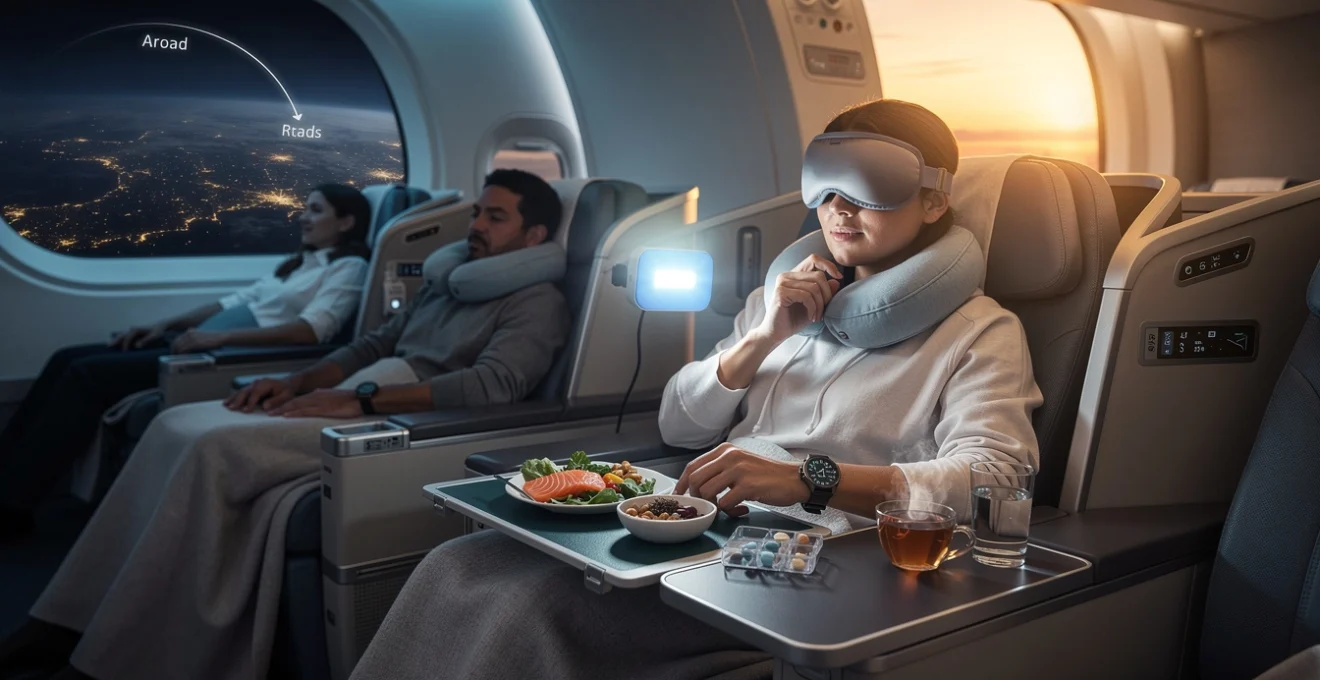
Long-haul flights across multiple time zones present a significant physiological challenge that affects millions of travellers annually. The disruption of circadian rhythms, commonly known as jet lag, can severely impact cognitive performance, mood regulation, and overall well-being for days or even weeks following travel. Modern aviation has made it possible to traverse eight or more time zones in less than twelve hours, yet our biological clocks remain anchored to evolutionary timescales that developed over millennia.
The economic and personal costs of jet lag are substantial. Business travellers report decreased productivity, impaired decision-making capabilities, and compromised negotiation skills during critical meetings. Holiday makers lose precious vacation days to fatigue and disorientation. Athletes competing in international events face performance degradation that can determine championship outcomes. Understanding and implementing evidence-based prevention strategies has become essential for anyone undertaking trans-meridian travel.
Circadian rhythm synchronisation through Pre-Flight light therapy protocols
The master clock governing human circadian rhythms resides in the suprachiasmatic nucleus of the hypothalamus, responding primarily to light exposure patterns. This biological timekeeper coordinates numerous physiological processes, including core body temperature fluctuations, hormone secretion cycles, and sleep-wake patterns. When you cross multiple time zones rapidly, this internal clock becomes desynchronised from the external environment, creating the constellation of symptoms collectively termed jet lag.
Pre-flight light therapy represents one of the most scientifically validated approaches to circadian rhythm management. Research demonstrates that strategic light exposure can shift the biological clock by approximately one hour per day when applied correctly. This gradual adjustment process, initiated several days before departure, allows travellers to arrive at their destination with minimal circadian disruption. The key lies in understanding the timing and intensity of light exposure relative to your current circadian phase and intended destination schedule.
Melanin suppression techniques using bright light exposure
Melatonin production follows a predictable circadian pattern, typically beginning approximately two hours before habitual bedtime and reaching peak concentrations during the middle of the night. Bright light exposure during evening hours suppresses melatonin synthesis, effectively delaying the onset of sleepiness and shifting the circadian clock later. This technique proves particularly valuable for westward travel, where you need to delay your biological clock to match a later time zone.
The efficacy of melatonin suppression depends on both light intensity and spectral composition. Standard indoor lighting rarely exceeds 500 lux, insufficient for robust circadian effects. Therapeutic light devices typically deliver 2,500 to 10,000 lux, comparable to outdoor daylight on an overcast day. The timing of exposure is critical: light therapy administered during the biological night advances the clock, whilst exposure during biological evening hours delays it. Understanding your current circadian phase helps determine optimal timing for maximum benefit.
Strategic blue light implementation via phillips goLITE BLU devices
Blue light wavelengths around 480 nanometres demonstrate the highest potency for circadian phase shifting. The Phillips goLITE BLU device delivers targeted blue light therapy in a portable format, making it practical for pre-travel preparation. Clinical studies indicate that blue light treatment requires shorter exposure durations than full-spectrum bright light to achieve comparable circadian effects, typically 15-30 minutes compared to 30-60 minutes for traditional light boxes.
The compact nature of blue light devices allows for consistent therapy sessions even during busy pre-travel periods. Users can incorporate treatment into morning routines for eastward travel preparation or evening schedules for westward journey planning. However, blue light exposure close to normal bedtime can significantly disrupt sleep quality, so careful timing remains essential. The device should be positioned approximately 50-70 centimetres from the eyes during treatment sessions to ensure adequate light intensity whilst avoiding potential retinal damage.
Dawn simulation technology for eastward flight preparation
Dawn simulation devices gradually increase light intensity over 30-90 minutes before your desired wake time, mimicking natural sunrise patterns. This technology proves particularly effective for eastward travel preparation, where you need to advance your circadian clock to accommodate earlier time zones. The gradual light increase promotes natural cortisol release and suppresses melatonin production, facilitating easier morning awakening and earlier bedtime scheduling.
Commercial dawn simulators
commercial dawn simulators can be programmed according to your destination time zone several days before departure. By shifting your wake-up time 30–60 minutes earlier each day and aligning light exposure with this new schedule, you effectively “fly” part of the time difference at home. Many travellers find that combining dawn simulation with modest evening light avoidance (dimming screens and indoor lighting) accelerates adaptation and reduces early-morning grogginess on arrival. For those who struggle with traditional light boxes, dawn simulation often feels more natural and less intrusive, as it works while you are still in bed.
Phototherapy timing based on destination time zone calculations
Effective phototherapy for jet lag prevention depends on precise timing relative to both your current circadian rhythm and your destination’s local time. As a rule of thumb, eastward travel typically requires morning light exposure at the destination to advance your clock, whereas westward travel relies more on evening light to delay it. However, simply stepping into bright light at random times can actually worsen jet lag, much like turning a steering wheel in the wrong direction.
To calculate optimal timing, start by identifying your usual wake time at home and the number of time zones you will cross. For eastward flights, you would begin moving your light exposure block earlier by about one hour per day in the three to five days before departure, aiming to match your destination wake time by the day you fly. For westward routes, you do the opposite, pushing bright light sessions later into the evening and avoiding early-morning sun. If this sounds complex, several circadian tools and apps can automate the calculations, but the underlying principle remains simple: give your internal clock the same light pattern it will experience after you land.
Advanced melatonin supplementation strategies for Trans-Meridian travel
While light exposure is the primary synchroniser of the circadian system, melatonin supplementation can act as a powerful secondary cue when used correctly. Melatonin is often misunderstood as a simple “sleeping pill”, yet its real value for long-haul flights lies in its ability to signal biological night and nudge your clock in the desired direction. For trans-meridian travel across more than three time zones, carefully timed low-dose melatonin can shorten the adjustment period and reduce classic jet lag symptoms such as fragmented sleep, early awakenings and daytime fatigue.
However, not all melatonin protocols are created equal. The ideal dose, formulation and timing vary according to flight direction, duration and your own sensitivity. High doses taken at the wrong time can leave you groggy, intensify vivid dreams and, paradoxically, delay your adaptation. Before introducing melatonin into your jet lag prevention toolkit, it is wise to understand the evidence-based strategies and to discuss them with your healthcare provider, particularly if you have underlying medical conditions.
Pharmaceutical-grade melatonin dosage protocols by flight duration
For long-haul flights of 8–12 hours crossing four to six time zones, research generally supports low doses of pharmaceutical-grade melatonin in the range of 0.5–3 mg. Lower doses (around 0.5–1 mg) are often sufficient for circadian phase shifting, while doses closer to 2–3 mg may improve sleep onset for travellers who find it hard to fall asleep in a new environment. For ultra-long-haul routes exceeding 12 hours and spanning eight or more time zones, a multi-day protocol is usually more effective than a single “rescue” dose on arrival.
A practical framework for eastward travel would be to begin taking 0.5–1 mg of melatonin 2–3 hours before your planned destination bedtime starting one to two nights before departure, then continue for two to three nights after arrival. For westward flights, melatonin may be taken closer to the new, later bedtime for just a few nights post-arrival to stabilise sleep. Remember that more is not necessarily better: think of melatonin as a timing signal rather than a sedative, and resist the temptation to escalate dosing if sleep does not instantly normalise.
Sublingual melatonin administration for rapid onset effects
Sublingual melatonin formulations, which dissolve under the tongue, are absorbed more rapidly than standard oral tablets that must pass through the digestive system. This quicker onset can be particularly useful when you are trying to fall asleep on a plane during your destination’s night-time window. Instead of waiting 45–60 minutes for effects, sublingual melatonin often begins acting within 15–20 minutes, allowing tighter control over sleep timing in relation to cabin meals, announcements and turbulence.
For many travellers, a 0.5–1 mg sublingual dose is sufficient to encourage drowsiness without leaving heavy residual sedation. You might use this approach during a red-eye flight when you need to capture a specific 3–5 hour sleep block that aligns with the middle portion of your destination night. Because absorption is rapid, it is important to be fully ready for sleep—seat reclined, eye mask on, electronics off—before taking it. If you frequently wake during the night, a second small sublingual dose is sometimes used, but this should be done cautiously to avoid carrying sleep inertia into your arrival morning.
Extended-release melatonin formulations for sleep maintenance
Travellers who can fall asleep but wake repeatedly during the night may benefit more from extended-release melatonin formulations. These are designed to mimic the body’s natural melatonin profile by releasing the hormone gradually over several hours. For eastward travel where the challenge is maintaining sleep until an earlier local wake time, an extended-release dose of 1–2 mg taken 1–2 hours before the destination bedtime may smooth out awakenings and reduce that “wide awake at 3 a.m.” phenomenon.
On ultra-long-haul routes, you might pair a small immediate-release dose to initiate sleep with an extended-release tablet to sustain it, but only under medical guidance. Extended-release products are generally less suited to in-flight use if you must be alert upon landing, since they can persist into the arrival morning. As with all circadian interventions, the goal is not to force unconsciousness but to support a coherent sleep period that matches local night-time.
Contraindications with common medications and medical conditions
Despite its over-the-counter availability in some countries, melatonin is a biologically active hormone that interacts with various physiological systems. It can influence blood pressure, blood glucose regulation and immune function, making it inappropriate for certain populations without medical supervision. Individuals taking anticoagulants, immunosuppressants, anticonvulsants, diabetes medications or antihypertensive drugs should discuss melatonin use with their physician due to potential interactions and altered metabolism.
Melatonin is typically not recommended for pregnant or breastfeeding women, and should be used cautiously in people with autoimmune disorders, major depressive disorder or epilepsy. In such cases, non-pharmacological jet lag prevention strategies—light therapy, behavioural sleep scheduling and nutrition-based approaches—should be prioritised. Even if you are otherwise healthy, starting melatonin for the first time during a long-haul trip is unwise; trial it at home first to observe your individual response before relying on it mid-flight.
In-flight sleep architecture optimisation techniques
Once on board, the way you sleep during the flight can either support or sabotage your jet lag prevention efforts. In-flight sleep architecture—how long you sleep, when that sleep occurs relative to destination time, and how fragmented it is—has a direct impact on how quickly your circadian rhythm realigns. Instead of thinking in terms of “sleep as much as possible”, it is more effective to think in terms of “sleep in the right phase and in the highest quality blocks possible”.
For overnight flights heading east, aim to structure one or two consolidated sleep cycles (each around 90 minutes) that overlap with the middle of the night at your destination. For westward journeys, strategic short naps early in the flight can offset fatigue without undermining your ability to stay awake until local evening after landing. Good sleep hygiene still applies at 35,000 feet: minimising blue light from screens, using earplugs or noise-cancelling headphones, and optimising your seat environment can significantly improve sleep depth even in economy class.
You can also leverage simple behavioural techniques to nudge your brain into the right sleep stage at the right time. Breathing exercises, short guided meditations and progressive muscle relaxation help accelerate the transition from wakefulness into non-REM sleep. Think of these tools as a portable “sleep environment” you carry with you, independent of the cabin’s constraints. By defending even a modest amount of high-quality in-flight sleep aligned with destination night-time, you dramatically reduce the shock to your system on arrival.
Strategic meal timing and Chronobiology-Based nutrition protocols
Beyond light and melatonin, meal timing exerts a powerful influence on peripheral clocks located in organs such as the liver, pancreas and gut. Emerging chronobiology research suggests that strategically aligning your eating patterns with your destination’s meal schedule can accelerate overall circadian adjustment. This makes sense intuitively: when you eat, your body assumes it is daytime in your current time zone, so shifting meals functions like a “secondary time cue” alongside light.
For long-haul flights, this means thinking about when you eat as carefully as what you eat. Heavy, high-fat or sugar-dense meals at biologically inappropriate times can confuse your internal clock, intensify gastrointestinal symptoms and worsen subjective jet lag. Instead, you can use targeted meal timing, lighter menus and specific nutrients to support serotonin and melatonin production, stabilise blood sugar and maintain hydration. The goal is not to follow a rigid diet, but to deploy food as a tool that works with your body’s natural rhythms rather than against them.
Argonne national laboratory Anti-Jet lag diet implementation
The Argonne National Laboratory anti-jet lag diet is one of the most widely cited chronobiology-based nutrition protocols for travellers crossing multiple time zones. It alternates days of “feast” and “fast” in the run-up to a trip, using cycles of high-calorie and low-calorie intake to prime the circadian system for a scheduled shift. On feast days, you consume a substantial breakfast and lunch rich in protein and complex carbohydrates, followed by an earlier, lighter dinner. On fast days, caloric intake is reduced, particularly in the evening, often with emphasis on lighter, low-carbohydrate meals.
Implementation typically starts three to four days before departure and culminates with a high-protein breakfast timed to your destination’s morning on the day of travel. This pattern is thought to help reset the internal clock by synchronising feeding cues with the new time zone. While not mandatory for jet lag prevention, many business travellers and elite athletes report that variations of the Argonne diet help them feel more alert on arrival and less prone to the “mid-afternoon crash”. If you choose to experiment with this approach, it is wise to test it on a shorter trip first to ensure it suits your digestion and energy needs.
Tryptophan-rich food selection for serotonin production
Tryptophan is an essential amino acid that serves as a precursor to serotonin and, ultimately, melatonin. By including tryptophan-rich foods in your pre-flight and in-flight meals, you can support the neurochemical pathways underpinning healthy sleep onset and mood regulation. Turkey and chicken are classic examples, but other useful sources include eggs, dairy products, tofu, pumpkin seeds, nuts and oats. Pairing these with complex carbohydrates facilitates tryptophan’s entry into the brain by modulating insulin and competing amino acids.
In practical terms, this might mean choosing yoghurt with nuts and fruit rather than a sugary pastry at the airport, or selecting a chicken-and-vegetable dish over a low-protein pasta on board. While tryptophan intake alone will not override poorly timed light exposure or erratic sleep, it can make it easier to relax and doze when your schedule demands it. Think of these foods as subtle allies that support your broader jet lag prevention strategy, not as magic bullets.
Caffeine withdrawal scheduling for long-haul emirates and qatar airways routes
Caffeine is a double-edged sword for long-haul travellers. Used strategically, it can enhance alertness when you need to stay awake in a new time zone; used indiscriminately, it can fragment sleep, mask fatigue and prolong jet lag. For ultra-long routes frequently operated by carriers such as Emirates and Qatar Airways, where you may be in the air for 14–17 hours, planning a brief caffeine “deload” before departure can reset your sensitivity and make smaller doses more effective when you truly need them.
One pragmatic approach is to reduce or eliminate caffeine intake for 24–48 hours prior to your flight, accepting a short period of mild withdrawal in exchange for greater responsiveness later. During the flight, restrict caffeine to the first half of the journey and time it according to your destination morning, not your departure time. After you land, modest doses—equivalent to one small coffee or tea—can help combat early afternoon slumps, but avoid caffeine after mid-afternoon local time. By treating caffeine as a precision tool rather than a constant drip, you support both in-flight sleep quality and faster circadian realignment.
Intermittent fasting windows aligned with destination meal times
Intermittent fasting, when applied thoughtfully, can also aid in jet lag prevention by giving your digestive system a clear signal of when the “day” starts in your new time zone. Some travellers choose to begin a fasting window a few hours before take-off and extend it through most of the flight, breaking the fast with a balanced meal timed to the destination’s breakfast or lunch. This approach can reduce digestive upset, bloating and the temptation to eat heavy cabin meals at biologically inappropriate times.
For example, if you are flying overnight from Europe to Asia, you might finish your last substantial meal in the late afternoon at departure, decline late-night in-flight snacks and then break your fast with a protein-rich breakfast aligned with your Asian destination morning. As with any fasting protocol, individual tolerance varies; those with diabetes, eating disorders or specific medical needs should avoid extended fasting unless medically supervised. The aim is to simplify your body’s time cues, not to introduce unnecessary stress.
Environmental control systems and cabin pressure adaptation methods
The aircraft environment itself exerts a significant influence on how your body responds to long-haul travel. Modern long-range aircraft employ sophisticated environmental control systems, but cabin pressure is still typically equivalent to an altitude of 6,000–8,000 feet. At this “virtual altitude”, oxygen saturation is slightly reduced, humidity levels fall below 20 percent and noise and vibration levels remain higher than most home environments. These factors contribute to dehydration, headaches, mild hypoxia and general fatigue, which can amplify jet lag symptoms.
New-generation aircraft such as the Boeing 787 and Airbus A350 feature improved pressurisation (closer to 6,000 feet), higher humidity and advanced air filtration, all of which can make long-haul flights more tolerable. Yet even on these aircraft, proactive management of your micro-environment is essential. Staying hydrated with regular water intake, avoiding excess alcohol, using saline nasal sprays and applying moisturiser to skin and eyes can counteract dryness. Layered clothing helps you adapt to temperature variations, while noise-cancelling headphones or earplugs reduce sensory overload and facilitate rest.
Movement is another often overlooked adaptation method. Because the lymphatic system relies on muscle contraction rather than a central pump, prolonged immobility leads to fluid pooling, swelling and a sense of heaviness. Simple in-seat exercises—ankle circles, calf raises, shoulder rolls—performed every hour, combined with short walks to the galley when the seatbelt sign is off, support circulation and reduce the risk of deep vein thrombosis. By treating the cabin as a challenging but manageable environment rather than a passive space, you maintain a more resilient physiology that can adapt more quickly when you reach your destination.
Post-arrival recovery protocols for rapid circadian Re-Entrainment
The hours and days immediately following arrival are critical for consolidating all the pre-flight and in-flight work you have done to prevent jet lag. Think of this phase as “locking in” your new schedule: every decision you make about light, sleep, movement and nutrition can either accelerate or delay circadian re-entrainment. Many travellers make excellent plans before and during the flight, only to undermine them by napping excessively, staying indoors or reverting to home time on their devices once they land.
On arrival, aim to adapt to the local timetable immediately. Expose yourself to natural daylight as soon as feasible—especially morning light after eastward travel—and engage in light to moderate physical activity such as a 30–45 minute walk. This combination of light and movement acts as a powerful “reset” for your internal clock. If you must nap, keep it short (20–30 minutes) and before mid-afternoon local time to avoid interfering with night-time sleep. Hydration remains important, as does a balanced meal pattern synced to local breakfast, lunch and dinner.
In the first two to three nights, be disciplined about your bedtime and wake time, even if your sleep feels fragmented. Use a consistent wind-down routine: dim lights, avoid stimulating screens, perhaps take a warm shower and practise brief relaxation exercises. If you are using melatonin under medical guidance, take it at the same local time each night for a few days. Within this framework, mild sleep deprivation on the first day or two is not harmful; in fact, it can help consolidate your sleep drive so that by night three or four, your body is largely in sync with the new time zone. By viewing post-arrival behaviour as the final stage of your jet lag prevention strategy rather than an afterthought, you significantly increase your chances of feeling clear-headed, energetic and fully present at your destination.