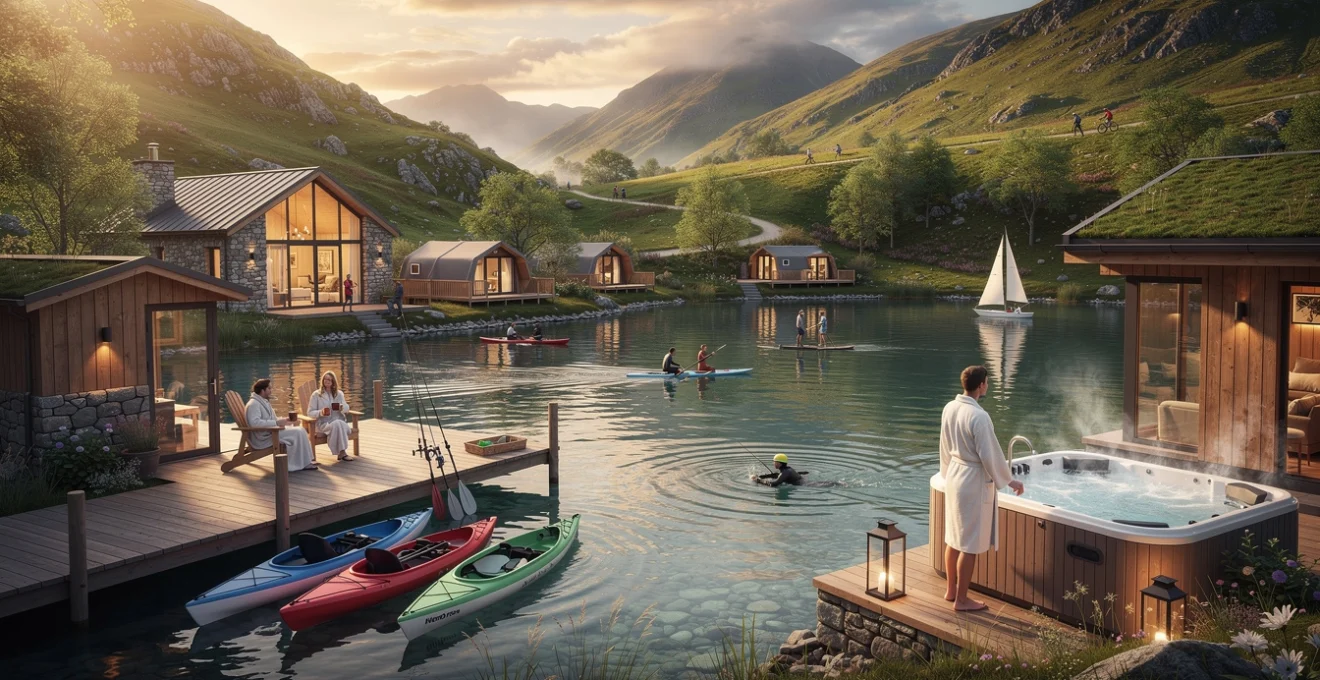
The therapeutic power of water has drawn travellers to lakeside destinations for centuries, creating a perfect fusion of tranquillity and adventure that modern wellness tourism continues to embrace. Britain’s stunning lake districts offer an unparalleled combination of natural beauty, recreational opportunities, and restorative environments that cater to both adrenaline seekers and those pursuing peaceful rejuvenation. From the crystalline waters of Windermere to the dramatic landscapes surrounding Haweswater, these aquatic sanctuaries provide the ideal backdrop for transformative holiday experiences.
Contemporary lakeside retreats have evolved far beyond simple waterfront accommodations, integrating sophisticated wellness facilities with authentic outdoor adventures. These destinations recognise that true relaxation often emerges through meaningful connection with nature, whether that involves gentle morning kayaking sessions or invigorating mountain hikes overlooking pristine alpine waters. The growing demand for experiential travel has positioned lakeside retreats as premier destinations for those seeking to escape urban pressures whilst engaging in activities that nurture both physical vitality and mental clarity.
Premium lake district retreat properties for wellness tourism
The Lake District’s reputation as England’s premier lakeside destination stems from its remarkable diversity of luxury accommodation options that seamlessly blend comfort with natural immersion. These establishments have mastered the art of providing sophisticated amenities whilst maintaining authentic connections to their stunning aquatic environments. Modern travellers increasingly seek accommodations that offer more than mere lodging, demanding spaces that facilitate genuine wellness experiences and meaningful outdoor engagement.
Luxury lodges at windermere with integrated spa facilities
Windermere’s luxury lodges represent the pinnacle of lakeside accommodation, featuring purpose-built spa facilities that utilise the therapeutic properties of the surrounding natural environment. These establishments typically incorporate floor-to-ceiling windows that frame the lake’s ever-changing moods, allowing guests to maintain visual connection with nature during indoor wellness treatments. Many properties feature private hot tubs positioned strategically to capture sunrise views across the water, creating intimate spaces for reflection and rejuvenation.
The integration of hydrotherapy facilities with natural lake access has become a defining characteristic of premium Windermere properties. Guests can transition seamlessly from heated indoor pools to invigorating lake swimming, experiencing the full spectrum of water-based wellness benefits. Professional spa therapists at these establishments often incorporate locally-sourced botanicals and minerals into treatments, creating unique therapies that reflect the distinctive character of the Lake District environment.
Eco-conscious glamping sites along ullswater’s eastern shore
Ullswater’s eastern shore hosts some of Britain’s most innovative eco-glamping developments, where luxury meets environmental responsibility in spectacular lakeside settings. These carefully designed sites utilise sustainable materials and renewable energy systems whilst providing guests with comfortable accommodations that enhance rather than detract from the natural landscape. Solar-powered shepherd’s huts and geodesic domes offer unique accommodation experiences that allow visitors to feel intimately connected to the surrounding wilderness.
The glamping sites along Ullswater prioritise minimal environmental impact through innovative waste management systems and water conservation technologies. Many establishments feature composting facilities and greywater recycling systems that demonstrate practical sustainability approaches to curious guests. These properties often include outdoor kitchens equipped with locally-sourced firewood, encouraging guests to engage with traditional cooking methods whilst reducing their carbon footprint.
Boutique bed and breakfast establishments in grasmere village
Grasmere’s boutique bed and breakfast properties offer intimate lakeside experiences that celebrate the village’s rich literary heritage whilst providing modern comfort and convenience. These family-owned establishments typically feature beautifully appointed guest rooms with carefully curated local artwork and handcrafted furnishings that reflect the area’s cultural significance. Many properties serve breakfasts featuring ingredients sourced from nearby farms and artisan producers, creating authentic taste experiences that connect guests to the local culinary landscape.
The personalised service offered by Grasmere’s boutique accommodations extends beyond traditional hospitality, with many proprietors serving as knowledgeable guides to hidden local treasures. These establishments often maintain detailed libraries of local walking routes, historical information, and seasonal activity recommendations that help guests discover aspects of the Lake District that remain unknown to casual visitors. Evening gatherings around crackling fireplaces provide opportunities for guests to share experiences and receive insider recommendations from both hosts and fellow travellers
This human-scale approach makes Grasmere particularly appealing for wellness-focused travellers who value both cultural immersion and personal connection. Rather than feeling like anonymous guests in a large resort, visitors become temporary members of a small community, with hosts often remembering individual preferences and tailoring recommendations accordingly. For many, this blend of refined comfort, lakeside scenery and warm, attentive hosting creates a restorative experience that lingers long after departure.
Self-catering cottages with private jetty access at coniston water
Coniston Water is renowned for its quieter ambience compared with some of the Lake District’s more visited lakes, and its self-catering cottages with private jetty access epitomise this understated charm. These lakeside retreats range from traditional stone-built boathouses to contemporary eco-lodges, yet all share a common emphasis on privacy, autonomy and direct interaction with the water. Having a private jetty means guests can slip a canoe into the lake at dawn, practice paddleboarding at their own pace, or simply sit at the water’s edge with a morning coffee as mist lifts from the surface.
Self-catering arrangements suit travellers who prefer flexible routines and the option to prepare their own nutritious meals, an important consideration for wellness tourism. Many cottages feature well-equipped kitchens, wood-burning stoves and panoramic windows that frame the lake and surrounding fells, turning even simple daily rituals into mindful moments. For active visitors, the ability to store equipment such as kayaks, bikes or hiking gear on-site adds another layer of convenience, supporting a balanced itinerary of outdoor adventure and quiet restoration.
The area around Coniston also offers rich historical and cultural interest, from the legacy of Donald Campbell’s water speed records to connections with writers and artists inspired by the lake. Staying in a lakeside cottage allows you to explore these stories at your own pace, returning each evening to the calm of your own private pier. For couples, families or small groups seeking a blend of independence, lakeside tranquillity and access to outdoor activities, these Coniston Water properties provide an ideal base for a rejuvenating holiday.
Adventure activity centres specialising in water-based recreation
While many lakeside retreats prioritise stillness and contemplation, the Lake District also excels as a destination for water-based adventure. Specialist activity centres have emerged around key lakes, offering structured experiences that are both exhilarating and safe. These centres cater to a wide range of abilities, from complete beginners to experienced outdoor enthusiasts, ensuring that everyone can benefit from the physical and mental health advantages of time spent on the water.
Professional instruction, high-quality equipment and carefully designed programmes help guests build confidence whilst respecting the often-changeable conditions of mountain lake environments. For wellness-focused travellers, guided adventure can be a powerful complement to more traditional spa or yoga-based retreats, providing the cardiovascular stimulation and sense of accomplishment that many of us struggle to access in everyday urban life. The following locations illustrate how different lakes have developed distinct specialisms in water-based recreation.
Kayaking and stand-up paddleboarding facilities at buttermere
Buttermere’s relatively compact size and dramatic surrounding peaks make it a superb setting for kayaking and stand-up paddleboarding (SUP). Local activity providers typically operate small-group sessions, emphasising safety, environmental awareness and technique. Calm early-morning conditions often create a mirror-like surface, ideal for first-time paddleboarders learning balance, while afternoon breezes add a little extra challenge for those looking to progress their skills.
Kayaking and SUP on Buttermere offer more than simple exercise; they provide a different perspective on the landscape. Gliding close to the shoreline, you can observe birdlife, waterfalls and ancient woodland that may go unnoticed from standard walking paths. Many centres also run mindful paddling sessions, encouraging participants to synchronise breath with stroke, pause in quiet bays and notice subtle changes in light on the water. This blend of low-impact physical activity and sensory immersion can be especially beneficial for guests hoping to reduce stress and improve overall wellbeing.
Practical considerations are well managed at these facilities, with high-buoyancy life vests, briefings on weather conditions and clear guidance on respecting local wildlife. If you are new to water sports, booking a guided session rather than hiring equipment independently is often the most reassuring choice. Not only does this support local instructors, it also ensures you learn correct techniques from the outset, helping to prevent fatigue or minor injuries that could otherwise limit your enjoyment of the rest of your lakeside retreat.
Wild swimming training programmes in tarn hows
Wild swimming has experienced a significant surge in popularity over the past decade, with participation in the UK estimated to have grown by more than 100% in some regions between 2019 and 2023. Tarn Hows, with its relatively sheltered waters and managed access points, has become a focal point for introductory wild swimming programmes. Specialist coaches offer sessions designed to help guests acclimatise safely to cooler water temperatures, understand appropriate equipment such as wetsuits and tow floats, and develop efficient, sustainable swimming techniques.
For many, wild swimming is as much a mental practice as a physical one. Entering cold water demands attention, presence and controlled breathing, making it a powerful antidote to digital overload and constant multitasking. Structured programmes at Tarn Hows often incorporate elements of breathwork and mindfulness, encouraging swimmers to notice sensations rather than resist them, and to work with the water rather than against it. Over time, this can build resilience, improve circulation and deliver the distinctive post-swim euphoria that regular wild swimmers describe.
Of course, cold water immersion is not suitable for everyone, and reputable providers in the area conduct careful pre-session health checks and safety briefings. They explain risks such as cold water shock and hypothermia in accessible terms, using analogies like “treating your body as you would a classic car on a frosty morning—warming it up gradually rather than racing off at full speed”. With the right guidance, however, many guests find wild swimming to be a transformative highlight of their lakeside holiday, leaving with skills and confidence they can apply to other natural water settings.
Sailing schools with royal yachting association certification at derwentwater
Derwentwater’s open stretches and predictable wind patterns make it an ideal training ground for sailing, and several established schools here operate under Royal Yachting Association (RYA) accreditation. For travellers seeking a structured learning experience during their lakeside retreat, these sailing schools offer courses ranging from beginner dinghy handling to more advanced sailing and navigation skills. RYA certification is widely recognised, so qualifications gained on Derwentwater can be built upon at other sailing centres in the UK and abroad.
Learning to sail engages both mind and body, requiring participants to read wind, water and weather whilst coordinating physical movements and working as part of a crew. This multi-layered concentration can be deeply absorbing, drawing attention away from everyday worries and into the present moment. Many wellness travellers describe sailing as a moving meditation, where the simple acts of trimming a sail or tacking across the lake become opportunities to practice focus and patience.
Derwentwater’s sailing schools typically place strong emphasis on environmental stewardship, teaching students to respect wildlife zones, minimise wake in sensitive areas and understand how climate patterns affect local conditions. Group courses can also foster social connections, as guests from different backgrounds collaborate to manage a boat in changing winds. For corporate groups or leadership retreats, these experiences can be especially valuable, translating lessons in communication and adaptability from the water back into workplace contexts.
Angling guides for brown trout fishing in haweswater reservoir
Haweswater Reservoir offers a more secluded, contemplative form of water-based recreation through its well-regarded brown trout fishing. Local angling guides provide expert support for visitors, from complete novices who have never picked up a rod to experienced anglers keen to understand the nuances of this particular water. Guided sessions typically cover casting techniques, reading water patterns and understanding trout behaviour across the seasons.
Fishing at Haweswater is often described as a study in patience and presence. Long periods of quiet observation, punctuated by brief moments of focused action, encourage a slower rhythm than many of us allow in daily life. For wellness-oriented guests, this can be a welcome counterpoint to more intense adventure activities, offering time to think, or perhaps not think at all. The surrounding landscapes—rugged fells, shifting clouds, the occasional call of upland birds—provide an atmospheric backdrop to these meditative hours by the water.
Responsible angling practices are central to guided experiences here, with catch-and-release methods, barbless hooks and careful handling of fish to protect local populations. Guides also share insights into the reservoir’s ecological history, helping guests appreciate the complex relationship between human water management, biodiversity and recreational use. If you are seeking a lakeside activity that blends skill development, quiet reflection and a deep connection with place, guided brown trout fishing at Haweswater is a compelling option.
Terrestrial outdoor pursuits around alpine lake environments
Lakeside retreats are not limited to water-based experiences; they also provide access to some of Britain’s most rewarding terrestrial outdoor pursuits. The fells, forests and valleys surrounding alpine-style lakes form a natural playground for hiking, cycling and nature observation. For many visitors, this combination of land and water activities creates the most balanced and restorative itinerary, allowing different muscle groups—and different parts of the mind—to be engaged on alternate days.
Walking remains the most popular activity in the Lake District, with recent visitor surveys indicating that over 80% of guests undertake at least one significant walk during their stay. Lakeside paths often provide gentle, accessible routes suitable for families or those with limited mobility, while higher-level ridge walks offer more demanding challenges and panoramic views. Cycling, whether on quiet lanes or designated mountain bike trails, provides another way to explore the varied terrain, with e-bike rentals making longer routes more accessible than ever before.
Nature-based wellness experiences such as forest bathing (shinrin-yoku), guided photography walks and birdwatching tours are increasingly integrated into lakeside retreat programmes. These slower-paced activities invite you to tune into subtle details—patterns of light through trees, the call of curlews, the texture of ancient stone walls—rather than rushing to tick off summits. Much like adjusting the focus on a camera lens, shifting from broad vistas to close-up observations can reveal a richer, more nuanced relationship with the landscape.
For those planning a trip, it can be helpful to think of terrestrial pursuits as providing the “framework” of your lakeside holiday, with water-based activities as “highlights” that punctuate the week. This analogy reflects how many wellness-focused itineraries are structured: steady, moderate daily movement on foot or by bike, complemented by more intense or novel sessions such as kayaking, wild swimming or sailing. The result is a varied yet coherent experience that supports both physical fitness and mental restoration.
Seasonal accessibility and weather considerations for lake-based holidays
Seasonality plays a crucial role in shaping lakeside retreats, influencing everything from available activities to accommodation pricing and crowd levels. Understanding weather patterns and accessibility can help you choose the best time of year for your priorities, whether that is warm-water swimming, quiet winter reflection or vibrant autumn colours. In the Lake District, average annual rainfall is higher than many other parts of England, but this moisture is also what sustains the region’s lush valleys and full lakes.
Spring (March to May) often brings longer daylight hours, emerging wildflowers and relatively uncrowded trails. It can be an excellent season for hiking and cycling, though lake temperatures remain cool, so water-based activities may require wetsuits. Summer (June to August) offers the warmest conditions and the broadest range of guided water sports, making it popular with families and first-time visitors. However, this period also sees the highest visitor numbers, so booking well in advance is essential for premium lakeside accommodation.
Autumn (September to November) is particularly appealing for wellness-focused travellers seeking quieter paths, rich foliage and more reflective experiences. Water temperatures begin to drop, yet many wild swimmers continue throughout this season with appropriate safety measures. Winter (December to February) brings shorter days and the potential for snow on higher fells, but also offers some of the most atmospheric lake views—misty mornings, crisp air and dramatic light. While certain higher-level routes and smaller roads may become less accessible, many lakeside retreats remain open, offering log fires, spa facilities and cosy interiors for restorative stays.
Weather in mountainous lake regions can change quickly, so flexible planning and appropriate clothing are vital. Layered waterproof garments, sturdy footwear and backup indoor activities (such as spa sessions, local museums or creative workshops) can turn a potentially frustrating wet day into an opportunity for rest. In this sense, successful lake-based holidays resemble well-designed wellness programmes: they anticipate variability and build in options, ensuring that changing external conditions do not derail the overall restorative aim of the trip.
Transportation infrastructure and accessibility to remote lakeside destinations
Accessibility is a key practical consideration when planning a lakeside retreat, particularly if you are travelling with limited time or aiming to minimise your environmental footprint. The Lake District benefits from an increasingly well-developed transport infrastructure, with mainline rail services to hubs such as Oxenholme and Penrith, and connecting bus routes reaching many villages and lakes. For visitors arriving from major UK cities, journey times by train can be surprisingly short—often under three hours from Manchester or under four from London, depending on connections.
Once in the region, local bus networks, seasonal shuttle services and lake ferries help reduce reliance on private cars. Around Windermere, Ullswater and Derwentwater, combined ticket options allow you to mix bus and boat travel, turning journeys between activities into relaxed sightseeing opportunities rather than stressful drives. For wellness travellers looking to extend their sense of slow, mindful living into the logistics of the trip, opting for public transport can feel like a natural extension of their broader intentions.
More remote lakes and valleys may still require some road travel, whether by hire car, taxi or organised transfer arranged by your accommodation provider. Road conditions are generally good, though some single-track routes demand patience and confidence. If you are not used to driving in such environments, it may be worth choosing a retreat with arranged transfers or focusing on lakes with stronger public transport links. This is particularly relevant in winter or early spring, when weather-related disruptions are more likely.
As sustainability becomes an increasingly important part of wellness tourism, many lakeside properties now provide information on low-impact travel options, EV charging points and incentives for guests arriving without a car. Thinking of transport as the “first and last chapter” of your lakeside retreat can be helpful: by starting and ending your journey in a calm, considered way, you set the tone for the restorative experiences that unfold in between.
Wellness facilities integration with natural thermal springs and mineral waters
While the Lake District itself is not widely known for geothermal spas in the same way as destinations such as Iceland or the Alps, the broader concept of integrating wellness facilities with natural waters is increasingly influential in lakeside retreat design. Across the UK and Europe, spa developers are drawing inspiration from traditional bath cultures—Roman baths, Japanese onsen, Scandinavian saunas—and adapting these principles to contemporary lakeside settings. The result is a new generation of retreats where thermal experiences and mineral-rich treatments complement outdoor activities on and around the lake.
Some UK lakeside hotels and wellness centres now incorporate hydrotherapy circuits modelled on thermal spring traditions, even when using treated mains or filtered lake water rather than naturally heated sources. Sequences might include warm pools, contrast showers, steam rooms and cold plunge pools, encouraging guests to move gradually through different temperatures and sensations. This cyclical approach can be likened to “pressing reset” on the nervous system, stimulating circulation and promoting deep relaxation in a relatively short time.
Elsewhere in Europe, particularly in regions such as the Alps or the Italian and Austrian lake districts, natural thermal springs are more directly integrated into lakeside wellness offerings. Here you might alternate between swimming in a cool lake and soaking in adjacent hot mineral pools, or complete a day of hiking with an evening session in open-air thermal baths overlooking the water. For travellers willing to look beyond national borders, combining a lakeside retreat with access to genuine thermal springs can provide a particularly potent wellness experience.
Even where true thermal waters are absent, many lakeside retreats emphasise the mineral and therapeutic qualities of water through spa treatments, drinking regimes and educational workshops. You may encounter signature therapies featuring local clays, salts or botanicals, or guided sessions exploring the science of hydrotherapy and its effects on sleep, stress and recovery. By understanding water as both an environmental feature and an active therapeutic element, these retreats offer a more holistic, evidence-informed approach to lakeside wellness.
Ultimately, the integration of wellness facilities with natural or carefully managed waters reflects a broader shift in how we think about health-focused travel. Rather than separating spa days from outdoor adventures, the most forward-thinking lakeside retreats weave them together, creating experiences where a morning of kayaking might be followed by mineral-rich bathing, or a demanding hike is balanced by a gentle hydrotherapy circuit. For guests, this synthesis can feel as cohesive as a well-composed piece of music, with each element—lake, land and water-based wellness—contributing to an overarching sense of restoration.