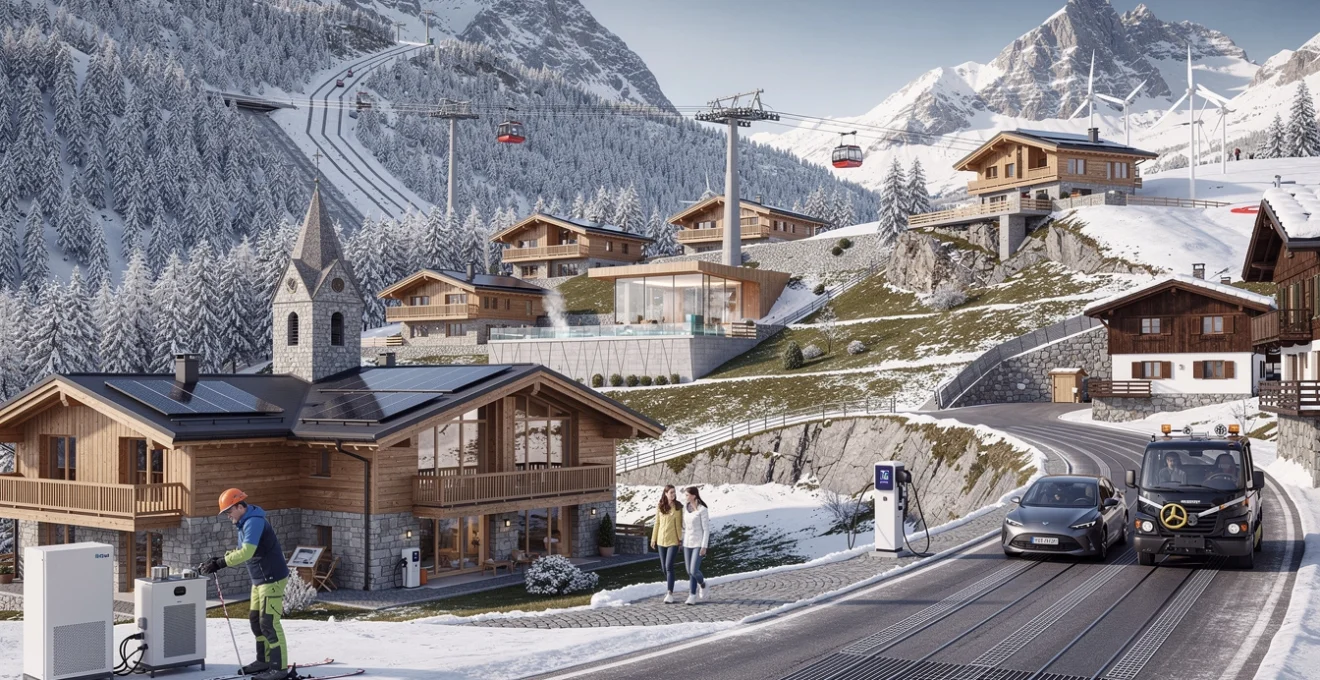
Mountain villages across Europe have evolved far beyond their humble agricultural origins to become sophisticated destinations where traditional Alpine architecture meets cutting-edge sustainable technology. These high-altitude settlements face unique challenges that demand innovative solutions, from extreme weather conditions and remote locations to the delicate balance between preserving natural environments and accommodating modern tourism infrastructure. The integration of contemporary comfort with environmental stewardship has created a new paradigm in mountain development, where luxury and sustainability coexist harmoniously against breathtaking Alpine backdrops.
The transformation of mountain communities into world-class destinations requires careful consideration of numerous factors, including geological constraints, environmental protection protocols, and the preservation of cultural heritage. Modern Alpine villages demonstrate how traditional building techniques can be enhanced with advanced technologies to create structures that are both resilient and environmentally responsible. This evolution represents a fascinating intersection of old-world craftsmanship and 21st-century innovation.
Alpine architecture integration: sustainable building practices in High-Altitude settlements
The integration of sustainable building practices in high-altitude settlements represents a fundamental shift in how mountain communities approach development. Modern Alpine architecture must address unique challenges including extreme temperature variations, heavy snow loads, and limited access for construction materials. Contemporary mountain villages are pioneering approaches that combine traditional building wisdom with advanced environmental technologies, creating structures that enhance rather than compromise the natural landscape.
Sustainable building practices in mountain environments require comprehensive understanding of local climate patterns, soil conditions, and ecosystem dynamics. Architects and engineers working in these locations must consider factors such as solar orientation, wind patterns, and precipitation levels when designing structures that will withstand decades of harsh Alpine conditions. The result is architecture that appears to grow naturally from the landscape while incorporating sophisticated systems for energy efficiency and environmental protection.
Passive solar design principles in chamonix valley construction
Chamonix Valley has become a showcase for passive solar design principles adapted to extreme Alpine conditions. Buildings in this renowned mountain destination utilise carefully calculated window placement, thermal mass integration, and seasonal shading strategies to maximise solar heat gain during winter months while preventing overheating in summer. The valley’s unique topography creates specific microclimates that architects leverage through strategic building orientation and landscaping design.
The implementation of passive solar principles in Chamonix requires sophisticated computer modelling to account for the dramatic shadows cast by surrounding peaks throughout the year. Thermal performance calculations must consider the reflection of sunlight from snow-covered surfaces, which can increase available solar energy by up to 40% during winter months. These design considerations result in buildings that achieve remarkable energy efficiency while maintaining the aesthetic integrity of traditional Alpine architecture.
Local stone and timber sourcing methods in zermatt building codes
Zermatt’s building codes have established stringent requirements for local material sourcing that support both environmental sustainability and cultural preservation. The regulations mandate that at least 60% of structural materials must be sourced from within a 50-kilometre radius, reducing transportation emissions while supporting local forestry and quarrying industries. This approach ensures that new construction maintains visual harmony with historic buildings while minimising the carbon footprint associated with material transport.
The local sourcing requirements have led to innovative partnerships between construction companies and regional suppliers, creating a sustainable supply chain that supports the broader Alpine economy. Stone quarries in the surrounding valleys now operate under strict environmental protocols, while timber harvesting follows sustainable forestry practices that maintain forest health and biodiversity. These materials are processed using traditional techniques enhanced with modern precision tools, resulting in building components that exceed contemporary performance standards.
Geothermal heating systems implementation in val d’isère developments
Val d’Isère has emerged as a leader in geothermal heating system implementation, taking advantage of the stable ground temperatures found at depth in Alpine environments. The resort’s geothermal installations tap into ground temperatures of 8-12°C at depths of 100-150 metres, providing consistent heating and cooling capacity regardless of surface weather conditions. These systems reduce heating costs by 50-70% compared to conventional fuel-based systems while eliminating local emissions.
The technical challenges of installing geothermal systems in rocky Alpine terrain have led to innovative drilling techniques and system designs. Ground-source heat pumps are configured in vertical loop systems that minimise surface disruption while maximising thermal efficiency.
In several new-build chalets, geothermal systems are combined with well-insulated envelopes and high-performance glazing to create near net-zero-energy accommodation. For visitors, the experience is seamless: rooms maintain a steady, comfortable temperature without the noise or draughts associated with traditional boilers and radiators. For local authorities and developers, the long-term benefit lies in predictable operating costs and significantly reduced greenhouse gas emissions across the village’s building stock.
Avalanche-resistant structural engineering in st. anton am arlberg
St. Anton am Arlberg, located in one of Austria’s most avalanche-prone valleys, has become a reference point for avalanche-resistant structural engineering in mountain villages. Here, building placement is the first line of defence: strict zoning regulations prevent new developments in mapped avalanche run-out zones, while existing structures are retrofitted with reinforced roofs and façades. Roof pitches are carefully calculated to shed snow safely, and critical infrastructure is positioned behind natural or engineered barriers.
Engineers in St. Anton make extensive use of protective structures such as snow fences, avalanche dams, and deflection berms positioned high on slopes to reduce the volume and speed of snow before it reaches the settlement. Building codes specify enhanced load-bearing requirements, often exceeding national norms by 30–50% to accommodate extreme snow and wind events. This layered approach — combining land-use planning, structural reinforcement, and active avalanche control — allows the resort to offer winter comfort without compromising safety, even in seasons with record snowfall.
Luxury mountain resort infrastructure: balancing wilderness preservation with modern amenities
Luxury mountain resorts increasingly face a dual mandate: provide five-star comfort while safeguarding the fragile ecosystems that attract visitors in the first place. In Europe’s high-altitude destinations, infrastructure planning now focuses on minimising land disturbance, reducing emissions, and optimising resource cycles. This shift is redefining what “luxury” means in mountain tourism, placing discreet, sustainable technologies behind the scenes so guests can enjoy pristine landscapes without visible industrial footprint.
From advanced wastewater treatment to low-impact energy systems, resort operators are investing in infrastructure that reduces environmental risk while ensuring resilience to climate variability. You might check into a spa hotel with geothermal pools and ultra-fast connectivity, yet the energy powering your room and the systems treating your waste are designed to leave the smallest possible trace on the surrounding peaks and forests. The best examples show that wilderness preservation and modern amenities are not opposing goals, but complementary pillars of long-term destination value.
Wastewater treatment technologies in remote alpine locations
Effective wastewater treatment is one of the most critical — yet least visible — components of sustainable mountain village development. Remote Alpine locations often sit upstream of major river systems, so any failure can have cascading impacts on drinking water, fisheries, and downstream communities. Modern resorts are therefore adopting compact membrane bioreactor (MBR) plants, sequencing batch reactors, and constructed wetlands that can operate reliably even during peak holiday occupancy.
These systems are engineered to handle strong seasonal fluctuations, with modular tanks and smart controls that scale treatment capacity up or down. In some villages, treated effluent is reused for toilet flushing, snowmaking, or landscape irrigation, closing the loop on water consumption and reducing pressure on high-altitude aquifers. For travellers, the benefit is subtle but significant: crystal-clear lakes, healthy forests, and the assurance that your stay is not compromising the very environment you came to enjoy.
Off-grid power generation systems for cortina d’ampezzo lodges
Around Cortina d’Ampezzo, many mountain lodges and rifugi sit far beyond the conventional grid, perched on ridgelines or nestled in remote cirques. To power these retreats, operators are turning to hybrid off-grid systems that combine solar photovoltaic panels, small wind turbines, battery storage, and sometimes micro-hydro units drawing from nearby streams. Diesel generators, once the default solution, are now used only as emergency backup or during extended periods of cloud and snow.
The design of these systems must account for harsh conditions: heavy rime ice, gale-force winds, and snow accumulation can all reduce performance if components are not carefully specified and sited. Energy management software prioritises essential functions — heating, food storage, safety systems — and can temporarily curtail non-critical loads when production dips. The result is a reliable, low-noise, low-emission power supply that allows guests to enjoy heated rooms, hot showers, and even charging for electronic devices in what would otherwise be off-grid wilderness.
Helicopter access pad regulations in verbier resort planning
Verbier’s popularity among high-end visitors and heli-skiers has driven a need for strict helicopter access pad regulations to balance convenience with community and environmental concerns. Noise pollution, wildlife disturbance, and safety risks all increase when helicopter traffic is poorly managed. Municipal plans now specify designated landing zones, enforced approach corridors, and strict time windows for take-offs and landings.
Helipads must be sited away from residential clusters and sensitive wildlife habitats, with surface treatments and drainage designed to prevent fuel spills from reaching soil or groundwater. Operators are required to meet stringent maintenance and pilot training standards, and in some cases to offset emissions through local environmental projects. For travellers, this framework ensures that aerial access remains possible for emergencies and select experiences, without turning the valley into an uncontrolled airstrip.
Fibre optic cable installation through protected dolomites terrain
Bringing high-speed internet to remote Dolomites villages has become essential for both residents and digital nomads who wish to work from mountain locations. Yet installing fibre optic cables through protected terrain requires a delicate touch. Engineers increasingly use micro-trenching along existing road corridors, directional drilling under sensitive meadows, and the repurposing of old utility conduits to avoid fresh disturbance.
Environmental impact studies guide each section of the route, mapping rare plant communities, karst formations, and erosion-prone slopes. In some cases, wireless point-to-point links bridge short gaps where physical cables would cause too much disruption. The end result is a digital backbone that supports telemedicine, remote work, and advanced tourism services, while leaving the Dolomites’ limestone towers and alpine pastures largely untouched by visible infrastructure.
Traditional village preservation techniques in european mountain communities
Alongside cutting-edge technologies, European mountain communities are working hard to preserve their traditional village fabric — not as a static museum, but as a living, evolving environment. Conservation strategies often begin with detailed inventories of historic buildings, street patterns, and cultural landscapes, followed by guidelines that regulate everything from roof materials and façade colours to signage and window proportions. This careful control ensures that new structures and renovations blend seamlessly with centuries-old barns, chapels, and stone houses.
Many villages operate heritage funds that provide grants or tax incentives for owners who restore rather than demolish traditional buildings. Skills training is also crucial: programmes in stone masonry, timber framing, and shingle making keep artisanal knowledge alive and provide employment for local craftspeople. As a visitor, you benefit from the immersive sense of place — walking down lanes where the texture of the walls, the smell of aged wood, and the rhythm of the architecture tell a coherent story of alpine life.
Climate-controlled accommodation standards in high-altitude tourism destinations
Comfortable, climate-controlled accommodation at 1,500 metres or more requires far more than simply turning up the thermostat. High-altitude tourism destinations must contend with low humidity, intense solar radiation, and dramatic day–night temperature swings. Modern standards now emphasise airtight building envelopes, high-performance insulation, and mechanical ventilation with heat recovery to maintain indoor comfort with minimal energy waste.
Hotel operators increasingly monitor indoor air quality indicators such as CO2 levels, particulate matter, and relative humidity, adjusting ventilation rates in real time. Smart thermostats and zoning systems allow guests to fine-tune temperature while preventing unnecessary overheating of unoccupied spaces. For travellers sensitive to altitude, stable indoor temperatures and good air quality can make the difference between a restorative stay and a fatiguing one, especially after long days spent skiing or hiking in challenging conditions.
Transportation infrastructure development in challenging mountain topography
Designing transportation infrastructure in steep, avalanche-prone terrain is a constant engineering puzzle. Mountain villages must provide safe, reliable access for residents and visitors while minimising landscape fragmentation and erosion. To achieve this, planners prioritise compact settlement patterns, multimodal hubs that connect rail, bus, and cable cars, and road alignments that follow natural contours rather than cutting aggressively into slopes.
Modern approaches also recognise that fewer private vehicles mean less need for wide, intrusive roads. Park-and-ride facilities in valley bottoms, coupled with electric shuttle buses and integrated lift systems, can drastically reduce congestion in village centres. For you as a visitor, this often translates into a car-free, pedestrian-friendly experience where the dominant sounds are cowbells and ski edges rather than engines and horns.
Funicular railway engineering solutions in grindelwald tourism corridors
In Grindelwald, funicular railways provide an elegant alternative to road expansion, shuttling guests up steep slopes with minimal surface disturbance. These systems use counterbalanced cars running on rails, pulled by cables from a central engine room. Because the track follows a narrow corridor and can be partially tunneled, land take is small compared to a full-width road, and visual impact is reduced.
Engineers must carefully analyse slope stability, groundwater flows, and avalanche paths before selecting the alignment. Foundations are often anchored into bedrock using rock bolts and micropiles, much like a climbing anchor scaled up for infrastructure. The outcome is a quiet, energy-efficient transport mode that blends seamlessly into the landscape and offers spectacular views, turning the journey itself into part of the holiday experience.
Cable car safety protocols for courchevel vertical access systems
Courchevel’s extensive network of gondolas and cable cars demands rigorous safety protocols to protect thousands of passengers daily. Routine inspections check everything from cable tension and tower foundations to emergency braking systems, with many components monitored by sensors that transmit real-time data to central control rooms. Backup power supplies and evacuation plans ensure that even in severe storms, passengers can be brought safely back to the valley.
Staff undergo regular training in rescue procedures, including the use of rope techniques and specialised evacuation cabins for rare instances where cabins must be emptied mid-span. International standards such as the EN 1709 and EN 12929 series provide a benchmark, but local authorities often impose even stricter rules. For you, stepping into a cable car becomes as routine as boarding a lift, even though behind the scenes it is supported by a level of engineering more akin to aviation than simple public transport.
Mountain road de-icing technologies in andermatt winter operations
Keeping roads open and safe during heavy snowfalls is a perpetual challenge in Andermatt, where winter tourism is a major economic driver. Traditional rock salt is still used, but often in combination with more targeted, environmentally sensitive technologies. Pre-wetted salt, brine spraying, and heated bridge decks reduce the total quantity of de-icing agents required, lowering the risk of soil and water contamination.
Weather stations positioned along key routes provide hyperlocal data on temperature, humidity, and road surface conditions, allowing maintenance teams to act proactively. Some particularly exposed sections are equipped with snow galleries — semi-tunnel structures that shield the carriageway from avalanches and drifting snow. The result for drivers and bus operators is a higher degree of reliability, with fewer road closures and more predictable travel times, even during severe winter events.
Electric vehicle charging networks in remote lech am arlberg locations
As more guests arrive in electric vehicles, remote villages like Lech am Arlberg are rapidly expanding their charging infrastructure. Installing fast chargers in high-altitude areas poses unique challenges: limited grid capacity, extreme cold, and seasonal access constraints. To address these, local utilities combine grid upgrades with on-site battery storage and, in some cases, solar canopies that provide both power and weather protection.
Charging stations are typically clustered at hotel car parks, municipal lots, and valley-bottom transport hubs, encouraging visitors to park once and use public or resort transport during their stay. Load management software balances demand so that charging does not overload local transformers during peak evening hours. For EV drivers, this means you can confidently plan a low-emission road trip into the heart of the Alps without worrying about range or reliability.
Environmental impact assessment protocols for mountain village development projects
Before any new development breaks ground in a sensitive mountain environment, comprehensive environmental impact assessments (EIAs) are now the norm rather than the exception. These protocols evaluate how a project will affect flora and fauna, hydrology, landscape character, and local communities over its entire lifecycle. In many European countries, EIAs are legally required for ski lifts, hotels above certain capacities, new roads, and major utility lines.
High-quality EIAs in mountain regions combine field surveys — such as mapping alpine meadows or monitoring wildlife corridors — with advanced modelling of noise, light pollution, and water flows. Mitigation measures might include wildlife overpasses, dark-sky lighting, seasonal construction windows to protect breeding periods, and habitat restoration once works are complete. For residents and visitors alike, robust assessment protocols act as a safeguard, ensuring that mountain villages can evolve and modernise without sacrificing the ecosystems and cultural landscapes that make them so extraordinary in the first place.