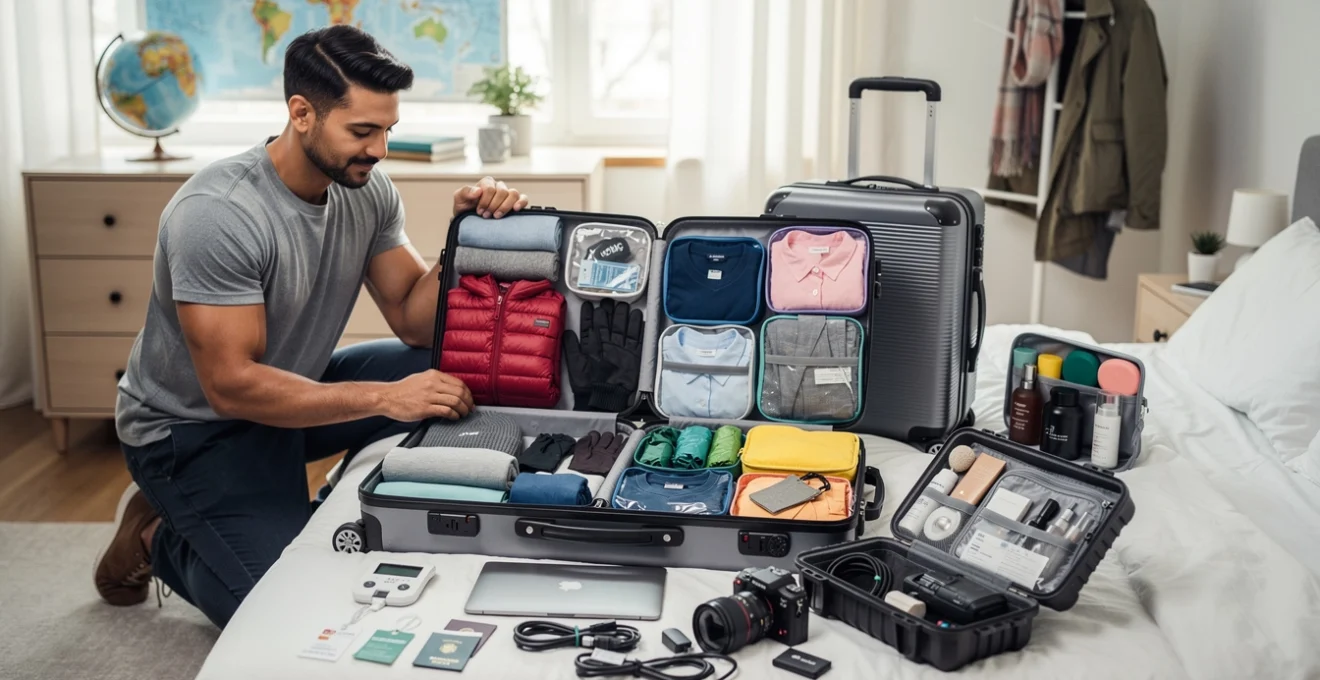
Mastering the art of efficient packing transforms travel from a stressful ordeal into a seamless experience. Whether you’re embarking on a weekend city break or a month-long adventure across multiple continents, strategic packing decisions can save you time, money, and considerable frustration. The key lies in understanding airline regulations, selecting appropriate luggage systems, and implementing proven organisational techniques that maximise space whilst minimising weight.
Modern travellers face increasingly complex airline restrictions, diverse climate considerations, and evolving security requirements. Strategic packing has become essential for navigating these challenges whilst ensuring you have everything necessary for your journey. From understanding TSA liquid regulations to selecting the optimal fabric technologies for different climates, every packing decision impacts your travel experience significantly.
Luggage weight distribution and airline baggage restrictions analysis
Understanding airline baggage policies forms the foundation of effective packing strategies. Each carrier implements specific dimensional and weight requirements that directly influence your luggage selection and packing approach. European budget carriers typically enforce stricter limits compared to traditional flag carriers, making precise weight calculations crucial for cost-effective travel.
Weight distribution within your luggage affects both comfort during transport and compliance with airline regulations. Placing heavier items near the wheels in wheeled luggage or close to your back in backpacks improves manoeuvrability and reduces strain. Professional travellers often utilise digital luggage scales to monitor weight throughout their packing process, preventing costly surprises at check-in counters.
British airways and EasyJet Carry-On dimensional requirements
British Airways permits carry-on luggage measuring 56cm x 45cm x 25cm with no weight restriction for most fare types, whilst their hand baggage must fit within overhead compartments. EasyJet enforces similar dimensional limits but restricts carry-on weight to 15kg, creating different packing strategies for each carrier. Understanding these specific requirements prevents last-minute repacking at departure gates.
The dimensional tolerance varies between airlines, with some allowing slight variations whilst others strictly enforce measurements. Cabin crew discretion often determines borderline cases, making it advisable to stay well within stated limits. Soft-shell luggage provides slight flexibility for dimensional compliance compared to rigid hard-shell alternatives.
Emirates and lufthansa checked baggage weight allowances
Emirates typically allows 30kg for economy class checked baggage on most routes, with business and first-class passengers enjoying higher allowances. Lufthansa’s weight limits vary by destination and fare type, ranging from 23kg for economy light fares to 32kg for flexible economy tickets. These variations significantly impact packing strategies for extended journeys.
Premium cabin passengers benefit from generous baggage allowances that accommodate extensive wardrobe requirements and specialised equipment. However, even with higher weight limits, efficient packing techniques reduce handling difficulties and improve travel mobility. Consider that baggage handlers process thousands of cases daily, making robust luggage construction essential for protecting contents.
Tsa-compliant liquid container regulations for international travel
The 3-1-1 rule governs liquid transport in carry-on luggage: containers must not exceed 100ml, fit within a single clear quart-sized bag, and be limited to one bag per passenger. This regulation applies globally for flights originating from or transiting through countries following TSA guidelines. Solid alternatives to liquid products bypass these restrictions entirely, offering practical solutions for frequent travellers.
Prescription medications and baby formula receive special consideration under TSA regulations, though documentation may be required. Duty-free liquids purchased after security screening face additional restrictions for connecting flights, particularly when transiting through different security zones. Smart travellers research destination-specific liquid regulations to avoid confiscation during international connections.
Hard-shell versus Soft-Shell suitcase weight calculations
Hard-shell suitcases typically weigh 3-5kg for carry-on sizes and 4-7kg for checked luggage dimensions, consuming 15-25% of total weight allowances before adding contents. Soft-shell alternatives reduce this overhead by 20-30%, providing more capacity for actual belongings. However, hard-shell cases offer superior protection
against impact and weather exposure, which is particularly valuable when transporting fragile electronics or breakable souvenirs. When calculating whether to use a hard-shell or soft-shell suitcase for long trips, consider the trade-off between structural protection and the usable payload after deducting the case’s own weight. For travellers frequently flying with strict 20kg checked baggage limits, choosing a lighter soft-shell case can effectively “add” 2–3kg of extra packing capacity.
Durability is another factor in your luggage weight calculations. Higher-end polycarbonate hard-shell cases withstand repeated handling without cracking, whereas cheaper ABS plastics may become brittle over time. Soft-shell cases made from ballistic nylon or high-denier polyester often resist abrasion better but can be more vulnerable to water ingress. Ultimately, your packing strategy should factor in not only airline baggage restrictions but also your typical travel environments and the items you need to protect.
Essential clothing systems for climate-specific destinations
Once your luggage constraints are clear, the next priority is designing clothing systems tailored to your destination climate. Rather than packing random outfits, you build a modular wardrobe that layers efficiently and adapts to changing conditions. This approach is essential when packing light for multi-destination itineraries, as each garment must earn its place by serving multiple roles.
Thinking in terms of systems rather than individual items also simplifies your packing checklist. You assemble base layers, mid-layers, and outer layers that can be combined for warmth, sun protection, or formal occasions as needed. By focusing on fabric technology and garment versatility, you can pack for alpine cold, tropical humidity, and temperate city breaks using a surprisingly compact clothing capsule.
Merino wool base layer configuration for alpine conditions
For alpine conditions and high-altitude destinations, a merino wool base layer system is one of the most efficient ways to stay warm without overpacking. Merino wool offers excellent warmth-to-weight performance, natural odour resistance, and the ability to regulate temperature even when damp. This means you can comfortably re-wear base layers for several days, reducing the number of items you need to pack.
A practical merino configuration for cold-weather trips typically includes one lightweight long-sleeve top, one midweight top, and a pair of merino leggings. You can rotate these pieces under a fleece or insulated mid-layer and a waterproof shell, adjusting the combination based on activity level and temperature. Because merino garments are relatively expensive, many travellers start by investing in socks and one base layer top, then gradually expand their collection as they confirm what works best for their style of travel.
Moisture-wicking synthetic fabrics for tropical humidity management
In tropical or monsoon climates, effective moisture management matters far more than sheer warmth. Cotton, while comfortable in mild conditions, tends to retain sweat and dry slowly, leaving you clammy and uncomfortable. Moisture-wicking synthetic fabrics such as polyester blends or technical nylon quickly move perspiration away from the skin and dry rapidly, helping you stay cool and reducing the risk of chafing.
When packing for high-humidity destinations, prioritise lightweight, quick-dry t-shirts, shorts, and underwear designed for active wear or travel. Many travellers find that three to four moisture-wicking tops and two to three pairs of quick-dry shorts are sufficient for extended trips when combined with regular hand-washing. Have you ever noticed how one well-chosen technical shirt can outperform three regular cotton ones in the tropics? That is the power of fabric technology in your packing list.
Compression packing techniques using eagle creek specter cubes
Even the most carefully selected clothing system can become bulky without proper organisation. Compression packing techniques, particularly when using ultralight organisers such as Eagle Creek Specter cubes, allow you to significantly reduce volume whilst maintaining order. These cubes use lightweight ripstop materials and dual-zip systems to compress clothing into flatter, denser parcels.
To maximise compression, roll or fold garments tightly before placing them inside the cube, then close the regular zip followed by the compression zip. Position heavier cubes near the base or wheel end of your suitcase to maintain stable weight distribution. Think of compression cubes as vacuum bags you can reuse indefinitely—without needing an actual vacuum—turning a chaotic pile of clothes into stackable, easily accessible modules.
Versatile garment selection for mediterranean multi-climate itineraries
Mediterranean trips often combine coastal heat, cooler evenings, and the possibility of visiting higher-altitude villages or shoulder-season destinations. The key to packing for such multi-climate itineraries is versatility. Opt for a compact “travel capsule wardrobe” based on neutral colours—blacks, greys, navy, and earth tones—that mix and match across casual and slightly dressier settings.
A typical Mediterranean packing list might include two lightweight trousers or chinos, one pair of shorts, three to four tops, a breathable dress or smart shirt, and a light mid-layer such as a merino sweater or thin fleece. Add a packable windproof shell or light rain jacket, and you can handle breezy ferry rides, city strolls, and cooler nights without extra bulk. By planning outfits around layering rather than single-use items, you avoid the common trap of overpacking “just-in-case” garments that never leave the suitcase.
Wrinkle-resistant textile technologies for business travel
Business travellers face an additional challenge: arriving with clothing that looks presentable straight from the bag. Wrinkle-resistant textiles, such as treated cotton blends, technical wool, and performance polyester, can dramatically reduce the need for ironing on the road. Many modern “travel suiting” lines use bi-stretch fabrics that rebound to their original shape after being folded or rolled.
When packing a carry-on for business, place structured garments such as blazers or tailored dresses in garment folders or use the “bundle wrapping” method: wrap delicate items around a soft core of t-shirts and underwear to minimise creasing. Some travellers also swear by hanging clothes in a steamy bathroom upon arrival to release minor wrinkles. By selecting textiles designed to resist creasing and combining them with smart packing techniques, you maintain a professional appearance without relying on hotel irons or travel steamers.
Technology and electronics packing protocols
Electronics are often the heaviest and most valuable items in your luggage, so they demand a precise packing strategy. Weight distribution, security concerns, and international compatibility all come into play when you decide which devices to bring. A minimalist, well-planned tech kit can support both leisure and business travel without tipping your bag over airline limits.
Start by defining the core tasks your devices must handle: communication, navigation, work, photography, or entertainment. From there, you can decide whether a lightweight tablet suffices or a full laptop is necessary, and which accessories genuinely justify their space and weight. Remember, every extra cable and gadget adds complexity at airport security and increases the risk of loss or damage.
Universal power adapter selection for european and asian outlets
Power compatibility is a critical yet often overlooked aspect of electronics packing. Europe and much of Asia use 220–240V mains voltage and outlet types that differ from North American or UK standards. A high-quality universal power adapter with interchangeable plugs or a multi-region design ensures you can safely charge your devices across multiple countries without carrying separate adapters for each region.
When selecting a universal adapter, prioritise models with built-in USB-A and USB-C ports so you can charge multiple devices from a single wall outlet. Check that the adapter is certified and includes surge protection to safeguard sensitive electronics such as laptops and cameras. Unlike heavy voltage converters, most modern chargers and laptop power bricks are already dual-voltage (100–240V); you simply need the correct plug interface rather than a bulky transformer.
Lithium battery transportation regulations for photography equipment
Lithium batteries power everything from smartphones to professional camera systems, but they are subject to specific airline safety regulations. As a rule, spare lithium-ion batteries must travel in your carry-on luggage, not in checked baggage, due to fire risk. Individual airlines and aviation authorities often limit the capacity (in watt-hours) and number of batteries allowed, especially for high-capacity camera or drone batteries.
For most travellers, keeping spare camera batteries under 100Wh each and storing them in protective cases with terminals covered will ensure compliance. Place them in an easily accessible part of your hand luggage, as security staff may request inspection. If you are travelling with extensive photography equipment, review the latest guidelines from your airline and national aviation authority; treating these regulations like a pre-flight checklist is far easier than negotiating at the security line.
Waterproof cable management systems using pelican cases
Keeping cables, chargers, and small electronic accessories organised can feel like managing a box of tangled spaghetti. Waterproof hard cases, such as compact Pelican models or similar IP-rated alternatives, provide robust protection and structured organisation for your tech ecosystem. Foam inserts or modular dividers allow you to separate cables, memory cards, and small devices while keeping them dry and cushioned.
For travellers engaged in adventure photography or sailing, a small waterproof case becomes a mobile nerve centre for critical electronics. You can think of it as a toolbox for your digital life: everything has a specific slot, remains protected from rain or accidental splashes, and is easy to transfer between daypacks and hotel safes. This level of organisation also reduces the chance of leaving chargers or adapters behind when you repack.
Smartphone and laptop security configuration for international networks
Beyond physical protection, your smartphones and laptops need digital hardening when connecting to unfamiliar networks abroad. Public Wi‑Fi hotspots, hotel networks, and co-working spaces can expose your devices to increased cyber risks. Before departure, ensure your operating systems, antivirus software, and key applications are fully updated, and enable full-disk encryption where available.
Using a reputable VPN service when connecting to public networks adds an extra layer of security, particularly when accessing online banking or confidential work systems. Activate multi-factor authentication on critical accounts and consider using a password manager rather than reusing simple passwords. Treat your device configuration as part of your packing protocol: investing 30 minutes before your trip can prevent days of frustration if your data is compromised.
Toiletries and personal care item optimisation strategies
Toiletries are one of the easiest categories to overpack, yet they are also among the most restricted due to liquid regulations. Optimising your personal care kit involves three main principles: reducing volume, switching to solids where possible, and standardising containers. By rethinking how you transport daily essentials, you can comply with TSA regulations whilst freeing up valuable space and weight.
Consider decanting shampoos, conditioners, and lotions into reusable travel-sized bottles rather than purchasing single-use minis for each trip. Solid toiletries—such as bar shampoo, conditioner bars, solid deodorant, and bar soap—completely bypass liquid restrictions and often last far longer than their bottled equivalents. For longer journeys, you can pair a compact 3-1-1 liquids bag for essentials with a small non-liquid kit containing solid products, dental floss, a compact razor, and any prescription medications in clearly labelled containers.
Duration-specific packing methodologies for weekend and extended journeys
The optimal way to pack essential luggage varies substantially depending on trip length and itinerary complexity. A two-night city break with hand luggage only demands a very different approach from a three-week multi-country itinerary with both short-haul and long-haul flights. The key is to match your packing methodology to the duration and flexibility you require, rather than applying a one-size-fits-all checklist.
For weekend trips, you can often work backwards from your daily schedule: list planned activities, assign specific outfits, then remove one non-essential item to reduce bulk. For extended journeys, a modular packing system—with clothing capsules, dedicated tech pouches, and compression cubes—allows you to access what you need without unpacking your entire suitcase each time. Ask yourself: could you repack your bag in ten minutes to catch an earlier train? If the answer is no, simplifying your system will pay off throughout the trip.
Emergency preparedness and documentation security measures
Even the most meticulously planned trip can be disrupted by lost documents, medical issues, or unexpected cancellations. Building a compact emergency kit and documentation system into your luggage strategy ensures you can respond quickly without panic. This does not mean packing for every conceivable disaster, but rather covering critical scenarios with lightweight, high-impact items.
Start with document security: scan your passport, visas, insurance policies, and key bookings, then store them securely in the cloud and on an encrypted USB drive. Carry at least two physical payment methods (for example, a primary credit card and a backup debit card) stored separately in case of loss or theft. A small emergency pouch containing basic first aid supplies, essential medications, and a written list of emergency contacts can live in your personal item so it is always within reach.
Finally, consider how you would prove your identity, access funds, or seek medical help if your main bag disappeared. By rehearsing this scenario mentally and adjusting your packing accordingly—perhaps by wearing a discreet money belt on travel days or using a hotel safe effectively—you convert potential crises into manageable inconveniences. In this way, your packing choices become not just about comfort and convenience, but about resilience and peace of mind throughout both short and long trips.