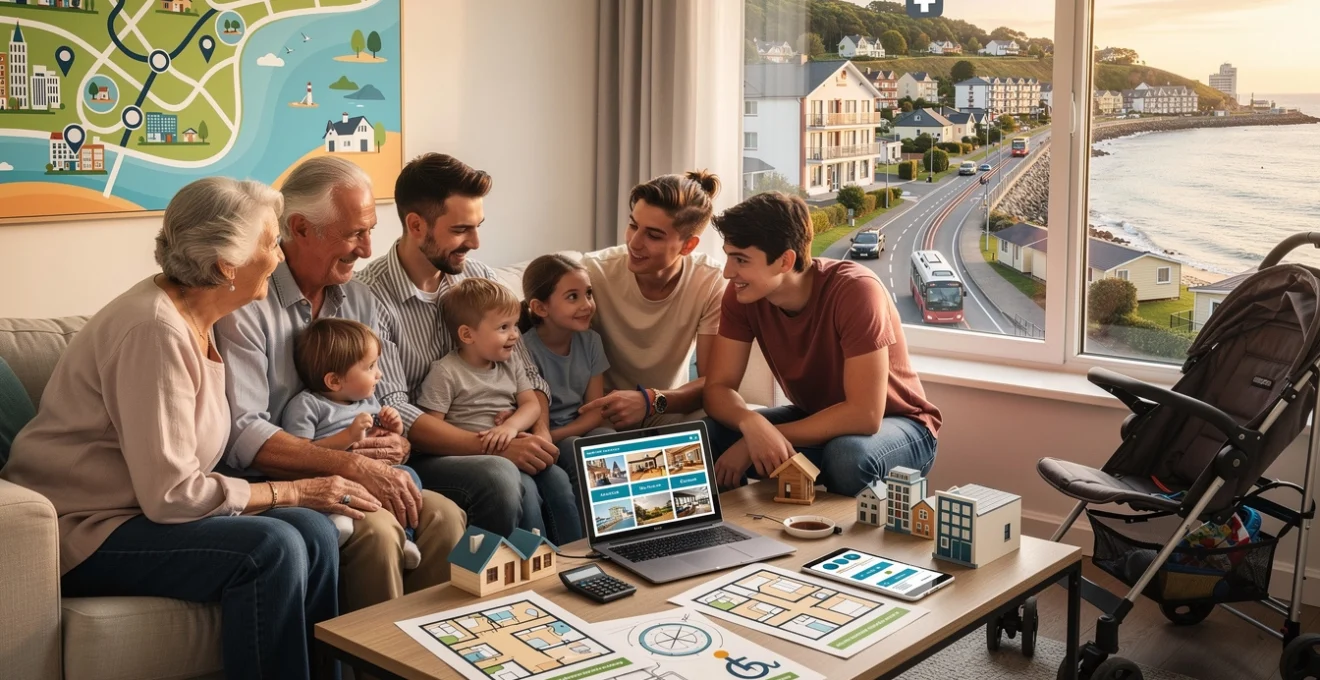
Planning accommodations for group travel presents unique challenges that extend far beyond simply booking a room. When you’re coordinating lodging for multiple family members or friends, every decision becomes amplified—from ensuring adequate space for everyone to managing diverse preferences and budgets. The complexity increases exponentially with larger groups, particularly when dealing with multi-generational families or friend groups with varying comfort expectations. Successfully navigating these considerations requires a strategic approach that balances practical requirements with the desire to create memorable shared experiences that bring people closer together.
Accommodation capacity analysis and space planning for Multi-Generational groups
Effective space planning begins with understanding the intricate dynamics of your travel party. Multi-generational groups present particular challenges, as the needs of grandparents, parents, and children can vary dramatically. Consider how different age groups interact and what privacy requirements each generation might have. Some families thrive in open-plan environments where everyone shares common spaces, whilst others require clearly delineated areas for different activities and rest periods.
Bedroom configuration assessment for extended family units
Bedroom allocation requires careful consideration of family relationships and personal preferences. Primary couples typically require private rooms, whilst children’s arrangements depend on their ages and comfort levels with sharing space. Teenagers often need more privacy than younger children, and some may prefer separate beds even when sharing rooms. Consider the sleeping habits of your group members—early risers versus night owls can create conflicts in shared spaces. Document everyone’s preferences during the planning phase to avoid uncomfortable situations upon arrival.
Communal living space requirements and square footage calculations
Calculate approximately 150-200 square feet of communal living space per adult for comfortable group accommodation. This calculation accounts for dining areas, lounge spaces, and circulation areas that prevent the cramped feeling common in undersized rentals. Open-plan layouts can make spaces feel larger, but they may lack the quiet corners that some travellers need for reading or phone calls. Consider properties with multiple common areas—perhaps a formal dining room plus a casual breakfast nook, or a main lounge supplemented by a covered outdoor terrace.
Private bathroom allocation strategies for large travel parties
The general rule suggests one bathroom per four people, with an additional half-bathroom for groups exceeding six individuals. However, this calculation should account for peak usage times, particularly during morning routines and evening preparations. Master suites with en-suite facilities provide privacy for couples, whilst shared bathrooms should ideally serve no more than two bedrooms. Consider the age and mobility of your group members when evaluating bathroom configurations—ground-floor facilities benefit elderly travellers who might struggle with stairs during nighttime visits.
Child-proofing considerations for Family-Friendly rental properties
Properties hosting families with young children require thorough safety assessments beyond basic cleanliness standards. Examine stair railings, window locks, and balcony barriers for adequate height and spacing. Kitchen safety becomes paramount in self-catering accommodations—check for safety latches on cabinets containing cleaning supplies or sharp objects. Swimming pools present the highest risk factor and should feature proper fencing, gate locks, and pool covers when not in use. Many rental properties provide basic child-proofing equipment upon request, but experienced family travellers often pack essential items like outlet covers and cabinet locks.
Accessibility compliance for Multi-Generational travellers
Accessibility requirements extend beyond wheelchair access to include considerations for mobility aids, visual impairments, and hearing difficulties. Ground-floor accommodation eliminates stair navigation, whilst wide doorways accommodate wheelchairs and walking frames. Bathroom safety features include grab bars, walk-in showers, and raised toilet seats. Universal design principles benefit all travellers—lever door handles prove easier for arthritis sufferers, whilst good lighting assists those with visual impairments. Many countries have varying accessibility standards, so verify specific compliance levels rather than assuming basic requirements are met.
Location proximity mapping and destination accessibility factors
Strategic location selection dramatically impacts your group’s daily experience and overall satisfaction. The ideal location balances proximity to desired attractions with neighbourhood safety, local amenities, and transportation options. Urban locations offer cultural immersion
and convenient access to public transport, while rural or coastal retreats may prioritise tranquillity, outdoor space, and parking. Before you fall in love with a particular villa or hotel, map out your likely daily movements: how long will it realistically take to get to the beach, the museum district, or Grandma’s favourite café? A beautiful property that requires a 90‑minute commute each way can quickly turn into a logistical headache for a group with varied energy levels and interests.
Transport hub distance analysis for airport and rail connections
Begin your location research by measuring distance from key transport hubs such as airports, major train stations, and intercity bus terminals. For group travel, reducing transfer time after a long flight can help everyone start the trip in a better mood, especially young children and older relatives. As a rule of thumb, aim for accommodation within 45–60 minutes of your arrival hub, unless you have a deliberate reason to stay further away (for example, a remote villa as part of a longer stay).
Use mapping tools to compare actual travel times, not just kilometres or miles, as traffic patterns and road types can dramatically change the journey. Check whether the area offers reliable shuttle services, ride‑hailing apps, or pre‑bookable private transfers suitable for your group size. You may find that paying slightly more for a centrally located property significantly reduces cumulative transport stress and cost over the course of the holiday.
Walkability index assessment for tourist attractions and amenities
Once you have narrowed down the general area, evaluate the walkability of specific neighbourhoods. High walkability is particularly valuable for group vacations, as it allows different sub‑groups to explore independently without coordinating constant car usage. Look for safe pavements, pedestrian crossings, and well‑lit streets, especially if anyone in your party will be pushing prams or using mobility aids.
Consider the distance to everyday essentials such as supermarkets, pharmacies, cafés, and playgrounds, not just headline tourist attractions. A ten‑minute stroll to pick up breakfast pastries or forgotten toiletries can feel like a luxury compared to piling everyone into cars. Many online booking platforms now include walkability scores or neighbourhood descriptions—use these in tandem with satellite and street‑view imagery to verify that “short walk” does not actually mean navigating steep hills or busy junctions with no pavements.
Car rental vs public transport feasibility studies
Deciding between car rental and public transport for a group trip is similar to choosing the right tool for a job: each can be ideal in the right context. In dense urban destinations with excellent metro, tram, or bus networks, relying on public transport can be more cost‑effective and less stressful than driving and parking multiple vehicles. Check for family or group travel cards that cap daily costs and simplify budgeting for multi‑day stays.
In contrast, rural regions, islands, and national parks often demand private vehicles to access trailheads, beaches, or small villages. When evaluating car hire, factor in not only daily rental rates but also fuel, tolls, and parking fees at attractions and at your lodging. Ask yourself: will everyone be happy travelling together in a single minivan, or will you need two cars to allow flexible schedules for early risers and late‑sleepers? Balance the convenience of door‑to‑door travel with the reality of navigating unfamiliar roads, local driving customs, and traffic restrictions such as European low‑emission zones.
Emergency services and medical facility proximity evaluation
While no one likes to imagine medical issues on holiday, prudent planning includes assessing access to emergency services, especially when travelling with children, pregnant travellers, or older adults. Identify the nearest hospital with an emergency department, as well as local clinics, urgent care centres, and pharmacies. In some destinations, smaller clinics may offer faster treatment than large city hospitals for minor issues.
Check typical response times for ambulances in the region and note emergency numbers, which differ between countries. For more remote villas or mountain lodges, confirm that the property has clear directions for emergency responders and reliable mobile reception or landline access. This level of preparedness functions like an insurance policy: you hope never to use it, but if something happens at 2 a.m., you will be grateful you chose lodging with straightforward access to medical support.
Property type comparison: vacation rentals vs traditional hospitality
Choosing between a vacation rental and traditional hospitality such as hotels or resorts can shape the entire tone of your group holiday. Vacation rentals often provide more space, privacy, and kitchen facilities, making them ideal for family dinners and late‑night conversations. Hotels and resorts, on the other hand, excel in services: daily housekeeping, on‑site restaurants, concierge support, and structured activities. Rather than assuming one option is inherently better, evaluate each property type according to your group’s priorities, trip length, and destination.
Airbnb and VRBO entire home listings for extended stay bookings
Entire‑home listings on platforms like Airbnb and VRBO are particularly well suited to extended family units and friend groups staying three nights or longer. Having multiple bedrooms, a full kitchen, and laundry facilities can make travel with children feel more like living abroad than “camping out” in a hotel room. For longer stays, the ability to cook some meals at home often results in substantial savings compared with eating out three times a day.
When filtering vacation rentals for group travel, prioritise hosts with consistently high ratings and detailed reviews mentioning cleanliness, accurate descriptions, and responsive communication. Look closely at floor plans and photo galleries to ensure communal areas are large enough for your entire group to gather comfortably. For extended stays, assess practical details such as the quality of mattresses, air conditioning or heating systems, and internet reliability—issues that may be tolerable for one night can become major irritations over two weeks.
Hotel suite configurations and connecting room availability
Hotels remain a strong choice for groups who value predictable service levels and central locations. Family suites and connecting rooms can offer a best‑of‑both‑worlds solution: shared proximity with doors that close for privacy and differing bedtimes. When researching, do not assume that “family room” automatically means enough beds for your whole party—read the fine print on maximum occupancy and bed sizes.
Because many hotel booking engines treat connecting rooms as a special request rather than a guarantee, it is wise to contact the property directly once you have narrowed down options. Ask specifically whether they can confirm adjoining rooms in writing for your dates, and clarify whether extra rollaway beds or cots are available. For friend groups, suite‑style layouts with a separate lounge can provide social space without everyone gathering on one bed, while loyalty programmes may add breakfast, late checkout, or lounge access that improves the overall value.
Holiday park lodge rentals and self-catering facility assessment
Holiday parks and lodge complexes offer a hybrid model that combines aspects of vacation rentals and resorts, often with strong appeal for families. Individual cabins or lodges typically include kitchenettes or full kitchens, while shared on‑site amenities might feature swimming pools, playgrounds, evening entertainment, and organised activities for children. This structure allows different generations to enjoy their own pace: grandparents may relax on the deck while children join a kids’ club session nearby.
When assessing holiday parks for group lodging, examine the quality and completeness of self‑catering facilities. Are there enough pots, pans, and dishes to cook for eight or ten people, or will you need to bring additional equipment? Review site maps to understand the distance between your lodge and central facilities—being too close to evening entertainment can mean noise at bedtime, while being too far might discourage use of included amenities. Many parks also have quiet zones or premium lakeside areas that may suit multi‑generational groups seeking a balance of activity and rest.
Boutique B&B multi-room booking strategies
Boutique bed and breakfasts and small inns can create an intimate, almost house‑party atmosphere for group vacations. Booking several rooms—or even the entire property—gives you the charm of a historic home or design‑led space with the added benefit of hosted breakfasts and local insight. This option works particularly well for adult friend groups or families with older teens who appreciate curated décor and home‑cooked morning meals.
Because smaller properties have limited inventory, advance planning is essential, especially for peak seasons and weekends. Communicate your group’s needs clearly: do you require a ground‑floor room for a grandparent, or a room that can accommodate an extra bed for a teenager? Clarify communal space access, such as lounges, gardens, or dining rooms, including whether you are allowed to bring your own snacks or drinks. For full buy‑outs, ask about noise policies and quiet hours so you know whether late‑night conversations by the fire are welcomed or discouraged.
Budget allocation framework and cost-per-person analysis
Creating a realistic lodging budget for group travel is as much about fairness and transparency as it is about absolute numbers. Rather than choosing a property first and then hoping everyone can afford it, start by discussing expected nightly budgets and comfort levels with your fellow travellers. Some may prioritise a luxury hotel, while others would rather allocate more funds to activities or dining; surfacing these preferences early avoids awkward conversations later.
A practical approach is to calculate costs on a per‑person, per‑night basis across several accommodation scenarios. For example, compare the cost of a large vacation rental versus multiple hotel rooms by dividing total lodging expenditure by the number of guests and nights. This method often reveals that a seemingly expensive villa can be excellent value when shared among three or four families, especially if it reduces restaurant spending through home‑cooked meals.
Be explicit about what is included in the lodging budget: nightly rates, cleaning fees, resort fees, parking, and local taxes can all change the final figure significantly. For mixed‑income groups, consider tiered room choices within the same property, allowing those who want more privacy or space to pay extra without forcing higher costs on everyone else. A simple shared spreadsheet or expense‑tracking app helps keep contributions clear, preventing money from overshadowing your time together.
Booking platform evaluation and reservation management systems
With so many booking platforms and travel apps available, choosing where and how to reserve your group lodging can feel overwhelming. Think of platforms as tools in a toolkit: each has strengths in particular scenarios. Large online travel agencies offer extensive choice and competitive pricing for hotels, while specialist vacation rental platforms may provide better filters for entire‑home properties and family‑friendly amenities.
When evaluating booking platforms, look beyond headline prices to cancellation policies, customer support responsiveness, and ease of managing multiple reservations. Flexible or semi‑flexible rates are often worth a modest premium for group trips, where illnesses, school schedules, or work obligations can change plans at the last minute. For complex itineraries involving several properties, consider using a centralised reservation management system, such as a shared calendar or trip‑planning app, to track confirmation numbers, payment deadlines, and check‑in procedures.
It is also wise to diversify your approach: you might research options on a meta‑search engine, cross‑check reviews on independent sites, and then book directly with the hotel or host to secure better communication or loyalty benefits. Whatever method you choose, assign one primary organiser to oversee lodging reservations, with at least one backup person who has copies of all key details. This prevents important information from being locked away in a single inbox if someone loses their phone en route.
Property amenity verification and safety compliance checks
Once you have narrowed your shortlist to a few promising properties, the final step is to verify that advertised amenities and safety features truly match your group’s needs. Photos and descriptions can sometimes be aspirational rather than accurate, so use reviews and direct communication with hosts or hotel staff to confirm critical details. For family and friend groups, these often include reliable Wi‑Fi, climate control, laundry facilities, and secure storage for valuables or sporting equipment.
Safety compliance deserves particular attention when travelling with children or older adults. Check whether the property has functioning smoke detectors, carbon monoxide alarms where relevant, clearly marked fire exits, and up‑to‑date electrical installations. In regions prone to natural hazards such as hurricanes or wildfires, ask about local preparedness plans and any specific instructions for guests. Treat this process like a pre‑flight checklist: methodical verification now means you can relax more fully once you arrive.
If any amenity is crucial to your trip’s success—such as a heated pool, step‑free access, or fast internet for remote work—request written confirmation from the property before paying non‑refundable deposits. You may even wish to screenshot key parts of listings in case details change later. By combining thorough amenity verification with the earlier steps of capacity planning, location analysis, and budget alignment, you dramatically increase the likelihood that your chosen lodging will support the kind of shared experiences and easy togetherness that make group vacations so rewarding.