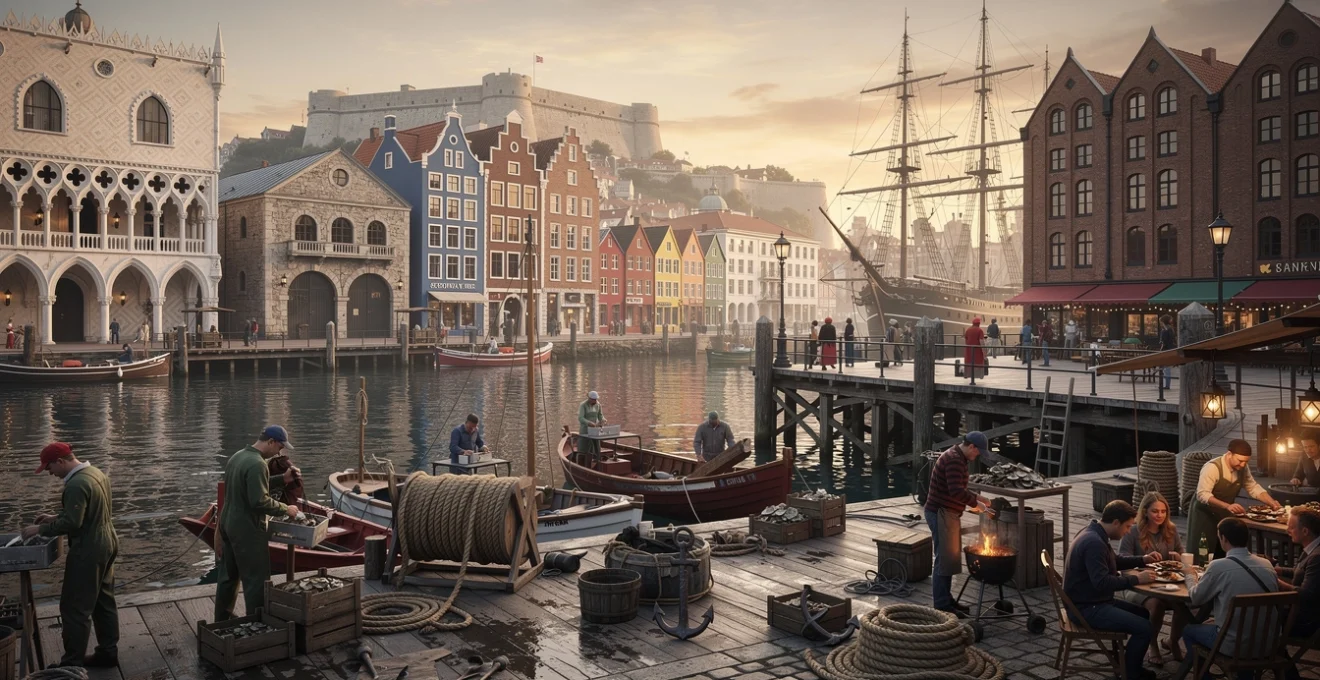
# Harbor Cities Full of Maritime Charm and Atmosphere
The world’s great harbour cities possess an undeniable magnetism that transcends their geographical coordinates. These waterfront settlements represent centuries of maritime commerce, naval history, and seafaring culture, all woven into the very fabric of their cobblestone streets and weathered wharves. From the moment you step onto their quaysides, the salt-laden air carries with it stories of distant voyages, bustling fish markets, and the rhythmic creaking of moored vessels. Whether you find yourself wandering through centuries-old warehouse districts or watching fishing boats return with their daily catch, harbour cities offer an atmospheric experience quite unlike any other urban environment. The distinctive character of these coastal settlements stems from their enduring relationship with the sea—a connection that shapes everything from architectural styles to local traditions, culinary customs to community festivals.
Architectural heritage and waterfront infrastructure in historic harbour settlements
The architectural landscape of historic harbour cities tells vivid stories of maritime prosperity and international trade. These waterfront settlements developed distinctive building styles that reflected both practical necessities and cultural influences carried across the seas. The surviving structures—from merchant houses to warehouses, from customs buildings to dock facilities—create an atmospheric streetscape that distinguishes harbour cities from their landlocked counterparts. Walking through these historic districts, you encounter centuries of architectural evolution, where Gothic arches meet Renaissance facades, and Victorian ironwork stands alongside modernist interventions.
Venetian gothic palazzi and Canal-Side warehouses
Venice represents perhaps the most extraordinary example of harbour city architecture, where every building relates directly to the water. The palazzi lining the Grand Canal showcase the distinctive Venetian Gothic style, with their characteristic pointed arches, ornate tracery, and marble facades that shimmer in the reflection of the lagoon. These merchant palaces were designed with waterside access in mind—ground floors functioned as warehouses and loading areas, whilst the upper storeys housed living quarters increasingly elaborate as wealth from maritime trade accumulated. The fondaco warehouses of Venice, including the magnificent Fondaco dei Tedeschi, demonstrate how commercial architecture responded to the unique challenges of a city built entirely upon water.
Dutch golden age gabled merchant houses along amsterdam’s IJ waterfront
Amsterdam’s characteristic stepped-gable merchant houses create one of Europe’s most recognisable waterfront skylines. These narrow, tall structures were designed to maximise valuable canal-front property whilst facilitating the hoisting of goods to upper-floor storage areas. The distinctive hoist beams that project from the gables remain functional architectural features, angled forward to prevent cargo from damaging the building facades during lifting operations. The architectural uniformity along Amsterdam’s canals—with their brick construction, large windows, and decorative gables—reflects both the prosperity of the Dutch Golden Age and the practical requirements of maritime commerce.
Hanseatic league trading posts and brick gothic warehouses in lübeck
The Hanseatic cities of Northern Europe developed their own distinctive architectural vocabulary, characterised by brick Gothic construction and impressive warehouse complexes. Lübeck, the « Queen of the Hanse, » preserves remarkable examples of medieval merchant architecture, including the famous Salzspeicher (salt warehouses) along the Trave River. These stepped-gable brick structures, with their sturdy construction and generous storage capacity, facilitated the salt trade that underpinned Lübeck’s prosperity. The atmospheric Gänge (narrow alleyways) connecting the waterfront to the old town reflect the dense, maritime-focused urban planning of Hanseatic settlements.
Victorian-era cast iron pier structures and esplanades
The Victorian period introduced industrialised materials and engineering innovations to harbour city architecture. Cast iron enabled the construction of elegant pier structures that extended recreational and commercial spaces out over the water. Cities like Brighton and Blackpool developed their iconic piers during this era, combining promenade functions with entertainment facilities. Victorian esplanades—broad waterfront promenades—transformed harbour cities into fashionable destinations, with their orderly rows of terraced houses, ornate railings, and public gardens creating a refined maritime atmosphere quite different from the working docks.
Colonial-era
Colonial-era godown architecture in georgetown penang and singapore
Across Asia, colonial-era harbour cities developed a distinctive godown architecture that blended European commercial design with local building traditions. In Georgetown, Penang, long rows of waterfront godowns once stored spices, rubber, tin, and other commodities destined for global markets. These solid, usually two-storey structures featured thick masonry walls, timber beams, and wide doorways opening directly onto the quay or street, enabling carts and coolies to move goods efficiently between ship and shore.
Singapore’s riverside districts—particularly along Boat Quay and Clarke Quay—preserve similar shophouse-godown hybrids that face the water at the rear and the street at the front. Their arcaded five-foot ways provided shelter from tropical downpours, while internal courtyards improved light and ventilation for workers handling cargo in humid conditions. Today, many of these historic godowns have been repurposed as restaurants, galleries, and boutique hotels, but their robust forms and rhythmic facades continue to tell the story of maritime trade routes that once linked Asia to Europe and beyond.
Traditional maritime industries and working harbour culture
Behind the picturesque waterfronts and carefully restored quays, many harbour cities remain living workplaces shaped by traditional maritime industries. Fishing fleets, ship repair yards, ropewalks, and fish markets sustain a working harbour culture that is every bit as important to local identity as grand civic buildings or museums. For visitors seeking authentic maritime charm, observing these everyday activities—often at unsociable hours—is one of the most rewarding ways to understand how harbour cities really function.
While container terminals and automated ports increasingly dominate global shipping, smaller docks and inshore harbours continue to support artisanal fisheries and small-scale maritime crafts. In these settings, you can still see age-old techniques being practised: nets spread out to dry across the quay, wooden hulls being recaulked by hand, or ropes twisted and spliced in modest workshops. This coexistence of modern logistics with long-established trades gives many coastal cities their distinctive layered character.
Artisanal fishing fleet operations and morning fish auctions
In many traditional harbour cities, the day effectively begins before dawn, when small fishing boats glide back into port after a night at sea. Their arrival sets in motion a highly choreographed routine that has changed little for generations. Crews unload plastic crates or woven baskets brimming with fish, squid, and shellfish, which are quickly sorted, weighed, and displayed on wet market floors or directly on the quayside for local buyers. The scent of salt and diesel mingles with shouted prices as wholesale and retail traders compete for the best catch.
Morning fish auctions, whether in bustling Asian ports or quieter European harbours, serve as vital economic engines for coastal communities. In places like Tokyo’s Toyosu Market, Marseille’s Vieux-Port, or Cascais in Portugal, strict grading, rapid bidding, and efficient logistics ensure that seafood reaches restaurants and households within hours. For travellers, observing these auctions offers a rare glimpse of working harbour culture at full intensity—just be prepared for early starts, slippery floors, and a fast-paced environment where time is literally money.
Wooden boat building yards and traditional caulking techniques
Although modern shipbuilding is dominated by steel and composites, wooden boat building remains an important tradition in many harbour cities and coastal villages. Small yards tucked along backwaters or creeks continue to produce fishing vessels, pilot boats, and classic yachts using techniques refined over centuries. Shipwrights shape timbers by eye, bending planks with steam and securing them with copper fastenings or wooden treenails, creating hulls that are both functional and graceful.
One of the most evocative aspects of this craft is traditional caulking, the process of making wooden hulls watertight. Skilled workers drive strands of oakum—hemp or jute fibres saturated with tar—into the seams between planks using a caulking iron and mallet. The rhythmic tap-tap echoes around the yard like a slow heartbeat, followed by layers of pitch or modern sealants brushed over the seams. Watching these techniques in action, you see how boatbuilding is as much about tacit knowledge and hand skills as it is about plans or measurements, much like a master tailor shaping fabric without relying solely on patterns.
Rope-making workshops and maritime chandlery heritage
Before synthetic fibres and mechanised production, rope-making was a labour-intensive, highly specialised trade that underpinned every aspect of maritime life. Historic harbour cities often developed long, straight “ropewalks”—sometimes more than 300 metres in length—where fibres could be twisted into increasingly thicker strands and then into full-sized hawsers. Workers walked backwards down these sheds as they worked, forming cables strong enough to anchor tall ships or support rigging under heavy sail.
Although industrial rope factories have largely replaced traditional ropewalks, some historic facilities survive as working museums or specialist producers for heritage vessels. Combined with maritime chandleries—shops supplying everything from shackles and shackles to lanterns and navigation lights—these rope-making workshops formed the essential infrastructure of sailing-age ports. Stepping into a traditional chandlery, with its shelves stacked high with coiled lines, blocks, and tarred tools, can feel like opening a time capsule from the days when almost everything aboard ship was made from hemp, wood, and iron.
Oyster farming cooperatives and shellfish cultivation practices
Not all traditional maritime industries revolve around boats and nets; in many harbour regions, oyster farming and shellfish cultivation shape the coastal landscape and local cuisine. From Brittany and Normandy to the Pacific Northwest and Japanese inlets, rows of trestles or floating bags dot sheltered bays, supporting oysters as they grow and filter the surrounding water. These aquaculture systems often coexist with historic harbour settlements, creating a patchwork of working shorelines where agriculture meets the sea.
Oyster cooperatives typically manage everything from spat collection and grading to harvesting and distribution, balancing environmental stewardship with economic viability. Modern sustainability standards and water quality monitoring—particularly in Europe and North America—mean that contemporary shellfish farming can play an important role in healthy marine ecosystems. For visitors, touring oyster farms or sampling freshly shucked oysters at simple harbour-side bars is one of the most direct ways to taste the terroir of a maritime region, much like visiting vineyards offers insight into inland agricultural landscapes.
Iconic harbour cities preserving nautical character
Some harbour cities have made a conscious decision to protect and celebrate their maritime character, weaving preservation into broader urban planning and tourism strategies. Rather than replacing old quays and warehouses with anonymous modern developments, they have restored historic waterfronts, conserved working docks, and invested in interpretation that helps visitors understand their nautical roots. The result is a series of atmospheric districts where seafaring heritage coexists with contemporary culture, dining, and creative industries.
These cities demonstrate that harbour regeneration need not erase the traces of labour and trade that defined them. By maintaining original building materials, preserving ship repair facilities, and integrating museums and public spaces into docklands, they offer compelling models for other coastal destinations. For travellers interested in maritime history, such cities provide rich case studies where you can walk, quite literally, through layers of nautical past and present.
Bergen’s bryggen wharf and hanseatic museum quarter
Bergen’s Bryggen Wharf, with its colourful wooden gabled houses facing the harbour, is one of the most instantly recognisable historic waterfronts in Europe. Originally built as trading offices and warehouses for Hanseatic merchants, these narrow buildings once stored dried cod and other commodities that flowed through Norway’s coastal trading networks. The quarter’s tight passageways, creaking staircases, and tarred timber facades evoke centuries of commercial activity, even as they now house galleries, shops, and cafés.
Designated a UNESCO World Heritage Site, Bryggen has been the focus of extensive conservation efforts, including careful reconstruction after fires and ongoing monitoring of its timber foundations. The Hanseatic Museum and Schøtstuene (assembly rooms) explain how German merchants lived and worked here under strict trading regulations and communal living arrangements. By preserving this quarter as a living urban space rather than a static monument, Bergen manages to maintain both its nautical character and a vibrant, contemporary harbour lifestyle.
Valletta’s grand harbour fortifications and historic dockyard
Valletta’s Grand Harbour is one of the Mediterranean’s most dramatic natural inlets, transformed over centuries into a formidable fortified port. Massive bastions, curtain walls, and watchtowers encircle the harbour, bearing witness to Malta’s strategic position along key maritime routes. From the Upper Barrakka Gardens, you can look down over tiered wharves, historic quays, and the old dockyard complex, where naval vessels once underwent repair beneath giant stone cranes and slipways.
Today, parts of the former dockyard have been converted into cultural venues, marinas, and cruise terminals, yet traces of industrial and military use remain visible. Dry docks, stone workshops, and heavy iron fittings retain the harbour’s working character, even as luxury yachts now share the waters with pilot boats and ferries. Valletta’s success lies in maintaining this balance: rather than scrubbing its waterfront clean of patina, the city embraces its layered history, allowing visitors to experience both the defensive architecture of the Knights of St John and the more recent legacy of British naval power.
Portsmouth historic dockyard and HMS victory preservation
On England’s south coast, Portsmouth embodies the close relationship between naval heritage and modern maritime life. The Portsmouth Historic Dockyard complex brings together some of the Royal Navy’s most significant surviving vessels, including HMS Victory, Admiral Nelson’s flagship at the Battle of Trafalgar, and HMS Warrior 1860, the world’s first iron-hulled armoured warship. These ships are preserved within an active naval base, where contemporary vessels and operational facilities remain part of the everyday harbour scene.
The ongoing conservation of HMS Victory provides a fascinating example of how nautical heritage is managed in practice. Structural surveys, painstaking timber replacement, and climate-controlled environments for artefacts ensure that the ship can withstand both the elements and visitor footfall. Interpretive displays, guided tours, and interactive exhibits help modern audiences understand life aboard an 18th-century warship—from cramped sleeping quarters to the organisation of gun decks. For anyone interested in harbour cities with deep naval roots, Portsmouth offers both a tangible connection to the Age of Sail and a window into current maritime defence operations.
Hobart’s salamanca place sandstone warehouses and constitution dock
On the edge of the Southern Ocean, Hobart in Tasmania demonstrates how a small harbour city can preserve its maritime atmosphere while developing a contemporary cultural scene. Salamanca Place, once a row of austere sandstone warehouses storing whale oil, wool, and grain, now hosts galleries, restaurants, and one of Australia’s best-known outdoor markets. The original warehouse forms and loading doors have been retained, and the rough-hewn stone facades still face directly onto the waterfront, maintaining the sense of a working quay.
Just a short walk away, Constitution Dock remains an active focal point for Hobart’s maritime identity. Fishing boats, Antarctic research vessels, and sleek racing yachts share berthing space, particularly during the annual Sydney to Hobart Yacht Race, when the dock becomes a hive of activity. Wooden slipways, chandlers, and small marine services cluster around the basin, ensuring that the harbour’s practical functions are never far from view. For visitors, the combination of historic buildings, working boats, and a thriving food and arts scene makes Hobart a compelling example of living nautical heritage at the edge of the world.
Maritime museums and nautical heritage institutions
Maritime museums and nautical heritage institutions play a crucial role in explaining how harbour cities evolved and why the sea remains central to their identity. These organisations act as custodians of ships, charts, instruments, and personal stories that might otherwise be lost as working waterfronts modernise. By curating exhibitions, restoring historic vessels, and running educational programmes, they help bridge the gap between specialist maritime knowledge and the curiosity of casual visitors.
In many cases, these museums are housed within former dock buildings, customs houses, or naval facilities, ensuring that the architecture itself forms part of the narrative. Institutions such as the National Maritime Museum in Greenwich, the Norwegian Maritime Museum in Oslo, or Hong Kong Maritime Museum situate their collections within sight of active harbours, reinforcing the continuity between past and present. Increasingly, digital archives, interactive displays, and community oral history projects enable wider participation, allowing local residents, seafarers, and shipyard workers to contribute their own perspectives to the official record of maritime life.
Seafaring traditions and contemporary harbour life
Beyond bricks, boats, and museums, harbour cities are defined by living seafaring traditions that continue to shape community life. Festivals, ceremonies, songs, and rituals help coastal populations navigate the tension between respect for the sea’s dangers and dependence on its resources. In many ports, these customs have been adapted to contemporary realities, yet they retain a direct line back to earlier generations of sailors, fishermen, and dock workers.
Engaging with these traditions—whether joining a shoreline procession, attending a blessing of the fleet, or listening to a revived sea shanty performance—adds a deeper layer of meaning to any visit. You start to see that maritime culture is not only about monumental ships or dramatic landscapes; it is also encoded in everyday habits, seasonal events, and the stories people tell about their relationship with the water. In this sense, seafaring traditions act like a living compass, orienting harbour communities as they face changing economic and environmental conditions.
Tall ships festivals and classic yacht regattas
Tall ships festivals bring the romance of traditional sailing vessels back into the heart of modern harbour cities. For a few days, quays fill with towering masts, furled canvas, and intricate rigging as barques, brigs, and schooners from around the world gather for sail parades and open-ship visits. Cities like Rouen, Bilbao, Sydney, and Charleston host these events on a regular cycle, drawing hundreds of thousands of visitors who come to tour the ships, watch manoeuvres under sail, and experience the atmosphere of an earlier maritime era.
Classic yacht regattas offer a similar blend of competition and heritage, though on a smaller, more exclusive scale. In Mediterranean ports such as Porto Cervo or Saint-Tropez, meticulously restored wooden racing yachts and vintage metre-class boats compete in races that are as much about elegance as speed. For harbour cities, these events serve multiple purposes: they promote nautical skills, stimulate marine industries like sail-making and rigging, and reinforce the visual spectacle of tall masts against the city skyline. If you’ve ever wondered what a historic port might have looked like at its busiest, attending a tall ships festival is probably the closest contemporary equivalent.
Harbour master ceremonies and traditional blessing of the fleet
Many harbour communities mark the start of the fishing or sailing season with ceremonial events led by harbour masters, clergy, or local dignitaries. The blessing of the fleet—often held in spring or early summer—typically involves processions, decorated boats, and prayers for safety and good catches. In Mediterranean ports, vessels may be garlanded with flowers and flags, while in Atlantic or Pacific communities, indigenous traditions and Christian rites sometimes blend in complex ways.
Harbour master ceremonies can also include the naming of new vessels, the inauguration of refurbished quays, or the commemoration of maritime disasters. These rituals reinforce the idea that the harbour is not just an economic asset, but a shared, almost sacred space whose rhythms affect everyone from shipowners to café proprietors. For visitors, witnessing such events offers a rare insight into how coastal societies acknowledge both the risks and rewards of depending on the sea—rather like farmers celebrating harvest festivals to honour the land that sustains them.
Sea shanty performances and maritime folk music revival
In recent years, sea shanties and maritime folk songs have experienced a surprising revival, helped by social media and renewed interest in communal singing traditions. Originally, shanties were work songs designed to coordinate labour aboard sailing ships, their strong rhythms helping crews heave on capstans or haul ropes in unison. The lyrics often mixed humour, hardship, and nostalgia for home, giving voice to the emotional realities of life at sea.
Today, sea shanty festivals in harbour towns across Britain, Ireland, North America, and beyond attract choirs and audiences who may never have hoisted a sail in their lives. Performances spill out from pubs onto quaysides, where choruses echo between stone warehouses and masts. This musical revival does more than simply entertain; it reconnects harbour communities with an intangible aspect of maritime heritage that might otherwise have faded away, showing that cultural currents can be as powerful and enduring as ocean tides.
Lighthouse keeper heritage and coastal navigation history
Before GPS and electronic chartplotters, safe entry into harbour cities depended on a network of lighthouses, buoys, and beacons, many of them staffed by dedicated keepers. These individuals often lived in remote, weather-beaten stations on headlands or offshore rocks, maintaining lamps, lenses, and foghorns through storms and long, isolated nights. Their work formed a crucial, if largely invisible, backbone of global maritime trade and coastal safety.
As automation has gradually replaced resident lighthouse keepers, many historic towers have been converted into museums, holiday accommodation, or heritage centres. Exhibitions on Fresnel lenses, signalling systems, and shipwrecks illustrate how navigation evolved from celestial sightings to radio beacons and satellite technology. Touring a former lighthouse and hearing first-hand accounts from retired keepers or their families can be a powerful reminder that every calm, postcard-perfect harbour scene rests on generations of often hazardous human endeavour along the surrounding coast.
Harbour-side gastronomy and seafood market culture
No exploration of harbour cities full of maritime charm would be complete without considering the food that emerges from their waters and quays. Harbour-side gastronomy is inseparable from seafood market culture: the closer you are to the source, the fresher and more expressive the flavours tend to be. From simple grilled sardines eaten at a plastic table overlooking the boats, to refined tasting menus in converted warehouses, coastal dining captures the essence of a city’s relationship with the sea.
Many harbours maintain bustling seafood markets where restaurateurs, home cooks, and curious travellers mingle among stalls piled high with glistening fish, crabs, and shellfish. In Tokyo’s Toyosu, Sydney’s Fish Market, or Catania’s pescheria, you can watch skilled vendors fillet, shuck, and prepare produce with astonishing speed. Increasingly, sustainability labels, catch-area information, and seasonal calendars guide consumers toward responsible choices, reflecting growing awareness of overfishing and ecosystem health. For you as a visitor, following the local crowd—whether to a humble harbour café or a celebrated waterfront restaurant—is often the best way to discover dishes that have nourished seafarers and shore-dwellers for generations.