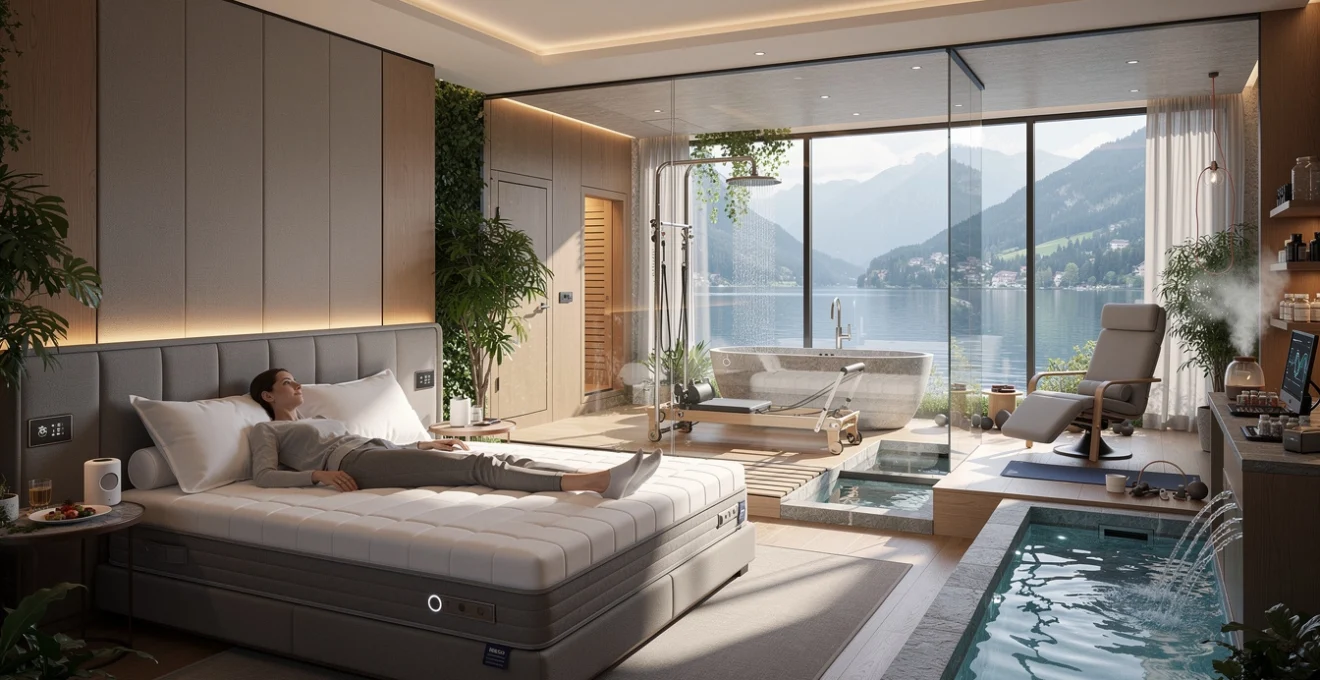
The distinction between hospitality and healthcare has begun to blur at the world’s most progressive wellness resorts. Rather than offering mere rooms where guests happen to sleep between treatments, leading medical spa destinations now design every square metre of accommodation as a calibrated intervention in the healing process. From air quality monitoring systems that track volatile organic compounds to biophilic architectural elements that measurably reduce cortisol levels, these therapeutic environments represent a fundamental shift in how we conceptualise rest and recovery. The science underpinning this transformation is compelling: research published in the Journal of Environmental Psychology demonstrates that carefully designed healing environments can accelerate physiological recovery by up to 30% compared to conventional hotel spaces. As chronic stress, burnout, and lifestyle-related illness continue to rise across developed nations, the demand for accommodation that actively supports cellular repair, nervous system regulation, and metabolic rebalancing has never been more acute.
Integrative medical architecture: designing therapeutic accommodation spaces
Medical architecture has evolved considerably beyond the sterile clinical environments of traditional healthcare facilities. Contemporary wellness resorts employ evidence-based design principles that create healing spaces whilst maintaining the comfort and aesthetic sophistication expected by discerning travellers. This integration of medical necessity with hospitality excellence requires meticulous attention to environmental factors that influence human physiology at cellular level.
Biophilic design principles in guest room configuration at SHA wellness clinic spain
SHA Wellness Clinic’s accommodation exemplifies how biophilic design can be systematically applied to support immune function and mental wellbeing. Each suite incorporates direct visual connections to natural landscapes through floor-to-ceiling windows that frame the Mediterranean coastline and Serra Gelada mountains. The spatial configuration follows golden ratio proportions, creating subconscious harmonisation that research from the University of Virginia associates with reduced anxiety markers. Living plant installations are selected not merely for aesthetics but for their documented air-purifying properties; Sansevieria trifasciata and Epipremnum aureum specimens convert carbon dioxide to oxygen throughout nocturnal hours, raising room oxygen saturation by measurable percentages. Natural material palettes incorporating limestone, oak, and linen create electromagnetic neutrality whilst providing tactile comfort that supports parasympathetic nervous system activation.
Circadian rhythm optimisation through strategic window placement and natural light exposure
The positioning and specifications of windows in therapeutic accommodation directly influence guests’ circadian biology. Leading wellness resorts now orient suites to maximise morning light exposure from eastern aspects, supporting cortisol awakening response and melatonin suppression through retinal photoreceptor stimulation. At Chenot Palace Weggis, architectural specifications ensure that guest rooms receive at least 1,000 lux of natural illumination during morning hours, the threshold research indicates is necessary for circadian entrainment. Glazing specifications incorporate low-emissivity coatings that preserve beneficial wavelengths in the 480-nanometre blue spectrum whilst filtering ultraviolet radiation. Automated electrochromic glass systems adjust transparency throughout the day, maintaining optimal lux levels without manual intervention. These systems prove particularly valuable for guests recovering from jet lag or shift work disorder, as properly timed light exposure represents the most powerful circadian phase-shifting intervention available.
Acoustic engineering standards for sleep recovery enhancement
Sound transmission significantly impacts sleep architecture and recovery outcomes. Wellness resorts implementing medical-grade accommodation standards now specify acoustic insulation that achieves Sound Transmission Class ratings of 60 or higher, effectively eliminating intrusive noise from adjacent spaces. At Lanserhof Tegernsee, floating floor systems decouple guest room structures from building foundations, preventing vibration transmission from mechanical systems. Wall assemblies incorporate multiple layers of dense materials separated by air cavities, creating impedance mismatches that dissipate sound energy. Background noise levels in sleeping areas are maintained below 30 decibels, the threshold the World Health Organization identifies as compatible with restorative sleep. Some suites feature active noise cancellation systems that detect low-frequency environmental sounds and generate inverse waveforms, creating zones of acoustic tranquillity even in urban locations. Have you considered how much the acoustic environment of your sleeping space might be compromising your recovery?
Therapeutic material selection: Non-Toxic finishes and electromagnetic field mitigation
Material science in wellness accommodation is now approached with the same rigour as clinical product design. Volatile organic compound (VOC) emissions are minimised through the exclusive specification of Class A+ paints and formaldehyde-free composite woods, reducing respiratory irritants that can compromise mitochondrial function and sleep quality. Flooring systems increasingly utilise natural wool, ceramic and untreated hardwood rather than synthetic carpets, lowering particulate accumulation and off-gassing. To address growing concern about electromagnetic hypersensitivity, several medical spa resorts integrate shielded cabling, kill-switches that disconnect bedroom circuits at night, and low-EMF Wi-Fi routers positioned outside sleeping zones. At Lanserhof properties, bedside analogue alarm clocks replace smartphones by design, and wiring is routed to keep power lines away from headboards, reducing chronic exposure to low-frequency fields during deep sleep cycles.
Evidence-based hydrotherapy integration within residential wellness environments
Where traditional hotels relegate water therapies to shared spa areas, advanced wellness resorts are increasingly embedding hydrotherapy infrastructure directly into accommodation. This shift recognises that the therapeutic effects of hydrotherapy – improved microcirculation, lymphatic drainage and neuromuscular relaxation – depend on repetition and timing, not occasional indulgence. By designing rooms and suites as micro-hydrotherapy environments, these properties allow guests to follow precisely prescribed balneotherapy protocols without leaving their private space, which is particularly valuable for those undergoing detoxification, immune modulation or post-surgical recovery.
Thalassotherapy suites at chenot palace weggis: seawater mineral balneotherapy protocols
Chenot Palace Weggis has taken the concept of in-room hydrotherapy further than most by creating dedicated thalassotherapy suites that replicate the mineral composition of the nearby Lake Lucerne in controlled seawater baths. Seawater drawn from carefully selected marine sources is filtered, sterilised and remineralised to precise therapeutic specifications, ensuring consistent levels of magnesium, calcium, iodine and trace elements known to support endocrine function and neuromuscular relaxation. Programmable filling systems allow medical staff to specify water temperature curves that follow evidence-based balneotherapy protocols – for instance, starting at 34°C and gradually cooling to 28°C to stimulate peripheral circulation without provoking cardiovascular stress. Immersion durations, typically 15–20 minutes, are synchronised with other elements of the Chenot method, such as alternating hydrojet sequences and manual lymphatic drainage, creating a synergistic effect on detoxification and tissue oxygenation.
Kneipp therapy pathways and temperature contrast bathing infrastructure
Many guests first encounter Kneipp therapy as a simple cold foot bath, yet in specialised wellness resorts this 19th-century hydrotherapy method has evolved into sophisticated, code-compliant infrastructure. Purpose-built Kneipp pathways feature alternating channels of warm and cold water with carefully calibrated depths, anti-slip natural stone surfaces and handrails that support safe ambulation for guests with compromised balance. At alpine properties in Austria and Germany, these facilities are increasingly integrated into ground-floor suites or adjacent private gardens, allowing guests to perform contrast walking protocols immediately after waking or before sleep to influence vascular tone and autonomic balance. Temperature sensors and digital controls maintain warm channels at 36–38°C and cold channels between 8–12°C, the range documented in European spa medicine literature to optimise vasoconstriction–vasodilation cycles without excessive shock response. This infrastructure transforms what could be a novelty into a repeatable, prescriptive tool for circulatory and nervous system regulation.
Vichy shower systems and affusion therapy room design specifications
In-room or en-suite Vichy shower installations bring spa-level affusion therapy directly into the private accommodation of top-tier medical resorts. Ceiling-mounted or cantilevered arms with multiple adjustable shower heads allow therapists to deliver horizontal rain-style treatments while guests recline on heated stone plinths. Water pressure, temperature and sequencing are programmable through digital control panels, enabling precise replication of therapeutic protocols focused on lymphatic drainage, muscle recovery or parasympathetic activation. To meet safety and hygiene standards, these affusion rooms incorporate advanced drainage gradients, slip-resistant stonework and negative-pressure ventilation systems that prevent excess humidity from infiltrating adjoining spaces. For guests recovering from burnout or chronic pain, the ability to receive a full Vichy or affusion session without navigating public spa areas can significantly lower social and sensory load, making adherence to daily treatment schedules far more realistic.
Private thermal circuit architecture: sauna, hammam, and cryotherapy chamber integration
Private thermal circuits represent the pinnacle of in-room hydrothermal design, effectively transforming signature suites into self-contained recovery labs. At properties such as Grand Resort Bad Ragaz and select Middle Eastern wellness hotels, architectural plans now allocate sufficient volume for a Finnish sauna, aromatised steam room and cold-plunge or cryotherapy installation within the footprint of a large residence. Structural considerations include high-performance vapour barriers, independent HVAC systems capable of handling rapid temperature shifts, and non-porous, antimicrobial finishes that withstand repeated thermal cycling. From a clinical perspective, this configuration allows medical teams to prescribe contrast protocols – for example, 10 minutes at 80–90°C in a dry sauna followed by 2–3 minutes in a 4–8°C plunge or cryo cabin – that have been shown in Scandinavian studies to improve vascular elasticity and subjective wellbeing. For the guest, the ability to complete these sequences at their own pace and in complete privacy can dramatically increase uptake and long-term engagement with thermal therapies.
Nutritional medicine delivery systems: in-room therapeutic dining protocols
Nutrition is no longer treated as a peripheral amenity in wellness resorts; it is integrated as a core therapeutic modality that begins and ends within the guest’s accommodation. The most advanced medical spa resorts now view each room as an extension of the clinic’s nutritional medicine department, designing space, storage and service flows that support precise dietary interventions. From portion-calibrated crockery to temperature-controlled delivery cabinets that protect nutrient integrity, every detail is aligned with the principle that food is an active part of the recovery prescription, not a discretionary add-on.
Mayr method implementation at park igls medical spa resort tyrol
At Park Igls in Tyrol, the Mayr method’s focus on digestive rest, mindful chewing and reduced inflammatory load has been translated into a highly structured in-room dining ecosystem. Crockery sizes are intentionally modest, encouraging portion control and slower consumption patterns in line with Mayr’s emphasis on thorough mastication. Bread made from spelt or other easily digestible grains is served with carefully measured spreads, and guests are instructed – both verbally and through in-room literature – to chew each mouthful 30–40 times to stimulate enzymatic activity. Mineral water service is timed away from meals to avoid diluting gastric juices, and room layouts often position dining tables near windows overlooking natural landscapes, supporting parasympathetic dominance during eating. For those on more intensive phases of the cure, broths and light vegetable preparations are delivered in thermally insulated containers that maintain optimal serving temperature without repeated reheating, which can degrade delicate nutrients.
Personalised nutraceutical preparation stations and metabolic typing cuisine
As functional medicine principles permeate wellness travel, some resorts are now equipping higher-category suites with dedicated nutraceutical preparation stations. These compact installations may include refrigerated drawers for probiotic and omega-3 storage, filtered water taps calibrated for specific mineral content, and precision scales for dosing powdered supplements. Integrated shelving systems discreetly accommodate individualised supplement protocols developed by on-site physicians or nutritionists, ensuring compliance without visual clutter. In parallel, kitchen teams work with metabolic typing assessments – drawing on biomarkers such as fasting glucose, lipid profiles and inflammatory markers – to design menus that modulate macronutrient ratios for each guest. Someone with insulin resistance, for example, might receive higher-protein, lower-glycaemic meals served at consistent times each day, while a guest with adrenal fatigue may be offered frequent small meals incorporating specific adaptogenic ingredients. By aligning in-room food delivery with these personalised plans, wellness resorts turn every snack and meal into a targeted intervention for metabolic recovery.
Circadian-aligned meal scheduling and in-suite dietary compliance monitoring
Emerging chrononutrition research has demonstrated that when we eat may be as important as what we eat for metabolic health and sleep regulation. Forward-thinking wellness resorts are now synchronising in-room meal delivery with guests’ circadian rhythms, front-loading caloric intake earlier in the day and tapering off towards evening. Digital ordering systems linked to the medical team’s recommendations limit late-night food options to light, sleep-supportive items rich in tryptophan and magnesium, such as herbal broths or steamed vegetables. Some properties integrate discreet compliance-monitoring tools, such as RFID-tagged meal trays that confirm delivery and collection times, or in-room apps that prompt guests to log satiety and energy levels after eating. Rather than policing behaviour, these mechanisms provide valuable feedback for clinicians and help guests notice how timing and composition affect their recovery – a form of biofeedback that many then replicate at home.
Sleep medicine facilities: clinical-grade rest environments at lanserhof tegernsee
Sleep is perhaps the most critical pillar of any recovery retreat, and Lanserhof Tegernsee has become a benchmark for translating sleep medicine research into built form. Here, bedrooms are conceived as controlled laboratories for nervous system repair, with architecture, technology and material selection all subordinated to the single objective of optimising sleep architecture. For guests experiencing burnout, chronic pain or post-viral fatigue, the difference between a pleasant room and a truly clinical-grade sleep environment can determine whether their stay produces transient relaxation or measurable physiological reset.
Polysomnography-informed mattress technology and spinal alignment systems
Lanserhof’s approach to bedding extends far beyond thread counts and marketing language. Mattress systems are selected and configured based on data from polysomnography studies, which examine how different firmness levels and zoned support structures influence time spent in slow-wave and REM sleep. Multi-layer constructions combine pressure-distributing top layers with denser cores that maintain spinal alignment, particularly at the lumbar region, reducing nocturnal micro-arousals caused by discomfort. In some suites, modular mattress inserts allow adjustment of firmness under specific body zones, effectively creating a custom orthopaedic profile for each guest. Ergonomic pillows made from breathable, hypoallergenic materials support cervical alignment, and staff are trained to assist guests in selecting combinations that correspond to their preferred sleep posture. The goal is not simply comfort but the minimisation of musculoskeletal strain that could otherwise trigger pain signalling and sleep fragmentation.
Sleep hygiene architecture: blackout systems and temperature regulation infrastructure
Light and temperature are two of the most potent external regulators of sleep quality, and Lanserhof’s room architecture reflects this understanding in meticulous detail. Triple-layered blackout systems – typically combining external shutters, insulated blinds and heavy drapery – reduce external light intrusion to near-zero levels, supporting melatonin secretion throughout the night. Window assemblies achieve high thermal insulation values while still allowing controlled ventilation, enabling rooms to be maintained at the sleep-optimised range of 16–19°C without draughts. Underfloor hydronic heating and zoned climate control systems ensure that surface and air temperatures remain stable, avoiding the overheating that often disrupts deep sleep stages. By engineering these variables into the building itself, rather than leaving them to guest preference alone, the resort creates a baseline environment that consistently supports restorative sleep, night after night.
Chrono-biological lighting controls and melatonin production enhancement
Beyond simple dimmers, advanced wellness resorts are now implementing circadian lighting systems that replicate the spectral dynamics of natural daylight. At Lanserhof Tegernsee and comparable properties, overhead and task lighting can transition from cool, blue-enriched tones in the morning – stimulating alertness and suppressing residual melatonin – to warmer, amber-dominant spectra in the evening that minimise melatonin disruption. Control systems may follow pre-programmed schedules aligned with local sunrise and sunset times, while also allowing manual overrides for guests experiencing jet lag or shift work-related circadian misalignment. Some suites include low-level night lighting in the 590–620 nm range, which research indicates has minimal impact on circadian phase, allowing safe nocturnal navigation without fully waking the brain. For guests accustomed to the harsh glare of device screens late at night, this curated light environment offers a tangible experience of how spectral quality influences sleep onset and depth.
White noise generators and soundproofing standards for deep sleep cycles
Even with excellent passive soundproofing, complete silence is neither achievable nor necessarily desirable in all contexts. To stabilise the auditory environment, some sleep-focused suites incorporate integrated white or pink noise generators that mask sporadic external sounds with a consistent, low-level acoustic backdrop. Studies published in Sleep Medicine suggest that such soundscapes can reduce sleep onset latency and protect against micro-arousals, particularly in individuals with heightened startle responses due to stress or trauma. At the architectural level, Lanserhof-class properties target background noise levels below 25 dB in sleeping areas and specify resilient channels, acoustic membranes and decoupled ceiling systems to limit structural sound transmission. For the guest, the effect is subtle but profound: the nervous system can down-regulate without the constant vigilance that urban dwellers often maintain subconsciously, allowing deeper and longer cycles of restorative sleep.
Movement therapy integration: private rehabilitation and exercise spaces
While spa menus often highlight passive treatments, the most progressive wellness resorts place equal emphasis on active movement as a therapeutic tool. Recognising that many guests arrive with musculoskeletal imbalances, deconditioning or specific rehabilitation needs, architects now weave dedicated movement zones directly into accommodation design. These spaces are not afterthoughts; they are carefully dimensioned, outfitted and positioned to encourage daily use without making the room feel like a clinic.
In-suite pilates reformer stations and gyrotonic equipment configuration
In larger suites and residences, some medical spas install compact Pilates reformers or Gyrotonic towers, transforming part of the living area into a private studio. Floor loading calculations ensure that equipment can be safely anchored without transmitting vibration to neighbouring rooms, while ceiling heights accommodate the full range of arm and leg work without restriction. Mirrors are positioned to support alignment feedback without creating a sense of performance anxiety; often, they are integrated into cabinetry that can be closed when not in use. Therapists conduct initial sessions in-room, programming sequences that address each guest’s postural patterns, scar tissue or joint limitations, and then leave tailored printouts or app-based routines for independent practice. For individuals recovering from lower back pain, surgery or prolonged sedentary periods, the convenience of having clinically supervised equipment just steps from the bed can mean the difference between theoretical and actual adherence.
Functional movement screening areas and corrective exercise zones
Even in suites without large apparatus, floor plans increasingly allocate clear, unobstructed zones of 2–3 square metres for bodyweight and corrective work. These areas often feature slightly softer, high-friction flooring to support barefoot movement, along with discreet storage for resistance bands, small weights and mobility tools. Upon arrival, guests at properties such as SHA Wellness Clinic may undergo functional movement screening – assessing squat patterns, shoulder mobility and balance – with results uploaded to an in-room tablet or printed guide. Exercises prescribed to address specific asymmetries can then be performed daily in the privacy of the room, ideally in front of a full-length mirror that facilitates real-time self-correction. By embedding this infrastructure into accommodation, resorts help guests integrate micro-workouts into their day, rather than relying solely on scheduled gym sessions.
Aquatic therapy pools with adjustable current resistance at vivamayr altaussee
Vivamayr Altaussee, renowned for its integration of modern Mayr medicine with alpine outdoor therapy, extends its aquatic rehabilitation focus into select residential units. Private or semi-private plunge pools equipped with adjustable current systems allow guests to perform low-impact cardiovascular and gait training under highly controllable conditions. Flow rates can be fine-tuned to match each individual’s capacity, enabling everything from gentle supported walking for those recovering from joint replacements to more demanding swim intervals for cardiovascular conditioning. Water temperature is typically maintained between 31–33°C for therapeutic work, balancing muscle relaxation with cardiovascular comfort. For guests with arthritis, chronic pain or weight-bearing limitations, this kind of in-suite or directly-adjacent aquatic facility removes many barriers to consistent movement practice and complements the detoxification and nutritional protocols that Vivamayr is known for.
Psychoneuroimmunology environments: accommodation design for stress hormone regulation
The emerging field of psychoneuroimmunology – which examines how psychological states influence immune function via the nervous and endocrine systems – has profound implications for how we design healing accommodation. Progressive wellness resorts are now deliberately crafting room environments that down-regulate the hypothalamic–pituitary–adrenal (HPA) axis, reducing chronic cortisol output and supporting more balanced immune responses. Rather than relying solely on scheduled meditation or therapy sessions, they embed cues for relaxation and safety into the very fabric of the space.
Meditation alcoves with heart rate variability biofeedback technology
Many top-tier wellness suites now include dedicated meditation alcoves – small, semi-enclosed niches furnished with cushions, ergonomic chairs or loungers – that signal a clear psychological boundary between active and restorative modes. Integrating heart rate variability (HRV) biofeedback technology into these spaces allows guests to see, in real time, how breath patterns and thought states influence autonomic balance. Wearable sensors or fingertip devices connect to wall-mounted tablets or subtle projection displays that visualise HRV coherence, guiding users towards more regulated states through paced breathing or guided imagery. Over the course of a multi-day stay, this turns abstract advice about “relaxing more” into concrete, measurable practice, which research suggests can enhance both resilience and immune modulation.
Aromatherapy diffusion systems and phytoncide air purification
Scent is one of the most direct pathways to the limbic system, and wellness resorts are increasingly harnessing this via integrated aromatherapy diffusion. Rather than relying on candles or plug-ins, which can introduce unwanted particulates, purpose-built HVAC-integrated diffusers release medical-grade essential oil blends at controlled micro-doses. Formulations might focus on lavender and bergamot in the evening, which have been associated with reductions in anxiety and heart rate, and more uplifting citrus profiles during the day. In forested locations, some properties go a step further by incorporating phytoncide-enriched air purification – essentially diffusing the same volatile organic compounds released by trees that have been linked in Japanese “forest bathing” studies to improved NK cell activity. For guests who may not be able to spend long periods outdoors, this is a way of importing some of nature’s immunomodulatory chemistry directly into their room.
Chromotherapy lighting programmes for cortisol reduction and autonomic nervous system balance
Chromotherapy, or colour-based light therapy, occupies an interesting intersection between aesthetics and physiology in wellness accommodation. While full clinical consensus on mechanisms is still emerging, preliminary studies suggest that exposure to specific wavelengths can influence mood, perceived stress and even heart rate variability. In practice, this translates into suites where bathrooms, meditation niches or headboard panels can be bathed in soft hues selected by the guest or pre-programmed by clinicians. Cool greens and soft blues, for example, are often used in evening routines to promote parasympathetic dominance and subjective calm, while gentle ambers may be applied during pre-sleep rituals to complement melatonin-friendly lighting. By integrating these programmes into daily schedules – perhaps linked to meditation, bathing or breathwork – wellness resorts transform colour from a purely decorative element into a subtle yet potentially powerful tool for modulating the stress response system.