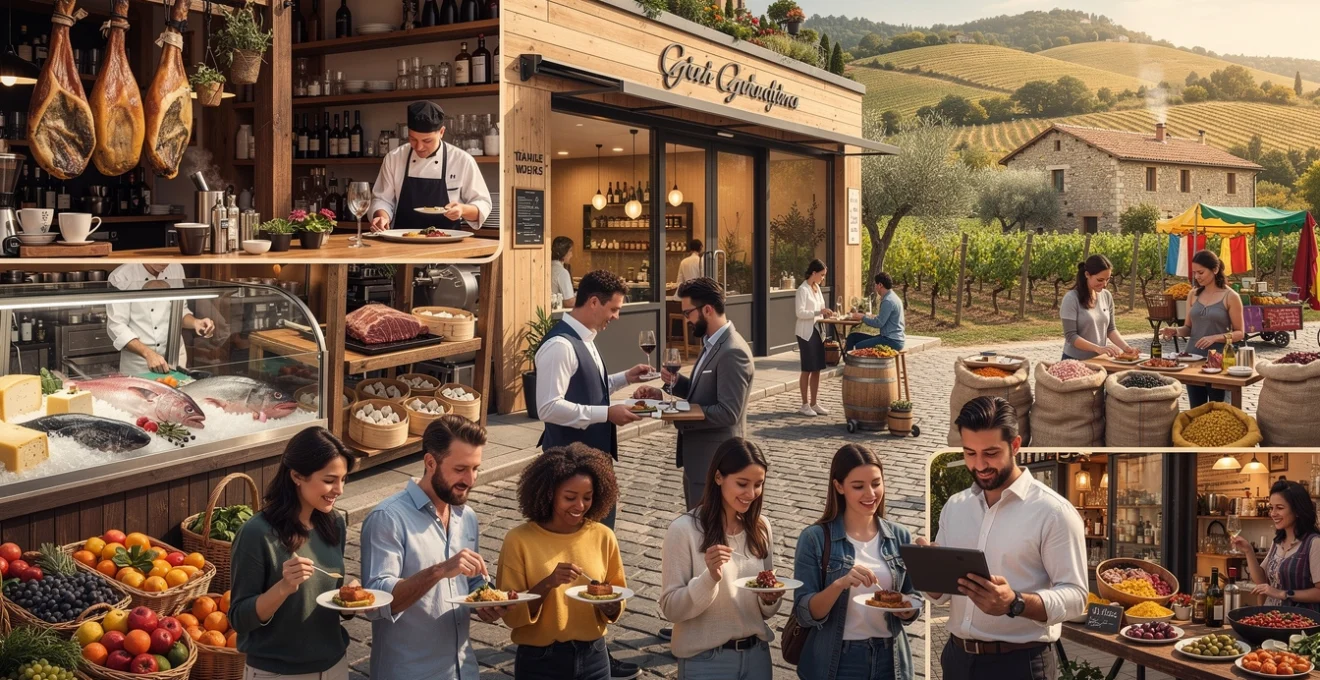
The modern traveller’s relationship with food has evolved far beyond mere sustenance during city breaks. Today’s discerning explorers seek authentic culinary experiences that unveil the cultural DNA of their chosen destinations through taste, aroma, and tradition. Food tours have emerged as the bridge between tourist attractions and genuine local culture, offering visitors an intimate glimpse into a city’s gastronomic soul that conventional sightseeing simply cannot provide.
These carefully curated culinary journeys transform ordinary city visits into extraordinary adventures, where each bite tells a story and every market stall becomes a classroom. From the bustling souks of Marrakech to the refined dining rooms of Copenhagen, food tours create meaningful connections between travellers and local communities, fostering cultural understanding through the universal language of cuisine.
Gastronomic walking tours: street food immersion and local market exploration
Walking food tours represent the most accessible and comprehensive introduction to a destination’s culinary landscape. These guided expeditions typically span three to four hours, weaving through neighbourhoods where authentic flavours flourish away from tourist-centric establishments. The walking format allows participants to experience the natural rhythm of local food culture whilst building anticipation between tastings.
Successful gastronomic walking tours balance structured learning with spontaneous discovery. Expert guides share historical context, cooking techniques, and cultural significance behind each dish, transforming casual snacking into educational experiences. The intimate group sizes, usually limited to twelve participants, ensure personalised attention and meaningful interaction with local vendors and artisans.
Borough market london: artisanal producer tastings and heritage food vendors
London’s Borough Market stands as a testament to the capital’s evolving food scene, where centuries-old traditions meet contemporary artisanal innovation. Food tours through this historic marketplace showcase the diversity of British cuisine, from traditional Scotch eggs and Cumberland sausages to modern interpretations of classic dishes. Visitors sample aged cheeses from Neal’s Yard Dairy, freshly baked sourdough from renowned bakers, and seasonal preserves that reflect the changing British landscape.
The market’s Victorian architecture provides an atmospheric backdrop for understanding London’s food heritage. Guided tours typically include meetings with third-generation traders who share family recipes and stories of the market’s evolution. Participants often discover that British cuisine extends far beyond fish and chips, encompassing regional specialities from Scotland’s highlands to Cornwall’s coastal waters.
La boquería barcelona: catalonian speciality sampling and jamón ibérico appreciation
Barcelona’s La Boquería market offers an sensory explosion that epitomises Catalonian food culture. Food tours navigate the market’s labyrinthine aisles, introducing visitors to essential ingredients like saffron, marcona almonds, and olive oils from different Spanish regions. The highlight often involves jamón ibérico tastings, where participants learn to distinguish between various grades and curing processes that define this prized Spanish delicacy.
Expert guides explain the significance of seasonal produce in Catalonian cooking, demonstrating how local ingredients shape traditional dishes like pan con tomate and escalivada. Tours frequently include stops at traditional tapas bars surrounding the market, where visitors experience the social aspect of Spanish dining culture. The combination of market exploration and authentic restaurant visits provides comprehensive insight into Barcelona’s gastronomic identity.
Tsukiji outer market tokyo: sushi omakase experiences and wagyu beef encounters
Tokyo’s Tsukiji Outer Market continues to serve as the heartbeat of Japanese culinary tradition, despite the wholesale market’s relocation to Toyosu. Food tours through this area offer unparalleled access to the freshest seafood, traditional tools, and time-honoured techniques that define Japanese cuisine. Participants witness the meticulous preparation methods that elevate simple ingredients to artistic heights.
The tour experience typically includes sushi omakase sessions at intimate counter restaurants where master chefs demonstrate knife skills passed down through generations. Visitors gain appreciation for the subtle differences between fish varieties and seasonal preparations that distinguish authentic Japanese cuisine from international interpretations. Additional tastings might include wagyu beef, handmade soba noodles, and traditional sweets that showcase Japan’s dedication to culinary perfection.
Beyond the savoury elements, many tours also highlight the role of Japanese confectionery in daily life. From taiyaki (fish-shaped cakes filled with sweet bean paste or custard) to delicate wagashi served with matcha, these tastings reveal how seasonality and aesthetics guide even the smallest treats. For travellers keen to understand how Tokyoites actually shop and eat, Tsukiji’s dense concentration of stalls, knives, tea merchants and specialist grocers offers a compact, highly walkable introduction to Japan’s broader food culture.
Pike place market seattle: pacific northwest seafood and craft coffee curation
Seattle’s Pike Place Market is one of the best-known food tour destinations in the United States, and with good reason. Curated walking tours here showcase the Pacific Northwest’s seafood heritage, from wild Alaskan salmon and Dungeness crab to briny local oysters served on the half shell. Guides often begin with an overview of the market’s early 20th-century origins, explaining how it evolved from a farmers’ market into a bustling culinary hub with more than 500 independent businesses.
Seafood tastings are typically paired with introductions to Seattle’s renowned coffee culture. Participants sample single-origin brews and learn about roasting profiles, brewing methods, and how to identify quality coffee beyond major chain branding. Many tours also incorporate artisanal bakeries, small-batch chocolatiers, and producers of regional specialities like smoked salmon spreads or cherry jams from Eastern Washington. For visitors, the combination of fishmongers’ theatrics, waterfront views and carefully chosen tastings transforms Pike Place from a crowded landmark into a nuanced snapshot of Pacific Northwest flavour.
Michelin-starred restaurant food tours: fine dining circuit navigation
For travellers who view dining as the centrepiece of a trip, Michelin-starred restaurant food tours provide an organised route through some of the world’s most celebrated kitchens. Rather than securing individual reservations months in advance, guests follow carefully sequenced itineraries that might include lunch tasting menus, late-afternoon wine pairings, and evening chef’s table experiences. These high-end food tours are particularly attractive in cities where demand for fine dining is intense and entry-level knowledge can feel intimidating.
Fine dining circuits go beyond simply “collecting stars”. Expert hosts contextualise each venue’s philosophy, from ingredient sourcing and plating style to the influence of local culinary traditions on avant-garde techniques. Between courses, participants often stroll through historic neighbourhoods, visit artisan bakeries or chocolatiers, and learn how critics evaluate restaurants. The result is a holistic exploration of gastronomy that combines rarefied dining rooms with street-level stories about the chefs, producers and trends reshaping global restaurant culture.
Paris arrondissement gastronomy: multi-course tasting menu progressions
In Paris, Michelin-focused food tours often unfold as a journey across several arrondissements, each with its own culinary character. A typical itinerary might begin with patisserie tastings and a light lunch in the 6th, progress to a left-bank bistro recognised by the Michelin Guide, and culminate in a formal multi-course dinner near the Champs-Élysées or in the 1st arrondissement. Along the way, participants are introduced to key concepts like terroir, seasonal menu planning, and the rigid yet evolving structure of the classic French meal.
Rather than rushing from one white-tablecloth restaurant to another, knowledgeable guides pace these tours to allow for palate resets and neighbourhood exploration. Guests might pause at a fromagerie to understand AOP cheese classifications or step into a wine bar to compare regional appellations before an evening tasting menu. This layered approach helps visitors see how Parisian gastronomy is not just about individual restaurants, but about an ecosystem of bakers, butchers, cheesemongers and vintners that sustains the city’s reputation as a culinary capital.
San sebastián pintxos crawls: basque culinary innovation and molecular gastronomy
San Sebastián offers a different, more informal take on high-level food tourism through its famed pintxos crawls. While the city boasts one of the highest concentrations of Michelin stars per capita, many food tours focus on the Old Town’s bars, where bite-sized creations blur the line between casual snacking and sophisticated cooking. Visitors move from counter to counter sampling grilled octopus, slow-cooked beef cheeks, and inventive small plates that might incorporate foams, gels or sous-vide techniques associated with molecular gastronomy.
Guides help participants navigate local etiquette—such as ordering a couple of pintxos at each stop rather than overloading a single plate—and explain how Basque chefs have driven global culinary innovation. You may taste traditional gilda skewers at one bar, then walk a few streets to encounter a modern reinterpretation featuring unexpected textures and temperatures. By the end of an evening, travellers gain an appreciation for how San Sebastián’s pintxos culture acts as a living laboratory, allowing chefs to experiment in a relaxed setting long before ideas reach formal tasting menus.
Copenhagen new nordic cuisine: noma-inspired foraging and fermentation techniques
Copenhagen’s food tours often centre on the principles of New Nordic cuisine, popularised by restaurants like Noma and codified in the New Nordic Manifesto. Rather than focusing purely on Michelin stars, many itineraries highlight the city’s broader culinary landscape: casual wine bars serving local produce, bakeries specialising in slow-fermented sourdough, and small restaurants turning hyper-seasonal ingredients into refined dishes. Participants hear how chefs collaborate with foragers, fishermen and farmers to build menus that change week by week.
Some premium tours include behind-the-scenes experiences such as fermentation workshops or visits to urban farms and rooftop gardens. Guides might demonstrate how basic techniques—pickling, drying, smoking and fermenting—allow Nordic restaurants to preserve fragile ingredients from short growing seasons. For travellers, these tours can feel less like static restaurant visits and more like a crash course in culinary sustainability and creativity. The emphasis on minimalism, purity of flavour and regional identity helps guests rethink what fine dining can look like in a cool-climate, resource-conscious city.
Hong kong dim sum heritage: traditional teahouse culture and cantonese culinary artistry
In Hong Kong, Michelin-oriented food tours frequently weave together traditional teahouses and contemporary Cantonese fine dining. Morning visits to long-established dim sum parlours introduce travellers to the ritual of sharing bamboo baskets of steamed dumplings, rice rolls and buns over pots of fragrant tea. Guides explain how dishes like har gow, siu mai and char siu bao have evolved, and why certain folding techniques or translucent wrappers are markers of culinary skill.
Later in the day, itineraries may progress to refined restaurants where chefs reinterpret Cantonese classics with seasonal ingredients, modern plating and curated wine or tea pairings. Participants learn about the balance of textures and flavours—sweet, salty, bitter, sour and umami—that defines high-level Cantonese cuisine. By contrasting bustling, no-frills dim sum halls with hushed dining rooms that have earned coveted stars, these tours demonstrate how Hong Kong’s food culture bridges everyday comfort and meticulous artistry.
Regional culinary identity tours: terroir-driven food discovery experiences
Beyond individual cities, regional culinary tours invite travellers to understand how landscape, climate and history shape distinctive food identities. Often spanning several days, these itineraries move at a slower pace than urban food walks, combining vineyard visits, farm stays, village markets and hands-on cooking classes. The concept of terroir—the way soil, weather and geography influence flavour—moves from abstract theory to tangible experience as you taste wines, cheeses and oils in the very places they are produced.
Such tours are particularly appealing to travellers who want to go beyond restaurant dining and see how their meals begin in vineyards, olive groves, rice paddies or spice plantations. Local guides and producers explain how traditional methods coexist with modern technology, and how climate change is already affecting harvests and flavour profiles. For many participants, the chance to talk directly with winemakers, cheesemakers or farmers becomes the most memorable element of a culinary adventure, turning a simple tasting into an in-depth cultural exchange.
Tuscany wine and olive oil estates: chianti classification and extra virgin production methods
Tuscan food and wine tours typically trace a route through rolling hills dotted with vineyards and olive groves, focusing on appellations within the Chianti and Chianti Classico zones. Guides demystify Italy’s wine labelling system, explaining the differences between DOC, DOCG and IGT, and how factors such as altitude, grape variety and barrel ageing influence the character of a Chianti. Structured tastings teach participants to recognise hallmark notes—cherry, violet, spice—and to match wines with regional dishes like bistecca alla fiorentina or ribollita.
Olive oil visits provide a complementary lens on Tuscan terroir. At small estates, guests often tour groves, see modern or traditional presses, and learn what separates high-quality extra virgin olive oil from mass-produced blends. Topics such as harvest timing, cold-pressing and acidity levels are made accessible, with side-by-side tastings revealing how subtle differences in production methods translate into peppery, grassy or buttery flavour profiles. By the end of the tour, you are far better equipped to interpret labels and choose authentic Tuscan products back home.
Lyon bouchon tradition: lyonnaise cuisine authenticity and charcuterie mastery
Lyon, frequently described as France’s gastronomic capital, offers regional food tours anchored around its historic bouchons—intimate restaurants serving hearty, traditional fare. Curated itineraries might begin at covered markets like Les Halles de Lyon Paul Bocuse, where visitors encounter local cheeses, sausages and pastries that supply the city’s kitchens. Guides discuss the evolution of Lyonnaise cuisine, from its origins in working-class “mothers of Lyon” kitchens to its modern-day celebration in both casual and fine-dining contexts.
Meals in certified bouchons highlight emblematic dishes such as quenelles de brochet, tablier de sapeur and salade lyonnaise, paired with Beaujolais or Côtes du Rhône wines. Many tours include visits to artisanal charcuteries, where you can observe the curing and seasoning techniques behind regional specialities like rosette or saucisson brioché. For those interested in authenticity, guides explain the criteria for official bouchon status and how to distinguish genuine establishments from tourist-oriented imitators—a valuable skill in any popular food destination.
Mumbai street food circuits: chaat variations and maharashtrian flavour profiles
Mumbai’s regional food tours largely unfold on the streets, where vendors serve an astonishing spectrum of snacks and quick meals. Structured circuits through areas such as Chowpatty Beach, Mohammad Ali Road or Fort introduce travellers to the intricacies of chaat—a family of savoury snacks that balance sweet, sour, spicy and crunchy elements. Participants might compare pani puri, bhel puri and sev puri, learning how different chutneys, spice blends and textures create distinctive flavour experiences.
Guides also emphasise Mumbai’s Maharashtrian identity, showcasing dishes like vada pav, misal pav and sabudana khichdi alongside influences from Gujarat, South India and beyond. Hygiene and timing are addressed openly, with reputable operators choosing vendors that maintain high standards and scheduling tours to avoid peak congestion. For travellers who might feel overwhelmed navigating India’s street food independently, these curated experiences act like a safety net, allowing you to embrace bold flavours with confidence.
Istanbul mezze trails: ottoman culinary heritage and turkish breakfast culture
In Istanbul, regional food tours often focus on the city’s role as a bridge between Europe and Asia, using shared plates to tell centuries of history. Evening mezze trails through neighbourhoods like Karaköy, Beyoğlu or Kadıköy introduce travellers to small dishes that draw on Ottoman court cuisine, Anatolian village recipes and coastal Mediterranean influences. You might sample smoky patlıcan ezmesi, tangy haydari, stuffed vine leaves and grilled seafood, all accompanied by rakı or local wines.
Many itineraries also feature the iconic Turkish breakfast, a lavish spread of cheeses, olives, eggs, simit bread, honey, clotted cream and jams served with endless glasses of tea. Guides explain how breakfast functions as both a daily ritual and a social occasion, and how regional variations—from the Black Sea to southeastern Turkey—introduce different breads, cheeses and pastries. For visitors, these tours are a chance to see how Istanbul’s culinary identity is woven into everyday life, from early-morning bakeries to late-night meyhanes.
Specialised dietary and ethnic food tour segments
As food tourism has matured, specialised dietary and ethnic food tours have emerged to serve travellers with specific preferences or needs. Vegan and vegetarian city walks, for example, highlight plant-based restaurants, markets and bakeries that might otherwise remain off the typical tourist radar. Gluten-free, halal and kosher-focused tours ensure that guests with dietary restrictions can still enjoy immersive food experiences without constant worry or compromise. In many cities, these tours double as introductions to local communities, from Jewish quarters to immigrant neighbourhoods shaped by decades of culinary exchange.
Ethnic food tours also play a key role in telling underrepresented stories. Guided walks through Chinatowns, Little Ethiopias or Latin American districts often combine tastings with discussions about migration patterns, labour history and cultural resilience. For travellers, this can be eye-opening: a bowl of noodles or a plate of injera becomes a window onto questions of identity, belonging and adaptation. If you have ever wondered how to support local communities ethically while seeking out “authentic” food, these niche tours offer a curated, respectful framework.
Food tour technology integration: mobile applications and digital enhancement platforms
Digital tools are rapidly reshaping how travellers discover and experience food tours. Many operators now supplement in-person guiding with mobile apps that provide interactive maps, tasting notes, allergen information and historical context accessible on demand. QR codes at tasting stops can unlock videos of producers at work, archive recipes or behind-the-scenes interviews with chefs, turning a three-hour walk into an expandable learning journey you can revisit later. For self-guided food tours, GPS-based apps function like culinary treasure maps, leading users from market to café to bar at their own pace.
Augmented reality and gamification are beginning to appear in innovative itineraries, overlaying stories or archival photos onto present-day streetscapes. Imagine pointing your phone at a seemingly ordinary corner and seeing how it looked when it housed a landmark bakery 80 years ago—this kind of digital layering deepens appreciation without overwhelming the senses. Of course, there is a balance to strike: constantly checking a screen can detract from sensory immersion. Thoughtful operators encourage guests to use technology as a background companion rather than a distraction, ensuring that the sizzle of a grill or the aroma of freshly ground spices remains front and centre.
Sustainable food tourism: farm-to-table initiatives and local producer partnerships
Sustainability has moved from buzzword to baseline expectation in food tourism, with many travellers actively seeking tours that minimise environmental impact and maximise community benefit. Farm-to-table routes, for instance, connect urban restaurants with the rural producers who supply them, often including farm visits, harvest participation and seasonal cooking classes. Participants see how decisions about soil health, water use and biodiversity translate into flavour on the plate, and why supporting small-scale agriculture can be a practical climate action rather than an abstract ideal.
Responsible food tour operators increasingly prioritise partnerships with independent vendors, family-run eateries and cooperatives, ensuring that tourism revenue circulates locally rather than flowing exclusively to large chains. They may limit group sizes to reduce congestion in markets, avoid single-use plastics, and adapt itineraries to respect residents’ daily routines. As a traveller, asking a few simple questions—about sourcing, waste management and community relationships—can help you choose tours that align with your values. When done thoughtfully, sustainable food tours do more than satisfy appetites; they help safeguard the culinary landscapes that make each city worth visiting in the first place.